

P0063 on 2013-2016 Land Rover Range Rover: Causes and Fixes for HO2S Heater Circuit Low
This code indicates a fault in the heater circuit for the Bank 2, Sensor 3 oxygen sensor. The most common cause on this specific Range Rover (with 3.0L V6 or 5.0L V8 engines) is a faulty oxygen sensor due to a known manufacturing defect. Replacing the sensor is the typical fix.
- P0063 on a 2013-2016 Range Rover almost always points to a bad Bank 2, Sensor 3 oxygen sensor.
- The failure is likely due to a known manufacturing defect (internal misalignment), as stated in Land Rover TSB SSM63157.
- While checking wiring and fuses is good practice, the sensor itself is the most probable part to fail. A blown fuse is a strong indicator of a shorted sensor.
- The issue is shared across other JLR products with the 3.0L V6 and 5.0L V8 engines, including the Range Rover Sport and Jaguar F-Type.
- Replacing the sensor is a DIY-friendly job with the right tools (an O2 sensor socket) and can save significant labor costs.
What's Unique About the 2013-2016 Land Rover RANGE ROVER
For this generation of Land Rover Range Rover (L405) with the AJ126 V6 and AJ133 V8 engines, the P0063 code is strongly linked to a known manufacturing issue with the oxygen sensors. Multiple Technical Service Bulletins (TSBs) were issued because of a supplier fault that caused an "internal misalignment in the sensor leading to side load on the ceramic internal to the sensor". This pre-stresses the component and leads to premature failure. This means that unlike in many other vehicles where wiring is a common suspect, the sensor itself is the most probable cause of the problem.
Diagnostic Flowchart
Tap your situation to follow the diagnostic path that matches what you're seeing on this vehicle.
Symptoms You May Notice
- Check Engine Light is on.
- Vehicle will fail an emissions test.
- A blown fuse for the O2 sensor heater circuit.
- Slightly reduced fuel economy, especially during engine warm-up.
- In rare cases, the engine may hesitate or run rough.
- Replacing the wrong oxygen sensor. The code is specific to Bank 2, Sensor 3. Bank 2 is the side of the engine opposite cylinder #1 (typically the driver's side on V-engines in the US). Sensor 3 is the rearmost, post-catalyst sensor on that bank.
Most Likely Causes
- Faulty Bank 2, Sensor 3 Oxygen Sensor 🔴 High Probability → Shop Oxygen Sensor A manufacturer TSB (SSM63157) explicitly states a "manufacturing fault at the supplier" caused an internal misalignment in the sensors, leading to premature failure. Another TSB (LTB00671NAS3) notes that on 3.0L V6 models, the failure can also be caused by thermal shock when water contacts the hot sensor. This makes the sensor itself the primary suspect.
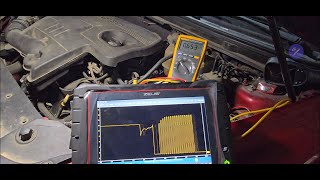
How to confirm: Use a multimeter to test the resistance of the heater circuit within the sensor. Disconnect the sensor and measure across the two heater wires 🎬 Watch: How to test oxygen sensor heater circuits with a multimeter. (often the same color). A normal reading is typically between 2 to 20 ohms. A reading of 0 ohms indicates a short, and an infinite reading (OL) indicates an open circuit. Either confirms a bad sensor. Also check if the fuse for the O2 heater circuit is blown, as a shorted sensor will often cause this.
Typical fix: Replace the Bank 2, Sensor 3 oxygen sensor. Per TSB SSM63157, ensure the replacement sensor has a date code of June 1st, 2013 or later to avoid installing another defective part.
Est. part cost: $75-$250 - Wiring or Connector Issue ⚪ Low Probability While possible, TSB SSM72448 notes that diagnosis often reveals no fault with the wiring or connectors, pointing back to the sensor. However, proximity to the hot exhaust can still cause damage over time, and corrosion in connectors is always a possibility on older vehicles.
How to confirm: Visually inspect the wiring harness and connector for the sensor. Look for any signs of melting, corrosion, or physical damage. Check for 12-volt power and a good ground at the connector with the key on, engine off.
Typical fix: Repair the damaged section of the wiring harness or clean/replace the connector.
Est. part cost: $10-$50
Rare But Worth Checking
- Blown Fuse or Faulty Relay: Always a quick and easy check. A blown fuse for the O2 heater circuit will disable the heater and trigger this code. A shorted O2 sensor is a common reason for the fuse to blow in the first place.
- Faulty Engine Control Module (ECM): This is very rare. The ECM's internal driver for the heater circuit can fail, but all other potential causes should be exhaustively ruled out before considering ECM replacement, which is a very expensive repair.
Diagnosis Steps
- Read the code with an OBD-II scanner to confirm P0063 is present.
- Check the fuse box for a blown fuse related to the oxygen sensor heater circuits. On some related Jaguar models, this is fuse F11 in the engine bay fuse box. If blown, it strongly suggests a short circuit in one of the sensors.
- Visually inspect the wiring and connector for the Bank 2, Sensor 3 oxygen sensor. Look for any signs of melting, chafing, or corrosion.
- If the wiring and fuse are okay, disconnect the sensor. Use a multimeter to test the resistance of the heater circuit on the sensor itself. The reading should be between 2 and 20 Ohms. An open circuit (infinite resistance) or a short (near zero resistance) confirms a bad sensor.
- If the sensor tests good, check for power (12V) and ground at the vehicle's harness connector with the ignition on.
- If power or ground is missing, trace the wiring back to find the break. If power and ground are present and the sensor is good, the issue may be a rare ECM fault.
Parts You'll Likely Need
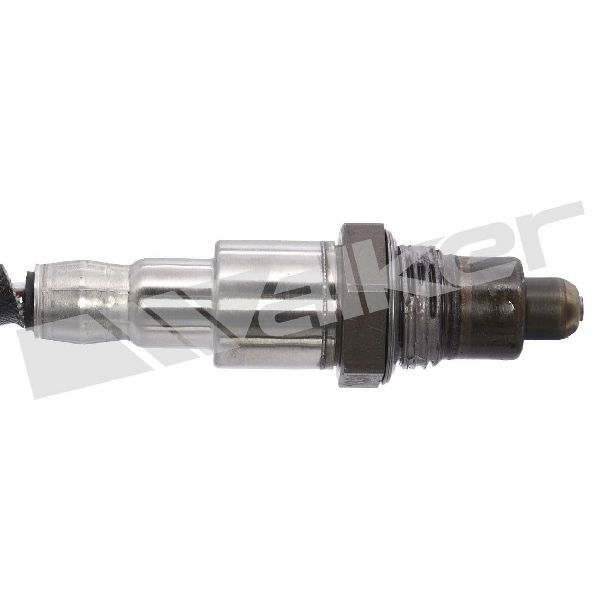
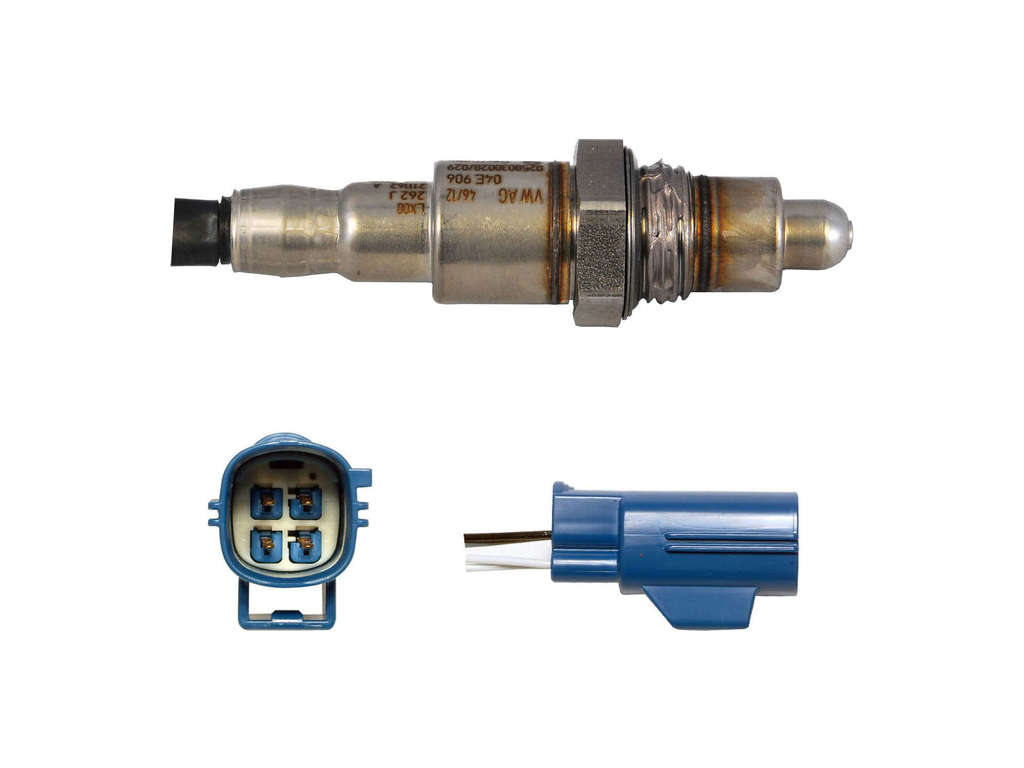
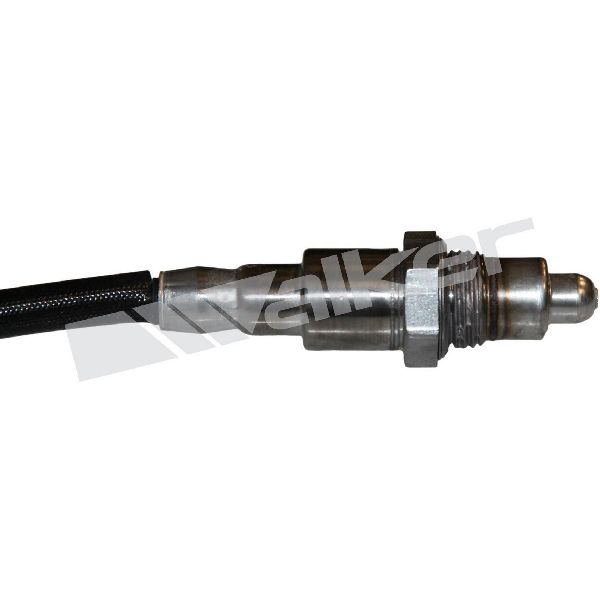
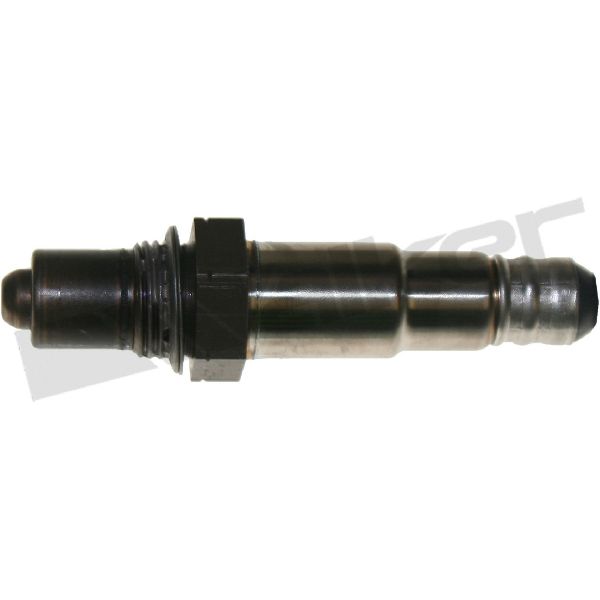
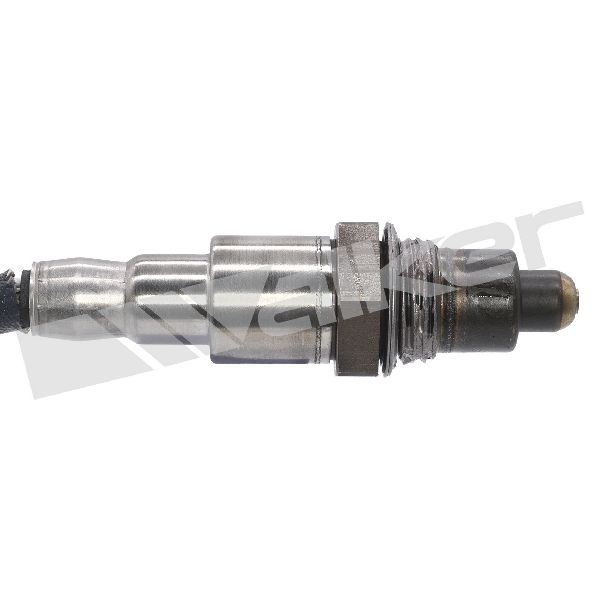
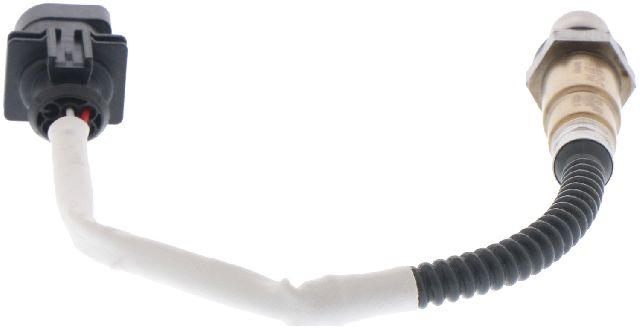
- Oxygen Sensor (Bank 2, Sensor 3)
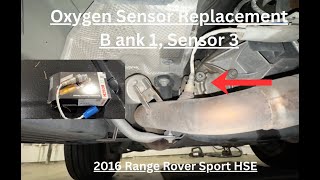
(OEM #C2D23702, LR035748)🎬 See this complete guide to replacing all six oxygen sensors. — This is the most common failure point for code P0063 on this vehicle, as documented by Land Rover's own service bulletins due to a supplier manufacturing defect. LR035748 is the Land Rover part number for the rear O2 sensor, while C2D23702 is the equivalent Jaguar part number.
Trusted brands: Bosch, Denso, Genuine Jaguar Land Rover
OEM price range: $180-$250
Aftermarket price range: $75-$150
Related Codes That Often Appear With This One
- P0042, P0043, P0044, P0055, P0061, P0062 — These are all related O2 sensor heater circuit codes. The TSBs LTB00671NAS3 and SSM63157 list them together, suggesting the manufacturing fault could affect multiple sensors simultaneously or that a single electrical issue (like a blown fuse) could impact several circuits.
Technical Service Bulletins (TSBs) & Recalls
- SSM72448: Notes that upon diagnosis for a group of O2 sensor codes including P0063, no fault is often found with wiring, indicating the issue is with the component.
- LTB00671NAS3: Links P0063 to the post-catalyst heated oxygen sensors and an illuminated MIL. Suggests thermal shock as a possible cause on 3.0L V6 models and recommends a software update in conjunction with sensor replacement.
- SSM63157: Details the root cause as a manufacturing fault ('misalignment within the sensor') from the supplier and provides affected part numbers (LR035748 for the rear sensor) and date codes to check.
Platform-Specific Known Issues
- TSB SSM63157 identifies a manufacturing fault at the supplier, causing misalignment within the oxygen sensor and leading to premature failure. This is a key reason why the sensor itself is the most likely culprit. The TSB advises checking the date code on any replacement sensor to ensure it was made after June 1st, 2013.
- TSB LTB00671NAS3 confirms that the Malfunction Indicator Lamp (MIL) can be illuminated with P0063 (and other related codes) stored, specifically pointing to the post-catalyst heated oxygen sensors. For the 3.0L V6, it suggests the cause may be thermal shock from water contacting the sensor.
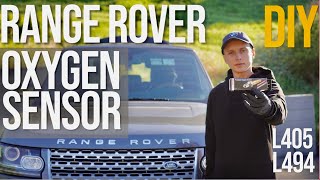
- The issue is not isolated to the Range Rover; it also affects the Range Rover Sport, LR4, and various Jaguar models that use the same AJ126 V6 and AJ133 V8 engines. 🎬 Watch: A DIY walkthrough for replacing sensors on the L405.
Mechanic-Grade Diagnostic Values
- O2 Sensor Heater Element Resistance — expected: Typically 4 to 10 Ohms when cold. A Bosch LSF4 sensor specification is 9 Ohms.. Failure: A reading of 0 Ohms indicates a short circuit. An infinite reading (OL) indicates an open circuit.
- Voltage at Heater Circuit Connector (Key On, Engine Off) — expected: Approximately 12V (battery voltage) should be present on the power supply wire to the sensor connector.. Failure: Low or no voltage indicates a problem with the fuse or wiring leading to the sensor.
- Heater Circuit Control — expected: The ECM grounds the control side of the heater circuit using a Pulse Width Modulated (PWM) signal to regulate temperature. With the engine running, a lab scope would show a square wave, while a multimeter might show a fluctuating or averaged voltage.. Failure: A constant 12V or 0V on the control wire (with the sensor connected and engine running) could indicate a wiring short or a faulty ECM driver.
Scan Tool Commands That Help
- JLR SDD / Pathfinder: Read Diagnostic Trouble Codes (DTCs) — To confirm P0063 and see if other manufacturer-specific codes are present that a generic scanner might miss.
- JLR SDD / Pathfinder: ECU Software Update / Configure existing module — TSB LTB00671NAS3 recommends a software update in conjunction with sensor replacement, especially on the 3.0L V6, to address potential thermal shock issues. This is performed using the dealer tool.
Wiring & Ground Locations
- Engine Bay Fuse Box — Located under the hood, on the passenger side of the vehicle.. This fuse box contains the fuses for the heated oxygen sensors. For a 2015 model, this is specifically listed as fuse F11 (15A) and F14 (20A). A blown fuse here is a strong indicator of a shorted sensor heater.
- Engine to Chassis Ground Strap — A primary ground strap typically connects from the engine block (often near the starter motor) to the vehicle's frame/chassis rail.. A poor or corroded main engine ground can cause a variety of electrical issues, including incorrect sensor readings and heater circuit faults, as the ECM and sensors may not have a stable ground reference.
- ECM Ground Point — On similar Land Rover models, a key ground point for the ECM and related sensors is located in the driver's side footwell, behind the trim panel.. A fault at this specific ground point can directly impact the ECM's ability to correctly read and control the oxygen sensor circuits, potentially mimicking a sensor or wiring failure.
OEM Part Supersession History
LR035748→LR098290, LR136928— Part revision and update by the manufacturer. The supersession indicates an updated or replacement part is now specified for service.
Heads up: The TSBs strongly advise using sensors manufactured after June 1st, 2013, to avoid the original manufacturing defect. While newer part numbers should meet this, it's a critical detail for this specific repair.
Model Year Variations Within This Range
- 2013-2016: TSB LTB00671NAS3 recommends a Powertrain Control Module (PCM) software update when replacing the post-catalyst oxygen sensors on 3.0L V6 models. This suggests that later software versions have revised strategies for sensor heating or diagnostics, which may not be present on earlier models without the update.
Helpful Videos

We Have This Part in Stock

The information in this article is provided for general reference and educational purposes only. Vehicle specifications, procedures, and part compatibility can vary by production date, trim level, and region. Always consult your vehicle's factory service manual and verify part numbers before purchasing or performing repairs. Safety-critical components such as airbags, seat belts, and braking systems should be installed by a qualified professional.
- Land Rover RANGE ROVER:
- 🧭 Diagnostic Flowchart
- 🎬 Helpful Videos
- 🛍️ Shop This Part
- What's Unique About the 2013-2016 Land Rover RANGE ROVER
- Symptoms You May Notice
- Most Likely Causes
- Rare But Worth Checking
- Diagnosis Steps
- Parts You'll Likely Need
- Related Codes That Often Appear With This One
- Technical Service Bulletins (TSBs) & Recalls
- Platform-Specific Known Issues
- Mechanic-Grade Diagnostic Values
- Scan Tool Commands That Help
- Wiring & Ground Locations
- OEM Part Supersession History
- Model Year Variations Within This Range
- 🎟️ Get 5% Off