

P0068 on 2011-2015 Audi Q7 3.0T: MAP/Throttle Correlation Causes and Fixes
For the 2011-2015 Audi Q7 3.0T, code P0068 is most often caused by a massive vacuum leak from a failed PCV valve (oil separator), which costs ~$150-$250 for the part but requires significant labor. The second most likely cause is a dirty throttle body, which is a much cheaper fix. In rare cases, a faulty MAP sensor can be the issue.
- Before buying any parts, test for a failed PCV valve by checking for strong suction at the oil filler cap with the engine running. This is the most common cause of P0068 on this engine.
- If the PCV is okay, the next step is to remove and thoroughly clean the throttle body of all carbon buildup.
- A Throttle Body Adaptation with a VAG-specific scan tool is a mandatory step after cleaning or replacing the throttle body.
- This engine does not have a MAF sensor; do not waste time looking for one. The problem lies between the throttle position and the MAP/boost pressure sensors.
- If you must replace the PCV valve, be prepared for a significant job that involves removing the supercharger.
What's Unique About the 2011-2015 Audi Q7
The Audi 3.0T supercharged engine (EA837) does not use a traditional Mass Airflow (MAF) sensor; it uses a speed-density system with multiple pressure sensors (MAP and boost sensors) to calculate airflow. This code is almost always triggered by a platform-specific weakness: the failure of the Positive Crankcase Ventilation (PCV) valve, also called the oil separator. The PCV diaphragm tears, creating a massive internal vacuum leak that the ECM cannot reconcile, leading directly to the P0068 correlation fault.
Symptoms You May Notice
- Rough, unstable, or 'bubbling' idle
- Engine stalling, especially when coming to a stop or at idle
- Significant loss of power and poor acceleration
- Loud whistling, sucking, or 'honking' noise from the engine bay at idle (classic sign of PCV failure)
- Check Engine Light and/or EPC (Electronic Power Control) light illuminated
- Increased fuel consumption
- Difficulty starting the engine
- Replacing the MAP sensor(s) without first checking for a failed PCV valve or cleaning the throttle body. The PCV failure is a far more common cause of this code on the 3.0T engine.
- Searching for or attempting to clean a Mass Airflow (MAF) sensor. This engine does not have one.
Most Likely Causes
- Failed PCV Valve (Oil Separator) 🔴 High Probability → Shop PCV Valve The diaphragm inside the PCV valve, which is made of plastic/rubber, is located under the supercharger and fails frequently from heat and age, tearing and creating a large, unmetered vacuum leak. This is a well-documented failure point on the 3.0T engine, often occurring between 60,000-80,000 miles.
How to confirm: With the engine running at idle, try to remove the oil filler cap. If there is very strong suction holding the cap down, making it difficult to remove, the PCV valve has failed. The engine idle may also change dramatically or a loud sucking noise will be heard when the cap is removed.
Typical fix: Replace the entire PCV valve assembly. This is an involved, 4-6 hour job as it requires the removal of the supercharger to access the PCV located in the engine valley. 🎬 See this step-by-step supercharger removal and PCV replacement It is highly recommended to use the latest revision Genuine Audi part to ensure a long-term fix.
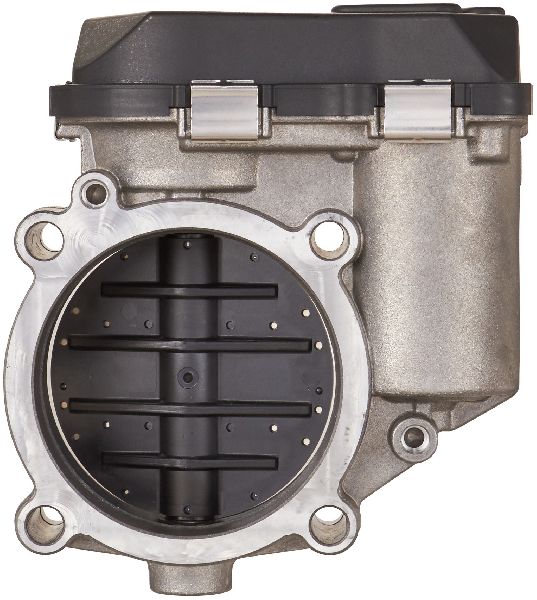
Est. part cost: $150 - $250 - Dirty or Sticking Throttle Body 🟡 Medium Probability → Shop Fuel Injection Throttle Body As a direct-injection engine, oil vapor and carbon can build up in the intake tract, including the throttle body. This buildup can restrict the movement of the throttle plate, causing airflow to be higher or lower than what the ECM expects for a given position.
How to confirm: Remove the intake boot from the throttle body and visually inspect for a thick layer of black carbon/oil grime around the throttle plate and bore. The plate should move smoothly and not stick.
Typical fix: Remove the throttle body and clean it thoroughly with throttle body cleaner and a soft brush/cloth. A Throttle Body Adaptation using a VAG-specific scan tool (like VCDS or OBDeleven) MUST be performed after cleaning and reinstallation.
Est. part cost: $10 - $20 (for cleaner and a new gasket) - Other Vacuum Leaks ⚪ Low Probability Plastic hoses and rubber gaskets can become brittle and crack with age, creating smaller vacuum leaks. Common areas include the intake manifold gaskets, breather hoses, or the supercharger lid gaskets.
How to confirm: A smoke test is the most effective way to find leaks. With the engine off, a smoke machine is used to fill the intake system with vapor, and any leaks will be visible as smoke escapes.
Typical fix: Replace the specific cracked hose or failed gasket that is identified during the smoke test.
Est. part cost: $20 - $150 - Faulty MAP / Boost Pressure Sensor ⚪ Low Probability The 3.0T engine uses multiple pressure sensors. While durable, they can fail or become contaminated with oil over time. There is one sensor on the front of the supercharger, and another on the rear of the throttle body.
How to confirm: Using a scan tool, monitor the live data from the pressure sensors with the key on, engine off (they should read close to barometric pressure) and at idle. Compare the readings to each other and to specifications. A sensor that is reading incorrectly should be replaced. A DIYer on YouTube fixed his P0068 by replacing the rear sensor. 🎬 Watch: A DIYer's guide to fixing the P0068 code
Typical fix: Replace the faulty sensor. The front sensor is easy to access, but the rear sensor is difficult to reach behind the throttle body.
Est. part cost: $40 - $90 per sensor
Rare But Worth Checking
- Clogged Air Filter or Snow Screen: A severely restricted air filter or the pre-filter 'snow screen' in the airbox can starve the engine of air, causing a correlation fault. One forum user reported a 20% airflow improvement after cleaning the snow screen.
- Wiring Issue to a Sensor: Damage or corrosion on the wiring or connectors for the MAP sensors or throttle body can cause intermittent signal loss, triggering the code. This should be checked if new parts don't solve the issue.
Diagnosis Steps
- Read all fault codes with a VAG-specific scan tool (VCDS, OBDeleven) to see if other codes are present. Generic P-codes can be misleading.
- With the engine idling, perform the 'Oil Cap Test': Carefully try to remove the engine oil filler cap. If extreme suction holds it in place, the PCV valve has failed and must be replaced. This is the most likely cause.
- If the PCV test is negative, inspect the air filter and the 'snow screen' in the airbox inlet for blockages. A dirty screen can reduce airflow by 20%. Clean or replace as needed.
- Remove the intake ducting from the throttle body. Inspect for heavy carbon and oil buildup. If dirty, remove the throttle body, clean it thoroughly off the car, and replace the gasket.
- After reinstalling the clean throttle body, you MUST perform a Throttle Body Adaptation using a VAG-specific scan tool. The procedure can be found on the Ross-Tech Wiki.
- If the code returns, perform a smoke test on the intake system to check for any other vacuum leaks from hoses or gaskets. Pay close attention to the supercharger lid and intake manifold gaskets.
- If no leaks are found, use a scan tool to monitor live data from all MAP/boost pressure sensors to ensure they are reading correctly and consistently. Replace any sensor with erratic or out-of-spec readings.
Parts You'll Likely Need
- PCV Valve / Oil Separator
(OEM #06E103547AC)— This is the most common failure item that causes code P0068 on the 3.0T engine due to its diaphragm tearing. There are multiple revisions; use the latest available genuine part.
Trusted brands: Audi Genuine, Vaico, URO Parts
OEM price range: $200-$250
Aftermarket price range: $120-$180 - MAP / Boost Pressure Sensor
(OEM #079800-7980)— If a sensor fails, it will provide incorrect data to the ECM, causing a correlation fault. The 3.0T uses multiple sensors. Bosch is the OEM supplier.
Trusted brands: Bosch
OEM price range: $70-$90
Aftermarket price range: $40-$60 - Throttle Body Gasket
(OEM #06E133237)— This gasket should always be replaced when the throttle body is removed for cleaning to prevent future vacuum leaks.
Trusted brands: Audi Genuine, Elring
OEM price range: $15-$25
Aftermarket price range: $5-$10
Related Codes That Often Appear With This One
- P307A — This code for 'Intake System Air Flow Too Low' is frequently stored alongside P0068, as both point to a discrepancy in the expected versus actual airflow.
- P0171 / P0174 — These 'System Too Lean' codes can be triggered if the root cause of P0068 is a vacuum leak (like a bad PCV), which allows unmetered air into the engine, leaning out the air-fuel mixture.
- P0106 — This code for 'MAP/Barometric Pressure Circuit Range/Performance' directly relates to the MAP sensor's function and often appears with P0068 when there is a significant intake pressure issue.
- P0507 — This code for 'Idle Control System RPM Higher Than Expected' can be triggered by the same large vacuum leaks (like a failed PCV) that cause P0068.
Technical Service Bulletins (TSBs) & Recalls
- TSB 2031458/5: Addresses 'MIL on' with rich/lean codes, and the prescribed fix is to replace the crankcase pressure valve (PCV) and update the ECM software, which is highly relevant to the root causes of P0068.
Platform-Specific Known Issues
- The PCV (Positive Crankcase Ventilation) valve, also known as the oil separator, has a very high failure rate on this engine. Its failure is the number one cause of code P0068. The part is located under the supercharger, making replacement a labor-intensive job.
Mechanic-Grade Diagnostic Values
- VCDS Measuring Blocks for Temperature Correlation — expected: Using Measuring Block 134, monitor Oil Temp, Ambient Temp, Intake Air Temp (IAT), and Coolant Temp. Values should be plausible; an IAT of 90°C+ with the engine off indicates heat soak, but extremely high values could point to a sensor issue influencing calculations.. Failure: An IAT reading that is illogical (e.g., extremely high or low compared to ambient when cold) can indicate a faulty sensor, affecting the air density calculation and potentially contributing to a P0068 code.
- Low-Side Fuel Pressure at Crank — expected: Using VCDS Measuring Block 103, pressure should be around 5.8 to 7.0 bar. While not a primary cause for P0068, incorrect fuel pressure can cause symptoms that overlap.. Failure: Significantly low fuel pressure could indicate a separate issue but is unlikely to be the root cause of a MAP/Throttle correlation fault.
- Throttle Body Connector Pin Voltage — expected: On the 8-pin connector for the throttle body, there should be a stable voltage supply. Pin 3 is typically the signal wire and Pin 5 is ground.. Failure: Corrosion or damage, especially on pins 3 and 5, can cause erratic signals and trigger throttle-related faults that accompany P0068.
Hidden / Shadow Codes Worth Checking
- 000104: This is the VAG-specific equivalent of the generic P0068 code (MAP/MAF <-> Throttle Position Correlation). (see via VCDS (VAG-COM), OBDeleven, or other VAG-specific diagnostic tools.)
- 012410: This is the VAG-specific equivalent of P307A (Air Intake System: Flow too Low), which frequently appears with P0068. (see via VCDS (VAG-COM), OBDeleven, or other VAG-specific diagnostic tools.)
Scan Tool Commands That Help
- VCDS (VAG-COM) or OBDeleven: Throttle Body Adaptation (TBA) — This procedure is mandatory after cleaning or replacing the throttle body. It allows the ECU to relearn the throttle plate's closed, open, and partial positions. Failure to perform this can cause a rough idle and re-trigger P0068. The function is found under [Engine-01] -> [Basic Settings-04] -> and selecting Group 060 or the named channel 'Throttle Valve Adaptation'.
Wiring & Ground Locations
- G640 — In the engine compartment on the left side, near the firewall/plenum area.. This is a primary engine ground point. A loose or corroded connection here can affect the reference ground for various engine sensors, including MAP sensors and the throttle body, potentially causing erratic readings and correlation faults.
- G609 — In the plenum chamber (the area below the windshield wipers) on the right side.. Another critical ground connection in the engine bay that provides a ground path for control modules and sensors.
- J338 — This is the Throttle Valve Control Module, which is integrated into the throttle body assembly itself.. The 6-pin or 8-pin connector (T6u/T8x) to this module is a potential point of failure. Inspecting the connector and wiring harness for corrosion, damage, or loose pins is a key diagnostic step if a new throttle body doesn't solve the issue.
Real Owner Repair Stories
- YouTube user SRT ROB ENT (2012 Audi Q7 3.0T Premium Plus) — Engine stalling, 'groggling' feeling, power cutting in and out, P0068 code.
❌ Tried (didn't work) The user first suspected the more common front MAP sensor or PCV valve.
✅ What actually fixed it The problem was resolved by replacing the less-common rear pressure sensor located on the back of the throttle body. The user referred to it as the 'third mass air flow sensor' or 'inlet sensor'. This fixed the stalling and cleared the code. - AudiWorld Forums user 'beep-beep' (Audi A6 (C6 platform) with 3.2L FSI engine (similar throttle body setup)) — P0068 and P307A codes.
❌ Tried (didn't work) Just cleaning the throttle body was not enough for some.
✅ What actually fixed it In addition to cleaning the throttle body, the user removed and cleaned the 'snow screen' (a pre-filter mesh in the airbox inlet). They measured a 20% improvement in airflow after cleaning this screen, which resolved the codes. - Ross-Tech Forums user (2014 Audi S4 3.0T) — P0068 and P0235 codes appeared after major service.
❌ Tried (didn't work) Replaced all 3 MAP sensors (Bosch), cleaned throttle body, replaced air filter.
✅ What actually fixed it The thread was unresolved, but the key takeaway is that the codes appeared immediately after a PCV valve replacement and carbon cleaning service. This strongly implies a man-made error, such as a damaged wire, a vacuum hose not reconnected, or a gasket that was pinched or not seated correctly during reassembly of the supercharger.
"I Checked Everything" — The Actual Cause
- While no specific stories matched this pattern exactly, a likely scenario is an internal leak in the supercharger's charge air coolers. A standard intake smoke test pressurizes the intake tract but may not reveal coolant leaking *into* the intake path from the coolers located under the supercharger. This can affect pressure readings and cause P0068, with symptoms like gradual coolant loss and misfires.
When the Usual Fixes Don't Work
- While the vast majority of P0068 codes on the 3.0T are caused by the PCV valve, a significant number of owners have fixed the issue simply by cleaning a heavily carboned throttle body and performing a Throttle Body Adaptation. Furthermore, at least one documented case shows the code was resolved by replacing the rear MAP sensor located behind the throttle body, a part that is rarely suspected. This indicates that while the PCV should be the primary suspect, it is not the only cause, and cheaper diagnostic steps like throttle body cleaning should be performed first if the classic 'suction test' for the PCV is inconclusive.
OEM Part Supersession History
06E103547F / Q→06E103547AC— These are part of the 30 mbar PCV valve family. The 'AC' revision is a more durable version intended to fix the common diaphragm failure.06E103547H / S / AB→06E103547AH— This is the supersession chain for the 150 mbar PCV valve used on many 3.0T engines. Revisions aimed to improve durability and oil separation.
Heads up: Using a 30 mbar PCV where a 150 mbar version is specified (or vice-versa) can cause oil consumption or pressure issues, even if it physically fits. An ECU tune may be required to match the new valve's pressure rating.06E103547N / AD→06E103547AF— This is the supersession chain for the PCV on the later 3.0T 'EVO' (CREC) engines, also rated at 150 mbar. 'AF' is the latest revision.
Heads up: It is critical to match the PCV valve to the engine code and any ECU software updates, as Audi changed the crankcase pressure strategy over time.
Model Year Variations Within This Range
- 2011 - Mid-2012: Early first-generation 3.0T engines were more prone to oil consumption issues related to a higher pressure regulation valve in the PCV system. Later revisions of the PCV part and associated ECU software updates were released to address this.
- 2014-2015: Later models in this range may have the 'EVO' version of the EA837 engine (e.g., CREC code), which featured changes like combined port and direct injection. While the root causes of P0068 are the same (PCV, throttle body), the specific part number for the PCV may differ (e.g., ending in AF).
Diagnostic Flowchart
Other Known Issues on This Vehicle
Issues unrelated to this code that are worth knowing about as an owner of this generation:
- Water Pump & Thermostat Failure 🔴 High — Very common, especially on pre-2013 models. Often fails between 50k-80k miles, leading to coolant leaks or overheating. (Ref: Audi TSB 01-16-68 (2040491) addresses thermostat issues and provides an ECM software update.)
- Timing Chain Tensioner Rattle 🟠 Medium — Commonly causes a 1-3 second rattle on cold starts. While Audi has stated it's not typically damaging, it's a sign of wear in the hydraulic tensioners. (Ref: Audi TSB 2039995/2 was released for this issue, providing updated tensioner parts.)
- Intake Valve Carbon Buildup 🟠 Medium — Inherent to the direct injection (FSI) design. Typically requires cleaning (walnut blasting) every 60k-100k miles to prevent misfires and performance loss.
- Supercharger Intercooler Leaks 🟠 Medium — The two air-to-water intercoolers inside the supercharger can leak coolant internally, often causing misfires in cylinders 3 and 6.
- Sunroof Drain Clogs 🔴 High — The panoramic sunroof drains are prone to clogging with debris, causing water to leak into the cabin, potentially damaging electronics in the floor and dashboard.
Used vs. New Parts: Buying Guide for This Vehicle
When a used part is the smart pick: For expensive, durable components like the throttle body assembly or the supercharger housing itself. A used throttle body can be a cost-effective option if cleaned and tested for smooth operation before installation.
Donor-vehicle mileage cap: roughly under 80000 miles for the part to have meaningful remaining life.
What to inspect on the donor part:
- For a throttle body, ensure the butterfly plate moves smoothly without binding or sticking.
- Check electrical connectors on any used part for signs of corrosion (green/white powder), bent pins, or brittle plastic.
- Inspect for physical damage like cracks or stripped bolt holes.
OEM-only on this vehicle (don't cheap out):
- PCV Valve / Oil Separator: This is the most critical part to buy new and from the OEM (or a high-quality OEM supplier). The labor to replace it is extensive, and aftermarket diaphragms are notorious for failing prematurely. Using the latest OEM revision is essential for a lasting repair.
Aftermarket brands forum-validated for this vehicle:
- Bosch: OEM supplier for MAP/Boost pressure sensors.
- Elring: Reputable OEM supplier for gaskets, such as the throttle body and supercharger gaskets.
Brands owners have reported issues with on this vehicle:
- Generic, unbranded PCV valve assemblies from online marketplaces. The risk of premature failure and repeating a 6+ hour labor job is too high.
Real Owner Stories
Aggregated from forums and TSBs cited above. Mileages and costs reflect what owners reported in those sources.
2015 Audi Q7 3.0T
Symptoms: Engine code P0068 was present. The owner identified a faulty pressure sensor located in a difficult-to-reach spot.
What fixed it: Replacing the rear MAP sensor located behind the throttle body.
Source hint: YouTube: 2015 AUDI Q7, 3.0T ENGINE CODE ⚠️P0068 -DIY FIX TIPS
2011-2015 Audi Q7 3.0T
Symptoms: P0068 and P307A codes. Airflow was restricted by approximately 20%.
What fixed it: Cleaning the throttle body, performing a Throttle Body Adaptation (TBA), and cleaning the 'snow screen' in the airbox inlet.
Source hint: AudiWorld Forums: THROTTLE BODY ISSUE, CODE P0068, FIXED
2011-2015 Audi Q7 3.0T
Symptoms: P0068 code accompanied by consuming a ton of oil.
What fixed it: The owner was advised to replace the PCV valve after the 'oil cap test' confirmed extreme suction.
Source hint: Reddit r/Audi: 3.0t consuming a ton of oil
Related OBD-II Codes
Frequently Asked Questions
Is there a TSB for the 3.0T engine regarding the PCV valve and software updates?
How can I tell if my 2011-2015 Audi Q7 PCV valve has failed without taking the supercharger off?
Does the 2011-2015 Audi Q7 3.0T use a MAF sensor or a MAP sensor for airflow calculation?
What is the 'snow screen' and how does it affect P0068 on my Q7?
Do I need any special tools to fix a P0068 code on my Audi Q7 3.0T?
At what mileage does the PCV valve typically fail on the Audi 3.0T supercharged engine?
Helpful Videos
Used OEM Parts in Stock
New Aftermarket Parts Available


The information in this article is provided for general reference and educational purposes only. Vehicle specifications, procedures, and part compatibility can vary by production date, trim level, and region. Always consult your vehicle's factory service manual and verify part numbers before purchasing or performing repairs. Safety-critical components such as airbags, seat belts, and braking systems should be installed by a qualified professional.
- Audi Q7:
- 🧭 Diagnostic Flowchart
- 🎬 Helpful Videos
- 🛍️ Shop This Part
- What's Unique About the 2011-2015 Audi Q7
- Symptoms You May Notice
- Most Likely Causes
- Rare But Worth Checking
- Diagnosis Steps
- Parts You'll Likely Need
- Related Codes That Often Appear With This One
- Technical Service Bulletins (TSBs) & Recalls
- Platform-Specific Known Issues
- Mechanic-Grade Diagnostic Values
- Hidden / Shadow Codes Worth Checking
- Scan Tool Commands That Help
- Wiring & Ground Locations
- Real Owner Repair Stories
- "I Checked Everything" — The Actual Cause
- When the Usual Fixes Don't Work
- OEM Part Supersession History
- Model Year Variations Within This Range
- Other Known Issues on This Vehicle
- Used vs. New Parts: Buying Guide for This Vehicle
- Real Owner Stories
- 2015 Audi Q7 3.0T
- 2011-2015 Audi Q7 3.0T
- 2011-2015 Audi Q7 3.0T
- Related OBD-II Codes
- Frequently Asked Questions
- 🎟️ Get 5% Off