

P0068 on 2008-2017 Buick Enclave 3.6L: MAP/MAF Throttle Position Correlation Fixes
On the 3.6L Enclave, P0068 usually means a dirty throttle body, a vacuum leak from loose intake manifold bolts, or a bad MAP sensor. Cleaning the throttle body is the most common and effective first step, costing only a can of cleaner. If that fails, check for vacuum leaks before replacing sensors.
- P0068 on a Buick Enclave 3.6L is a correlation code, meaning a mechanical issue is more likely than a sensor failure.
- Always start by inspecting and cleaning the throttle body. This is the most common fix and is very inexpensive.
- Check for vacuum leaks, especially around the intake manifold, before replacing any sensors.
- Use only dedicated MAF sensor cleaner if you clean the MAF; other chemicals will damage it.
- The problem is common across the entire GM lineup that uses the 3.6L LLT and LFX V6 engines.
What's Unique About the 2008-2017 Buick Enclave
The GM 3.6L V6 engines (both the earlier LLT and later LFX versions) used in the Enclave and its platform mates are known for two issues that commonly cause this code. First, as direct-injection engines, they are prone to carbon buildup in the intake and on the throttle body plate, which can restrict airflow and cause the throttle to sit at an incorrect angle. Second, vacuum leaks from loose intake manifold bolts or failing intake gaskets are a well-documented problem that will cause the MAP sensor readings to be out of line with what the ECM expects. GM even issued a TSB (PIP5529B) for some vehicles regarding loose intake manifold bolts causing this code.
Symptoms You May Notice
- Check Engine Light is on
- Rough or unstable idle
- Engine hesitation or stumbling on acceleration
- Reduced engine power or 'limp mode'
- Occasional stalling, especially when coming to a stop
- Poor fuel economy
- Feeling like the engine is choking or has a 'dead spot' when pressing the gas pedal
- Replacing the throttle position sensor (TPS) alone. The TPS on this engine is integrated into the throttle body and is not sold separately. The entire throttle body assembly must be replaced.
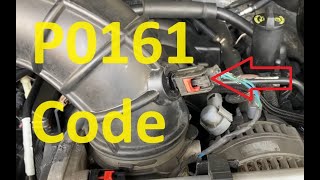
- Replacing the MAF or MAP sensor without checking for vacuum leaks or a dirty throttle body first. This code indicates a *correlation* issue, which is more often caused by a mechanical problem (a leak or blockage) than a failed sensor. 🎬 Watch: Understanding the causes and fixes for code P0068
Most Likely Causes
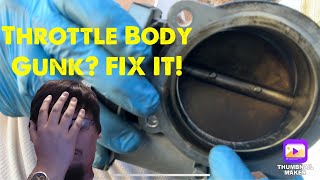
- Dirty Throttle Body 🔴 High Probability → Shop Fuel Injection Throttle Body The PCV (Positive Crankcase Ventilation) system on the 3.6L engine can allow oil vapor into the intake, which bakes into carbon deposits (coke) on the throttle plate and bore. This restricts airflow and causes the plate to not close properly, creating a mismatch between expected and actual airflow.
How to confirm: Remove the air intake duct from the throttle body and visually inspect for a thick, black, greasy ring of carbon around the throttle plate and bore.
Typical fix: Remove the throttle body and clean it thoroughly with specialized throttle body cleaner and a soft brush/rag. 🎬 See this step-by-step guide to cleaning your throttle body Do not use harsh tools. A throttle relearn procedure (often achieved by letting the car idle for several minutes after reconnecting the battery) may be needed afterward.
Est. part cost: $10-$20 - Vacuum Leak 🔴 High Probability Intake manifold gaskets on the 3.6L V6 are a known failure point. Additionally, GM has issued technical service bulletins for other vehicles with this engine regarding intake manifold bolts that loosen over time, creating a vacuum leak. Cracked or disconnected PCV hoses are also common sources.
How to confirm: Listen for a hissing sound near the intake manifold at idle. A common DIY method is to carefully spray carburetor cleaner around the intake manifold gasket area with the engine running; a change in engine RPM indicates a leak. A professional smoke test is the most definitive way to pinpoint the exact location.
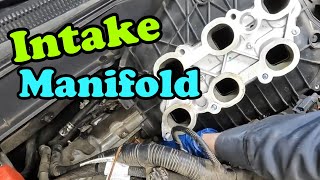
Typical fix: If bolts are loose, they should be removed, have threadlocker applied, and be re-torqued to specification (typically 18 lb-ft for the upper intake). If gaskets have failed, the intake manifold must be removed to replace them. 🎬 Watch: How to remove the intake manifold and replace gaskets
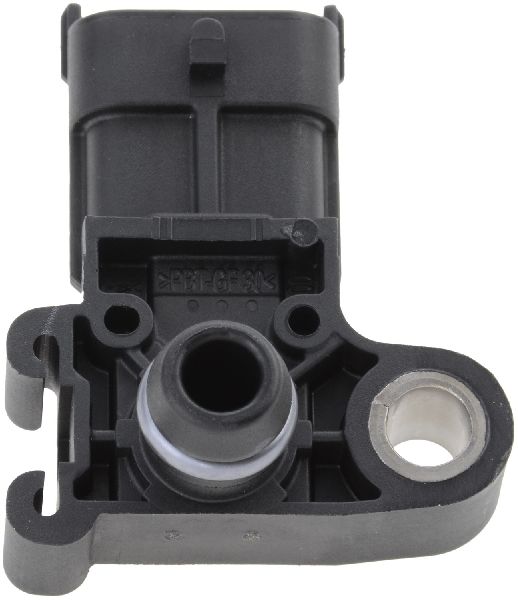
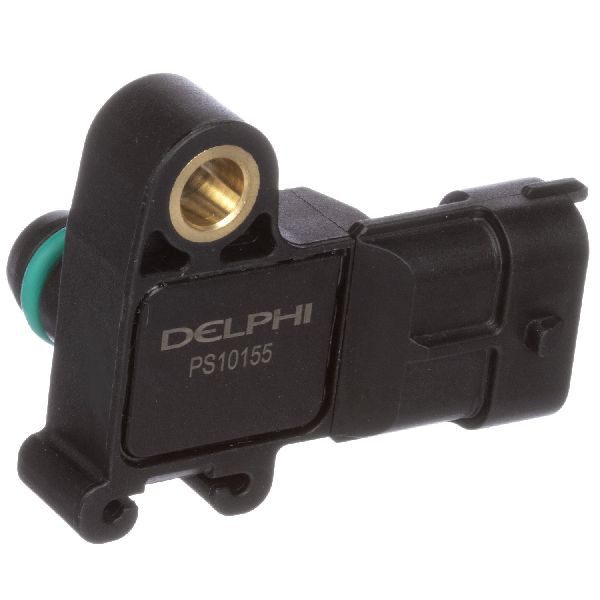
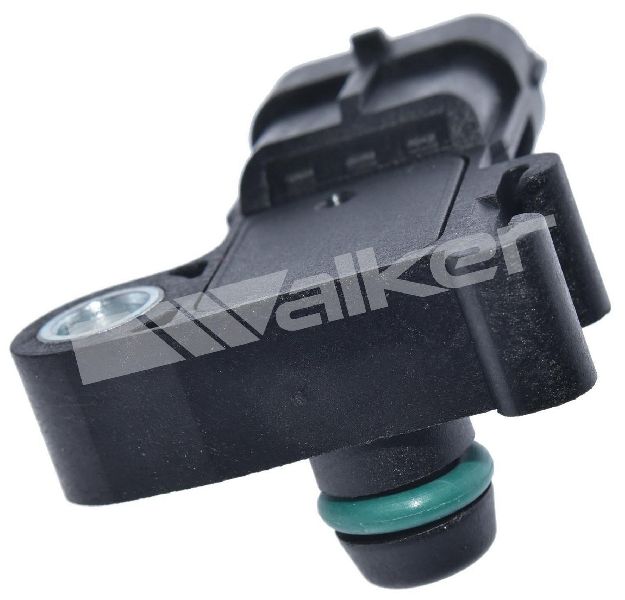
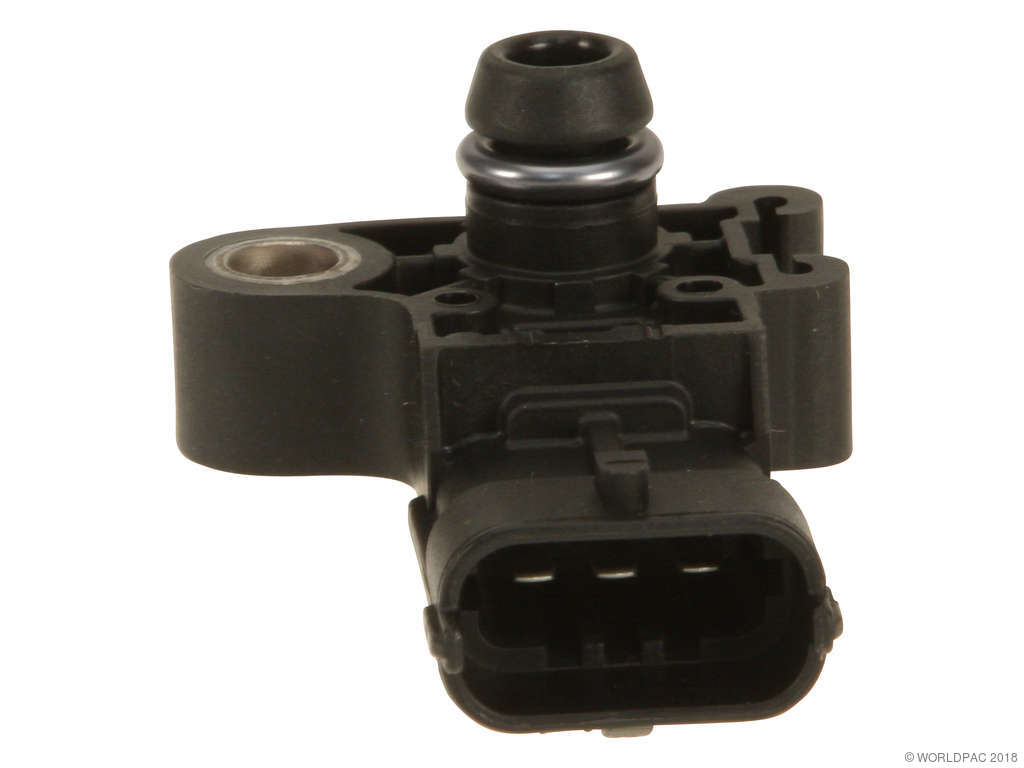
Est. part cost: $40-$100 - Faulty Manifold Absolute Pressure (MAP) Sensor 🟡 Medium Probability → Shop Manifold Absolute Pressure Sensor The sensor can become contaminated with oil or carbon from the intake, or it can fail electronically over time. It's a frequent point of failure, but should be tested after checking for dirt and leaks.
How to confirm: With a scan tool, monitor the MAP sensor voltage with the key on, engine off. It should read near your local barometric pressure (around 4.5-5.0 volts). At idle, it should show a strong vacuum (around 1.0-1.5 volts). Compare these readings to specifications. A faulty sensor may also have visible oil contamination.
Typical fix: Replace the MAP sensor. It is typically mounted on the intake manifold with one bolt and is easily accessible.
Est. part cost: $30-$80 - Faulty Mass Airflow (MAF) Sensor ⚪ Low Probability → Shop Fuel Injection Air Flow Meter The sensor's delicate wires can become contaminated by dirt or oil, especially if an aftermarket oiled air filter is used. This is less common than a dirty throttle body or vacuum leak.
How to confirm: Inspect the sensor wires for contamination. Use a scan tool to monitor airflow in grams/second and compare it to specified values at idle and various RPMs. A dirty sensor can often be cleaned.
Typical fix: First, try cleaning the sensor using only dedicated MAF sensor cleaner. Do not touch the sensor wires. If cleaning doesn't work and the sensor is confirmed faulty, replace the sensor.
Est. part cost: $15-$120
Rare But Worth Checking
- Clogged PCV System: A clogged or stuck PCV orifice/valve, particularly on the LLT engine's valve cover, can cause incorrect crankcase pressure, forcing oil into the intake and fouling the throttle body and sensors, leading to this code.
- Damaged Wiring or Connectors: Check the wiring harnesses for the MAP, MAF, and throttle body for any signs of chafing, corrosion, or loose pins, which can cause intermittent and incorrect signals. Pay close attention to the main engine grounds (e.g., G101 at the front of the block).
Diagnosis Steps
- Check for other stored trouble codes with an OBD-II scanner.
- Visually inspect the entire air intake system from the air filter to the throttle body for any cracks, loose clamps, or disconnected hoses.
- Remove the intake duct and inspect the throttle body bore and plate for carbon buildup.
- If carbon is present, clean the throttle body thoroughly. Disconnect the battery before cleaning to reset the throttle's learned position.
- Inspect the MAF sensor elements for any dirt or oil contamination. Clean with dedicated MAF cleaner if necessary.
- With the engine running, listen for any hissing sounds around the intake manifold that would indicate a vacuum leak.
- If a vacuum leak is suspected, carefully spray carb cleaner around the intake manifold gaskets and vacuum hoses. A spike in engine RPM will help locate the leak. For a more precise diagnosis, perform a smoke test.
- Use a scan tool to monitor live data for the MAP sensor (Volts), MAF sensor (g/s), and Throttle Position (%) at idle and while slowly opening the throttle. Look for any values that are erratic or do not change smoothly.
- Inspect the wiring and connectors for the MAP, MAF, and throttle body for any damage or corrosion. Check main engine ground connections.
Parts You'll Likely Need
- Throttle Body Assembly
(OEM #12670981)— Often replaced if cleaning does not resolve the issue, as the internal position sensors may have failed. This part number (12670981) supersedes older versions like 12632172, 12648415, and 12669016. Replacement requires a programming/relearn procedure.
Trusted brands: ACDelco, Bosch, Hitachi
OEM price range: $200-$300
Aftermarket price range: $100-$200 - Manifold Absolute Pressure (MAP) Sensor
(OEM #12591290)— This sensor is a common failure point and can get contaminated by oil. It's a relatively inexpensive and easy part to replace during diagnosis.
Trusted brands: ACDelco, Bosch, Delphi
OEM price range: $40-$70
Aftermarket price range: $20-$50 - Intake Manifold Gasket Set
(OEM #MS97204 (Fel-Pro))— Required if a vacuum leak is traced to the intake manifold seals. These gaskets are a known weak point on the 3.6L V6. Fel-Pro is a highly regarded aftermarket brand for this part.
Trusted brands: ACDelco, Fel-Pro, Mahle
OEM price range: $50-$80
Aftermarket price range: $30-$60
Related Codes That Often Appear With This One
- P0106 — This code for 'MAP Sensor Performance' is often triggered by the same vacuum leaks, PCV issues, or dirty throttle body that cause P0068.
- P0171 / P0174 — These codes for 'System Too Lean (Bank 1 / Bank 2)' are a direct result of a vacuum leak, which allows unmetered air into the engine and is a primary cause of P0068.
- P2101 — This code relates to 'Throttle Actuator Control Motor Circuit Range/Performance' and can be set if the ECM detects a problem with the throttle body's internal motor, often due to carbon buildup restricting its movement.
Technical Service Bulletins (TSBs) & Recalls
- TSB #PIP5529B (for other GM models, but relevant): Diagnostic Tip For P0068 And/Or P0106 And Possible Low Engine Vacuum Or Idle Fluctuation, points to loose intake manifold bolts.
- TSB #PIP4578B (for other GM models, but relevant): Recommends cleaning the throttle body as a first step for throttle-related codes. This bulletin specifically addresses idle surge and reduced engine power modes associated with P0068 on high mileage vehicles.
- Bulletin #PIP5529A: Provides additional diagnostics and repair to assist in resolving a malfunction indicator lamp illumination due to combinations of codes including P0068, P0101, and P0106.
Platform-Specific Known Issues
- Throttle Body Relearn Procedure: → Shop Fuel Injection Throttle Body After cleaning or replacing the throttle body, a relearn procedure is necessary. While some sources suggest disconnecting the battery or letting the car idle is sufficient, the official GM procedure often requires a specific sequence of key-on/key-off cycles or the use of a scan tool like a Tech2/GDS2 to perform an 'Idle Learn Reset'. Failing to do this can result in a high idle or the code returning immediately.
Mechanic-Grade Diagnostic Values
- Mass Airflow (MAF) Sensor Reading at Idle (Warm Engine) — expected: 3.6 to 4.5 g/s. Failure: A reading significantly lower than 3.6 g/s suggests a vacuum leak (unmetered air). A reading significantly higher (e.g., 7-8 g/s) can indicate a faulty sensor over-reporting airflow.
- Manifold Absolute Pressure (MAP) Sensor Voltage (Key On, Engine Off) — expected: ~4.5 - 5.0 Volts (should correspond to local barometric pressure). Failure: A voltage that is significantly different from the expected barometric pressure reading indicates a faulty sensor.
- Manifold Absolute Pressure (MAP) Sensor Voltage (Engine at Idle) — expected: ~1.0 - 1.5 Volts (indicating strong vacuum). Failure: A higher voltage at idle (e.g., > 2.0V) suggests a vacuum leak or a sensor that is not reading vacuum correctly.
Scan Tool Commands That Help
- GDS2 / Tech2: Idle Learn Reset — This function should be used after cleaning or replacing the throttle body. The ECM learns to compensate for carbon buildup over time, and if these learned values are not reset, the ECM may command an incorrect throttle angle, leading to a high idle or an immediate return of P0068.
- GDS2 / Tech2: Throttle Position Sweep Test — This bidirectional command allows a technician to command the throttle plate through its full range of motion while observing the TPS 1 and TPS 2 voltage readings on the scan tool. This can identify dead spots or erratic behavior in the throttle position sensors that may not be apparent during normal driving.
Wiring & Ground Locations
- G105 — On the LLT/LFX engine, this ground is often located at the left rear of the engine.. This is a critical ground point. A loose or corroded connection here can introduce electrical noise or voltage offsets to sensor signals, including the MAP and MAF sensors, corrupting the readings sent to the ECM.
- G106 — On the 3.6L engine, this ground is typically on the engine at the left front top corner.. Serves as a primary engine ground. A poor connection can cause a wide range of unpredictable electrical faults and sensor reading errors that could lead to a P0068 correlation code.
- MAP Sensor Connector — On the intake manifold.. The connector for the MAP sensor can become contaminated with oil or have its pins corrode. The typical 3-wire setup includes a 5V reference, a ground, and a signal wire. Verifying 5V and good ground at the connector is a key diagnostic step before replacing the sensor.
Real Owner Repair Stories
- Acadia Forum User (2011 GMC Acadia (same platform/engine)) — Check Engine Light with code P0068, rough idle, and hesitation.
❌ Tried (didn't work) Cleaned the throttle body, Cleaned the MAF sensor
✅ What actually fixed it The user found that the intake manifold bolts were loose. After torquing the bolts to the proper specification, the code was cleared and did not return. This confirms the issue described in GM TSB PIP5529.
OEM Part Supersession History
12632172, 12648415, 12669016, 12671015→12670981— GM regularly updates parts to integrate new materials, improve reliability, and address known failure modes. Later versions may have improved sealing or more robust internal electronics.
Heads up: While physically similar, earlier throttle bodies (e.g., for 2008-2011 models) may have different part numbers and are not interchangeable with the LFX-era parts due to software and connector differences. Always verify the part number by VIN.
Model Year Variations Within This Range
- 2008-2012 (LLT Engine): Uses an aluminum intake manifold and has a fixed PCV orifice integrated into the valve cover. This makes it prone to clogging, which requires valve cover replacement, a commonly missed cause of excessive oil in the intake.
- 2013-2017 (LFX Engine): Uses a composite (plastic) intake manifold, which can be susceptible to cracking. The PCV system design was revised, though it can still contribute to oil contamination of the intake.
Diagnostic Flowchart
Other Known Issues on This Vehicle
Issues unrelated to this code that are worth knowing about as an owner of this generation:
- Premature Timing Chain Stretch (LLT Engine) 🔴 High — Very common, especially on 2008-2012 models. Often occurs between 70,000 and 120,000 miles. Linked to long oil change intervals. (Ref: GM Special Coverage Adjustment 11340C extended warranty to 10 years/120,000 miles (now expired).)
- Cracked 3-5-R Wave Plate (6T70/6T75 Transmission) 🔴 High — Common on 2008-2009 models, causing sudden loss of 3rd, 5th, and Reverse gears. Can occur as early as 30,000-40,000 miles. (Ref: GM Special Coverage Adjustment 14404B extended warranty to 10 years/120,000 miles (now expired).)
- Power Steering Fluid Leaks / Pump Failure 🟠 Medium — Widespread issue where power steering fluid leaks from the rack, lines, or pump, often becoming noticeable around 45,000-85,000 miles. Can be exacerbated by cold weather. (Ref: Multiple TSBs exist, including 13-02-32-001G for cold weather issues and PIP5516A for leaks contaminating O2 sensors.)
- Water Pump Failure 🟠 Medium — Coolant leaks from the water pump weep hole are a common failure item, often requiring replacement between 60,000 and 100,000 miles.
Used vs. New Parts: Buying Guide for This Vehicle
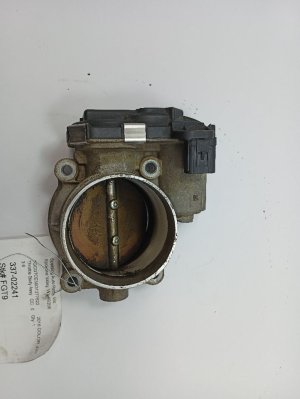
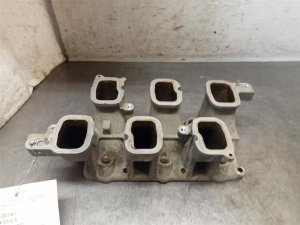
When a used part is the smart pick: A used throttle body from a low-mileage, late-model donor vehicle can be a cost-effective option, as they are generally reliable components if not contaminated. Intake manifolds (especially the aluminum LLT version) are also good candidates for used purchase if they are guaranteed to be free of cracks.
Donor-vehicle mileage cap: roughly under 75000 miles for the part to have meaningful remaining life.
What to inspect on the donor part:
- For a throttle body, inspect the bore for deep scoring or damage. Ensure the electrical connector is free of corrosion or broken pins.
- For an intake manifold, check all threaded holes for damage and inspect the body for any hairline cracks, especially around mounting points.
- Verify the donor vehicle's VIN to ensure it had the same engine (LLT vs. LFX) to guarantee compatibility.
OEM-only on this vehicle (don't cheap out):
- Manifold Absolute Pressure (MAP) Sensor
- Mass Airflow (MAF) Sensor
Aftermarket brands forum-validated for this vehicle:
- Fel-Pro for intake manifold gaskets.
- Bosch and Hitachi are often OEM suppliers for throttle bodies and sensors, making their aftermarket versions a reliable choice.
- Dorman offers OE FIX versions of the throttle body that claim to have improved seals to prevent future contamination.
Brands owners have reported issues with on this vehicle:
- Avoid unbranded, 'white-box' electronic sensors (MAP, MAF, TPS) as their calibration and longevity are often poor, leading to a quick return of the code.
Real Owner Stories
Aggregated from forums and TSBs cited above. Mileages and costs reflect what owners reported in those sources.
2008-2017 Buick Enclave 3.6L V6
Symptoms: The Check Engine Light came on with a P0068 code. The dealer quoted a high price for a full throttle body replacement.
What fixed it: Cleaning the throttle body thoroughly instead of replacing it.
Source hint: enclaveforum.net: 'P0068 code - dealer says throttle body'
2007-2016 GMC Acadia 3.6L V6
Symptoms: Code P0068 appeared on this platform-mate vehicle.
What fixed it: Cleaning the throttle body and checking for a cracked intake tube.
Source hint: acadiaforum.net: 'Code P0068'
2009-2017 Chevrolet Traverse 3.6L V6
Symptoms: The vehicle experienced P0068, P0171, and P0174 codes simultaneously.
What fixed it: Repairing a significant vacuum leak.
Source hint: traverseforum.com: 'P0068, P0171, P0174 - Help!'
Related OBD-II Codes
Frequently Asked Questions
Does TSB #PIP5529B apply to my Buick Enclave if I have a P0068 code?
The dealer wants to replace my throttle body for a P0068 code; is there a cheaper fix?
Is there a specific procedure I need to follow after cleaning the throttle body on my 3.6L Enclave?
Can I use any cleaner to fix the MAF sensor if it's causing the P0068 code?
Are the intake manifold gaskets a known issue for the Buick Enclave 3.6L V6?
Could my P0068 code be related to the timing chain issues common on the 2008-2012 LLT engines?
Helpful Videos
Used OEM Parts in Stock
New Aftermarket Parts Available


The information in this article is provided for general reference and educational purposes only. Vehicle specifications, procedures, and part compatibility can vary by production date, trim level, and region. Always consult your vehicle's factory service manual and verify part numbers before purchasing or performing repairs. Safety-critical components such as airbags, seat belts, and braking systems should be installed by a qualified professional.
- Buick Enclave:
- 🧭 Diagnostic Flowchart
- 🎬 Helpful Videos
- 🛍️ Shop This Part
- What's Unique About the 2008-2017 Buick Enclave
- Symptoms You May Notice
- Most Likely Causes
- Rare But Worth Checking
- Diagnosis Steps
- Parts You'll Likely Need
- Related Codes That Often Appear With This One
- Technical Service Bulletins (TSBs) & Recalls
- Platform-Specific Known Issues
- Mechanic-Grade Diagnostic Values
- Scan Tool Commands That Help
- Wiring & Ground Locations
- Real Owner Repair Stories
- OEM Part Supersession History
- Model Year Variations Within This Range
- Other Known Issues on This Vehicle
- Used vs. New Parts: Buying Guide for This Vehicle
- Real Owner Stories
- 2008-2017 Buick Enclave 3.6L V6
- 2007-2016 GMC Acadia 3.6L V6
- 2009-2017 Chevrolet Traverse 3.6L V6
- Related OBD-II Codes
- Frequently Asked Questions
- 🎟️ Get 5% Off