

P0068 on 2013-2019 Buick Encore 1.4L Turbo: MAP/Throttle Position Correlation Causes and Fixes
On the 1.4L Turbo Encore, P0068 is almost always caused by a major vacuum leak from a failed PCV system. This is a known issue involving a torn diaphragm in the valve cover and a failed check valve in the intake manifold. The most common fix is replacing the valve cover and inspecting/replacing the intake manifold or installing an aftermarket PCV fix kit. This issue is shared with platform mates like the Chevy Cruze, Sonic, and Trax.
- P0068 on this engine is almost always a symptom of a large vacuum leak, not a bad sensor.
- The most likely cause is a well-known failure of the PCV system, involving both the valve cover and the intake manifold.
- Always check for a hissing sound or strong vacuum at the oil cap before buying any parts; this is a free and highly effective diagnostic step.
- When replacing the valve cover for a torn PCV diaphragm, you MUST inspect the check valve in the intake manifold. If it's missing, the manifold must also be replaced or repaired to prevent the new valve cover from failing.
- Cleaning the throttle body is a good secondary step, but it is unlikely to be the root cause if a major PCV vacuum leak is present.
What's Unique About the 2013-2019 Buick Encore
The 1.4L Turbo engine (RPO: LUV) in the Buick Encore and its siblings (Chevy Cruze, Sonic, Trax) has a well-documented design flaw in its Positive Crankcase Ventilation (PCV) system that is the primary cause of code P0068. The issue is a two-part failure: a non-serviceable check valve inside the plastic intake manifold degrades, breaks, and gets ingested, which then allows high-pressure turbo boost to enter the crankcase. This boost pressure ruptures a rubber diaphragm in the valve cover, creating a massive, unmetered vacuum leak that the ECM cannot account for, leading directly to the sensor correlation fault.
Symptoms You May Notice
- Check Engine Light is on
- Rough, unstable, or high idle
- Hissing or whistling sound from the engine bay, especially at idle.
- Reduced engine power or 'limp mode'.
- Hesitation or stumbling during acceleration
- Engine may stall when coming to a stop
- Increased fuel consumption.
- Difficulty removing the oil fill cap with the engine running due to strong vacuum
- Long crank time or multiple attempts needed to start the engine after it has been sitting for a short period (20 mins - 3 hours).
- Replacing the MAP sensor without first checking for the common PCV system vacuum leak. The sensor is often correctly reporting the abnormal pressure caused by the leak.
- Replacing the throttle body or MAF sensor when the root cause is the PCV system failure.
- Replacing only the valve cover without addressing the missing check valve in the intake manifold, leading to a repeat failure of the new valve cover.
Most Likely Causes
- Failed PCV System (Torn Valve Cover Diaphragm and/or Failed Intake Manifold Check Valve) 🔴 High Probability This is a widely recognized design flaw in the GM 1.4L Turbo engine. The intake manifold has an internal, non-serviceable check valve that degrades and fails, allowing boost pressure to destroy the PCV diaphragm located in the valve cover, causing a large vacuum leak.
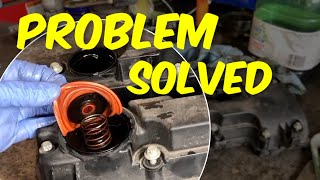
How to confirm: With the engine running, listen for a distinct hissing or whistling sound near the top of the engine. Try to remove the oil fill cap; if there is a very strong vacuum holding it down ('glove test'), the PCV diaphragm has failed. You can also place a piece of paper or plastic bag over the small vent hole on the PCV valve cap on the valve cover; if it gets sucked on, the diaphragm is torn. A visual inspection of the intake manifold port (after removing the throttle body) can confirm if the orange check valve is missing.
Typical fix: Replace the entire engine valve cover, as the diaphragm is not sold separately. Critically, you must also inspect the orange check valve inside the intake manifold. If it is missing, the intake manifold must be replaced to prevent the new valve cover from failing immediately. Alternatively, aftermarket PCV 'fix kits' (e.g., from CruzeKits.com) can be installed, which add an external check valve, bypassing the need to replace the entire intake manifold.
Est. part cost: $50-$150 for the valve cover, $150-$250 for the intake manifold, $60-$100 for an aftermarket PCV fix kit. - Dirty Throttle Body 🟡 Medium Probability → Shop Fuel Injection Throttle Body Oil vapors from the PCV system can deposit carbon and sludge (coke) on the throttle plate and bore over time. This buildup can restrict airflow at idle or cause the plate to stick, causing the throttle plate position to not correlate with the actual air entering the manifold.
How to confirm: Remove the air intake hose connected to the throttle body and visually inspect the throttle plate and bore for black, greasy buildup.
Typical fix: Clean the throttle body thoroughly with a dedicated throttle body cleaner and a soft cloth. A throttle relearn procedure may be required after cleaning.
Est. part cost: $10-$15 for cleaner. - Other Vacuum Leaks (Hoses, Gaskets) ⚪ Low Probability Plastic and rubber components in the engine bay degrade over time from heat cycles.
How to confirm: Perform a smoke test by introducing smoke into the intake system and watching for leaks from gaskets, seals, or vacuum hoses. Alternatively, you can carefully spray carb cleaner around suspected leak points with the engine running; a change in engine idle indicates a leak. A cracked PCV tube between the intake and turbo is another possible leak point.
Typical fix: Replace the cracked hose or failed gasket.
Est. part cost: $10-$50
Rare But Worth Checking
- Faulty Manifold Absolute Pressure (MAP) Sensor: → Shop Manifold Absolute Pressure Sensor While possible, this is less common than the physical PCV system failure. The code indicates a *correlation* problem, not necessarily a bad sensor. Only replace the sensor after confirming there are no vacuum leaks and the throttle body is clean.
- Damaged Wiring to MAP or Throttle Position Sensor: → Shop Fuel Injection Throttle Body Check the wiring harness and connectors for any visible damage, corrosion, or loose pins before replacing sensors. This is an uncommon but possible cause.
Diagnosis Steps
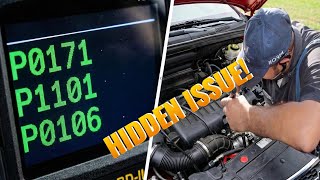
- Scan for any other accompanying trouble codes. Codes like P1101, P0171, and P0106 strongly point towards a vacuum leak from the PCV system.
- With the engine running, listen for an audible hissing or whistling sound from the top of the engine, near the PCV cap on the valve cover.
- Perform a 'glove test': With the engine running, attempt to remove the oil fill cap. If it is held on by strong vacuum or a glove placed over the opening gets sucked in, this confirms a failed PCV diaphragm in the valve cover.
- Visually inspect all accessible vacuum hoses for cracks or disconnection, including the PCV tube running from the intake manifold to the turbocharger.
- Remove the air intake duct and inspect the throttle body for heavy carbon buildup. Clean if necessary.
- If the valve cover diaphragm is confirmed bad, remove the throttle body and visually inspect the port in the intake manifold for the presence of the small, orange, circular check valve. If it is missing, the manifold must be replaced or an external check valve kit installed.
- If no obvious vacuum leak is found, perform a smoke test to check the intake manifold and associated hoses for hidden leaks.
- If all physical causes are ruled out, use a scan tool to monitor live data from the MAP and Throttle Position sensors to check for erratic or incorrect readings that would indicate a sensor failure. At idle, the throttle angle should be between 8-14%; a value below 8% suggests an unmetered air leak.
Parts You'll Likely Need
- Engine Valve Cover
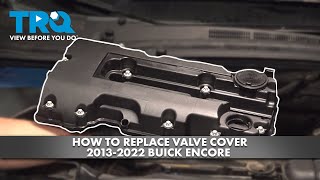
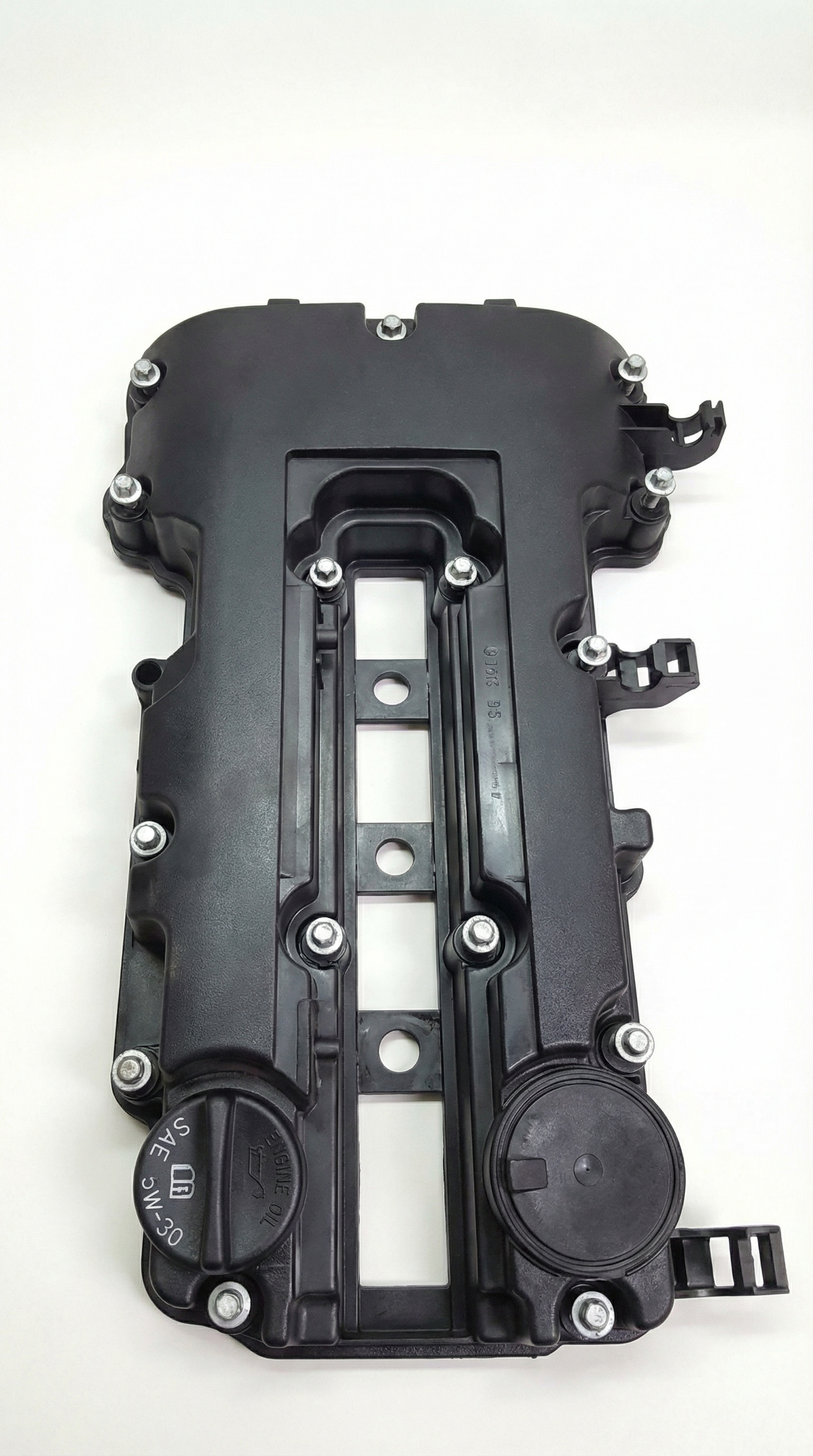
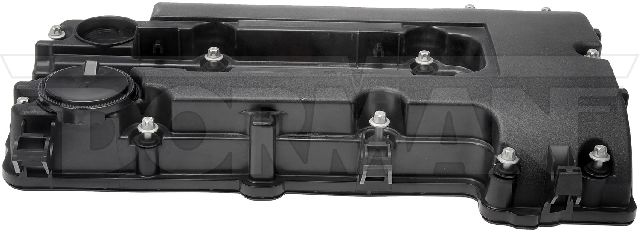
(OEM #25203036 (supersedes 25198877, 55573746), 25209141)— This is the most common failure point. The integrated, non-serviceable PCV diaphragm tears, causing a massive vacuum leak. The entire cover must be replaced. 🎬 See this step-by-step Buick Encore valve cover replacement walkthrough.
Trusted brands: ACDelco (GM Genuine), Dorman (264-968)
OEM price range: $80-$150
Aftermarket price range: $50-$90 - Intake Manifold
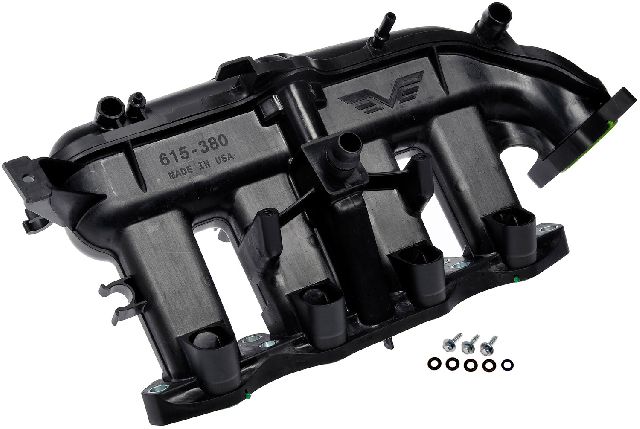
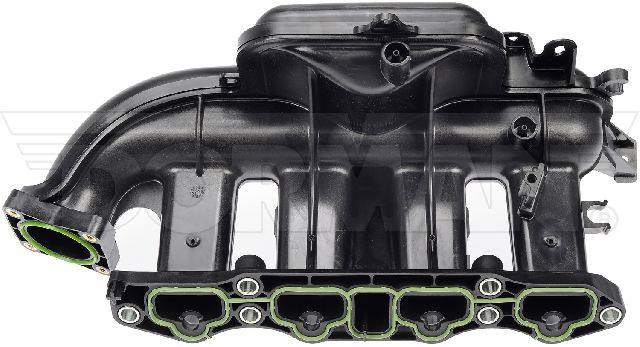
(OEM #25200449 (superseded by 55573746))— The internal check valve fails and gets ingested by the engine. This failure is the root cause that allows boost pressure to destroy the valve cover diaphragm. If this valve is missing, the manifold must be replaced to prevent repeat failures.
Trusted brands: ACDelco (GM Genuine), Dorman (615-380, which features a redesigned retaining pin for the valve)
OEM price range: $200-$250
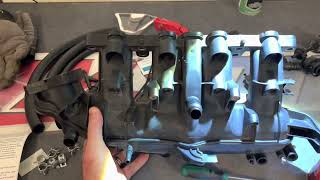
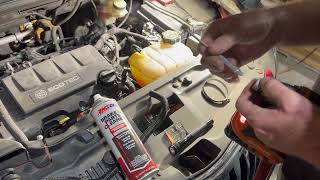
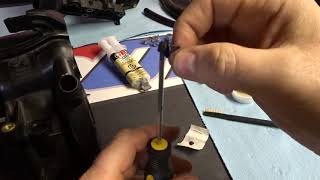
Aftermarket price range: $150-$200 - Aftermarket PCV Fix Kit — A popular and cost-effective alternative to replacing the entire intake manifold. These kits add a new, more robust check valve into the PCV hose, permanently bypassing the failed internal valve. 🎬 Watch: How to install a PCV fix kit yourself.
Trusted brands: CruzeKits.com
OEM price range: N/A
Aftermarket price range: $60-$100 - Manifold Absolute Pressure (MAP) Sensor
(OEM #55567257)
Related Codes That Often Appear With This One
- P1101 — P1101 (Intake Air Flow System Performance) is often triggered by the same unmetered air/vacuum leak 🎬 Watch: How to diagnose these common GM trouble codes. from the PCV system.
- P0171 — P0171 (System Too Lean) is caused by the large vacuum leak, which introduces excess air into the engine that the ECM cannot compensate for.
- P0106 — P0106 (Manifold Absolute Pressure/Barometric Pressure Circuit Range/Performance) directly relates to the abnormal readings from the MAP sensor caused by the vacuum leak.
- P0300 — P0300 (Random/Multiple Cylinder Misfire) can occur because the lean air/fuel mixture caused by the vacuum leak leads to unstable combustion.
Technical Service Bulletins (TSBs) & Recalls
- While no TSB is specifically for P0068 on the Encore, the root cause is widely documented. TSBs for other GM vehicles with similar engines, like #PIP4578B and #PIP5529B, address P0068 caused by throttle body coking or loose intake bolts, which are less common but possible on the Encore. A key document is NHTSA SB-10070046-0335, which details the PCV check valve failure for the Chevy Cruze, the same issue affecting the Encore.
- Manufacturer Bulletin #PIP5529A and #PIP5529B provide additional diagnostics and repair guidance for resolving MIL illumination involving P0068 and other codes like P0101, P0106, and P0171.
- Bulletin #PIP4578B notes that P0068 may be experienced on high mileage vehicles and can be associated with idle surge and reduced engine power mode.
Platform-Specific Known Issues
- The PCV system on the 1.4L Turbo engine is a known weak point. The failure of the intake manifold's internal check valve is a cascade failure that directly leads to the rupture of the valve cover's PCV diaphragm. Both components must be inspected and addressed for a lasting repair.
- GM issued warranty extensions for some vehicles to cover this specific PCV issue, but they are mileage and time-limited. Owners should check with a dealer for eligibility.
- Aftermarket solutions, such as the Dorman redesigned intake manifold (615-380) with a retaining pin for the check valve, or external PCV fix kits, have become popular and effective long-term repairs.
Mechanic-Grade Diagnostic Values
- MAP Sensor Voltage (Key On, Engine Off) — expected: ~4.0-4.9 Volts (at sea level). Failure: Voltage is significantly lower, indicating a sensor or wiring issue. Should match BARO sensor reading.
- MAP Sensor Voltage (Engine at Idle) — expected: 1.0 - 2.0 Volts. Failure: Voltage is stuck high (near the KOEO reading), which points to a massive vacuum leak like the common PCV failure.
- Throttle Position Sensor 1 (TPS1) Voltage — expected: ~0.4 - 0.8V at closed throttle, rising smoothly to ~4.5V at Wide-Open Throttle (WOT).. Failure: Voltage that jumps, drops out, or has dead spots as the throttle is slowly opened indicates a faulty sensor.
- Long Term Fuel Trim (LTFT) at idle — expected: Within +/- 10%. Failure: Sustained positive values of +20% or higher indicate the ECM is adding large amounts of fuel to compensate for unmetered air from a vacuum leak.
Scan Tool Commands That Help
- GDS2 / Professional Scan Tool: Idle Learn Reset / Throttle Learn — This is critical after cleaning or replacing the throttle body. The command erases old learned airflow adjustments and forces the ECM to relearn the new baseline idle characteristics, preventing the code from returning due to incorrect idle compensation.
Wiring & Ground Locations
- MAP Sensor Connector — Plugged directly into the intake manifold.. The MAP sensor has three wires: a 5-volt reference from the ECM, a ground wire, and a signal wire that sends voltage back to the ECM. A bad ground or a corroded connection on any of these wires can mimic a sensor failure or a vacuum leak, triggering P0068.
- Throttle Position Sensor Connector — On the side of the throttle body assembly.. Like the MAP sensor, the TPS relies on accurate voltage signals. Damage or corrosion at this connector can cause the ECM to receive incorrect throttle angle data, creating a mismatch with the MAP sensor's readings.
Real Owner Repair Stories
- Reddit user in /r/MechanicAdvice (2016 Buick Encore) — Burning smell and sputtering after a shop replaced the valve cover. Popped the hood to find oil had sprayed everywhere.
❌ Tried (didn't work) The shop initially replaced only the failed valve cover.
✅ What actually fixed it The issue reoccurred because the root cause, a failed check valve in the intake manifold, was not addressed. The user reported a second shop visit was needed for what was likely an intake manifold replacement, as another user with the same car confirmed their mechanic stated it's a common issue where both parts must be replaced together.
OEM Part Supersession History
25198877, 55573746→25203036— GM updated the valve cover assembly. While the specific improvements are not officially documented in public bulletins, it is the current replacement part for this known issue.GM OEM Intake Manifold (e.g., 25200449)→Dorman OE FIX 615-380— The Dorman aftermarket part was specifically redesigned to address the failure of the internal PCV check valve. It includes a retaining pin for the valve to prevent it from becoming dislodged, which is the root cause of the original part's failure.
Model Year Variations Within This Range
- 2016-2020: Starting in 2016, Buick offered an optional, newer 1.4L engine (RPO code LE2) with Spark Ignited Direct Injection (SIDI). This engine is identified by the 8th VIN digit 'M', while the standard LUV engine is VIN 'B'. The LE2 has a different fuel system and some different components, so it's important to verify which engine the vehicle has before ordering parts.
Diagnostic Flowchart
Used vs. New Parts: Buying Guide for This Vehicle
When a used part is the smart pick: A used intake manifold from a low-mileage donor vehicle can be a cost-effective option, but ONLY if the internal orange check valve can be visually confirmed to be present and in good condition. A used valve cover is NOT recommended.
Donor-vehicle mileage cap: roughly under 60000 miles for the part to have meaningful remaining life.
What to inspect on the donor part:
- For a used intake manifold, remove the throttle body and use a light to inspect the PCV port. The orange check valve must be visible, circular, and not appear brittle or damaged.
- Check the plastic body of the manifold for any hairline cracks, especially around mounting points and seams.
OEM-only on this vehicle (don't cheap out):
- While not strictly required, using an OEM (ACDelco) or a well-regarded aftermarket valve cover is highly recommended. Cheap, no-name valve covers often use inferior diaphragm material that can fail prematurely, leading to a repeat repair.
Aftermarket brands forum-validated for this vehicle:
- Dorman (615-380) for the intake manifold, as it features a redesigned check valve retainer.
- CruzeKits.com for their PCV 'fix kit', which is a well-regarded, robust alternative to replacing the intake manifold entirely.
Brands owners have reported issues with on this vehicle:
- Unbranded, low-cost valve covers from online marketplaces have a high rate of premature failure. A user review for a genuine GM part noted, "Don't buy the dorman valve cover for the chevy 1.4l turbo engine. They are junk," suggesting potential quality issues with that specific Dorman part, though Dorman's intake is well-regarded.
Real Owner Stories
Aggregated from forums and TSBs cited above. Mileages and costs reflect what owners reported in those sources.
Chevrolet Cruze 1.4L Turbo
Symptoms: Owner got a P0068 code after installing an aftermarket PCV fix kit.
What fixed it: The issue was resolved by ensuring all new connections from the PCV fix kit were secure and leak-free.
Source hint: Reddit r/cruze - PCV V 3.4 Fix Kit Aftermath
Related OBD-II Codes
Frequently Asked Questions
Is the PCV problem that causes P0068 on my Buick Encore a known issue?
My mechanic says I need a new valve cover. Is that the complete fix?
Are there any warranty extensions or TSBs for this specific PCV issue?
I've heard about aftermarket 'fix kits'. Are they a good option for my Encore?
How can I quickly check if my PCV diaphragm has failed at home?
Does the Chevrolet Trax have the same P0068 problem as my Encore?
What are the most common symptoms of P0068 on this engine besides the Check Engine Light?
Helpful Videos
Used OEM Parts in Stock
New Aftermarket Parts Available


The information in this article is provided for general reference and educational purposes only. Vehicle specifications, procedures, and part compatibility can vary by production date, trim level, and region. Always consult your vehicle's factory service manual and verify part numbers before purchasing or performing repairs. Safety-critical components such as airbags, seat belts, and braking systems should be installed by a qualified professional.
- Buick Encore:
- 🧭 Diagnostic Flowchart
- 🎬 Helpful Videos
- 🛍️ Shop This Part
- What's Unique About the 2013-2019 Buick Encore
- Symptoms You May Notice
- Most Likely Causes
- Rare But Worth Checking
- Diagnosis Steps
- Parts You'll Likely Need
- Related Codes That Often Appear With This One
- Technical Service Bulletins (TSBs) & Recalls
- Platform-Specific Known Issues
- Mechanic-Grade Diagnostic Values
- Scan Tool Commands That Help
- Wiring & Ground Locations
- Real Owner Repair Stories
- OEM Part Supersession History
- Model Year Variations Within This Range
- Used vs. New Parts: Buying Guide for This Vehicle
- Real Owner Stories
- Chevrolet Cruze 1.4L Turbo
- Related OBD-II Codes
- Frequently Asked Questions
- 🎟️ Get 5% Off