

P0068 on 2016-2017 Buick Envision: Causes for MAP/MAF & Throttle Position Mismatch
On a 2016-2017 Envision, code P0068 is often caused by loose intake manifold bolts, creating a vacuum leak. Check this before replacing parts, as per GM TSB #PIP5529B. The fix involves applying threadlocker and re-torquing the bolts to 22 Nm (16 lb-ft). Other common causes are a dirty throttle body or a faulty MAP sensor.
- Always check for loose intake manifold bolts first on a 2016-2017 Envision with code P0068, as specified in TSB #PIP5529B.
- A vacuum leak or a dirty throttle body are the next most likely causes. Do not replace sensors until these physical issues are ruled out.
- The code indicates a *correlation* problem, meaning the sensors are disagreeing. Your job is to find out why—is one sensor bad, or is there a physical problem (like a leak) causing one sensor to read something that doesn't make sense to the others?
- If multiple codes are present along with P0068 (especially P0101, P0106, P0171), the likelihood of the TSB-identified intake leak is very high.
What's Unique About the 2016-2017 Buick ENVISION
For the 2016-2017 Buick Envision, this code has a very specific and well-documented cause that can be easily missed. General Motors issued Technical Service Bulletin #PIP5529B, which directly links P0068 on both the 2.5L and 2.0L Turbo engines to loose intake manifold bolts. This creates a significant vacuum leak that the ECM cannot reconcile, often triggering a cascade of other codes. While dirty sensors or throttle bodies are common culprits on many vehicles, checking the intake bolt torque is a critical, platform-specific first step for this Envision and its platform mates like the Chevy Malibu and GMC Acadia.
Diagnostic Flowchart
Tap your situation to follow the diagnostic path that matches what you're seeing on this vehicle.
Symptoms You May Notice
- Check Engine Light is on
- Rough or unstable idle
- Hesitation or stumbling on acceleration
- Reduced engine power or 'limp mode'
- Engine may stall, especially when coming to a stop
- Increased fuel consumption
- Hissing sound from the engine bay
- Replacing the MAP or MAF sensor without first checking for vacuum leaks or cleaning the throttle body. The sensors are often correctly reporting the effects of a physical air leak, not failing themselves.
- Replacing the intake manifold gasket when only the bolts are loose. The TSB explicitly states the gasket is often reusable.
Most Likely Causes
- Loose Intake Manifold Bolts 🔴 High Probability → Shop Engine Intake Manifold This is a known issue documented by GM in Technical Service Bulletin #PIP5529B for the 2016-2017 Envision with both the 2.5L and 2.0L engines, as well as many other GM vehicles sharing these powerplants.
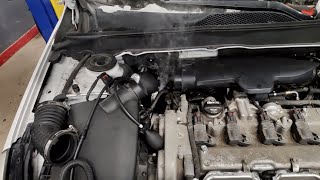
How to confirm: Check the torque of the intake manifold mounting bolts. 🎬 Watch: How to find and tighten loose intake manifold bolts. They are often found to be several turns loose. A hissing sound or using a smoke machine can also help detect the resulting vacuum leak. Physically trying to wiggle the intake manifold may reveal movement.
Typical fix: Per TSB #PIP5529B, remove one bolt at a time, apply medium-strength threadlocker (e.g., Loctite Blue 242/243), and torque all bolts in sequence to 22 Nm (16 lb-ft). The intake gasket typically does not need to be replaced unless it is damaged.
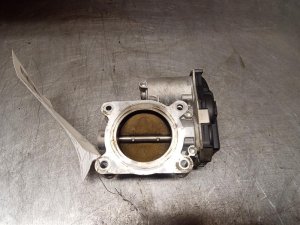
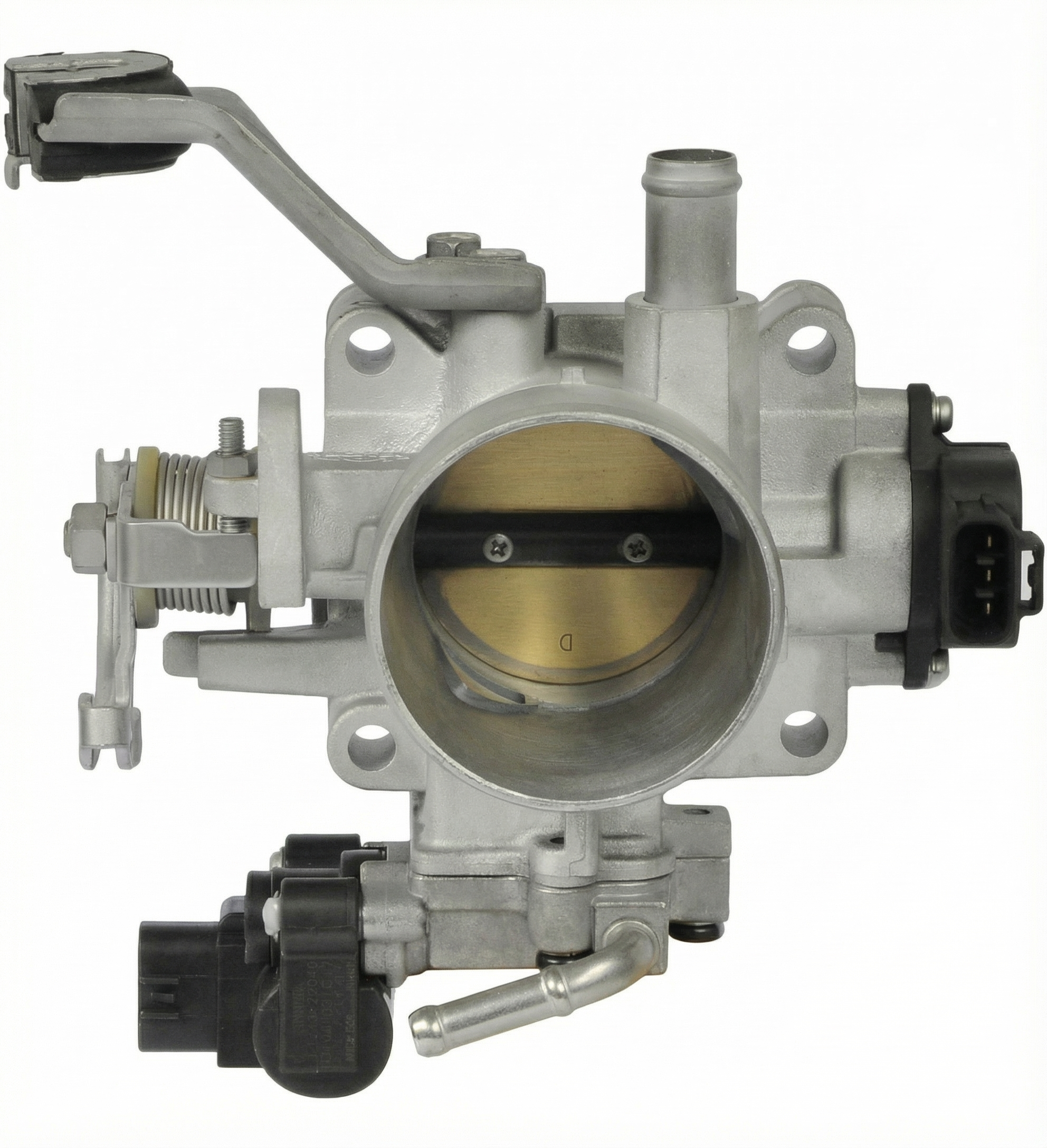
Est. part cost: $5-$15 for threadlocker - Dirty Throttle Body 🟡 Medium Probability → Shop Fuel Injection Throttle Body Direct injection engines can be prone to carbon buildup ('coke') in the intake path, which can accumulate on the throttle plate and bore, disrupting airflow and preventing the plate from sealing correctly at idle.
How to confirm: Remove the air intake duct from the throttle body and visually inspect the throttle plate and bore for a layer of black, greasy residue, especially on the side facing the intake manifold.
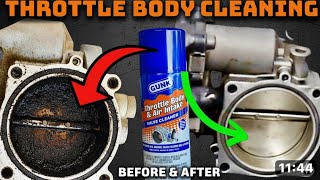
Typical fix: Clean the throttle body using a dedicated throttle body cleaner and a soft brush 🎬 Watch: The right way to clean your throttle body. or lint-free rag. Manually (and gently) open the throttle plate to clean the edges and bore. An idle relearn procedure may be necessary after cleaning.
Est. part cost: $10-$20 for cleaner - Other Vacuum Leaks 🟡 Medium Probability PCV hoses and other plastic/rubber components in the engine bay can become brittle and crack over time due to heat cycles.
How to confirm: Visually inspect all vacuum hoses and the air intake tube for cracks, loose fittings, or damage. With the engine running, listen for hissing sounds. A smoke test is the most definitive way to find a hidden leak.
Typical fix: Replace the cracked hose or leaking gasket. Ensure all clamps are tight.
Est. part cost: $10-$50 for hoses - Faulty Manifold Absolute Pressure (MAP) Sensor ⚪ Low Probability → Shop Manifold Absolute Pressure Sensor
How to confirm: Use a scan tool to monitor the MAP sensor reading at idle and with the key on, engine off. With the key on and engine off, the reading should be close to barometric pressure. At idle, it should drop significantly. Compare this to the MAF and TPS readings to spot the discrepancy. The sensor is often blamed when the real issue is a vacuum leak.
Typical fix: Replace the MAP sensor after definitively ruling out all possible air leaks.
Est. part cost: $40-$100
Rare But Worth Checking
- Faulty Mass Airflow (MAF) Sensor: → Shop Fuel Injection Air Flow Meter The MAF sensor is less likely to be the root cause than a vacuum leak or dirty throttle body, but it can fail or become contaminated, especially if an aftermarket oiled air filter is used. Cleaning it with dedicated MAF sensor cleaner is a good step before replacement.
- Damaged Wiring or Connectors: Before replacing any sensors, inspect the wiring harnesses and connectors for the MAP, MAF, and TPS for any corrosion, frayed wires, or loose pins.
Diagnosis Steps
- Scan for all stored DTCs. If codes like P0101, P0106, P0171, or P0506 are present with P0068, immediately suspect loose intake manifold bolts per TSB #PIP5529B.
- Perform a thorough visual inspection of the entire air intake system, from the air filter to the engine. Check for cracked, disconnected, or collapsed vacuum hoses.
- CRITICAL STEP: Check the intake manifold bolts for proper torque. They are often multiple turns loose. If loose, follow the TSB procedure: remove one bolt at a time, apply medium-strength threadlocker, and re-torque in sequence to 22 Nm (16 lb-ft).
- Remove the intake duct and inspect the throttle body for carbon buildup. If dirty, clean it thoroughly with throttle body cleaner.
- Inspect and clean the Mass Airflow (MAF) sensor using dedicated MAF sensor cleaner. Be careful not to touch the delicate sensor wires.
- If the problem persists, use a scan tool to monitor live data from the MAP, MAF, and Throttle Position (TPS) sensors. Watch for any readings that are erratic or do not change smoothly with engine RPM and throttle input.
- If a leak is still suspected but not visible, perform a smoke test on the intake system to pinpoint the source 🎬 See how to perform a smoke test to verify the repair. of the leak. Pay close attention to the intake manifold gasket area.
Parts You'll Likely Need
- Intake Manifold Absolute Pressure (MAP) Sensor
(OEM #12711681)— This sensor can fail and provide incorrect data, but it should only be replaced after ruling out vacuum leaks and a dirty throttle body. It is often misdiagnosed.
Trusted brands: ACDelco, Bosch, Delphi
OEM price range: $60-$90
Aftermarket price range: $30-$60 - Throttle Body Assembly
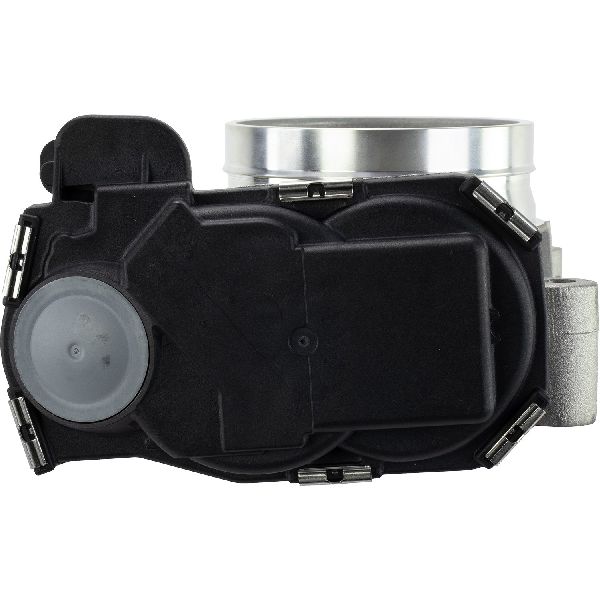
(OEM #12670839 (for 2.0L LTG), 12670981 (for 2.5L LCV))— In some cases, the electronic components of the throttle body fail and cleaning is not sufficient. Replacement is a last resort after thorough diagnosis.
Trusted brands: ACDelco, Standard Motor Products
OEM price range: $200-$350
Aftermarket price range: $100-$200 - Mass Airflow (MAF) Sensor
(OEM #23262344 (for 2.0L Turbo), 23262343 (for 2.5L))— Can become contaminated or fail, leading to incorrect airflow readings. Often misdiagnosed when a vacuum leak is the real issue.
Trusted brands: ACDelco, Denso
OEM price range: $100-$150
Aftermarket price range: $50-$90
Related Codes That Often Appear With This One
- P0101 — Mass Airflow (MAF) Sensor Performance. This code is often triggered alongside P0068 because a vacuum leak causes a discrepancy between what the MAF measures and what the ECM expects. It is specifically listed in TSB #PIP5529B.
- P0106 — Manifold Absolute Pressure (MAP) Sensor Performance. Similar to P0101, a vacuum leak causes the MAP sensor readings to be out of the expected range, triggering this code. It is also listed in TSB #PIP5529B.
- P0171 — System Too Lean (Bank 1). A vacuum leak introduces unmetered air into the engine, creating a lean air-fuel mixture. This is a direct consequence of the most common causes of P0068 and is listed in TSB #PIP5529B.
- P0506 — Idle Air Control System RPM Lower Than Expected. A dirty throttle body or vacuum leak can prevent the engine from maintaining its target idle speed, causing this code. It is also listed in TSB #PIP5529B.
Technical Service Bulletins (TSBs) & Recalls
- GM #PIP5529B: Stall, Hesitation, and multiple codes (P0068, P0101, P0106, P0171, etc.) caused by loose intake manifold bolts on LCV, LTG, and other engines. The official fix is to remove bolts one by one, apply medium-strength threadlocker, and torque to specification.
Platform-Specific Known Issues
- TSB #PIP5529B: This is the most critical issue for this vehicle and code. It states that on 2016-2017 Envision models with either the 2.5L LCV or 2.0L LTG engine (and many other GM models), a combination of codes including P0068 is frequently caused by loose intake manifold bolts. The official repair is to remove one bolt at a time, apply medium-strength threadlocker, and torque to 22 Nm (16 lb-ft). The intake gasket is not typically replaced.
Mechanic-Grade Diagnostic Values
- MAP Sensor 5V Reference Circuit — expected: 5.0V +/- 0.1V with Key On, Engine Off.. Failure: Voltage is missing, low, or high, indicating a problem with the ECM or wiring. May set a P0641 or P0651 code.
- MAP Sensor Signal Voltage (Key On, Engine Off) — expected: ~4.5V - 4.8V at sea level. Should be nearly identical to the Barometric Pressure (BARO) sensor reading on a scan tool.. Failure: Voltage is significantly different from the BARO reading or is stuck low (e.g., under 4.0V), suggesting a faulty sensor or wiring issue.
- MAP Sensor Signal Voltage (Engine at Idle) — expected: 1.0V - 1.5V for the 2.5L LCV (naturally aspirated) engine, indicating strong manifold vacuum.. Failure: Voltage is high (e.g., above 2.0V) at a stable idle, which is a strong indicator of a vacuum leak.
- Throttle Position Sensor (TPS) Voltage — expected: Smoothly sweeps from ~0.5V at closed throttle to ~4.5V at wide-open throttle.. Failure: Voltage jumps, has dead spots, or does not change smoothly as the throttle pedal is depressed, indicating a failing sensor.
Scan Tool Commands That Help
- GDS2 (GM Factory Tool): ECM Data Display > Compare 'Manifold Absolute Pressure Sensor' and 'Barometric Pressure Sensor' — With Key On, Engine Off, these two values should be nearly identical. A significant difference points to a faulty MAP sensor or wiring, rather than a vacuum leak.
- Professional Scan Tool (e.g., GDS2, Autel, iCarsoft): Idle Learn / Throttle Relearn — This function must be performed after cleaning or replacing the throttle body to reset the learned idle position in the ECM. Failure to do so can cause an unstable idle or stalling.
Wiring & Ground Locations
- MAP Sensor Connector — Directly on the MAP sensor, which is mounted on the intake manifold.. It is a 3-pin connector containing the 5V reference, ground, and signal wires. It should be inspected for corrosion, damage, or loose pins as a primary electrical check.
- ECM Connector X1, Pin 59 — On the Engine Control Module (ECM), located under the underhood fuse block.. On some GM models of this era, this is the specific pin for the MAP sensor signal. Probing this pin can confirm if the signal from the sensor is reaching the ECM correctly, helping to isolate a wiring fault.
- G103 Ground — Typically located on the cowl at the left rear of the engine compartment, above the brake booster.. This is a major ground point that services the Engine Control Module (ECM) and the Data Link Connector (DLC). A poor connection here can cause erratic sensor readings and communication issues.
Real Owner Repair Stories
- buickforums.com (2017 Envision) — Check Engine Light with codes P0068, P0171, P0106
❌ Tried (didn't work) Replaced MAP sensor
✅ What actually fixed it Dealer technician found and followed TSB #PIP5529B, tightening the intake manifold bolts to the correct torque specification, which resolved all codes.
"I Checked Everything" — The Actual Cause
- On GM turbo engines like the 2.0L LTG, it is possible for a smoke test to show no leaks, yet an unmetered air issue still exists. This can happen if a back-pressure valve in the PCV system fails or if an internal PCV orifice in the intake manifold becomes clogged. These faults can introduce unmetered air under specific boost or vacuum conditions that are not replicated during a standard, low-pressure smoke test.
When the Usual Fixes Don't Work
- While the most common causes of P0068 are vacuum leaks from loose intake bolts or a dirty throttle body, there are documented cases where these fixes do not resolve the issue. On the 2.0L Turbo engine, a critical point of failure can be the PCV system, which may not show a leak during a standard smoke test. A failed check valve or a torn diaphragm in the valve cover can introduce unmetered air only under certain load conditions, leading technicians to mistakenly replace sensors when the root cause is mechanical.
OEM Part Supersession History
12627217, 12669073→12670839— Part consolidation and design updates.
Heads up: This is for the 2.5L LCV engine. Using the correct, updated part number is crucial. Replacement requires a throttle relearn procedure.12612110, 12643955, 25202498→25203477— Updated MAP sensor design for the 2.0L LTG engine.12594942, 12644228, 12694725, 12701247→12711681— Part consolidation for the multi-purpose pressure sensor used as the MAP sensor on the 2.5L LCV engine and other applications.
Helpful Videos
Used OEM Parts in Stock
New Aftermarket Parts Available



The information in this article is provided for general reference and educational purposes only. Vehicle specifications, procedures, and part compatibility can vary by production date, trim level, and region. Always consult your vehicle's factory service manual and verify part numbers before purchasing or performing repairs. Safety-critical components such as airbags, seat belts, and braking systems should be installed by a qualified professional.
- Buick ENVISION:
- 🧭 Diagnostic Flowchart
- 🎬 Helpful Videos
- 🛍️ Shop This Part
- What's Unique About the 2016-2017 Buick ENVISION
- Symptoms You May Notice
- Most Likely Causes
- Rare But Worth Checking
- Diagnosis Steps
- Parts You'll Likely Need
- Related Codes That Often Appear With This One
- Technical Service Bulletins (TSBs) & Recalls
- Platform-Specific Known Issues
- Mechanic-Grade Diagnostic Values
- Scan Tool Commands That Help
- Wiring & Ground Locations
- Real Owner Repair Stories
- "I Checked Everything" — The Actual Cause
- When the Usual Fixes Don't Work
- OEM Part Supersession History
- 🎟️ Get 5% Off