

P0068 on 2016-2017 Buick Envision: MAP/MAF Throttle Position Correlation Causes and Fixes
On a 2016-2017 Envision, P0068 is most often caused by loose intake manifold bolts creating a vacuum leak. Before replacing any sensors, check and re-torque these bolts according to GM TSB #PIP5529B. This simple mechanical check often resolves the issue, especially if codes like P0171 or P0106 are also present.
- For a 2016-2017 Buick Envision, check for loose intake manifold bolts FIRST when you see code P0068, as per GM TSB #PIP5529B.
- This is a 'correlation' code, meaning the problem is often a mechanical issue (like a vacuum leak) that makes the sensors disagree, not a faulty sensor itself.
- Do not replace any sensors until you have ruled out vacuum leaks and a dirty throttle body.
- Driving with this code can be risky, as the engine may stall or enter a low-power 'limp mode' unexpectedly.
What's Unique About the 2016-2017 Buick Envision
For the 2016-2017 Buick Envision, this code is frequently not a sensor failure but a specific mechanical issue. GM released Technical Service Bulletin (TSB) #PIP5529B which identifies loose intake manifold bolts as a common culprit for a wide range of codes, including P0068. This creates a vacuum leak that causes the sensor readings to conflict. Owners and technicians should always check for this specific TSB-related issue before assuming a sensor is bad, as it also affects numerous platform mates like the Chevrolet Malibu and Cadillac ATS.
Symptoms You May Notice
- Check Engine Light is on
- Rough or unstable idle.
- Hesitation or stumbling during acceleration.
- Reduced engine power or 'limp mode'.
- Engine may stall, especially when coming to a stop.
- Increased fuel consumption.
- Hissing sound from the engine bay, indicating a vacuum leak.
- Replacing the MAP, MAF, or Throttle Position Sensor without first checking for the TSB-related intake bolt issue or other vacuum leaks. The code indicates a correlation problem, which is often caused by a mechanical issue (like a leak) rather than a failed sensor.
Most Likely Causes
- Loose Intake Manifold Bolts 🔴 High Probability → Shop Engine Intake Manifold This is a known issue documented in GM Technical Service Bulletin #PIP5529B (and later versions) for this specific vehicle and a wide range of other GM models using the 2.5L LCV and 2.0L LTG engines. The plastic intake manifold's thermal expansion rate differs from the aluminum cylinder head, causing the bolts to loosen over time.
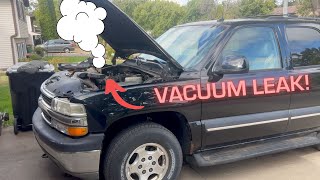
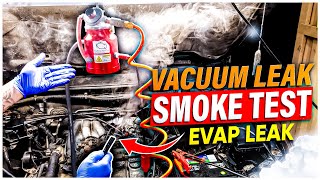
How to confirm: Physically check the torque on the intake manifold bolts; they may be several turns loose. A smoke test will definitively show a leak at the manifold gasket 🎬 Watch: How to find vacuum leaks using a smoke or spray test. if the bolts are loose. This cause is highly likely if P0068 is accompanied by codes P0171, P0106, P0101, or P0506.
Typical fix: Apply medium-strength threadlocker (like Loctite Blue 242) to the bolt threads and re-torque them to the factory specification of 22 Nm (16 lb-ft). The bolts should be addressed one at a time to avoid shifting the manifold. The gasket typically does not need to be replaced.
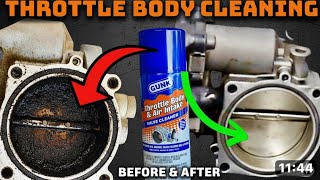
Est. part cost: $5-$15 (for threadlocker) - Dirty Throttle Body 🟡 Medium Probability → Shop Fuel Injection Throttle Body Carbon and oil vapor from the PCV system can build up around the throttle plate over time, restricting airflow at idle and causing the plate's actual position to not match what the sensor reports. This is a common issue on many modern direct-injection engines.
How to confirm: Remove the air intake tube connected to the throttle body and visually inspect for a ring of black carbon buildup ('coke') around the throttle plate and bore. A scan tool may show a high throttle angle percentage at idle (e.g., over 10-15%) as the ECM holds the plate open to compensate for the restriction.
Typical fix: Clean the throttle body bore and plate with a dedicated throttle body cleaner and a soft cloth. An idle relearn procedure may be required after cleaning.
Est. part cost: $10-$20 (for cleaner) - Other Vacuum Leaks (e.g., PCV Hoses) 🟡 Medium Probability
How to confirm: Perform a smoke test to find the source of the unmetered air. Listen for hissing sounds around the engine bay. Common leak points include cracked PCV hoses (especially on the 2.0L LTG engine), intake gaskets, and vacuum lines.
Typical fix: Replace the cracked hose, failed gasket, or faulty component that is causing the leak. The PCV hose on the 2.0L LTG often becomes brittle and cracks.
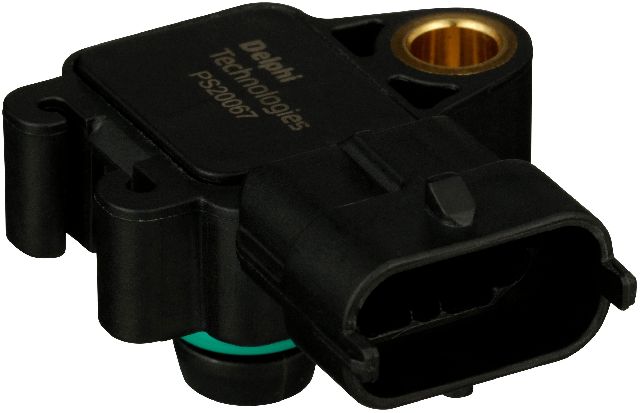
Est. part cost: $20-$100 - Faulty Manifold Absolute Pressure (MAP) Sensor ⚪ Low Probability → Shop Manifold Absolute Pressure Sensor
How to confirm: Use a scan tool to monitor the MAP sensor voltage with the key on, engine off (KOEO). It should be around 4.5-4.8V at sea level and correlate with local barometric pressure. At idle, voltage should drop to 1.0-1.5V for the 2.5L engine. Compare its live data readings to specifications; erratic or stuck values indicate failure.
Typical fix: Replace the MAP sensor. It is typically located on the intake manifold and secured by a single bolt.
Est. part cost: $40-$120
Rare But Worth Checking
- Faulty PCV System (2.0L LTG Turbo Engine): On the 2.0L turbo engine, a failed internal check valve or a torn diaphragm in the valve cover's integrated PCV system can introduce unmetered air under specific load or boost conditions. This may not be detectable with a standard smoke test at idle but can be a root cause if other fixes fail. The fix often requires replacing the entire valve cover assembly.
- Damaged wiring or poor connection: Corrosion or damage to the wiring or connectors for the MAP, MAF, or Throttle Position sensors can cause intermittent or incorrect signals. A thorough visual inspection of the harnesses near the sensors is recommended.
Diagnosis Steps
- Check for Technical Service Bulletins (TSBs). Specifically, check for TSB #PIP5529B (or newer versions like PIP5529D) regarding loose intake manifold bolts.
- Inspect the intake manifold bolts to see if they are loose. If so, remove one bolt at a time, apply medium-strength threadlocker, and torque to specification (22 Nm / 16 lb-ft). Clear codes and re-test.
- If bolts are tight, perform a smoke test to check for other vacuum leaks in the intake system, including all PCV hoses and the air intake duct.
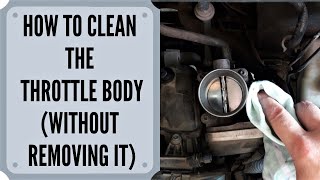
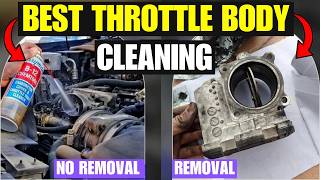
- If no leaks are found, inspect the throttle body for carbon buildup. Clean it thoroughly with appropriate cleaner if it is dirty. 🎬 See this step-by-step guide for cleaning your throttle body properly. Perform an idle relearn procedure if necessary.
- Using a scan tool, monitor the live data from the MAP, MAF, and Throttle Position sensors. Ensure their readings are plausible and respond correctly to changes in engine speed and load. Check MAP voltage KOEO (should be ~4.5V) and at idle (should be ~1.0-1.5V).
- If a sensor provides an erratic or fixed reading, inspect its wiring and connector for damage or corrosion before deciding to replace the sensor itself.
- For the 2.0L LTG engine, if no vacuum leaks are found and the issue persists, investigate the integrated PCV system in the valve cover for internal failures.
- If all other possibilities are exhausted, the issue may be a faulty sensor or, rarely, the ECM itself.
Parts You'll Likely Need
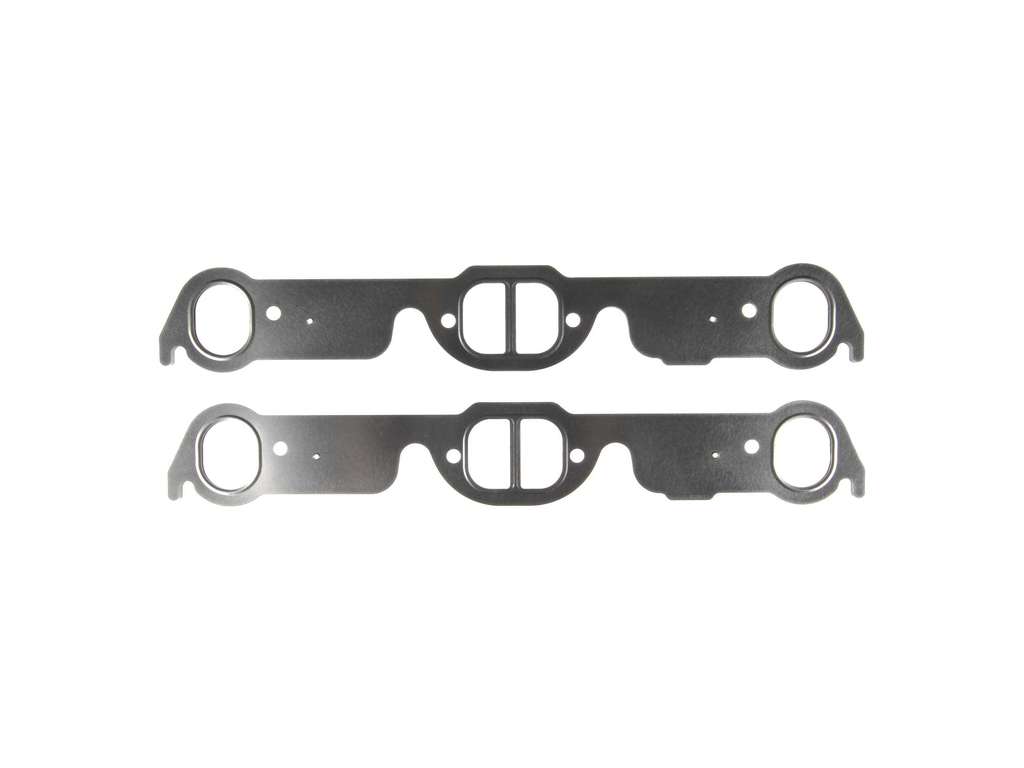
- Intake Manifold Gasket
(OEM #ACDelco 12637683)— While TSB #PIP5529B states replacement is often not necessary, if the intake manifold bolts were loose for an extended period or if the manifold is removed for other service, the gasket may have been damaged and could be the source of a vacuum leak.
Trusted brands: ACDelco, Fel-Pro
OEM price range: $30-$60
Aftermarket price range: $15-$40 - Manifold Absolute Pressure (MAP) Sensor
(OEM #ACDelco 12644228 (fits many 2.0L/2.5L models))— If mechanical issues and leaks are ruled out, the MAP sensor itself may have failed and is providing incorrect data to the ECM. This is a common replacement part after the primary causes are eliminated.
Trusted brands: ACDelco, Bosch, Delphi
OEM price range: $60-$120
Aftermarket price range: $40-$80 - Throttle Body Cleaner — A dirty throttle body is a common cause of this code, and cleaning it is a primary diagnostic and repair step.
Trusted brands: CRC, Permatex, Gumout
Aftermarket price range: $10-$20
Related Codes That Often Appear With This One
- P0171 — System Too Lean (Bank 1). A vacuum leak, which is a primary cause of P0068, allows unmetered air into the engine, 🎬 Watch: Using a smoke machine to fix rough idle and P0171 codes. creating a lean condition that triggers both codes. TSB #PIP5529B groups these codes together.
- P0106 — Manifold Absolute Pressure/Barometric Pressure Circuit Range/Performance. This code points directly to an issue with the MAP sensor's signal, which is a key input for the P0068 calculation. A large vacuum leak will cause both codes to set.
- P0101 — Mass Air Flow (MAF) Circuit Range/Performance. This indicates a problem with the MAF sensor signal, another key input for the P0068 check. A significant air leak after the MAF sensor is a common cause for both codes.
- P0506 — Idle Air Control System RPM Lower Than Expected. The ECM may struggle to control idle speed due to the unmetered air from a vacuum leak, triggering this code alongside P0068. It is also listed in TSB #PIP5529B.
Technical Service Bulletins (TSBs) & Recalls
- PIP5529B: Diagnostic Tip For P0068 And/Or P0106 And Possible Low Engine Vacuum Or Idle Fluctuation. This bulletin provides additional diagnostics and repair to assist in resolving a malfunction indicator lamp illumination due to any combination of diagnostic trouble codes including P0068, P0101, P0106, P0171, P0131, P0137, P0324, P0326, P0331, and P0506.
- PIP5529A: An earlier manufacturer service bulletin that also addresses MIL illumination due to combinations of P0068 and related codes like P0101, P0106, and P0171.
- PIP5529D: An updated version of the same bulletin, confirming the issue persists across multiple model years and platforms.
Platform-Specific Known Issues
- GM TSB #PIP5529B specifically calls out loose intake manifold bolts as a cause for P0068 on this platform. This TSB covers a wide range of GM vehicles and engines, indicating a systemic design issue.
- On the 2.0L LTG Turbo engine, cracked plastic PCV hoses are another very common failure point that can cause P0068 and other lean/airflow codes.
Mechanic-Grade Diagnostic Values
- MAP Sensor Signal Voltage (Key On, Engine Off) — expected: ~4.5V - 4.8V at sea level, should be nearly identical to BARO sensor reading.. Failure: Voltage is significantly different from BARO reading or stuck low (e.g., < 4.0V).
- MAP Sensor Signal Voltage (Engine at Idle, Warm) — expected: 1.0V - 1.5V for 2.5L LCV engine.. Failure: Voltage remains high (e.g., > 2.0V), indicating a vacuum leak.
- MAP Sensor 5V Reference Circuit — expected: 5.0V +/- 0.1V with Key On, Engine Off.. Failure: Voltage is missing, low, or high. May set a P0641 or P0651 code.
- Throttle Position Sensor (TPS) Voltage — expected: Smoothly sweeps from ~0.5V at closed throttle to ~4.5V at wide-open throttle.. Failure: Jerky, erratic, or non-responsive voltage change when pressing the pedal.
- Long Term Fuel Trim (LTFT) at Idle — expected: Close to 0%, ideally within +/- 10%.. Failure: Consistently high positive value (e.g., > +15% to +25% or higher) strongly suggests a vacuum leak.
- High-Pressure Fuel Rail Pressure (Direct Injection Engines) — expected: ~750 psi at idle, rising to over 2,250 psi at wide-open throttle.. Failure: Pressure that is significantly lower than specified, especially under load, points to a fuel delivery issue, not an air measurement problem.
Scan Tool Commands That Help
- GDS2 / Tech2: Fuel Trim Reset — After repairing a vacuum leak or replacing a fuel system component, this command forces the ECM to relearn the fuel strategy immediately, confirming the fix much faster than waiting for the long-term trims to adjust over several drive cycles.
- GDS2 / Tech2: Throttle/Idle Learn — Required after cleaning or replacing the throttle body. This function resets the learned idle airflow values. Failure to perform this can cause an unstable idle and may re-trigger P0068 or set other throttle-related codes.
- Any Professional Scan Tool: Graphing MAP vs. MAF vs. TPS vs. RPM — Simultaneously graphing these four parameters allows a technician to visually spot the exact moment the correlation fails. For example, seeing the MAP reading fail to drop as RPMs increase with a steady throttle opening can pinpoint the fault.
Wiring & Ground Locations
- MAP Sensor Connector — Directly on the MAP sensor, which is mounted on the intake manifold.. This is a 3-pin connector. Pin A is typically ground (Black/White), Pin B is the signal (Yellow or Light Green), and Pin C is the 5V reference (Orange). Corrosion or backed-out pins here will directly cause sensor failure codes.
- G103 / G107 Ground — Typically located on the cowl at the left rear of the engine compartment, or on the rear/side of the cylinder head.. These are major ground points for the Engine Control Module (ECM). A loose or corroded connection here can cause erratic voltage and faulty readings for multiple sensors, including the MAP, leading to correlation codes like P0068.
- ECM Connector (e.g., X1) — The ECM is located under the underhood fuse block.. The MAP sensor signal wire (often Light Green) runs to a specific pin on one of the main ECM connectors (e.g., Pin 19 on some diagrams). Damage to the harness near the ECM or a corroded pin at the connector can cause a loss of signal.
Real Owner Repair Stories
- Chevrolet Forum user 'GO Auto' (2013 Chevrolet Malibu 2.5L (platform mate with same engine and issue)) — Rough Idle, Stalling, Check Engine Light.
❌ Tried (didn't work) The user, a mobile diagnostician, noted that shops often replace VVT solenoids, O2 sensors, and even the BCM module without success.
✅ What actually fixed it The primary cause was loose intake manifold bolts. This was confirmed by checking for high fuel trims (>10 at idle) with a scan tool and then physically checking the manifold for looseness.
"I Checked Everything" — The Actual Cause
- According to GM TSB #PIP5529B and related diagnostic articles, a vehicle (especially with the 2.0L LTG engine) can sometimes pass a static smoke test but still have a vacuum leak causing P0068. The actual cause is loose intake manifold bolts, and the leak may only become significant under specific engine vacuum and vibration conditions not replicated by a simple smoke test at idle. The definitive fix is to re-torque the bolts with threadlocker, not just rely on the smoke test result.
OEM Part Supersession History
12594942→12644228— Unknown, likely an internal revision for improved reliability or manufacturing.
Heads up: The new part number (12644228) is the correct replacement and is fully compatible.
Model Year Variations Within This Range
- 2016: The 2016 model year was only available with the 2.0L LTG turbocharged engine.
- 2017: The 2017 model year introduced the 2.5L LCV naturally aspirated engine as the base option, alongside the 2.0L LTG. While P0068 applies to both, the specific vacuum leak points can differ (e.g., PCV hose assembly is a more common failure on the 2.0L LTG).
Diagnostic Flowchart
Used vs. New Parts: Buying Guide for This Vehicle
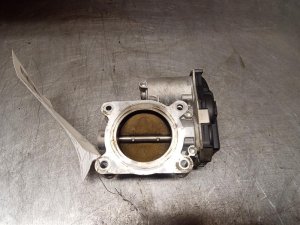
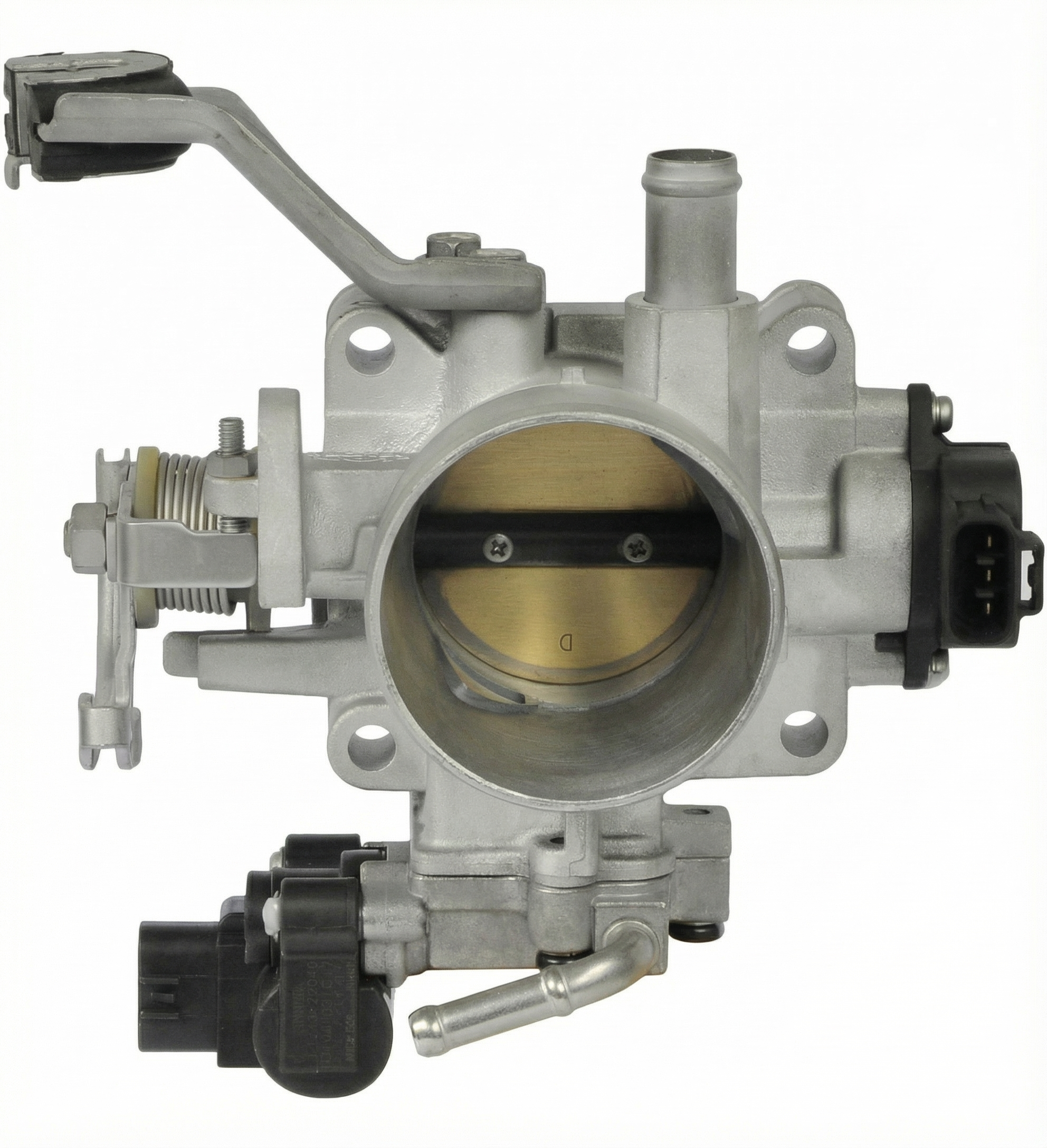
When a used part is the smart pick: A used throttle body or intake manifold can be a cost-effective choice if the original is physically cracked or damaged. These parts have no internal wear components that are likely to fail, aside from the electronics on the throttle body.
Donor-vehicle mileage cap: roughly under 80000 miles for the part to have meaningful remaining life.
What to inspect on the donor part:
- For a throttle body, ensure the electrical connector pins are clean and straight, and the throttle plate moves smoothly without binding.
- For an intake manifold, inspect carefully for any hairline cracks, especially around bolt holes and seams.
- Verify the donor vehicle did not have a catastrophic engine failure or fire.
OEM-only on this vehicle (don't cheap out):
- Manifold Absolute Pressure (MAP) Sensor: Aftermarket sensors are notoriously problematic and can cause repeat codes or poor performance. It is strongly recommended to use an OEM ACDelco or a direct OE supplier like Bosch or Delphi.
Aftermarket brands forum-validated for this vehicle:
- Fel-Pro for intake manifold gaskets.
- Bosch or Delphi for MAP sensors if an ACDelco part is unavailable.
Brands owners have reported issues with on this vehicle:
- Avoid unbranded, 'white-box' electronic sensors (like MAP or TPS) from online marketplaces, as they have a high failure and out-of-box defect rate.
Real Owner Stories
Aggregated from forums and TSBs cited above. Mileages and costs reflect what owners reported in those sources.
2016 Buick Envision 2.5L LCV
Symptoms: The check engine light came on with code P0068, and the engine had a rough, fluctuating idle. There was also a noticeable loss of power.
What fixed it: The issue was caused by loose intake manifold bolts, a known problem. The fix was to remove each bolt one at a time, apply medium-strength threadlocker, and re-torque them to 22 Nm (16 lb-ft).
Cost: $5-$15
Source hint: TSB #PIP5529B: Diagnostic Tip For P0068 And/Or P0106 And Possible Low Engine Vacuum Or Idle Fluctuation
2017 Buick Envision 2.0L LTG
Symptoms: Check engine light was on, engine was hesitating during acceleration, and there was a faint hissing sound coming from the engine bay.
What fixed it: A smoke test revealed a vacuum leak from a cracked plastic PCV hose, which is a common failure point on the 2.0L turbo engine. Replacing the brittle hose resolved the code.
Cost: $20-$100
Source hint: Vehicle-specific issue noted for 2.0L LTG Turbo engine in article context.
Related OBD-II Codes
Frequently Asked Questions
Is there a known issue or TSB for a P0068 code on my 2016 Buick Envision 2.5L?
What is the most likely fix for P0068 on my Envision if I'm also getting a P0171 code?
I have the 2.0L Turbo engine in my 2017 Envision. Besides the intake bolts, what else is a common cause for P0068?
What are the torque specs for the intake manifold bolts mentioned in TSB PIP5529B?
How can I confirm my MAP sensor is working correctly on my Envision?
My mechanic wants to replace the intake manifold gasket. Is this necessary for the loose bolt issue?
Helpful Videos

Used OEM Parts in Stock
New Aftermarket Parts Available



The information in this article is provided for general reference and educational purposes only. Vehicle specifications, procedures, and part compatibility can vary by production date, trim level, and region. Always consult your vehicle's factory service manual and verify part numbers before purchasing or performing repairs. Safety-critical components such as airbags, seat belts, and braking systems should be installed by a qualified professional.
- Buick Envision:
- 🧭 Diagnostic Flowchart
- 🎬 Helpful Videos
- 🛍️ Shop This Part
- What's Unique About the 2016-2017 Buick Envision
- Symptoms You May Notice
- Most Likely Causes
- Rare But Worth Checking
- Diagnosis Steps
- Parts You'll Likely Need
- Related Codes That Often Appear With This One
- Technical Service Bulletins (TSBs) & Recalls
- Platform-Specific Known Issues
- Mechanic-Grade Diagnostic Values
- Scan Tool Commands That Help
- Wiring & Ground Locations
- Real Owner Repair Stories
- "I Checked Everything" — The Actual Cause
- OEM Part Supersession History
- Model Year Variations Within This Range
- Used vs. New Parts: Buying Guide for This Vehicle
- Real Owner Stories
- 2016 Buick Envision 2.5L LCV
- 2017 Buick Envision 2.0L LTG
- Related OBD-II Codes
- Frequently Asked Questions
- 🎟️ Get 5% Off