

P0068 on 2014-2017 Buick Regal: MAP/MAF - Throttle Position Correlation Fixes
On a 2014-2017 Buick Regal, code P0068 is most often caused by a vacuum leak, a dirty throttle body, or a faulty Manifold Absolute Pressure (MAP) sensor. A less common but notable cause on this platform is loose intake manifold bolts. Start by checking for cracked hoses and cleaning the throttle body before replacing any parts.
- P0068 means the engine's computer is getting conflicting information about airflow from its key sensors.
- Before buying any parts, always start by inspecting for vacuum leaks and cleaning the throttle body. These are the most common and cheapest fixes.
- A faulty MAP sensor is a likely culprit if cleaning and leak checks don't solve the problem. The ACDelco part number is 12643955.
- This code is often accompanied by other codes. Referencing TSB PIP5529B can be helpful if you have multiple codes stored.
What's Unique About the 2014-2017 Buick REGAL
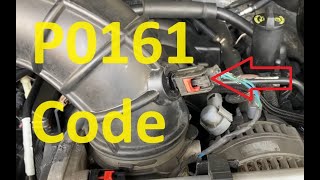
The Buick Regal of this era uses direct-injection engines (2.0L Turbo and 2.4L), which can be more susceptible to carbon buildup in the intake system. This buildup can interfere with the operation of the throttle body, making it a common cause for the P0068 code 🎬 Watch this video to understand how the P0068 code works. on this specific vehicle. Additionally, GM has issued Technical Service Bulletin PIP5529B which identifies that loose intake manifold bolts can cause a significant vacuum leak, leading to P0068 and a host of other related codes. This bulletin suggests the issue is prevalent enough across several GM models with these engines to warrant a specific diagnostic check.
Diagnostic Flowchart
Tap your situation to follow the diagnostic path that matches what you're seeing on this vehicle.
Symptoms You May Notice
- Check Engine Light is on
- Rough or unstable idle
- Hesitation or stumbling during acceleration
- Reduced engine power or 'limp mode'
- Engine may stall, especially when coming to a stop
- Increased fuel consumption
- Engine feels like it is choking or has a 'dead spot' when pressing the accelerator
- Replacing the MAP or MAF sensor without first checking for vacuum leaks or cleaning the throttle body, which are more common and cheaper to fix.
- Replacing the intake manifold gasket when the actual problem is loose intake manifold bolts, which only require re-torquing.
Most Likely Causes
- Vacuum Leak 🔴 High Probability Hoses and gaskets can become brittle and crack over time with exposure to engine heat. A notable issue on this platform is the intake manifold bolts becoming loose, creating a significant vacuum leak.
How to confirm: Perform a visual inspection of all vacuum lines and intake ducting for cracks or disconnections. A smoke test is the most effective way to find small leaks. To check for loose intake manifold bolts as per TSB PIP5529B, physically check the bolts for proper torque.
Typical fix: Replace the cracked hose or faulty gasket. If intake manifold bolts are loose, remove one at a time, apply medium-strength threadlocker, and torque to specification.
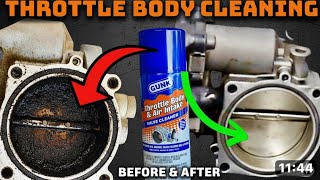
Est. part cost: $10-$50 - Dirty Throttle Body 🔴 High Probability → Shop Fuel Injection Throttle Body Direct injection engines can cause carbon and oil residue (coke) to build up in the intake tract, restricting airflow and causing the throttle plate to stick or not seal properly.
How to confirm: Remove the air intake tube connected to the throttle body and visually inspect for a layer of black, greasy grime around the throttle plate and bore.
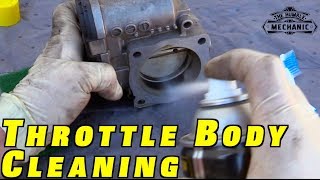
Typical fix: Clean the throttle body thoroughly with a dedicated throttle body cleaner and a soft cloth. Afterwards, a throttle position relearn procedure may be needed. This can sometimes be accomplished by letting the engine idle for 5-10 minutes after a drive cycle, or may require a scan tool.
Est. part cost: $10-$20 for cleaner - Faulty Manifold Absolute Pressure (MAP) Sensor 🟡 Medium Probability → Shop Manifold Absolute Pressure Sensor Sensors can fail with age and heat cycles, leading to incorrect pressure readings that conflict with MAF and TPS data.
How to confirm: Use a scan tool to monitor the MAP sensor voltage. With the key on, engine off (KOEO), the voltage should be between 4.5 to 5.0 volts. With the engine running at idle, it should drop to around 1.0 to 1.5 volts for a naturally aspirated engine or 2.0-2.5 volts for a turbo engine. The voltage should change smoothly with engine vacuum.
Typical fix: Replace the MAP sensor.
Est. part cost: $40-$100 - Faulty Mass Airflow (MAF) Sensor ⚪ Low Probability → Shop Fuel Injection Air Flow Meter The sensor's delicate wires can get contaminated by dirt or oil, especially if an aftermarket oiled air filter is used, leading to inaccurate airflow readings.
How to confirm: Inspect the sensor for contamination. Use a scan tool to monitor MAF readings (in g/s) at idle and during acceleration to see if they are logical for the engine speed. A dirty sensor is a common cause of P0101, which often appears with P0068.
Typical fix: First, try cleaning the sensor with a dedicated MAF sensor cleaner. If cleaning doesn't work, replace the sensor.
Est. part cost: $15 for cleaner, $70-$150 for a new sensor
Rare But Worth Checking
- Loose Intake Manifold Bolts: → Shop Engine Intake Manifold GM TSB PIP5529B specifically calls out loose intake manifold bolts as a cause for P0068 in combination with other codes. This creates a vacuum leak that is not always obvious. The fix is to re-torque the bolts with threadlocker.
- Damaged Wiring or Connectors: Wiring to the MAP, MAF, or TPS can become frayed or corroded, causing an intermittent signal. This should be checked before replacing expensive components.
- Faulty Powertrain Control Module (ECM): → Shop Engine Control Module (ECM) This is very rare. The ECM should only be considered after all other possibilities, including sensors, wiring, and vacuum leaks, have been exhaustively ruled out.
Diagnosis Steps
- Read the code with an OBD-II scanner and document any other codes present, paying close attention to codes listed in TSB PIP5529B (P0101, P0106, P0171, etc.).
- Visually inspect the entire air intake system from the air filter to the intake manifold for any obvious cracks, loose clamps, or disconnected hoses.
- Inspect the wiring and connectors for the MAP, MAF, and Throttle Position sensors for any signs of damage or corrosion.
- Remove the intake duct from the throttle body and inspect it for heavy carbon buildup ('coke'). If dirty, clean it thoroughly with appropriate cleaner.
- Check intake manifold bolts to ensure they are torqued to specification, as loose bolts are a known issue on this platform.
- With the engine running, listen for hissing sounds that indicate a vacuum leak. For a more precise diagnosis, use a smoke machine to introduce smoke into the intake system and watch for where it escapes.
- Use a scan tool to observe live data. Watch the voltage/readings from the MAP, MAF, and TPS at idle and while slowly opening the throttle. Look for any reading that is erratic, stuck, or doesn't respond logically.
- If a sensor is suspected, test its circuit for proper voltage and ground before replacing the part. For the MAP sensor, check for ~5V KOEO and ~1-2.5V at idle.
- After any repair, clear the codes and perform a test drive with several decelerations and extended idles to ensure the issue is resolved and allow the system to relearn.
Parts You'll Likely Need
- Manifold Absolute Pressure (MAP) Sensor
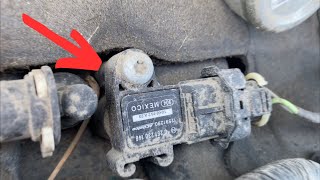
(OEM #12643955)— This sensor is a primary input for the P0068 calculation and can fail, providing incorrect data to the ECM. The OEM part number 12643955 is confirmed 🎬 Watch this walkthrough to locate and replace your MAP sensor. to fit 2014-2017 Buick Regals. This part has been superseded by GM part number 25203477.
Trusted brands: ACDelco, Bosch, Delphi
OEM price range: $60-$90
Aftermarket price range: $30-$60 - Throttle Body Gasket — This gasket should be replaced if the throttle body is removed for cleaning to prevent a vacuum leak. TSB PIP5529B advises against replacing the intake manifold gasket unless a leak is confirmed after re-torquing the bolts.
Trusted brands: ACDelco, Fel-Pro
OEM price range: $10-$20
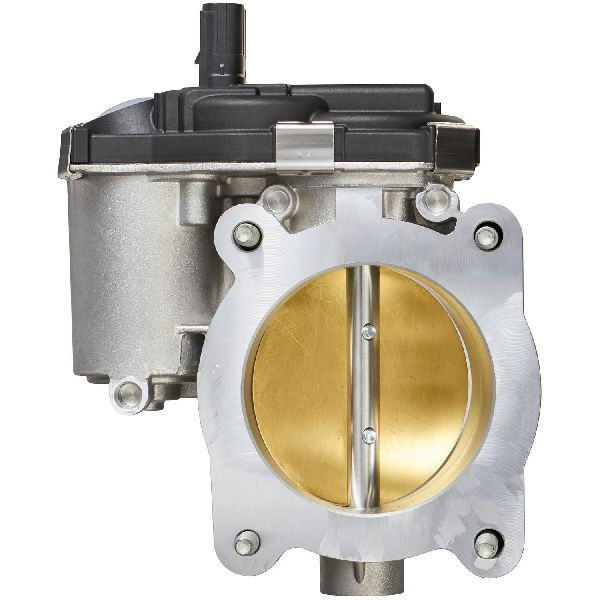
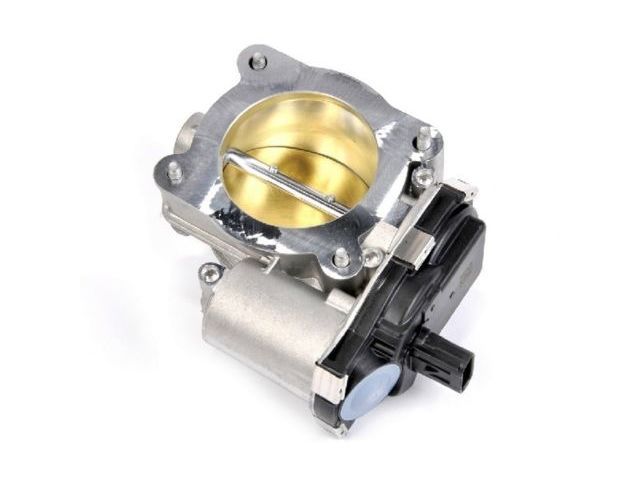
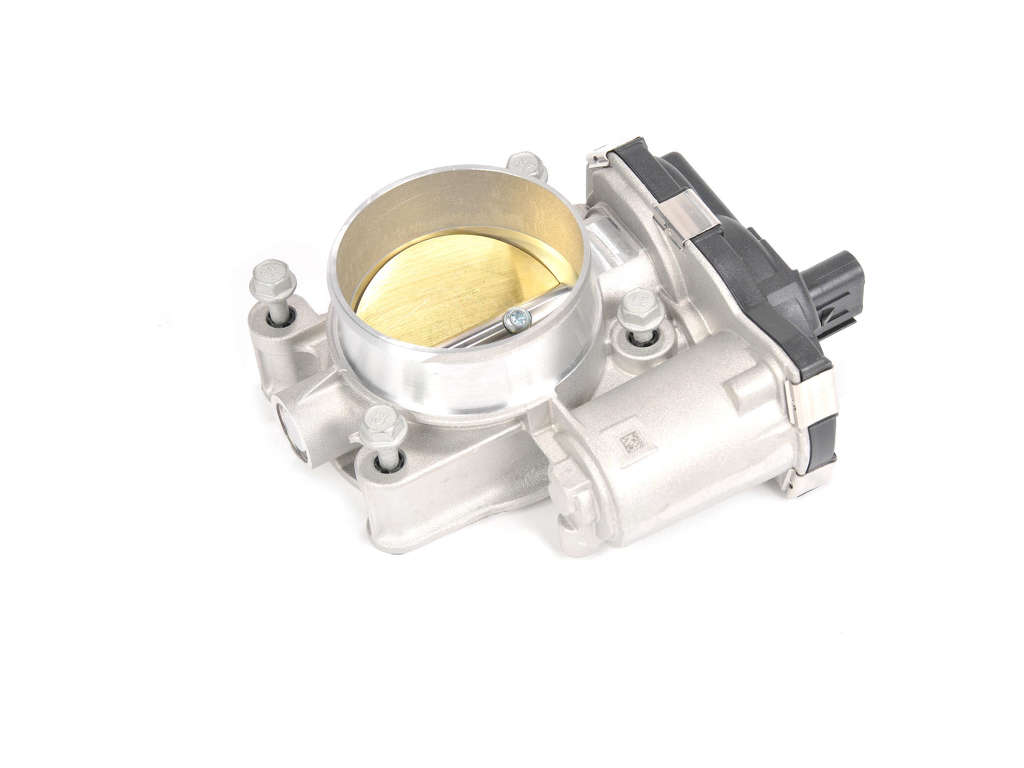
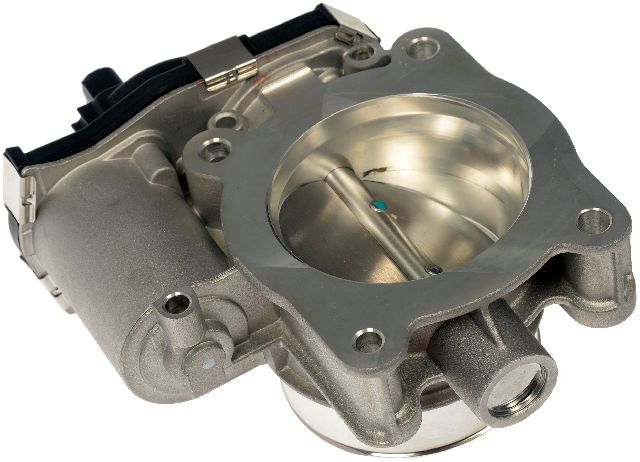
Aftermarket price range: $5-$15 - Throttle Body Assembly — Replaced only if cleaning does not resolve the issue or if the integrated throttle position sensor has failed, which can also cause codes like P2135.
Trusted brands: ACDelco
OEM price range: $200-$350
Aftermarket price range: $120-$250
Related Codes That Often Appear With This One
- P0101 — Mass Airflow (MAF) Circuit Range/Performance. This code is directly related to the MAF sensor, one of the key inputs for the P0068 calculation. A vacuum leak or faulty MAF can cause both.
- P0106 — Manifold Absolute Pressure (MAP)/Barometric Pressure Circuit Range/Performance. This is the equivalent code for the MAP sensor, another key input. A faulty MAP or a vacuum leak can trigger both.
- P0171 — System Too Lean (Bank 1). A vacuum leak is a common cause for both P0068 and P0171, as unmetered air leans out the air-fuel mixture.
- P0506 — Idle Air Control System RPM Lower Than Expected. A stuck or dirty throttle body can cause both a correlation fault and an idle speed issue.
Technical Service Bulletins (TSBs) & Recalls
- PIP5529B: "...additional diagnostics and repair to assist in resolving a malfunction indicator lamp illumination due to any combination of diagnostic trouble codes P0068 P0101 P0106 P0171 P0131 P0137 P0324 P0326 P0331 P0506."
Platform-Specific Known Issues
- GM Technical Service Bulletin #PIP5529B is highly relevant. It states that P0068 appearing with codes like P0101, P0106, P0171, P0506, etc., on this platform often points to loose intake manifold bolts. The prescribed fix is to remove each bolt one by one, apply medium strength threadlocker, and torque them to the proper specification, rather than immediately replacing sensors or gaskets.
Mechanic-Grade Diagnostic Values
- MAP Sensor Voltage (Key On, Engine Off) — expected: 4.5V to 5.0V. Failure: Voltage significantly lower than 4.5V suggests a wiring issue or faulty sensor.
- MAP Sensor Voltage (Engine Idling, Turbo Engine) — expected: 2.0V to 2.5V. Failure: Voltage that is stuck high (near KOEO reading) or is erratic indicates a sensor or vacuum issue.
- MAP Sensor Voltage (Engine Idling, Naturally Aspirated Engine) — expected: 1.0V to 1.5V. Failure: Voltage that is stuck high (near KOEO reading) or is erratic indicates a sensor or vacuum issue.
- Throttle Position Sensor (TPS) Voltage — expected: ~0.5V (closed throttle) to ~4.5V (wide-open throttle). Failure: Voltage that jumps, drops out, or does not change smoothly when opening the throttle indicates a faulty sensor.
- MAP Sensor Connector Pinout (Generic 3-wire) — expected: Pin A: Ground, Pin B: Signal, Pin C: +5V Supply. Failure: Incorrect voltages at these pins point to wiring harness issues.
Scan Tool Commands That Help
- No Scan Tool: Throttle Body Relearn / Idle Learn Procedure — After cleaning or replacing the throttle body to allow the ECM to recalibrate the idle and off-idle throttle positions. A general procedure is to turn the ignition on (engine off) for 3 minutes, then off for 1 minute, then start the engine and let it idle for 10-15 minutes without touching the accelerator.
Wiring & Ground Locations
- G101 (Unconfirmed for Regal) — On other GM platforms, located at the lower front of the engine block.. On similar GM vehicles, G101 provides the ground for the Engine Control Module (ECM) and the Mass Air Flow (MAF) sensor. A poor connection here could cause erratic sensor readings.
- G103 (Unconfirmed for Regal) — On other GM platforms, located on the cowl in the engine compartment, often above the brake booster.. This is a major ground point for multiple modules, including the BCM and instrument panel cluster, which communicate with the ECM. A poor ground here can cause widespread communication errors.
OEM Part Supersession History
12643955→25203477— Part revision or manufacturer change.
Heads up: The new part number (25203477) is listed as a 4-Bar sensor, suitable for the turbo models, and is a direct replacement for the original.
Model Year Variations Within This Range
- 2014 (and earlier): Models with the 2.4L engine may be susceptible to a clogged PCV orifice inside the intake manifold, as detailed in GM bulletin 14882 for 2011-2013 models. This can cause abnormal crankcase pressure, potentially influencing MAP sensor readings and contributing to a P0068 code.
Helpful Videos



Used OEM Parts in Stock
New Aftermarket Parts Available



The information in this article is provided for general reference and educational purposes only. Vehicle specifications, procedures, and part compatibility can vary by production date, trim level, and region. Always consult your vehicle's factory service manual and verify part numbers before purchasing or performing repairs. Safety-critical components such as airbags, seat belts, and braking systems should be installed by a qualified professional.
- Buick REGAL:
- 🧭 Diagnostic Flowchart
- 🎬 Helpful Videos
- 🛍️ Shop This Part
- What's Unique About the 2014-2017 Buick REGAL
- Symptoms You May Notice
- Most Likely Causes
- Rare But Worth Checking
- Diagnosis Steps
- Parts You'll Likely Need
- Related Codes That Often Appear With This One
- Technical Service Bulletins (TSBs) & Recalls
- Platform-Specific Known Issues
- Mechanic-Grade Diagnostic Values
- Scan Tool Commands That Help
- Wiring & Ground Locations
- OEM Part Supersession History
- Model Year Variations Within This Range
- 🎟️ Get 5% Off