

P0068 on 2007-2014 Cadillac CTS: MAP/MAF Throttle Position Correlation Fixes
P0068 on a Cadillac CTS usually means there's a vacuum leak, a dirty throttle body, or a bad sensor. The most common fixes are cleaning the throttle body and MAF sensor, or finding and repairing a vacuum leak, often from a cracked PCV or brake booster hose. In some cases, the throttle position sensor itself may be faulty, which can be identified by checking its reading with the key on and engine off.
- P0068 means the engine's computer is getting conflicting information about airflow from the MAF, MAP, and throttle position sensors.
- Before replacing any sensors, always check for the most common causes: vacuum leaks (especially PCV and brake booster hoses) and a dirty throttle body.
- Cleaning the throttle body and MAF sensor is a low-cost, high-impact first step in diagnosing this code.
- A smoke test is the most reliable way to find hidden vacuum leaks if a visual inspection reveals nothing.
- This code will cause noticeable driving problems, so it should be addressed promptly to restore engine performance and safety.
What's Unique About the 2007-2014 Cadillac CTS
On the 2007-2014 Cadillac CTS, particularly with the direct-injection 3.6L V6 engine (LLT), this code is frequently linked to issues beyond just a single bad sensor. The LLT engine, an evolution of the earlier LY7, is known for being maintenance-sensitive. Its direct injection design means fuel no longer cleans the intake valves, leading to faster carbon buildup on the valves and throttle body. Furthermore, the PCV system can introduce oil vapor into the intake, contaminating the MAF sensor and contributing to throttle body deposits. This combination makes the CTS more susceptible to unmetered air from degraded hoses and skewed sensor readings from contamination, often causing P0068 as a symptom of this larger air-fuel management issue.
Diagnostic Flowchart
Tap your situation to follow the diagnostic path that matches what you're seeing on this vehicle.
Generation note: The 2007-2014 range covers the end of the first generation (2003-2007) and the entire second generation (2008-2014) of the Cadillac CTS. While the causes are similar, the second generation introduced direct injection engines (e.g., 3.6L LLT from 2008-2011) which are more sensitive to carbon buildup on intake valves and the throttle body, a primary trigger for P0068.
Symptoms You May Notice
- Rough, unstable, or surging idle.
- Engine stalling, especially when coming to a stop.
- Reduced engine power or "limp mode".
- Hesitation or a dead spot when pressing the accelerator.
- Check Engine Light is on.
- Poor fuel economy. 🎬 Watch: Diagnosing a CTS that starts, stalls, and runs rough.
- Replacing the MAP or MAF sensor without first checking for vacuum leaks or cleaning the throttle body. Unmetered air is a very common cause and should be ruled out before spending money on new sensors.
Most Likely Causes
- Vacuum Leak 🔴 High Probability PCV hoses and the brake booster vacuum hose are known to become brittle, soft, or crack over time due to heat and oil vapor exposure, creating a source of unmetered air. The connection for the brake booster hose at the back of the intake manifold is a particularly common failure point, where the hose can become soggy from oil and slip off the fitting.
How to confirm: Perform a visual inspection of all vacuum lines connected to the intake manifold. A common failure point is the brake booster hose where it connects to the back of the intake manifold; it may feel soft or be completely disconnected. For hard-to-find leaks, a smoke test is the most effective method.
Typical fix: Replace the cracked, disconnected, or oil-saturated vacuum hose. The brake booster vacuum hose is a common culprit.
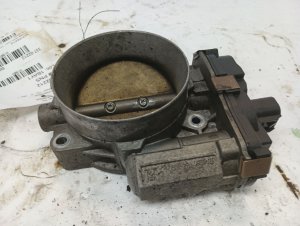
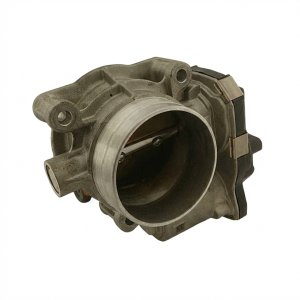
Est. part cost: $20-$80 - Dirty or Faulty Throttle Body 🔴 High Probability → Shop Fuel Injection Throttle Body Carbon and oil blow-by from the PCV system can build up on the throttle plate and bore, restricting its movement and causing airflow to be inconsistent with the throttle position sensor's reading. TSB #PIP4578B specifically mentions throttle body issues on high-mileage vehicles leading to codes like P0068.
How to confirm: Remove the air intake tube connected to the throttle body and visually inspect the throttle plate and bore for black, greasy buildup. With the key on but engine off, use a scan tool to check the throttle position percentage; if it shows a value significantly above 0% at rest, it's a strong indicator of a problem. Have a helper press the gas pedal and observe if the throttle plate moves smoothly or sticks.
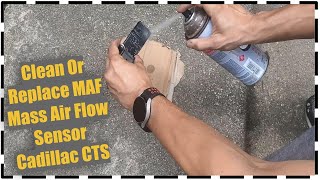
Typical fix: Clean the throttle body thoroughly with a dedicated throttle body cleaner and a soft cloth or brush. If cleaning doesn't resolve the issue or if the internal electronics have failed (indicated by an incorrect TPS reading at rest), the entire throttle body assembly must be replaced. 🎬 Watch: Step-by-step guide to cleaning your throttle body and MAF. A throttle relearn procedure is often required after cleaning or replacement.
Est. part cost: $5-$15 for cleaner, $150-$350 for a new throttle body - Dirty or Faulty Mass Airflow (MAF) Sensor 🟡 Medium Probability → Shop Fuel Injection Air Flow Meter The MAF sensor's delicate wires can become contaminated with dirt and oil from the intake system, causing it to report incorrect airflow to the PCM.
How to confirm: The MAF sensor is located in the intake tube after the air filter. Unplug it and remove it for inspection. If the small wires inside appear dirty, it needs cleaning. A scan tool can also show live data to see if the airflow readings (in grams/sec) are erratic or out of spec at idle. For a 3.6L engine, the reading at idle should be around 3.6-4.0 g/s.
Typical fix: Clean the sensor using only a dedicated MAF sensor cleaner spray. Never touch the sensor wires. If cleaning doesn't work, replace the sensor.
Est. part cost: $10-$15 for cleaner, $70-$200 for a new sensor - Faulty Manifold Absolute Pressure (MAP) Sensor ⚪ Low Probability → Shop Manifold Absolute Pressure Sensor While less common than other causes, the MAP sensor can fail electronically or its port can become clogged with carbon, leading to inaccurate pressure readings.
How to confirm: Use a scan tool to check the MAP sensor reading with the key on, engine off. It should read close to atmospheric pressure (voltage around 4.5V). With the engine running at idle, the pressure should drop significantly (voltage around 1.0-1.5V). If the reading is stuck or doesn't change, the sensor is likely faulty.
Typical fix: Replace the MAP sensor.
Est. part cost: $40-$100
Rare But Worth Checking
- Leaking or Loose Intake Manifold: → Shop Engine Intake Manifold While less common than a hose leak, TSB #PIP5529B points to loose intake manifold bolts as a potential cause for P0068 and a host of other codes on some GM vehicles. The fix is to remove, apply threadlocker to, and re-torque the bolts to specification. Failed intake gaskets can also cause a significant vacuum leak. A smoke test is the best way to confirm this.
- PCM Software Issue: In rare cases, the PCM's software may have outdated calibration tables, leading to a false P0068 code. A dealer or qualified shop can check for and apply any available software updates.
Diagnosis Steps
- Check for other stored trouble codes that could provide more clues. Codes like P0171/P0174 strongly suggest a vacuum leak.
- Perform a thorough visual inspection of the entire air intake system, from the air filter to the intake manifold. Look for disconnected hoses, cracked plastic, or loose clamps.
- Pay close attention to the PCV hoses and the brake booster vacuum hose, especially where it connects to the rear of the intake manifold.
- Remove the air intake duct and inspect the throttle body for carbon buildup. Clean it thoroughly with throttle body cleaner if it's dirty.
- Remove and inspect the MAF sensor. Clean it with dedicated MAF sensor cleaner if it appears dirty.
- If the problem persists, use a smoke machine to test for vacuum leaks that are not visually apparent, paying special attention to the intake manifold gaskets.
- Using a scan tool with the key on and engine off, check the Throttle Position Sensor (TPS) voltage. It should be near 0.5V at closed throttle. If it's stuck at a higher value, the throttle body assembly is likely faulty.
- Using a scan tool, monitor the live data for the MAP, MAF, and TPS sensors to ensure their readings are plausible and change with engine speed and load.
- If a sensor provides no reading or an erratic reading, test its wiring and connector for power, ground, and signal integrity before replacing the sensor.
Parts You'll Likely Need
- Throttle Body
(OEM #12676296 (supercedes 12632171, 12671014, etc. for many 3.0/3.6L models))— Carbon buildup can impede the throttle plate's movement, or the internal electronics can fail, causing a correlation error. This is a known issue on high-mileage vehicles per TSB #PIP4578B.
Trusted brands: ACDelco, Bosch, Hitachi
OEM price range: $250-$400
Aftermarket price range: $150-$350 - Mass Airflow (MAF) Sensor
(OEM #ACDelco 19355502 (for 2011 3.6L LLT))— A dirty or failed MAF sensor provides incorrect airflow data, which is a direct input for the P0068 calculation.
Trusted brands: ACDelco, Delphi, Denso
OEM price range: $150-$250
Aftermarket price range: $70-$150
Related Codes That Often Appear With This One
- P0101 — Mass Airflow (MAF) Circuit Range/Performance. This code is often set alongside P0068 because a vacuum leak or dirty sensor directly affects MAF performance.
- P0106 — Manifold Absolute Pressure (MAP)/Barometric Pressure Circuit Range/Performance. This code relates to the MAP sensor, another key input for the P0068 correlation check.
- P0171/P0174 — System Too Lean (Bank 1 / Bank 2). A vacuum leak allows unmetered air into the engine, creating a lean condition that the PCM tries to correct, often triggering these codes along with P0068.
- P2176 — Throttle Actuator Control System - Idle Position Not Learned. This code is mentioned in TSB #PIP4578B and points directly to issues with the electronic throttle body, a primary cause of P0068.
Technical Service Bulletins (TSBs) & Recalls
- PIP4578B: Mentions idle surge, reduced power, and a group of DTCs including P0068 related to throttle body issues on high-mileage vehicles.
- PIP5529B: Addresses a combination of codes including P0068 that may be caused by loose intake manifold bolts. The recommended fix is to re-torque the bolts with threadlocker.
Platform-Specific Known Issues
- Faulty Throttle Position Sensor Reading: → Shop Fuel Injection Throttle Body A YouTube video by 'Jabo The Mechanic' on a 2013 CTS with a 3.6L engine showed a P0068 code where the throttle position sensor read 30% at rest (key on, engine off). This indicated a faulty throttle body assembly, as cleaning did not resolve the incorrect baseline reading.
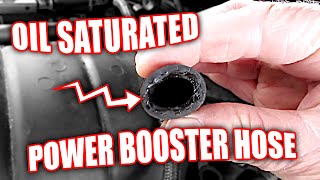
- Brake Booster Hose Failure: → Shop Power Brake Booster Multiple owner videos and forum posts identify the power brake booster vacuum hose as a primary culprit for vacuum leaks triggering P0068. The hose can become oil-saturated and soft where it connects to the intake manifold, causing it to slip off. A replacement hose, GM Part No. 20919372, is often required.
Mechanic-Grade Diagnostic Values
- Mass Airflow (MAF) Sensor at idle (3.6L Engine) — expected: Approximately 3.6 to 4.5 g/s. Failure: Significantly higher (e.g., 8 g/s) or lower readings suggest a vacuum leak or a faulty sensor.
- Manifold Absolute Pressure (MAP) Sensor Voltage (Key On, Engine Off) — expected: 4.5V - 5.0V (reflecting atmospheric pressure). Failure: A voltage significantly lower than this indicates a sensor or wiring issue.
- Manifold Absolute Pressure (MAP) Sensor Voltage (Engine at Idle) — expected: 1.0V - 1.5V (for non-turbo engines). Failure: Voltage that is too high at idle suggests a vacuum leak or poor engine vacuum. Voltage that doesn't change with RPM is a sign of a failed sensor.
- Throttle Position Sensor (TPS) Voltage — expected: ~0.5V at closed throttle, rising to ~4.5V at wide-open throttle.. Failure: Readings that are erratic, do not change smoothly, or have an incorrect closed-throttle voltage indicate a failing sensor.
- Sensor Reference Voltage at Connector — expected: 4.75V to 5.25V. Failure: If the reference voltage supplied by the ECM to the sensors is outside this range, the problem lies in the ECM or wiring, not the sensor itself.
Scan Tool Commands That Help
- Manual Procedure (No Scan Tool): Idle Learn / Throttle Relearn Procedure — Required after cleaning the throttle body, replacing it, or disconnecting the battery to prevent high/unstable idle and related codes. The procedure allows the ECM to relearn the new closed-throttle position.
- GDS2 / Tech2 (or high-end bidirectional scanner): Idle Learn Reset — This is the dealer/professional method to force the ECM to reset idle and airflow values after a throttle body service. It is more direct and reliable than the manual procedure.
Wiring & Ground Locations
- G106 — Right rear of the engine (on 2009 CTS 3.6L). This is a primary engine ground. A loose or corroded connection here can cause erratic behavior and incorrect readings from multiple engine sensors that share this ground path.
- G130 / G131 — Rear of right cylinder head (G130) and left rear of engine (G131) (on 2009 CTS 3.6L). These grounds are critical for the Engine Control Module (ECM) and its associated sensors. Poor connections can lead to floating grounds and voltage discrepancies, triggering correlation codes like P0068.
- ECM Connector C1, Pin 67 (Yellow Wire) — At the Engine Control Module (ECM). This is the specific pin for the MAF Sensor Signal. It can be back-probed to test the signal directly at the ECM, bypassing all vehicle wiring to determine if a fault is in the harness or the ECM itself.
- ECM Connector C1, Pin 64 & 66 (D-GN & PU Wires) — At the Engine Control Module (ECM). These are the pins for the dual Throttle Position Sensor signals (TP Sensor 1 and TP Sensor 2). Testing here can confirm if the throttle body's signals are reaching the ECM correctly.
Real Owner Repair Stories
- cadillacforums.com user (2008 Cadillac CTS) — Check engine light with code P0068, rough idle.
❌ Tried (didn't work) Cleaned the throttle body, Cleaned the MAF sensor
✅ What actually fixed it The user discovered the small vacuum hose that runs from the air intake tube (just before the throttle body) to the top of the engine was completely disconnected. Reconnecting the hose and clearing the code resolved the issue instantly.
OEM Part Supersession History
12632171, 12648414, 12669536, 12671014→12676296— GM regularly updates service parts to integrate new materials, technologies, or address known failure modes.
Heads up: While physically similar, using an incorrect throttle body can cause communication errors or idle control problems. It is critical to verify the correct part number for the specific year and engine (LY7, LLT, LFX). Some replacements may require a software update or specific relearn procedure to function correctly.
Model Year Variations Within This Range
- 2008-2011 (LLT Engine): These models use the 3.6L direct injection (DI) V6. This engine design is more susceptible to carbon buildup on the intake valves and throttle body because fuel is injected directly into the cylinder and no longer cleans the intake ports. This makes cleaning the throttle body a more frequent cause and solution for P0068 on these specific years.
- 2007 (LY7 Engine): The 2007 model uses the port-injected 3.6L V6. While still prone to vacuum leaks and dirty throttle bodies, it is less susceptible to the severe intake valve carbon buildup seen in the later direct-injection engines. Causes for P0068 on this engine are more likely to be simple vacuum leaks or sensor failures.
Helpful Videos

Used OEM Parts in Stock
New Aftermarket Parts Available




The information in this article is provided for general reference and educational purposes only. Vehicle specifications, procedures, and part compatibility can vary by production date, trim level, and region. Always consult your vehicle's factory service manual and verify part numbers before purchasing or performing repairs. Safety-critical components such as airbags, seat belts, and braking systems should be installed by a qualified professional.
- Cadillac CTS:
- 🧭 Diagnostic Flowchart
- 🎬 Helpful Videos
- 🛍️ Shop This Part
- What's Unique About the 2007-2014 Cadillac CTS
- Symptoms You May Notice
- Most Likely Causes
- Rare But Worth Checking
- Diagnosis Steps
- Parts You'll Likely Need
- Related Codes That Often Appear With This One
- Technical Service Bulletins (TSBs) & Recalls
- Platform-Specific Known Issues
- Mechanic-Grade Diagnostic Values
- Scan Tool Commands That Help
- Wiring & Ground Locations
- Real Owner Repair Stories
- OEM Part Supersession History
- Model Year Variations Within This Range
- 🎟️ Get 5% Off