

P0068 on 2007-2014 Cadillac Escalade: MAP/MAF Throttle Correlation Causes and Fixes
On a 2007-2014 Cadillac Escalade, code P0068 is most often caused by a dirty throttle body restricting airflow or a vacuum leak. Cleaning the throttle body and performing an idle relearn procedure is the most common and cost-effective first step to fixing the issue. This code frequently triggers 'Reduced Engine Power' and 'Service Stabilitrak' messages.
- P0068 indicates a conflict between measured airflow (MAF/MAP) and expected airflow (TPS) on your Escalade.
- Do not replace any sensors before performing the two most common and inexpensive checks: inspecting for vacuum leaks and thoroughly cleaning the throttle body.
- This code will likely trigger the 'Reduced Engine Power' mode, making the vehicle unsafe for highway driving.
- After cleaning or replacing the throttle body, an idle relearn procedure may be necessary for the engine to run smoothly.
What's Unique About the 2007-2014 Cadillac ESCALADE
On the 6.2L V8 engine in these Escalades, P0068 is a well-documented issue, particularly on higher-mileage vehicles. As noted in GM Technical Service Bulletin #PIP4578B, carbon buildup (coking) in the throttle body is a frequent cause. Over time, the ECM adapts to this restricted airflow by opening the throttle plate more at idle. Eventually, the discrepancy between the learned position and the sensor data becomes too large, triggering the code and often putting the vehicle into 'Reduced Engine Power' mode.
Diagnostic Flowchart
Tap your situation to follow the diagnostic path that matches what you're seeing on this vehicle.
Symptoms You May Notice
- Check Engine Light is on
- "Reduced Engine Power" message on the dash
- "Service Stabilitrak" and/or "Service Traction Control" messages often appear simultaneously.
- Rough or unstable idle, sometimes surging up and down.
- Hesitation or poor acceleration.
- Engine stalling, especially at low speeds or when stopping.
- Increased fuel consumption.
- Replacing the MAP or MAF sensor without first cleaning the throttle body.
- Replacing the entire throttle body assembly when only a cleaning and idle relearn procedure was needed.
- Replacing parts without performing a smoke test to rule out a simple vacuum leak from a cracked hose.
Most Likely Causes
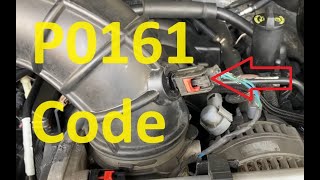
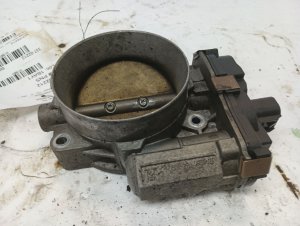
- Dirty or Carbon-Clogged Throttle Body 🔴 High Probability → Shop Fuel Injection Throttle Body The PCV (Positive Crankcase Ventilation) system routes oil vapors into the intake, which bake onto the throttle body over time, restricting airflow. This is a very common issue on high-mileage GM V8s and is the primary cause cited in TSB #PIP4578B.
How to confirm: Remove the intake air duct from the throttle body and visually inspect the throttle plate and bore for a thick, black, greasy carbon buildup. The engine side is often much dirtier than the intake side.
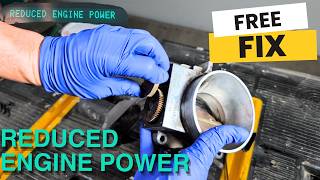
Typical fix: Remove the throttle body and clean it thoroughly with a dedicated throttle body cleaner and a soft brush or rag. 🎬 See this step-by-step guide to cleaning your throttle body A throttle relearn procedure is critical after cleaning 🎬 Watch: How to perform a free idle relearn at home to reset the learned idle values in the ECM.
Est. part cost: $10-$20 for cleaner - Vacuum Leak 🟡 Medium Probability Intake manifold gaskets on these engines can degrade over time, causing unmetered air to enter the engine. More commonly, the PCV hoses and the brake booster vacuum hose can become brittle, crack, or disconnect, creating a significant air leak.
How to confirm: Perform a smoke test by introducing smoke into the intake system and watching for leaks. Pay close attention to the intake manifold gaskets, the PCV hose connection at the back of the intake manifold, the brake booster hose, and the oil filler cap seal.
Typical fix: Replace the leaking gasket or hose. The PCV hose (GM Part #12613099 is a common replacement) is often the culprit and is relatively inexpensive to replace.
Est. part cost: $15-$100 for hoses or gaskets - Dirty or Faulty Mass Air Flow (MAF) Sensor ⚪ Low Probability → Shop Fuel Injection Air Flow Meter The MAF sensor is in the direct path of incoming air and can become contaminated with dirt and oil, especially if an oiled air filter is used, skewing its readings.
How to confirm: Visually inspect the sensor's delicate wires for contamination. You can try cleaning it with a dedicated MAF sensor cleaner. If cleaning doesn't work, monitor its readings with a scan tool for erratic behavior or readings that don't increase smoothly with RPM.
Typical fix: Clean the sensor with MAF sensor cleaner. If cleaning fails, replace the sensor. This should only be done after confirming the throttle body is clean and there are no vacuum leaks.
Est. part cost: $10 for cleaner, $70-$150 for a new sensor
Rare But Worth Checking
- Faulty Manifold Absolute Pressure (MAP) Sensor: → Shop Manifold Absolute Pressure Sensor This sensor can fail, but it's less common than a dirty throttle body or vacuum leak. It should be tested with a scan tool by comparing its readings to atmospheric pressure with the key on, engine off. A user on PerformanceTrucks.net swapped a known good MAP sensor with no change, indicating it's often not the root cause.
- Faulty Throttle Position Sensor (TPS): → Shop Fuel Injection Throttle Body On this vehicle, the TPS is integrated into the electronic throttle body assembly. A failure usually requires replacing the entire throttle body. GM issued a special coverage adjustment (TSB 11273B) for the TPS on these models for 10 years/120,000 miles, which could cover replacement. This is rarely the root cause for P0068 alone and is often accompanied by other TPS-specific codes like P0121 or P2135.
- Wiring Issues: Chafed or corroded wiring to the MAP, MAF, or throttle body connectors can cause intermittent signal loss, triggering the code. A visual inspection and tug test of the harness is necessary, especially at the connector ends.
Diagnosis Steps
- Check for any other stored DTCs. Codes like P0121, P2176, or P0171 can help pinpoint the root cause.
- Visually inspect the entire air intake tract from the air filter to the throttle body for any loose clamps, cracked hoses, or disconnected lines. Ensure the oil cap is tight.
- Remove the intake duct and inspect the throttle body bore and plate for carbon buildup. If dirty, this is the most likely culprit.
- Clean the throttle body thoroughly using a dedicated cleaner and a soft brush. Do not spray cleaner directly on electrical connections.
- Perform a Throttle Relearn Procedure. This is a critical step. See the 'Throttle Relearn Procedure' section below for details.
- If the code returns after cleaning and relearn, perform a smoke test to check for vacuum leaks, paying close attention to the intake manifold gaskets and PCV system hoses.
- Using a scan tool, monitor the live data for the MAP sensor, MAF sensor, and Throttle Position (%) while the engine is running. Look for any readings that are erratic or don't respond logically to throttle inputs.
- If a sensor is suspected, test its wiring and connector for proper voltage, ground, and signal before replacing the part.
Parts You'll Likely Need
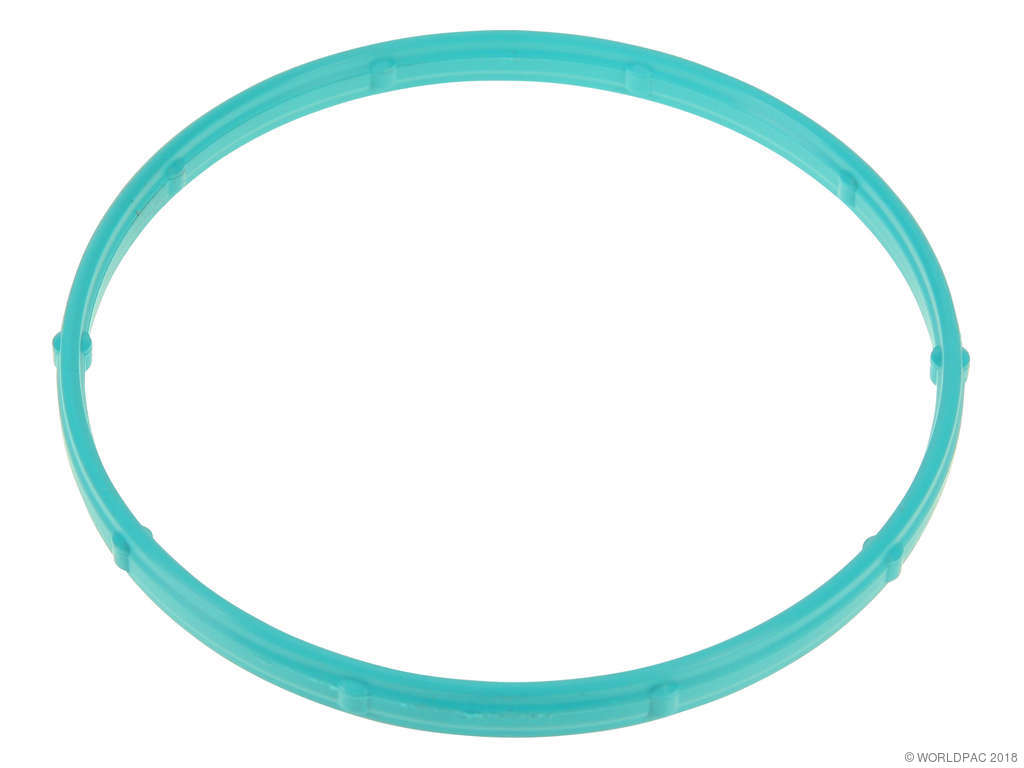
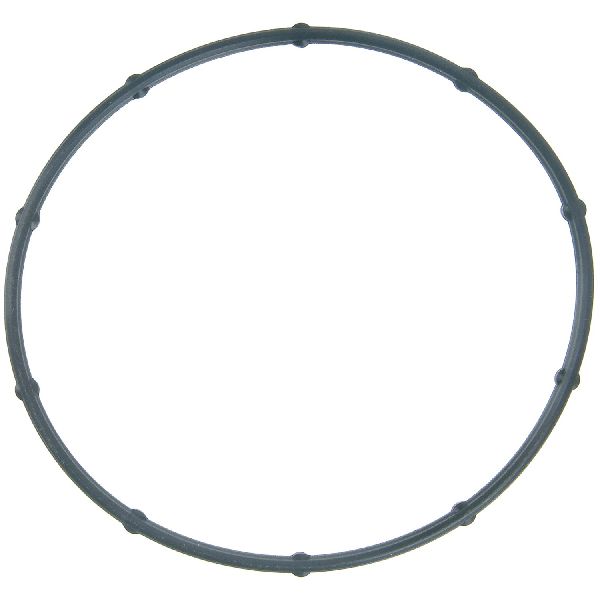
- Throttle Body Assembly
(OEM #12678223)— While often only a cleaning is needed, if the internal electronics (TPS) have failed or the unit is damaged, replacement is necessary. This part includes the integrated Throttle Position Sensor. TSB 11273B provides special coverage for this part under certain conditions.
Trusted brands: ACDelco, Bosch
OEM price range: $180-$250
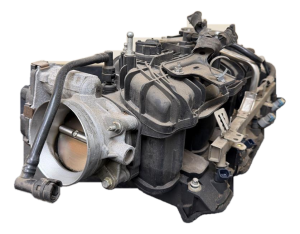
Aftermarket price range: $100-$180 - Intake Manifold Gasket Set
(OEM #12627092)— If a smoke test confirms a vacuum leak at the intake manifold, these gaskets must be replaced to restore a proper seal.
Trusted brands: ACDelco, Fel-Pro
OEM price range: $50-$80
Aftermarket price range: $30-$50 - PCV Hose (Dirty Side)
(OEM #12613099)— This molded hose connects the valve cover to the intake manifold and is a very common point for cracks and vacuum leaks, triggering P0068.
Trusted brands: ACDelco, Dorman
OEM price range: $20-$40
Aftermarket price range: $15-$30 - Mass Air Flow (MAF) Sensor
(OEM #15865791)— Replaced only after cleaning the throttle body and confirming no vacuum leaks exist, and if the sensor fails diagnostic tests.
Trusted brands: ACDelco, Delphi, Denso
OEM price range: $100-$150
Aftermarket price range: $60-$100
Related Codes That Often Appear With This One
- P0121 — Throttle Position Sensor (TPS) Performance. This code often appears with P0068 because a dirty, sticking throttle body directly affects the TPS readings and is mentioned in TSB PIP4578B.
- P2176 — Minimum Throttle Position Not Learned. This code is set when the ECM can't learn the closed position of the throttle, often because of carbon buildup preventing it from closing fully. It is also listed in TSB PIP4578B.
- P0101 — Mass Air Flow (MAF) Circuit Range/Performance. This indicates an issue with the MAF sensor reading, which is a key input for the P0068 correlation check.
- P0106 — Manifold Absolute Pressure (MAP) Circuit Range/Performance. This points to a problem with the MAP sensor signal, often caused by a large vacuum leak that also triggers P0068. Owners on forums frequently report seeing P0068 and P0106 together.
- P0171 / P0174 — System Too Lean (Bank 1 / Bank 2). A vacuum leak, a primary cause of P0068, allows unmetered air into the engine, creating a lean condition that the oxygen sensors detect.
Technical Service Bulletins (TSBs) & Recalls
- PIP4578B: Addresses idle surge, reduced engine power mode, and DTCs including P0068, P0121, P1516, P2101, P2119, and/or P2176 on high mileage vehicles, often recommending throttle body cleaning and an idle learn reset.
- 11273B: Special Coverage Adjustment for the Throttle Position Sensor. Covers replacement for 10 years/120,000 miles if the sensor causes rough running or reduced power mode. This applies to 2008-2011 Escalade models.
Platform-Specific Known Issues
- Per TSB #PIP4578B, this code, along with others like P0121 and P2176, is common on high-mileage vehicles and frequently points to the need for a throttle body cleaning and idle learn reset.
- Owners on forums frequently report that the 'Service Stabilitrak' and 'Reduced Engine Power' messages are the first signs of this issue, which can be alarming but is directly tied to the throttle system fault.
- A Reddit user on r/Cadillac described a frustrating experience where a mechanic replaced the throttle body to fix the 'Service Stabilitrak' error, but the issue persisted, highlighting the importance of proper diagnosis (like a smoke test) before replacing expensive parts.
Mechanic-Grade Diagnostic Values
- Mass Air Flow (MAF) Sensor Reading at Idle — expected: 5-7 g/s for a 6.2L engine at normal operating temperature.. Failure: Significantly lower readings (e.g., 2-3 g/s) suggest a vacuum leak downstream of the sensor. Readings should increase smoothly with RPM.
- Manifold Absolute Pressure (MAP) Sensor Voltage (KOEO) — expected: ~4.5 - 5.0 Volts (Key On, Engine Off). This should correlate with local atmospheric pressure.. Failure: Voltage significantly different from the expected range indicates a sensor or wiring fault.
- Manifold Absolute Pressure (MAP) Sensor Voltage (At Idle) — expected: ~1.0 - 1.5 Volts with the engine running at a warm idle.. Failure: Higher voltage at idle suggests low engine vacuum, which could be caused by a vacuum leak or internal engine issue.
- Throttle Position Sensor (TPS) Voltage — expected: A smooth sweep from ~0.5V at closed throttle to ~4.5V at wide-open throttle.. Failure: Any spikes, dropouts, or non-linear readings during a slow sweep of the pedal indicate a failing sensor.
Scan Tool Commands That Help
- Tech 2 / GDS2: Throttle/Idle Learn Reset — This function should be used after cleaning or replacing the throttle body to force the ECM to relearn the new idle airflow values immediately. A user confirmed using a Tech 2 for this procedure after cleaning the throttle body on a 2013 Escalade.
- Tech 2 / GDS2: Snapshot / Live Data Review — Use this to record and review MAF sensor g/s, MAP sensor voltage, and Throttle Position (%) data frame-by-frame while increasing and decreasing engine RPM. This helps identify intermittent sensor dropouts or lazy sensor responses that may not be obvious in real-time.
Wiring & Ground Locations
- G103 — On the front of the right cylinder head (for non-hybrid models).. This is a primary engine ground. A poor connection here can cause erratic voltage readings for multiple engine sensors, including those involved in the P0068 calculation.
- G104 — On the front of the left cylinder head.. This is another critical engine ground point. Ensuring it is clean and tight is essential for stable sensor operation.
- G102 — Lower left front of the engine.. This ground serves the ignition coils, but poor grounding anywhere on the engine block can create electrical noise and affect sensitive sensor signals.
Real Owner Repair Stories
- CadillacForums user (2007+ Cadillac Escalade) — P0171 and P0174 codes (System Too Lean), rough idle. These codes are often related to the same vacuum leaks that cause P0068.
❌ Tried (didn't work) Replacing intake manifold gaskets, Replacing MAF sensor, Replacing O2 sensors
✅ What actually fixed it The final cause was a cracked driver's side valve cover. The integrated PCV system within the cover had failed, creating a large, hard-to-find vacuum leak. Replacing the entire valve cover resolved the lean codes.
"I Checked Everything" — The Actual Cause
- In a related case for lean codes (P0171/P0174) which share the vacuum leak cause, a user performed multiple checks that did not reveal the issue. The actual cause was a cracked valve cover with an integrated PCV system, which can be missed by a smoke test if the crack is in a location that doesn't show smoke under typical test pressures or if the test isn't run long enough for the leak to become apparent.
When the Usual Fixes Don't Work
- While cleaning the throttle body is the most common fix, it is not always sufficient. If the code returns, it is critical to perform a comprehensive vacuum leak test (smoke test) before replacing sensors. A user on a GM truck forum reported that even after cleaning the throttle body, the code persisted until a cracked PCV hose was found and replaced. Another user with related lean codes ultimately found a cracked valve cover was the true cause after replacing multiple sensors and gaskets to no effect.
OEM Part Supersession History
12678223→12733469, 12740727— Standard part evolution and consolidation by GM.
Heads up: While these parts are listed as superseding the original, they are primarily for 2014+ Gen V engines. Ensure vendor confirms fitment for the GMT900 platform before purchasing a superseded part number, as connector or calibration differences may exist.
Helpful Videos

Used OEM Parts in Stock
New Aftermarket Parts Available


The information in this article is provided for general reference and educational purposes only. Vehicle specifications, procedures, and part compatibility can vary by production date, trim level, and region. Always consult your vehicle's factory service manual and verify part numbers before purchasing or performing repairs. Safety-critical components such as airbags, seat belts, and braking systems should be installed by a qualified professional.
- Cadillac ESCALADE:
- 🧭 Diagnostic Flowchart
- 🎬 Helpful Videos
- 🛍️ Shop This Part
- What's Unique About the 2007-2014 Cadillac ESCALADE
- Symptoms You May Notice
- Most Likely Causes
- Rare But Worth Checking
- Diagnosis Steps
- Parts You'll Likely Need
- Related Codes That Often Appear With This One
- Technical Service Bulletins (TSBs) & Recalls
- Platform-Specific Known Issues
- Mechanic-Grade Diagnostic Values
- Scan Tool Commands That Help
- Wiring & Ground Locations
- Real Owner Repair Stories
- "I Checked Everything" — The Actual Cause
- When the Usual Fixes Don't Work
- OEM Part Supersession History
- 🎟️ Get 5% Off