

P0068 on 2005-2011 Cadillac STS: MAP/MAF Throttle Position Correlation Fixes
On a 2005-2011 Cadillac STS, code P0068 is most often caused by a vacuum leak, especially from a deteriorated power brake booster hose (GM Part #15826720 or ACDelco #171-1045) where it connects to the intake manifold. Oil vapors soften the hose, causing a large unmetered air leak. Cleaning the throttle body and MAF sensor is also a common fix. Expect to spend under $50 for a DIY hose replacement.
- Before buying any parts for a P0068 code on a 2005-2011 STS, first inspect the power brake booster hose at the back of the intake manifold for a loose, soft, or oily connection.
- The second step should be to clean the throttle body and the MAF sensor, as these are low-cost, high-impact maintenance items.
- This code is usually caused by unmetered air entering the engine, not a faulty sensor. Replacing sensors should be the last resort after all potential leak points have been ruled out.
- P0068 is often accompanied by lean codes (P0171, P0174) and a MAF performance code (P1101), which all point towards a vacuum leak.
- For 2005-2006 models, if you cannot find a physical leak, be aware that a factory ECM update exists to address this issue.
What's Unique About the 2005-2011 Cadillac STS
On the 2005-2011 Cadillac STS, particularly with the 4.6L Northstar V8, a very common trigger for P0068 is the power brake booster vacuum hose. Over time, oil vapor from the PCV system collects at the bottom of the intake manifold. The nipple for the brake booster hose is located on the rear of the manifold, in a position where this collected oil can saturate the rubber hose end. This makes the hose soft, swollen, and 'soggy,' causing it to lose its seal or fall off the nipple entirely, creating a significant vacuum leak. Additionally, for 2005-2006 models, a Technical Service Bulletin (TSB #09-06-04-032A) exists for an ECM software update to address this code if no physical faults are found after a cold start. Manufacturer service bulletin TSB Bulletin #PIP4578B also notes that high mileage vehicles may experience DTC P0068 alongside idle surge and reduced engine power modes.
Symptoms You May Notice
- Rough, unstable, or surging idle
- Engine stalling, especially when coming to a stop
- Hesitation or stumbling on acceleration
- Reduced engine power or 'limp mode'
- Check Engine Light is on
- Increased fuel consumption
- Hard brake pedal on cold start, before the engine has warmed up
- Replacing the MAP, MAF, or Throttle Position Sensor without first checking for vacuum leaks or cleaning the throttle body. The code indicates a correlation problem, which is more often caused by a physical issue (like an air leak) than a failed sensor.
Most Likely Causes
- Deteriorated Power Brake Booster Hose 🔴 High Probability → Shop Power Brake Booster The hose connects to a nipple on the rear of the intake manifold. Over time, engine oil vapor from the PCV system collects and softens the rubber, causing it to lose its seal and create a large, unmetered air leak. This is a widely documented failure on the Northstar V8.
How to confirm: Inspect the vacuum hose that runs from the power brake booster to the back of the intake manifold. The connection is low on the manifold, roughly underneath the passenger-side windshield wiper area. Wiggle the hose at the intake connection; if it feels soft, swollen, 'soggy,' or is completely disconnected, it is the cause. A smoke test will definitively show a leak from this location.
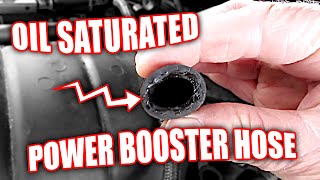
Typical fix: Replace the molded power brake booster vacuum hose. 🎬 See how oil saturation ruins this specific vacuum hose. Due to its specific bends, an OEM part is required. Some owners add a hose clamp to the new hose for extra security, though it is not originally equipped with one.
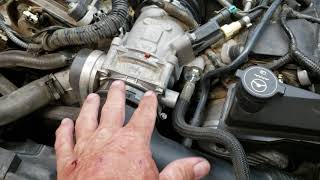
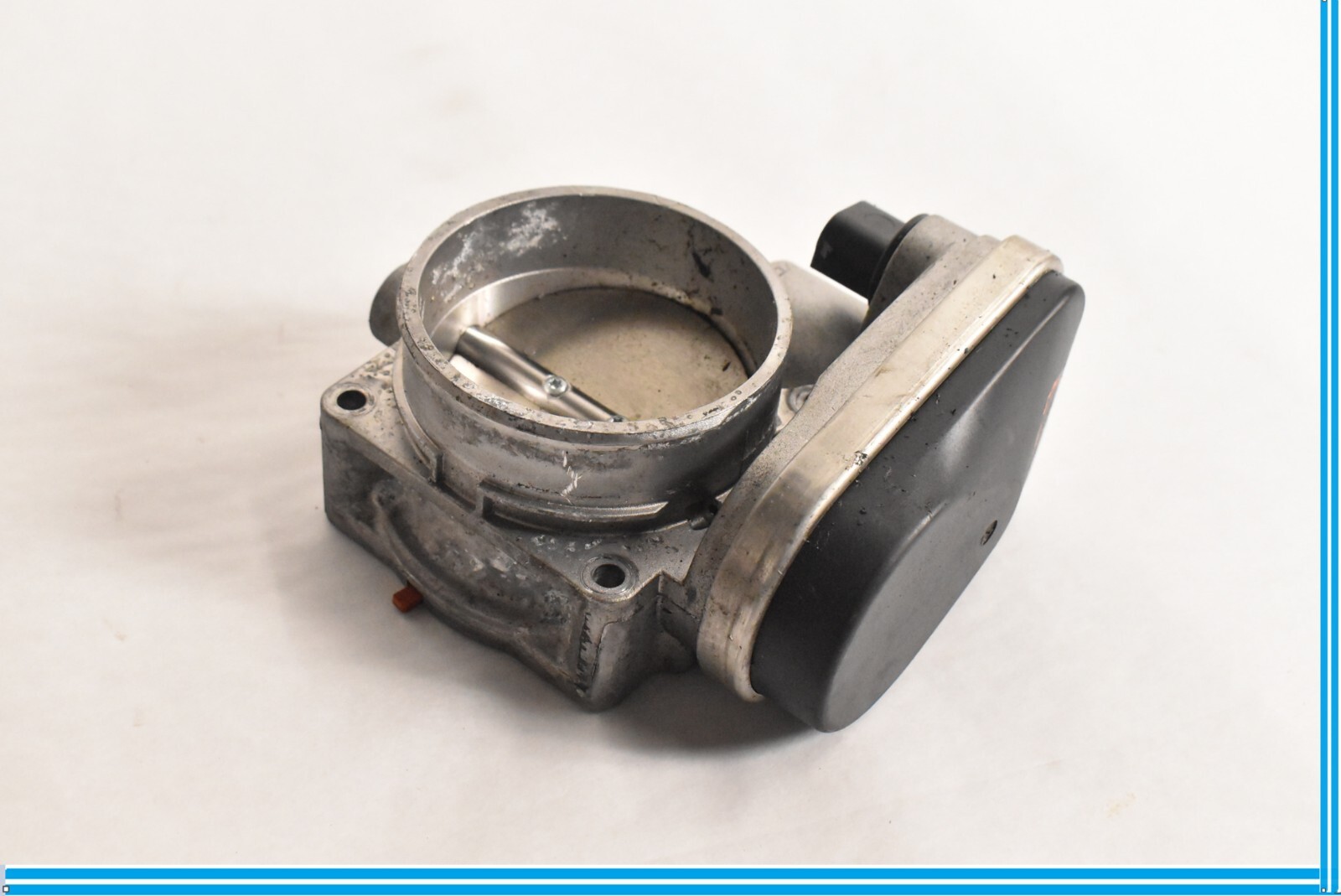
Est. part cost: $40-$80 - Dirty Throttle Body 🟡 Medium Probability → Shop Fuel Injection Throttle Body Carbon and oil from the PCV system can build up around the throttle plate, restricting airflow at idle and low speeds. This causes the actual airflow (measured by the MAF) to be lower than what the PCM expects for a given throttle angle (measured by the TPS).
How to confirm: Remove the intake ducting from the throttle body and visually inspect the throttle plate and bore for a ring of black carbon buildup.
Typical fix: Clean the throttle body thoroughly with a dedicated throttle body cleaner and a soft brush or rag. After cleaning, an idle relearn procedure may be required. This can sometimes be accomplished by letting the vehicle idle for several minutes after reconnecting the battery.
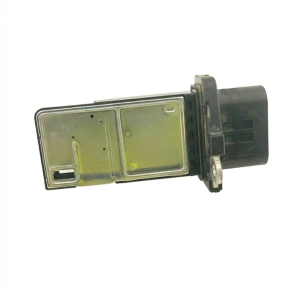
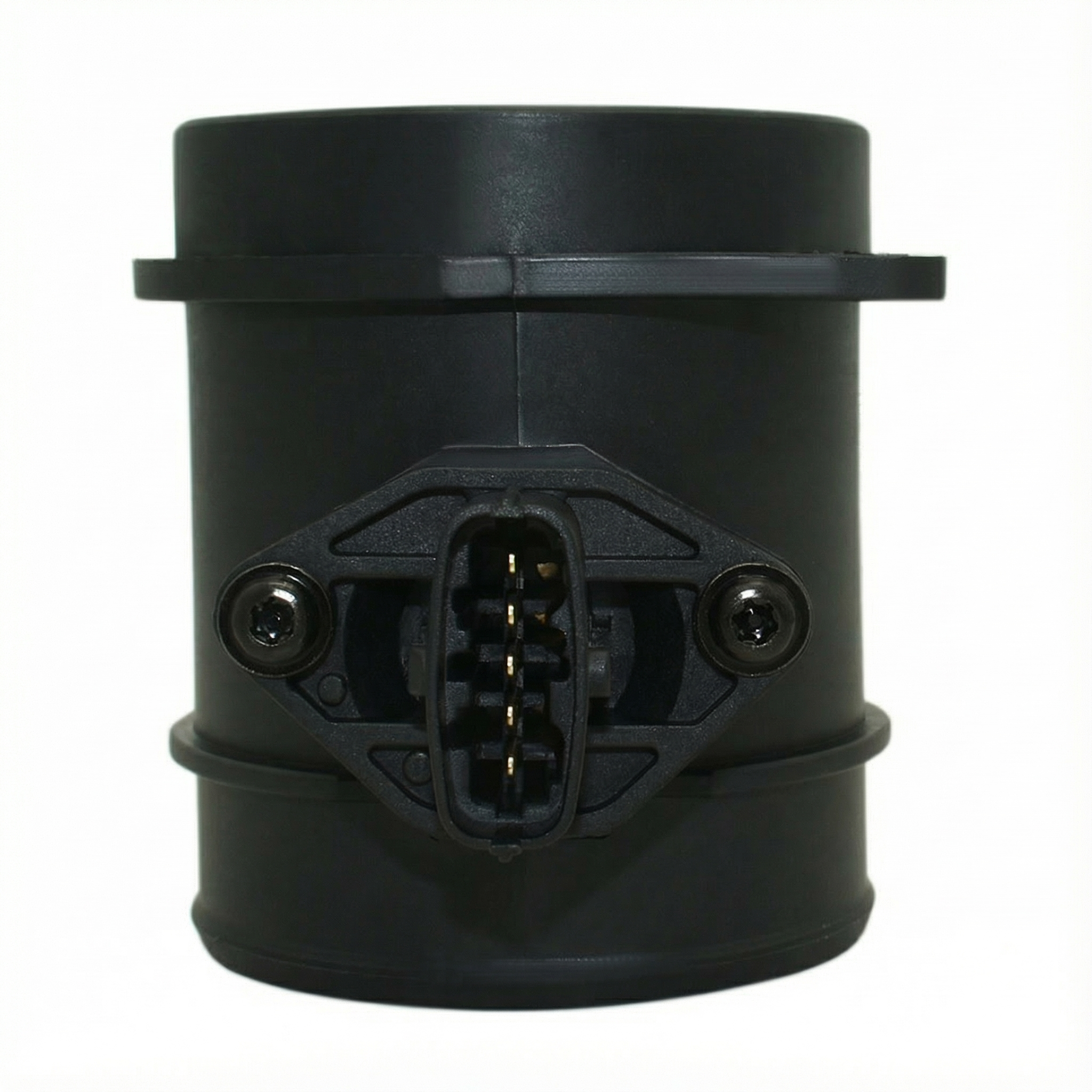
Est. part cost: $10-$20 - Dirty Mass Airflow (MAF) Sensor 🟡 Medium Probability → Shop Fuel Injection Air Flow Meter
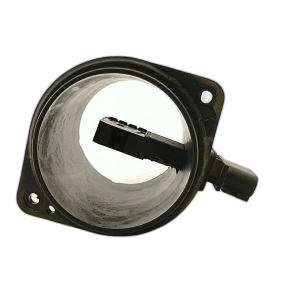
How to confirm: The MAF sensor's hot wire can become contaminated with dirt and oil, causing it to read airflow inaccurately. Visually inspect the sensor wires inside the housing after removing it from the intake tube. If they appear dirty, cleaning is warranted.
Typical fix: Carefully remove the MAF sensor and spray the delicate internal wires with a dedicated MAF sensor cleaner. Do not touch the wires. Allow it to dry completely before reinstalling.
Est. part cost: $10-$15 - Other Vacuum Leaks (Intake Gaskets, PCV Hoses) ⚪ Low Probability
How to confirm: Perform a smoke test on the intake system to check for leaks from intake manifold gaskets, PCV system hoses, or other vacuum lines. Listen for hissing sounds around the engine bay at idle.
Typical fix: Replace the leaking gasket or hose.
Est. part cost: $20-$300
Rare But Worth Checking
- Outdated ECM Software: For 2005-2006 STS, SRX, and XLR models with the 4.6L V8, TSB #09-06-04-032A notes that P0068 can be set after a cold start with no actual engine performance issues. If no physical faults can be found, the ECM may need a software update from a GM dealer.
- Faulty Throttle Position Sensor (TPS): → Shop Fuel Injection Throttle Body While less common than a dirty throttle body, the sensor itself can fail. This usually requires replacing the entire throttle body assembly, as the TPS is often integrated. Check its reading with a scan tool at idle (key on, engine off); it should be low and stable, not erratic or high.
Diagnosis Steps
- Check for other stored DTCs. Codes like P0171, P0174, and P1101 strongly suggest a vacuum leak.
- Visually inspect the engine bay for obvious issues like disconnected hoses or cracked intake components.
- Specifically inspect the power brake booster vacuum hose where it connects to the rear of the intake manifold. It is a molded black hose. Feel the end connected to the engine; if it is soft, swollen, or loose on the fitting, it has failed.
- If no obvious leaks are found, remove the intake duct and inspect the throttle body for carbon buildup. Clean it if it's dirty.
- Remove and inspect the MAF sensor. Clean it with dedicated MAF sensor cleaner if it appears dirty.
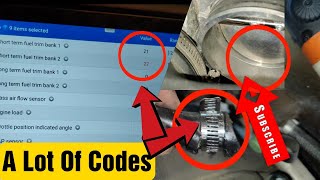
- If the problem persists, perform a smoke test to find hard-to-see vacuum leaks from intake manifold gaskets or other hoses. A mechanic in one video noted that positive fuel trims on a scan tool confirmed a lean condition before finding the leak. 🎬 Watch a technician diagnose multiple codes including P0068 and P1101.
- Use a scan tool to monitor live data from the MAP, MAF, and TPS sensors to ensure their readings are logical and change smoothly with engine RPM and load.
- For 2005-2006 models, if no physical fault is found and the code appears mainly on cold starts, consult a dealer about TSB #09-06-04-032A regarding an ECM reprogram.
Parts You'll Likely Need
- Power Brake Booster Vacuum Hose
(OEM #GM 15826720 / ACDelco 171-1045)— This is the most common point of failure on the STS for this code, due to oil contamination causing the hose end to soften and leak.
Trusted brands: ACDelco, GM Genuine Parts
OEM price range: $40-$80
Aftermarket price range: $30-$60 - Throttle Body Assembly — Replaced if cleaning does not resolve the issue or if the integrated Throttle Position Sensor (TPS) is confirmed to be faulty via scan tool data.
Trusted brands: ACDelco, Bosch
OEM price range: $250-$400
Aftermarket price range: $150-$250 - Mass Airflow (MAF) Sensor — Replaced only if cleaning the sensor does not resolve incorrect readings confirmed via scan tool data. This is less common than vacuum leaks or a dirty throttle body.
Trusted brands: ACDelco, Delphi, Denso
OEM price range: $150-$250
Aftermarket price range: $70-$150
Related Codes That Often Appear With This One
- P1101 — This GM-specific code for 'Intake Air Flow System Performance' is often triggered by the same unmetered air leaks that cause P0068. The official TSB lists them together. 🎬 Watch: A quick overview of P0068 and P1101 on the STS.
- P0171 — Indicates 'System Too Lean (Bank 1)'. A vacuum leak allows unmetered air into the engine, creating a lean condition that the PCM tries to correct by adding fuel.
- P0174 — Indicates 'System Too Lean (Bank 2)'. This is the same as P0171 but for the opposite cylinder bank, often appearing together when a large vacuum leak like the brake booster hose affects the entire engine.
Technical Service Bulletins (TSBs) & Recalls
- 09-06-04-032A: Check Engine Light On, DTC P1101, P0068, P0171, P0174 (Reprogram ECM). This TSB applies to 2005-2006 STS, 2004-2006 SRX, and 2004-2006 XLR models, addressing a condition where the check engine light comes on after a cold start with no performance issues.
- TSB Bulletin #PIP5529A: Provides additional diagnostics and repair to assist in resolving a malfunction indicator lamp illumination due to a combination of diagnostic trouble codes including P0068, P0101, P0106, and P0171.
- TSB Bulletin #PIP5529B: An updated manufacturer bulletin that provides further diagnostic guidance for resolving check engine light illumination involving P0068 and related codes like P0101 and P0171.
Platform-Specific Known Issues
- TSB for ECM Reprogram: TSB #09-06-04-032A: For 2005-2006 STS models, an ECM reprogram is available to correct a sensitive trigger for P0068 and related codes when no mechanical fault is present, particularly after a cold start.
- Brake Booster Hose Failure Mode: → Shop Power Brake Booster The specific failure of the brake booster hose due to oil saturation is a hallmark issue for the Northstar V8 in this chassis. Multiple owner forums and videos confirm this is the first place to check.
Mechanic-Grade Diagnostic Values
- Mass Air Flow (MAF) Sensor at Idle (4.6L V8) — expected: 4-10 g/s. Some service data suggests a tighter range of 3-8 g/s.. Failure: Readings outside the expected range at a stable, warm idle. Positive short-term fuel trims (+8% to +12%) on both banks also strongly indicate an unmetered air leak that the MAF is not accounting for.
- Mass Air Flow (MAF) Sensor at Wide-Open Throttle (WOT) — expected: 190 g/s or more during a 1-2 shift.. Failure: Failure to reach this value during a WOT pull can indicate a faulty sensor or an intake restriction.
- Throttle Position Sensor (TPS) Voltage (Key On, Engine Off) — expected: 0.2V - 0.8V at closed throttle.. Failure: An incorrect closed-throttle voltage or readings that do not sweep smoothly and proportionally up to ~4.5V when the pedal is depressed.
- Manifold Absolute Pressure (MAP) Sensor Voltage (Engine at Idle) — expected: 1.0V - 1.5V (reflecting high engine vacuum).. Failure: Voltage that is too high at idle suggests a vacuum leak or poor engine vacuum.
- Short-Term Fuel Trims at Idle — expected: Close to 0% (+/- 5%). Failure: Consistently high positive values (e.g., +8% to +32%) on both banks indicate the PCM is adding fuel to compensate for unmetered air from a vacuum leak.
Scan Tool Commands That Help
- N/A (Manual Procedure): Throttle Body Idle Relearn — After cleaning or replacing the throttle body, a relearn procedure is necessary to reset the ECM's learned idle position. An un-learned throttle body can cause a high or erratic idle. The manual procedure involves specific idle and drive cycles.
Wiring & Ground Locations
- G100 / G106 — G100 is on the rear side of the right cylinder head. G106 is also on the rear side of the right cylinder head. Another source notes G101 jumpers to G106 on the front center frame cross rail under the crank pulley. A bad block ground can cause numerous electrical issues.. These are primary engine grounds. The Engine Control Module (ECM) is grounded via these points. A poor ground here can cause erratic sensor readings and incorrect ECM operation, potentially triggering correlation codes like P0068.
- G101 — Located at the left front of the engine, lower block.. This ground point specifically serves the Mass Air Flow (MAF) Sensor, Intake Air Temperature (IAT) Sensor, Engine Control Module (ECM), and Transmission Control Module (TCM). A fault at this specific ground is a direct potential cause for MAF sensor signal issues.
- G105 — Located at the back of the underhood fuse block.. This is a major ground distribution point in the engine bay. While not directly tied to the sensors in documentation, verifying its integrity is a key step in diagnosing any electrical fault under the hood.
Real Owner Repair Stories
- CarKiller.com forum user 'brightfuture' (2006 Cadillac STS 4.6L V8) — Rough idle, bad fuel consumption, Check Engine Light with codes P0171, P0174, P0101, and P0068. Short term fuel trims were +20% to +32% at idle.
❌ Tried (didn't work) Replacing the MAF sensor three times with new aftermarket sensors, Replacing MAP sensor, Replacing intake manifold gaskets, Replacing all four O2 sensors, Replacing the brake booster to manifold hose, Replacing the fuel filter
✅ What actually fixed it Replacing the aftermarket MAF sensor with a genuine OEM part resolved all codes and symptoms. The user noted that many cars, including this one, do not work well with aftermarket sensors for critical components. - YouTube - 'P0068 and p1101 2005 Cadillac STS' by a professional mechanic (2005 Cadillac STS 4.6L V8 with 180,000 miles) — Check Engine Light with codes P0068, P1101, P0171, and P0174.
❌ Tried (didn't work) Cleaning the throttle body (helped slightly but did not fix the codes)., Verifying MAF sensor readings were within spec at idle (4-10 g/s).
✅ What actually fixed it The brake booster hose where it connected to the rear of the intake manifold was found to be loose and oil-saturated, causing a large vacuum leak. The mechanic added a hose clamp to the new hose for better security. The key diagnostic clue was short-term fuel trims showing +8 to +12 on both banks, indicating a lean condition.
Model Year Variations Within This Range
- 2005-2006: These model years are specifically called out in TSB #09-06-04-032A for having a sensitive ECM calibration that could set P0068, P1101, P0171, and P0174 after a cold start with no actual performance issue. The fix is an ECM reprogram available from a GM dealer.
Diagnostic Flowchart
Used vs. New Parts: Buying Guide for This Vehicle
When a used part is the smart pick: For this specific repair, sourcing a used Throttle Body Assembly from a low-mileage donor vehicle can be a cost-effective choice if the original is confirmed faulty. Mechanical parts like intake manifolds or specific brackets are also good candidates for used parts.
Donor-vehicle mileage cap: roughly under 80000 miles for the part to have meaningful remaining life.
What to inspect on the donor part:
- For a throttle body, check for a clean throttle plate and bore with minimal carbon buildup.
- Ensure all electrical connectors are intact with no broken clips or corrosion.
- Verify the throttle plate moves smoothly by hand (if mechanical) or appears undamaged (if electronic).
- Ask for the donor vehicle's VIN to check for compatibility and any history of related issues if possible.
OEM-only on this vehicle (don't cheap out):
- Mass Airflow (MAF) Sensor: Forum and repair evidence strongly suggests that this platform is highly sensitive to MAF sensor inputs, and aftermarket units frequently fail to resolve lean codes or P0068, even when new. It is strongly recommended to use a GM Genuine or ACDelco OEM part.
- Power Brake Booster Vacuum Hose: Due to the specific molded shape required to route around the back of the engine, a generic hose will not fit. An OEM or direct-fit aftermarket replacement (ACDelco 171-1045) is necessary.
Aftermarket brands forum-validated for this vehicle:
- ACDelco (often the OEM supplier)
- Bosch (for throttle bodies)
Brands owners have reported issues with on this vehicle:
- Non-branded, generic, or 'white-box' MAF sensors purchased from online marketplaces have a high rate of failure for this specific application.
Real Owner Stories
Aggregated from forums and TSBs cited above. Mileages and costs reflect what owners reported in those sources.
2005 Cadillac STS V8 (Northstar) — 115000 miles
Symptoms: The car started idling rough out of nowhere, especially noticeable at stop lights. It threw multiple codes including P0068, P0171, P0174, P1101, and P0302.
What fixed it: Replacing the bank 2 ignition coil pack resolved the rough idle and the codes.
Source hint: CadillacForums.com
2005 Cadillac STS
Symptoms: A shaky idle, a noticeable loss of power, and a hard brake pedal on cold starts. Codes P1101, P0068, P0171, and P0174 were present.
What fixed it: The power brake booster hose had become soft and saturated with oil where it connects to the intake manifold, causing a massive vacuum leak. Replacing the molded hose fixed the issue.
Source hint: YouTube - 'Oil Saturated Power Booster Hose - Code P1101, P0068, P0171, P0174 - 2005 Cadillac STS' by John Sadler's Auto Repair
Related OBD-II Codes
Frequently Asked Questions
What is the most common cause of a P0068 code on my 2005-2011 Cadillac STS with the Northstar V8?
My 2005 STS threw a P0068 code on a cold start but seems to run fine. What should I check?
Where exactly is the brake booster hose that fails and causes the P0068 code?
I'm replacing the power brake booster hose. Should I add a hose clamp to the new one?
Besides the brake booster hose, what else commonly causes P0068 on the STS?
My mechanic suggested a smoke test. Is that a valid diagnostic step for P0068?
Does the ECM reprogram TSB for P0068 apply to my 2009 Cadillac STS?
Helpful Videos
We Have This Part in Stock

The information in this article is provided for general reference and educational purposes only. Vehicle specifications, procedures, and part compatibility can vary by production date, trim level, and region. Always consult your vehicle's factory service manual and verify part numbers before purchasing or performing repairs. Safety-critical components such as airbags, seat belts, and braking systems should be installed by a qualified professional.
- Cadillac STS:
- 🧭 Diagnostic Flowchart
- 🎬 Helpful Videos
- 🛍️ Shop This Part
- What's Unique About the 2005-2011 Cadillac STS
- Symptoms You May Notice
- Most Likely Causes
- Rare But Worth Checking
- Diagnosis Steps
- Parts You'll Likely Need
- Related Codes That Often Appear With This One
- Technical Service Bulletins (TSBs) & Recalls
- Platform-Specific Known Issues
- Mechanic-Grade Diagnostic Values
- Scan Tool Commands That Help
- Wiring & Ground Locations
- Real Owner Repair Stories
- Model Year Variations Within This Range
- Used vs. New Parts: Buying Guide for This Vehicle
- Real Owner Stories
- 2005 Cadillac STS V8 (Northstar) — 115000 miles
- 2005 Cadillac STS
- Related OBD-II Codes
- Frequently Asked Questions
- 🎟️ Get 5% Off