

P0068 on 2013-2019 Cadillac XTS 3.6L: MAP/MAF Throttle Position Correlation Fixes
On the 3.6L LFX V6, P0068 is almost always caused by a dirty throttle body restricting airflow. Cleaning the throttle body and performing an idle relearn procedure is the most common fix, costing under $25 for DIY materials. Vacuum leaks from brittle PCV hoses are the second most likely cause.
- Do not immediately replace any sensors. P0068 on this engine is most often a physical problem, not a failed sensor.
- The first and most important step is to inspect and clean the throttle body. This resolves the issue in a majority of cases.
- After cleaning the throttle body, an 'Idle Relearn Procedure' is highly recommended to allow the engine computer to adapt.
- Thoroughly inspect the entire air intake path for cracked hoses or loose connections, as vacuum leaks are the second most common cause.
- Only consider replacing the MAP or MAF sensors after all physical causes have been ruled out.
What's Unique About the 2013-2019 Cadillac XTS
The 3.6L LFX V6 is a direct-injection engine. Unlike traditional engines, fuel is injected directly into the cylinders and doesn't wash over the intake path. This allows oil vapor from the PCV system to bake onto the throttle body, creating a sticky ring of carbon that restricts airflow and can cause the throttle plate to bind. This buildup is a primary trigger for P0068 on this specific engine. This same GDI design also leads to significant carbon buildup on the intake valves over time, which can cause misfires and related performance issues.
Symptoms You May Notice
- Check Engine Light is on
- Rough or unstable idle, sometimes fluctuating
- Engine may hesitate or stumble on acceleration
- Vehicle may enter 'Reduced Engine Power' mode
- Increased fuel consumption
- Occasional stalling at low speeds or when coming to a stop
- A 'whooshing' or 'sucking' noise from the engine bay if a vacuum leak is large
- Replacing the MAP or MAF sensor before cleaning the throttle body. 🎬 Watch: Understanding P0068 causes and how to fix them The issue is most often physical (carbon buildup) rather than a failed sensor.
- Replacing the throttle body assembly when only a cleaning and idle relearn were necessary.
Most Likely Causes
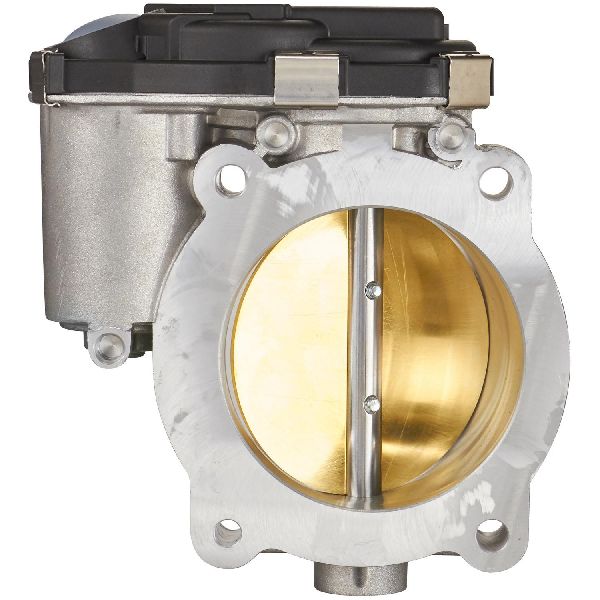
- Dirty or Carbon-Clogged Throttle Body 🔴 High Probability → Shop Fuel Injection Throttle Body The LFX is a direct-injection engine, so fuel doesn't clean the intake path. Oil vapors from the PCV system bake onto the throttle plate, restricting airflow and causing a sensor mismatch. This is a well-documented issue (TSB PIP4578B).
How to confirm: Remove the air intake duct from the throttle body. Visually inspect for a thick black ring of carbon buildup around the throttle plate and inside the throttle body bore. The plate may feel sticky when moved by hand.
Typical fix: Thoroughly clean the throttle body using a dedicated throttle body cleaner, a soft brush, and a lint-free rag. An idle relearn procedure is required after cleaning. 🎬 See this step-by-step LFX throttle body cleaning walkthrough
Est. part cost: $10-$20 - Vacuum Leak 🟡 Medium Probability The plastic PCV 'foul air' tube that connects the front valve cover to the air intake duct is a known failure point. It becomes brittle from heat and oil exposure, leading to cracks and unmetered air entering the system.
How to confirm: Visually inspect all vacuum lines, especially the hard plastic PCV tube (ACDelco P/N 12648138) for cracks. Also check the brake booster hose and intake manifold gaskets. A smoke test is the most effective way to pinpoint a hidden leak.
Typical fix: Replace the cracked or leaking hose or gasket. The PCV foul air tube is a common and inexpensive part to replace.
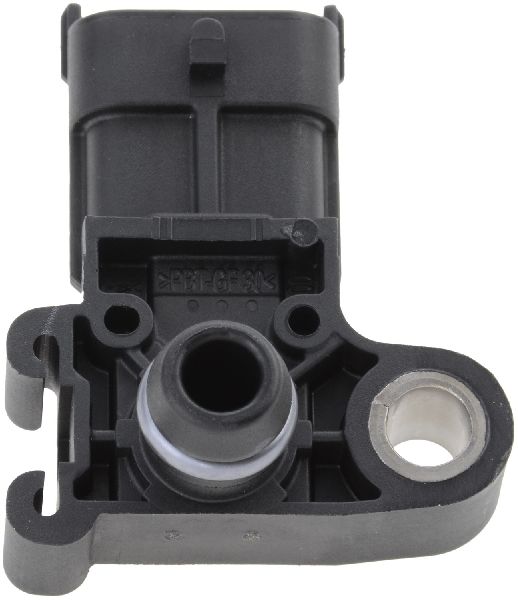
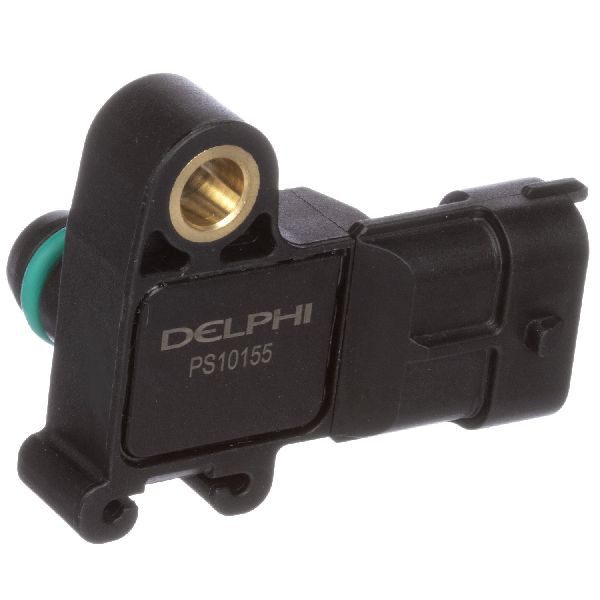
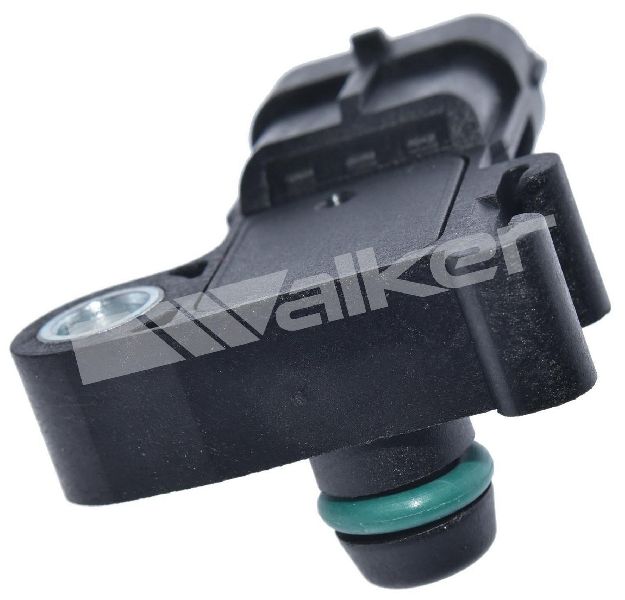
Est. part cost: $15-$100 - Faulty Manifold Absolute Pressure (MAP) Sensor ⚪ Low Probability → Shop Manifold Absolute Pressure Sensor While not as common as physical issues, the MAP sensor can fail or provide inaccurate readings due to internal failure or contamination, directly causing a correlation fault.
How to confirm: Use a scan tool to monitor the MAP sensor reading (in kPa or inHg) with the key on, engine off. Compare the reading to the barometric pressure (BARO) value; they should be nearly identical. If they differ significantly, or if the reading is erratic while driving, the sensor is likely faulty.
Typical fix: Replace the MAP sensor. It is typically mounted directly on the intake manifold.
Est. part cost: $40-$120 - Dirty or Faulty Mass Airflow (MAF) Sensor ⚪ Low Probability → Shop Fuel Injection Air Flow Meter
How to confirm: Inspect the MAF sensor wires (located inside the sensor housing after the air filter) for dirt, debris, or oil contamination. Use a scan tool to monitor airflow in grams per second (g/s); look for erratic readings that don't correspond to engine RPM changes.
Typical fix: Clean the sensor with a dedicated MAF sensor cleaner. Do not touch the sensor wires. If cleaning doesn't resolve the issue, replace the sensor.
Est. part cost: $15-$150
Rare But Worth Checking
- Clogged PCV System Orifice: On the 3.6L LFX, the 'dirty side' PCV orifice is integrated into the camshaft cover (driver's side). If it clogs, it can cause excessive crankcase pressure, leading to oil leaks and potentially rupturing the 'clean side' tube, creating a significant, hard-to-find vacuum leak.
- Loose Intake Manifold Bolts: → Shop Engine Intake Manifold Though more commonly documented on other GM engines under TSB PIP5529B, loose intake manifold bolts can create an intermittent vacuum leak that may not be found with a standard smoke test. The fix is to re-torque the bolts to the proper specification.
- Wiring Issues: Corroded or damaged wiring or connectors for the MAP, MAF, or throttle body can cause intermittent signals. This should be investigated after the more common physical causes are ruled out by checking for signal continuity and voltage at the sensor connectors.
Diagnosis Steps
- Check for any other stored trouble codes that could provide more clues.
- Visually inspect the entire air intake system, from the air filter to the throttle body, for any cracks, tears, or loose connections.
- Pay close attention to the hard plastic PCV hose running from the front valve cover to the intake boot, as it is a very common failure point.
- Remove the intake duct from the throttle body and inspect for heavy carbon buildup. If present, this is the most likely cause.
- Clean the throttle body thoroughly with a dedicated cleaner and a soft brush. Ensure the throttle plate moves freely.
- If the throttle body was dirty, perform an Idle Relearn Procedure after reassembly. This allows the ECM to adapt to the clean throttle body.
- If the problem persists, inspect and clean the MAF sensor using only MAF sensor cleaner.
- Use a scan tool to monitor live data from the MAP, MAF, and TPS sensors to identify any sensor that is not responding correctly to changes in throttle and engine load.
- If a vacuum leak is suspected but not visible, perform a smoke test to locate the source of the leak.
Parts You'll Likely Need
- Throttle Body Assembly
(OEM #12669113)— While cleaning usually works, if the integrated Throttle Position Sensor (TPS) has failed or the actuator motor is weak, the entire assembly must be replaced.
Trusted brands: ACDelco, Hitachi
OEM price range: $150-$250
Aftermarket price range: $90-$180 - Manifold Absolute Pressure (MAP) Sensor
(OEM #12644228)— If cleaning the throttle body and checking for vacuum leaks doesn't solve the problem, a faulty MAP sensor is the next most likely electrical component to fail.
Trusted brands: ACDelco, Bosch, Delphi
OEM price range: $50-$90
Aftermarket price range: $30-$60 - PCV Foul Air Tube
(OEM #12648138)— This specific hard plastic hose is a very common failure point for vacuum leaks on the 3.6L LFX engine, becoming brittle and cracking over time.
Trusted brands: ACDelco, Dorman
OEM price range: $30-$60
Aftermarket price range: $20-$40 - Air Intake Duct / Hose — The flexible rubber duct between the air filter box and the throttle body can crack with age, causing a significant unmetered air leak.
Trusted brands: ACDelco, Dorman
OEM price range: $70-$120
Aftermarket price range: $40-$80
Related Codes That Often Appear With This One
- P0101 — Mass Airflow (MAF) Circuit Range/Performance. This code is often set alongside P0068 because a vacuum leak or dirty sensor directly affects MAF performance.
- P0106 — Manifold Absolute Pressure (MAP) Circuit Range/Performance. This indicates a problem with the MAP sensor's readings, which is a key input for the P0068 calculation and often appears when a major vacuum leak is present.
- P0171 / P0174 — System Too Lean. These codes are triggered when a vacuum leak allows excess, unmetered air into the engine, which is a primary cause of P0068.
- P2176 — Minimum Throttle Position Not Learned. This can be set when the ECM can't learn the closed position of the throttle, often because carbon buildup is preventing it from closing fully.
Technical Service Bulletins (TSBs) & Recalls
- PIP4578B: Addresses issues related to P0068 on high-mileage vehicles, pointing to carbon buildup in the throttle body and the need for an idle learn reset after cleaning. This bulletin also notes that idle surge and reduced engine power mode may be experienced.
- Bulletin #PIP5529A: Provides additional diagnostics and repair to assist in resolving a malfunction indicator lamp illumination due to any combination of diagnostic trouble codes including P0068, P0101, P0106, and P0171.
- Bulletin #PIP5529B: Offers further diagnostic guidance for resolving P0068 and related codes like P0101, P0106, P0171, and P0506.
- PIP5029C: Discusses engine misfires due to ma
Platform-Specific Known Issues
- GM TSB PIP4578B specifically identifies carbon buildup in the throttle body as a cause for P0068 on high-mileage vehicles, emphasizing the need for cleaning and an idle learn reset.
- The direct injection design makes regular intake valve cleaning (walnut blasting) a necessary maintenance item to prevent misfires and poor performance, which can sometimes be related to airflow correlation issues.
Mechanic-Grade Diagnostic Values
- Mass Airflow (MAF) Sensor at Idle — expected: 4.0 to 7.0 grams/second (g/s) on a fully warmed-up engine.. Failure: Readings significantly below 4.0 g/s may indicate a vacuum leak. Readings that do not rise smoothly with RPM (e.g., to 15-25 g/s at 2500 RPM) suggest a faulty sensor.
- MAP/BARO Sensor 5V Reference Voltage — expected: 4.8 - 5.2 Volts DC with Key On, Engine Off (KOEO).. Failure: Voltage outside this range indicates a problem with the ECM's 5V reference circuit or wiring.
- MAP Sensor Signal Voltage (KOEO) — expected: ~4.5 - 5.0 Volts at KOEO, should match BARO reading.. Failure: A significant difference between the MAP and BARO readings at KOEO points to a faulty MAP sensor.
- MAP Sensor Signal Voltage (Engine Idling) — expected: Drops to around 1.0 - 1.5 Volts at idle due to engine vacuum.. Failure: Voltage that remains high (close to the KOEO reading) at idle suggests the sensor is not responding to vacuum, has a clogged port, or there is a massive vacuum leak.
- Throttle Position Sensor (TPS) Voltage — expected: A smooth voltage increase from ~0.5V at closed throttle to ~4.5V at wide-open throttle.. Failure: Any spikes, dropouts, or non-linear response as the throttle is slowly opened and closed indicates a failing TPS.
Scan Tool Commands That Help
- GDS2 / Professional Scan Tool: Idle Learn Reset / Throttle Learn — This function is mandatory after cleaning or replacing the throttle body. The ECM must relearn the new closed-throttle position. Failure to do so can result in a high idle, stalling, and codes like P2176.
- GDS2 / Professional Scan Tool: Live Data Graphing (MAP, MAF, TPS) — Graphing the MAP, MAF, and TPS sensors simultaneously while performing slow throttle sweeps can reveal glitches, dropouts, or lazy sensors that are not obvious from looking at numerical data alone.
Wiring & Ground Locations
- G103 — On the cowl in the left rear of the engine compartment, often near or above the brake booster.. This is a major ground point for the Engine Control Module (ECM) and Data Link Connector (DLC). A poor connection here can cause a wide range of sensor and communication issues, including P0068.
- G105 / G106 — Located on the engine block or front frame cross rail. G105 is often at the left rear of the engine, while G106 is at the left front.. These are critical engine and chassis grounds. A loose or corroded connection can introduce electrical noise or voltage offsets to sensor signals, including the MAP and MAF sensors, corrupting the readings sent to the ECM.
- MAP Sensor Connector — On the MAP sensor, located under the upper intake manifold on the 3.6L LFX.. This is the primary test point for the MAP sensor circuit. A typical 3-pin GM connector has a 5V Reference (Gray wire), a Low Reference/Ground, and the Signal wire (Light Green wire). Verifying power, ground, and signal here is a key diagnostic step.
- K20 ECM Connectors (X1, X2, X3) — The Engine Control Module itself, with three main harness connectors (Blue, Black, Gray).. For advanced electrical diagnosis, testing sensor signal, reference voltage, and ground wires directly at the ECM connectors can definitively rule out wiring harness issues between the sensors and the module.
Real Owner Repair Stories
- Reddit r/AskAMechanic (2017 Chevy Traverse 3.6L V6 (LFX Engine)) — Check Engine Light with codes P0068 and P0101.
❌ Tried (didn't work) Initial diagnosis at a repair shop did not find the issue.
✅ What actually fixed it The owner discovered and replaced a cracked PCV tube, which was creating a vacuum leak. - CadillacForums user (2008 Cadillac CTS 3.6L (LLT, similar PCV design)) — P0068 and a rough idle.
❌ Tried (didn't work) Initial visual inspection did not reveal the cause.
✅ What actually fixed it A small vacuum hose running from the air intake tube to the top of the engine was found completely disconnected. Reconnecting the hose resolved the code instantly.
"I Checked Everything" — The Actual Cause
- A common scenario for the 3.6L V6 is a torn or cracked flexible air intake duct, located between the MAF sensor and the throttle body. A technician performing a smoke test by introducing smoke into the intake manifold (after the throttle body) will not find this leak, as it occurs 'upstream' of the test point. This unmetered air is a direct cause of P0068 because the MAF sensor isn't measuring it, but the engine is consuming it. A careful physical inspection of this duct, especially in the ribbed sections, is required.
- Per GM TSB #PIP5529B, a vehicle can pass a smoke test but still have a vacuum leak causing P0068. The actual cause is often loose intake manifold bolts. The leak may only become apparent under specific engine vacuum and vibration conditions that a static smoke test doesn't replicate. The fix is to re-torque the bolts to specification (89 lb-in for the LFX).
OEM Part Supersession History
12634308→12648138— GM regularly updates service part designs to integrate new materials or improve durability.
Model Year Variations Within This Range
- 2012-2019: The 3.6L LFX engine was used consistently across the 2013-2019 XTS model years with no major changes affecting the diagnosis of P0068. The primary causes (throttle body carbon, PCV issues) are relevant to the entire production run.
Diagnostic Flowchart
Other Known Issues on This Vehicle
Issues unrelated to this code that are worth knowing about as an owner of this generation:
- Premature Timing Chain Stretch 🔴 High — Widespread issue across the GM 3.6L engine family. While the LFX has improved chains over the earlier LLT, stretching still occurs, often exacerbated by extended oil change intervals. Typically presents after 70,000 miles, triggering codes like P0008, P0017, or P0019. (Ref: TSB #12-06-01-009F (updated parts), TSB #PIP3423P (diagnosis))
- CUE Infotainment Screen Delamination 🟠 Medium — Extremely common. The screen develops bubbles, cracks, or becomes unresponsive to touch, often called 'spider-webbing'. This is due to the separation of screen layers. It was the subject of class-action lawsuits. (Ref: TSB issued in Dec 2014 and Aug 2017; GM offered a special reimbursement program for out-of-warranty repairs.)
- Intake Valve Carbon Buildup 🟠 Medium — A direct consequence of the GDI engine design. Oil vapor from the PCV system bakes onto the back of the intake valves, restricting airflow and causing misfires, especially on cold starts. Requires manual cleaning (e.g., walnut blasting) every 60,000-80,000 miles. (Ref: TSB PIP5029C)
- Excessive Oil Consumption 🟠 Medium — Many LFX engines are known to consume oil, sometimes as much as one quart every 2,000 miles, which GM has often deemed 'normal'. This is frequently linked to the PCV system design and can lead to low oil levels, accelerating timing chain wear if not monitored closely.
- Failing Air Suspension Components 🟡 Low — The rear air springs or the air compressor can fail, causing the vehicle to sag in the rear or ride harshly. Owners may see a 'Service Suspension System' message. This is a common wear-and-tear item on higher-mileage vehicles.
Used vs. New Parts: Buying Guide for This Vehicle
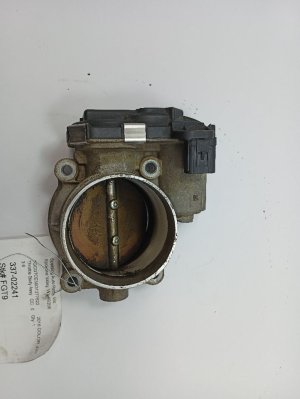
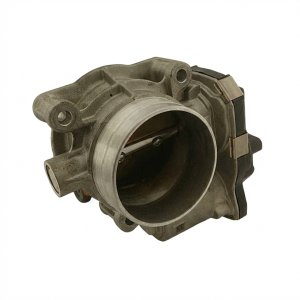
When a used part is the smart pick: For this repair, a used Throttle Body or Air Intake Duct from a low-mileage donor vehicle can be a cost-effective option. These are mechanical parts that can be visually inspected for wear or damage. A used throttle body should be thoroughly cleaned before installation.
Donor-vehicle mileage cap: roughly under 60000 miles for the part to have meaningful remaining life.
What to inspect on the donor part:
- For a throttle body, check for a clean throttle plate and smooth, unrestricted movement. Avoid units with heavy, baked-on carbon.
- For an air intake duct, squeeze the flexible rubber sections to ensure they are pliable and not brittle or cracked.
- Check the vehicle history of the donor car if possible to avoid parts from flood or collision-damaged vehicles.
OEM-only on this vehicle (don't cheap out):
- Manifold Absolute Pressure (MAP) Sensor
- Mass Airflow (MAF) Sensor
Aftermarket brands forum-validated for this vehicle:
- ACDelco (OEM)
- Bosch (for sensors)
- Delphi (for sensors)
- Dorman (for PCV tubes and intake ducts)
Brands owners have reported issues with on this vehicle:
- No-name, unbranded electronic sensors from online marketplaces should be avoided, as they often have high failure rates and can make diagnosis more difficult.
Real Owner Stories
Aggregated from forums and TSBs cited above. Mileages and costs reflect what owners reported in those sources.
2012-2015 Chevrolet Camaro 3.6L LFX
Symptoms: Owners frequently discuss P0068 and related rough idle issues.
What fixed it: Throttle body and intake valve cleaning.
Source hint: DIY LFX Intake Manifold / Valve Cleaning - Camaro5 Forum
2013-2019 Cadillac XTS 3.6L LFX — ~85000 miles
Symptoms: Carbon buildup in the throttle body on a high-mileage vehicle.
What fixed it: Cleaning the throttle body and performing an idle learn reset.
Source hint: PIP4578B: Addresses issues related to P0068 on high-mileage vehicles
Related OBD-II Codes
Frequently Asked Questions
Does GM TSB PIP4578B apply to my high-mileage Cadillac XTS?
Is there a specific part number for the PCV tube that often fails on the XTS 3.6L?
Why does my XTS enter 'Reduced Engine Power' mode when P0068 is triggered?
Do I need to perform any special procedure after cleaning the throttle body on my LFX V6?
Could my P0068 code be related to the timing chain issues common on the 3.6L engine?
How does the direct-injection design of my XTS affect the throttle body?
Helpful Videos

Used OEM Parts in Stock
New Aftermarket Parts Available


The information in this article is provided for general reference and educational purposes only. Vehicle specifications, procedures, and part compatibility can vary by production date, trim level, and region. Always consult your vehicle's factory service manual and verify part numbers before purchasing or performing repairs. Safety-critical components such as airbags, seat belts, and braking systems should be installed by a qualified professional.
- Cadillac XTS:
- 🧭 Diagnostic Flowchart
- 🎬 Helpful Videos
- 🛍️ Shop This Part
- What's Unique About the 2013-2019 Cadillac XTS
- Symptoms You May Notice
- Most Likely Causes
- Rare But Worth Checking
- Diagnosis Steps
- Parts You'll Likely Need
- Related Codes That Often Appear With This One
- Technical Service Bulletins (TSBs) & Recalls
- Platform-Specific Known Issues
- Mechanic-Grade Diagnostic Values
- Scan Tool Commands That Help
- Wiring & Ground Locations
- Real Owner Repair Stories
- "I Checked Everything" — The Actual Cause
- OEM Part Supersession History
- Model Year Variations Within This Range
- Other Known Issues on This Vehicle
- Used vs. New Parts: Buying Guide for This Vehicle
- Real Owner Stories
- 2012-2015 Chevrolet Camaro 3.6L LFX
- 2013-2019 Cadillac XTS 3.6L LFX — ~85000 miles
- Related OBD-II Codes
- Frequently Asked Questions
- 🎟️ Get 5% Off