

P0068 on 2014-2018 Chevrolet Corvette: MAP/MAF & Throttle Position Correlation Fixes
On a C7 Corvette, code P0068 is most often caused by a dirty throttle body or a vacuum leak. Cleaning the throttle body and performing an idle relearn procedure is the most common fix. If that fails, suspect a vacuum leak (especially around the intake manifold) or a faulty MAP sensor. Aftermarket air intakes installed without a tune are another frequent trigger.
- Before buying any parts for a P0068 code on a C7 Corvette, your first step should be to thoroughly clean the throttle body.
- After cleaning the throttle body, you MUST perform an idle relearn procedure for the fix to be effective.
- If cleaning doesn't work, the next most likely cause is a vacuum leak. Check the intake tube and consider having a smoke test performed.
- Only consider replacing sensors like the MAP or MAF after you have ruled out a dirty throttle body and vacuum leaks.
What's Unique About the 2014-2018 Chevrolet CORVETTE
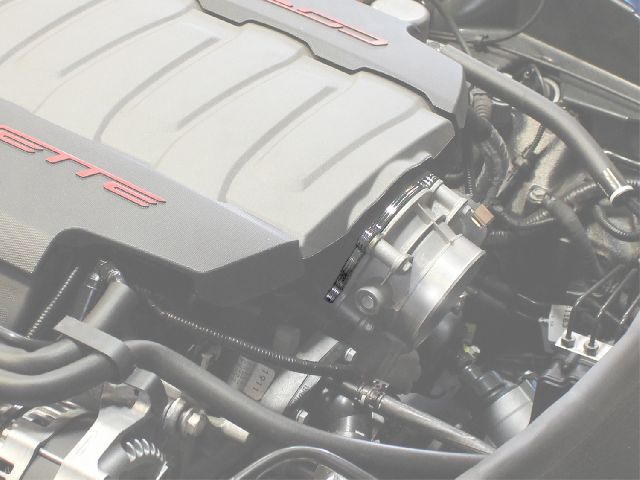
The 2014-2018 C7 Corvette's Gen V LT-series direct-injected engines are highly sensitive to airflow calculations. A primary issue, detailed in GM Technical Service Bulletin #PIP4578B, is that carbon can build up in the throttle body. The ECM learns to open the throttle plate slightly more at idle to compensate for this restriction. If the throttle body is cleaned without resetting these learned values, the now-higher airflow at the learned throttle angle will mismatch the expected values, triggering P0068 and causing an idle surge. Similarly, if the buildup becomes excessive, the ECM can no longer compensate, also setting the code. Aftermarket modifications like cold air intakes or ported throttle bodies are notorious for causing P0068 if the ECM is not retuned, as they allow more air than the factory software expects for a given throttle angle.
Diagnostic Flowchart
Tap your situation to follow the diagnostic path that matches what you're seeing on this vehicle.
Symptoms You May Notice
- Check Engine Light is on
- Engine running rough, sputtering, or misfiring, especially at idle
- Idle speed surging up to 1500-2000 RPM, especially when coming to a stop
- Hesitation or stumbling during acceleration
- Reduced Engine Power mode is activated
- Increased fuel consumption
- Blinking Service Engine Soon (SES) light, indicating a misfire
- Replacing the throttle body assembly when only a cleaning and idle relearn were necessary.
- Replacing the MAF or MAP sensor before checking for vacuum leaks or a dirty throttle body, which are far more common issues.
- Replacing the battery, assuming electrical gremlins. While a failing battery can cause many unrelated codes, P0068 by itself is rarely caused by the battery.
Most Likely Causes
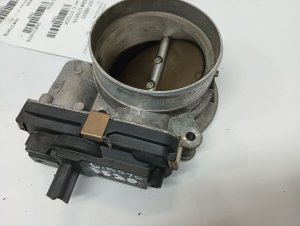
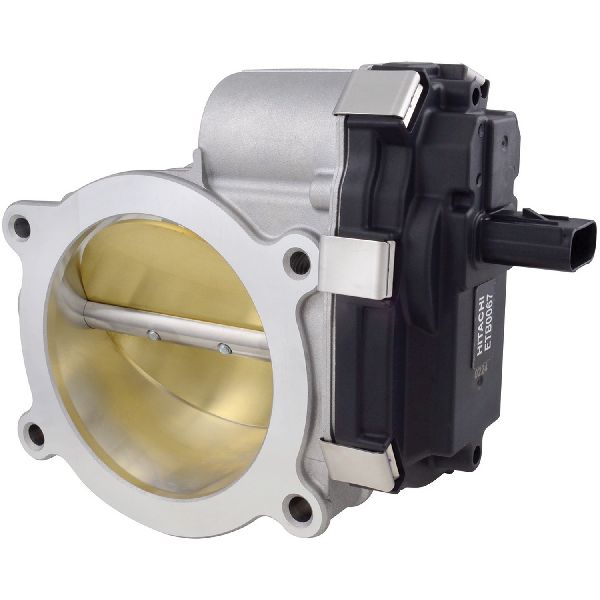
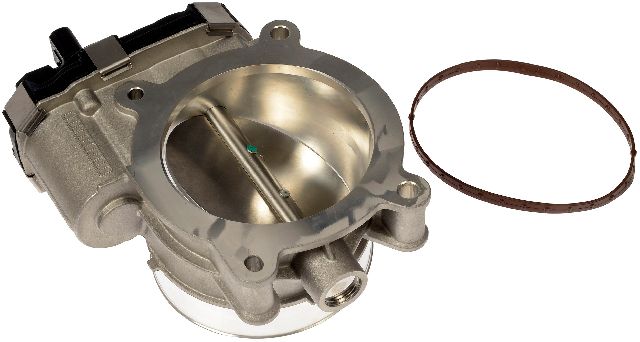
- Dirty or Carbon-Fouled Throttle Body 🔴 High Probability → Shop Fuel Injection Throttle Body As identified in TSB #PIP4578B, carbon buildup from the PCV system is a known issue on high-mileage GM direct-injection engines. The ECM compensates for the restriction until it can no longer maintain stable control or until the throttle body is cleaned without a relearn.
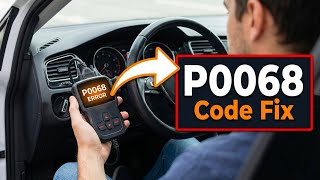
How to confirm: Visually inspect the throttle body bore and plate for a dark, greasy carbon buildup. The engine may idle erratically or surge, especially after deceleration. 🎬 Watch: How to fix a rough idle and P0068 code
Typical fix: Carefully clean the throttle body plate and bore with a dedicated throttle body cleaner and a soft cloth. Afterwards, an 'Idle Learn' or 'Throttle Relearn' procedure must be performed. This can be done with a capable scan tool or by following a manual procedure, which typically involves a series of key-on/key-off cycles and specific idle periods to allow the ECM to reset its learned values.
Est. part cost: $10-$20 for cleaner - Vacuum Leak 🟡 Medium Probability The intake manifold bolts on LT engines can sometimes loosen, allowing unmetered air to enter and disrupt the air-fuel mixture. Additionally, PCV hoses and the large rubber elbow connecting the MAF to the throttle body can crack or be improperly sealed, creating leaks.
How to confirm: Perform a smoke test to find the source of the leak; this is the most reliable method. Alternatively, listen for hissing sounds around the intake manifold, vacuum lines, and PCV system with the engine running. Spraying short bursts of brake cleaner near suspected areas and listening for a change in engine idle can also pinpoint a leak.
Typical fix: Tighten loose intake manifold bolts to the manufacturer's torque specification. Replace any cracked or faulty gaskets/hoses. Ensure the air intake tube clamps are secure.
Est. part cost: $20-$150 depending on the gasket or hose needed - Faulty Manifold Absolute Pressure (MAP) Sensor ⚪ Low Probability → Shop Manifold Absolute Pressure Sensor
How to confirm: Use a scan tool to monitor the MAP sensor voltage or pressure reading with the Key On, Engine Off (KOEO). The reading should be nearly identical to the barometric pressure (BARO) reading, typically around 4.5-5.0V or 99 kPa. At idle, voltage should drop to around 1.0-1.5V.
Typical fix: Replace the MAP sensor. It is typically located on the top rear of the intake manifold.
Est. part cost: $40-$100 - Dirty or Faulty Mass Airflow (MAF) Sensor ⚪ Low Probability → Shop Fuel Injection Air Flow Meter
How to confirm: Inspect the MAF sensor's hot wires (located in the intake tube after the air filter) for contamination like dirt or oil. Use a scan tool to monitor the MAF reading (in g/s); it should be stable at idle (typically 7-12 g/s for a V8) and increase smoothly with RPM without erratic jumps.
Typical fix: First, try cleaning the sensor with a dedicated MAF sensor cleaner. Do not touch the sensor wires. If cleaning doesn't resolve the issue, or if the sensor was damaged during cleaning attempts, replace the sensor.
Est. part cost: $15 for cleaner, $70-$200 for a new sensor
Rare But Worth Checking
- Loose or Damaged Electrical Connector/Wiring: A poor connection to the MAP, MAF, or throttle body can cause intermittent signal loss, triggering the code. Visually inspect the connectors and wiring harnesses for any signs of damage, corrosion, or looseness.
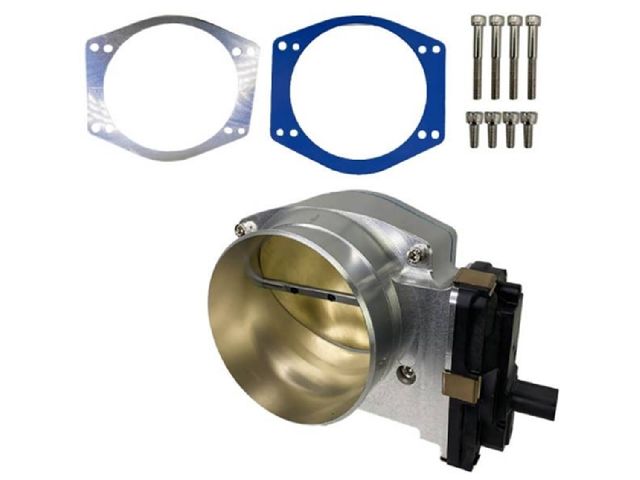
- Aftermarket Air Intake or Ported Throttle Body: → Shop Fuel Injection Throttle Body Modifications that change the airflow characteristics of the engine, such as a cold air intake or ported throttle body, can cause the factory software to see airflow readings that don't correlate with the throttle position, setting a P0068 code, especially during aggressive acceleration. A custom tune is often required to recalibrate the ECM's expected airflow tables.
- Cracked Spark Plug Insulator: In one documented case on CorvetteForum, a P0068 code accompanied by a misfire was ultimately traced to a cracked ceramic insulator on a single spark plug. This can cause erratic combustion that the ECM may misinterpret as an airflow correlation issue.
Diagnosis Steps
- Check for other stored trouble codes. P0068 is often accompanied by other codes that can help pinpoint the root cause, such as MAF codes (P0101) or lean codes (P0171).
- Visually inspect the entire air intake system from the air filter to the throttle body. Look for loose clamps, disconnected hoses, or cracks in the intake tube.
- Inspect the throttle body for carbon buildup. This is a very common cause on high-mileage LT engines.
- If the throttle body is dirty, clean it thoroughly with appropriate cleaner. Crucially, perform a throttle/idle relearn procedure afterward. A common manual procedure is: Start and idle the engine for 3 minutes. Turn the ignition off for 60 seconds. Restart and idle for another 3 minutes. The idle should stabilize. A scan tool provides a more direct reset. 🎬 See this breakdown of P0068 causes and common fixes
- If the code persists, check for vacuum leaks using a smoke machine, paying close attention to the intake manifold gasket area and all PCV connections.
- Using a scan tool, monitor live data for the MAP, MAF, and TPS sensors. Ensure their readings are plausible and change smoothly with engine RPM and load. Compare MAP to BARO with the engine off; they should be nearly identical.
- Inspect the wiring and connectors for the MAP, MAF, and throttle body for any signs of damage or corrosion.
- If all else fails and a vacuum leak has been ruled out, the issue may be with one of the sensors (MAP is more likely than MAF) or, in very rare cases, the ECM itself.
Parts You'll Likely Need
- Throttle Body Cleaner
(OEM #ACDelco 19353316 (Top Engine and Fuel Injector Cleaner))— This is the most likely first step, as a dirty throttle body is a primary cause of P0068 on this vehicle according to GM TSBs.
Trusted brands: CRC, ACDelco
Related Codes That Often Appear With This One
- P0101 — Mass Air Flow (MAF) Circuit Range/Performance. Often set with P0068 because both relate to the PCM receiving unexpected data from the MAF sensor, frequently caused by a vacuum leak or aftermarket intake.
- P0121 — Throttle/Pedal Position Sensor/Switch 'A' Circuit Performance. Often set with P0068 due to carbon buildup in the throttle body affecting sensor readings, as noted in TSB #PIP4578B.
- P2101 — Throttle Actuator Control Motor Circuit Range/Performance. This indicates a problem with the electronic throttle control system, which is directly related to the issues causing P0068.
- P2119 — Throttle Actuator Control Throttle Body Range/Performance. This code points to the throttle plate not being in the expected position, often due to carbon buildup.
- P2176 — Throttle Actuator Control System - Idle Position Not Learned. This code is set when the ECM cannot learn the proper idle position, a common consequence of a dirty throttle body or after cleaning it without performing a relearn.
Technical Service Bulletins (TSBs) & Recalls
- PIP4578B: This bulletin addresses conditions of an idle surge, reduced engine power mode, and/or DTCs P0068, P0121, P1516, P2101, P2119, and/or P2176 on high-mileage vehicles. It explicitly states that as carbon builds up, the ECM learns a new throttle angle. If the throttle body is cleaned or the ECM is replaced/reprogrammed without performing an 'idle learn reset', the learned compensation will be incorrect for the new clean state, causing drivability issues and setting codes.
Platform-Specific Known Issues
- A known issue documented in TSB #PIP4578B involves carbon buildup in the throttle body on high-mileage vehicles, leading to P0068 and other related codes. The ECM learns to compensate for the buildup, and cleaning the throttle body without performing an idle learn reset can cause the code to appear along with an idle surge.
Mechanic-Grade Diagnostic Values
- MAP Sensor Voltage (Key On, Engine Off) — expected: ~4.5V - 5.0V (Should match Barometric Pressure). Failure: Voltage significantly lower than 4.5V or not matching BARO reading on a scan tool.
- MAP Sensor Voltage (Engine at warm idle) — expected: ~1.0V - 1.5V. Failure: Voltage significantly higher than 1.5V at idle, indicating low vacuum or a sensor fault.
- MAF Sensor Airflow (Engine at warm idle) — expected: ~7 g/s to 12 g/s for a stock V8. Failure: Readings are erratic, jumpy, or significantly outside this range at a steady idle.
- Throttle Position Sensor (TPS) Voltage — expected: ~0.5V at closed throttle to ~4.5V at wide-open throttle. Failure: Voltage does not sweep smoothly or has dead spots when the throttle is slowly opened.
- 5-Volt Reference Circuit — expected: 4.9V - 5.1V. Failure: Voltage outside this range indicates a problem with the ECM or a short in one of the sensors sharing the circuit.
Scan Tool Commands That Help
- GDS2 / Tech2 or equivalent high-end scanner: Idle Learn Reset / Throttle Relearn — This function is critical after cleaning or replacing the throttle body. It resets the learned idle airflow values in the ECM to prevent a high idle or P0068 from being set due to the change in airflow characteristics.
- HP Tuners / EFI Live: Adjust 'Max Airflow vs RPM' table under Diagnostics — This is an advanced tuning function used to resolve P0068 after installing a ported throttle body or high-flow aftermarket intake. It raises the ECM's expected airflow limit to match the new hardware, preventing the code during aggressive throttle changes.
Wiring & Ground Locations
- MAP Sensor Connector (K20 ECM, X2) — On the MAP sensor, located at the rear of the intake manifold near the firewall.. A poor connection here directly affects the MAP signal. Pin 43 (L-GN/WH) is the signal wire, Pin 44 (GY-RD) is the 5-volt reference, and Pin 63 (BK/L-GN) is the low reference/ground.
- G103 — On the cowl in the left rear of the engine compartment, above the brake booster.. This is a major ground point for the Body Control Module (BCM) and the Data Link Connector (DLC). While not a direct engine sensor ground, poor grounding here can cause a wide range of communication errors and phantom codes.
- G101 / G106 — G101 is on the right side of the engine block; G106 is on the front center of the frame cross rail under the crank pulley. They are jumpered together.. This is a primary ground for the Engine Control Module (ECM) and Mass Air Flow sensor. A loose or corroded connection here can directly cause faulty sensor readings and trigger P0068.
Real Owner Repair Stories
- CorvetteForum user 'BusDriverC6' (2008 Corvette (C6, but same principle and code)) — Started rough, CEL on, Service Traction Control, REP/limp mode, code P0068. After reset, still had idle surge up to 1500-2000 RPM when decelerating.
❌ Tried (didn't work) Clearing the code, checking plug wires, checking for intake obstructions.
✅ What actually fixed it Cleaning four engine compartment grounding points (two under the battery, one on each fender) and reinstalling the battery cleared the code. The user still planned to clean the MAF and throttle body to address the remaining idle surge.
OEM Part Supersession History
12678223→12740727— Standard part revision by the manufacturer.
Heads up: The parts are interchangeable. 12678223 was the common throttle body for LT1/LT4 engines in this range.12644228→12711681— Standard part revision for the MAP sensor.
Heads up: The parts are interchangeable for the C7 Corvette.
Model Year Variations Within This Range
- 2015-2018 (Z06): The supercharged LT4 engine in the Z06 has multiple pressure sensors. A P0068 (or more commonly P0106) can sometimes be triggered under high load not by a faulty part, but by an ECU software calibration issue. A dealer reflash may be required before replacing sensors.
Helpful Videos
Used OEM Parts in Stock
New Aftermarket Parts Available

The information in this article is provided for general reference and educational purposes only. Vehicle specifications, procedures, and part compatibility can vary by production date, trim level, and region. Always consult your vehicle's factory service manual and verify part numbers before purchasing or performing repairs. Safety-critical components such as airbags, seat belts, and braking systems should be installed by a qualified professional.
- Chevrolet CORVETTE:
- 🧭 Diagnostic Flowchart
- 🎬 Helpful Videos
- 🛍️ Shop This Part
- What's Unique About the 2014-2018 Chevrolet CORVETTE
- Symptoms You May Notice
- Most Likely Causes
- Rare But Worth Checking
- Diagnosis Steps
- Parts You'll Likely Need
- Related Codes That Often Appear With This One
- Technical Service Bulletins (TSBs) & Recalls
- Platform-Specific Known Issues
- Mechanic-Grade Diagnostic Values
- Scan Tool Commands That Help
- Wiring & Ground Locations
- Real Owner Repair Stories
- OEM Part Supersession History
- Model Year Variations Within This Range
- 🎟️ Get 5% Off