

P0068 on 2006-2010 Chevrolet Express: MAP/MAF Throttle Position Correlation Fixes
On a 2006-2010 Chevrolet Express, code P0068 is most often caused by a dirty electronic throttle body, especially on higher mileage vans. Cleaning the throttle body bore and plate is a common first step and may resolve the issue for under $20. If that fails, suspect a vacuum leak or a faulty MAP sensor. A throttle relearn procedure is often required after cleaning.
- Start with the simplest and most likely fix: thoroughly clean the throttle body.
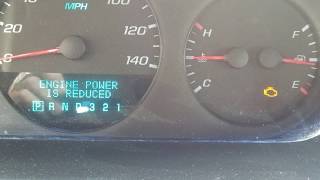
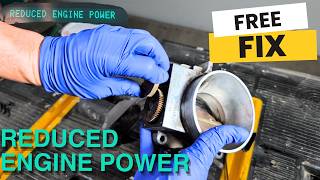
- This code often triggers the 'Reduced Engine Power' mode, which is a significant drivability and safety issue that should be addressed promptly.
- Do not immediately replace expensive sensors; a dirty throttle body or a simple vacuum leak is a more probable cause on these vans.
- Be aware that multiple throttle-related codes (P0121, P1516, etc.) often appear with P0068, all pointing to the electronic throttle control system.
- After cleaning or replacing the throttle body, the engine may idle unusually for a short time as the computer relearns its settings.
What's Unique About the 2006-2010 Chevrolet EXPRESS
For this generation of Chevrolet Express and other GM trucks, the electronic throttle body is a known weak point, particularly on high-mileage vehicles. A Technical Service Bulletin (TSB #PIP4578B) was issued for idle surge and a group of throttle-related codes, including P0068. [⭐] This bulletin explains that as carbon from the PCV system builds up in the throttle body, the PCM learns to compensate by opening the throttle plate slightly more at idle. Eventually, the buildup becomes so significant that the PCM's adjustments can't maintain a stable correlation between the expected and measured airflow, triggering the P0068 fault. This is why simply cleaning the throttle body without performing an "idle learn reset" can cause the code to return, as the PCM is still using the old, incorrect learned values.
Diagnostic Flowchart
Tap your situation to follow the diagnostic path that matches what you're seeing on this vehicle.
Symptoms You May Notice
- Check Engine Light is on
- "Reduced Engine Power" me 🎬 Watch this video to fix the Reduced Engine Power message.ssage on the dash
- Rough or unstable idle, sometimes described as a surge or fluctuation.
- Poor acceleration or hesitation, feeling like a 'dead spot' when pressing the gas pedal.
- Engine stalling, especially when coming to a stop or at low RPMs.
- Increased fuel consumption.
- Difficulty starting the engine.
- Replacing the MAP or MAF sensor without first thoroughly inspecting and cleaning the throttle body.
- Replacing the throttle body without first checking for vacuum leaks, which are a cheaper and common cause.
- Cleaning the throttle body but failing to perform the idle relearn procedure, causing the code and rough idle to return.
Most Likely Causes
- Dirty or Clogged Throttle Body 🔴 High Probability → Shop Fuel Injection Throttle Body As noted in TSB PIP4578B, high-mileage GM trucks and vans of this era are prone to carbon and oil buildup in the throttle body from the PCV system. This greasy, black sludge (sometimes called 'coke') restricts airflow and can make the throttle plate stick, causing a mismatch between its actual position and what the computer expects. [⭐, 15]
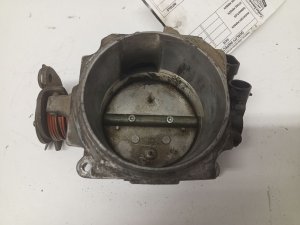
How to confirm: Remove the air intake duct from the throttle body and visually inspect the throttle bore and plate for a layer of black carbon/oily residue. The buildup is often heaviest on the back of the plate and in the bore where the plate rests at idle.
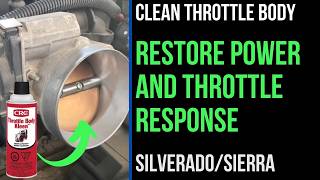
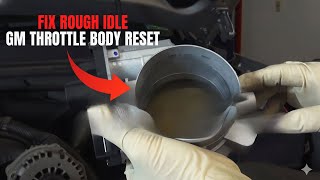
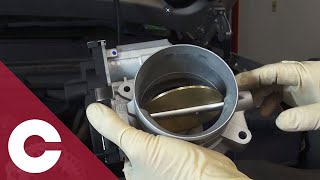
Typical fix: Remove the throttle body from the intake manifold and clean it thoroughly with a dedicated throttle body cleaner and a soft cloth or brush. 🎬 Watch: A simple walkthrough for cleaning your GM throttle body. Do not force the electronic throttle plate by hand. After cleaning and reinstallation, a throttle relearn procedure is critical. [⭐, 14]
Est. part cost: $10-$20 for cleaner - Vacuum Leak 🟡 Medium Probability Intake manifold gaskets and various vacuum hoses (especially the PCV hose) can become brittle and crack over time due to age and heat cycles, allowing unmetered air to enter the engine. This extra air disrupts the calculations made by the PCM.
How to confirm: A professional smoke test is the most effective method. A DIY approach is to carefully spray carburetor cleaner around suspected leak points (intake manifold gaskets, vacuum lines, base of the throttle body) with the engine running; a change in idle RPM indicates a leak.
Typical fix: Replace the leaking gasket or hose. The intake manifold gaskets are a common failure point that can be replaced by a moderately skilled DIYer.
Est. part cost: $5-$100 depending on the leaking component - Faulty Manifold Absolute Pressure (MAP) Sensor 🟡 Medium Probability → Shop Manifold Absolute Pressure Sensor
How to confirm: Use a scan tool to monitor the MAP sensor reading (Key On, Engine Off). It should read close to the BARO (Barometric Pressure) sensor. With the engine running at idle, the reading should drop significantly (e.g., to around 1.0-1.5 volts). Compare the readings to manufacturer specifications. A sensor that is slow to respond or provides erratic readings is likely faulty.
Typical fix: Replace the MAP sensor. It is typically a push-in, clip-on style sensor mounted directly on the intake manifold, making for a relatively easy replacement.
Est. part cost: $30-$80 - Dirty or Faulty Mass Airflow (MAF) Sensor ⚪ Low Probability → Shop Fuel Injection Air Flow Meter
How to confirm: First, try cleaning the sensor with a dedicated MAF sensor cleaner. If the problem persists, monitor the MAF reading (in grams/second) on a scan tool to see if it responds correctly to changes in engine RPM. A faulty sensor may provide erratic or no readings. An overly oiled aftermarket air filter can also contaminate the MAF sensor.
Typical fix: Clean the sensor first. If cleaning doesn't work, replace the MAF sensor assembly.
Est. part cost: $15 for cleaner, $60-$150 for a new sensor
Rare But Worth Checking
- Clogged Air Filter: A severely clogged air filter can restrict airflow enough to cause a discrepancy between sensor readings. Always check the simple things first.
- Damaged Wiring or Connectors: Inspect the wiring harnesses for the MAP, MAF, and throttle body for any signs of corrosion, chafing, or loose pins, as this can cause intermittent signal loss. Water intrusion into the Throttle Actuator Control (TAC) module connector is also a possibility.
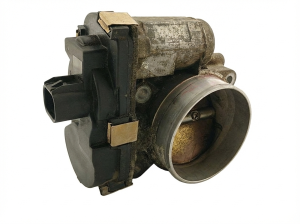
- Failing Throttle Body Assembly: → Shop Fuel Injection Throttle Body If cleaning the throttle body does not resolve the issue and a relearn procedure fails, the internal electronics of the Throttle Position Sensor (TPS) or the actuator motor may be failing. In this case, the entire throttle body assembly needs to be replaced.
Diagnosis Steps
- Check for other stored trouble codes that could provide more clues.
- Visually inspect the entire air intake system from the air filter box to the throttle body for any loose clamps, cracked hoses, or disconnected lines.
- Remove the intake duct and carefully inspect the throttle body bore and plate for heavy carbon buildup.
- If dirty, disconnect the negative battery terminal, remove the throttle body, and clean it thoroughly using MAF/throttle body cleaner and a soft rag. Do not spray cleaner directly into the intake manifold.
- While the intake is accessible, inspect vacuum lines for cracks or brittleness, especially the PCV hose connected to the intake.
- Reinstall the throttle body and reconnect the battery.
- Perform a Throttle Body Relearn Procedure. A common manual method is: Start the engine and let it idle in Park for 3 minutes. Turn the ignition OFF for 60 seconds. Start the engine again and let it idle in Park for another 3 minutes. The idle should stabilize. If this fails, a scan tool may be required 🎬 See how to manually reset and relearn your throttle body. to perform the 'Idle Learn Reset'.
- If the code returns, use a scan tool to monitor live data from the MAP, MAF, and TPS sensors to check for erratic or out-of-range readings.
- If a vacuum leak is suspected, perform a smoke test to pinpoint the source.
Parts You'll Likely Need
- Throttle Body Cleaner — This is the first and most common fix for P0068 on this vehicle, used to remove carbon buildup causing the throttle plate to stick.
Trusted brands: CRC, Gumout, ACDelco
Aftermarket price range: $10-$20 - Throttle Body Assembly
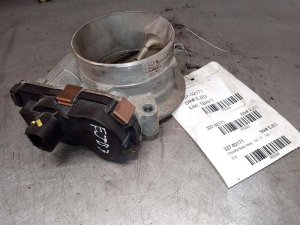
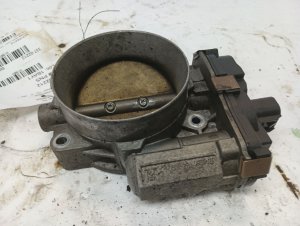
(OEM #ACDelco 217-3151 (GM 12670839) for 5.3L/6.0L V8s is a common replacement.)— If cleaning does not work, the internal sensors (TPS) or actuator motor may have failed, requiring replacement of the entire unit.
Trusted brands: ACDelco, Delphi, Hitachi, Dorman
OEM price range: $250-$400
Aftermarket price range: $150-$250 - Manifold Absolute Pressure (MAP) Sensor
(OEM #ACDelco 19418808 (replaces 12614973, 16249939).)— A faulty MAP sensor can send incorrect pressure readings to the PCM, causing the correlation error. It's a common failure point after the throttle body is ruled out.
Trusted brands: ACDelco, Bosch, Delphi
OEM price range: $50-$90
Aftermarket price range: $30-$80
Related Codes That Often Appear With This One
- P0121 — Throttle Position Sensor (TPS) Performance problem. Often set together as both relate to the throttle body's function and are listed in the same TSB. [⭐]
- P1516 — Throttle Actuator Control (TAC) Module Performance. This is a GM-specific code indicating a problem with the electronic throttle control system, often triggered alongside P0068. [⭐]
- P2101 — Throttle Actuator Control Motor Circuit Range/Performance. Points to a problem with the motor that opens and closes the throttle plate, also mentioned in TSB PIP4578B. [⭐]
- P2176 — Throttle Actuator Control System - Idle Position Not Learned. This can occur after cleaning or replacing the throttle body if a relearn procedure isn't performed correctly. [⭐]
- P0106 — Manifold Absolute Pressure (MAP) Sensor Performance. This code can appear with P0068 when the MAP sensor's signal is irrational or doesn't correlate with the throttle's position.
Technical Service Bulletins (TSBs) & Recalls
- PIP4578B: Addresses idle surge, reduced engine power mode, and DTCs including P0068, P0121, P1516, P2101, P2119, and/or P2176. It explicitly states that as carbon builds up, the PCM compensates by increasing the throttle plate angle. The primary fix recommended is to clean the throttle body and perform an 'idle learn reset' with a scan tool.
Platform-Specific Known Issues
- TSB-Documented Throttle Body Coking: → Shop Fuel Injection Throttle Body A known issue, documented in TSB #PIP4578B, involves carbon buildup on the throttle body leading to this code, especially in high-mileage vans. This often results in an idle surge or the vehicle entering 'Reduced Engine Power' mode. The fix requires not only cleaning but also a specific idle learn reset procedure.
- Real-World Repair Story: A user on PerformanceTrucks.net with a GM truck experiencing P0068 and P0106 went into 'Reduced Engine Power' mode. After swapping a known-good MAP sensor and throttle body didn't fix it, and checking wiring yielded no results, the issue was eventually traced back to the throttle body needing a thorough cleaning and idle learn reset as described in TSB PIP4578A (an earlier version of the bulletin). This highlights how even when parts aren't faulty, the carbon buildup itself is enough to trigger the code.
Mechanic-Grade Diagnostic Values
- MAP Sensor Voltage (Key On, Engine Off) — expected: ~4.5 Volts at sea level, decreasing with altitude. Failure: Voltage significantly lower or higher, or not matching BARO sensor reading on a scan tool.
- MAP Sensor Voltage (Engine at Idle) — expected: 1.0 - 1.5 Volts. Failure: Voltage is stuck high (near KOEO reading) or is erratic.
- Throttle Position Sensor 1 (TPS1) Voltage — expected: ~0.4 - 0.8V at closed throttle, rising smoothly to ~4.5V at Wide-Open Throttle (WOT).. Failure: Voltage jumps, drops out, or has dead spots as the throttle is slowly opened.
- Mass Airflow (MAF) Sensor Reading (V8 Engines at Idle) — expected: 4.0 - 6.0 grams/second (g/s). Failure: Reading is stuck, erratic, or significantly outside the expected range for the given RPM.
Scan Tool Commands That Help
- Tech2 / GDS2 / Professional Scan Tool: Idle Learn Reset (or Throttle/Idle Learn) — This is critical after cleaning or replacing the throttle body. The PCM stores learned airflow adjustments to compensate for carbon buildup. This command erases those old values, forcing the PCM to relearn the idle characteristics with the clean/new throttle body, preventing the P0068 code from returning.
Wiring & Ground Locations
- G103 / G104 — Engine grounds typically located on the rear of the left (driver's side) cylinder head or the front of the engine block.. The ECM and its sensors rely on clean ground connections. A corroded or loose G103 or G104 ground can cause erratic voltage readings from the MAP, MAF, and TPS, leading to a false correlation code.
- Throttle Body Connector (6-pin) — The electrical connector on the electronic throttle body.. Allows for direct testing of sensor circuits. Pin E (Yellow) is often the 5V reference, Pin B (Dark Blue) is the low reference/ground. TPS signal wires are typically on other pins (e.g., Pin D - Light Blue, Pin A - Brown). Verifying 5V reference and clean ground at the connector is a key diagnostic step.
Real Owner Repair Stories
- PerformanceTrucks.net Forums (Chevrolet Truck with similar GM V8 engine) — Truck started acting like it wasn't firing on all cylinders, then went into 'Reduced Engine Power' mode.
❌ Tried (didn't work) Replaced MAP sensor with a known good one., Replaced Drive-by-Wire Throttle Body with a known good one., Checked all wiring and grounds.
✅ What actually fixed it The user found a wet spark plug (#5) and suspected a bad plug wire or coil pack, shifting the diagnosis away from the throttle/sensor correlation issue to a misfire that was likely causing erratic manifold pressure readings.
"I Checked Everything" — The Actual Cause
- A hairline crack in the plastic intake manifold. A smoke test on a cold engine may not reveal the leak. As the engine warms up, the plastic expands, opening the crack and allowing unmetered air to enter, which triggers the P0068 code. The fix is to replace the entire intake manifold assembly.
OEM Part Supersession History
12627217, 12669073→12670839— GM regularly updates parts to integrate new materials and technologies.
Heads up: While the part number 12670839 is listed for many GM vehicles, it primarily fits 4-cylinder engines and is NOT the correct throttle body for the V8 engines in the 2006-2010 Express. The correct V8 throttle body is ACDelco 217-3151 (GM 12670839 is an incorrect cross-reference in some catalogs). Always verify fitment with the vehicle's VIN.
Model Year Variations Within This Range
- 2006-2010: The Express was available with a 4.3L V6 as well as 4.8L, 5.3L, and 6.0L V8s. The V6 uses different part numbers for the throttle body and sensors compared to the V8s. The V8 models (4.8L, 5.3L, 6.0L) share many of the same components relevant to this code, such as the throttle body and MAP sensor.
Helpful Videos


Used OEM Parts in Stock
New Aftermarket Parts Available


The information in this article is provided for general reference and educational purposes only. Vehicle specifications, procedures, and part compatibility can vary by production date, trim level, and region. Always consult your vehicle's factory service manual and verify part numbers before purchasing or performing repairs. Safety-critical components such as airbags, seat belts, and braking systems should be installed by a qualified professional.
- Chevrolet EXPRESS:
- 🧭 Diagnostic Flowchart
- 🎬 Helpful Videos
- 🛍️ Shop This Part
- What's Unique About the 2006-2010 Chevrolet EXPRESS
- Symptoms You May Notice
- Most Likely Causes
- Rare But Worth Checking
- Diagnosis Steps
- Parts You'll Likely Need
- Related Codes That Often Appear With This One
- Technical Service Bulletins (TSBs) & Recalls
- Platform-Specific Known Issues
- Mechanic-Grade Diagnostic Values
- Scan Tool Commands That Help
- Wiring & Ground Locations
- Real Owner Repair Stories
- "I Checked Everything" — The Actual Cause
- OEM Part Supersession History
- Model Year Variations Within This Range
- 🎟️ Get 5% Off