

P0068 on 2014-2017 Chevrolet Impala: MAP/MAF & Throttle Correlation Fixes
Code P0068 on a 2014-2017 Impala usually points to a vacuum leak, often from loose intake manifold bolts, or a dirty throttle body. Before replacing sensors, check the intake manifold bolt torque (89 lb-in) and clean the throttle body, as these are common, low-cost fixes documented in GM service bulletins.
- Always check for loose intake manifold bolts first on a 2014-2017 Impala with code P0068, especially if other codes like P0101, P0106, or P0171 are present. This is a known issue.
- A dirty throttle body is the second most likely cause. Cleaning it is a simple, low-cost diagnostic step.
- Do not replace the MAP, MAF, or throttle position sensors until you have ruled out vacuum leaks and a dirty throttle body.
- This code indicates a problem with the *correlation* of sensor data, which often means one sensor is accurately reporting a problem caused by something else (like a vacuum leak).
What's Unique About the 2014-2017 Chevrolet IMPALA
On this generation of Chevrolet Impala with the 2.5L LKW or 3.6L LFX engines (and other GM vehicles with similar powerplants), P0068 is frequently not caused by a failed sensor. Instead, it is often triggered by a physical issue like a vacuum leak from loose intake manifold bolts, a known issue documented in GM Technical Service Bulletin PIP5529B. This can cause a cluster of codes to appear at once, making diagnosis seem more complex than it is.
Diagnostic Flowchart
Tap your situation to follow the diagnostic path that matches what you're seeing on this vehicle.
Symptoms You May Notice
- Rough or unstable idle.
- Hesitation or stumbling during acceleration.
- Reduced engine power or 'limp mode'.
- Engine may stall, especially when coming to a stop.
- Illuminated Check Engine Light.
- Poor fuel economy.
- "Reduced Engine Power" message on the dash display.
- Replacing the MAP or MAF sensor before checking for vacuum leaks or a dirty throttle body. The sensors are often reporting a real airflow problem, not failing themselves.
Most Likely Causes
- Vacuum Leak (Especially Loose Intake Manifold Bolts) 🔴 High Probability GM has issued Technical Service Bulletins (PIP5529B, PIP5529A) that specifically mention P0068 in conjunction with other codes resulting from loose intake manifold bolts, allowing unmetered air to enter the engine. This affects the 2.5L LKW and other common Impala engines.
How to confirm: Listen for a hissing sound around the intake manifold at idle. A definitive way to check is to test the torque of the intake manifold bolts. A professional can use a smoke machine to find the exact source of the leak.
Typical fix: Tighten the intake manifold bolts to the manufacturer's specification, which is 89 lb-in (10 Nm). For a more permanent fix, as recommended by TSB PIP5529B, remove each bolt one at a time, apply medium-strength threadlocker, and re-torque in the proper sequence.
Est. part cost: $0-$10 (for threadlocker) - Dirty or Clogged Throttle Body 🔴 High Probability → Shop Fuel Injection Throttle Body Carbon and oil vapor from the PCV (Positive Crankcase Ventilation) system can build up around the throttle plate, restricting airflow at idle and causing a mismatch between the expected and actual airflow. 🎬 Watch: Understanding the P0068 correlation code and its common fixes.
How to confirm: Remove the air intake tube connected to the throttle body and visually inspect for a dark, greasy buildup (coke) around the throttle plate and bore.
Typical fix: Clean the throttle body using a dedicated throttle body cleaner and a soft cloth or brush. Do not spray cleaner directly into the throttle body while it's connected. After cleaning, a throttle relearn procedure is necessary.
Est. part cost: $10-$20 (for cleaner) - Faulty Manifold Absolute Pressure (MAP) Sensor 🟡 Medium Probability → Shop Manifold Absolute Pressure Sensor
How to confirm: After ruling out vacuum leaks and a dirty throttle body, use a scan tool to monitor the MAP sensor voltage. The reading should change smoothly with engine load and RPM. If it's erratic or stuck, the sensor is likely faulty.
Typical fix: Replace the MAP sensor. It is typically mounted directly on the intake manifold.
Est. part cost: $30-$90 - Dirty or Faulty Mass Airflow (MAF) Sensor ⚪ Low Probability → Shop Fuel Injection Air Flow Meter
How to confirm: Inspect the MAF sensor's sensing elements (located in the intake tube after the air filter) for dirt or contamination. A scan tool can also show if the MAF readings (in grams/second) increase smoothly with RPM.
Typical fix: First, try cleaning the sensor with a dedicated MAF sensor cleaner. Do not touch the delicate wires. If cleaning doesn't resolve the issue, replace the sensor.
Est. part cost: $15-$100
Rare But Worth Checking
- Damaged Wiring or Connectors: Check the wiring harnesses for the MAP, MAF, and throttle body for any signs of corrosion, chafing, or loose pins, especially if other work has recently been done in the engine bay.
- Clogged Engine Air Filter: A severely clogged air filter can restrict airflow enough to cause a correlation error between the sensors. It's a simple and inexpensive item to check and replace.
- Cracked Air Intake Duct: The flexible plastic/rubber ducting between the air filter housing and the throttle body can develop cracks, allowing unmetered air to enter after the MAF sensor, which can trigger P0068. This is a known issue on the 3.6L V6 engine.
Diagnosis Steps
- Scan for Codes: Use an OBD-II scanner to confirm P0068 and check for any other related codes like P0101, P0106, or P0171. Note the freeze-frame data.
- Inspect for Vacuum Leaks: Visually inspect all vacuum hoses and the air intake tube for cracks or loose connections. Listen for hissing sounds near the intake manifold.
- Check Intake Manifold Bolt Torque: Following TSB PIP5529B, check the torque on the intake manifold bolts. If they are loose, this is the most likely cause. Tighten them to 89 lb-in (10 Nm). For a permanent fix, add threadlocker.
- Inspect and Clean Throttle Body: Remove the air intake hose from the throttle body and inspect it for carbon buildup. If dirty, clean it thoroughly with throttle body cleaner and a soft cloth.
- Inspect and Clean MAF Sensor: Locate the MAF sensor in the intake duct. Remove it and inspect the sensing wires. If they appear dirty, spray them with dedicated MAF sensor cleaner and allow them to air dry completely before reinstalling.
- Test Sensor Data: Use a scan tool with live data capability to monitor the voltage/readings from the MAP, MAF, and TPS sensors while the engine is running. Ensure their values change smoothly and logically as you press and release the accelerator.
- Check Wiring: If sensor data is erratic or missing, inspect the connectors and wiring to each sensor for damage, corrosion, or loose connections.
- Perform Throttle Relearn: After cleaning or replacing the throttle body, a relearn procedure is needed. A common manual method is: 1. Turn ignition ON (engine off) for 3 minutes. 2. Turn ignition OFF for 1 minute. 3. Start engine and let it idle in Park for 3 minutes. 4. Turn engine OFF for 1 minute. 5. Restart engine. The idle should now be stable. A scan tool can also perform this function.
Parts You'll Likely Need
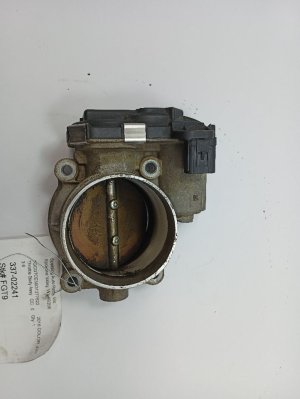
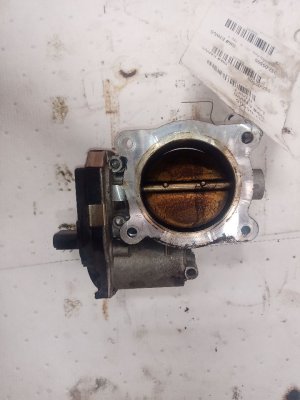
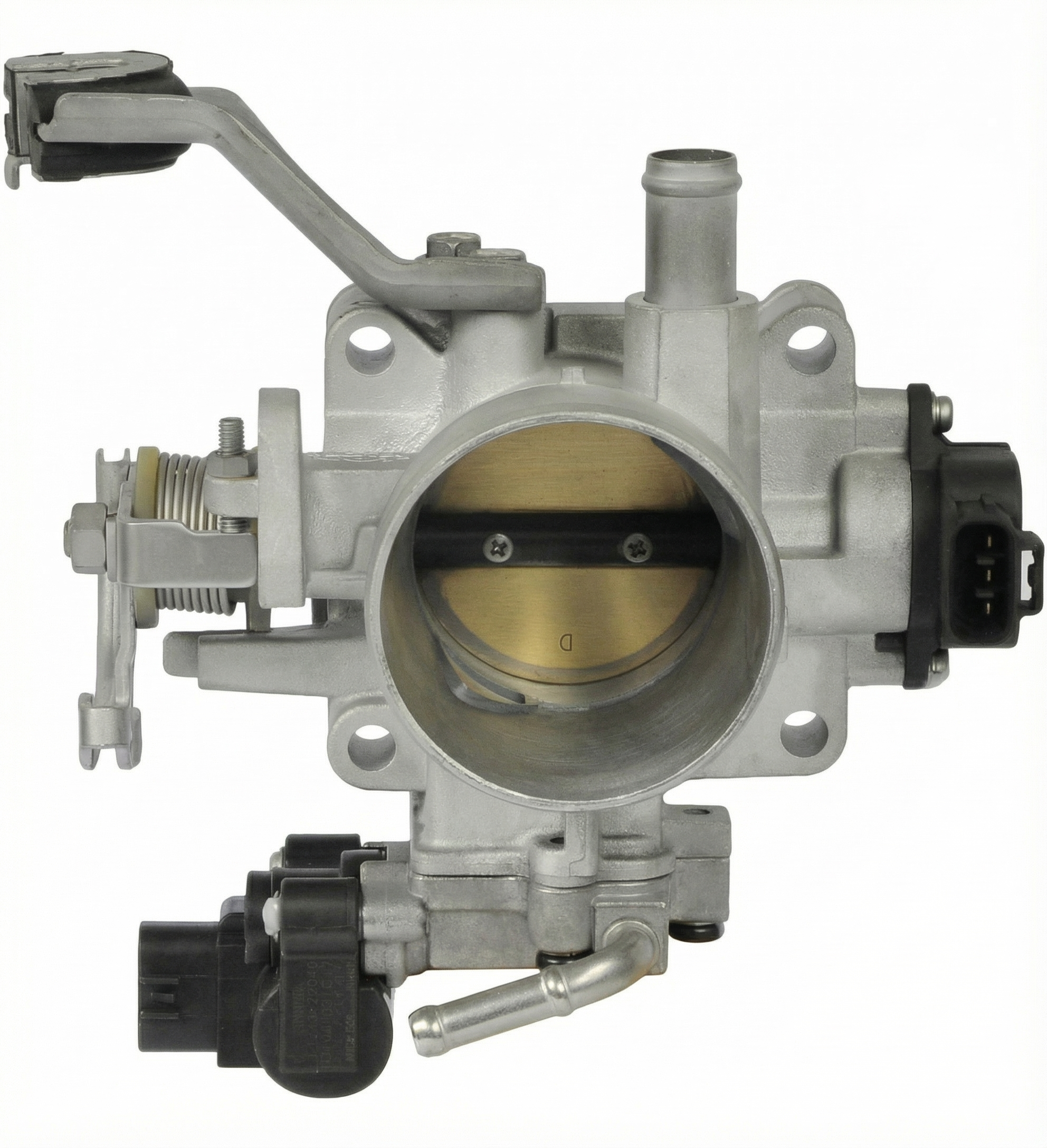
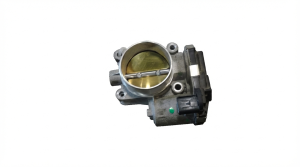
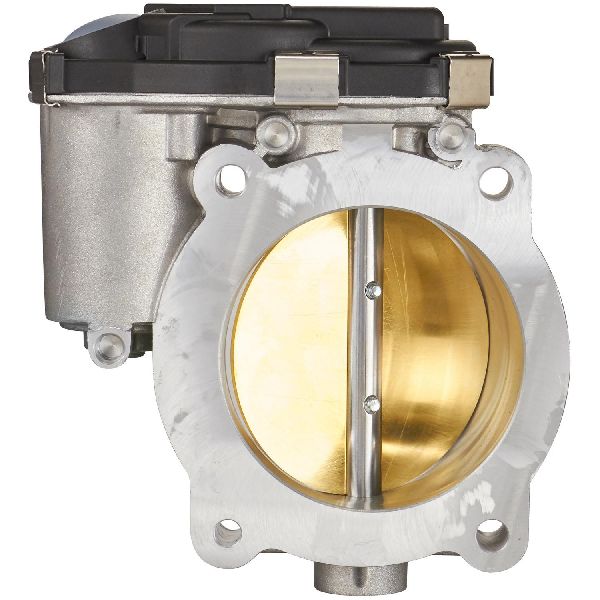
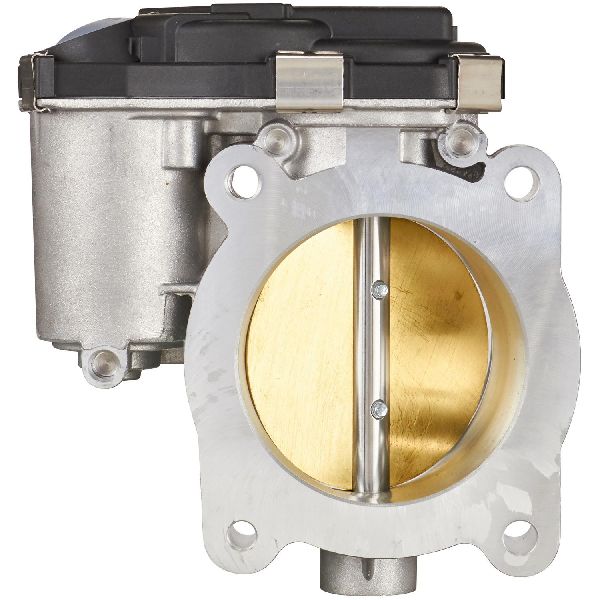
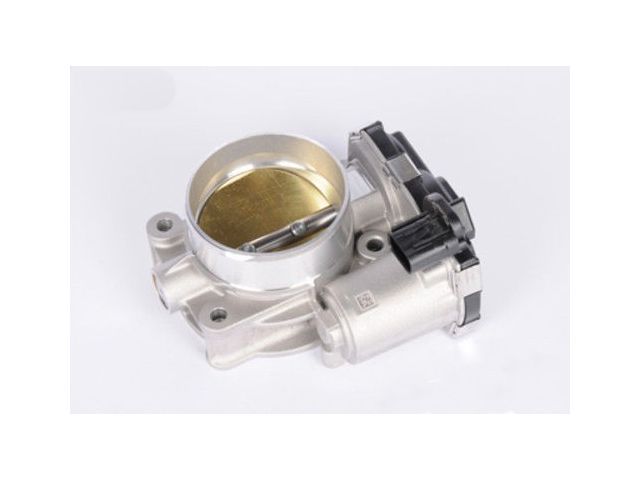
- Throttle Body — Often just needs cleaning, but if the internal electronic throttle position sensor has failed, the entire unit must be replaced.
Trusted brands: ACDelco, Bosch
OEM price range: $150-$250
Aftermarket price range: $80-$180 - Manifold Absolute Pressure (MAP) Sensor
(OEM #12644228)— If vacuum leaks are ruled out and the sensor's readings are erratic or incorrect on a scan tool, it has likely failed. The OEM part number 12644228 (or compatible 55573248) is the correct replacement.
Trusted brands: ACDelco, Delphi
OEM price range: $50-$90
Aftermarket price range: $30-$60 - Intake Manifold Gasket Set — If tightening the intake manifold bolts does not solve a vacuum leak, the gaskets themselves may have failed and will need to be replaced. TSB PIP5529B advises against replacing them unless a leak is confirmed after torquing the bolts.
Trusted brands: ACDelco, Fel-Pro
OEM price range: $40-$70
Aftermarket price range: $20-$40
Related Codes That Often Appear With This One
- P0101 — Mass Airflow (MAF) Circuit Range/Performance. This code often appears with P0068 because both relate to implausible airflow readings. TSB #PIP5529B lists them together as being caused by loose intake manifold bolts.
- P0106 — Manifold Absolute Pressure (MAP) Sensor Performance. This is a direct companion code, as a vacuum leak will cause the MAP sensor's readings to be out of the expected range. It is also listed in TSB #PIP5529B.
- P0171 — System Too Lean (Bank 1). A vacuum leak allows unmetered air into the engine, which creates a lean air-fuel mixture, triggering this code alongside P0068. This is another key code mentioned in TSB #PIP5529B.
- P0506 — Idle Air Control RPM Lower Than Expected. An airflow issue from a vacuum leak or dirty throttle body can prevent the ECM from maintaining the target idle speed. Also listed in TSB #PIP5529B.
Technical Service Bulletins (TSBs) & Recalls
- Addresses a stall, hesitation, or illuminated MIL with a combination of codes including P0068, P0101, P0106, P0171, and P0506. The bulletin identifies loose intake manifold bolts as the cause. The recommended correction is to remove one bolt at a time, apply medium strength threadlocker, and torque to specification. It explicitly states not to replace the gasket unless a leak is confirmed after torquing.
- An earlier version of PIP5529B with a similar diagnosis, pointing to loose intake manifold bolts as the cause for the cluster of codes. The primary update in version B was the explicit instruction to use threadlocker.
Platform-Specific Known Issues
- Technical Service Bulletin #PIP5529B documents that a combination of codes (P0068, P0101, P0106, P0171, P0506) is very commonly caused by loose intake manifold bolts on the 2.5L LKW and other GM engines, rather than a sensor failure. The fix is to re-torque the bolts to 89 lb-in (10 Nm), adding threadlocker for durability.
Mechanic-Grade Diagnostic Values
- MAP Sensor Voltage (Key On, Engine Off) — expected: ~4.5 - 5.0 Volts DC. Failure: Voltage is significantly lower or does not match BARO reading on a scan tool.
- MAP Sensor Voltage (Engine Idling) — expected: ~1.0 - 1.5 Volts DC. Failure: Voltage is high (closer to KOEO reading), indicating a vacuum leak or faulty sensor.
- Throttle Position Sensor (TPS) Voltage (Closed Throttle) — expected: ~0.5 - 0.9 Volts DC. Failure: Voltage is outside this range or does not read smoothly when opening the throttle.
- Throttle Position Sensor (TPS) Voltage (Wide Open Throttle) — expected: ~4.5 - 5.0 Volts DC. Failure: Voltage does not reach this level or has dead spots during throttle sweep.
- Mass Airflow (MAF) Sensor Reading (Engine Idling, 3.6L V6) — expected: Approx. 3.6 - 4.5 grams/second (g/s). Failure: Reading is significantly lower than calculated airflow on a scan tool (e.g., 2.5 g/s actual vs 4.5 g/s calculated), suggesting a faulty sensor.
- Sensor Ground Wire Resistance — expected: < 5 Ohms to a known good chassis ground. Failure: High resistance indicates a poor ground connection, which can skew sensor readings.
Scan Tool Commands That Help
- GDS2 (GM Dealer Tool): Reset All Learned Values — After replacing a component like a MAP sensor or cleaning the throttle body, the ECM may retain incorrect learned airflow values. Resetting these forces the ECM to relearn, which can be necessary if the code returns after a repair.
- Any OBD-II Scanner: Unplug MAF Sensor Test — If a faulty MAF is suspected, unplugging it forces the engine to run on a default fueling strategy. If the engine's performance (e.g., rough idle) improves significantly with the sensor unplugged, it strongly points to a failed MAF sensor. This will set other codes.
Wiring & Ground Locations
- G101 — Lower front of the engine, on the lower block.. This is a primary ground location for the Engine Control Module (ECM), Transmission Control Module (TCM), and the Mass Air Flow (MAF) / Intake Air Temperature (IAT) sensor. A poor connection here can directly cause erratic signals from the MAF sensor and calculation errors in the ECM.
- G123 (3.6L Engine) — Left side of the engine.. This is an engine block ground. Verifying all engine-to-chassis grounds are clean and tight is crucial, as the sensors involved in P0068 rely on a stable ground reference provided through the engine block and harness.
- Intake Air Duct (3.6L Engine) — The flexible rubber/plastic tube between the air filter box/MAF sensor and the throttle body.. This duct is a known failure point, developing cracks in its accordion-like ribs. This allows unmetered air to enter the system *after* the MAF sensor, causing the ECM to see a mismatch between measured airflow and what's expected at the throttle body, directly triggering P0068 and lean codes (P0171/P0174).
Real Owner Repair Stories
- YouTube Channel 'pinehollowautodiagnostics' (2017 Chevrolet Impala) — Poor running condition, multiple codes including P0101 (MAF Performance) and P0171 (System Lean).
❌ Tried (didn't work) Initial assumption was a vacuum leak, which is the most common cause.
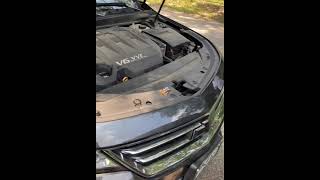
✅ What actually fixed it Using a scan tool, the technician observed that the 'Calculated Air Flow' was 4.5 g/s at idle, but the 'Actual Air Flow' reported by the MAF sensor was only 2.5 g/s. This massive under-reporting proved the MAF sensor itself was faulty, not that there was a vacuum leak. Unplugging the MAF confirmed the diagnosis as the engine ran better on default values. The fix was replacing the MAF sensor. - YouTube Channel 'Mac Certified' (2015 Chevrolet Impala 3.6L V6 with 98,000 miles) — Check engine light with lean codes P0171 and P0174.
❌ Tried (didn't work) A smoke test of the intake manifold might come back clean, misleading the diagnosis.
✅ What actually fixed it The cause was a large tear in the flexible air intake duct, located between the MAF sensor and the throttle body. The tear was in the ribbed section of the duct, allowing a large amount of unmetered air to be sucked in past the MAF sensor. The fix was to replace the torn intake duct (GM Part #20885923).
"I Checked Everything" — The Actual Cause
- A common scenario for the 3.6L V6 engine is a torn or cracked air intake duct that runs between the MAF sensor and the throttle body. A technician performing a smoke test by introducing smoke into the intake manifold would not find this leak, as it occurs before the throttle body. However, this unmetered air is the direct cause of the P0068 and related lean codes because the MAF sensor is not measuring it. A careful physical inspection of this duct is required.
When the Usual Fixes Don't Work
- While the most common causes for P0068 on this platform are physical air leaks (loose manifold, torn duct) or a dirty throttle body, it is critical not to rule out a failed sensor. In one documented case on a 2017 Impala, live scan tool data clearly showed the MAF sensor was reporting an airflow value (2.5 g/s) that was significantly lower than the ECM's calculated value (4.5 g/s) at idle. This discrepancy, which persisted under load, pointed directly to a faulty MAF sensor as the root cause, not a vacuum leak. The repair was to replace the MAF sensor.
OEM Part Supersession History
12591290, 12594942, 93192107→12644228 or 55573248— Updated design for the MAP sensor used across many GM vehicles.
Heads up: Parts 12644228 and 55573248 are widely listed as compatible and interchangeable for this application.N/A→20885923 (Air Intake Duct for 3.6L V6)— This is the replacement part for the air intake duct which is known to crack and tear over time, causing vacuum leaks.
Heads up: This part is specific to the 3.6L LFX engine.
Model Year Variations Within This Range
- 2014-2017 (2.5L LKW Engine): These models are highly prone to loose intake manifold bolts as documented in TSB #PIP5529B. This should be the first check for P0068 on a 2.5L engine.
- 2014-2017 (3.6L LFX Engine): These models are known to develop cracks in the flexible air intake duct between the MAF sensor and the throttle body. A physical inspection of this duct (Part #20885923) is a primary diagnostic step for P0068 on the V6.
Helpful Videos
Used OEM Parts in Stock
New Aftermarket Parts Available



The information in this article is provided for general reference and educational purposes only. Vehicle specifications, procedures, and part compatibility can vary by production date, trim level, and region. Always consult your vehicle's factory service manual and verify part numbers before purchasing or performing repairs. Safety-critical components such as airbags, seat belts, and braking systems should be installed by a qualified professional.
- Chevrolet IMPALA:
- 🧭 Diagnostic Flowchart
- 🎬 Helpful Videos
- 🛍️ Shop This Part
- What's Unique About the 2014-2017 Chevrolet IMPALA
- Symptoms You May Notice
- Most Likely Causes
- Rare But Worth Checking
- Diagnosis Steps
- Parts You'll Likely Need
- Related Codes That Often Appear With This One
- Technical Service Bulletins (TSBs) & Recalls
- Platform-Specific Known Issues
- Mechanic-Grade Diagnostic Values
- Scan Tool Commands That Help
- Wiring & Ground Locations
- Real Owner Repair Stories
- "I Checked Everything" — The Actual Cause
- When the Usual Fixes Don't Work
- OEM Part Supersession History
- Model Year Variations Within This Range
- 🎟️ Get 5% Off