

P0068 on 2006-2010 Chevy Silverado 2500: MAP/MAF Throttle Correlation Fixes
Code P0068 on a 2006-2010 Silverado 2500 usually means there's a dirty throttle body causing sensor disagreements. A thorough cleaning of the throttle body and a new gasket often resolves the issue for under $25 and is a common DIY fix. An idle relearn procedure is critical after cleaning.
- P0068 is a correlation code, meaning sensors are disagreeing, not necessarily that one has failed.
- The most common cause on a 2006-2010 Silverado is a dirty throttle body, which is a simple and inexpensive DIY fix.
- Always check for vacuum leaks before replacing any sensors.
- After cleaning or replacing the throttle body, an 'Idle Learn Reset' procedure with a scan tool is highly recommended to prevent the code from returning.
What's Unique About the 2006-2010 Chevrolet SILVERADO 2500
On this generation of Silverado, especially high-mileage trucks, P0068 is frequently caused by carbon buildup inside the throttle body. As greasy, black deposits accumulate, the throttle plate can't close to its original position, and the ECM learns to compensate by adjusting the throttle angle. This eventually leads to a correlation error when the learned values reach their limit, often triggering Reduced Engine Power mode. GM acknowledged this pattern in Technical Service Bulletin (TSB) #PIP4578B, which specifically addresses this code and others related to throttle body performance on high-mileage vehicles.
Diagnostic Flowchart
Tap your situation to follow the diagnostic path that matches what you're seeing on this vehicle.
Generation note: The 2006 model year is the last of the first-generation Silverado HD ('Classic' GMT800), while 2007-2010 models are the second generation (GMT900). However, the causes and fixes for P0068 are largely the same for the common V8 gas engines (4.8L, 5.3L, 6.0L) across these years, as the electronic throttle control system and its tendency for carbon buildup are similar.
Symptoms You May Notice
- Reduced Engine Power message on the dash
- Check Engine Light is on
- Rough or unstable idle, or idle speed is slow to return to normal after revving
- Poor or sluggish acceleration
- Hesitation or a 'dead spot' when pressing the gas pedal
- Increased fuel consumption
- Engine may stall at low speeds or when stopping
- Replacing the entire throttle body when only a cleaning and a new gasket are needed.
- Replacing the MAP or MAF sensor before checking for vacuum leaks or cleaning the throttle body.
- Replacing the accelerator pedal position (APP) sensor, as it can sometimes throw similar codes but is less likely to be the root cause of P0068.
Most Likely Causes
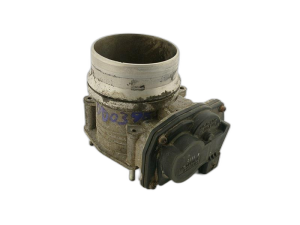
- Dirty Throttle Body 🔴 High Probability → Shop Fuel Injection Throttle Body As noted in TSB PIP4578B, carbon deposits accumulate in the throttle body bore and on the throttle plate over time, restricting movement and airflow. This is the most common cause by a wide margin.
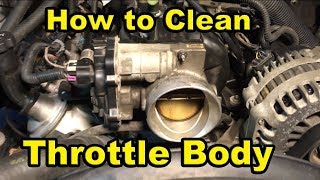
How to confirm: Remove the air intake tube from the throttle body and visually inspect for a thick, black layer of carbon buildup around the throttle plate and bore. The buildup is often worst on the back side of the plate.
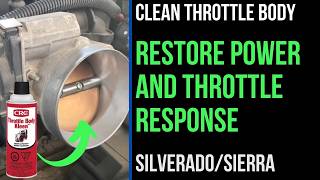
Typical fix: Remove the throttle body (typically four 10mm bolts), clean it thoroughly on both sides with a dedicated throttle body cleaner and a soft brush or cloth, and replace the gasket. Do not force the electronic throttle plate open manually; have a helper turn the key to 'ON' (engine off) and press the gas pedal to open the plate for cleaning.
Est. part cost: $10-$25 (cleaner and new gasket) - Vacuum Leak 🟡 Medium Probability Plastic and rubber vacuum lines, particularly the PCV hose and brake booster hose, can become brittle and crack with age and heat cycles. Intake manifold gaskets are also a known failure point, allowing unmetered air to enter the engine and disrupt sensor readings.
How to confirm: Visually inspect all vacuum hoses for cracks or disconnection, especially the PCV line that connects to the intake manifold. A smoke test is the most effective way to find hard-to-see leaks. You can also carefully spray carburetor cleaner around the intake manifold gasket with the engine running; an RPM spike indicates a leak.
Typical fix: Replace the cracked hose or faulty gasket. The PCV hose is a common and inexpensive part to replace.
Est. part cost: $10-$150 - Faulty Manifold Absolute Pressure (MAP) Sensor ⚪ Low Probability → Shop Manifold Absolute Pressure Sensor
How to confirm: Use a scan tool to monitor the MAP sensor's readings. With the key on and engine off, it should read close to atmospheric pressure, which translates to a voltage of 4.5-4.8V. At idle, it should drop significantly. Test sensor voltage to confirm it's within spec.
Typical fix: Replace the MAP sensor. It is typically a push-in sensor located on the top of the intake manifold, making for a quick replacement.
Est. part cost: $30-$80 - Faulty Mass Airflow (MAF) Sensor ⚪ Low Probability → Shop Fuel Injection Air Flow Meter
How to confirm: A dirty MAF sensor is more common than a failed one. First, try cleaning it with dedicated MAF sensor cleaner. If the problem persists, monitor its readings with a scan tool to see if they are plausible for the given engine speed and load. A rule of thumb is that at warm idle, the g/s reading should be close to the engine's displacement in liters (e.g., a 6.0L engine should read around 6.0 g/s). Inspect the wiring and connector for damage.
Typical fix: Clean the MAF sensor. If cleaning doesn't work, replace the sensor.
Est. part cost: $15 (cleaner) - $150 (sensor)
Rare But Worth Checking
- Damaged Wiring or Connectors: Wiring to the MAP, MAF, or throttle body can become frayed or corroded, causing intermittent signals. A poor ground connection to the engine block has also been identified in forums as a cause for multiple throttle-related codes and Reduced Engine Power mode.
- Clogged Air Filter: A severely clogged air filter can restrict airflow enough to cause a discrepancy between sensor readings. This is a simple and often overlooked check.
Diagnosis Steps
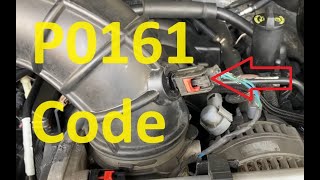
- Scan the ECM for P0068 and any other stored codes. 🎬 See a breakdown of common causes and fixes for P0068. Note the codes listed in TSB PIP4578B (P0121, P1516, etc.) as they strongly point to a throttle body issue.
- Visually inspect the air intake system for any obvious issues like a disconnected hose or a severely clogged air filter.
- Inspect for vacuum leaks. Check all vacuum lines connected to the intake manifold, especially the PCV and brake booster hoses, for cracks or damage. A smoke test is the most reliable method.
- Remove the air intake duct and inspect the throttle body for carbon buildup. This is the most likely cause.
- If significant carbon is present, remove the throttle body, clean it thoroughly using throttle body cleaner and a soft brush/rag, and install a new gasket.
- After cleaning and reinstalling the throttle body, perform an 'Idle Learn Reset'. A scan tool is the official method per TSB PIP4578B. However, a manual relearn often works: idle the engine in Park for 3 minutes, turn the ignition off for 60 seconds, then start and idle again for 3 minutes. A drive cycle above 44 MPH with several decelerations may be needed to finalize the process.
- If the issue persists, use a scan tool to monitor live data from the MAP, MAF, and TPS sensors to ensure their readings are logical and change correctly with engine speed and load.
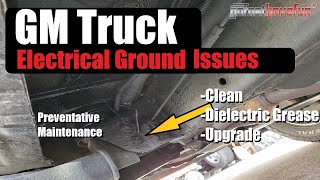
- Inspect the wiring and connectors for the MAP, MAF, and throttle body for any signs of damage, corrosion, or looseness. Pay special attention to engine ground straps. 🎬 Watch how to identify and fix common GM electrical ground issues.
Parts You'll Likely Need
- Throttle Body Cleaner — This is the most common fix. Carbon buildup in the throttle body is a well-documented cause of P0068 on these trucks.
Trusted brands: CRC, ACDelco, Gumout
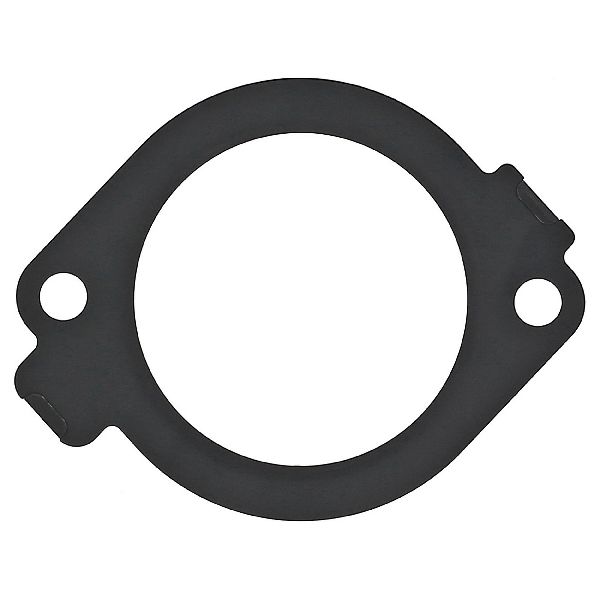
Aftermarket price range: $5-$15 - Throttle Body Gasket
(OEM #12576695)— It is best practice to replace the gasket anytime the throttle body is removed to prevent future vacuum leaks.
Trusted brands: ACDelco, Fel-Pro, Mahle
OEM price range: $10-$20
Aftermarket price range: $5-$15 - Manifold Absolute Pressure (MAP) Sensor
(OEM #12644228 (supersedes 12594942, now 12711681))— If cleaning the throttle body and checking for vacuum leaks doesn't solve the issue, a faulty MAP sensor is the next most likely component failure.
Trusted brands: ACDelco, Bosch, Delphi, SKP
OEM price range: $50-$90
Aftermarket price range: $30-$60 - Throttle Body Assembly
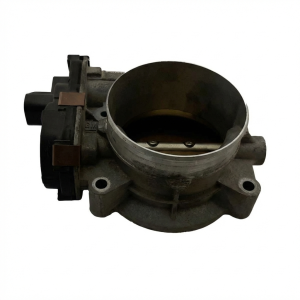
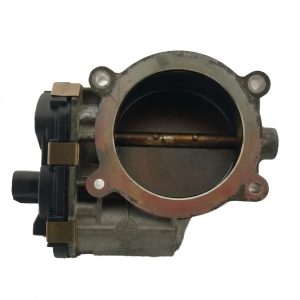
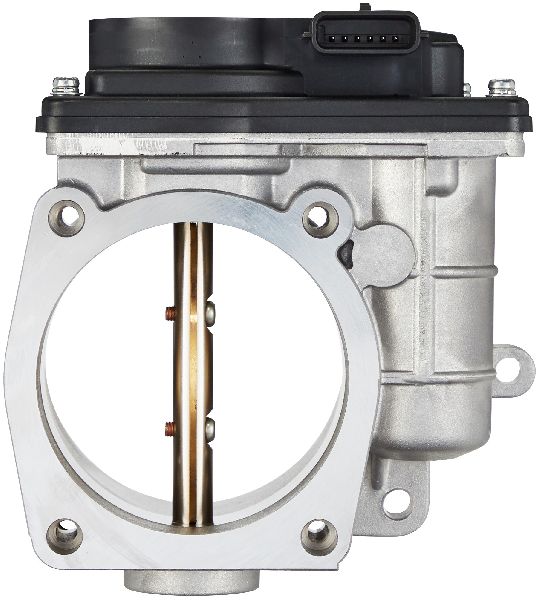
(OEM #ACDelco 217-3153 (GM 12679525))— In rare cases where cleaning does not resolve the issue, or if the internal electronics (TPS or motor) have failed, a full replacement is necessary. This should only be done after all other diagnostic steps have been exhausted.
Trusted brands: ACDelco, Hitachi, Dorman
OEM price range: $200-$350
Aftermarket price range: $100-$220
Related Codes That Often Appear With This One
- P0121 — Throttle Position Sensor Performance (mentioned in TSB PIP4578B)
- P1516 — Throttle Actuator Control (TAC) Module Throttle Actuator Position Performance (mentioned in TSB PIP4578B)
- P2101 — Control Throttle Actuator Control Motor Circuit Range/Performance (mentioned in TSB PIP4578B)
- P2119 — Throttle Actuator Control Throttle Body Range/Performance (mentioned in TSB PIP4578B)
- P2176 — Throttle Actuator Control System - Idle Position Not Learned (mentioned in TSB PIP4578B)
Technical Service Bulletins (TSBs) & Recalls
- PIP4578B: Addresses idle surge, reduced engine power, and DTCs including P0068 on high mileage vehicles, recommending throttle body cleaning and an idle learn reset. It applies to a wide range of 2007+ GM vehicles.
Platform-Specific Known Issues
- GM Technical Service Bulletin PIP4578B directly addresses P0068 in conjunction with idle surge and Reduced Engine Power mode on high-mileage vehicles.
Mechanic-Grade Diagnostic Values
- MAP Sensor Voltage (Key On, Engine Off) — expected: 4.5V - 4.8V DC. Failure: Voltage significantly outside this range indicates a sensor or wiring issue.
- MAP Sensor Voltage (Under Vacuum) — expected: At 5 in. Hg vacuum: 3.9V - 4.1V. At 10 in. Hg vacuum: 2.8V - 3.0V.. Failure: Sensor voltage does not respond correctly to applied vacuum.
- MAF Sensor Live Data (Warm Idle) — expected: Approximately the same grams/second (g/s) as the engine displacement in liters (e.g., a 6.0L engine should be ~6.0 g/s).. Failure: Reading is significantly higher or lower than the engine displacement.
- Throttle Position Sensor (TPS) Voltage — expected: Approximately 0.5V at closed throttle to 4.5V at wide-open throttle.. Failure: Voltage is erratic, does not change smoothly, or is outside the expected range.
- MAP Sensor 5-Volt Reference Circuit — expected: 4.8V - 5.2V. Failure: Voltage below this range suggests a short to ground or open/high resistance in the circuit.
Scan Tool Commands That Help
- Tech2 / GDS2: Throttle Activation Test — To command the throttle plate to specific angles (e.g., 20%, 50%, 80%) to check for smooth mechanical operation and verify the TPS is reporting the angle correctly. This helps distinguish a mechanical bind from a sensor failure.
- Tech2 / GDS2: Adaptive Learning Reset / Idle Learn Reset — This is mandatory after cleaning or replacing the throttle body. It clears the old learned idle airflow values from the ECM, preventing a high or unstable idle after the repair.
Wiring & Ground Locations
- G103 — On the right rear or right front of the engine block, depending on the specific year and engine. For GMT900 (2007+), it's often on the front of the passenger side cylinder head.. This is a primary engine ground. A poor connection here can cause erratic signals from the MAP, MAF, and TPS sensors, which rely on a stable ground reference to the ECM.
- G104 — On the left rear of the engine block/cylinder head.. Another critical engine ground point for the ECM and its sensors. Corrosion or looseness can lead to intermittent correlation faults like P0068.
- Engine Block to Firewall/Chassis Ground Strap — A braided strap connecting the back of the engine (often on a cylinder head) to the vehicle's firewall.. This strap ensures the entire engine assembly is properly grounded to the vehicle body. A broken or corroded strap is a well-documented cause of multiple, difficult-to-diagnose electrical issues, including sensor correlation codes.
Real Owner Repair Stories
- YouTube channel 'LegacyJR' (GMT900 Chevy Silverado) — Multiple electrical issues including Check Engine Light, ABS light, battery light, slow power windows, and low voltage readings.
❌ Tried (didn't work) The video focuses on the fix rather than failed attempts.
✅ What actually fixed it The engine block to chassis ground strap, located at the back of the engine block connecting to the firewall, was found to be broken/burnt off. Replacing this ground strap resolved all the electrical issues, including the dash warning lights.
OEM Part Supersession History
12594942→12644228, which is now superseded by 12711681— Standard part evolution for improved reliability or manufacturing changes.
Heads up: While physically similar, using an older sensor on a newer truck (or vice-versa) can cause calibration issues. It's critical to use the correct part number for the specific model year. The 2006-2007 'Classic' models may use a different sensor (like GM 19418808) than the 2007-2010 'New Body Style' trucks.
Model Year Variations Within This Range
- 2006 vs. 2007-2010: The 2006 model is a GMT800 'Classic' platform, while the 2007-2010 models are the newer GMT900 platform. This can affect part numbers for components like the throttle body and MAP sensor. For example, some electronic throttle bodies from the GMT800 era open in the opposite direction of the GMT900, making them incompatible without special adapter harnesses and tuning. Always verify parts by VIN.
Helpful Videos



Used OEM Parts in Stock
New Aftermarket Parts Available

The information in this article is provided for general reference and educational purposes only. Vehicle specifications, procedures, and part compatibility can vary by production date, trim level, and region. Always consult your vehicle's factory service manual and verify part numbers before purchasing or performing repairs. Safety-critical components such as airbags, seat belts, and braking systems should be installed by a qualified professional.
- Chevrolet SILVERADO 2500:
- 🧭 Diagnostic Flowchart
- 🎬 Helpful Videos
- 🛍️ Shop This Part
- What's Unique About the 2006-2010 Chevrolet SILVERADO 2500
- Symptoms You May Notice
- Most Likely Causes
- Rare But Worth Checking
- Diagnosis Steps
- Parts You'll Likely Need
- Related Codes That Often Appear With This One
- Technical Service Bulletins (TSBs) & Recalls
- Platform-Specific Known Issues
- Mechanic-Grade Diagnostic Values
- Scan Tool Commands That Help
- Wiring & Ground Locations
- Real Owner Repair Stories
- OEM Part Supersession History
- Model Year Variations Within This Range
- 🎟️ Get 5% Off