

P0068 on 2006-2013 Chevrolet Suburban: MAP/MAF Throttle Position Correlation Fixes
On a 2006-2013 Suburban, code P0068 is most often caused by a dirty throttle body restricting airflow, an issue GM documented in TSB PIP4578B. Cleaning the throttle body is a low-cost, high-success DIY repair that usually resolves the issue, but a mandatory idle relearn procedure must be performed afterward to prevent high idle and other codes.
- P0068 means the engine's sensors for airflow and throttle position are disagreeing.
- The most likely cause on a 2006-2013 Suburban is a dirty throttle body, which is a simple DIY cleaning job.
- Before buying any parts, inspect and clean the throttle body first.
- Other potential causes include vacuum leaks or, less commonly, a faulty MAP or MAF sensor.
- Driving with this code can lead to 'Reduced Engine Power' mode, so it should be fixed promptly.
What's Unique About the 2006-2013 Chevrolet SUBURBAN
The V8 engines in this generation of Suburban are known for accumulating carbon and oil residue inside the throttle body, especially on higher-mileage vehicles. This buildup restricts airflow at idle and small throttle openings. As this happens, the PCM learns to command a slightly larger throttle angle to maintain the correct idle speed. When the throttle body is suddenly cleaned, the PCM's learned compensation is now excessive, leading to a mismatch that triggers P0068. This specific tendency is a primary reason P0068 is common on these trucks and is directly referenced in GM's Technical Service Bulletin #PIP4578B.
Diagnostic Flowchart
Tap your situation to follow the diagnostic path that matches what you're seeing on this vehicle.
Generation note: This range covers two Suburban generations: the end of the 9th Gen (GMT800, 2006 model) and the full 10th Gen (GMT900, 2007-2013). The primary cause, a dirty throttle body, is common to the Vortec V8 engines used in both generations. The provided TSB PIP4578B specifically covers model years across this entire span, confirming the issue's prevalence.
Symptoms You May Notice
- Check Engine Light is on
- "Reduced Engine Power" message displayed on the instrument cluster
- Rough, surging, or unstable idle
- Hesitation or stumbling during acceleration
- Engine may stall when coming to a stop
- Increased fuel consumption
- High idle RPM, especially after cleaning the throttle body without a relearn.
- Replacing the MAP or MAF sensor without first inspecting and cleaning the throttle body. A dirty throttle body is the most frequent cause and the easiest to fix.
- Cleaning the throttle body but failing to perform the idle relearn procedure, leading to a high idle and the return of the Check Engine Light.
Most Likely Causes
- Dirty Throttle Body 🔴 High Probability → Shop Fuel Injection Throttle Body The PCV (Positive Crankcase Ventilation) system routes oil vapors into the intake, which can bake onto the throttle plate and bore over time, causing carbon buildup (coking). This is a well-documented issue on high-mileage GM trucks and the primary subject of TSB #PIP4578B.
How to confirm: Remove the air intake tube from the throttle body. Visually inspect the throttle plate and the inside of the bore for a thick, black, greasy coating.
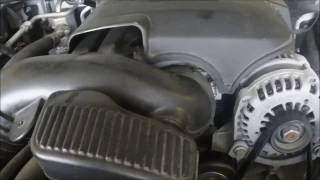
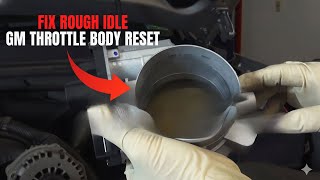
Typical fix: Remove the throttle body and clean it thoroughly with dedicated throttle body cleaner and a soft brush or rag. A new throttle body gasket 🎬 See this walkthrough on cleaning your GM throttle body should be used. CRITICALLY, a throttle relearn procedure MUST be performed after reinstallation to reset the PCM's learned values.
Est. part cost: $10-$25 for cleaner and a new gasket - Vacuum Leak 🟡 Medium Probability Hoses and gaskets become brittle with age and heat cycles. The intake manifold gaskets and PCV hoses on these V8 engines are known potential failure points that allow unmetered air to enter the engine, disrupting the sensor correlation.
How to confirm: With the engine running, listen for hissing sounds around the intake manifold. You can also carefully spray short bursts of brake cleaner or a propane torch (unlit) around gasket sealing surfaces and vacuum hoses. A change in engine idle indicates the location of the leak.
Typical fix: Replace the cracked vacuum hose (e.g., PCV hose, brake booster hose) or failed gasket (e.g., intake manifold gasket, throttle body gasket).
Est. part cost: $5-$150 depending on the leak source - Faulty Manifold Absolute Pressure (MAP) Sensor ⚪ Low Probability → Shop Manifold Absolute Pressure Sensor
How to confirm: Use a scan tool to monitor the MAP sensor reading with the Key On, Engine Off. The reading should be close to the Barometric Pressure (BARO) reading. With the engine running at idle, voltage should be around 1V. If values are stuck or illogical, the sensor is likely faulty. Some owners report that only genuine ACDelco sensors will resolve the code.
Typical fix: Replace the MAP sensor. It is typically mounted directly on the intake manifold.
Est. part cost: $30-$80 - Faulty Mass Airflow (MAF) Sensor ⚪ Low Probability → Shop Fuel Injection Air Flow Meter
How to confirm: Inspect the sensor elements (visible inside the housing after the air filter) for dirt or debris. A dirty sensor can sometimes be cleaned with dedicated MAF sensor cleaner. If cleaning doesn't help, monitor its readings on a scan tool to see if they respond correctly to changes in engine RPM.
Typical fix: Clean the MAF sensor with approved cleaner. If cleaning fails, replace the sensor.
Est. part cost: $15 for cleaner, $70-$150 for a new sensor
Rare But Worth Checking
- Damaged Wiring or Connectors: Check the wiring harnesses going to the MAP, MAF, and throttle body for any signs of chafing, melting, or corrosion at the connector pins. A poor connection can mimic a failed sensor.
- Faulty Throttle Body Assembly: → Shop Fuel Injection Throttle Body If cleaning the throttle body and performing the relearn procedure does not resolve the issue, the internal Throttle Position Sensor (TPS) or actuator motor may have failed. In this case, the entire throttle body assembly needs to be replaced.
Diagnosis Steps
- Check for other stored DTCs. Codes related to specific sensors (MAP, MAF, TPS) or idle control can help narrow down the diagnosis.
- Visually inspect the entire air intake system, from the air filter box to the throttle body, for any loose clamps, cracked hoses, or disconnected tubes.
- Remove the intake duct from the throttle body and inspect the throttle plate and bore for heavy carbon buildup. This is the most likely cause.
- If the throttle body is clean, inspect all vacuum hoses connected to the intake manifold for cracks or loose fittings. Pay special attention to the PCV hose and the brake booster hose.
- If no physical faults are found, use a scan tool or multimeter to observe live data. With Key On, Engine Off, MAP sensor voltage should be ~4.5-5V. At idle, it should drop to ~1-1.5V. The TPS voltage should sweep smoothly from ~0.5V at idle to ~4.5V at wide-open throttle with no dropouts.
- If the throttle body was dirty, clean it thoroughly using throttle body cleaner and a rag. Do not push the throttle plate open manually on an electronic throttle body; instead, have a helper turn the key to 'On' (engine off) and press the gas pedal to open the plate for cleaning.
- After cleaning or replacing parts, clear the codes and perform an idle relearn procedure. This is a critical step.
- Manual Idle Relearn Procedure: 1. Start the engine and let it idle in Park for 3 minutes. The idle may be high. 2. Turn the ignition OFF for 60 seconds. 3. Start the engine again and let it idle in Park for another 3 minutes. The idle should now settle to normal. 4. If idle is still not correct, a drive cycle with speeds above 45 MPH and several decelerations may be required. 🎬 Watch: How to manually reset your electronic throttle body
Parts You'll Likely Need
- Throttle Body Cleaner — This is required for the most common fix: cleaning carbon buildup from the throttle body.
Trusted brands: CRC, ACDelco
OEM price range: $15-$25
Aftermarket price range: $10-$15 - Throttle Body Gasket — Should be replaced whenever the throttle body is removed for cleaning or replacement to prevent vacuum leaks.
Trusted brands: Fel-Pro, ACDelco
OEM price range: $10-$20
Aftermarket price range: $5-$10 - Throttle Body Assembly
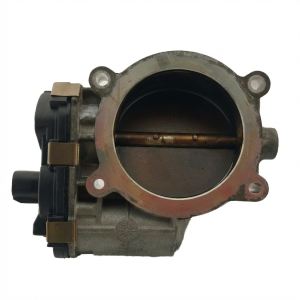
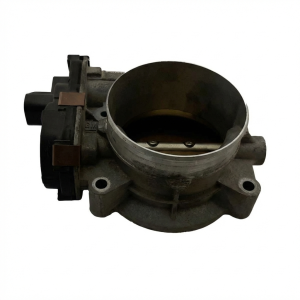
(OEM #12629992 (for 2009-2013 V8 models, supersedes 12601387) or 12679524 (for 2007-2008 V8 models))— If cleaning doesn't work, the internal electronics (TPS or motor) have likely failed, requiring replacement of the entire unit.
Trusted brands: ACDelco, Delphi, Dorman
OEM price range: $240-$350
Aftermarket price range: $100-$180 - Manifold Absolute Pressure (MAP) Sensor
(OEM #12644228)— If diagnostics confirm the sensor is providing incorrect pressure readings, it must be replaced. Using
Trusted brands: ACDelco, Delphi
OEM price range: $40-$80
Aftermarket price range: $25-$50
Related Codes That Often Appear With This One
- P0121 — Throttle/Pedal Position Sensor/Switch 'A' Circuit Performance. This code is often set with P0068 because a dirty or failing throttle body affects the TPS readings. It is explicitly mentioned in TSB PIP4578B.
- P1516 — Throttle Actuator Control (TAC) Module Throttle Actuator Position Performance. This is a GM-specific code indicating a problem with the electronic throttle control system, often triggered by the same root causes as P0068 and also listed in TSB PIP4578B.
- P2176 — Throttle Actuator Control System - Idle Position Not Learned. This code often appears after cleaning or replacing the throttle body if the idle relearn procedure has not been completed successfully, as noted in TSB PIP4578B.
- P0506 / P0507 — Idle Air Control System RPM Lower/Higher Than Expected. These codes can appear after a throttle body cleaning if the idle relearn is not performed, as the PCM's old adaptive values are now incorrect for the clean throttle body.
Technical Service Bulletins (TSBs) & Recalls
- SES Light, Idle Surge, and/or Reduced Engine Power Mode with DTCs P0068, P0121, P0506, P0507, P1516, P2101, P2119, and/or P2176 - Clean Throttle Body and Perform Idle Learn Reset: → Shop Fuel Injection Throttle Body This GM bulletin directly addresses P0068 on high-mileage vehicles. It states that as carbon builds up, the PCM learns to open the throttle plate more to compensate. If the throttle body is cleaned but an 'idle learn reset' is not performed with a scan tool (or manually), the PCM will continue to use the old compensation values, which can cause idle problems, stalling, and set additional codes like P0506 or P0507.
Platform-Specific Known Issues
- A Technical Service Bulletin (TSB #PIP4578B) was issued by GM for these vehicles, noting that P0068 can occur on high-mileage vehicles along with idle surge and reduced power mode. The bulletin explains that the PCM adapts to carbon buildup over time, and if the throttle body is cleaned without resetting these learned values, the engine will run poorly and may set other codes like P0506/P0507. This makes the idle relearn procedure a mandatory final step for this specific repair on these trucks.
Mechanic-Grade Diagnostic Values
- MAP Sensor Signal Voltage (Key On, Engine Off) — expected: 4.5V - 5.0V, should correlate with local barometric pressure. Failure: Voltage significantly lower than 4.5V, or not matching barometric pressure, indicates a sensor or circuit issue.
- MAP Sensor Signal Voltage (Engine Idling) — expected: 1.0V - 2.0V at normal operating temperature. Failure: Voltage significantly higher than 2.0V at idle suggests a vacuum leak or a faulty sensor.
- MAP Sensor 5-Volt Reference Circuit — expected: Approximately 5.0V DC with key on. Failure: A reading of 0V or significantly less than 5V points to an open or short in the wiring harness or an ECM fault.
- MAP Sensor Ground Circuit — expected: Less than 100 mV or near 0 Ohms resistance to a known good chassis ground. Failure: Voltage higher than 100mV indicates a poor ground connection, which can skew sensor readings.
- Throttle Position Sensor (TPS) Voltage at Closed Throttle — expected: ~0.5V. Failure: A base voltage significantly higher than 0.8V may indicate a misadjusted or faulty sensor.
- Throttle Position Sensor (TPS) Voltage at Wide-Open Throttle (WOT) — expected: ~4.5V. Failure: Failure to reach at least 4.0V, or voltage that is erratic or drops out during sweep, indicates a faulty sensor.
Scan Tool Commands That Help
- HP Tuners / EFI Live: Modify 'Max Airflow vs. RPM' Table — This is an advanced tuning step, not a standard diagnostic. It is required if P0068 appears immediately after installing a ported or modified throttle body that flows more air than the stock calibration expects.
Wiring & Ground Locations
- PCM Ground — On top of the engine block, typically a ring terminal with multiple black-and-white wires.. This is the primary ground for the engine computer and all its sensors, including MAP, MAF, and TPS. A poor connection here can cause erratic readings on all sensors simultaneously, directly leading to a P0068 correlation fault.
- Engine-to-Firewall Ground Strap — A braided strap connecting the engine block (often near the back, on a cylinder head) to the vehicle's firewall/body.. Ensures the engine block has a solid ground reference to the rest of the vehicle's electrical system. A broken or corroded strap can cause intermittent sensor issues.
- MAP Sensor Connector — The 3-pin connector on the MAP sensor itself, mounted on the intake manifold.. Knowing the pinout (Pin A: Ground, Pin B: Signal, Pin C: 5V Reference) allows for direct testing of the sensor's power, ground, and signal output at the component, isolating a faulty sensor from a wiring problem.
- Chassis Grounds — Main ground point from the negative battery terminal to the frame/radiator support; also grounds on the frame rail near the driver's side tire.. While less direct, overall chassis ground integrity is crucial. A poor main ground can create voltage drops and electrical noise that affect sensitive sensor circuits.
Real Owner Repair Stories
- Tahoe Yukon Forum (2007 Tahoe 5.3L Flex Fuel, 178,000 miles) — P0068, P0101, P0106, and Reduced Engine Power mode after a DOD delete and camshaft replacement.
❌ Tried (didn't work) Replacing AC Delco MAF sensor, Replacing Delphi MAP sensor, Checking for vacuum leaks with starting fluid (none found)
✅ What actually fixed it The final fix was not posted, but the strong consensus from a mechanic and forum members was that the issue was not a vacuum leak or bad sensor, but an incorrect ECM tune that did not account for the new camshaft's different airflow characteristics. - CorvetteForum (2006 Corvette (similar GM V8 architecture)) — P0068 and 'Reduced Engine Power' immediately after installing a ported throttle body.
❌ Tried (didn't work) Resetting the code
✅ What actually fixed it The problem was that the ported throttle body flowed more air than the ECM expected. The fix was to use a tuning software (HP Tuners) to log the new airflow values and update the ECM's 'Max airflow Vs. RPM' diagnostic table to match the new hardware.
"I Checked Everything" — The Actual Cause
- In a case involving a 2007 Tahoe with a P0068 after a camshaft replacement, a vacuum leak test using starting fluid came back negative and fuel trims were normal, correctly suggesting no vacuum leak was present. The actual suspected cause was an engine tune that was not properly calibrated for the new camshaft, causing the airflow correlation error.
OEM Part Supersession History
12601387→12629992— Updated design/revision by manufacturer.→— There are distinct part numbers for early (2007-2008) and later (2009+) GMT900 models.
Heads up: While they may look similar, using the wrong year throttle body can cause issues. For 2007-2008 models, use part numbers like 12679524. For 2009-2013, use 12629992.
Model Year Variations Within This Range
- 2006 (GMT800) vs 2007-2013 (GMT900): The 2006 model is the last year of the GMT800 platform, while 2007 marked the beginning of the GMT900. While they share similar Vortec V8 engines and the P0068 fault is common to both, there can be differences in wiring harness connectors, PCM type (and pinouts), and specific component locations. The core diagnostic principles remain the same.
- 2007-2008 vs 2009-2013: The throttle body assembly part number changed around 2009. Early GMT900 trucks (07-08) use a different part than later models (09-13). It is critical to order the correct part for the specific model year.
Helpful Videos

We Have This Part in Stock

The information in this article is provided for general reference and educational purposes only. Vehicle specifications, procedures, and part compatibility can vary by production date, trim level, and region. Always consult your vehicle's factory service manual and verify part numbers before purchasing or performing repairs. Safety-critical components such as airbags, seat belts, and braking systems should be installed by a qualified professional.
- Chevrolet SUBURBAN:
- 🧭 Diagnostic Flowchart
- 🎬 Helpful Videos
- 🛍️ Shop This Part
- What's Unique About the 2006-2013 Chevrolet SUBURBAN
- Symptoms You May Notice
- Most Likely Causes
- Rare But Worth Checking
- Diagnosis Steps
- Parts You'll Likely Need
- Related Codes That Often Appear With This One
- Technical Service Bulletins (TSBs) & Recalls
- Platform-Specific Known Issues
- Mechanic-Grade Diagnostic Values
- Scan Tool Commands That Help
- Wiring & Ground Locations
- Real Owner Repair Stories
- "I Checked Everything" — The Actual Cause
- OEM Part Supersession History
- Model Year Variations Within This Range
- 🎟️ Get 5% Off