

P0068 on 2004-2008 Chrysler Pacifica 3.5L: MAP/Throttle Position Correlation Causes and Fixes
On the 2004-2008 Pacifica 3.5L, P0068 is most often caused by a vacuum leak from a cracked hose or poorly seated gasket, a dirty throttle body, or a faulty MAP sensor. Start by checking for obvious air leaks, especially after recent repairs like a spark plug change, and cleaning the throttle body before replacing parts.
- Before buying any parts for a P0068 code, thoroughly check for vacuum leaks. A smoke test is the best method.
- A common time for this code to appear is after a tune-up or other repair where the intake manifold was disturbed.
- As a simple and cheap first step, clean the throttle body with a dedicated cleaner.
- If no leaks are found and cleaning doesn't help, the MAP sensor is the next most likely part to fail.
What's Unique About the 2004-2008 Chrysler Pacifica
The Chrysler 3.5L V6 is known for being sensitive to vacuum leaks, which are a primary trigger for the P0068 code. This issue often surfaces after related maintenance, like a spark plug change, where intake components are disturbed and gaskets may not be perfectly reseated. Forum discussions frequently point to a forgotten or damaged EGR tube gasket at the intake plenum as a specific culprit. Unlike many other vehicles, the first suspect on this platform is often not a bad sensor, but a simple vacuum leak that is allowing unmetered air into the manifold, confusing the MAP sensor.
Symptoms You May Notice
- Rough, unstable, or surging idle
- Engine stalling, especially when coming to a stop or during slow turns
- Hesitation or lack of power during acceleration
- Hard starting
- Illuminated Check Engine Light
- Whistling sound from the engine bay, indicating a vacuum leak
- Replacing the MAP sensor or throttle body when a simple, un-found vacuum leak is the real problem.
- Replacing the throttle body when only a thorough cleaning is required.
Most Likely Causes
- Vacuum Leak 🔴 High Probability The intake manifold and associated gaskets/hoses are often disturbed during other repairs (like spark plug replacement). An improperly seated EGR tube gasket or intake plenum gasket is a very common cause. The PCV hose and its elbow are also common failure points.
How to confirm: Perform a smoke test to visually identify the source of the leak. Alternatively, with the engine running, carefully spray short bursts of brake cleaner or unlit propane around the intake manifold gaskets, vacuum hoses, and EGR tube; a change in engine idle indicates a leak.
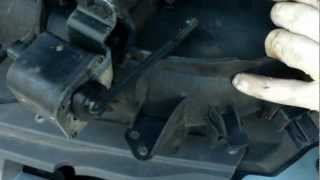
Typical fix: Replace the cracked vacuum hose or faulty gasket. Ensure all intake components are torqued to spec after reassembly. The EGR tube gasket is a frequent, inexpensive fix. 🎬 Watch: How to find and fix an upper intake leak
Est. part cost: $5-$50 - Dirty Throttle Body 🟡 Medium Probability → Shop Fuel Injection Throttle Body Over time, carbon and oil vapor from the PCV system build up around the throttle plate, restricting airflow or preventing the plate from closing properly. This causes the actual airflow to differ from what the PCM expects based on the throttle position sensor's reading.
How to confirm: Remove the air intake hose from the throttle body and visually inspect the throttle plate and bore for black carbon buildup.
Typical fix: Clean the throttle body bore and plate using a dedicated throttle body cleaner and a soft cloth or brush. Do not spray cleaner directly into an electronic throttle body; spray it on the cloth first.
Est. part cost: $5-$15 - Faulty Manifold Absolute Pressure (MAP) Sensor 🟡 Medium Probability → Shop Manifold Absolute Pressure Sensor The MAP sensor is a critical input for this calculation and can fail with age, sending incorrect pressure data to the PCM.
How to confirm: With a scan tool, observe the MAP sensor reading with the key on, engine off, and compare it to the barometric pressure reading; they should be nearly identical. The reading should change instantly with throttle input when the engine is running. A more thorough test involves a multimeter and a hand-held vacuum pump.
Typical fix: Replace the MAP sensor. It is typically mounted directly on the intake manifold and secured with one or two bolts.
Est. part cost: $30-$80 - Faulty Throttle Body / Throttle Position Sensor (TPS) ⚪ Low Probability → Shop Fuel Injection Throttle Body The Throttle Position Sensor (TPS) is integrated into the electronic throttle body. While less common than leaks or a bad MAP sensor, a failure in the TPS or the throttle actuator can send incorrect position data, causing the correlation fault.
How to confirm: This is difficult to confirm without a high-end scan tool to monitor TPS voltage for smooth operation. It is usually diagnosed after all other causes have been ruled out.
Typical fix: Replace the entire throttle body assembly.
Est. part cost: $150-$300
Rare But Worth Checking
- Internal Engine Damage (e.g., Bent Valves): This is extremely rare but possible if the code appeared immediately after a major mechanical event like a broken timing belt. The 3.5L is an interference engine, and bent valves will create a massive internal vacuum leak, triggering P0068.
- Faulty Powertrain Control Module (PCM): → Shop Engine Control Module (ECM) This is the last resort after all other possibilities, including wiring, have been exhaustively checked.
- Clogged Catalytic Converter: A severely restricted exhaust can cause a backup of pressure in the intake manifold, which can throw off the MAP sensor readings and trigger a P0068 code, although other codes like P0420 would typically appear first.
Diagnosis Steps
- Read all stored fault codes with an OBD-II scanner to check for related codes.
- Visually inspect the engine bay for any disconnected or cracked vacuum hoses, especially around the air intake snorkel, PCV system, and intake manifold. Pay close attention to the EGR tube connection at the upper intake plenum, especially if recent repairs have been performed.
- Perform a smoke test to check for vacuum leaks. This is the most effective way to find small cracks in hoses or bad gaskets like the intake plenum or EGR gaskets.
- If no leaks are found, remove the air intake duct and inspect the throttle body. Clean it thoroughly with throttle body cleaner and a soft brush, ensuring the throttle plate moves freely.
- With a scan tool, monitor live data from the MAP sensor and TPS. Ensure the MAP sensor reading is stable at idle and responds correctly to throttle snaps. The Key On, Engine Off (KOEO) MAP reading should be close to the Barometric Pressure (BARO) reading.
- If a vacuum leak is ruled out and cleaning the throttle body does not help, consider replacing the MAP sensor. It is a relatively inexpensive and accessible part.
- If the problem persists, the issue may be with the throttle body assembly (including the integrated TPS) or, rarely, the wiring or PCM.
Parts You'll Likely Need
- Manifold Absolute Pressure (MAP) Sensor
(OEM #4896003AB)— This sensor provides the primary data that conflicts with the throttle position. It can fail or provide inaccurate readings due to age or contamination.
Trusted brands: Mopar, Delphi, NGK, Standard Motor Products (SMP)
OEM price range: $60-$90
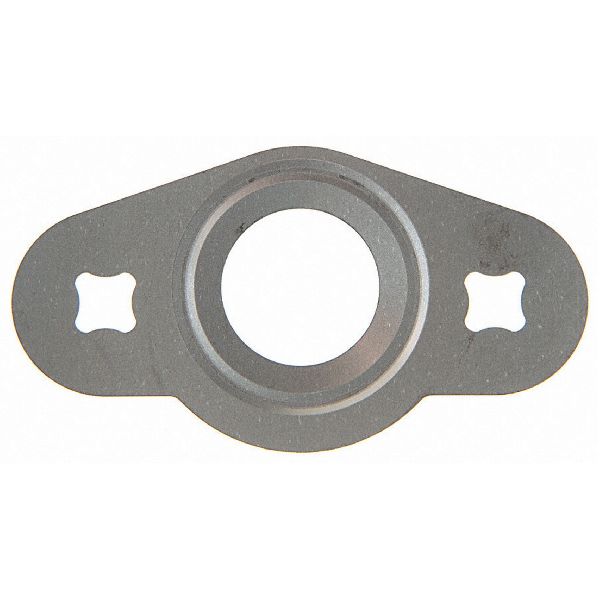
Aftermarket price range: $30-$60 - Intake Manifold or EGR Gaskets — Vacuum leaks from failed gaskets are a very common cause of P0068 on this engine, especially after other service has been performed. The EGR tube gasket is a particularly common culprit.
Trusted brands: Fel-Pro, Mahle, Mopar
OEM price range: $20-$50
Aftermarket price range: $10-$30 - Throttle Body Cleaner — A dirty throttle body is a frequent cause, and cleaning it is a key diagnostic and repair step before replacing more expensive parts.
Trusted brands: CRC, WD-40 Specialist, Sea Foam
OEM price range: $10-$15
Aftermarket price range: $5-$10
Related Codes That Often Appear With This One
- P2074 — This is a sister code, 'Manifold Pressure/Throttle Position Correlation - High Flow/Vacuum Leak'. They often appear together as they point to the same fundamental disagreement between sensors.
- P0171 / P0174 — These 'System Too Lean' codes can be triggered if the root cause of P0068 is a significant vacuum leak, which introduces unmetered air that the PCM tries to compensate for.
- P0108 — This code means 'Manifold Absolute Pressure/Barometric Pressure Circuit High Input', which points directly to a problem with the MAP sensor or its circuit. If it appears with P0068, it strongly suggests the MAP sensor itself is faulty.
- P0121 / P0123 — These codes relate to the Throttle Position Sensor (TPS) circuit performance or high input. Their presence alongside P0068 points towards a faulty throttle body assembly.
Technical Service Bulletins (TSBs) & Recalls
- While no TSB directly addresses P0068 on this specific model, TSB 18-031-05 is a related bulletin for other Chrysler vehicles that involves PCM software updates to address issues with sensor readings and engine performance, highlighting that PCM software can be a factor in such correlation codes.
Platform-Specific Known Issues
- Vacuum Leak After Spark Plug Change: Many owners report the P0068 code appearing immediately after changing the spark plugs. This is almost always due to an intake manifold gasket or, more commonly, the small gasket for the EGR tube not being reseated correctly upon reassembly, creating a significant vacuum leak.
Mechanic-Grade Diagnostic Values
- MAP Sensor Voltage (KOEO) — expected: ~4.5 - 5.0 Volts DC. Failure: Significantly lower voltage may indicate a wiring issue or faulty sensor.
- MAP Sensor Voltage (Engine Idling) — expected: ~1.0 - 1.5 Volts DC. Failure: Voltage staying high (closer to KOEO voltage) indicates the sensor is not reading engine vacuum, possibly due to a sensor fault or a massive vacuum leak.
- TPS Voltage (Closed Throttle) — expected: ~0.5 - 1.0 Volts DC. Failure: Voltage below ~0.4V or significantly higher may indicate a faulty sensor or miscalibration.
- TPS Voltage (Wide Open Throttle) — expected: ~4.5 - 5.0 Volts DC. Failure: Voltage does not reach this level, or has dead spots/jumps during throttle sweep, indicating a worn or faulty sensor.
- MAP Sensor Circuitry — expected: No high resistance or shorts to ground on the 5V supply (K6), signal (K1), or ground (K4) circuits.. Failure: Using a multimeter to check for resistance or shorts in the harness can identify wiring faults.
Scan Tool Commands That Help
- Manual Procedure or Scan Tool: Throttle Body Relearn / Reset — After cleaning or replacing the throttle body, or disconnecting the battery, to recalibrate the throttle plate's closed and open positions with the PCM. A manual procedure often works, but some cases may require a scan tool to complete the function.
Wiring & Ground Locations
- G101 / Transmission Ground — A ground strap running from a transmission stud to the engine block.. This ground is known to fray or break due to engine movement from worn motor mounts. A poor ground can cause erratic behavior from multiple sensors and modules, potentially triggering correlation codes.
- Driver-Side Strut Tower Grounds — A set of three ground screws located on the driver's side strut tower in the engine bay.. These are primary chassis ground points. Corrosion or looseness here can create a floating ground and cause unpredictable sensor readings.
- MAP Sensor Connector — The 3-pin oval connector plugging into the MAP sensor on the intake manifold.. The terminals for the 5V supply, signal, and ground can corrode or the wiring can become damaged, leading to incorrect signals that cause P0068.
Real Owner Repair Stories
- Chrysler Forum user 'CHRYSLER TECH' (2005 Chrysler Pacifica 3.5L) — Very high idle speed immediately after replacing spark plugs; engine would stall after a few seconds.
❌ Tried (didn't work) Initial check of hoses and bolts.
✅ What actually fixed it The user had created a vacuum leak by forgetting to reinstall the gasket where the EGR tube goes into the upper intake manifold. Replacing the missing gasket resolved the high idle and related issues.
OEM Part Supersession History
4896002AD, 4896003AA→4896003AB— Standard part revision and consolidation by the manufacturer.OEM MAP Sensor (2-bolt design)→NGK 92946XB (and similar aftermarket)— Aftermarket design change.
Heads up: Some aftermarket sensors like the NGK have a redesigned outer shell that only utilizes one of the two original mounting holes. This is not a defect, but can confuse installers who expect a direct physical copy.
Diagnostic Flowchart
Other Known Issues on This Vehicle
Issues unrelated to this code that are worth knowing about as an owner of this generation:
- Engine Cradle / Subframe Rust 🔴 High — Very common on vehicles in the 'salt belt'. Can become structurally unsound, with hundreds of NHTSA complaints filed. (Ref: Limited warranty extensions and TSBs were issued but for very specific build dates, leaving many owners without coverage.)
- Premature Engine Mount Failure 🟠 Medium — Widespread reports of hydraulic engine mounts failing, causing excessive vibration at idle, and clunking noises when accelerating or shifting.
- Engine Ticking Noise (Rocker Arm Shaft) 🟠 Medium — A common ticking noise develops around 100,000 miles due to a broken rocker arm shaft retaining pin, which can restrict oil flow.
- Carbon Buildup on Valves 🟡 Low — Common in higher-mileage (130k+) engines, can cause misfires, hard starting, and trigger lean or catalyst codes. (Ref: Chrysler acknowledged the issue and recommended combustion chamber cleaning.)
- 41TE (A604) Transmission Problems 🟠 Medium — This 4-speed automatic transmission is known for potential issues with solenoids, sensors, and sometimes hard shifting or entering 'limp mode'.
Used vs. New Parts: Buying Guide for This Vehicle
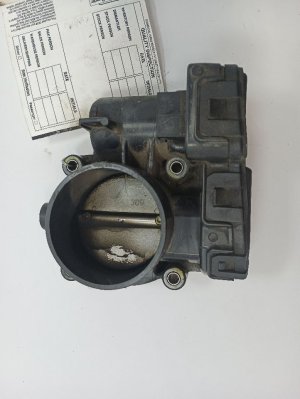
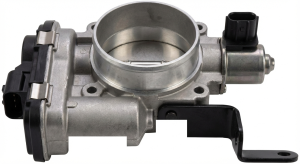
When a used part is the smart pick: A used OEM throttle body assembly from a reputable salvage yard can be a cost-effective alternative to a new unit, especially when compared to cheap, unbranded aftermarket options.
Donor-vehicle mileage cap: roughly under 100000 miles for the part to have meaningful remaining life.
What to inspect on the donor part:
- Check for a relatively clean throttle plate, which can indicate a well-maintained donor engine.
- Inspect the plastic housing for any cracks or damage, especially around the connector.
- Ensure the electrical connector pins are straight and free of corrosion.
- Confirm the donor vehicle had no throttle-related trouble codes if possible.
OEM-only on this vehicle (don't cheap out):
- No parts for this repair are strictly 'OEM-only', but using Mopar or reputable OE-equivalent brands for sensors is highly recommended for reliability.
Aftermarket brands forum-validated for this vehicle:
- Sensors: Delphi, NGK, Standard Motor Products (SMP)
- Gaskets: Fel-Pro, Mahle
Brands owners have reported issues with on this vehicle:
- Unbranded, 'white-box' electronic sensors from major online marketplaces are frequently cited as having high failure rates and should be avoided.
Real Owner Stories
Aggregated from forums and TSBs cited above. Mileages and costs reflect what owners reported in those sources.
2004-2008 Chrysler Pacifica 3.5L V6
Symptoms: P0068 code appearing immediately after changing the spark plugs.
What fixed it: Reseating the EGR tube gasket correctly upon reassembly of the intake manifold.
Source hint: Chrysler Forum (chryslerforum.com) and vehicle_specific_issues section
Related OBD-II Codes
Frequently Asked Questions
Why did my 2004-2008 Chrysler Pacifica start throwing a P0068 code immediately after I changed the spark plugs?
Is there a TSB for the P0068 code on my Pacifica regarding PCM updates?
Can a dirty throttle body cause the P0068 code on my 3.5L V6 engine?
How can I check if my MAP sensor is causing the P0068 code without buying a new one?
I hear a whistling sound from the engine bay of my Pacifica along with the P0068 code; what is it?
Is the P0068 code related to the common engine cradle rust issue on the Pacifica?
Helpful Videos
Used OEM Parts in Stock
New Aftermarket Parts Available


The information in this article is provided for general reference and educational purposes only. Vehicle specifications, procedures, and part compatibility can vary by production date, trim level, and region. Always consult your vehicle's factory service manual and verify part numbers before purchasing or performing repairs. Safety-critical components such as airbags, seat belts, and braking systems should be installed by a qualified professional.
- Chrysler Pacifica:
- 🧭 Diagnostic Flowchart
- 🎬 Helpful Videos
- 🛍️ Shop This Part
- What's Unique About the 2004-2008 Chrysler Pacifica
- Symptoms You May Notice
- Most Likely Causes
- Rare But Worth Checking
- Diagnosis Steps
- Parts You'll Likely Need
- Related Codes That Often Appear With This One
- Technical Service Bulletins (TSBs) & Recalls
- Platform-Specific Known Issues
- Mechanic-Grade Diagnostic Values
- Scan Tool Commands That Help
- Wiring & Ground Locations
- Real Owner Repair Stories
- OEM Part Supersession History
- Other Known Issues on This Vehicle
- Used vs. New Parts: Buying Guide for This Vehicle
- Real Owner Stories
- 2004-2008 Chrysler Pacifica 3.5L V6
- Related OBD-II Codes
- Frequently Asked Questions
- 🎟️ Get 5% Off