

P0068 on 2002-2005 Ford Explorer 4.0L: MAP/MAF Throttle Position Correlation Causes and Fixes
On a 2002-2005 Explorer with the 4.0L V6, code P0068 is most often caused by a vacuum leak from failed intake manifold gaskets or a cracked PCV hose. Before replacing any sensors, thoroughly inspect for vacuum leaks using a smoke machine, as this is a very common and well-documented issue on this engine.
- For a P0068 code on a 2002-2005 Explorer 4.0L, assume you have a vacuum leak until proven otherwise.
- The most likely sources of the leak are the intake manifold gaskets and the PCV hose assembly.
- A smoke test is the most reliable method to quickly locate the source of the leak.
- Do not replace expensive sensors like the MAF until you have thoroughly ruled out vacuum leaks and tried cleaning the MAF and throttle body.
- Check for related lean codes (P0171/P0174), as their presence strongly points towards a vacuum leak.
What's Unique About the 2002-2005 Ford Explorer
The 4.0L SOHC V6 engine used in this generation of Ford Explorer is infamous for developing vacuum leaks as it ages. The plastic upper intake manifold and its associated gaskets are well-documented failure points. These leaks introduce 'unmetered' air into the engine that the PCM cannot account for, creating the exact type of sensor correlation conflict that triggers P0068. While sensor failures are possible, a vacuum leak is so common on this platform that it should be the first suspicion, often accompanied by lean codes P0171 and P0174.
Symptoms You May Notice
- Rough or unstable idle.
- Engine stalling, especially when coming to a stop.
- Hesitation or lack of power during acceleration.
- Reduced fuel economy.
- Difficulty starting the engine.
- A hissing sound from the engine bay, indicating a vacuum leak.
- Check Engine Light is on.
- Replacing the MAF or TPS sensor without first checking for vacuum leaks. On this specific engine, vacuum leaks are the most probable cause and should be ruled out with a smoke test before spending money on parts.
Most Likely Causes
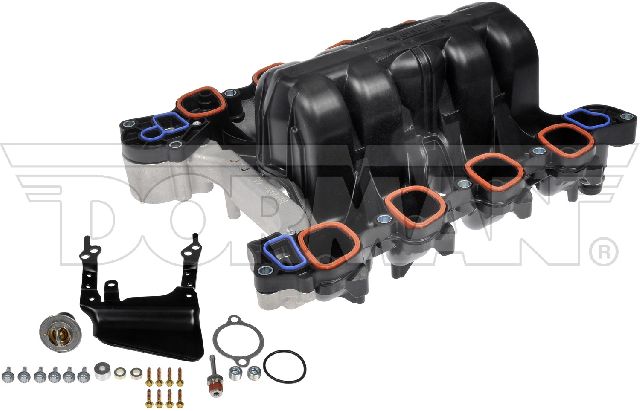
- Leaking Intake Manifold Gaskets 🔴 High Probability → Shop Engine Intake Manifold The original gaskets for the plastic intake manifold are known to degrade, harden, and crack over time, causing leaks, especially around the isolator bolts. This is a notorious failure point on the 4.0L SOHC. Ford issued TSB 03-16-1 for related lean codes (P0171/P0174) caused by these leaking gaskets and isolator bolts.
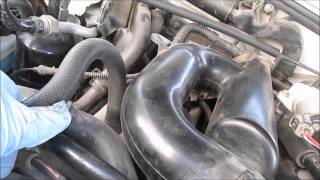
How to confirm: Perform a smoke test on the intake system. 🎬 Watch: A mechanic's guide to hunting down these vacuum leaks. Smoke will be seen escaping from the seam where the upper and lower intake manifolds meet or around the intake runner bolts. The leak may be more pronounced on a cold engine and may seal up when the engine warms up and expands.
Typical fix: Replace the upper and lower intake manifold gaskets. It is highly recommended to use the updated Fel-Pro (PermaDryPlus) MS 96121 gaskets, which are a one-piece design and considered superior to the OEM-style gaskets. Also replace the isolator bolts at the same time.
Est. part cost: $30-$80 - Cracked or Disconnected PCV System Hoses 🔴 High Probability The rubber elbows and plastic lines of the PCV (Positive Crankcase Ventilation) system are exposed to oil vapors and intense heat, causing them to become brittle and crack. The most common failure is the 90-degree rubber elbow at the rear of the intake manifold, which can be difficult to see.
How to confirm: Visually inspect all PCV hoses and rubber elbows. Pay close attention to the elbow connecting to the back of the intake manifold. A smoke test will quickly reveal these leaks. A hissing sound is often audible from this area.
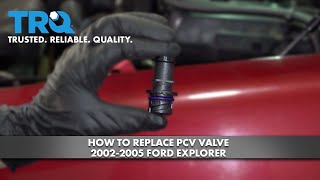
Typical fix: Replace the entire PCV hose assembly. The OEM part is often the best fit. The Motorcraft part number is typically 4L2Z-6758-AA. 🎬 See this walkthrough on how to replace the PCV assembly.
Est. part cost: $30-$60 - Dirty or Sticking Throttle Body 🟡 Medium Probability → Shop Fuel Injection Throttle Body
How to confirm: Remove the air intake tube connected to the throttle body and visually inspect the throttle plate and bore for black carbon buildup. The plate should move smoothly and close completely.
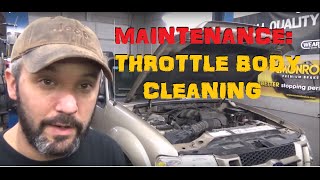
Typical fix: Clean the throttle body bore and plate using a dedicated throttle body cleaner and a soft brush or cloth. Do not use harsh tools that could scratch the bore. 🎬 Watch: How to clean the throttle body to restore idle quality. This ensures the throttle plate can close properly, which is critical for the PCM's calculations.
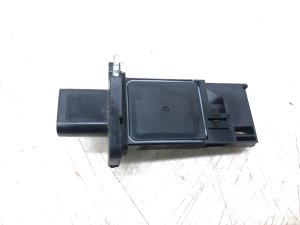
Est. part cost: $5-$15 (for cleaner) - Dirty or Faulty Mass Airflow (MAF) Sensor 🟡 Medium Probability → Shop Fuel Injection Air Flow Meter Over-oiling of aftermarket reusable air filters can contaminate the MAF sensor element, causing it to read incorrectly. They can also fail with age, providing skewed airflow data to the PCM.
How to confirm: Remove the sensor and inspect the small wires for contamination. Use a scan tool to monitor the MAF reading (in g/s) at idle and with RPMs; the reading should be stable and increase smoothly with engine speed. A dirty sensor will often read lower than expected.
Typical fix: First, try cleaning the sensor with a dedicated MAF sensor cleaner spray. Do not touch the sensor wires. If cleaning does not resolve the issue, the sensor must be replaced. Use a quality brand like Motorcraft or Hitachi.
Est. part cost: $10-$20 (for cleaner), $70-$150 (for new sensor) - Faulty Throttle Position Sensor (TPS) ⚪ Low Probability → Shop Fuel Injection Throttle Body
How to confirm: Use a scan tool to watch the throttle position percentage or voltage as you slowly press and release the gas pedal. The reading should be smooth with no jumps, dropouts, or dead spots. A multimeter can also be used to test for a smooth voltage sweep.
Typical fix: On 2002-2005 models, the TPS is a separate component that can be unbolted from the throttle body and replaced. The Motorcraft part number is often DY-1164.
Est. part cost: $40-$70
Rare But Worth Checking
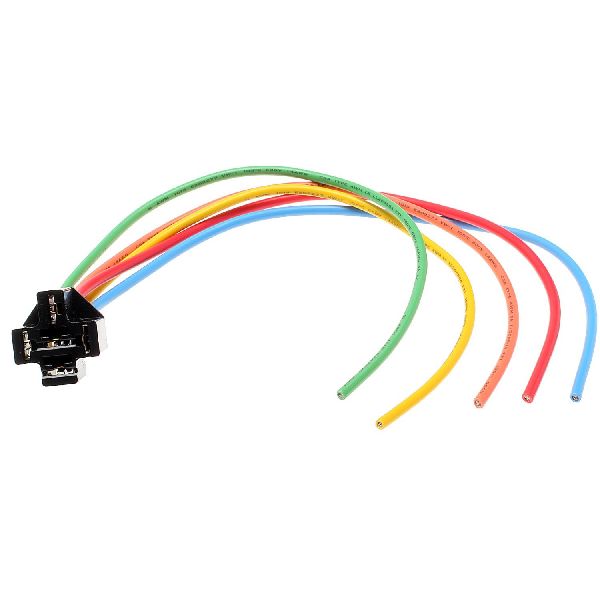
- Damaged wiring or connector: A broken connector or chafed wire for the TPS, MAF, or MAP sensor can cause an intermittent signal and trigger this code. One owner in a forum found a broken TPS connector to be the culprit after replacing sensors. Always inspect the wiring harness during diagnosis.
- Faulty Manifold Absolute Pressure (MAP) Sensor: → Shop Manifold Absolute Pressure Sensor While less common than other causes, a failing MAP sensor can provide incorrect pressure readings to the PCM, contributing to the correlation fault. It is located on the intake manifold and can be tested with a scan tool and a vacuum pump.
- High Altitude Operation: While documented for other Ford models, a manufacturer service bulletin (TSB 18-2370) notes that vehicles operating in altitudes of 3500 feet above sea level and higher may exhibit an illuminated MIL with only DTC P0068 stored.
Diagnosis Steps
- Check for other codes: Scan the PCM for any other stored codes, paying close attention to lean codes (P0171, P0174) or other sensor-specific codes.
- Visually Inspect the Air Intake: Check the entire air intake system from the air filter box to the throttle body for any obvious cracks, loose clamps, or disconnected hoses.
- Inspect PCV Hoses: Carefully examine all PCV hoses and their rubber elbows for cracks, splits, or mushiness. Pay special attention to the elbow at the rear of the intake manifold.
- Perform a Smoke Test: This is the most effective way to find vacuum leaks. Introduce smoke into the intake manifold via a vacuum port and look for smoke escaping from the intake manifold gaskets, PCV system, throttle body shaft, or other vacuum lines.
- Clean the Throttle Body: If no vacuum leaks are found, remove the intake duct and clean any carbon buildup from the throttle plate and bore using throttle body cleaner.
- Clean the MAF Sensor: Remove the MAF sensor and clean it using only dedicated MAF sensor cleaner. Let it dry completely before reinstalling.
- Monitor Sensor Data: Use a scan tool to view live data for the TPS, MAF, and MAP sensors. Watch the TPS signal for smooth operation as you press the pedal. Check that the MAF (g/s) and MAP (kPa) readings are stable at idle and respond logically to throttle changes.
- Test Sensor Wiring: If a sensor's signal is erratic, inspect its connector and wiring for damage, corrosion, or looseness.
- Test/Replace Sensors: If a vacuum leak has been ruled out and cleaning has not worked, test the suspect sensor (usually the TPS or MAF) with a multimeter or replace it with a quality part.
Parts You'll Likely Need
- Intake Manifold Gasket Set — This is the most common cause of vacuum leaks on the 4.0L SOHC engine, leading to code P0068. The original design is prone to failure.
Trusted brands: Fel-Pro (MS 96121 - Recommended upgrade), Mahle, Motorcraft
OEM price range: $50-$80
Aftermarket price range: $30-$60 - PCV Hose Assembly
(OEM #4L2Z-6758-AA)— The rubber elbows and plastic lines are a high-failure item that crack and cause major vacuum leaks, especially the rear elbow.
Trusted brands: Motorcraft
OEM price range: $40-$60
Aftermarket price range: $25-$40 - Throttle Position Sensor (TPS)
(OEM #DY-1164)— Replaced if sensor data shows erratic readings or dead spots and wiring is confirmed to be good.
Trusted brands: Motorcraft
OEM price range: $50-$70
Aftermarket price range: $30-$50 - Mass Air Flow (MAF) Sensor Cleaner — A critical first step before replacing the MAF sensor. Often, contamination is the only issue.
Trusted brands: CRC, WD-40 Specialist
OEM price range: N/A
Aftermarket price range: $10-$20
Related Codes That Often Appear With This One
- P0171 — System Too Lean (Bank 1) - A vacuum leak introduces unmetered air, causing a lean condition that the PCM detects.
- P0174 — System Too Lean (Bank 2) - Same as P0171. It's very common to see both P0171 and P0174 together with P0068 when a significant vacuum leak is present, as noted in TSB 03-16-1.
Technical Service Bulletins (TSBs) & Recalls
- TSB 03-16-1: Addresses lean DTCs P0171/P0174 caused by vacuum leaks at the intake manifold gaskets and isolator bolts, a common root cause for P0068 on this engine.
- TSB 18-2370: While issued for other Ford models, this bulletin notes that operating in high altitudes (above 3500 feet) can trigger P0068 as the only stored code.
Platform-Specific Known Issues
- Ford Technical Service Bulletin (TSB) 03-16-1 was issued for lean codes (P0171/P0174) on this engine, caused by leaking intake manifold port gaskets and isolator bolts. This is a primary cause of the unmetered air that also triggers P0068.
Mechanic-Grade Diagnostic Values
- Throttle Position Sensor (TPS) Reference Voltage — expected: ~5.0 volts. Failure: Voltage significantly lower or higher than 5.0V indicates a PCM or wiring issue.
- Throttle Position Sensor (TPS) Signal Voltage - Closed Throttle — expected: 0.5 to 1.5 volts. Failure: Voltage outside this range at closed throttle suggests a misadjusted or faulty TPS.
- Throttle Position Sensor (TPS) Signal Voltage - Wide Open Throttle (WOT) — expected: 4.0 to 5.0 volts. Failure: Voltage does not reach this range at WOT, or the signal is erratic/jumpy during throttle sweep.
- Manifold Absolute Pressure (MAP) Sensor Frequency - KOEO — expected: ~159 Hz at sea level. Failure: Frequency is significantly different, indicating a faulty sensor.
- Manifold Absolute Pressure (MAP) Sensor Frequency - Idle — expected: ~110 Hz (will vary with engine vacuum). Failure: Frequency does not drop from the KOEO reading or is erratic at a steady idle.
- Long Term Fuel Trims (LTFT) with a vacuum leak — expected: Highly positive values, often +15% to +25%. Failure: When LTFT for both banks are maxed out, it's a strong indicator of a large, unmetered air leak affecting the entire engine, which is a primary cause of P0068.
Hidden / Shadow Codes Worth Checking
- Mode $06, TID $53: Cylinder-specific misfire counts for the last 10 driving cycles. While not a trouble code itself, high counts on one or more cylinders can indicate an issue (like a lean misfire from a vacuum leak) that is contributing to the P0068 correlation fault before a P030x code is set. (see via A scan tool capable of displaying Mode $06 data. This is available on most professional and some advanced DIY scanners.)
Wiring & Ground Locations
- G100 — Engine compartment, center rear, often on the firewall.. This is a primary engine-to-chassis ground. A poor connection here can cause floating grounds for various sensors, leading to erratic voltage signals and correlation codes like P0068.
- G101 — Engine compartment, left-hand (driver's) side, front, near the battery.. Another critical ground point for the engine harness. Corrosion or looseness can affect the PCM and its sensor inputs.
- Engine-to-Firewall Ground Strap — Typically runs from the rear of the driver's side cylinder head to a stud on the firewall.. Ensures the engine block has a solid ground reference to the body and PCM. If this strap is broken or corroded, sensors that ground through the block can provide faulty data.
- PCM Connector — Located in the engine bay, typically on the passenger side firewall.. Water intrusion or corrosion at the main PCM connector can disrupt signals from the MAF, MAP, and TPS, directly causing a P0068 code. All sensor signals route through here.
Real Owner Repair Stories
- 2CarPros Forum User (2003 Ford Explorer (Sport Trac) 4.0L) — Check Engine Light with code P0068.
❌ Tried (didn't work) Replacing the Mass Air Flow (MAF) sensor.
✅ What actually fixed it Upon attempting to replace the Throttle Position Sensor (TPS), the owner discovered the electrical connector for the TPS was broken. Replacing the damaged connector resolved the code. - Ford Truck Enthusiasts Forum User (Ford truck with intermittent stalling and P0068) — Truck would die at low speeds, intermittently setting code P0068 which would disappear on restart.
❌ Tried (didn't work) Replacing the fuel filter., Replacing the MAF sensor., Spraying brake cleaner to check for vacuum leaks (none found).
✅ What actually fixed it The user eventually found the fix was replacing the intake manifold gaskets, which is the common failure point, even though their initial check for leaks did not reveal the problem. - NHTSA Report (NHTSA ODI #11559506) — An owner of a Ford vehicle reported that the P0068 code appeared while they were driving, forcing them to pull over to a shoulder.
"I Checked Everything" — The Actual Cause
- In some cases, a vacuum leak from the intake manifold gaskets may only appear when the engine is cold. As the engine warms up and components expand, the leak can temporarily seal itself, causing a smoke test on a warm engine to pass. The root cause is still the failing gaskets, which should be suspected if symptoms are worse on a cold start.
OEM Part Supersession History
1L2Z-9E926-DB→Discontinued— End of life for the part. This was the throttle body assembly for 2002-2003 models.
Heads up: While the complete assembly is discontinued, the individual sensors (TPS, IAC) can still be sourced.3L5Z-9E926-AA→9W7Z-9E926-A— Part number consolidation and revision by Ford.
Heads up: These part numbers are generally associated with the V8 models or later year Explorers/F-150s but are sometimes cross-referenced. It is critical to verify the correct throttle body part number by VIN for the specific 2002-2005 4.0L V6, as physical and electrical differences exist.
Model Year Variations Within This Range
- 2002: The 2002 model year was the final year a 5-speed manual transmission (Mazda M5OD-R4) was offered with the 4.0L V6 engine. From 2003-2005, only the 5-speed automatic was available. This does not directly affect the cause of P0068 but is a key vehicle variation.
- 2002: Early 2002 models were known to have issues with the metallurgy of the rear coil springs, causing them to fracture. While unrelated to P0068, it's a known 'first year' flaw for the third generation.
Diagnostic Flowchart
Other Known Issues on This Vehicle
Issues unrelated to this code that are worth knowing about as an owner of this generation:
- Timing Chain Cassette Failure 🔴 High — Very common, especially on earlier 1997-2002 models, but still a concern through 2005. Often presents as a rattling or 'death rattle' sound from the engine on startup or at idle. The plastic guides for the timing chains wear out and break, leading to slack in the chains. One chain is at the front of the engine, but another is at the rear, requiring engine or transmission removal for replacement, making it a very expensive repair.
- 5R55S/W/N Automatic Transmission Failure 🔴 High — Extremely common for the 2002-2005 model years. Symptoms include harsh shifting, delayed engagement into gear, a flashing O/D (overdrive) light, and eventual loss of gears (like reverse). Common failures include a worn servo bore in the transmission case and solenoid pack failure.
- Cracked Rear Tailgate Applique 🟡 Low — Widespread cosmetic issue affecting nearly all 2002-2005 Explorers and Mountaineers. The plastic panel below the rear window cracks, usually horizontally near the Ford emblem. This is caused by a design flaw allowing moisture to get trapped, and was the subject of a class-action lawsuit. It is primarily a cosmetic problem but can lead to the rear glass latch failing. (Ref: Subject of class-action lawsuit (Nettleton v. Ford Motor Company))
- Wheel Bearing Failure 🟠 Medium — Commonly reported issue. Leads to a humming or grinding noise from one of the wheels that changes with speed. Requires replacement of the hub and bearing assembly.
Used vs. New Parts: Buying Guide for This Vehicle
When a used part is the smart pick: A complete throttle body assembly from a junkyard can be a cost-effective choice if yours is physically damaged (e.g., cracked housing). Sensors like the MAF or TPS can also be sourced used, but it's a gamble on their remaining lifespan.
Donor-vehicle mileage cap: roughly under 120000 miles for the part to have meaningful remaining life.
What to inspect on the donor part:
- Check the donor vehicle's mileage; lower is always better.
- For a throttle body, inspect the bore for deep scoring and ensure the throttle plate isn't bent.
- For sensors, inspect the connectors for corrosion or broken plastic locking tabs.
- Look for vehicles that appear well-maintained and are free from front-end collision damage.
OEM-only on this vehicle (don't cheap out):
- PCV Hose Assembly: Aftermarket versions often have poor fitment and use lower-quality rubber that fails quickly. The complex shape makes OEM (Motorcraft) the most reliable choice.
- MAF Sensor: While some aftermarket brands are acceptable, cheap, no-name sensors are notorious for being calibrated incorrectly out of the box, causing persistent performance issues. Stick with Motorcraft or a trusted OEM supplier like Hitachi if possible.
Aftermarket brands forum-validated for this vehicle:
- Fel-Pro (PermaDryPlus) for Intake Manifold Gaskets (MS 96121 is considered an upgrade over OEM).
- Motorcraft for all sensors and PCV components (OEM).
- Walker or Standard Motor Products (SMP) for sensors if Motorcraft is unavailable.
Brands owners have reported issues with on this vehicle:
- Unbranded, 'white-box' electronic sensors (TPS, MAF, MAP) from online marketplaces. These frequently have high failure rates and incorrect calibrations, leading to a repeat of the P0068 code or new, different codes.
Real Owner Stories
Aggregated from forums and TSBs cited above. Mileages and costs reflect what owners reported in those sources.
2003 Ford Explorer 4.0L V6
Symptoms: Code P0068 persisted even after the owner replaced the MAF sensor.
What fixed it: The root cause was discovered to be a broken TPS (Throttle Position Sensor) connector.
Source hint: 2CarPros: Code P0068 on 2003 Ford Explorer
2004 Ford Explorer 4.0L V6
Symptoms: Vehicle threw codes P0068, P0171, and P0174 simultaneously.
What fixed it: The issue was traced to vacuum leaks from the intake gaskets and the PCV hose elbow located behind the intake manifold.
Source hint: Ford Truck Enthusiasts: P0068 and lean codes
2002-2005 Ford Explorer 4.0L V6
Symptoms: Owner experienced P0068 alongside lean codes P0171 and P0174. They attempted cleaning the MAF sensor first.
What fixed it: Replacing both the upper and lower intake manifold gaskets resolved all three codes.
Source hint: ExplorerForum: P0171, P0174, P0068 - Fixed!
Related OBD-II Codes
Frequently Asked Questions
Does Ford Technical Service Bulletin 03-16-1 apply to my 4.0L Explorer's P0068 code?
I've heard the PCV system is a common failure point on the 2002-2005 Explorer 4.0L. Where should I look?
What specific intake gaskets should I use for the 4.0L SOHC engine repair?
Can an aftermarket air filter cause a P0068 on my Explorer?
Is the Throttle Position Sensor (TPS) integrated into the throttle body on the 2002-2005 models?
Why does my P0068 code seem to disappear after the engine warms up?
Helpful Videos
Used OEM Parts in Stock
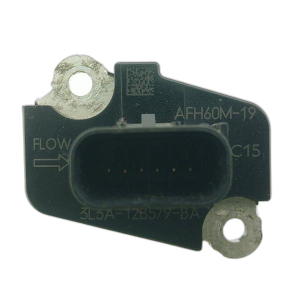
New Aftermarket Parts Available


The information in this article is provided for general reference and educational purposes only. Vehicle specifications, procedures, and part compatibility can vary by production date, trim level, and region. Always consult your vehicle's factory service manual and verify part numbers before purchasing or performing repairs. Safety-critical components such as airbags, seat belts, and braking systems should be installed by a qualified professional.
- Ford Explorer:
- 🧭 Diagnostic Flowchart
- 🎬 Helpful Videos
- 🛍️ Shop This Part
- What's Unique About the 2002-2005 Ford Explorer
- Symptoms You May Notice
- Most Likely Causes
- Rare But Worth Checking
- Diagnosis Steps
- Parts You'll Likely Need
- Related Codes That Often Appear With This One
- Technical Service Bulletins (TSBs) & Recalls
- Platform-Specific Known Issues
- Mechanic-Grade Diagnostic Values
- Hidden / Shadow Codes Worth Checking
- Wiring & Ground Locations
- Real Owner Repair Stories
- "I Checked Everything" — The Actual Cause
- OEM Part Supersession History
- Model Year Variations Within This Range
- Other Known Issues on This Vehicle
- Used vs. New Parts: Buying Guide for This Vehicle
- Real Owner Stories
- 2003 Ford Explorer 4.0L V6
- 2004 Ford Explorer 4.0L V6
- 2002-2005 Ford Explorer 4.0L V6
- Related OBD-II Codes
- Frequently Asked Questions
- 🎟️ Get 5% Off