

P0068 on 2007-2016 GMC Acadia 3.6L: MAP/MAF Throttle Position Correlation Fixes
P0068 on the GMC Acadia 3.6L V6 usually means the throttle body is dirty with carbon buildup. Cleaning the throttle body and Mass Airflow (MAF) sensor is the most common and inexpensive fix, often resolving a rough idle and 'Reduced Engine Power' mode for under $25.
- P0068 on a 2007-2016 Acadia is almost always caused by a dirty throttle body.
- Always start by cleaning the throttle body and MAF sensor before replacing any parts; this is the cheapest and most likely fix.
- If cleaning doesn't work, the next step is to check for vacuum leaks, especially around the intake manifold.
- The vehicle may enter 'Reduced Engine Power' mode, so it's important to address the code promptly for safety and normal vehicle operation.
- Replacing sensors should be the last step, after confirming they are faulty through testing.
What's Unique About the 2007-2016 GMC Acadia
The GM 3.6L V6 engines (LLT from 2007-2012 and LFX from 2013-2016) are direct-injection, which means they are particularly prone to carbon and oil vapor buildup on the throttle body. Unlike port-injected engines, there is no fuel washing over the throttle plate to keep it clean. This buildup restricts airflow at idle and small throttle openings, causing the MAP and MAF sensor readings to conflict with what the throttle position sensor reports, making this a very common code on the Acadia and its platform mates (Buick Enclave, Chevy Traverse, Saturn Outlook).
Generation note: The 2007-2016 GMC Acadia is all part of the first generation, but it includes two engine versions: the 3.6L LLT (2007-2012) and the 3.6L LFX (2013-2016). While the causes for P0068 are similar for both, the LLT engine is also known for PCV system issues and timing chain stretch that can sometimes contribute to performance problems and related codes.
Symptoms You May Notice
- Check Engine Light is on
- Rough or unstable idle
- Vehicle enters "Reduced Engine Power" mode
- Hesitation or poor acceleration
- Increased fuel consumption
- Engine may stall when coming to a stop
- Hissing noise from the engine bay, especially on acceleration
- Replacing the MAP or MAF sensor before cleaning the throttle body. A dirty throttle body is the most frequent cause, and cleaning it is the cheapest and easiest first step.
Most Likely Causes
- Dirty or Carbon-Fouled Throttle Body 🔴 High Probability → Shop Fuel Injection Throttle Body As a direct-injection engine, the 3.6L V6 lacks the cleaning effect of fuel spraying on the throttle plate, leading to oil and carbon buildup from the PCV system. This is the most common cause by a wide margin. Manufacturer Bulletin #PIP4578B notes that P0068 and related codes like P2176 may be experienced on high mileage vehicles due to these conditions.
How to confirm: Remove the air intake duct from the throttle body and visually inspect for a thick, black, greasy ring of carbon around the throttle plate and bore. The backside of the plate is often the dirtiest.
Typical fix: Thoroughly clean the throttle body plate and bore with a dedicated throttle body cleaner and a soft cloth or brush. Do not spray cleaner directly on an electronic throttle body; spray the rag first. An idle relearn procedure may be required afterward.
Est. part cost: $10-$20 - Vacuum Leak 🟡 Medium Probability The large plastic air intake tube can crack or the rubber boots at either end can tear, allowing unmetered air to enter. Intake manifold gaskets can also degrade over time.
How to confirm: With the engine running, carefully spray short bursts of brake cleaner or a propane torch (unlit) around the intake manifold gaskets and vacuum lines. If the engine RPM changes, a leak is present. A smoke test is a more precise method. Visually inspect the entire intake boot for cracks or tears.
Typical fix: Replace the leaking gasket or hose. The rubber boot connecting the air filter box to the throttle body is a common failure point.
Est. part cost: $5-$150 - Faulty Manifold Absolute Pressure (MAP) Sensor ⚪ Low Probability → Shop Manifold Absolute Pressure Sensor Sensors can fail electronically over time, providing incorrect pressure readings to the PCM. Oil contamination from the PCV system can also foul the sensor.
How to confirm: Use a scan tool to monitor the MAP sensor voltage. With the key on and engine off, it should read near atmospheric pressure (voltage around 4.5-5V). With the engine idling, it should show a strong vacuum (voltage around 1-1.5V). Readings that are stuck or don't change with engine load indicate a bad sensor.
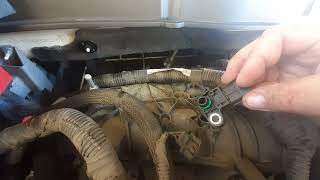
Typical fix: Replace the MAP sensor. It is located on the top front of the engine's intake manifold and is held in by a single bolt.
Est. part cost: $30-$80 - Dirty or Faulty Mass Airflow (MAF) Sensor ⚪ Low Probability → Shop Fuel Injection Air Flow Meter
How to confirm: Inspect the MAF sensor element (located in the intake tube after the air filter) for dirt or debris. You can try cleaning it with dedicated MAF sensor cleaner. A scan tool can monitor its readings in grams/second to see if they respond correctly to engine RPM changes.
Typical fix: Clean the sensor with MAF sensor cleaner. If cleaning doesn't work, replace the MAF sensor assembly.
Est. part cost: $15-$150
Rare But Worth Checking
- Damaged wiring or connectors: Check the wiring harnesses for the MAP, MAF, and throttle body sensors for any signs of chafing, corrosion, or loose pins, especially if other work has recently been done in the engine bay. Bulletin #PIP5529A suggests additional diagnostics to resolve MIL illumination when P0068 appears in combination with other electrical or sensor codes.
- Faulty Throttle Position Sensor (TPS): → Shop Fuel Injection Throttle Body The TPS is integrated into the throttle body assembly on this engine. If it fails, the entire throttle body usually needs to be replaced. This is less common than the throttle body simply being dirty.
Diagnosis Steps
- Scan the vehicle for all stored trouble codes. Note any other codes that appear with P0068. Bulletin #PIP5529B indicates that P0068 often appears alongside codes such as P0101, P0106, P0171, and P0506.
- Visually inspect the entire air intake system from the air filter box to the throttle body. Look for cracked hoses, loose clamps, or disconnected lines, paying close attention to the large rubber intake boot.
- Remove the intake duct from the throttle body and inspect the throttle plate and bore for carbon buildup.
- If dirty, clean the throttle body thoroughly using throttle body cleaner and a soft cloth. Also, clean the MAF sensor with dedicated MAF sensor cleaner.
- If the throttle body was clean or cleaning did not resolve the issue, check for vacuum leaks using a smoke machine or by carefully spraying carb cleaner around the intake manifold gaskets and vacuum hoses while monitoring engine RPM.
- Using a scan tool, monitor live data for the MAP, MAF, and TPS sensors to ensure their readings are logical and change with engine speed and load.
- If a sensor is suspected, test its circuit for proper voltage, ground, and signal before replacing the part.
- After any repair, clear the codes and perform a throttle idle relearn procedure. This can sometimes be achieved by idling the engine for 3 minutes, turning it off for 1 minute, and repeating, or by driving for several key cycles. Then test drive the vehicle to confirm the fix.
Parts You'll Likely Need
- Throttle Body Cleaner
(OEM #ACDelco 19351855 (Top Engine and Fuel Injector Cleaner))— This is required to clean the carbon buildup from the throttle body, which is the most common cause of P0068 on this engine.
Trusted brands: CRC, ACDelco
OEM price range: $15-$20
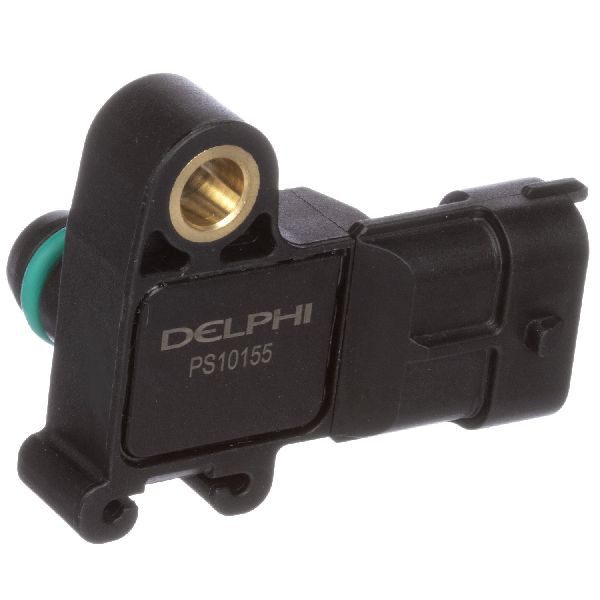
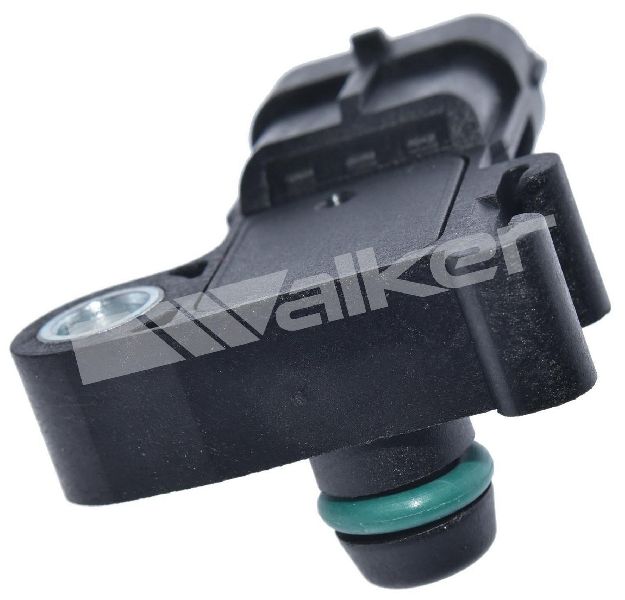
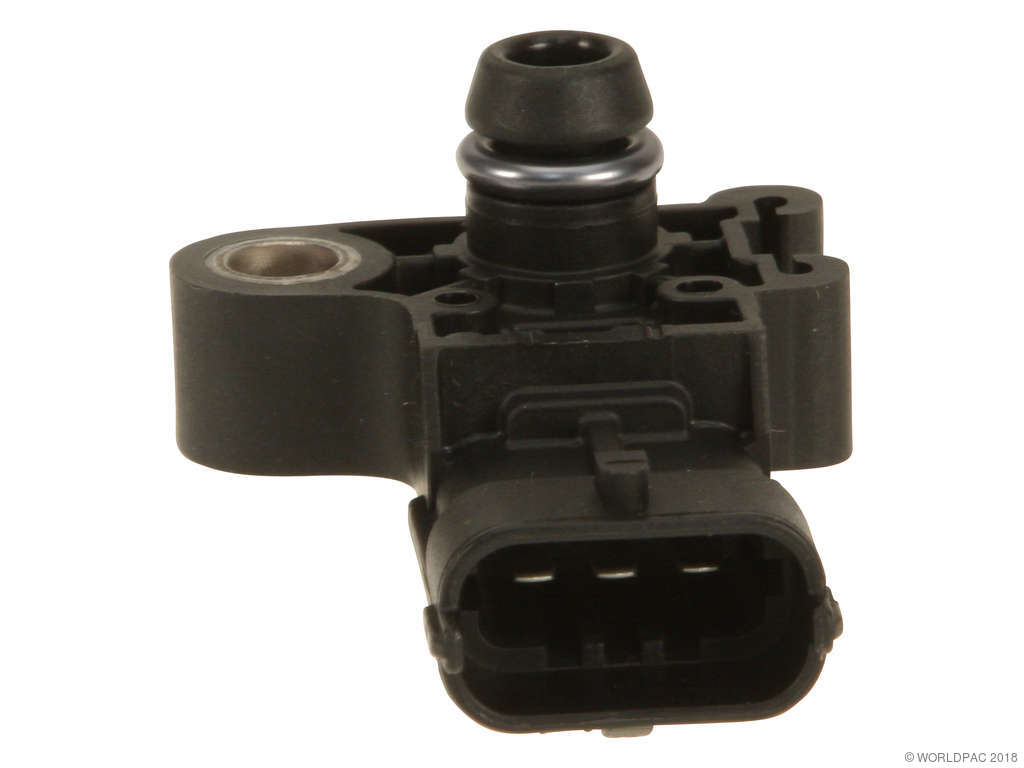
Aftermarket price range: $8-$12 - Manifold Absolute Pressure (MAP) Sensor
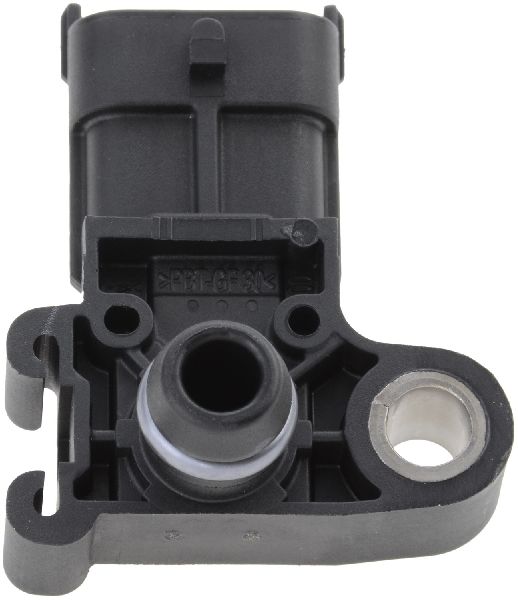
(OEM #ACDelco 213-4681 (Replaces 12644228))— If cleaning the throttle body and checking for vacuum leaks doesn't solve the problem, the MAP sensor itself may have failed.
Trusted brands: ACDelco, Bosch, Delphi
OEM price range: $50-$80
Aftermarket price range: $30-$60 - Throttle Body Assembly
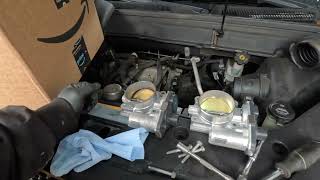
(OEM #ACDelco 217-3430 (Replaces 12631186))— Replaced if cleaning does not work and the internal electronics (Throttle Position Sensor) have failed. This is a less common fix. 🎬 Watch: Step-by-step throttle body replacement guide
Trusted brands: ACDelco, Hitachi, Standard Motor Products
OEM price range: $200-$300
Aftermarket price range: $120-$220
Related Codes That Often Appear With This One
- P0106 — This code for 'MAP Sensor Performance' is often triggered by the same dirty throttle body or vacuum leaks that cause P0068.
- P0171 / P0174 — These 'System Too Lean' codes are a direct result of unmetered air from a vacuum leak, which is also a primary cause of P0068.
- P2176 — This code for 'Idle Position Not Learned' can appear after cleaning or replacing the throttle body if the idle relearn procedure is not performed or is unsuccessful.
Technical Service Bulletins (TSBs) & Recalls
- TSB PIP5068D: Addresses P0068 and other codes, instructing technicians to check for throttle body icing or dirt/debris, and to clean the throttle body and perform an idle learn procedure.
- TSB #PIP4578B: Addresses P0068 on high-mileage GM vehicles, linking the code to carbon buildup in the throttle body and emphasizing the necessity of an idle learn reset after cleaning. It also notes that symptoms may include idle surge and reduced engine power mode.
- Bulletin #PIP5529B: Provides additional diagnostics and repair assistance for resolving malfunction indicator lamp illumination when P0068 is present with a combination of other codes like P0101, P0106, and P0171.
Platform-Specific Known Issues
- Idle Relearn Procedure: After cleaning the throttle body, the idle may be high or erratic. The PCM needs to relearn the new closed-throttle position. A common procedure is to let the engine idle for 3 minutes, turn the ignition off for 1 minute, and repeat this cycle three times. In some cases, the system will relearn on its own after a few days of normal driving.
Mechanic-Grade Diagnostic Values
- MAP Sensor Voltage (Key On, Engine Off) — expected: 4.5V - 5.0V (at sea level, should match BARO reading). Failure: Voltage is significantly lower, higher, or reads 0V. If voltage is stuck high and does not change when the engine starts, the sensor or circuit is faulty.
- MAP Sensor Voltage (Engine at Idle) — expected: 1.0V - 1.5V. Failure: Voltage remains high (near the KOEO reading) or is erratic. This indicates the sensor is not reading engine vacuum.
- MAP Sensor 5V Reference Wire (Gray wire at connector) — expected: ~5.0V. Failure: Voltage is not present or is low, indicating a PCM or wiring issue.
- MAP Sensor Ground Circuit Resistance — expected: Less than 1 ohm to a known good chassis ground.. Failure: High resistance indicates a poor ground connection, which can cause incorrect (high) sensor voltage readings.
- Throttle Position Sensor Voltage — expected: A smooth climb from ~0.5V at idle to ~4.5-5.0V at wide-open throttle.. Failure: Voltage spikes, drops out, or does not change smoothly, indicating a faulty sensor (which is integrated into the throttle body).
- MAF Sensor Reading (at idle) — expected: Approximately 3.5 - 5.0 g/s for a 3.6L engine at normal idle.. Failure: Readings are stuck, do not increase with RPM, or are significantly outside the expected range.
Scan Tool Commands That Help
- GDS2/Tech2: Idle Learn Reset / Throttle Learn — This function is mandatory after cleaning or replacing the throttle body. The PCM must relearn the new closed-throttle position to correct a high or unstable idle. Failure to perform this reset is a common reason for the code to return after a cleaning.
- GDS2/Tech2: Engine Output Controls — Allows a technician to command the throttle plate to specific angles (e.g., 10%, 25%, 50%) with the key on and engine off. This is used to verify if the throttle position sensor readings on the scan tool match the commanded position and to check for any binding or sticking in the throttle body mechanism.
Wiring & Ground Locations
- MAP Sensor Connector — On the front of the intake manifold, easily visible after removing the engine cover.. This 3-pin connector provides power, ground, and signal for the MAP sensor. A poor connection here will directly cause MAP-related codes. The gray wire is the 5V reference, the center wire is ground, and the other is the signal wire.
- G110 — On the driver's side of the engine block, near the front.. This is a primary engine ground. A loose or corroded G110 ground can cause erratic voltage readings for multiple sensors, including the MAP and MAF, leading to correlation codes like P0068.
- G302 — Inside the vehicle, under the dashboard near the driver's side kick panel.. This is an interior body ground. While less likely to be the primary cause, poor interior grounds can sometimes affect PCM operation and sensor data.
Real Owner Repair Stories
- acadiaforum.net user (2008 GMC Acadia (LLT)) — Check Engine Light with codes P0068, P0106, P0171, P0174, rough idle, and reduced engine power.
❌ Tried (didn't work) Initial diagnosis pointed towards multiple sensor failures or a major vacuum leak.
✅ What actually fixed it The user removed the air intake and found the throttle body was extremely dirty with carbon buildup. A thorough cleaning of the throttle body resolved all codes and restored normal engine operation. - traverseforum.com user (Chevrolet Traverse (platform mate with same 3.6L engine)) — 'Engine Power is Reduced' message and P0068 code.
❌ Tried (didn't work) Cleaning the throttle body., Checking for vacuum leaks around the intake manifold.
✅ What actually fixed it The user discovered a large tear in the flexible rubber air intake boot located between the MAF sensor and the throttle body. This allowed a large amount of unmetered air into the engine. Replacing the torn boot fixed the issue. - YouTube video analysis (2008 GMC Acadia (LLT)) — Multiple MAP sensor codes (P0106, P0107, P0108) and rough running.
❌ Tried (didn't work) Sensor replacement was considered.
✅ What actually fixed it A technician diagnosed a faulty MAP sensor connector pigtail. The wiring had failed, causing intermittent signal loss. Replacing the pigtail and soldering the new one in place resolved the codes.
"I Checked Everything" — The Actual Cause
- In some cases on the 3.6L LFX engine, a smoke test may not reveal a leak, but the cause can be a ruptured diaphragm in the clean-side PCV tube. This happens when the fixed PCV orifice in the valve cover clogs, causing excessive vacuum that damages the diaphragm, creating a hard-to-find internal vacuum leak.
OEM Part Supersession History
12644228→ACDelco 213-4681— This is the OEM part number for the MAP sensor. 12644228 has been discontinued and replaced by the 213-4681 service part number.12631186→12694871 (also service part number 217-3430)— This is the OEM part number for the throttle body assembly applicable to the LLT engine. It has been superseded by newer revisions.
Heads up: The throttle body for the LLT (2007-2012) and LFX (2013-2016) engines are different. The LFX uses a different part number (e.g., 12670981). Ensure the correct part is ordered for the specific engine.
Model Year Variations Within This Range
- 2007-2012 (LLT Engine): The LLT engine uses an aluminum intake manifold and has a serviceable PCV valve system, but the rear bank's fixed orifice is integrated into the valve cover and is prone to clogging. The throttle body part number is specific to this engine (e.g., 12631186).
- 2013-2016 (LFX Engine): The LFX engine features a lighter composite (plastic) intake manifold and integrated exhaust manifolds cast into the cylinder heads. It uses a different ECU (Delphi instead of Bosch) and has a different PCV system design. A known issue is a clogged PCV orifice rupturing a diaphragm in the clean-side tube, creating a unique vacuum leak.
Diagnostic Flowchart
Other Known Issues on This Vehicle
Issues unrelated to this code that are worth knowing about as an owner of this generation:
- Premature Timing Chain Stretch 🔴 High — Very common, especially on 2007-2012 LLT engines, often appearing between 70,000 and 120,000 miles. Can lead to catastrophic engine failure if ignored. (Ref: Special Coverage Adjustment #11340C; TSB 12-06-01-009E.)
- Fractured 3-5-R Transmission Wave Plate 🔴 High — Common on 2007-2009 models with the 6T70/6T75 transmission, typically before 100,000 miles. Results in loss of 3rd, 5th, and Reverse gears, requiring a transmission rebuild. (Ref: TSB GCUS-9-2635 (Special Coverage, now expired).)
- Power Steering Pump Failure / Leaks 🟠 Medium — Widespread issue across all first-generation years. Leaks can develop from the pump, lines, or steering rack, leading to loss of power assist. (Ref: Special Coverage #14329 (extends warranty to 10 years/150,000 miles for this issue).)
- Intake Valve Carbon Buildup 🟠 Medium — Common on direct-injection engines (2009+ LLT/LFX), causing cold start misfires, rough idle, and reduced performance. Often requires walnut shell blasting to clean. (Ref: TSB PIP5029C.)
- Clogged PCV Orifice / Oil Consumption 🟠 Medium → Shop PCV Valve — The PCV orifice in the rear valve cover can clog, leading to increased crankcase pressure and high oil consumption, which can foul catalytic converters. (Ref: TSB 10-06-01-008H.)
Used vs. New Parts: Buying Guide for This Vehicle
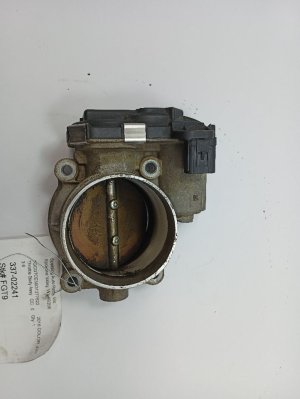
When a used part is the smart pick: A used throttle body assembly from a low-mileage donor vehicle can be a cost-effective option, as the failure mode is often electronic (bad TPS) rather than mechanical wear. Given the high cost of a new OEM unit, a used part from a reputable salvage yard with a warranty is a reasonable choice. Used MAP or MAF sensors are generally not recommended due to their electronic nature and sensitivity.
Donor-vehicle mileage cap: roughly under 75000 miles for the part to have meaningful remaining life.
What to inspect on the donor part:
- Check for a clean throttle plate and bore; excessive carbon suggests a hard life or a donor vehicle with its own PCV issues.
- Ensure the electrical connector pins are straight, clean, and free of corrosion.
- Verify the part number matches your vehicle's specific engine (LLT vs. LFX).
- Ask for the donor vehicle's mileage and check if the seller offers a 30-90 day warranty.
OEM-only on this vehicle (don't cheap out):
- While not strictly 'OEM-only', electronic sensors like the MAP and MAF have a higher rate of failure with generic, no-name aftermarket brands. Sticking to OEM (ACDelco) or reputable OE manufacturers (Bosch, Delphi) is strongly advised to avoid repeat failures.
Aftermarket brands forum-validated for this vehicle:
- Bosch (Often the OE supplier for sensors and throttle bodies)
- Hitachi Astemo
- Dorman OE FIX (For throttle bodies, Dorman sometimes offers an improved design with better seals to prevent common failures)
Brands owners have reported issues with on this vehicle:
- Unbranded, 'white-box' electronic sensors and throttle bodies from online marketplaces. These often have high defect rates and may not be calibrated correctly, causing the code to persist or new codes to appear.
Real Owner Stories
Aggregated from forums and TSBs cited above. Mileages and costs reflect what owners reported in those sources.
2009-2017 Chevrolet Traverse 3.6L V6
Symptoms: Engine Power is Reduced
What fixed it: Replacing a torn air intake boot between the MAF sensor and the throttle body which was causing a massive vacuum leak.
Source hint: traverseforum.com thread titled 'Engine Power is Reduced - P0068'
2007-2016 GMC Acadia 3.6L V6
Symptoms: P0068, P0106, P0171, P0174 codes, poor idle and power issues.
What fixed it: Cleaning a heavily carboned-up throttle body.
Source hint: acadiaforum.net post titled 'P0068, P0106, P0171, P0174 - Fixed!'
2007-2016 GMC Acadia 3.6L V6 — ~100000 miles
Symptoms: P0068 code triggered by carbon buildup in the throttle body.
What fixed it: Thorough cleaning of the throttle body and performing an idle learn reset.
Source hint: TSB #PIP4578B
Related OBD-II Codes
Frequently Asked Questions
My 2012 GMC Acadia is in 'Reduced Engine Power' mode with code P0068. Is there a TSB for this?
Why does my Acadia 3.6L V6 keep getting carbon buildup in the throttle body?
I just cleaned the throttle body on my 2010 Acadia and now the idle is high. What should I do?
Can a cracked air intake tube cause P0068 on a GMC Acadia?
Where is the MAP sensor located on the 3.6L V6 engine if I need to inspect it for P0068?
Is P0068 related to the timing chain issues common on 2007-2012 Acadia models?
Helpful Videos
Used OEM Parts in Stock
New Aftermarket Parts Available


The information in this article is provided for general reference and educational purposes only. Vehicle specifications, procedures, and part compatibility can vary by production date, trim level, and region. Always consult your vehicle's factory service manual and verify part numbers before purchasing or performing repairs. Safety-critical components such as airbags, seat belts, and braking systems should be installed by a qualified professional.
- GMC Acadia:
- 🧭 Diagnostic Flowchart
- 🎬 Helpful Videos
- 🛍️ Shop This Part
- What's Unique About the 2007-2016 GMC Acadia
- Symptoms You May Notice
- Most Likely Causes
- Rare But Worth Checking
- Diagnosis Steps
- Parts You'll Likely Need
- Related Codes That Often Appear With This One
- Technical Service Bulletins (TSBs) & Recalls
- Platform-Specific Known Issues
- Mechanic-Grade Diagnostic Values
- Scan Tool Commands That Help
- Wiring & Ground Locations
- Real Owner Repair Stories
- "I Checked Everything" — The Actual Cause
- OEM Part Supersession History
- Model Year Variations Within This Range
- Other Known Issues on This Vehicle
- Used vs. New Parts: Buying Guide for This Vehicle
- Real Owner Stories
- 2009-2017 Chevrolet Traverse 3.6L V6
- 2007-2016 GMC Acadia 3.6L V6
- 2007-2016 GMC Acadia 3.6L V6 — ~100000 miles
- Related OBD-II Codes
- Frequently Asked Questions
- 🎟️ Get 5% Off