

P0068 on 2007-2013 GMC Sierra 1500: MAP/MAF Throttle Position Correlation Fixes
On these GMC trucks, P0068 is most often caused by a dirty throttle body. Cleaning it and the MAF sensor is a high-success, low-cost fix (under $20) that usually resolves rough idle and 'Reduced Engine Power' mode. A vacuum leak, particularly from a PCV hose, is the second most likely cause.
- Always start by thoroughly cleaning the throttle body and MAF sensor before buying any parts. This resolves the issue in a majority of cases for under $20.
- After cleaning or replacing the throttle body, an idle relearn procedure is often necessary to prevent idle issues and a recurring P2176 code.
- If cleaning doesn't fix it, check for vacuum leaks (especially intake manifold gaskets and PCV hoses) before suspecting a bad sensor.
- The truck will likely enter 'Reduced Engine Power' mode, making it slow and potentially unsafe for highway driving. Get the issue addressed promptly.
What's Unique About the 2007-2013 GMC Sierra 1500
On this generation of GMC Sierra (the GMT900 platform), the V8 engines are highly prone to carbon and oil buildup (coking) inside the electronic throttle body. This buildup restricts airflow at idle and low speeds in a way the PCM doesn't expect, creating the sensor correlation mismatch that triggers P0068. The problem is so common that GM issued a Technical Service Bulletin (TSB PIP4578B) that directly points to cleaning the throttle body as a primary fix for this and related codes on a wide range of V8-powered GM trucks and SUVs.
Generation note: The 2007-2013 year range primarily covers the second-generation Sierra 1500 (GMT900). However, 2007 was a transition year, and some 'Classic' models based on the older GMT800 platform were also sold. The causes and fixes for P0068 are very similar for both generations within this year range, as they share similar engine and sensor technology.
Symptoms You May Notice
- Check Engine Light is on
- "Reduced Engine Power" message and limited performance
- Rough or unstable idle
- Hesitation or stumbling during acceleration
- Engine may stall, especially when coming to a stop
- Increased fuel consumption
- Engine feels like it is choking or has a 'dead spot' when pressing the gas pedal.
- Replacing the MAP, MAF, or Throttle Position Sensor without first thoroughly cleaning the throttle body and MAF sensor. Cleaning is the most common fix and should always be the first step.
- Replacing the throttle body assembly when only a cleaning was needed.
Most Likely Causes
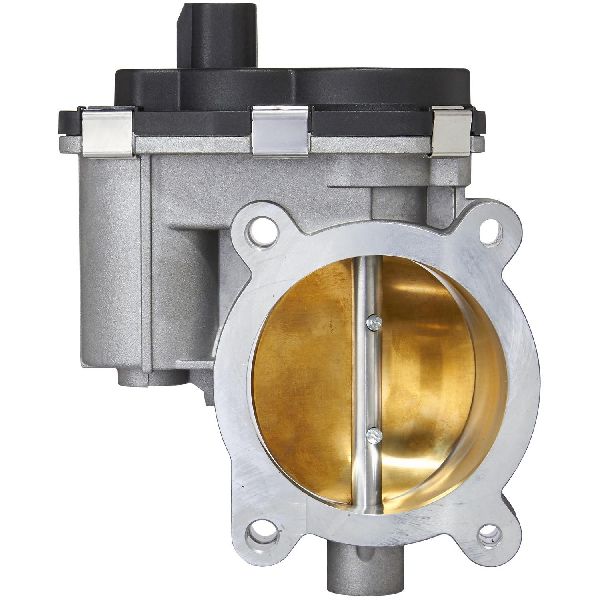
- Dirty Throttle Body 🔴 High Probability → Shop Fuel Injection Throttle Body The PCV (Positive Crankcase Ventilation) system routes oil vapors into the intake, which combine with dust and carbon to create sticky buildup on the throttle plate and bore. This is a very common issue on GM's V8 engines of this era and is the primary subject of TSB PIP4578B.
How to confirm: Visually inspect the inside of the throttle body for a dark, sticky layer of carbon. The buildup is often most significant on the back of the throttle plate and around the edges where the plate meets the bore at idle.
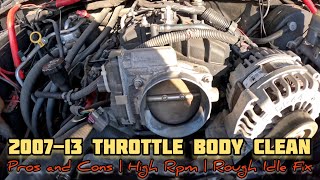
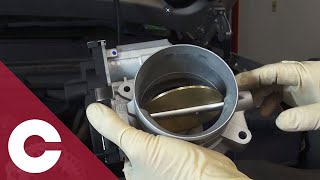
Typical fix: Remove the throttle body from the intake manifold and clean it thoroughly with a dedicated throttle body cleaner and a soft brush or rag. Do not use 🎬 Watch: How to clean the throttle body on your Sierra. harsh carburetor cleaner. An idle relearn procedure is required after reinstallation.
Est. part cost: $10-$15 - Vacuum Leak 🟡 Medium Probability Intake manifold gaskets can become brittle and crack over time due to heat cycles. A particularly common failure point is the PCV hose connection on the driver's side of the intake manifold; the plastic barb it connects to can become brittle and break, creating a significant unmetered air leak.
How to confirm: With the engine running, listen for hissing sounds around the intake manifold. You can also carefully spray brake cleaner or a propane torch (unlit) around potential leak points; a change in engine idle indicates a leak. A smoke test is the most definitive method.
Typical fix: Replace the faulty gasket or hose. If the intake manifold barb is broken, it may require either a creative repair or replacement of the intake manifold itself.
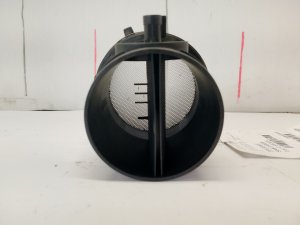
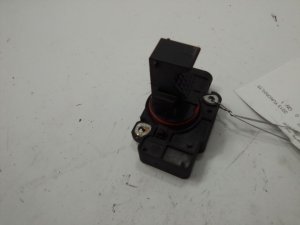
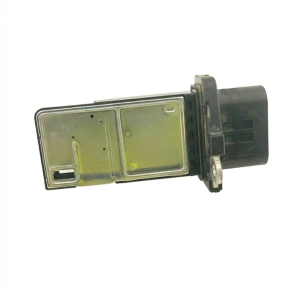
Est. part cost: $5-$60 - Faulty or Dirty Mass Airflow (MAF) Sensor ⚪ Low Probability → Shop Fuel Injection Air Flow Meter Oiled air filters can contaminate the sensor's hot wire, and general dust/debris can accumulate over time, causing inaccurate readings. It's a common misdiagnosis, but cleaning is easy preventative maintenance.
How to confirm: First, try cleaning the sensor with a dedicated MAF sensor cleaner spray. Do not touch the sensitive wires. If the problem persists, monitor the sensor's output with a scan tool to see if it responds correctly to changes in engine RPM.
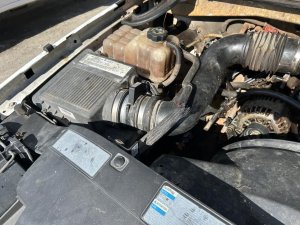
Typical fix: Clean the sensor. If cleaning doesn't work, replace the MAF sensor. It is located in the intake tube just after the air filter box.
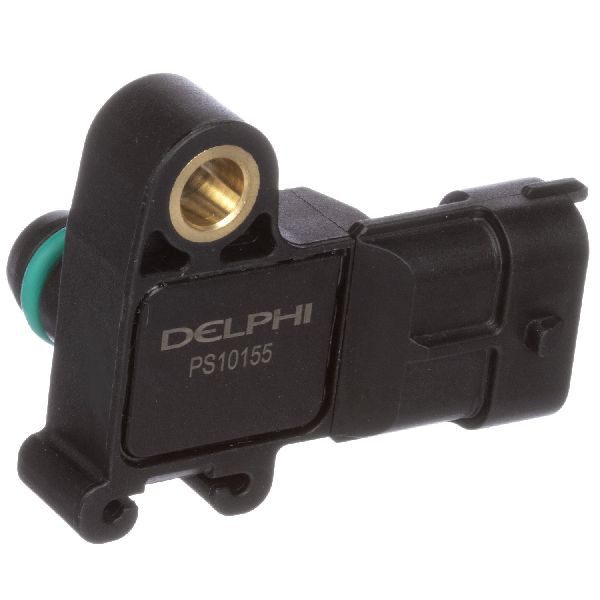
Est. part cost: $10-$120 - Faulty Manifold Absolute Pressure (MAP) Sensor ⚪ Low Probability → Shop Manifold Absolute Pressure Sensor
How to confirm: The MAP sensor can be tested with a scan tool to observe its pressure readings at idle and under load. Compare these readings to specifications. With the key on, engine off, it should read atmospheric pressure (around 4.5-5 volts) and drop to around 1 volt at idle.
Typical fix: Replace the MAP sensor. It is typically located on the top front of the intake manifold, held in by a single bolt.
Est. part cost: $30-$90
Rare But Worth Checking
- Damaged Wiring or Connectors: Check the wiring harnesses for the MAP, MAF, and throttle body sensors for any signs of chafing, corrosion, or loose pins, especially if other work has been done in the engine bay recently. A cluster of sensor codes appearing at once can point to a wiring or ground issue.
Diagnosis Steps
- Check for other stored diagnostic trouble codes. Address any other codes first.
- Perform a thorough visual inspection of the air intake system from the filter to the throttle body. Look for cracked hoses, loose clamps, or disconnected lines.
- Inspect the wiring and connectors for the MAF sensor, MAP sensor, and the throttle body for any signs of damage or corrosion.
- Remove the air intake duct from the throttle body and inspect the throttle plate and bore for carbon buildup.
- If dirty, clean the throttle body. This is the most likely fix. Also, clean the MAF sensor with dedicated cleaner as a preventative measure.
- After cleaning, perform a throttle idle relearn procedure. A common method without a scan tool is: 1. Start the engine and let it idle in Park for 3 minutes. 2. Turn the engine off and wait 60 seconds. 3. Start the engine again and let it idle in Park for another 3 minutes. The idle should now be stable. 🎬 See this video for a visual guide on the relearn procedure.
- If the code returns, use a scan tool to monitor live data from the MAP, MAF, and TPS sensors. Watch their values as you open and close the throttle (with the engine off, key on). All readings should change smoothly and correlate with each other.
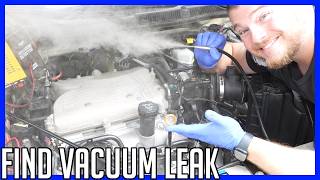
- If a vacuum leak is suspected, perform a smoke test to pinpoint the source of the leak. 🎬 Watch: Expert tips on how to find a vacuum leak. Pay close attention to the intake manifold gaskets and PCV hoses.
- If a sensor is providing erratic data or no data at all, test its circuit for power, ground, and signal before replacing the sensor itself.
Parts You'll Likely Need
- Throttle Body Cleaner
(OEM #ACDelco 19379159 (X66-P))— This is the most common fix. Carbon buildup on the throttle plate is the leading cause of P0068 on these trucks.
Trusted brands: ACDelco, CRC
OEM price range: $10-$15
Aftermarket price range: $5-$10 - Manifold Absolute Pressure (MAP) Sensor
(OEM #12591290 (also listed as 213-3842, 213-4681))— If cleaning the throttle body doesn't work and no vacuum leak is found, the MAP sensor could be faulty, providing incorrect pressure readings.
Trusted brands: ACDelco, Bosch, Delphi
OEM price range: $50-$90
Aftermarket price range: $30-$60 - Mass Airflow (MAF) Sensor
(OEM #15865791 (also listed as 213-4222))— Less common than a dirty throttle body, a faulty or contaminated MAF sensor can send incorrect airflow data to the PCM, causing the correlation error.
Trusted brands: ACDelco, Denso, Hitachi
OEM price range: $100-$180
Aftermarket price range: $60-$120
Related Codes That Often Appear With This One
- P0121 — Stands for 'Throttle/Pedal Position Sensor/Switch 'A' Circuit Performance'. It often appears with P0068 because a dirty or failing throttle body directly affects the TPS readings. Both codes are mentioned in TSB PIP4578B.
- P1516 — A GM-specific code for 'Throttle Actuator Control (TAC) Module Throttle Actuator Position Performance'. This is triggered by the same electronic throttle control issues that cause P0068.
- P2176 — Stands for 'Throttle Actuator Control System - Idle Position Not Learned'. This code can appear after cleaning or replacing the throttle body if the idle relearn procedure isn't performed or completed successfully.
Technical Service Bulletins (TSBs) & Recalls
- PIP4578B: SES Light, Idle Surge, and/or Reduced Engine Power Mode with DT
Platform-Specific Known Issues
- GM Technical Service Bulletin (TSB) PIP4578B directly addresses this code (and others) on high-mileage vehicles. It points to throttle body coking and recommends cleaning the throttle body and performing an idle learn reset. The TSB notes that as carbon builds, the PCM learns to compensate by increasing the throttle angle; cleaning removes the buildup, but without an idle relearn, the PCM's compensation is now incorrect, leading to new idle issues. According to TSB Bulletin #PIP4578B, this condition may also cause an idle surge or trigger a "Reduced Engine Power" mode.
Mechanic-Grade Diagnostic Values
- MAP Sensor Voltage (Key On, Engine Off) — expected: 4.5 - 5.0 Volts, should be nearly identical to BARO reading on scan tool.. Failure: Voltage is significantly lower than 4.5V, or does not match BARO reading.
- MAP Sensor Voltage (Engine at Warm Idle) — expected: 1.0 - 1.5 Volts.. Failure: Voltage remains high (near KOEO value) or is stuck.
- Throttle Position Sensor (TPS) Voltage (Closed Throttle) — expected: ~0.5 - 0.9 Volts.. Failure: Voltage is outside this range when the throttle plate is fully closed.
- Throttle Position Sensor (TPS) Voltage (Wide Open Throttle) — expected: Approx. 4.5 Volts.. Failure: Voltage does not reach ~4.5V at WOT or does not change smoothly from closed throttle.
- MAP Sensor 5V Reference Circuit — expected: 4.5 to 5.0 Volts DC.. Failure: Voltage is significantly lower than 4.5V, indicating an open in the circuit or an ECM issue.
- MAP Sensor Ground Circuit Resistance — expected: Less than 10 ohms to a known good ground.. Failure: Resistance greater than 10 ohms indicates a poor ground connection, which can skew sensor readings.
Scan Tool Commands That Help
- Tech2 / GDS2: Idle Learn Reset / Throttle/Idle Learned Airflow — This function must be used after cleaning or replacing the throttle body. The PCM has learned airflow values based on the old, dirty throttle body. This command resets those learned values to prevent high idle or stalling with the clean/new part, which can sometimes trigger code P2176.
- Tech2 / GDS2: Output Control -> Engine Throttle Position — This bidirectional control allows the technician to command the throttle plate to specific angles (e.g., 10%, 25%, 50%) while monitoring MAP, MAF, and TPS sensor data. It's used to verify that the throttle actuator is working correctly and that all three sensors respond logically and in correlation without the engine running.
Wiring & Ground Locations
- G101 / G106 — G101 is on the lower front of the engine block on the left (driver's) side. It often jumpers to G106 on the frame cross rail under the crank pulley.. This is a primary ground for the Engine Control Module (ECM), Transmission Control Module (TCM), and the MAF/IAT sensor. A poor connection here can cause erratic sensor readings and directly contribute to a P0068 correlation fault.
- G103 — Located on the left rear of the engine compartment on the cowl, above the brake booster.. This grounds the Body Control Module (BCM) and the Data Link Connector (DLC). While not a direct engine sensor ground, a fault here can cause communication issues with scan tools, making diagnosis difficult.
- Throttle Body Connector — The 8-pin electrical connector on the electronic throttle body assembly.. This connector contains the wiring for the two separate Throttle Position Sensors (TPS1 and TPS2) and the throttle actuator control motor. Corrosion, moisture, or backed-out pins in this connector are a common failure point that can cause P0068 and other throttle-related codes.
- MAP Sensor Connector — The 3-pin connector on the MAP sensor, located on top of the intake manifold.. Provides the 5V reference, ground, and signal return for the MAP sensor. Damage to these wires, often from engine heat and vibration, can cause P0107 (MAP Circuit Low) or other MAP-related codes that contribute to a P0068 fault.
Real Owner Repair Stories
- SilveradoSierra.com forum user (2008 Chevrolet Silverado 5.3L) — P0068 code, rough idle, stalling, and 'Reduced Engine Power' message.
❌ Tried (didn't work) Cleaned the throttle body, Cleaned the MAF sensor, Replaced the MAF sensor
✅ What actually fixed it The plastic nipple for the PCV fresh air hose on the passenger side of the intake manifold had broken off, creating a massive vacuum leak. The user replaced the intake manifold assembly to resolve the issue. - GM-Trucks.com forum user (2007 GMC Sierra 5.3L with 175,000 miles) — Check Engine Light with code P0068.
❌ Tried (didn't work) Initial diagnosis pointed towards sensors.
✅ What actually fixed it The user found a small crack in the PCV hose that connects to the driver's side valve cover. Replacing the inexpensive hose fixed the vacuum leak and cleared the code.
OEM Part Supersession History
12575869, 12597415, 15372170→12601822— This is the knock sensor wiring harness, which is often replaced during intake manifold service. The original designs were prone to failure from heat and oil contamination.
Heads up: For 2007 models, ensure you have the correct harness for the 'Classic' (GMT800) vs 'New Body Style' (GMT900) as there can be differences.Unknown→12591290— This is a standard 1-bar MAP sensor used across many GM vehicles. It has been superseded by newer internal ACDelco numbers like 213-3842 but the GM part number remains a valid reference.
Model Year Variations Within This Range
- 2007: 2007 was a crossover year. The 'Classic' body style (GMT800 platform) and the 'New Body Style' (NBS, GMT900 platform) were sold concurrently. While the engines are similar, some wiring harnesses and component locations may differ slightly. It is important to correctly identify the vehicle platform before ordering parts like wiring harnesses.
Diagnostic Flowchart
Other Known Issues on This Vehicle
Issues unrelated to this code that are worth knowing about as an owner of this generation:
- Active Fuel Management (AFM) Lifter Failure 🔴 High — Common on 5.3L and 6.2L engines, especially over 70,000 miles. Can lead to misfires, ticking noises, and eventually camshaft damage requiring engine-out repair. (Ref: Multiple TSBs exist, but no universal recall. Fix often involves replacing lifters and camshaft.)
- Excessive Oil Consumption 🟠 Medium — Widespread on AFM-equipped engines. Often caused by clogged piston rings or a poorly designed PCV system in the driver-side valve cover. (Ref: TSB 10-06-01-008G addresses this, with fixes ranging from a redesigned valve cover to piston ring replacement.)
- Cracked Dashboard 🟡 Low — Very common across all GMT900 trucks and SUVs, regardless of mileage or climate. Cracks typically form near the instrument cluster and over the passenger airbag. (Ref: No recall issued; GM has generally considered this a cosmetic issue. Multiple class-action lawsuits have been filed regarding this defect.)
- Faulty Oil Pressure Sender/Sensor 🟠 Medium — Common failure item, causing the oil pressure gauge to read zero or fluctuate wildly. The sensor is located in a difficult-to-reach spot behind the intake manifold.
Used vs. New Parts: Buying Guide for This Vehicle
When a used part is the smart pick: A used throttle body or intake manifold from a reputable auto recycler can be a cost-effective option, as these are durable mechanical parts. Failure is often due to external factors (broken PCV barb on intake) or fixable issues (carbon buildup on throttle body) rather than internal failure.
Donor-vehicle mileage cap: roughly under 100000 miles for the part to have meaningful remaining life.
What to inspect on the donor part:
- For a throttle body, check for excessive play in the throttle plate shaft, which indicates wear.
- For an intake manifold, meticulously inspect all plastic PCV connection points and barbs for cracks or brittleness. Ensure no hairline cracks are present around gasket surfaces.
- Check electrical connectors on any part for corrosion, bent pins, or broken plastic locking tabs.
- Avoid parts from vehicles that show signs of significant engine fire, flood, or heavy front-end collision damage.
OEM-only on this vehicle (don't cheap out):
- Mass Airflow (MAF) Sensor
- Manifold Absolute Pressure (MAP) Sensor
Aftermarket brands forum-validated for this vehicle:
- ACDelco (OEM supplier)
- Delphi
- Bosch
- Denso
Brands owners have reported issues with on this vehicle:
- Unbranded 'white-box' sensors from online marketplaces are frequently cited on forums as being poorly calibrated, failing quickly, or being dead-on-arrival.
Real Owner Stories
Aggregated from forums and TSBs cited above. Mileages and costs reflect what owners reported in those sources.
2007 GMC Sierra 5.3L
Symptoms: Experienced multiple codes including P0068, P0106, P0121, P0171, P0174, and P1516.
What fixed it: Discovering and repairing a significant vacuum leak at the intake manifold gasket after replacing sensors failed to solve the issue.
Source hint: GM-Trucks.com - 'P0068, P0106, P0121, P0171, P0174, P1516'
2012 GMC Sierra 1500 V8
Symptoms: P0068 code appeared after recent engine work.
What fixed it: Checking for a vacuum leak from a disconnected hose or a faulty MAP sensor.
Source hint: SilveradoSS.com - 'P0068 Code'
2007-2013 GMC Sierra 1500 V8 — ~150000 miles
Symptoms: P0068 along with several other codes; engine performance issues.
What fixed it: Cleaned the throttle body, which was heavily coked with carbon, and performed the idle relearn procedure.
Source hint: Common Causes - Dirty Throttle Body repair story
Related OBD-II Codes
Frequently Asked Questions
Does TSB PIP4578B apply to my high-mileage GMC Sierra 1500?
Why did my Sierra 1500 go into 'Reduced Engine Power' mode with code P0068?
Can I clean the MAF sensor on my 5.3L V8 to fix this code?
How do I perform an idle relearn on my Sierra without a scan tool after cleaning the throttle body?
Where is the most common place for a vacuum leak to occur on the 2007-2013 Sierra V8 intake?
Is it safe to use carburetor cleaner on my GMC Sierra's throttle body?
Helpful Videos

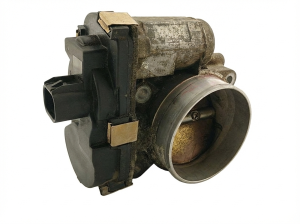
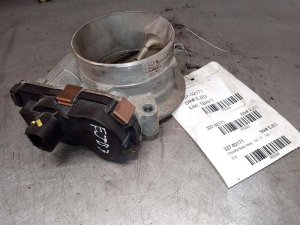
Used OEM Parts in Stock
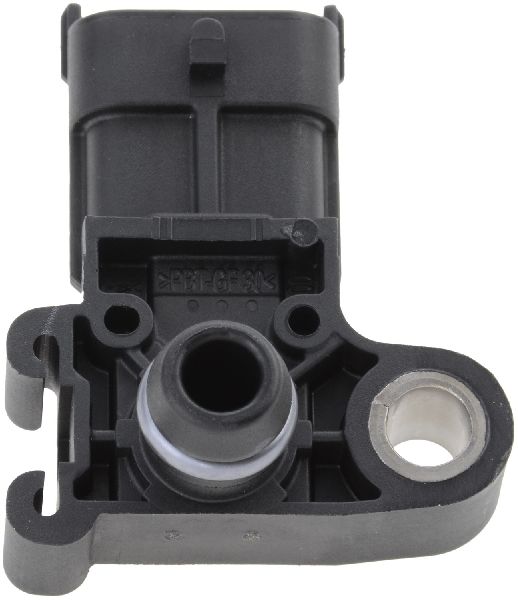
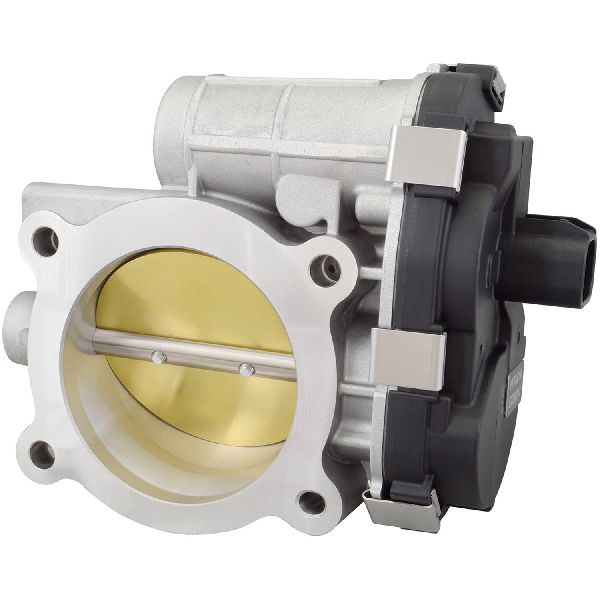
New Aftermarket Parts Available


The information in this article is provided for general reference and educational purposes only. Vehicle specifications, procedures, and part compatibility can vary by production date, trim level, and region. Always consult your vehicle's factory service manual and verify part numbers before purchasing or performing repairs. Safety-critical components such as airbags, seat belts, and braking systems should be installed by a qualified professional.
- GMC Sierra 1500:
- 🧭 Diagnostic Flowchart
- 🎬 Helpful Videos
- 🛍️ Shop This Part
- What's Unique About the 2007-2013 GMC Sierra 1500
- Symptoms You May Notice
- Most Likely Causes
- Rare But Worth Checking
- Diagnosis Steps
- Parts You'll Likely Need
- Related Codes That Often Appear With This One
- Technical Service Bulletins (TSBs) & Recalls
- Platform-Specific Known Issues
- Mechanic-Grade Diagnostic Values
- Scan Tool Commands That Help
- Wiring & Ground Locations
- Real Owner Repair Stories
- OEM Part Supersession History
- Model Year Variations Within This Range
- Other Known Issues on This Vehicle
- Used vs. New Parts: Buying Guide for This Vehicle
- Real Owner Stories
- 2007 GMC Sierra 5.3L
- 2012 GMC Sierra 1500 V8
- 2007-2013 GMC Sierra 1500 V8 — ~150000 miles
- Related OBD-II Codes
- Frequently Asked Questions
- 🎟️ Get 5% Off