

P0068 on 2007-2014 GMC Sierra 1500: MAP/MAF Throttle Position Correlation Causes & Fixes
Code P0068 on a 2007-2014 GMC Sierra most often indicates a dirty throttle body causing a mismatch between sensor readings. A thorough cleaning of the throttle body is a common, low-cost first step that frequently resolves the issue. This is often followed by an idle relearn procedure.
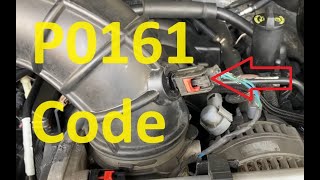
- P0068 means the engine's computer sees a disagreement between the throttle position and the measured airflow.
- The most likely cause on a 2007-2014 Sierra is a dirty throttle body, which is a simple and inexpensive DIY fix.
- Always clean the throttle body and MAF sensor before spending money on replacement sensors.
- Check for vacuum leaks, especially around the intake manifold and PCV hoses, if cleaning doesn't solve the problem.
- After cleaning or replacing the throttle body, a throttle idle relearn procedure may be necessary.
What's Unique About the 2007-2014 Gmc SIERRA 1500
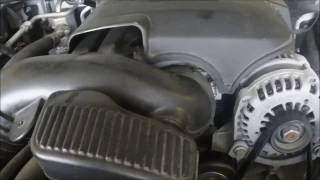
On this generation of GMC Sierra trucks, especially those with higher mileage, the P0068 code is very frequently caused by carbon buildup (coking) inside the throttle body. This buildup restricts airflow in a way the sensors can't account for, creating the data conflict. The issue is common enough that GM issued a Technical Service Bulletin (TSB #PIP4578B). This TSB explains that as carbon builds up, the PCM learns to open the throttle plate more at idle to compensate. If the battery is disconnected or the PCM is reprogrammed, this learned compensation is lost, and the engine may not idle correctly, triggering P0068 and other codes 🎬 Watch: Understanding the causes and fixes for the P0068 code until the throttle body is cleaned and an idle relearn is performed.
Diagnostic Flowchart
Tap your situation to follow the diagnostic path that matches what you're seeing on this vehicle.
Generation note: This year range covers two distinct generations of the Sierra 1500: the GMT900 (2007-2013) and the K2XX (2014). While the P0068 code has the same meaning for both, specific parts like the throttle body, sensors, and intake manifold design differ. However, the most common cause—a dirty throttle body—is prevalent in both generations. For 2007 models, it's important to distinguish between the 'Classic' (GMT800) and 'New Body Style' (GMT900), as the throttle bodies are different.
Symptoms You May Notice
- Check Engine Light is on
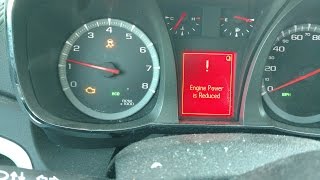
- Vehicle enters "Reduced Engine Power" mode
- Engine running rough, especially at idle
- Hesitation or stumbling during acceleration
- Poor fuel economy
- Engine may stall when coming to a stop
- Unstable or surging idle
- Replacing the MAP or MAF sensor when the actual problem is a dirty throttle body.
- Replacing the entire throttle body when only a cleaning and idle relearn procedure is required.
- Replacing the accelerator pedal position (APP) sensor, which is less likely to cause P0068 than the other listed items.
Most Likely Causes
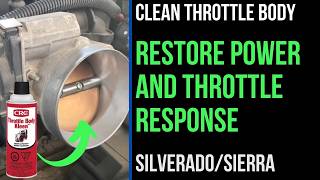
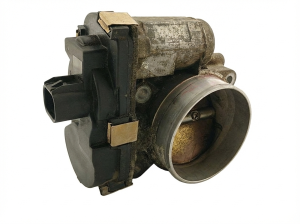
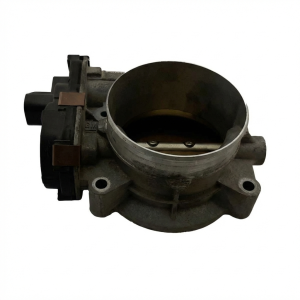
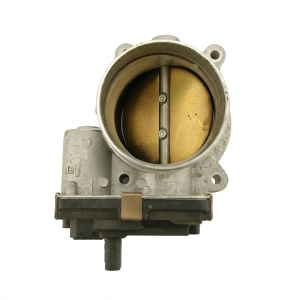
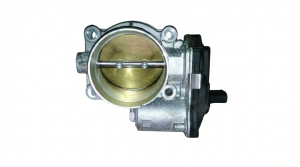
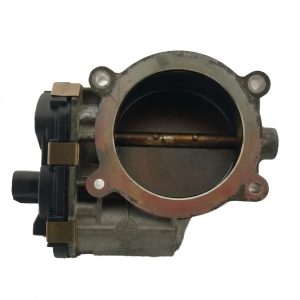
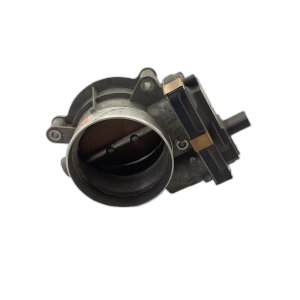
- Dirty or Carbon-Fouled Throttle Body 🔴 High Probability → Shop Fuel Injection Throttle Body The PCV (Positive Crankcase Ventilation) system routes oil vapors and other blow-by gases into the intake, which bake onto the back of the throttle plate and bore over time, restricting airflow. This is a very common issue on GM V8 engines and the first thing to check. 🎬 See how to perform a simple throttle body cleaning
How to confirm: Remove the air intake tube from the throttle body and visually inspect the throttle plate and bore for a layer of black, greasy carbon buildup. The buildup is often heaviest on the side facing the intake manifold.
Typical fix: Clean the throttle body thoroughly with a dedicated throttle body cleaner and a soft cloth or brush. It is critical to perform an idle relearn procedure after cleaning.
Est. part cost: $5-$15 - Vacuum Leak 🟡 Medium Probability Intake manifold gaskets and PCV hoses can become brittle and crack with age and heat cycles, allowing unmetered air to enter the engine. A particularly common failure point is the PCV hose or the plastic barb on the intake manifold where it connects, which can easily break.
How to confirm: Perform a smoke test on the intake system to find the source of the leak. Alternatively, with the engine running, carefully spray carburetor cleaner or a propane torch (unlit) around the intake manifold gaskets and vacuum lines; a change in engine RPM indicates a leak.
Typical fix: Replace the cracked hose or faulty gasket. The intake manifold barb may require replacement of the intake manifold or a custom repair.
Est. part cost: $10-$100 - Faulty Manifold Absolute Pressure (MAP) Sensor ⚪ Low Probability → Shop Manifold Absolute Pressure Sensor
How to confirm: Use a scan tool to monitor the MAP sensor voltage. With the key on and engine off, it should read near 4.5-5.0 volts. At idle, it should drop to around 1.0-1.5 volts. Readings that are stuck or don't change with engine load suggest a bad sensor.
Typical fix: Replace the MAP sensor. It is typically located on the top of the intake manifold.
Est. part cost: $30-$80 - Faulty Mass Airflow (MAF) Sensor ⚪ Low Probability → Shop Fuel Injection Air Flow Meter Oiled aftermarket air filters can contaminate the sensor, but they can also fail electronically.
How to confirm: A dirty MAF sensor is more common than a failed one. First, try cleaning it with a dedicated MAF sensor cleaner. If the code persists, monitor the MAF reading on a scan tool; the grams/second (g/s) reading should increase smoothly with engine RPM. A general rule of thumb is that the g/s reading at idle should be roughly equal to the engine's displacement in liters (e.g., a 5.3L engine should read around 5.3 g/s).
Typical fix: Clean the MAF sensor first. If cleaning doesn't work, replace the sensor.
Est. part cost: $60-$150
Rare But Worth Checking
- Aftermarket Cold Air Intake: Some aftermarket intakes, especially those with oiled filters, can cause turbulent airflow across the MAF sensor or contaminate it with oil, leading to incorrect readings and triggering a P0068 code.
- Damaged Wiring or Connectors: Check the wiring harnesses for the MAP, MAF, and throttle body for any signs of corrosion, damage, or loose connections, as this can disrupt sensor signals. A poor ground connection is a known issue on these trucks that can cause various electronic problems.
- Cracked PCV Hose Barb on Intake Manifold: → Shop Engine Intake Manifold A specific and known vacuum leak source on these V8 engines is the plastic PCV tube/barb on the driver's side of the intake manifold. It can become brittle and crack or break off entirely, creating a significant vacuum leak.
Diagnosis Steps
- Scan the PCM for any other stored trouble codes. Address other codes first if they are present, as they may provide clues.
- Visually inspect the entire air intake system from the air filter to the throttle body for any loose clamps, cracked hoses, or disconnected lines. Pay close attention to the PCV hoses.
- Remove the intake duct from the throttle body and inspect for heavy carbon buildup (coking) on the throttle plate and bore. This is the most likely cause.
- If carbon is present, clean the throttle body thoroughly using a dedicated cleaner and a lint-free rag. Manually open the plate to clean the edges. Be careful not to damage the electronic components.
- Inspect and clean the Mass Airflow (MAF) sensor using dedicated MAF sensor cleaner. Do not touch the sensor wires.
- After cleaning, reconnect everything and perform a throttle idle relearn procedure. This typically involves starting the engine and letting it idle in park for 3 minutes, turning it off for 1 minute, then starting and idling for another 3 minutes.
- If the code returns, use a scan tool to monitor live data from the MAP, MAF, and TPS sensors to ensure their readings are within specification and change correctly with engine speed and load.
- If a vacuum leak is suspected, perform a smoke test to pinpoint the source. Pay special attention to the intake manifold gaskets and the PCV port on the driver's side of the intake.
Parts You'll Likely Need
- Throttle Body Cleaner
(OEM #ACDelco 19379159 (X66-P))— This is the most common fix. Carbon buildup on the throttle plate is the leading cause of P0068 on these trucks.
Trusted brands: CRC, ACDelco
OEM price range: $10-$15
Aftermarket price range: $5-$10 - Manifold Absolute Pressure (MAP) Sensor
(OEM #ACDelco 213-3842 (GM 12591290))— If cleaning the throttle body doesn't work and a vacuum leak isn't present, the MAP sensor could be faulty, providing incorrect pressure readings.
Trusted brands: ACDelco, Bosch, Delphi
OEM price range: $50-$90
Aftermarket price range: $30-$60 - Mass Airflow (MAF) Sensor
(OEM #ACDelco 213-4222 (GM 15865791))— Less common than a dirty throttle body, a faulty or contaminated MAF sensor can send incorrect airflow data to the PCM, causing the correlation error.
Trusted brands: ACDelco, Denso, Hitachi
OEM price range: $100-$180
Aftermarket price range: $60-$120
Related Codes That Often Appear With This One
- P0121 — Throttle/Pedal Position Sensor/Switch 'A' Circuit Performance Problem. Often set with P0068 because both relate to throttle body operation and are mentioned together in TSB PIP4578B.
- P1516 — Throttle Actuator Control (TAC) Module Throttle Actuator Position Performance. This is a GM-specific code indicating a problem with the electronic throttle control system, often triggered by the same throttle body issues.
- P2176 — Throttle Actuator Control System - Idle Position Not Learned. This code can appear after a throttle body cleaning or replacement if the idle relearn procedure is not performed correctly.
Technical Service Bulletins (TSBs) & Recalls
- PIP4578B: Addresses idle surge, reduced engine power mode, and DTCs including P0068 on high mileage vehicles. The primary recommendation is to inspect and clean the throttle body of carbon buildup and then perform an idle learn reset.
Platform-Specific Known Issues
- A Technical Service Bulletin (TSB #PIP4578B) was issued by GM for a range of model years, including the 2007-2014 Sierra, that addresses DTCs P0068, P0121, P1516, P2101, P2119, and/or P2176, especially on high-mileage vehicles. The bulletin points towards issues with the throttle body, reinforcing that this is a known problem area.
- The bulletin clarifies that the PCM learns to compensate for carbon buildup over time. If the battery is disconnected or the PCM is reprogrammed, this learned compensation is lost, and the engine may not idle correctly until the throttle body is cleaned and an idle relearn is performed.
Mechanic-Grade Diagnostic Values
- MAP Sensor Voltage (Key On, Engine Off) — expected: 4.5 - 5.0 Volts. Failure: Voltage significantly lower than 4.5V suggests a sensor or wiring issue.
- MAP Sensor Voltage (Engine at Idle) — expected: 1.0 - 1.5 Volts. Failure: Voltage that is stuck high or does not drop to this range at idle indicates a problem.
- Throttle Position Sensor (TPS) Voltage (Closed Throttle) — expected: Approx. 0.5 - 0.9 Volts. Failure: Voltage outside this range at closed throttle points to a faulty sensor or incorrect adjustment.
- Throttle Position Sensor (TPS) Voltage (Wide Open Throttle) — expected: Approx. 4.5 Volts. Failure: Voltage that does not reach this level or shows dropouts/spikes during throttle movement indicates a bad sensor.
- Mass Airflow (MAF) Sensor Reading (Engine at Idle) — expected: Approx. 1.0 g/s per liter of engine displacement (e.g., 5.3L engine ≈ 5.3 g/s). Failure: Readings significantly higher or lower than the expected value can indicate a vacuum leak, dirty sensor, or faulty sensor.
- Mass Airflow (MAF) Sensor Reading (at 2500 RPM) — expected: 15 - 25 g/s (depending on engine size). Failure: A reading that does not rise smoothly with RPM or falls outside this range suggests a sensor performance issue.
Scan Tool Commands That Help
- Tech2 / GDS2: Throttle Position Desired vs. Indicated Angle — Use this function to graph the commanded throttle angle from the PCM against the actual angle reported by the TPS. The two values should mirror each other closely. A lag or deviation in the actual angle can indicate a failing throttle body motor or wiring issue.
- Tech2 / GDS2: Freeze Frame / Failure Records — When diagnosing codes like P1516 that often accompany P0068, checking the freeze frame data is critical. TSBs indicate that if the code set at 0 MPH (at startup), the TAC module should not be replaced, pointing to other potential causes.
Wiring & Ground Locations
- G101 — Located at the left front of the engine, lower block.. This ground is a primary grounding point for the Engine Control Module (ECM), Mass Air Flow Sensor, and Intake Air Temperature Sensor. A poor connection here can cause erratic sensor readings and trigger correlation codes like P0068.
- G102 — Located at the left rear of the engine.. This ground serves the ignition coils. While not directly tied to the MAP/MAF sensors, electrical noise from a bad ground here can sometimes interfere with sensitive sensor signals, contributing to intermittent electronic issues.
- Throttle Body Connector — Connected directly to the electronic throttle body.. Loose wiring crimps or corrosion within this connector are a known cause for throttle-related codes (P0120, P0220, P1516, P2135) that are often seen with P0068. Inspecting the pins and wires at this connector is a key diagnostic step.
- MAP Sensor Connector — On top of the intake manifold, connected to the MAP sensor.. The 3-pin connector provides the MAP sensor with its 5V reference, ground, and signal return to the ECM. Verifying voltage and ground at these specific pins is a key diagnostic step to rule out a wiring issue before replacing the sensor.
Real Owner Repair Stories
- PerformanceTrucks.net Forums (2008 GMC Sierra 1500 V8) — Truck started acting funny, as if not firing on all cylinders. Threw codes P0068 and P0106, then went into 'Reduced Engine Power' mode.
❌ Tried (didn't work) Swapped in a known good MAP sensor., Swapped in a known good drive-by-wire (DBW) throttle body., Checked all wiring and grounds., Replaced spark plug wires.
✅ What actually fixed it The user did not post the final resolution, but the diagnostic process involved checking for a wet spark plug (#5), suspecting a bad coil pack, and checking for broken valve springs, indicating the P0068 code was likely a symptom of a deeper mechanical or ignition issue rather than a primary sensor failure.
OEM Part Supersession History
GM 12591290 (MAP Sensor)→GM 55573248— Standard part evolution and consolidation by the manufacturer.GM 12576410 (MAF Sensor)→GM 15865791— Standard part evolution and consolidation by the manufacturer.
Model Year Variations Within This Range
- 2007: GM sold two body styles in 2007: the 'Classic' (GMT800 platform, with a crease in the door) and the 'New Body Style' (GMT900 platform, with smooth doors). The throttle bodies and related components are different between these two styles. It is crucial to verify which style the truck is before ordering parts.
- 2014: The 2014 model year marks the beginning of the K2XX generation. While the P0068 code's meaning is the same, the engines (EcoTec3 family), intake manifold design, and specific sensor part numbers are different from the 2007-2013 GMT900 generation.
Helpful Videos
We Have This Part in Stock

The information in this article is provided for general reference and educational purposes only. Vehicle specifications, procedures, and part compatibility can vary by production date, trim level, and region. Always consult your vehicle's factory service manual and verify part numbers before purchasing or performing repairs. Safety-critical components such as airbags, seat belts, and braking systems should be installed by a qualified professional.
- Gmc SIERRA 1500:
- 🧭 Diagnostic Flowchart
- 🎬 Helpful Videos
- 🛍️ Shop This Part
- What's Unique About the 2007-2014 Gmc SIERRA 1500
- Symptoms You May Notice
- Most Likely Causes
- Rare But Worth Checking
- Diagnosis Steps
- Parts You'll Likely Need
- Related Codes That Often Appear With This One
- Technical Service Bulletins (TSBs) & Recalls
- Platform-Specific Known Issues
- Mechanic-Grade Diagnostic Values
- Scan Tool Commands That Help
- Wiring & Ground Locations
- Real Owner Repair Stories
- OEM Part Supersession History
- Model Year Variations Within This Range
- 🎟️ Get 5% Off