

P0068 on 2006-2013 GMC Yukon: MAP/MAF - Throttle Position Correlation Causes and Fixes
On a 2006-2013 GMC Yukon, code P0068 is most often caused by a dirty electronic throttle body due to carbon and oil buildup. This triggers a 'Reduced Engine Power' warning and a rough idle. Cleaning the throttle body and MAF sensor, followed by an idle relearn procedure, is the most likely fix, costing under $20 in cleaners and taking about an hour.
- P0068 on a 2006-2013 Yukon means the computer sees a mismatch between airflow sensors and the throttle's position.
- This code will almost certainly put the truck in 'Reduced Engine Power' mode.
- The most common cause by far is a dirty throttle body, which is a simple and cheap DIY fix.
- Always start by cleaning the MAF sensor and throttle body before spending money on new parts.
- If you must replace the throttle body, use a quality OEM part (like ACDelco) to avoid immediate failure of the new part.
What's Unique About the 2006-2013 Gmc YUKON
On the GMT900 platform, which includes the 2006-2013 Yukon, P0068 is very frequently linked to the electronic throttle body. Over time, especially on higher mileage vehicles, carbon and oil residue from the PCV system build up in the throttle body bore and on the throttle plate. This buildup restricts airflow at idle and low speeds, causing the actual airflow (measured by the MAF/MAP) to be lower than what the computer expects for a given throttle angle, triggering the code. GM Technical Service Bulletin #PIP4578B directly addresses this scenario, linking P0068 and other codes to reduced power mode on high-mileage V8 engines and recommending a throttle body cleaning and idle learn reset. A known defect in the driver-side valve cover's PCV baffle on pre-2011 models exacerbates this issue by allowing excessive oil into the intake.
Diagnostic Flowchart
Tap your situation to follow the diagnostic path that matches what you're seeing on this vehicle.
Symptoms You May Notice
- Check Engine Light is on
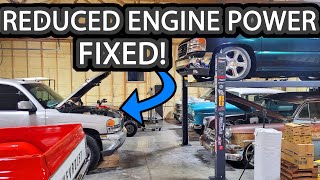
- "Reduced Engine Power" message on the 🎬 Watch: How to fix the Reduced Engine Power message on your Yukon. dash
- Rough, unstable, or high idle.
- Hesitation or stumbling during acceleration.
- Noticeable lack of power or sluggish acceleration.
- Vehicle may stall, especially when coming to a stop.
- Engine RPM is slow to return to idle after revving.
- Replacing the MAP or MAF sensor before thoroughly cleaning the throttle body.
- Replacing the entire throttle body assembly when only a cleaning and idle relearn was needed.
- Replacing the accelerator pedal position (APP) sensor, which can also cause 'Reduced Engine Power' but typically sets different codes (e.g., P2138).
- Assuming an aftermarket tune is needed on a stock vehicle. This code points to a mechanical or sensor discrepancy, not a tuning issue, unless the vehicle is heavily modified.
Most Likely Causes
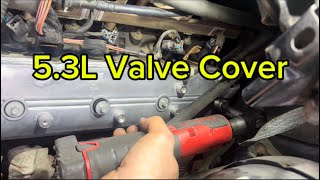
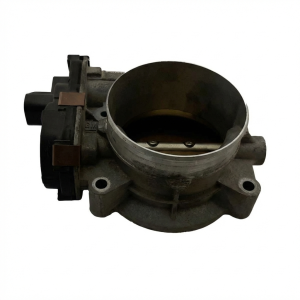
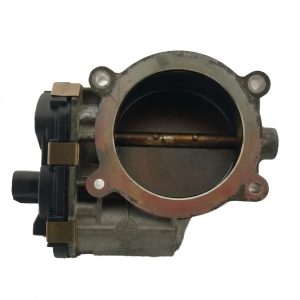
- Dirty Throttle Body 🔴 High Probability → Shop Fuel Injection Throttle Body The PCV (Positive Crankcase Ventilation) system routes oil vapors into the intake, which can bake onto the throttle body over time, causing carbon buildup ('coke'). This is a well-documented issue on GM's V8 engines and is the primary subject of TSB PIP4578B for high-mileage vehicles. Pre-2011 models have a faulty PCV baffle design in the valve cover 🎬 See how to replace the valve cover to stop oil buildup. that accelerates this buildup.
How to confirm: Remove the air intake tube connected to the throttle body. Visually inspect the throttle plate and the inside of the bore for a thick, black, greasy sludge. The backside of the throttle plate is often the dirtiest.
Typical fix: Disconnect the negative battery terminal. Remove the throttle body (four 10mm bolts) from the intake manifold for best results. Clean it thoroughly with a dedicated throttle body cleaner and a soft cloth or non-abrasive brush. Do not manually force the electronic butterfly valve open aggressively. Reinstall with a new gasket and perform the Idle Relearn Procedure.
Est. part cost: $15-$30 for cleaner and a new gasket. - Vacuum Leak 🟡 Medium Probability Intake manifold gaskets can become brittle with age and heat cycles. PCV hoses, especially the tube running from the driver-side valve cover to the intake manifold, can crack or become disconnected. The brake booster hose is another potential leak point.
How to confirm: With the engine running, carefully spray carburetor cleaner or use a smoke machine around the intake manifold gaskets, vacuum lines, and the PCV system. If the engine RPM changes or smoke is drawn in, a leak is present.
Typical fix: Replace the leaking gasket or hose. Intake manifold gaskets are a more involved job, while a PCV hose is a quick replacement.
Est. part cost: $5-$80 depending on the leaking component. - Faulty Manifold Absolute Pressure (MAP) Sensor ⚪ Low Probability → Shop Manifold Absolute Pressure Sensor The sensor is located on top of the intake manifold and can become contaminated with oil or simply fail electronically over time. It's a less common failure than a dirty throttle body.
How to confirm: After cleaning the throttle body and checking for leaks, use a scan tool to monitor MAP sensor voltage. With the key on and engine off, it should read near atmospheric pressure (voltage high, ~4.5-5V). At idle, the reading should drop significantly to show vacuum (voltage low, around 1-1.5V). If the readings are stuck or erratic, the sensor is likely faulty.
Typical fix: Replace the MAP sensor. It is held in by a single bolt on top of the intake manifold, making for an easy replacement.
Est. part cost: $45-$95 for an OEM ACDelco part. - Dirty or Faulty Mass Airflow (MAF) Sensor ⚪ Low Probability → Shop Fuel Injection Air Flow Meter The sensor's delicate wires can get contaminated by dirt or oil, especially if an aftermarket oiled air filter is used. This is a common misdiagnosis; it's more often the throttle body.
How to confirm: Visually inspect the sensor wires inside the housing for debris. A scan tool can also show erratic or out-of-range readings at idle and under load. A dirty MAF often won't throw a P0068 by itself but can contribute. At idle, a warm 5.3L engine should read approximately 5.3-5.5 g/s.
Typical fix: First, try cleaning the sensor with a dedicated MAF sensor cleaner spray. Do not touch the sensor wires. If cleaning doesn't work and the sensor is confirmed bad via testing, replace the sensor.
Est. part cost: $10 for cleaner, $60-$150 for a new sensor.
Rare But Worth Checking
- Damaged Wiring: Check the wiring harnesses leading to the throttle body, MAP, and MAF sensors for any signs of chafing, corrosion, or loose connections. On similar GM truck platforms, harnesses have been known to chafe on brackets near the cylinder heads or on the generator. Pay special attention to the main engine grounds (G102, G103, G104).
- Failing Throttle Body Assembly: → Shop Fuel Injection Throttle Body If a thorough cleaning does not resolve the issue and codes like P1516 or P2101 are also present, the electronic components of the throttle body (the motor or the integrated Throttle Position Sensor) may be failing. This is more likely if the 'Reduced Engine Power' mode appears randomly, especially in cold weather.
Diagnosis Steps
- Read all fault codes with an OBD-II scanner. Note any other codes that are present, as they can provide clues.
- Visually inspect the entire air intake system from the air filter box to the throttle body. Look for cracked hoses, loose clamps, or disconnected lines. Ensure the intake tube is securely fastened at both ends.
- Remove the plastic engine cover and air intake tube. Inspect the Mass Airflow (MAF) sensor and, if it appears dirty, clean it using dedicated MAF sensor cleaner.
- Inspect the throttle body for heavy carbon buildup. If dirty, disconnect the negative battery terminal, remove the four 10mm bolts holding the throttle body, and clean it thoroughly off the vehicle 🎬 Watch this walkthrough on how to properly clean your GM throttle body. with throttle body cleaner and a new gasket.
- Reinstall the throttle body with a new gasket, torque bolts to 89 lb-in (10 Nm). Reconnect all intake components and the battery.
- Perform the Idle Relearn Procedure: Start the engine and let it idle in Park for 3 minutes. The idle may be high. Turn the engine off for 60 seconds. Start the engine again and let it idle in Park for another 3 minutes. The idle should now settle to the correct RPM.
- If the code returns, check for vacuum leaks. With the engine idling, spray short bursts of carburetor cleaner around the intake manifold gaskets and vacuum hoses. Listen for any change in engine RPM, which indicates a leak.
- If no leaks are found, use a scan tool to monitor live data from the MAP and TPS sensors to ensure their readings are logical. MAP should be ~4.5-5V with key-on-engine-off and drop to ~1-1.5V at idle. TPS voltage should sweep smoothly from ~0.5V to ~4.5V as you press the pedal.
- If a sensor is identified as faulty through data analysis, replace it. The MAP sensor is the next most likely culprit after a dirty throttle body.
Parts You'll Likely Need
- Throttle Body Cleaner — This is the most common fix. Cleaning carbon buildup restores proper airflow correlation.
Trusted brands: CRC, Berryman
Aftermarket price range: $8-$15 - Throttle Body Gasket
(OEM #12576549)— Should be replaced whenever the throttle body is removed to prevent vacuum leaks.
Trusted brands: ACDelco, Fel-Pro
OEM price range: $10-$20
Aftermarket price range: $5-$15
Related Codes That Often Appear With This One
- P0121 — Throttle/Pedal Position Sensor/Switch 'A' Circuit Performance. This code is often seen with P0068 as it directly relates to the throttle position sensor's performance, which is a key part of the P0068 correlation check. Both are mentioned in TSB PIP4578B.
- P1516 — Throttle Actuator Control (TAC) Module Throttle Actuator Position Performance. This is a GM-specific code indicating a problem between the TAC module and the throttle body, often triggered by the same root causes as P0068, such as a sticking throttle plate.
- P2176 — Throttle Actuator Control System - Idle Position Not Learned. After cleaning or replacing the throttle body, the PCM may need to perform a relearn procedure. This code can appear if the idle position is not correctly established, and is also listed in TSB PIP4578B.
Technical Service Bulletins (TSBs) & Recalls
- PIP4578B: Addresses idle surge, reduced engine power, and DTCs including P0068 on high-mileage V8 vehicles due to carbon buildup in the throttle body. It confirms that cleaning the throttle body and performing an idle learn reset is the correct procedure. This TSB covers a wide range of GM vehicles from 2006-2018 with V8 engines.
Platform-Specific Known Issues
- TSB PIP4578B specifically notes that DTC P0068, along with reduced engine power, can occur on high mileage vehicles and points towards a throttle body issue. [⭐ MANUFACTURER TSB — highest authority]
- The 'Reduced Engine Power' mode is a very common symptom for this code on the Yukon/Tahoe/Silverado platform and is almost always linked to the throttle body system.
Mechanic-Grade Diagnostic Values
- MAP Sensor Voltage (Key On, Engine Off) — expected: ~4.5V - 5.0V. Failure: Voltage significantly lower than 4.5V indicates a sensor or wiring issue.
- MAP Sensor Voltage (Engine Idling, Warm) — expected: ~1.0V - 1.5V. Failure: Voltage stuck high (near KOEO reading) or not responding to throttle changes suggests a bad sensor or vacuum leak.
- Mass Airflow (MAF) Sensor Reading (Engine Idling, Warm, 5.3L V8) — expected: 4.5 g/s - 8.5 g/s (A common rule of thumb is g/s should approximate engine displacement in liters, e.g., ~5.3 g/s).. Failure: A reading significantly lower than expected (e.g., under 3.5 g/s) or a reading that is stuck and doesn't increase with RPM.
- Throttle Position Sensor (TPS) Voltage — expected: Smooth sweep from ~0.5V (closed throttle) to ~4.5V (wide-open throttle).. Failure: Voltage that jumps, drops out, or does not change smoothly indicates a failing sensor.
Scan Tool Commands That Help
- GDS2 / Tech2 / High-End Scan Tool: Idle Learn Reset / Throttle Relearn — This must be performed after cleaning or replacing the throttle body to allow the ECM to learn the new minimum airflow at the closed throttle position. Failure to do so often results in a high or unstable idle and can trigger code P2176.
- GDS2 / Tech2 / High-End Scan Tool: Fuel Trim Reset — After performing a repair for a P0068 code, such as fixing a vacuum leak or replacing a sensor, resetting the fuel trims forces the PCM to immediately start from a baseline fuel strategy instead of using old, learned compensation values. This helps confirm the fix quickly.
Wiring & Ground Locations
- G103 — On the front of the passenger side cylinder head.. Provides a ground path for components on the right side (Bank 2) of the engine. A poor connection can cause erratic sensor readings.
- G104 — On the left rear corner of the engine, mounted to the driver side cylinder head (Note: some service manuals incorrectly state front corner).. Provides a critical ground path for the Engine Control Module (ECM). A fault here can cause widespread engine management problems, including sensor correlation codes like P0068.
- G102 — Located at the left rear of the engine; grounds the 8 ignition coils.. While not directly tied to the airflow sensors, a poor ground here can cause electrical noise and misfires that might complicate diagnosis.
- G101 — Located at the lower left front of the engine block.. This ground serves the Mass Air Flow (MAF) Sensor, Intake Air Temperature (IAT) Sensor, and the Engine Control Module (ECM). A bad connection here is a direct potential cause for MAF-related codes and P0068.
Real Owner Repair Stories
- YouTube user 'Wrench Sense with Nate Johnson' (2007 GMC Yukon, 5.3L V8, 230,000 miles) — Puff of blue smoke on startup, a classic sign of oil being ingested by the PCV system.
❌ Tried (didn't work) Owner notes that many misdiagnose this as bad piston rings or valve seals, leading to expensive and unnecessary engine teardowns.
✅ What actually fixed it The root cause was the faulty factory PCV baffle in the driver's side valve cover allowing oil into the intake. The fix was replacing the original valve cover with an updated Dorman part (264-969), which permanently solved the oil ingestion and resulting smoke. This directly addresses the source of the carbon that fouls the throttle body.
When the Usual Fixes Don't Work
- While cleaning the throttle body is the most common immediate fix for P0068, if the code returns periodically, the repair is likely incomplete. On pre-2011 models, the true root cause is often the faulty PCV baffle design in the original driver-side valve cover. This defect constantly feeds oil vapor and droplets into the intake, guaranteeing the throttle body will become heavily coked again. The permanent solution in these cases is not repeated cleaning, but replacing the valve cover with the updated GM or equivalent aftermarket part to stop the oil contamination at its source.
OEM Part Supersession History
12591290→55573248— Standard part update/revision by GM.Original pre-2011 driver-side valve cover (various PNs)→Updated GM cover (e.g., ACDelco 12570427) or aftermarket equivalent (e.g., Dorman 264-969)— The original design had a faulty PCV baffle that allowed excessive oil into the intake. The updated part has a revised baffle to correct this.
Heads up: This is a corrective upgrade; the new part is designed to replace the old, faulty one.
Model Year Variations Within This Range
- 2007-2010 (and early 2011 models built before Feb 1, 2011): These model years are equipped with a driver-side valve cover that has a known defective PCV system baffle. This design allows excessive oil to be drawn into the intake manifold, leading to rapid and severe carbon buildup on the throttle body, which is a primary trigger for code P0068. Later models have a revised valve cover that fixes this issue.
Helpful Videos

We Have This Part in Stock

The information in this article is provided for general reference and educational purposes only. Vehicle specifications, procedures, and part compatibility can vary by production date, trim level, and region. Always consult your vehicle's factory service manual and verify part numbers before purchasing or performing repairs. Safety-critical components such as airbags, seat belts, and braking systems should be installed by a qualified professional.
- Gmc YUKON:
- 🧭 Diagnostic Flowchart
- 🎬 Helpful Videos
- 🛍️ Shop This Part
- What's Unique About the 2006-2013 Gmc YUKON
- Symptoms You May Notice
- Most Likely Causes
- Rare But Worth Checking
- Diagnosis Steps
- Parts You'll Likely Need
- Related Codes That Often Appear With This One
- Technical Service Bulletins (TSBs) & Recalls
- Platform-Specific Known Issues
- Mechanic-Grade Diagnostic Values
- Scan Tool Commands That Help
- Wiring & Ground Locations
- Real Owner Repair Stories
- When the Usual Fixes Don't Work
- OEM Part Supersession History
- Model Year Variations Within This Range
- 🎟️ Get 5% Off