

P0068 on 2003-2024 Honda Accord: MAP/Throttle Position Correlation Causes and Fixes
On a Honda Accord, code P0068 is most often caused by a dirty throttle body or a faulty Manifold Absolute Pressure (MAP) sensor. Cleaning the throttle body and performing an idle relearn procedure is a common, low-cost first step that often resolves the issue.
- P0068 means your Accord's computer sees a conflict between the MAP sensor and the throttle position.
- The most likely cause is a dirty throttle body, which you can often clean yourself for less than $15.
- If cleaning the throttle body doesn't work, the next most likely causes are a bad MAP sensor or a vacuum leak.
- Do not immediately replace sensors. A thorough visual inspection and cleaning should always be your first step.
- Ignoring this code can lead to poor performance, bad fuel economy, and potential damage to other expensive components like the catalytic converter.
What's Unique About the 2003-2024 Honda Accord
For the Honda Accord, particularly models with K-series and J-series engines, this code frequently points towards two main culprits: a MAP sensor that is failing or providing incorrect data, or a throttle body that is dirty with carbon buildup. Over time, carbon deposits can form around the throttle plate, restricting airflow and causing the actual airflow to differ from what the throttle position sensor reports. While vacuum leaks and other sensor issues can be the cause, starting with an inspection and cleaning of the throttle body, followed by an idle relearn procedure, is a very common and effective fix for Accord owners.
Generation note: The 2003-2024 range covers the 7th through 11th generations of the Honda Accord, which have used K-series (4-cyl), J-series (V6), and the more recent L-series (turbo 4-cyl) engines. While the fundamental cause of P0068 is the same across all generations, the exact location and part numbers for components like the MAP sensor and throttle body will differ. Newer models with direct-injection engines (found in some 9th gen and later models) may be more susceptible to carbon buildup on intake components.
Symptoms You May Notice
- Check Engine Light is on
- Rough or unstable idle.
- Hesitation or stumbling during acceleration.
- Reduced engine power, sometimes described as 'lugging'.
- Engine may stall, especially when coming to a stop.
- Increased fuel consumption.
- Difficulty starting the engine.
- Replacing the Throttle Position Sensor (TPS) alone. On most modern Accords, the TPS is integrated into the throttle body assembly and is not sold separately. The issue is often carbon buildup, not a failed sensor.
- Replacing the Mass Airflow (MAF) sensor. While the code definition includes 'MAF', many Honda engines rely primarily on the MAP sensor for this calculation. Always verify your specific engine's sensor configuration before buying parts.
Most Likely Causes
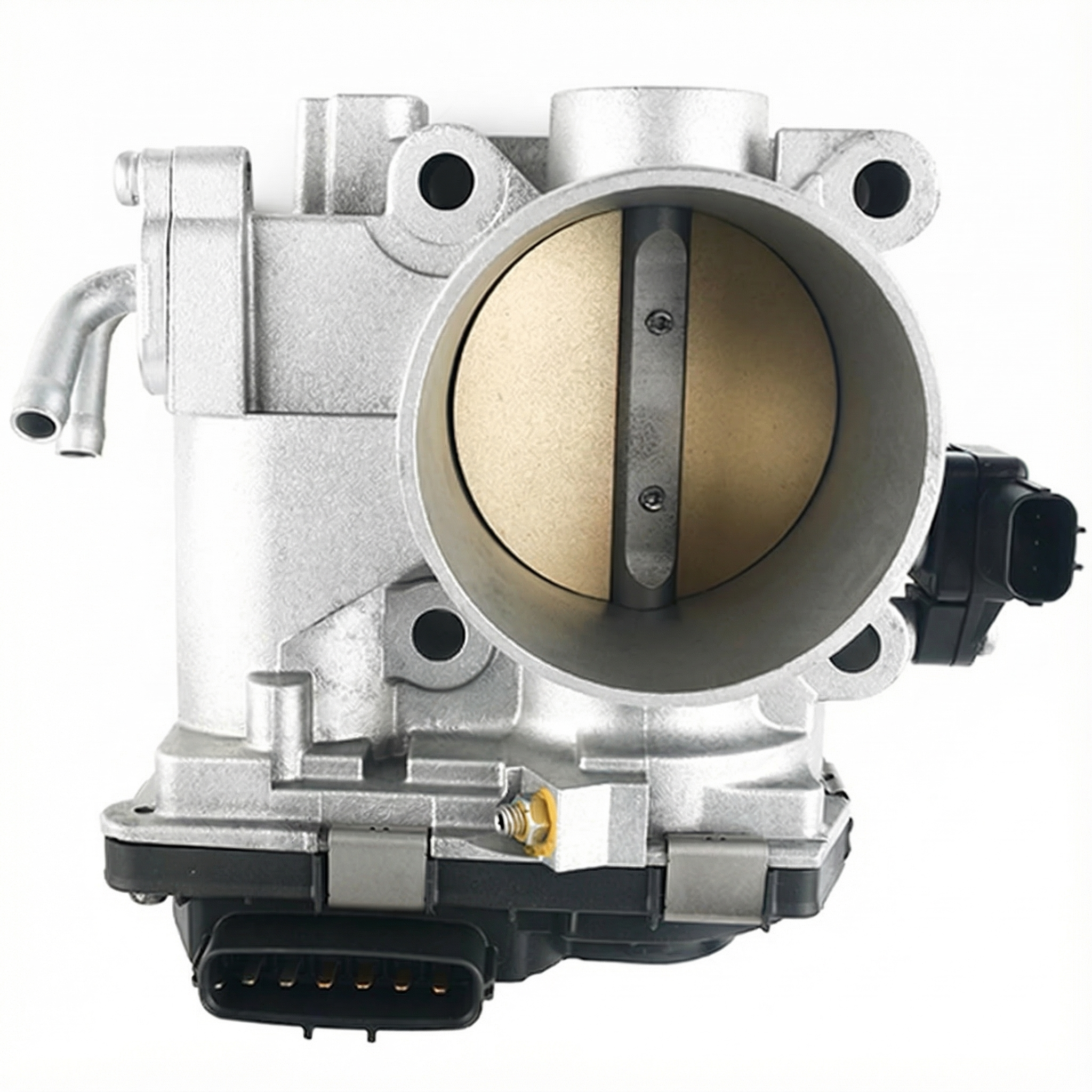
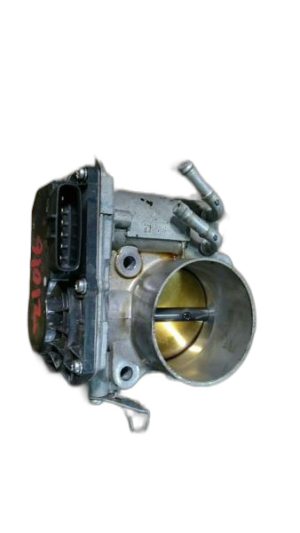
- Dirty Throttle Body 🔴 High Probability → Shop Fuel Injection Throttle Body Carbon and oil vapor from the PCV system can accumulate around the throttle plate over time, restricting airflow and preventing the plate from moving smoothly. This is a very common issue on Accords as they age.
How to confirm: Remove the air intake hose from the throttle body and visually inspect the throttle plate and bore for black, greasy carbon buildup ('coke').
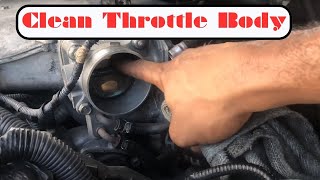
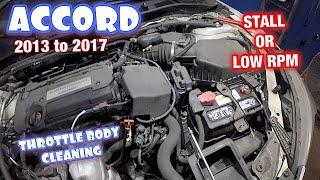
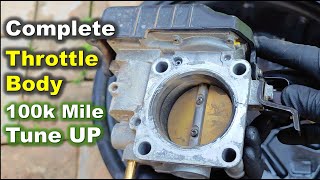
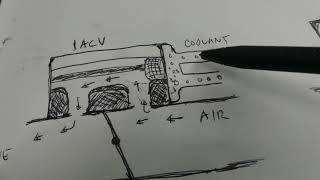
Typical fix: Clean the throttle body thoroughly with a dedicated throttle body cleaner and a soft brush or rag. 🎬 Watch: Complete throttle body cleaning and adaptation walkthrough. An idle relearn procedure is required after cleaning to allow the ECM to adapt to the restored airflow.
Est. part cost: $5-$15 for cleaner - Faulty Manifold Absolute Pressure (MAP) Sensor 🟡 Medium Probability → Shop Manifold Absolute Pressure Sensor The MAP sensor is a critical input for this calculation on Honda engines. Over time, the sensor can become contaminated or fail electronically, sending incorrect pressure readings to the ECM.
How to confirm: With a scan tool, monitor the MAP sensor voltage/pressure at key-on, engine-off (should be near atmospheric pressure) and then at idle (should show strong vacuum). The reading should change logically with engine vacuum. A good MAP sensor should read about 4.5-5 volts with key-on, engine-off, and drop to around 1 volt at idle.
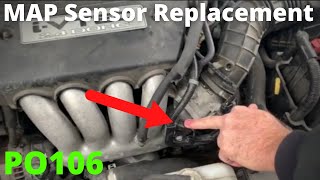
Typical fix: Replace the MAP sensor. It is typically a single screw and an electrical connector. Always use a new O-ring. 🎬 See how to replace the MAP sensor on your Accord.
Est. part cost: $40-$150 - Vacuum Leak 🟡 Medium Probability Rubber vacuum hoses and intake manifold gaskets can become brittle and crack with age and heat cycles, allowing unmetered air to enter the engine, which contradicts the throttle position.
How to confirm: Perform a smoke test by introducing smoke into the intake system and watching for leaks. Alternatively, you can carefully spray carb cleaner around suspected leak points (like the intake manifold gasket) with the engine running; a change in engine idle indicates a leak.
Typical fix: Replace the cracked hose or faulty gasket.
Est. part cost: $10-$100 - Dirty or Clogged Air Filter ⚪ Low Probability
How to confirm: Visually inspect the engine air filter. If it is black, clogged with debris, or has not been changed in a long time, it is restricting airflow.
Typical fix: Replace the engine air filter.
Est. part cost: $15-$40
Rare But Worth Checking
- Damaged Wiring or Connectors: Corrosion or damage to the wiring or connectors for the MAP or TPS sensors can cause intermittent or lost signals, triggering the code. Check for pushed-out pins or frayed wires before replacing sensors.
- Loose Oil Filler Cap: While seemingly unrelated, a loose or improperly sealed oil filler cap can create a significant unmetered air leak into the crankcase, which is then pulled into the intake via the PCV system. This introduces air that the MAP/MAF sensor doesn't see, causing a correlation fault. An Audi TSB for P0068 specifically identifies this as a possible cause.
- Faulty Powertrain Control Module (PCM): → Shop Engine Control Module (ECM) This is extremely rare. Before condemning the PCM, all other possibilities (sensors, wiring, vacuum leaks) must be exhaustively ruled out. Sometimes a software update from the dealer can resolve logic issues.
Diagnosis Steps
- Read Freeze Frame Data: Use an OBD-II scanner to see the engine conditions (RPM, load, etc.) when the code was set.
- Inspect the Air Intake System: Check the air filter to ensure it's clean. Inspect the entire intake tract from the airbox to the throttle body for loose clamps or cracked hoses.
- Inspect and Clean the Throttle Body: Remove the intake duct and check for heavy carbon buildup on the throttle plate and bore. Clean it using throttle body cleaner and a soft cloth. Do not move the butterfly valve manually if it's electronic.
- Check for Vacuum Leaks: With the engine running, listen for hissing sounds. Check that the oil filler cap is tight. Perform a smoke test or use the carb cleaner method to check for leaks at the intake manifold gasket and all vacuum lines.
- Test the MAP Sensor: Use a scan tool to monitor live data from the MAP sensor. The readings should change smoothly and logically as you apply and release the throttle. Check for ~4.5-5V KOEO and ~1V at idle.
- Inspect Sensor Wiring: Visually inspect the wiring and connectors going to the MAP sensor and throttle body for any signs of corrosion, damage, or loose pins.
- Test the Throttle Position Sensor (TPS): Using a scan tool, monitor the TPS percentage as you slowly press the accelerator pedal. The reading should be smooth from idle to wide-open throttle with no dropouts or spikes.
- Perform an Idle Relearn Procedure: After cleaning/replacing the throttle body or disconnecting the battery, this step is crucial. Turn off all accessories, start the engine, and let it idle until the cooling fan cycles on, then let it idle for at least 5-10 more minutes. 🎬 Watch: How to perform an idle relearn without a scan tool.
Parts You'll Likely Need
- Manifold Absolute Pressure (MAP) Sensor
(OEM #37830-RNA-A01, 37830-PAA-S00, 37830-PGK-A01, 37830-PNC-003)— This sensor provides the primary pressure reading that the ECM uses for this correlation check. It can fail electronically or become contaminated. Part numbers vary significantly by year and engine.
Trusted brands: Denso, Bosch, Hitachi, NTK
OEM price range: $70-$180
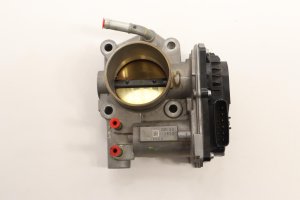
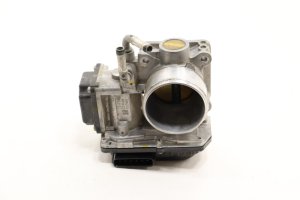
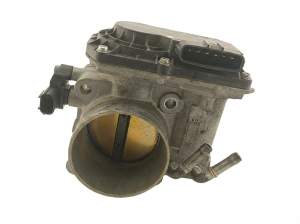
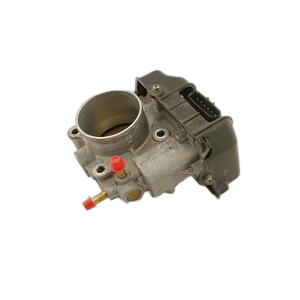
Aftermarket price range: $40-$90 - Throttle Body Assembly — If cleaning does not resolve the issue or if the integrated Throttle Position Sensor (TPS) has failed, the entire assembly must be replaced.
Trusted brands: Hitachi, Bosch
OEM price range: $350-$600
Aftermarket price range: $150-$300 - Throttle Body Cleaner — This is the most common first step, used to remove carbon buildup that causes the throttle plate to stick or restrict airflow.
Trusted brands: CRC, Gumout
OEM price range: $10-$15
Aftermarket price range: $5-$10
Related Codes That Often Appear With This One
- P2279 - Intake Air System Leak
- P0507 - Idle Control System RPM Higher than Expected
Technical Service Bulletins (TSBs) & Recalls
- Audi TSB 2070915/1: While for Audi, this TSB demonstrates that a loose oil filler cap can cause P0068, P2279, and P0507 by creating an intake air leak, a diagnostic angle worth considering on any vehicle.
Platform-Specific Known Issues
- Idle Relearn is Non-Negotiable After Cleaning: For Accords with electronic throttle bodies, cleaning the carbon buildup changes the baseline airflow. If an idle relearn is not performed, the car may have a high or unstable idle because the computer's learned adaptations are now incorrect.
Mechanic-Grade Diagnostic Values
- MAP Sensor Voltage (Key On, Engine Off) — expected: ~4.5 - 5.0 Volts. Failure: Voltage significantly lower or higher than atmospheric pressure reading.
- MAP Sensor Voltage (Engine at Idle) — expected: ~1.0 Volt. Failure: Voltage does not drop significantly from the KOEO reading, indicating no vacuum is being measured.
- Throttle Position Sensor (TPS) Voltage — expected: Smooth progression from ~0.5V (closed throttle) to ~4.5V (wide-open throttle).. Failure: Voltage that jumps, spikes, or has dead spots as the throttle is slowly opened.
- Mass Air Flow (MAF) Sensor Reading (if equipped) — expected: ~2-5 g/s at idle.. Failure: Abnormally low readings can indicate a restriction; abnormally high readings can indicate a post-sensor vacuum leak.
Hidden / Shadow Codes Worth Checking
- N/A: Unlike some German manufacturers, Honda does not have widely documented, publicly accessible 'shadow codes' for this fault. However, the official diagnostic procedure emphasizes troubleshooting other codes first if they appear alongside P0068, such as those for the TP sensor (P0121), fuel system (P0171), or idle control (P0507). (see via Honda Diagnostic System (HDS) or other professional-grade scan tools.)
Scan Tool Commands That Help
- Honda Diagnostic System (HDS): ECM RESET — Used after replacing a component like a MAP sensor to clear learned values and force the computer to re-adapt.
- Honda Diagnostic System (HDS): ETCS Learn Procedure — This is the Electronic Throttle Control System relearn. It is mandatory after cleaning or replacing the electronic throttle body to teach the ECM the new closed-throttle position and airflow characteristics.
- Advanced OBD-II Scanner (e.g., iCarsoft CR Ultra): Throttle Activation Test — A bidirectional command that allows the technician to command the throttle plate to open to specific percentages (e.g., 20%, 50%, 80%). This is used to check for binding, hesitation, or slow response from the throttle body motor, helping to diagnose a physical fault versus a sensor issue.
Wiring & Ground Locations
- G101 — On many 4-cylinder Accords, this critical ECU and sensor ground is located on the intake manifold plenum, on the driver's side of the engine bay.. A loose or corroded G101 ground can cause erratic voltage readings from the MAP and TPS sensors, creating a correlation fault even if the sensors themselves are perfectly fine. Cleaning this ground point is a crucial step in diagnosing persistent or intermittent electrical faults for P0068.
Real Owner Repair Stories
- YouTube channel '...I'll do it myself...' (1999 Honda Accord) — MAP sensor code, rough running.
❌ Tried (didn't work) Initial diagnosis pointed to a bad MAP sensor., Owner tested a replacement MAP sensor with no change in behavior., Considered checking engine timing as a next step.
✅ What actually fixed it The root cause was a missing gasket for the MAP sensor. After removing the throttle body for inspection, the owner discovered there was no gasket where the MAP sensor mounted, creating a direct vacuum leak at the sensor itself, which skewed its readings. Installing a proper gasket resolved the issue.
"I Checked Everything" — The Actual Cause
- In one documented case on a 1999 Accord, the root cause of a MAP sensor-related code was a missing gasket at the base of the MAP sensor itself. A standard smoke test of the intake system might miss this specific type of leak, as the smoke may not be forced out of the small, sealed-off area where the sensor mounts to the throttle body. The technician's attention is usually on hoses and the main intake gasket, not the mounting seal of the sensor they are testing.
OEM Part Supersession History
37830-P0G-S00→37830-PAA-S00— Part update/revision by Honda.
Heads up: These parts are generally cross-compatible for the vehicles specified, covering many Accords from approximately 1994-2005.37830-RNA-A01→N/A— This is a common MAP sensor for later model Accords (approx. 2006+) and other Hondas.
Heads up: This part is not interchangeable with the older 37830-PAA-S00. Always verify the correct part number for your specific year and engine.
Model Year Variations Within This Range
- 2017-2024 (approx.): Accords with the 1.5T and 2.0T engines are equipped with two MAP sensors (one on the intake pipe and one on the intake manifold). Diagnosing P0068 on these models requires testing both sensors to identify the faulty one, whereas most older models only have a single MAP sensor on the throttle body or intake manifold.
- 2003-2024 (all with electronic throttle): All vehicles in this range use an Electronic Throttle Control System (ETCS). Unlike older cable-driven throttles, any service involving cleaning or replacing the throttle body requires an 'ETCS Learn Procedure' to be performed with a capable scan tool or via a manual process to prevent high idle or unstable idle issues.
Diagnostic Flowchart
Used vs. New Parts: Buying Guide for This Vehicle
When a used part is the smart pick: A complete throttle body assembly is a viable used part, especially if the failure is due to a faulty integrated sensor and an OEM replacement is prohibitively expensive. A used assembly from a low-mileage vehicle can be a cost-effective solution.
Donor-vehicle mileage cap: roughly under 100000 miles for the part to have meaningful remaining life.
What to inspect on the donor part:
- Inspect the throttle bore for deep scratches or scoring.
- Check the throttle plate for cleanliness; light carbon is okay, but heavy, caked-on buildup is a red flag.
- Ensure all electrical connectors are intact with no broken clips or corroded pins.
- If possible, verify the donor vehicle's mileage and that it was not wrecked due to engine failure.
OEM-only on this vehicle (don't cheap out):
- Manifold Absolute Pressure (MAP) Sensor
Aftermarket brands forum-validated for this vehicle:
- Denso (often the Original Equipment Manufacturer for Honda)
- NTK
- Bosch
- Hitachi
Brands owners have reported issues with on this vehicle:
- Unbranded 'white-box' sensors from online marketplaces. These are notorious for poor calibration and high failure rates, often causing the code to return shortly after repair.
Real Owner Stories
Aggregated from forums and TSBs cited above. Mileages and costs reflect what owners reported in those sources.
2010 Honda Accord 2.4L
Symptoms: After cleaning the throttle body to address other issues, the car developed a high or unstable idle.
What fixed it: Performing an idle relearn procedure allowed the engine computer to adapt to the restored airflow, correcting the idle.
Source hint: vehicle_specific_issues: 'Idle Relearn is Non-Negotiable After Cleaning'
Related OBD-II Codes
Frequently Asked Questions
After cleaning the throttle body on my Accord, the idle is now high and unstable. What went wrong?
Is it safe to use a cheap aftermarket MAP sensor to fix P0068 on my Honda Accord?
What is the most likely cause of a P0068 code on an older Honda Accord?
How can I test the MAP sensor on my Accord at home before replacing it?
I saw an Audi TSB (2070915/1) that said a loose oil filler cap can cause P0068. Could this really affect my Honda?
Is there anything special I need to know before cleaning the electronic throttle body on my newer Accord?
Helpful Videos

We Have This Part in Stock

The information in this article is provided for general reference and educational purposes only. Vehicle specifications, procedures, and part compatibility can vary by production date, trim level, and region. Always consult your vehicle's factory service manual and verify part numbers before purchasing or performing repairs. Safety-critical components such as airbags, seat belts, and braking systems should be installed by a qualified professional.
- Honda Accord:
- 🧭 Diagnostic Flowchart
- 🎬 Helpful Videos
- 🛍️ Shop This Part
- What's Unique About the 2003-2024 Honda Accord
- Symptoms You May Notice
- Most Likely Causes
- Rare But Worth Checking
- Diagnosis Steps
- Parts You'll Likely Need
- Related Codes That Often Appear With This One
- Technical Service Bulletins (TSBs) & Recalls
- Platform-Specific Known Issues
- Mechanic-Grade Diagnostic Values
- Hidden / Shadow Codes Worth Checking
- Scan Tool Commands That Help
- Wiring & Ground Locations
- Real Owner Repair Stories
- "I Checked Everything" — The Actual Cause
- OEM Part Supersession History
- Model Year Variations Within This Range
- Used vs. New Parts: Buying Guide for This Vehicle
- Real Owner Stories
- 2010 Honda Accord 2.4L
- Related OBD-II Codes
- Frequently Asked Questions
- 🎟️ Get 5% Off