

P0068 on 2006-2011 Hyundai Accent: MAP/TPS Correlation Causes and Fixes
On a 2006-2011 Accent, P0068 is most often caused by a vacuum leak from a cracked hose or a dirty throttle body. Start by inspecting for leaks and cleaning the throttle body before replacing any sensors. A new MAP sensor, another common fix, costs around $25-$70.
- P0068 means your car's computer is confused because the throttle position and intake manifold pressure readings don't make sense together.
- Before buying any parts, thoroughly inspect for vacuum leaks (cracked hoses) and clean the throttle body. These are the most common and cheapest fixes.
- A smoke test is the most reliable way to find a hard-to-see vacuum leak.
- If cleaning and leak checks don't solve the problem, the MAP sensor (Part #39300-22600) is the next most likely part to have failed.
- Use a scan tool to watch live data from the MAP and TPS sensors; this can quickly help you identify which sensor is giving an illogical reading.
What's Unique About the 2006-2011 Hyundai Accent
For the 2006-2011 (MC generation) Accent and its platform-mate, the Kia Rio (JB), this code is almost always related to the basics: unmetered air getting in or restricted air from gunk. Unlike some newer vehicles where this code can be triggered by complex software issues, the cause on this simple 1.6L G4ED engine is typically a physical fault. The most common culprits are simple vacuum leaks from aging rubber hoses or a throttle body gummed up with carbon, both of which are common on high-mileage economy cars.
Symptoms You May Notice
- Rough or unstable idle
- Hesitation or stumbling during acceleration
- Reduced engine power or feeling like the car is 'choking'
- Engine stalling, especially when coming to a stop
- Increased fuel consumption
- Check Engine Light is on
- Difficulty starting the engine
- Replacing the MAP or TPS sensor without first checking for vacuum leaks or a dirty throttle body. These are more common and cheaper to fix.
- Replacing sensors with cheap, poor-quality aftermarket parts that may be faulty out of the box or fail quickly.
Most Likely Causes
- Vacuum Leak 🔴 High Probability Rubber vacuum hoses and intake gaskets become brittle and crack with age and heat cycles, which is common on vehicles over 10 years old. The PCV hose is a particularly frequent failure point.
How to confirm: Visually inspect all vacuum hoses connected to the intake manifold for cracks or disconnection. A common failure point is the PCV hose. For hard-to-find leaks, a smoke test is the most effective method; feed smoke into the intake system and look for where it escapes. Alternatively, with the engine running, you can carefully spray carburetor cleaner around suspected leak areas (like intake gaskets); a change in engine idle indicates a leak.
Typical fix: Replace the cracked hose or leaking gasket.
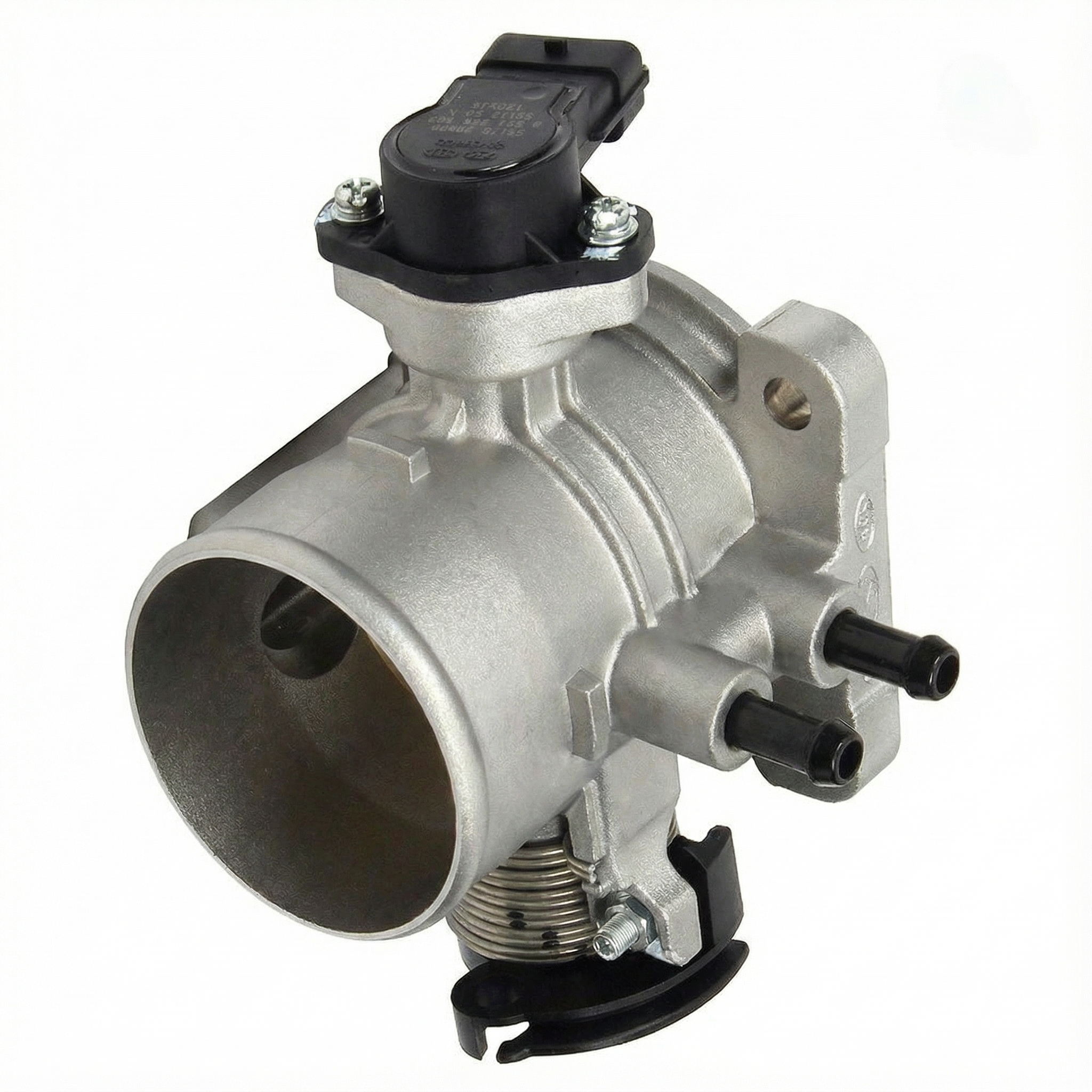
Est. part cost: $5-$30 - Dirty Throttle Body 🔴 High Probability → Shop Fuel Injection Throttle Body The PCV (Positive Crankcase Ventilation) system can route oil vapors into the intake, which mix with dirt and form carbon deposits (coke) around the throttle plate, restricting or disturbing airflow at low throttle angles.
How to confirm: Remove the intake air duct from the throttle body and inspect the throttle plate and bore. If there is a dark, sticky or greasy sludge buildup, it needs cleaning.
Typical fix: Clean the throttle body and plate thoroughly with a dedicated throttle body cleaner and a soft cloth or brush. You may need to remove the throttle body for a complete cleaning. Be aware that after cleaning, the engine may run rough for a minute as it burns off the cleaner.
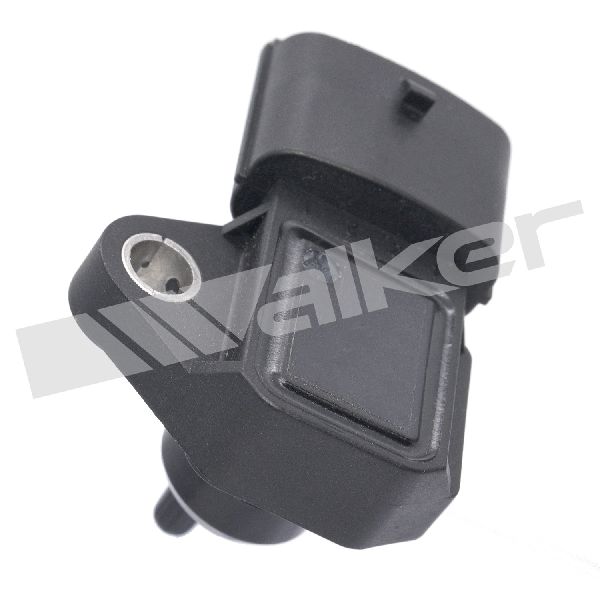
Est. part cost: $5-$10 for cleaner - Faulty Manifold Absolute Pressure (MAP) Sensor 🟡 Medium Probability → Shop Manifold Absolute Pressure Sensor The sensor can become contaminated by oil or carbon over time, or simply fail electronically after many years of service. It's a very common failure item leading to this code.
How to confirm: With a scan tool, monitor the MAP sensor reading with the key on, engine off; it should be close to barometric pressure. At idle, it should show a strong vacuum (low pressure). If the readings are stuck or don't change with engine load, the sensor is likely faulty. You can also test its voltage output with a multimeter.
Typical fix: Replace the MAP sensor. It is typically held in by a single 10mm bolt on the intake manifold and is easy to access.
Est. part cost: $25-$70 - Faulty Throttle Position Sensor (TPS) ⚪ Low Probability → Shop Fuel Injection Throttle Body As a mechanical sensor with a moving potentiometer, the TPS can wear out over time, creating dead spots or erratic readings in its signal.
How to confirm: Use a scan tool to monitor the TPS percentage as you slowly press the accelerator pedal. The reading should increase smoothly from around 0% to 100% without any jumps or dropouts. An erratic signal indicates a bad sensor. With a multimeter, the voltage should sweep smoothly from ~0.2-0.8V at closed throttle to ~4.3-4.8V at wide-open throttle.
Typical fix: Replace the throttle position sensor, which is mounted on the side of the throttle body.
Est. part cost: $30-$80
Rare But Worth Checking
- Wiring or Connector Issue: A damaged wire or corroded connector pin for the MAP or TPS can cause the same symptoms as a failed sensor. Owners report that yanking on wires instead of the plastic connector housing is a common cause of damage. Always inspect the harness and connectors before replacing parts.
- Faulty Powertrain Control Module (PCM): → Shop Engine Control Module (ECM) This is extremely rare. The PCM should only be considered as the cause after all other possibilities, including sensors, wiring, and vacuum leaks, have been exhaustively ruled out.
- Clogged Air Filter: A severely restricted engine air filter can starve the engine of air, potentially causing a discrepancy between what the MAP sensor reads and what the ECM expects for a given throttle position. This should be one of the first and easiest checks.
Diagnosis Steps
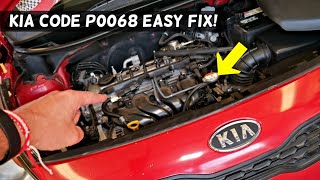
- Read Codes: Use an OBD-II scanner to confirm P0068 is the primary code. Note any other codes present, as they can provide valuable clues (e.g., P0121, P0106). 🎬 Watch: Diagnosing P0068 and MAP sensor issues on a Kia
- Visual Inspection: Inspect the entire air intake system from the air filter to the engine. Check the air filter itself for dirt. Look for disconnected hoses, cracked plastic, or loose clamps.
- Check for Vacuum Leaks: Pay close attention to all vacuum lines connected to the intake manifold, especially the PCV valve and its hose. Listen for hissing sounds at idle. For best results, perform a smoke test to find hidden leaks.
- Inspect and Clean Throttle Body: Remove the intake hose connected to the throttle body. Inspect for heavy carbon buildup. If dirty, clean it thoroughly using throttle body cleaner and a rag.
- Analyze Live Data: Use a scan tool to view live data. With the Key On, Engine Off, the MAP sensor should read close to atmospheric pressure. At idle, it should drop to a low kPa value (high vacuum). The TPS should read 0-1% at idle and move smoothly to ~100% at wide-open throttle.
- Test Sensors: If a sensor's live data is suspect, test it directly. Check for 5V reference, ground, and signal voltage at the sensor connector with a multimeter. Compare readings to factory specifications, such as the TPS sweep from ~0.5V to ~4.5V.
- Inspect Wiring: If sensor tests are inconclusive, inspect the wiring harness and connectors for the MAP and TPS sensors for any signs of damage, corrosion, or loose pins. Ensure connectors are fully seated.
Parts You'll Likely Need
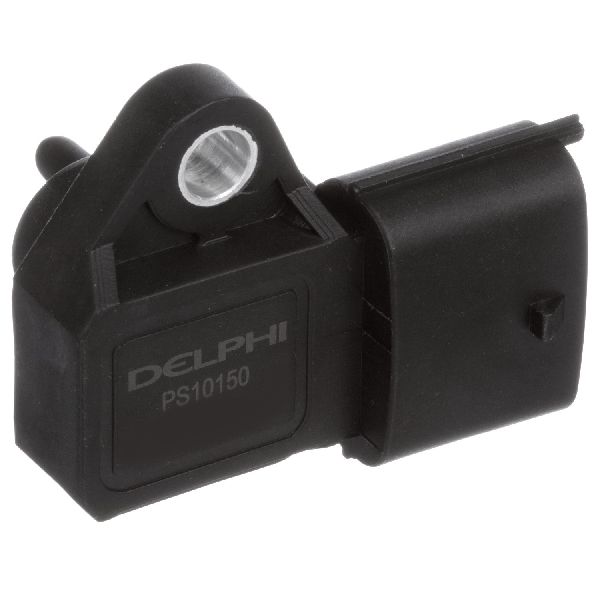
- Manifold Absolute Pressure (MAP) Sensor
(OEM #39300-22600)— This sensor provides the pressure reading that the ECM is comparing against the throttle position. It can fail or become contaminated, leading to the correlation error. This part number is widely confirmed for this vehicle.
Trusted brands: Hyundai (OEM), Bosch, Delphi, Standard Motor Products
OEM price range: $60-$90
Aftermarket price range: $25-$70 - Throttle Body Cleaner — A dirty throttle body is a very common cause. Cleaning is often the only fix needed.
Trusted brands: CRC, Gumout, Permatex
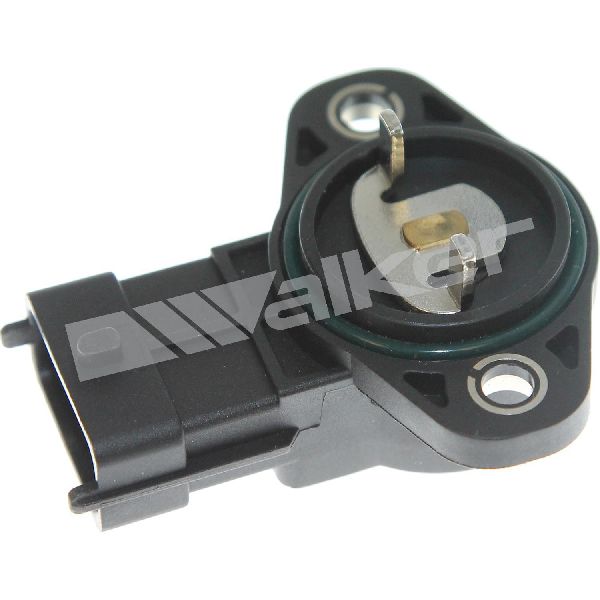
Aftermarket price range: $5-$10 - Throttle Position Sensor (TPS)
(OEM #35170-22600)— If the TPS is sending erratic or incorrect data about the throttle plate's angle, it will directly cause this correlation code.
Trusted brands: Hyundai (OEM), Beck/Arnley, Walker Products
OEM price range: $70-$100
Aftermarket price range: $30-$80 - PCV Hose
(OEM #26711-26000 (approximate, verify with VIN))— A cracked or disconnected vacuum hose is a high-probability cause of the unmetered air that triggers P0068. The PCV hose is a known weak point.
Trusted brands: Hyundai (OEM)
OEM price range: $10-$20
Aftermarket price range: $5-$15
Related Codes That Often Appear With This One
- P0106 — This code specifically points to a MAP sensor performance problem, which can be a root cause for the P0068 correlation fault.
- P0121 / P0122 / P0123 — These codes point specifically to a TPS performance problem or circuit issue, which would directly cause a correlation fault with the MAP sensor.
- P0171 — This code for 'System Too Lean' is often caused by a vacuum leak, which is also a primary cause of P0068.
Platform-Specific Known Issues
- Common PCV Hose Failure: → Shop PCV Valve Hose Owners frequently report the rubber hose going to the PCV valve becomes brittle, cracks, and creates a significant vacuum leak. This is one of the top causes for P0068 on high-mileage Accents and should be one of the first things inspected.
Mechanic-Grade Diagnostic Values
- Throttle Position Sensor (TPS) Signal Voltage — expected: 0.2V - 0.8V at closed throttle (idle) and 4.2V - 4.8V at wide-open throttle (WOT). The voltage should sweep smoothly between these points.. Failure: Voltage readings that are outside the specified ranges, or any sudden jumps, drops, or flat spots as the pedal is depressed.
- Throttle Position Sensor (TPS) Resistance — expected: Approximately 2 kΩ (2000 Ohms) ± 20% at 20°C (68°F).. Failure: Resistance that is significantly higher or lower than the specification, or an open/infinite reading.
- Manifold Absolute Pressure (MAP) Sensor Signal Voltage — expected: Approximately 0.8V - 1.2V at idle (high vacuum). Approximately 4.0V - 4.8V at wide-open throttle or Key On Engine Off (low vacuum).. Failure: Voltage that is stuck, does not change with engine load, or fluctuates erratically when the sensor is lightly tapped (indicating an internal failure).
- Manifold Absolute Pressure (MAP) Sensor Live Data (Pressure) — expected: At idle, pressure should be around 28-35 kPa.. Failure: Pressure readings that are stuck high (near atmospheric pressure) at idle, suggesting a massive vacuum leak or a failed sensor.
Scan Tool Commands That Help
- Hyundai GDS (Global Diagnostic System): Actuation Test: ETC Motor — With the ignition on and engine off, a technician can command the electronic throttle control motor to open and close. While watching live data for the TPS, this can confirm if the sensor is tracking the physical movement of the throttle plate correctly, helping to isolate a bad sensor from a sticking throttle body.
- Manual Procedure (No Scan Tool): Throttle Body Relearn / Reset — After cleaning or replacing the throttle body, a relearn procedure may be needed if the idle is unstable. A common manual method is: warm up the engine, turn the key to 'ON' (engine off) for 15 seconds, turn 'OFF' for 5 seconds, and repeat the cycle 5 times. Another method involves letting the engine idle for 10 minutes without touching the accelerator.
Wiring & Ground Locations
- GE301, GE302 — These are primary engine ground connection points. While specific diagrams for the 2006-2011 Accent are scarce, on similar Hyundai models these are typically located on the cylinder head, intake manifold, or the chassis near the battery tray.. A poor ground connection for the engine sensors can cause fluctuating or incorrect voltage readings for the MAP and TPS, leading to a correlation fault even if the sensors themselves are good.
- ECM Connector Pins — At the main Engine Control Module (ECM) connector.. When diagnosing a persistent P0068 after replacing sensors, a technician would test for correct voltage and continuity at the ECM pins corresponding to the MAP and TPS sensors. This confirms the integrity of the wiring harness between the sensors and the computer. A wiring diagram is essential for this step.
OEM Part Supersession History
35170-23500→35170-22600— Part consolidation and potential minor revisions.
Heads up: The newer part number 35170-22600 is the correct replacement for the older 35170-23500 for this application.39300-38110→39300-22600— Part consolidation across multiple vehicle lines.
Heads up: The part number 39300-22600 is the correct MAP sensor and replaces the older 39300-38110.
Diagnostic Flowchart
Used vs. New Parts: Buying Guide for This Vehicle
When a used part is the smart pick: For this repair, obtaining a used throttle body assembly from a junkyard can be a cost-effective option, especially if your original is physically damaged. The electronic sensors (MAP, TPS) themselves are generally not recommended to be purchased used.
Donor-vehicle mileage cap: roughly under 80000 miles for the part to have meaningful remaining life.
What to inspect on the donor part:
- Check the throttle bore for excessive carbon buildup or scoring. A little dirt is fine and can be cleaned, but deep grooves are a bad sign.
- Ensure the throttle plate moves smoothly by hand without binding or sticking.
- Inspect the plastic sensor connectors for cracks, brittleness, or broken locking tabs.
- If possible, get a part from a vehicle that was clearly in a rear-end collision, suggesting the engine was running fine before the accident.
OEM-only on this vehicle (don't cheap out):
- While not strictly 'OEM-only', electronic sensors like the MAP and TPS are high-risk for poor quality from no-name online sellers. Sticking to the OEM Hyundai part or a reputable aftermarket brand (Bosch, Delphi, Standard Motor Products) is strongly advised to avoid a repeat failure.
Aftermarket brands forum-validated for this vehicle:
- Standard Motor Products (for sensors)
- Walker Products (for sensors)
- Bosch (for sensors)
- Delphi (for sensors)
Brands owners have reported issues with on this vehicle:
- Unbranded, generic sensors from online marketplaces are frequently cited as being dead-on-arrival or failing within a few months.
Real Owner Stories
Aggregated from forums and TSBs cited above. Mileages and costs reflect what owners reported in those sources.
2006 Hyundai Accent
Symptoms: Check engine light with fault code P0068, indicating occasional throttle position misreading.
What fixed it: The owner was in the process of obtaining a new throttle position sensor, but the final fix was not confirmed in the report.
Source hint: Reddit r/AskMechanics
High-mileage 2006-2011 Hyundai Accent — ~115000 miles
Symptoms: Rough idle, hesitation during acceleration, and Check Engine Light on with code P0068.
What fixed it: Replacing the brittle, cracked rubber hose going to the PCV valve, which had created a significant vacuum leak.
Cost: $5-$30
Source hint: Vehicle Specific Issue: Common PCV Hose Failure
2007 Kia Rio
Symptoms: Check Engine Light on with code P0068.
What fixed it: The issue was resolved after a proper diagnosis that involved checking for vacuum leaks and testing sensors before replacing any parts, which highlighted the potential for new aftermarket sensors to be faulty out of the box.
Source hint: BAT Auto Technical: 2007 Kia Rio P0068
2008 Hyundai Sonata
Symptoms: Stored Check Engine Light with code P0068.
What fixed it: The owner was advised by forum members to follow the common troubleshooting path for this code on Hyundai vehicles: check for vacuum leaks (especially the PCV system), clean the throttle body, and test the MAP sensor.
Source hint: Hyundai Forum: Sonata with P0068
Related OBD-II Codes
Frequently Asked Questions
What is the most common cause of a P0068 code on a high-mileage Hyundai Accent?
Should I clean the throttle body on my 2007 Accent to fix P0068?
My mechanic suggests replacing the Throttle Position Sensor (TPS). Is this a likely fix?
How can I check for a vacuum leak myself?
I have a 2008 Kia Rio with a P0068 code. Does the information for the Accent apply?
My scan tool shows a P0068 code. What live data should I check first?
Helpful Videos

Used OEM Parts in Stock
New Aftermarket Parts Available


The information in this article is provided for general reference and educational purposes only. Vehicle specifications, procedures, and part compatibility can vary by production date, trim level, and region. Always consult your vehicle's factory service manual and verify part numbers before purchasing or performing repairs. Safety-critical components such as airbags, seat belts, and braking systems should be installed by a qualified professional.
- Hyundai Accent:
- 🧭 Diagnostic Flowchart
- 🎬 Helpful Videos
- 🛍️ Shop This Part
- What's Unique About the 2006-2011 Hyundai Accent
- Symptoms You May Notice
- Most Likely Causes
- Rare But Worth Checking
- Diagnosis Steps
- Parts You'll Likely Need
- Related Codes That Often Appear With This One
- Platform-Specific Known Issues
- Mechanic-Grade Diagnostic Values
- Scan Tool Commands That Help
- Wiring & Ground Locations
- OEM Part Supersession History
- Used vs. New Parts: Buying Guide for This Vehicle
- Real Owner Stories
- 2006 Hyundai Accent
- High-mileage 2006-2011 Hyundai Accent — ~115000 miles
- 2007 Kia Rio
- 2008 Hyundai Sonata
- Related OBD-II Codes
- Frequently Asked Questions
- 🎟️ Get 5% Off