

P0068 on 2015-2020 Kia Optima: MAP/Throttle Position Correlation Causes and Fixes
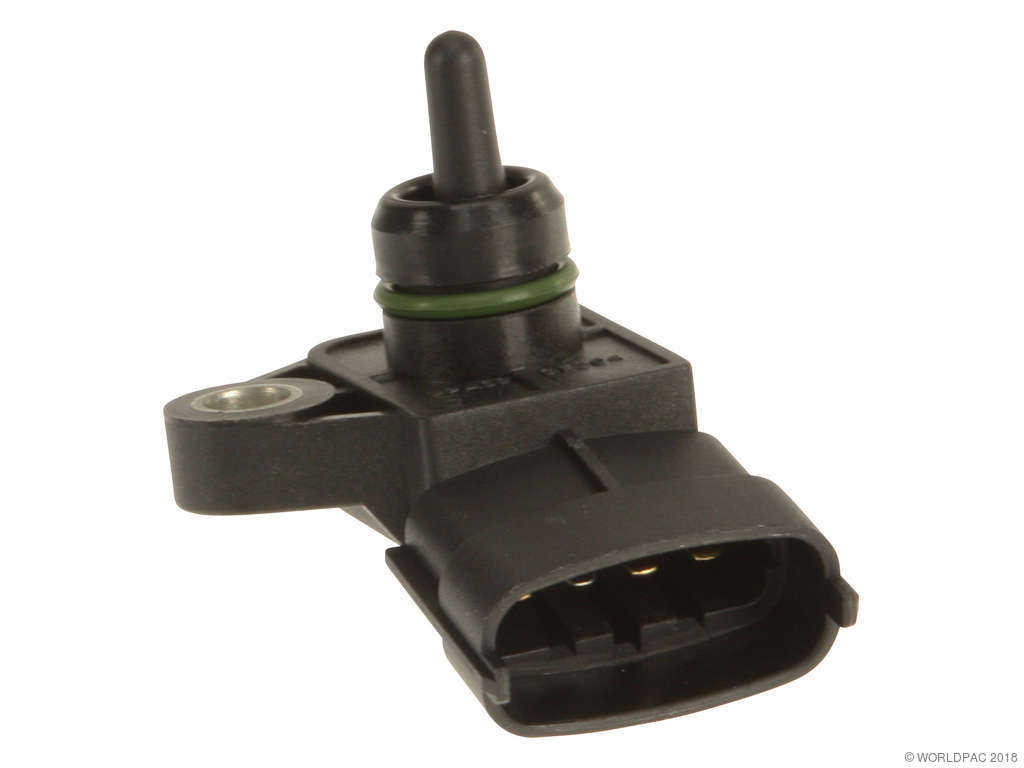
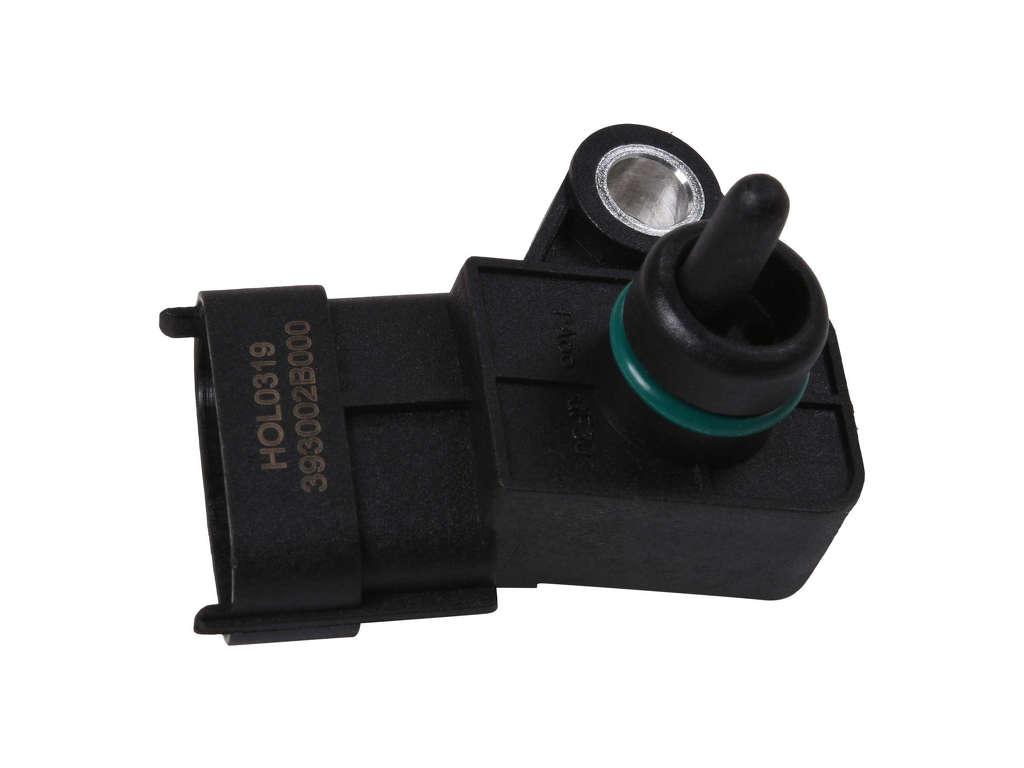
On a 2015-2020 Kia Optima, code P0068 is most often caused by a faulty Manifold Absolute Pressure (MAP) sensor or a dirty electronic throttle body. Cleaning the throttle body and inspecting for vacuum leaks are effective first steps before replacing the MAP sensor (OEM Part No. 39300-2B000), which is a common failure point.
- P0068 indicates a conflict between the throttle position and the intake manifold pressure sensors.
- The most likely culprits on a 2015-2020 Optima are a faulty MAP sensor or a dirty throttle body due to carbon buildup common in GDI engines.
- Always start with the simplest and cheapest fixes: inspect for vacuum leaks and clean the throttle body before replacing any parts.
- Replacing the MAP sensor is a straightforward DIY job that can often resolve the issue.
- If basic fixes don't work, check for damaged wiring to the sensors before considering more complex issues.
What's Unique About the 2015-2020 Kia Optima
The Gasoline Direct Injection (GDI) engines used in this generation of Optima are known to be susceptible to carbon buildup in the intake system. This buildup can directly affect the throttle body's operation, causing the throttle plate to stick or respond slowly, which directly leads to the correlation error with the MAP sensor. While the code can be caused by other issues, the sensitivity of GDI engines to carbon makes a dirty throttle body a highly probable cause on this specific vehicle.
Generation note: The 2015 model year is the end of the third generation (TF) Optima, while 2016-2020 models are the fourth generation (JF). The causes and fixes for P0068 are broadly similar across these generations as they often share engine platforms (e.g., the 2.4L GDI). No significant differences in diagnosing this specific code have been noted between the generations.
Symptoms You May Notice
- Check Engine Light is on
- Rough or unstable idle
- Hesitation or stumbling during acceleration
- Reduced engine power or entering 'limp mode'
- Stalling, especially at idle or low speeds
- Increased fuel consumption
- Difficulty starting the engine
- Replacing the Throttle Position Sensor (TPS) alone. On most modern vehicles, including the Optima, the TPS is integrated into the electronic throttle body assembly and is not sold as a separate component. The entire throttle body must be replaced if the internal sensor fails.
Most Likely Causes
- Faulty Manifold Absolute Pressure (MAP) Sensor 🔴 High Probability → Shop Manifold Absolute Pressure Sensor The MAP sensor is a common failure point on this engine platform, with failures often occurring between 125,000 and 150,000 miles. A bad O-ring on the sensor can also cause a vacuum leak, triggering the code.
How to confirm: Use a scan tool to monitor live MAP sensor voltage. With the key on and engine off, it should read around 4.5-5.0V. At idle, it should drop significantly. If the voltage is stuck or doesn't change with engine RPM, the sensor is likely faulty.
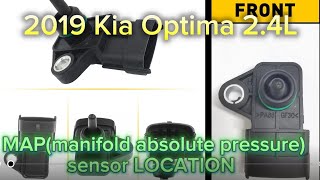
Typical fix: Replace the MAP sensor. It is typically mounted on the intake manifold with a single 10mm bolt.
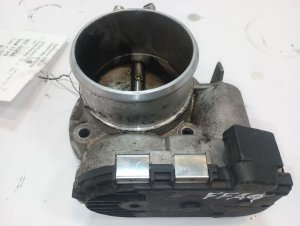
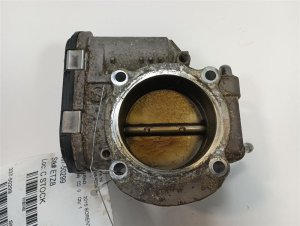
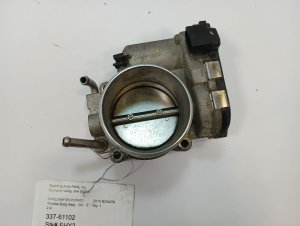
Est. part cost: $70-$105 - Dirty or Sticking Electronic Throttle Body 🔴 High Probability → Shop Fuel Injection Throttle Body GDI engines are prone to carbon buildup (coke) inside the throttle body, which can restrict the movement of the throttle plate, causing a mismatch between the commanded and actual throttle position.
How to confirm: Remove the intake air duct from the throttle body and visually inspect for a thick, dark layer of carbon buildup around the throttle plate and bore.
Typical fix: Thoroughly clean the throttle body bore and plate with a dedicated throttle body cleaner and a soft brush or rag. A throttle body relearn procedure may be necessary after cleaning.
Est. part cost: $10-$20 for cleaner - Vacuum Leak 🟡 Medium Probability Vacuum hoses can become brittle and crack over time. A common source is a leaking air intake hose between the air filter box and the throttle body, or a cracked PCV hose.
How to confirm: Visually inspect all vacuum lines and the intake air duct for cracks or loose connections. A smoke test is the most effective way to find hard-to-see leaks.
Typical fix: Replace the cracked or leaking hose or gasket.
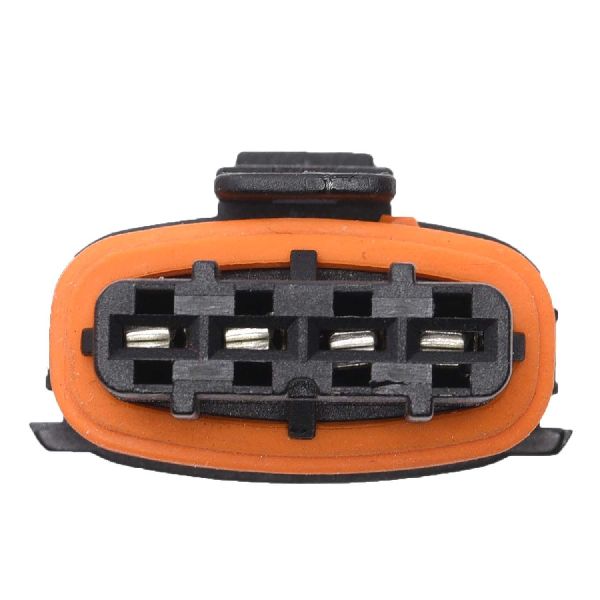
Est. part cost: $20-$100 - Damaged Wiring or Poor Connection ⚪ Low Probability The MAP sensor wiring harness can sometimes be routed near the radiator fan, making it susceptible to chafing or damage if not properly secured. Corrosion in the connector can also cause issues.
How to confirm: Inspect the wiring and connector at the MAP sensor and throttle body for any signs of corrosion, damage, or loose pins.
Typical fix: Repair the damaged section of wiring or replace the connector pigtail.
Est. part cost: $15-$50
Rare But Worth Checking
- Faulty Powertrain Control Module (PCM): → Shop Engine Control Module (ECM) This is extremely rare and should only be considered after all other possibilities (sensors, wiring, leaks, and software) have been exhaustively ruled out.
- PCM Software Requires Update: A Technical Service Bulletin (TSB FUE047) exists for the related 2019-2020 Kia Forte with the 2.0L engine for P0068, where the fix is an ECM software update. While not specific to the Optima, it indicates that overly sensitive diagnostic logic can be a cause, making a dealer inquiry about software updates a valid step if other diagnostics fail.
Diagnosis Steps
- Check for Other Codes: Use an OBD-II scanner to check for any other stored codes. Codes related to the MAP sensor (P0106, P0107, P0108, P0069) strongly suggest the MAP sensor is the root cause.
- Inspect the Intake System: Visually inspect the air intake duct between the air filter and the throttle body for any cracks, tears, or loose clamps. Ensure the air filter is clean.
- Inspect for Vacuum Leaks: Check all vacuum hoses connected to the intake manifold for cracks, brittleness, or loose connections. A smoke test is the most definitive way to find a leak.
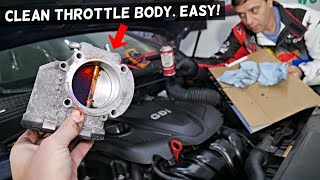
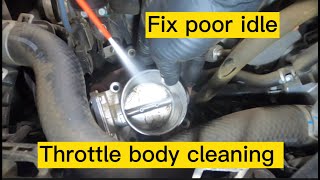
- Inspect and Clean the Throttle Body: → Shop Fuel Injection Throttle Body Remove the intake duct and inspect the electronic throttle body for heavy carbon buildup. If dirty, clean it thoroughly with throttle body cleaner. Do not push the throttle plate open manually; have a helper turn the key to the 'ON' position (engine off) and press the gas pedal to open it.
- Inspect Sensor Wiring: Carefully examine the wiring and connectors for the MAP sensor and the throttle body. Look for any signs of damage, corrosion, or loose pins. Pay close attention to the harness near the radiator fan.
- Test the MAP Sensor: → Shop Manifold Absolute Pressure Sensor Using a scan tool with live data, monitor the MAP sensor reading. With the key on and engine off, the reading should be close to barometric pressure (around 4.5-5.0V). At idle, it should show a strong vacuum (voltage should drop significantly). If the readings are erratic or do not change with engine RPM, the sensor is likely faulty.
- Replace the MAP Sensor: → Shop Manifold Absolute Pressure Sensor If the sensor is suspected to be faulty, replace it. It is located on the intake manifold and is typically held in by a single 10mm bolt.
- Consider a PCM Software Update: If all physical components and wiring check out, contact a Kia dealership with your VIN to see if any software updates are available for the PCM to address overly sensitive diagnostic logic, similar to TSB FUE047 for the Kia Forte.
- Clear Codes and Test Drive: After any repair, clear the DTCs with a scan tool and perform a test drive to ensure the code does not return.
Parts You'll Likely Need
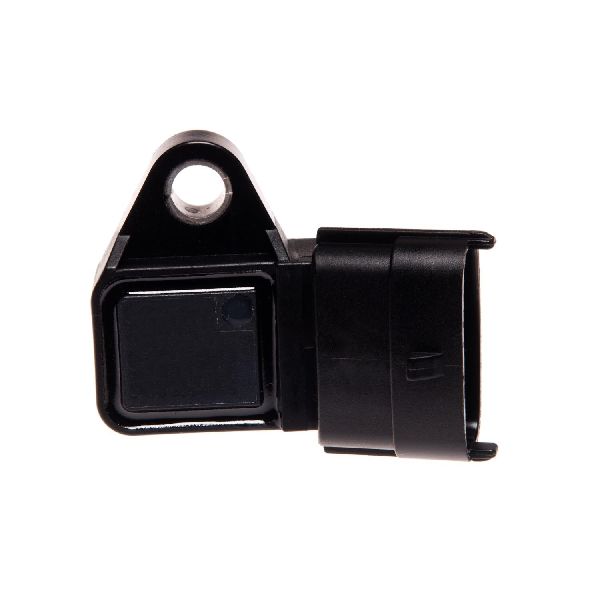
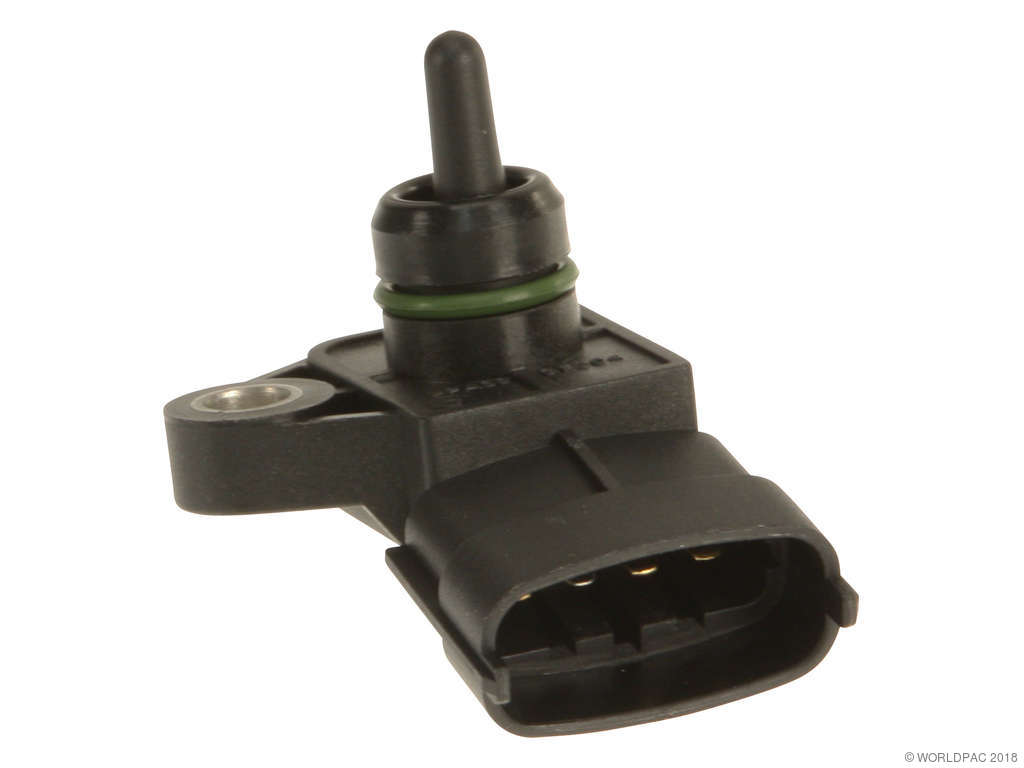
- Manifold Absolute Pressure (MAP) Sensor
(OEM #39300-2B000)— This sensor is the most common component to fail and directly cause the P0068 correlation code on this platform. This part number also supersedes 39300-2B100.
Trusted brands: Kia (Genuine OEM), Bosch, Delphi, Standard Motor Products
OEM price range: $70-$105
Aftermarket price range: $30-$80 - Throttle Body Cleaner — Required for cleaning carbon buildup from the throttle body, a very common cause of this code on GDI engines.
Trusted brands: CRC, Gumout, WD-40 Specialist
Aftermarket price range: $10-$20
Related Codes That Often Appear With This One
- P0106 — This code for 'Manifold Absolute Pressure/Barometric Pressure Circuit Range/Performance' directly points to a problem with the MAP sensor's performance, reinforcing the diagnosis of a faulty sensor.
- P0107 — Indicates 'MAP Sensor Circuit Low Input', suggesting an electrical fault within the sensor or its circuit that would also cause the correlation error of P0068.
- P0108 — Indicates 'MAP Sensor Circuit High Input', the opposite of P0107, also pointing to an electrical failure of the MAP sensor or its circuit.
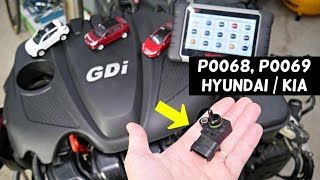
- P0069 — This code for 'MAP - Barometric Pressure Correlation' often appears with P0068, as both rely on a functioning MAP sensor. 🎬 Watch: Diagnosing P0068 and P0069 on Kia 2.4L A faulty MAP sensor is the primary cause for both codes appearing together.
Technical Service Bulletins (TSBs) & Recalls
- TSB FUE047: While not for the Optima, this TSB for the 2019-2020 Kia Forte with the 2.0L Nu engine addresses P0068, P0101, and P0106 with an ECM software update and throttle body cleaning. This is relevant as it shows a precedent for software-related fixes for this code on Kia vehicles.
- TSB Bulletin #TSB_FUE047: This manufacturer bulletin notes that some vehicles equipped with the NU 2.0L MPI Atkinson engine may exhibit a MIL with DTC P0101, P0106, and/or P0068, requiring an update to the Electronic Throttle Control (ETC) logic.
Platform-Specific Known Issues
- While no TSB was found specifically for the 2015-2020 Optima and P0068, a similar Kia model (2019-2020 Forte) with a Nu 2.0L engine has a TSB (FUE047) for this code. The fix involves a PCM software update to revise the diagnostic logic and cleaning the throttle body. If you have exhausted other diagnostic steps, it may be worth inquiring with a Kia dealer about any available software updates for your Optima's PCM.
Mechanic-Grade Diagnostic Values
- MAP Sensor Voltage (Key On, Engine Off) — expected: ~4.5V - 5.0V (Should correspond to atmospheric pressure). Failure: Voltage is significantly lower or higher, or does not match a known good barometric pressure reading.
- MAP Sensor Voltage (Engine at Idle) — expected: 1.0V - 2.0V (Indicates strong vacuum). Failure: Voltage remains high (near KOEO reading) or does not drop significantly, indicating the sensor is not reading vacuum.
- Throttle Position Sensor (TPS) Voltage (Closed Throttle) — expected: ~0.5V - 1.0V. Failure: Voltage is stuck at 0V, is significantly higher, or is erratic at rest.
- Throttle Position Sensor (TPS) Voltage (Wide-Open Throttle) — expected: Sweeps smoothly up to ~4.5V. Failure: Voltage has dead spots, jumps erratically, or does not reach the expected maximum voltage during a slow pedal press.
- MAP/TPS Sensor Connector 5V Reference — expected: ~5.0V. Failure: Absence of 5V reference at the sensor connector (with key on) points to a wiring issue or a problem with the PCM, not the sensor itself.
Scan Tool Commands That Help
- Kia GDS (or equivalent advanced scanner): ETC (Electronic Throttle Control) Adaptive Values Reset — This function should be performed after cleaning or replacing the electronic throttle body. It erases the PCM's learned values for the throttle plate's idle and closed positions, forcing it to relearn the new, correct positions. Failure to do this can cause idle issues or a persistent P0068 code.
Wiring & Ground Locations
- Engine Bay Ground Points — Key grounding points in the engine bay include the cylinder head, engine block, intake manifold, and transmission housing. Ensure these connections are clean, tight, and free of corrosion.. A poor engine ground can cause unstable or incorrect readings from the MAP and TPS sensors, as they rely on a stable ground reference. This can mimic the failure of a sensor when the sensor itself is actually good.
- Chassis Ground Bolt — A common chassis ground location on many Kia models is a bolt to the right of the interior fuse panel (kick panel area), where multiple ground wires terminate.. A loose or corroded main chassis ground can introduce electrical noise and voltage drops throughout the vehicle's systems, potentially affecting the PCM's interpretation of sensor data and triggering correlation codes.
OEM Part Supersession History
39300-2B100→39300-2B000— Part has been updated by the manufacturer for improved reliability or a change in supplier.
Diagnostic Flowchart
Other Known Issues on This Vehicle
Issues unrelated to this code that are worth knowing about as an owner of this generation:
- Theta II Engine Failure 🔴 High — Widespread across 2.0L Turbo and 2.4L GDI engines. Can occur under 100,000 miles. Symptoms include engine knocking, seizing, and potential for fire. (Ref: Multiple recalls (e.g., SC147) and class-action lawsuits have been issued. Kia extended the engine warranty for affected vehicles that received a Knock Sensor Detection System (KSDS) software update.)
- Excessive Oil Consumption 🟠 Medium — Commonly reported on the 2.4L GDI engine, can lead to premature engine wear or failure if not monitored closely. (Ref: Related to the broader Theta II engine issues and covered under the extended warranty if it leads to bearing failure.)
- Steering Coupler Degradation 🟠 Medium — The flexible rubber coupler in the electronic power steering column can disintegrate over time, causing a distinct clicking or clunking noise when turning the steering wheel. (Ref: Kia issued a warranty extension (CS1604/WTY006) to 10 years/unlimited mileage for this part on earlier models, and the issue persists into this generation.)
- Peeling Exterior Paint 🟡 Low — Many owners report issues with paint, particularly white paint, chipping and peeling off easily, affecting aesthetics and resale value.
Used vs. New Parts: Buying Guide for This Vehicle
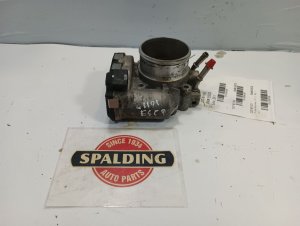
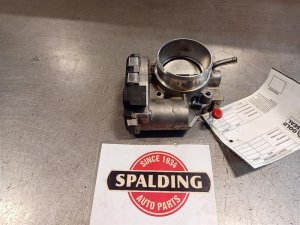
When a used part is the smart pick: A complete, used electronic throttle body assembly from a reputable salvage yard can be a cost-effective option, as the failure mode is often carbon buildup rather than electronic failure. A used intake manifold is also a good choice if the original is found to be cracked.
Donor-vehicle mileage cap: roughly under 80000 miles for the part to have meaningful remaining life.
What to inspect on the donor part:
- For a throttle body, inspect the bore for deep scoring or damage and ensure the throttle plate moves freely.
- For any electronic sensor (like the MAP), check that the connector pins are straight and free of corrosion, and the plastic housing is not cracked.
- Verify the part number on the used component matches the required OEM number or its supersession.
OEM-only on this vehicle (don't cheap out):
- Manifold Absolute Pressure (MAP) Sensor: While quality aftermarket options exist, the OEM sensor is recommended for this critical input to avoid repeat failures from out-of-spec aftermarket parts that can still trigger correlation codes.
Aftermarket brands forum-validated for this vehicle:
- Delphi
- NGK / NTK
- Standard Motor Products (SMP)
Real Owner Stories
Aggregated from forums and TSBs cited above. Mileages and costs reflect what owners reported in those sources.
Hyundai Sonata NF20 2.0L
Symptoms: Stored Check Engine Light with code P0068.
What fixed it: The owner had already cleaned the throttle body as a first step to resolve the correlation issue.
Source hint: Hyundai-Forums.com - 'Sonata Nf20 2.0l P0068 with Stored Check engine light'
2019-2020 Kia Forte 2.0L Nu
Symptoms: Diagnostic trouble codes P0068, P0101, and P0106.
What fixed it: ECM software update to revise diagnostic logic and cleaning the throttle body.
Source hint: TSB FUE047
Kia Stinger Owner Report
Symptoms: An owner reported a rough idle and a check engine light pulling codes P0108 and P0068. Despite being driven to a dealer, the issue was not immediately found (NHTSA ODI #11390539).
Kia Soul Owner Report
Symptoms: A Kia owner filed a complaint regarding multiple engine codes including P0017, P000B, P0068, and P0014 (NHTSA ODI #11723229).
Related OBD-II Codes
Frequently Asked Questions
Does TSB FUE047 apply to my 2015-2020 Kia Optima?
I have a 2.4L GDI Optima; is the MAP sensor a known weak point?
Can carbon buildup in my GDI engine cause P0068?
Is there a specific wiring issue I should look for on my Optima?
Should I manually push the throttle plate open to clean it on my Optima?
Could my P0068 code be related to the Theta II engine recalls?
Helpful Videos
Used OEM Parts in Stock
New Aftermarket Parts Available


The information in this article is provided for general reference and educational purposes only. Vehicle specifications, procedures, and part compatibility can vary by production date, trim level, and region. Always consult your vehicle's factory service manual and verify part numbers before purchasing or performing repairs. Safety-critical components such as airbags, seat belts, and braking systems should be installed by a qualified professional.
- Kia Optima:
- 🧭 Diagnostic Flowchart
- 🎬 Helpful Videos
- 🛍️ Shop This Part
- What's Unique About the 2015-2020 Kia Optima
- Symptoms You May Notice
- Most Likely Causes
- Rare But Worth Checking
- Diagnosis Steps
- Parts You'll Likely Need
- Related Codes That Often Appear With This One
- Technical Service Bulletins (TSBs) & Recalls
- Platform-Specific Known Issues
- Mechanic-Grade Diagnostic Values
- Scan Tool Commands That Help
- Wiring & Ground Locations
- OEM Part Supersession History
- Other Known Issues on This Vehicle
- Used vs. New Parts: Buying Guide for This Vehicle
- Real Owner Stories
- Hyundai Sonata NF20 2.0L
- 2019-2020 Kia Forte 2.0L Nu
- Kia Stinger Owner Report
- Kia Soul Owner Report
- Related OBD-II Codes
- Frequently Asked Questions
- 🎟️ Get 5% Off