

P0068 on 2018 Mitsubishi Eclipse Cross: MAP/MAF & Throttle Position Fixes
On a 2018 Eclipse Cross, code P0068 is most often caused by a software glitch. Mitsubishi issued Technical Service Bulletin TSB-18-13-001 to fix this with an ECU update. Before replacing any parts, have a dealer check if the ECU software is version 1860D11603 or higher; if not, the reprogram is the first and most likely fix.
- For a 2018 Mitsubishi Eclipse Cross, your first step for P0068 must be to check with a dealer about TSB-18-13-001.
- The most probable fix is a simple ECU software update, not an expensive part replacement.
- If the software is already up to date, the next most likely cause is a physical air leak in the intake system (vacuum leak).
- Symptoms can be severe, including the vehicle entering a 'limp mode' with restricted speed.
What's Unique About the 2018-2018 Mitsubishi Eclipse Cross
For the 2018 model year, the first year of this Eclipse Cross generation, this code is frequently a false positive. Mitsubishi identified that the original engine software was too sensitive and could incorrectly set a P0068 code because the 'Mass Airflow Sensor Plausibility Monitoring does not recognize turbocharged operation' correctly. The official fix, detailed in TSB-18-13-001, is a simple software reprogram of the engine computer, not a hardware replacement. This makes checking the vehicle's software status the most critical first step in diagnosis. The updated software part number is 1860D11603 or higher.
Symptoms You May Notice
- Check Engine Light is on
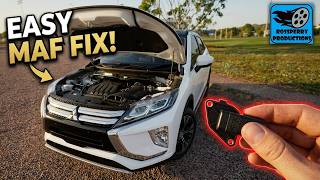
- Vehicle speed limited to 62 mph (Limp Mode) 🎬 Watch this video to understand the causes and fixes for P0068.
- Rough or unstable idle
- Engine stalling, especially when coming to a stop
- Hesitation or poor acceleration
- Reduced engine power
- Replacing the MAF, MAP, or throttle body without first checking for the software update TSB. This is the most common mistake and leads to unnecessary expense, as the software issue is the most probable cause on 2018 models.
Most Likely Causes
- Engine Control Unit (ECU) Software Needs Update 🔴 High Probability Affects 2018 models built before mid-April 2018 due to overly sensitive monitoring logic from the factory that fails to properly account for turbocharged operation.
How to confirm: A Mitsubishi dealer or a shop with a MUT-III scan tool can check the current software part number on the ECU. If the number is lower than 1860D11603, the update is needed.
Typical fix: Reprogram the Engine Control Unit (ECU) with the updated software file provided by Mitsubishi. This is a software-only fix that takes approximately 0.3 labor hours.
Est. part cost: $0 - Intake Air / Vacuum Leak 🟡 Medium Probability Turbocharged engines are sensitive to unmetered air entering the system after the MAF sensor. A cracked hose, loose clamp, or bad gasket can throw off the correlation check that the ECU performs.
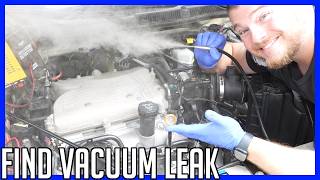
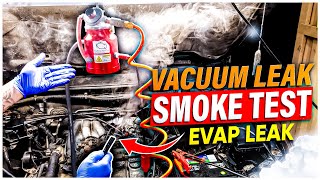
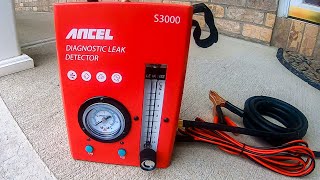
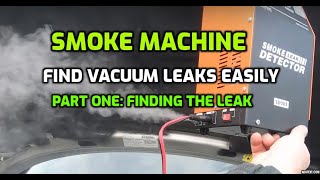
How to confirm: Perform a smoke test on the intake system. 🎬 See how to use a smoke machine to find hidden leaks. This involves filling the intake with harmless smoke under low pressure and looking for leaks from cracked hoses, loose clamps, or bad gaskets between the air filter box and the engine.
Typical fix: Replace the cracked hose or leaking gasket and ensure all clamps are tight.
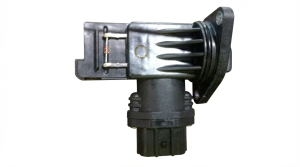
Est. part cost: $15-$75 - Dirty or Contaminated Mass Airflow (MAF) Sensor ⚪ Low Probability → Shop Fuel Injection Air Flow Meter
How to confirm: Visually inspect the MAF sensor's delicate wires (located in the intake tube after the air filter). If they are dirty, oily, or have debris on them, the reading will be inaccurate. A scan tool can also show if the MAF readings are erratic or outside the expected range (standard value at idle is 1,350-1,670 mV).
Typical fix: Carefully clean the sensor wires using only dedicated MAF sensor cleaner spray. Do not touch the wires. If cleaning doesn't work, replace the sensor.
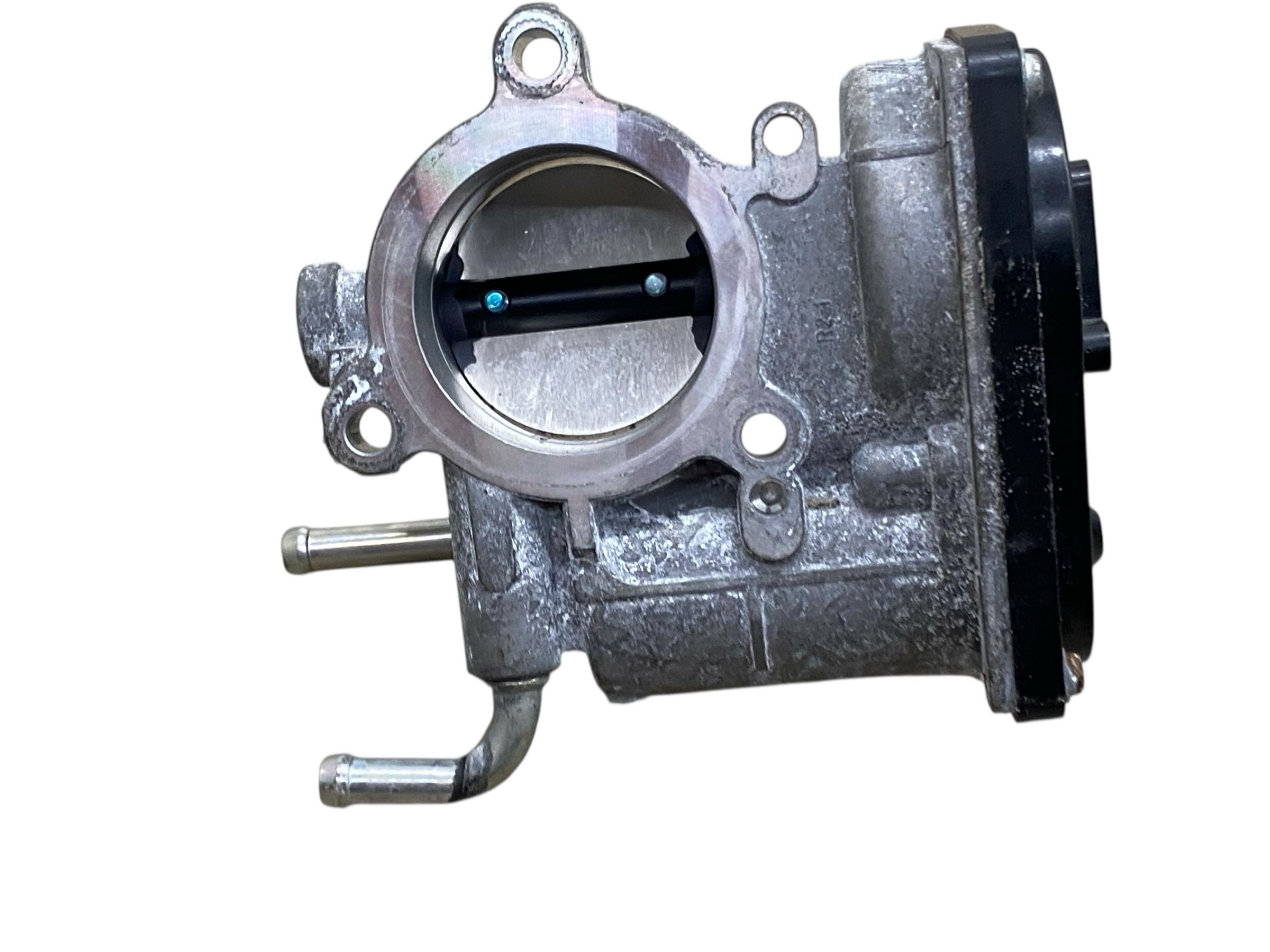
Est. part cost: $10-$15 for cleaner, $150-$250 for a new sensor - Dirty or Sticking Throttle Body ⚪ Low Probability → Shop Fuel Injection Throttle Body
How to confirm: Remove the intake boot from the throttle body and inspect the throttle plate and bore for heavy carbon buildup ('coke'). The buildup can prevent the plate from moving smoothly or closing completely, causing a mismatch with sensor readings.
Typical fix: Clean the throttle body bore and plate with a dedicated throttle body cleaner and a soft cloth. An idle relearn procedure is required after cleaning.
Est. part cost: $10-$20 for cleaner
Rare But Worth Checking
- Faulty MAP Sensor: → Shop Manifold Absolute Pressure Sensor The Manifold Absolute Pressure (MAP) sensor is another key input. While less likely to be the primary cause than a MAF or vacuum issue, if its readings are incorrect, it can contribute to this correlation code.
- Poor Electrical Connection: Check the wiring harnesses and connectors for the MAF sensor, MAP sensor, and throttle body for any signs of corrosion, damage, or looseness. An owner of a different Mitsubishi model with P0068 reported that simply unplugging and replugging sensor connectors temporarily resolved the issue, pointing to a possible bad connection.
Diagnosis Steps
- Check for TSBs: Contact a Mitsubishi dealer with your VIN to determine if TSB-18-13-001 is open for your vehicle or has already been completed. Ask for the current ECU software part number.
- Perform ECU Update if Needed: If the TSB applies and the software is outdated (older than 1860D11603), have the dealer reprogram the ECU. This resolves the majority of P0068 issues on this vehicle.
- Inspect Intake System: If the TSB does not apply or the code returns, thoroughly inspect the entire air intake tract from the air filter to the throttle body for loose clamps, cracked hoses, or disconnected lines.
- Perform a Smoke Test: To definitively find any vacuum leaks, use a smoke machine to pressurize the intake system and look for escaping smoke.
- Inspect and Clean MAF Sensor: → Shop Fuel Injection Air Flow Meter Remove and inspect the Mass Airflow sensor. If it appears dirty, clean it with a dedicated MAF sensor cleaner. Do not touch the sensor wires.
- Inspect and Clean Throttle Body: → Shop Fuel Injection Throttle Body Check for carbon buildup around the throttle plate. Clean if necessary with throttle body cleaner.
- Perform Idle Relearn Procedure: After cleaning or replacing the throttle body, an idle relearn procedure is mandatory. This can sometimes be done without a scan tool by following a specific sequence of key-on, idle, and key-off steps, but a scan tool is the most reliable method.
- Analyze Live Sensor Data: Use an OBD-II scan tool to view live data for the MAF, MAP, and Throttle Position sensors. Watch for any sensor that is not responding smoothly or is providing readings that are illogical for the engine's state (e.g., MAF voltage at idle should be ~1.35-1.67V).
- Check Wiring: If a sensor's data is erratic, inspect its connector and wiring for damage before replacing the sensor itself.
Parts You'll Likely Need
- ECU Reprogramming Service
(OEM #Software P/N 1860D11603)— This is a software fix, not a part. It corrects the logic error in the factory software that causes the code to be set incorrectly on 2018 models.
Trusted brands: Mitsubishi Dealer Service
OEM price range: $100-$200
Aftermarket price range: N/A - Mass Air Flow (MAF) Sensor
(OEM #MR985187 (Verify with dealer))— If the sensor is dirty beyond cleaning or has failed electronically, it will provide incorrect airflow data, causing the correlation fault. Part number MR985187 is listed for other Mitsubishi engines and may fit, but dealer confirmation is essential.
Trusted brands: Denso, Bosch, Mitsubishi Genuine
OEM price range: $200-$300
Aftermarket price range: $100-$180 - Throttle Body Assembly
(OEM #1450A233)— While cleaning often resolves issues, a failure of the internal motor or position sensor requires replacement of the whole assembly.
Trusted brands: Mitsubishi Genuine
OEM price range: $500-$700
Aftermarket price range: $250-$400 - Intake Air Hose / Duct — A crack in the flexible intake duct after the MAF sensor is a common source of unmetered air (a vacuum leak), which is a primary cause of this code.
Trusted brands: Mitsubishi Genuine
OEM price range: $50-$120
Aftermarket price range: $30-$80
Related Codes That Often Appear With This One
- P061A — Mitsubishi Technical Information Notice TIN-18-13-003 states that the same ECU software update (version 1860D11603 or higher) that fixes the false P0068 also addresses false P061A ('Internal Control Module Torque Performance') codes. They are often related to the same software logic issue.
Technical Service Bulletins (TSBs) & Recalls
- TSB-18-13-001: Details the procedure for reprogramming the Engine ECU to correct a logic flaw causing false P0068 codes. It specifies the issue is the monitoring logic not recognizing turbocharged operation.
- TIN-18-13-003: A Technical Information Notice confirming that the single software update to version 1860D11603 or higher addresses both P0068 and P061A codes.
- Bulletin #TIN-18-13-002: A manufacturer notice informing dealers that an update is available to address MFI DTCs P0068 and P061A that have been improperly set.
Platform-Specific Known Issues
- A significant number of 2018 Eclipse Cross models built before mid-April 2018 are subject to TSB-18-13-001. This TSB addresses a software flaw where the ECU's plausibility checks fail to properly recognize normal turbocharged operation, incorrectly triggering code P0068.
Mechanic-Grade Diagnostic Values
- Mass Airflow (MAF) Sensor Voltage at Idle — expected: 1,350 - 1,670 mV (1.35 - 1.67 V). Failure: Voltage is outside of this range at idle, or does not increase smoothly as the engine is revved.
- Throttle Position Sensor (TPS) Voltage — expected: ~0.5 V (closed throttle) to ~4.5 V (wide-open throttle). Failure: Voltage is jumpy, doesn't sweep smoothly, or is outside the expected range at closed or open throttle.
- Engine Coolant Temperature (ECT) Sensor Resistance — expected: ~2400 Ohms at 68°F (20°C); ~300 Ohms at 176°F (80°C). Failure: Resistance values are significantly different at corresponding temperatures. An incorrect temperature reading can affect the ECU's air/fuel calculations.
Scan Tool Commands That Help
- Mitsubishi MUT-III: Actuator Test — Allows for forced operation of various actuators, which can help determine if a component like the electronic throttle control motor is responding correctly to ECU commands.
- Mitsubishi MUT-III: Data List — Used to view live data from sensors like the MAF, MAP, and TPS to check for plausible values and smooth operation during engine running.
- Mitsubishi MUT-III: ECU Reprogramming — This is the specific function required to perform the software update outlined in TSB-18-13-001 to fix the false P0068 code on early 2018 models.
- Generic OBD-II Scanner / MUT-III: Throttle Valve Learned Value Reset — This function should be performed after cleaning or replacing the throttle body to reset the stored idle and throttle position values in the ECU.
Wiring & Ground Locations
- Engine Ground (Example G11 from similar engine) — On a similar Mitsubishi engine (4B11), a key ground is located on the left side of the cylinder head. While the exact designator for the 4B40 may differ, checking major grounding points on the cylinder head and engine block is critical.. A poor engine ground can introduce electrical noise and voltage offsets, causing erratic and incorrect readings from sensors like the MAP, MAF, and TPS, which can directly trigger a correlation code like P0068.
- Jacking Points — The front and rear jacking points are located on the pinch weld seam, indicated by two small notches or tabs on the seam itself.. While not directly related to the code, knowing the correct jacking points is essential for safely lifting the vehicle to inspect wiring harnesses, sensors, or intake components underneath the engine bay.
OEM Part Supersession History
1450A233→1450A249— Part number update or revision by the manufacturer. Both parts are listed as compatible for the 2018-2024 Eclipse Cross.
Heads up: According to parts suppliers, 1450A249 is a direct replacement for 1450A233. No incompatibility is noted.
Model Year Variations Within This Range
- 2018 (built before mid-April 2018): These early production models are subject to TSB-18-13-001, which involves a mandatory ECU software update to prevent false P0068 codes. Later 2018 models and subsequent years have the updated software from the factory.
Diagnostic Flowchart
Other Known Issues on This Vehicle
Issues unrelated to this code that are worth knowing about as an owner of this generation:
- CVT Transmission Issues 🟠 Medium — Complaints of delayed response, jerky shifting, or a 'rubber band' effect can appear as early as 30,000-60,000 km. (Ref: TSB-20-23-001 (addresses shudder/surging))
- Air Conditioning Malfunction 🟡 Low — Some owners report insufficient cooling, unusual noises, or complete failure, sometimes as early as 25,000 km, often due to compressor or control unit issues.
- Electrical System Complaints 🟡 Low — The 2018 model year has a number of NHTSA complaints related to the electrical system, though they cover a wide range of non-specific issues.
- Engine Stalling in Cold Weather (Not P0068 related) 🟠 Medium — An issue separate from the P0068 code, addressed by a different software update. (Ref: TSB-19-13-002)
- Poor Rear Visibility 🟡 Low — A common design complaint due to the split rear window, affecting all 2018 models.
Used vs. New Parts: Buying Guide for This Vehicle
When a used part is the smart pick: Used parts like an intake air hose/duct or a complete throttle body assembly can be a cost-effective choice, provided they come from a low-mileage, accident-free donor vehicle.
Donor-vehicle mileage cap: roughly under 60000 miles for the part to have meaningful remaining life.
What to inspect on the donor part:
- For intake hoses, check for any signs of cracking, brittleness, or oil saturation.
- For a throttle body, inspect the connector for corrosion and the throttle bore for excessive carbon buildup. Ensure the throttle plate moves smoothly by hand (if applicable).
- For a MAF sensor, ensure the connector pins are clean and straight, and there is no visible damage or oil contamination on the sensor element.
OEM-only on this vehicle (don't cheap out):
- ECU Reprogramming: This is a software service that can only be performed by a Mitsubishi dealer or a specialized shop with a MUT-III tool and access to Mitsubishi's software database.
- Mass Airflow (MAF) Sensor: While cheaper aftermarket options exist, they are notorious for incorrect calibration, leading to persistent performance issues or other codes. Using a genuine Mitsubishi or OEM supplier (like Denso) part is strongly recommended.
Aftermarket brands forum-validated for this vehicle:
- Denso: Denso is a major OEM supplier for many Japanese manufacturers, including Mitsubishi. Their aftermarket sensors are generally considered to be of the same quality as genuine parts.
Brands owners have reported issues with on this vehicle:
- Unbranded/White-box eBay/Amazon MAF Sensors: These are frequently cited in forums across all vehicle makes as being poorly calibrated and a common cause of unresolved diagnostic issues. It is best to avoid them for critical sensors like the MAF.
Real Owner Stories
Aggregated from forums and TSBs cited above. Mileages and costs reflect what owners reported in those sources.
2018 Mitsubishi Eclipse Cross 1.5L Turbo
Symptoms: The vehicle triggered a P0068 code because the factory monitoring logic was too sensitive and did not properly account for the engine's turbocharged operation. According to Bulletin #TSB-18-13-001, this condition can also cause vehicle speed to be restricted to a maximum of 62 mph.
What fixed it: Reprogramming the Engine Control Unit (ECU) with updated software (version 1860D11603 or higher) as per TSB-18-13-001. Manufacturer Bulletin #TIN1813003 confirms this update was made available on June 7, 2018.
Source hint: TSB-18-13-001, TIN1813003
2015 Mitsubishi Mirage
Symptoms: Sudden Code P0068 and stalling, then all seems well.
What fixed it: Checking and reseating electrical connectors to the intake sensors.
Source hint: Car Talk Community - 'Sudden Code P0068 and stalling, then all seems well'
Related OBD-II Codes
Frequently Asked Questions
My 2018 Eclipse Cross is stuck at 62 mph and won't accelerate. Is this related to P0068?
Does TSB-18-13-001 apply to all Mitsubishi Eclipse Cross models?
How can I tell if my ECU needs the software update mentioned in the TSB?
I cleaned my throttle body to fix P0068; do I need to do anything else?
Is there a specific voltage I should look for when testing the MAF sensor on my 1.5L Turbo?
Are later models like the 2019 ASX or 2021 Outlander with the 4B40 engine prone to this same P0068 software issue?
Helpful Videos

We Have This Part in Stock

The information in this article is provided for general reference and educational purposes only. Vehicle specifications, procedures, and part compatibility can vary by production date, trim level, and region. Always consult your vehicle's factory service manual and verify part numbers before purchasing or performing repairs. Safety-critical components such as airbags, seat belts, and braking systems should be installed by a qualified professional.
- Mitsubishi Eclipse Cross:
- 🧭 Diagnostic Flowchart
- 🎬 Helpful Videos
- 🛍️ Shop This Part
- What's Unique About the 2018-2018 Mitsubishi Eclipse Cross
- Symptoms You May Notice
- Most Likely Causes
- Rare But Worth Checking
- Diagnosis Steps
- Parts You'll Likely Need
- Related Codes That Often Appear With This One
- Technical Service Bulletins (TSBs) & Recalls
- Platform-Specific Known Issues
- Mechanic-Grade Diagnostic Values
- Scan Tool Commands That Help
- Wiring & Ground Locations
- OEM Part Supersession History
- Model Year Variations Within This Range
- Other Known Issues on This Vehicle
- Used vs. New Parts: Buying Guide for This Vehicle
- Real Owner Stories
- 2018 Mitsubishi Eclipse Cross 1.5L Turbo
- 2015 Mitsubishi Mirage
- Related OBD-II Codes
- Frequently Asked Questions
- 🎟️ Get 5% Off