

P0068 on 2008-2012 Mitsubishi Lancer Evolution: MAP/MAF Correlation Causes & Fixes
For a 2008-2012 Lancer Evolution, P0068 is most often caused by a vacuum or boost leak, a dirty MAF sensor, or a dirty throttle body. For 2011-2012 models specifically, a known software issue requires an ECM update from the dealer as per TSB-13-13-009. Start by checking for leaks and cleaning sensors before considering part replacement. Owners report that the code can appear after installing aftermarket parts or during high-load driving in cold weather.
- For 2011-2012 models, first rule out the software issue described in TSB-13-13-009, especially if no physical faults are found.
- The most common physical fault is a vacuum or boost leak; a smoke test is the most reliable diagnostic method.
- Before replacing any sensors, always clean the MAF sensor and the throttle body, as this is a cheap and often effective fix.
- Do not immediately replace expensive sensors without a thorough diagnosis, as leaks or software are just as likely to be the root cause.
What's Unique About the 2008-2012 Mitsubishi LANCER EVOLUTION
The Lancer Evolution's 4B11T is a turbocharged engine, making it highly sensitive to any leaks in the pressurized intake tract. A small leak that might be minor on a naturally aspirated car can become a major issue under boost, directly causing the sensor correlation issues that trigger P0068. Furthermore, Mitsubishi issued a Technical Service Bulletin (TSB-13-13-009) acknowledging that 2011-2014 models can falsely set this code due to an overly sensitive software parameter, with the official fix being an ECM reprogram. Some owners on forums report this code appearing after installing aftermarket modifications like intakes or tunes, suggesting the factory sensor calibration is sensitive to changes in airflow.
Diagnostic Flowchart
Tap your situation to follow the diagnostic path that matches what you're seeing on this vehicle.
Symptoms You May Notice
- Check Engine Light is on
- Rough or unstable idle, sometimes idling high around 2000-2200 RPM
- Hesitation or stumbling during acceleration
- Reduced engine power, especially under boost, sometimes described as a "dead spot"
- Engine may stall when coming to a stop
- Poor fuel economy
- Vehicle enters "limp mode" with limited throttle response
- Replacing the MAF or MAP sensor without first checking for vacuum/boost leaks.
- Replacing the throttle body when only a cleaning is needed.
- Assuming a part is faulty on a 2011+ model when the TSB for an ECM reflash has not been performed.
Most Likely Causes
- Vacuum or Boost Leak 🔴 High Probability Turbocharged engines have complex intake plumbing with many connection points (intercooler pipes, couplers, vacuum lines) that can loosen or crack over time, causing unmetered air to enter or boost pressure to escape. Leaks are common after installing aftermarket parts or after a recent tune that increases boost pressure.
How to confirm: Perform a smoke test or boost leak test on the intake system. Pressurize the system with smoke or air and look/listen for leaks from hoses, gaskets, or intercooler connections. A DIY method involves spraying brake cleaner or soapy water near suspected leak points with the engine idling; a change in idle RPM or visible bubbles indicates a leak. Visually inspect all couplers and vacuum lines for cracks or loose clamps.
Typical fix: Tighten loose clamps or replace the cracked hose, gasket, or coupler. Some owners recommend using two clamps on each coupler connection for better security.
Est. part cost: $10-$150 - ECM Software Calibration (2011-2012 models) 🔴 High Probability As per TSB-13-13-009, Mitsubishi identified that the original ECM software on 2011-2014 models had an "improper intake air volume judgement parameter," making it too sensitive and causing false codes, especially in cold weather below 3,000 RPM. Owners on forums confirm this often happens during cold weather with aggressive driving.
How to confirm: This can only be confirmed by a Mitsubishi dealer with a MUT-III scan tool. If no physical faults like vacuum leaks or bad sensors are found on a 2011-2012 model, this is the most likely cause.
Typical fix: The Mitsubishi dealer must reprogram the Engine Control Module (ECM) with updated software. The labor time for this TSB is listed as 0.3 hours.
Est. part cost: $0-$200 - Dirty or Faulty Mass Airflow (MAF) Sensor 🟡 Medium Probability → Shop Fuel Injection Air Flow Meter The MAF sensor's hot wire can become contaminated with dirt or oil (especially from oiled air filters), causing it to under-report the amount of air entering the engine. The Mitsubishi service manual lists a faulty MAF system as a primary troubleshooting hint.
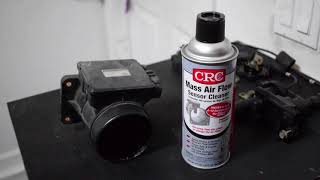
How to confirm: Remove the MAF sensor and visually inspect it for dirt or debris. You can try cleaning it with a dedicated MAF sensor cleaner. 🎬 See this quick guide on cleaning your MAF sensor properly. If cleaning doesn't work, monitor its readings on a scan tool to see if they are erratic or out of range. The service manual specifies a voltage between 1,350 and 1,670 millivolts at normal idle for some models, while other versions state 760 to 1,080 millivolts. Always verify the correct spec for your specific model year.
Typical fix: Clean the sensor with MAF sensor cleaner. If the issue persists, replace the MAF sensor.
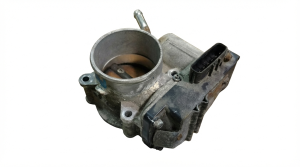
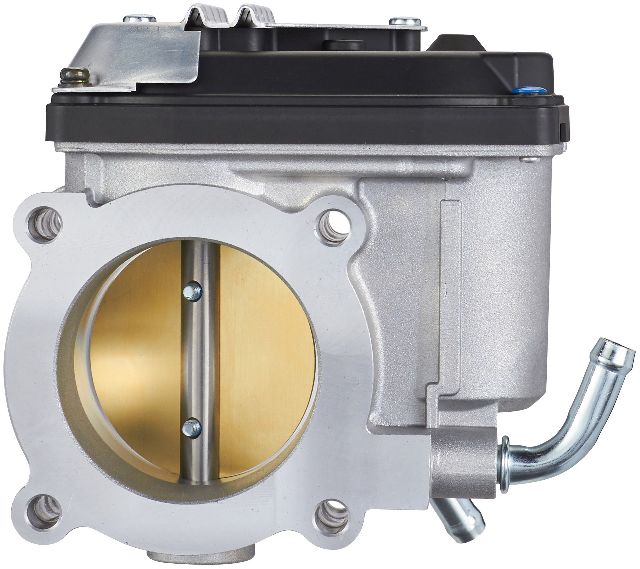
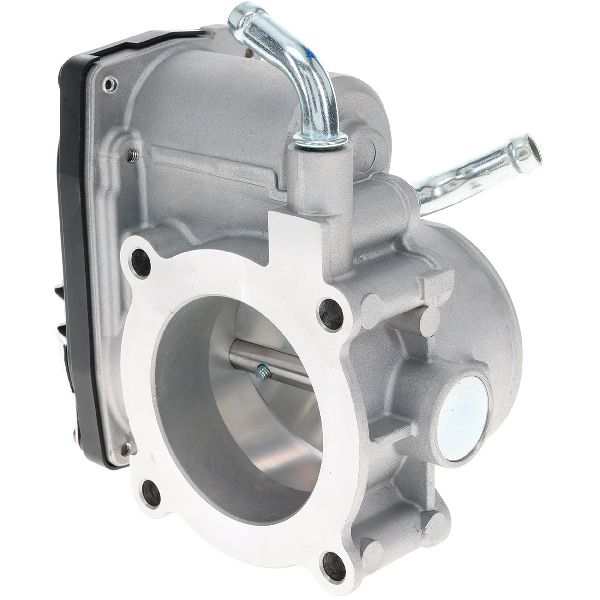
Est. part cost: $15-$250 - Dirty or Sticking Throttle Body 🟡 Medium Probability → Shop Fuel Injection Throttle Body Carbon and oil deposits from the PCV system can build up in the throttle body, creating a greasy, dark-colored material often called 'coke'. This buildup prevents the throttle plate from closing correctly or moving smoothly, causing a mismatch between the throttle position sensor reading and the actual airflow.
How to confirm: Remove the intake hose from the throttle body and inspect for black carbon buildup around the throttle plate and bore.
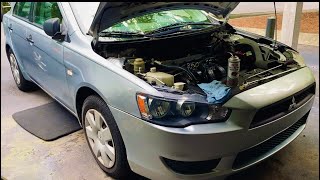
Typical fix: Clean the throttle body thoroughly with throttle body cleaner and a soft cloth. 🎬 Watch: How to clean the throttle body to fix idle issues. A throttle position relearn procedure may be necessary after cleaning, which can sometimes be done by following a specific sequence of key cycles and idling.
Est. part cost: $10-$25
Rare But Worth Checking
- Faulty Manifold Absolute Pressure (MAP) Sensor: → Shop Manifold Absolute Pressure Sensor While less common than MAF issues or leaks, the MAP sensor can fail, providing incorrect pressure readings to the ECM. One owner on a forum replaced both MAF and MAP sensors without fixing the issue, highlighting the importance of diagnosing leaks first.
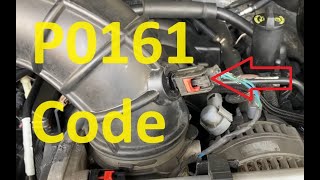
- Loose or Damaged Sensor Wiring: Check the connectors and wiring harnesses for the MAF, MAP, and TPS for any corrosion, looseness, or damage. Some owners have reported fixing the issue by simply unplugging and replugging the sensor connectors, suggesting a poor connection was the culprit.
- Clogged Air Filter: A severely clogged air filter can restrict airflow enough to cause a discrepancy between sensor readings, triggering the code. One owner on a forum noted their air filter box was dirty when they encountered the code.
Diagnosis Steps
- Check for Technical Service Bulletins (TSBs). For 2011-2012 models, TSB-13-13-009 is highly relevant. Confirm with a dealer if the reflash has been performed.
- Visually inspect the entire intake path from the air filter to the throttle body for any obvious loose clamps, cracked hoses, or disconnected lines. Pay close attention to intercooler piping couplers.
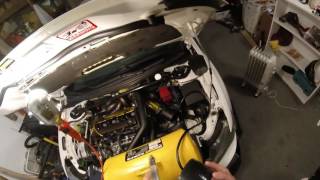
- Perform a boost leak test. 🎬 Watch: How to perform a boost leak test on your Evo. This is more effective than a standard smoke test for a turbocharged car. Pressurize the system to ~20 PSI and listen for hissing, then spray soapy water on all connections to look for bubbles. Common leak points include throttle body shaft seals and injector O-rings.
- Remove, inspect, and clean the Mass Airflow (MAF) sensor using a dedicated MAF sensor cleaner. Do not touch the sensor wires.
- Inspect the throttle body for carbon buildup ('coke'). If dirty, clean it carefully with throttle body cleaner and a soft cloth.
- Using a scan tool with live data, monitor the values from the MAF (g/s), MAP (kPa), and TPS (%) at idle and while revving the engine to see which sensor's data is not correlating with the others.
- Inspect the electrical connectors for the MAF, MAP, and TPS for corrosion or damage. Unplugging and replugging them can sometimes resolve intermittent connection issues.
- If all physical components and wiring are good, and the vehicle is a 2011 or 2012 model, the issue is likely the ECM software, which requires a dealer visit for reprogramming per TSB-13-13-009.
Parts You'll Likely Need
- Mass Airflow (MAF) Sensor Cleaner — Often the first and cheapest step is to clean the MAF sensor, which can become contaminated and cause incorrect readings.
Trusted brands: CRC, Liqui Moly
Aftermarket price range: $10-$20 - Mass Airflow (MAF) Sensor
(OEM #1525A021)— If cleaning does not resolve the issue, the sensor itself may have failed. This is a common failure point leading to P0068.
Trusted brands: Mitsubishi (OEM), Denso
OEM price range: $509
Aftermarket price range: $150-$300 - Manifold Absolute Pressure (MAP) Sensor
(OEM #1865A052)— If MAF and leak checks don't resolve the code, the MAP sensor could be providing faulty data.
Trusted brands: Mitsubishi (OEM), Omni Power
OEM price range: $150-$200
Aftermarket price range: $50-$140 - Throttle Body Gasket
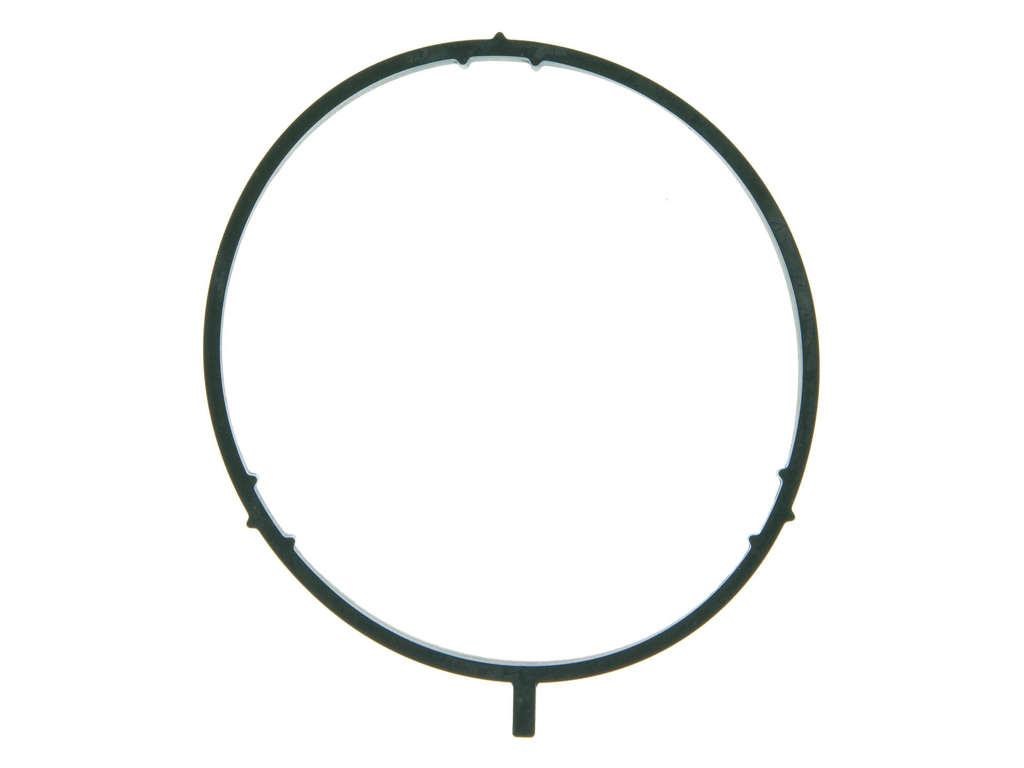
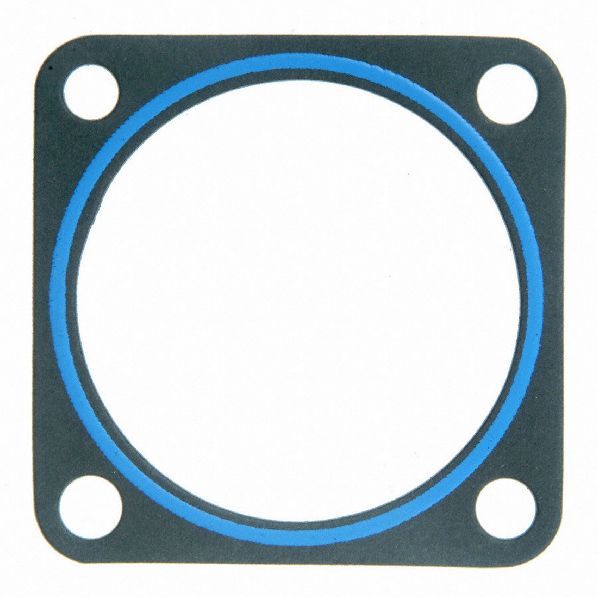
(OEM #MD180361)— This gasket should be replaced whenever the throttle body is removed for cleaning or inspection to prevent vacuum leaks.
Trusted brands: Mitsubishi (OEM), Fel-Pro
OEM price range: $10-$20
Aftermarket price range: $5-$15
Related Codes That Often Appear With This One
- P0171 — If the P0068 code is caused by a vacuum leak, the engine may also run lean, triggering a 'System Too Lean (Bank 1)' code.
- P1235 — On 2008-2010 models, this code for 'Boost/Air Flow Sensor Plausibility' is the equivalent of P0068 on 2011+ models for the same software-related issue described in TSB-13-13-009.
- P0101 — This code for 'Mass Air Flow (MAF) Circuit Range/Performance' can accompany P0068 as both relate to implausible signals from the MAF sensor.
- P0106 — This code for 'Manifold Absolute Pressure (MAP)/Barometric Pressure Circuit Range/Performance' can be triggered alongside P0068 if the MAP sensor is the source of the conflicting data.
Technical Service Bulletins (TSBs) & Recalls
- TSB-13-13-009: Addresses false MIL illumination with DTC P0068 (on 2011-2014 models) or P1235 (on 2008-2010 models) due to an improper software parameter for intake air volume. The fix is an ECM reprogram.
Platform-Specific Known Issues
- A known issue documented in Mitsubishi TSB-13-13-009 affects 2011-2014 Lancer Evolutions, where the ECM may incorrectly store DTC P0068 due to an 'improper intake air volume judgement parameter.' The fix is to have a dealer reprogram the ECM with updated software.
- The code frequently appears on modified cars, particularly after a tune or installation of aftermarket intake parts, suggesting the factory logic is sensitive to airflow changes.
- Owners report the code can be triggered during high-load driving (e.g., track days, multiple wide-open-throttle pulls) or in cold weather, which aligns with the conditions described in TSB-13-13-009.
Mechanic-Grade Diagnostic Values
- Mass Airflow (MAF) Sensor Voltage at Idle — expected: 1,350 - 1,670 millivolts (mV) at normal operating temperature (80-95°C).. Failure: Voltage is significantly outside this range or does not increase smoothly as the engine is revved.
- Mass Airflow (MAF) Sensor g/s at Idle — expected: Approximately 3.0 - 5.6 g/s for a 2.0L engine at warm idle with no loads.. Failure: Readings are significantly lower (suggesting a vacuum leak after the MAF) or higher (suggesting a dirty sensor or restriction).
- Manifold Absolute Pressure (MAP) Sensor Voltage (Key On, Engine Off) — expected: ~4.5 - 5.0 Volts at or near sea level.. Failure: Voltage is significantly lower, indicating a faulty sensor or wiring issue.
- Manifold Absolute Pressure (MAP) Sensor Voltage at Idle — expected: ~1.0 - 1.5 Volts at warm idle.. Failure: Voltage is significantly higher or does not respond to changes in engine load/vacuum.
- Throttle Position Sensor (TPS) Voltage — expected: Smoothly climbs from ~0.5V at closed throttle to ~4.5V at wide-open throttle.. Failure: Voltage jumps, drops out, or does not have a smooth, linear progression as the throttle is opened.
Scan Tool Commands That Help
- Mitsubishi M.U.T.-III: Data List - Item 10: Mass Airflow Sensor — This is the primary function used in the official Mitsubishi diagnostic procedure to check the MAF sensor's output voltage at idle and compare it to the specified range to determine if the sensor is faulty.
- Mitsubishi M.U.T.-III: ECU Reprogramming — Used by dealers to apply the updated software fix as described in TSB-13-13-009 for 2011+ models that are falsely setting P0068 (or P1235 on earlier models) in cold weather.
- ECUFlash / Cobb Accessport: Disable DTC P0068 / Edit Boost Error Correction — Tuners may disable this diagnostic check when aftermarket parts (like intakes or blow-off valves) cause the code to appear despite the car running properly. In one case, a user fixed the code by restoring the 'boost error correction' values that had been zeroed out after installing a 3-port boost controller. This is an advanced user function.
Wiring & Ground Locations
- MAP Sensor ECU Pins — On the main Engine Control Unit (ECU) located under the passenger side carpet/kick panel area.. For advanced diagnosis, you can test the MAP sensor circuit directly at the ECU. Pin 44: Power supply voltage to MAP sensor. Pin 45: MAP sensor signal. Pin 46: MAP sensor ground.
- TPS ECU Pins — On the main Engine Control Unit (ECU).. Allows for checking the Throttle Position Sensor circuit integrity. Pin 12: Power supply to TPS. Pin 10: TPS signal (main). Pin 11: TPS signal (sub). Pin 13: TPS ground.
- MAF Sensor ECU Pin — An ECU pinout diagram for the Evo X shows the MAF sensor signal wire connects to the ECU, but specific pin numbers can vary. A full diagram is needed for confirmation.. A damaged wire or poor connection between the MAF sensor harness and the ECU will cause incorrect readings and trigger P0068.
- Engine Ground G11 — On the left side of the cylinder head, under the throttle cable bracket area.. A poor engine ground can cause erratic behavior and incorrect readings from any sensor referenced to it, including the MAP, MAF, and TPS. Ensuring this ground is clean and tight is a crucial step in diagnosing electrical faults.
Real Owner Repair Stories
- EvolutionM user 'jmorris1027' (2011 Lancer Evolution GSR) — P0068 code appears only at wide-open throttle during a 2-3-4 gear run, not during a single gear pull. Car was tuned to 26 PSI spike.
❌ Tried (didn't work) Initially suspected mods (intake, exhaust, boost controller) or a boost leak.
✅ What actually fixed it The user discovered their 'boost error correction' values had been zeroed out in the ECU tune (using ECUFlash). Restoring these values to default resolved the P0068 code. This happened after installing a Grimmspeed 3-port boost controller. - EvolutionM user '|V8SRSLO' (2012 Lancer Evolution GSR with UICP, LICP, AEM intake, exhaust.) — P0068 code appeared.
❌ Tried (didn't work) The final fix involved two steps, so it's unclear if one alone would have worked.
✅ What actually fixed it The issue was resolved by replacing the MAF sensor and fixing a small boost leak simultaneously. - Reddit user 'PrideApprehensive352' (2014 Lancer Evolution X GSR) — P0068 code, car tries to die when coming to a stop.
❌ Tried (didn't work) Cleaning the MAF sensor., A performance shop found no boost leaks.
✅ What actually fixed it The user reported that cleaning or changing the fuel injectors and cleaning the throttle body resolved the stalling symptoms associated with the code.
"I Checked Everything" — The Actual Cause
- A common scenario for P0068 on Evos is a boost leak from the throttle body shaft seals. This type of leak is notoriously difficult to find with a standard smoke or boost leak test because it may only open up under specific temperature or pressure conditions. Mechanics often find it by spraying soapy water directly on the ends of the throttle body shaft (where the throttle cable wheel and TPS are located) while the system is pressurized, looking for small bubbles.
- An aftermarket blow-off valve (BOV) that vents to atmosphere (VTA) instead of recirculating will almost always cause P0068 on a stock tune. The MAF sensor measures air that the ECU expects to stay in the system. When the VTA BOV releases that metered air, the ECU sees a massive discrepancy between the MAF reading and what the MAP/TPS report, triggering the code. This is not a mechanical fault, but a tuning issue.
Model Year Variations Within This Range
- 2011-2012: These models are specifically called out in TSB-13-13-009 as being prone to setting a false P0068 due to overly sensitive ECM software parameters, especially in cold weather. The official fix is a dealer-installed ECM reflash.
- 2008-2010: These earlier Evo X models will set code P1235 for the exact same software plausibility issue that triggers P0068 on the 2011+ models, as described in TSB-13-13-009.
Helpful Videos

Used OEM Parts in Stock
New Aftermarket Parts Available


The information in this article is provided for general reference and educational purposes only. Vehicle specifications, procedures, and part compatibility can vary by production date, trim level, and region. Always consult your vehicle's factory service manual and verify part numbers before purchasing or performing repairs. Safety-critical components such as airbags, seat belts, and braking systems should be installed by a qualified professional.
- Mitsubishi LANCER EVOLUTION:
- 🧭 Diagnostic Flowchart
- 🎬 Helpful Videos
- 🛍️ Shop This Part
- What's Unique About the 2008-2012 Mitsubishi LANCER EVOLUTION
- Symptoms You May Notice
- Most Likely Causes
- Rare But Worth Checking
- Diagnosis Steps
- Parts You'll Likely Need
- Related Codes That Often Appear With This One
- Technical Service Bulletins (TSBs) & Recalls
- Platform-Specific Known Issues
- Mechanic-Grade Diagnostic Values
- Scan Tool Commands That Help
- Wiring & Ground Locations
- Real Owner Repair Stories
- "I Checked Everything" — The Actual Cause
- Model Year Variations Within This Range
- 🎟️ Get 5% Off