

P0068 on 2011-2014 Mitsubishi Lancer Evolution: MAP/MAF/Throttle Correlation Causes and Fixes
On a 2011-2014 Evo X, P0068 is most often caused by a vacuum/boost leak or an overly sensitive ECU. Check for leaks first, then clean the MAF and throttle body. If no leaks are found, you may need a dealer ECU reflash per TSB-13-13-009, especially if the code appears in cold weather. Many owners of modified cars also experience this code, which may require a tune adjustment.
- For a 2011-2014 Evo X, do not immediately replace sensors. The most likely causes are a vacuum/boost leak or a software issue.
- A smoke test or boost leak test is the most effective way to diagnose the most common cause (leaks).
- Cleaning the MAF sensor and throttle body are inexpensive and easy diagnostic steps you should perform before buying parts.
- If no physical faults are found, be aware of TSB-13-13-009 and consult a dealer about an ECM reflash, as this may be the only solution.
What's Unique About the 2011-2014 Mitsubishi Lancer Evolution
The Lancer Evolution's 4B11T is a turbocharged engine, making it highly sensitive to any leaks in the pressurized intake tract. A small vacuum leak can become a major boost leak under pressure, directly causing the sensor correlation issues that trigger P0068. Critically, for 2011-2014 models, Mitsubishi issued Technical Service Bulletin TSB-13-13-009, which acknowledges that the factory ECM software can be too sensitive and falsely set this code, particularly in cold weather during turbo operation below 3,000 RPM. The official fix in this case is not a part replacement, but an ECM reprogram by a dealer. Owners on forums frequently report this code appearing after installing aftermarket intakes or receiving a new tune, highlighting the ECU's sensitivity.
Symptoms You May Notice
- Check Engine Light is on
- Rough, unstable, or high idle (e.g., ~2200 RPM)
- Engine hesitates or stumbles during acceleration
- Stalling when coming to a stop or during low-speed maneuvers
- Noticeable loss of power
- Car enters 'limp mode' with limited acceleration
- Replacing the MAP or MAF sensor without first performing a thorough vacuum/boost leak test. Leaks are a more common cause of the sensor *reading* incorrectly than the sensor itself being faulty.
- Ignoring the possibility of the TSB-13-13-009 software issue on a stock or lightly modified 2011-2014 vehicle, especially if the code appears in cold weather.
Most Likely Causes
- Vacuum or Boost Leak 🔴 High Probability The 4B11T is a turbocharged engine with many feet of intake piping and hoses. Age, heat, and pressure can cause hoses to crack or connections to loosen. Common leak points include intercooler couplers, vacuum lines, and the blow-off valve (BOV) gasket.
How to confirm: Perform a boost leak test or have a shop perform a smoke test. This involves pressurizing the intake system with low-pressure air or smoke and listening/looking for leaks. Visually inspect all hoses and clamps from the air filter to the throttle body.
Typical fix: Replace the cracked hose or leaking gasket and secure all clamps. Tighten loose intercooler piping clamps.
Est. part cost: $10-$100 - Outdated ECM Software (TSB-13-13-009) 🔴 High Probability Mitsubishi officially acknowledged that the 'intake air volume judgment parameter' was too sensitive on 2011-2014 models, leading to false P0068 codes, especially in cold weather. Forum users confirm this often happens on stock or near-stock cars during spirited driving.
How to confirm: This should be considered after all physical causes like leaks and dirty sensors are ruled out. A Mitsubishi dealer can check your vehicle's software version against the TSB using a MUT-III scan tool.
Typical fix: Dealer reprograms the Engine Control Module (ECM) with updated software.
Est. part cost: $0 (labor cost for reprogramming will apply, typically 1-2 hours) - Dirty Throttle Body 🟡 Medium Probability → Shop Fuel Injection Throttle Body Oil vapor from the PCV system can build up as carbon deposits around the throttle plate, restricting its movement and disrupting airflow at idle and small throttle openings, which directly affects the correlation calculation.
How to confirm: Remove the intake hose connected to the throttle body. Visually inspect the throttle plate and bore for black, sticky carbon buildup.
Typical fix: Clean the throttle body and plate using a dedicated throttle body cleaner and a soft cloth or brush. Do not spray cleaner directly into an attached electronic throttle body; spray it on the cloth.
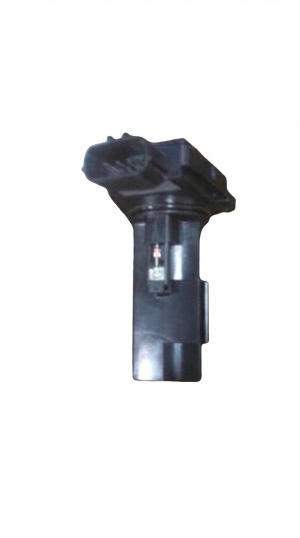
Est. part cost: $5-$15 - Dirty or Faulty Mass Airflow (MAF) Sensor 🟡 Medium Probability → Shop Fuel Injection Air Flow Meter
How to confirm: The MAF sensor's hot wires can become contaminated with dirt or oil (especially with oiled aftermarket air filters like K&N, as mentioned by owners). Visually inspect the sensor wires. Use a scan tool to monitor MAF readings at idle (should be stable) and during a rev (should increase smoothly).
Typical fix: Clean the sensor using dedicated MAF sensor cleaner. If cleaning doesn't work and testing confirms it's faulty, replace the sensor. The OEM part number is MR985187.
Est. part cost: $10 (cleaner) - $250 (OEM sensor)
Rare But Worth Checking
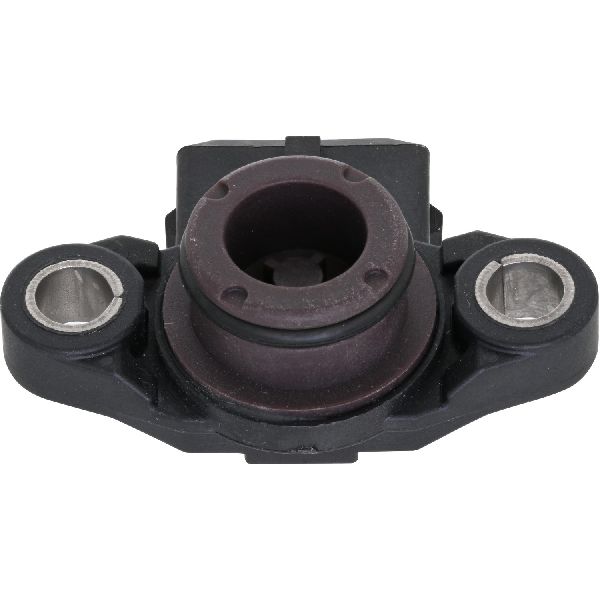
- Faulty Manifold Absolute Pressure (MAP) Sensor: → Shop Manifold Absolute Pressure Sensor While less common than MAF issues or leaks on this platform, the MAP sensor can fail and provide incorrect pressure readings to the ECM, triggering the code. The OEM part number is 1865A052.
- Loose or Damaged Sensor Wiring: A poor electrical connection to the MAF, MAP, or TPS can cause intermittent signal loss, leading to this correlation code. One owner of a similar Mitsubishi model reported fixing the issue by simply unplugging and replugging sensor connectors after hitting a deer.
- Improperly Set ECU Tune Parameters: In the tuning community, it has been discovered that incorrect 'boost error correction' values in a custom tune can trigger P0068 during multi-gear, wide-open-throttle pulls. One owner fixed the code by restoring these values in their tune.
Diagnosis Steps
- Check for Technical Service Bulletins (TSBs). For 2011-2014 models, be aware of TSB-13-13-009 regarding a necessary ECM reflash, especially if the issue occurs in cold weather.
- Perform a thorough visual inspection of the entire air intake system. Look for cracked hoses, loose clamps, or disconnected lines between the air filter box and the intake manifold.
- Perform a vacuum/boost leak test. This is the most critical step for a turbocharged engine. Use a smoke machine or a DIY pressure tester to find any leaks in the intake tract, paying close attention to intercooler couplers.
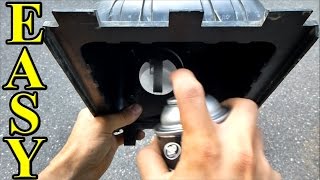
- If no leaks are found, inspect and clean the Mass Airflow (MAF) sensor. Use only dedicated MAF sensor cleaner and do not touch the sensor wires. 🎬 Watch: How to clean your MAF sensor safely Be extra cautious if you have an oiled aftermarket air filter.
- Inspect and clean the throttle body. Remove carbon buildup from the throttle plate and bore using throttle body cleaner. 🎬 See this step-by-step throttle body cleaning guide
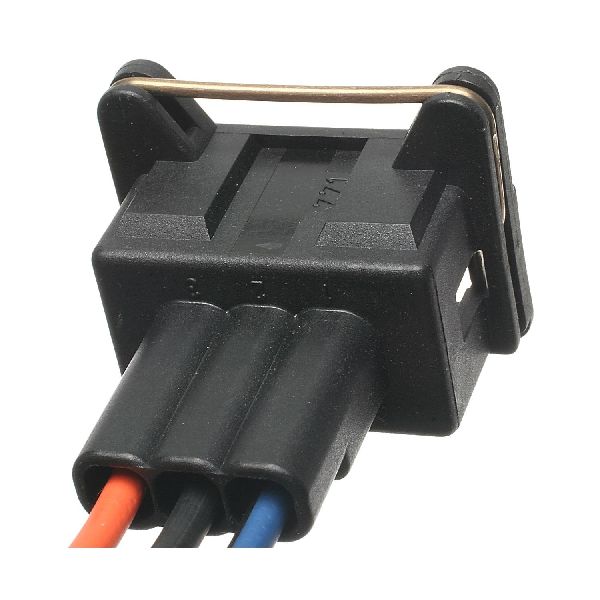
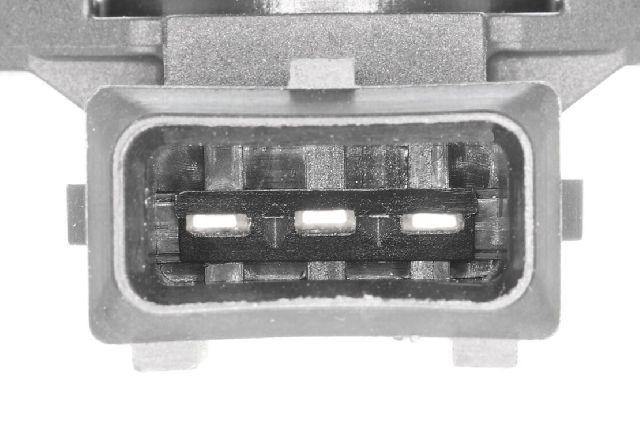
- Check electrical connectors for the MAF, MAP, and Throttle Position sensors. Ensure they are clean, secure, and free of corrosion. Unplugging and replugging them can sometimes re-establish a solid connection.
- Using a scan tool, monitor live data from the MAF, MAP, and TPS sensors at idle and while slowly increasing engine RPM. Look for any values that are erratic or do not change smoothly.
- If the car is modified with a tune, consult your tuner. The issue may be related to specific tune parameters like 'boost error correction' that need adjustment.
- If all physical checks pass and the vehicle is a 2011-2014 model, contact a Mitsubishi dealer to inquire about the ECM reflash mentioned in TSB-13-13-009.
Parts You'll Likely Need
- Mass Airflow (MAF) Sensor Cleaner — Often, the sensor is just dirty, not broken. Cleaning is a cheap and effective first step before considering replacement.
Trusted brands: CRC, Liqui Moly
OEM price range: N/A
Aftermarket price range: $10-$15 - Mass Airflow (MAF) Sensor
(OEM #MR985187)— If cleaning the sensor does not resolve the issue and it is confirmed to be faulty, replacement is necessary. This is a common failure point if contaminated by an over-oiled filter.
Trusted brands: Mitsubishi Genuine, Denso
OEM price range: $250-$500
Aftermarket price range: $40-$150 - Manifold Absolute Pressure (MAP) Sensor
(OEM #1865A052)— A less common but possible cause. This sensor provides critical pressure data to the ECU.
Trusted brands: Mitsubishi Genuine
OEM price range: $220-$315
Aftermarket price range: $50-$150
Technical Service Bulletins (TSBs) & Recalls
- TSB-13-13-009: Addresses an improper intake air volume judgme
Platform-Specific Known Issues
- A key issue is documented in Mitsubishi TSB-13-13-009 for 2011-2014 models, where the ECM may incorrectly store DTC P0068 due to an 'improper intake air volume judgment parameter,' especially in cold weather. The official fix is a dealer-performed ECM reprogram.
- The code is frequently reported by owners of modified cars, particularly after installing an aftermarket tune or intake parts, suggesting the factory ECU logic is highly sensitive to changes in airflow. In some cases, the fix is a tune adjustment rather than a physical part replacement.
Mechanic-Grade Diagnostic Values
- Throttle Position Sensor (TPS) Output Voltage — expected: 0.580 - 0.690 V (580 - 690 mV) at idle/closed throttle. Should increase smoothly to ~4.5V at wide-open throttle.. Failure: Voltage is outside the specified idle range, or the voltage jumps, drops out, or does not change when moving the throttle.
- Manifold Absolute Pressure (MAP) Sensor Voltage (Key On, Engine Off) — expected: Approximately 4.5 - 5.0 V.. Failure: Voltage is significantly lower, indicating a potential sensor or wiring issue.
- Manifold Absolute Pressure (MAP) Sensor Voltage (Engine Idling) — expected: Approximately 1.0 - 1.5 V at normal idle vacuum.. Failure: Voltage is higher than 1.5V (indicating low vacuum/a leak) or lower than 0.5V (indicating a possible short).
- Mass Airflow (MAF) Sensor Voltage (Key On, Engine Off) — expected: Near 0V.. Failure: Any significant voltage reading indicates a sensor fault.
- Mass Airflow (MAF) Sensor Live Data (Evoscan) — expected: At max voltage (5V), the stock MAF should report a value of 41360, which corresponds to ~379 g/s or 50 lb/min of airflow.. Failure: Readings that are erratic or do not correspond logically with engine RPM and load.
Scan Tool Commands That Help
- Mitsubishi M.U.T.-III: Data List - Item 10: Mass Airflow Sensor — This is the official function used in the Mitsubishi diagnostic procedure to check the MAF sensor's output voltage at idle and compare it to the specified range to determine if the sensor is faulty.
- Mitsubishi M.U.T.-III: ECU Reprogramming — This function is required by a dealer to apply the software update specified in TSB-13-13-009, which is a common fix for this code on 2011-2014 models when no physical faults are present.
- Generic OBD-II Scanner / Manual Procedure: Throttle Adaptation Reset / Relearn — After cleaning or replacing the throttle body, the ECU may need to relearn the closed and open positions of the throttle plate. A procedure may involve disconnecting the battery for a period or a specific sequence of key-on/key-off and pedal depressions. If a manual relearn doesn't work, a scan tool with this function may be required.
Wiring & Ground Locations
- ECU Pin 10 — On the main Engine Control Unit (ECU) harness connector, located in the engine bay near the battery.. This is the signal wire for the main Throttle Position Sensor (TPS). A poor connection here can cause incorrect throttle readings.
- ECU Pin 11 — On the main ECU harness connector.. This is the signal wire for the sub Throttle Position Sensor (TPS), used for redundancy and cross-checking.
- ECU Pin 45 — On the main ECU harness connector.. This is the signal wire for the Manifold Absolute Pressure (MAP) sensor.
- ECU Pin 87 — On the main ECU harness connector.. This is the signal wire for the Mass Airflow (MAF) sensor.
- ECU Pin 81 — On the main ECU harness connector.. This is a primary ECM ground. A poor ground connection at this pin can cause erratic behavior and incorrect readings from multiple sensors.
Real Owner Repair Stories
- Car Talk Community User (Mitsubishi Mirage (similar sensor logic)) — Car suddenly started running rough, stalled at a stop sign, and the Check Engine Light came on with code P0068.
❌ Tried (didn't work) Initially, the owner suspected bad gas.
✅ What actually fixed it While at a gas station, the owner opened the hood and unplugged and replugged all accessible sensor connectors around the intake manifold (MAF, MAP, TPS). Upon restarting the car, the Check Engine Light was off and the issue did not return. The suspected cause was a loose electrical connection, possibly from prior unrelated collision repair work. - EvolutionM.net User (2012 Lancer Evolution) — Check Engine Light with P0068 appeared at only 3,000 miles on a stock vehicle.
✅ What actually fixed it The owner pulled over, shut the car off, and restarted it. The code cleared itself and did not immediately return, suggesting an intermittent or software-related glitch consistent with the TSB.
"I Checked Everything" — The Actual Cause
- On 2011-2014 models, if a smoke test and boost leak test come back clean, and the sensors have been cleaned, the root cause is very likely the overly sensitive ECU software mentioned in TSB-13-13-009. This is especially true if the code appears in cold weather. The fix is not a physical part but a dealer reflash of the ECU.
Model Year Variations Within This Range
- 2011-2014: These models are specifically affected by TSB-13-13-009 for the P0068 code due to sensitive ECU software. The fix is a dealer reflash.
- 2008-2010: Earlier Evo X models would set a P1235 code for the identical software plausibility issue that triggers P0068 on the 2011+ models. The TSB also covers this fix for the earlier models under the different code.
Diagnostic Flowchart
Other Known Issues on This Vehicle
Issues unrelated to this code that are worth knowing about as an owner of this generation:
- Active Yaw Control (AYC) Pump Failure 🔴 High — Very common, especially in colder climates with road salt. The pump is exposed under the car and corrodes, leading to failure often between 30,000-80,000 miles. Many owners relocate the pump to the trunk as a preventative measure.
- Timing Chain Stretch (pre-2012 models) 🔴 High — Common on earlier 2008-2011 models. The ECU can detect stretch and trigger a warning light, but if it stretches excessively or the tensioner fails, it can lead to catastrophic engine damage. Mitsubishi revised the chain design for 2012+ models.
- OEM Clutch Master Cylinder (CMC) Failure 🟠 Medium — The stock plastic CMC is a known weak point, especially when an upgraded, stiffer clutch is installed. It can fail and leave the driver stranded without a functioning clutch. Numerous aftermarket metal replacement/upgrade kits are available.
- Fuel Pump Relay Failure 🟠 Medium — The original grey or black fuel pump relay is prone to failure, which can cause stalling or no-start conditions. It can also cause the engine to run lean and lead to engine damage. An upgraded blue relay is the common fix.
Used vs. New Parts: Buying Guide for This Vehicle
When a used part is the smart pick: Used parts like intake piping, intercoolers, and clamps from a reputable Evo-specific dismantler can be a cost-effective way to fix boost leaks. A used throttle body assembly can also be a viable option if the actuator motor on the original has failed, as they are generally robust.
Donor-vehicle mileage cap: roughly under 80000 miles for the part to have meaningful remaining life.
What to inspect on the donor part:
- For sensors (MAF/MAP): Ask for the VIN of the donor car to verify it's not from a model year with known widespread issues.
- For throttle body: Inspect the connector for any bent pins or corrosion. Manually move the throttle plate (if possible without power) to feel for any binding or roughness.
- For intake hoses/couplers: Squeeze the rubber to check for pliability. Avoid any parts that feel hard, brittle, or show visible dry rot or cracking.
OEM-only on this vehicle (don't cheap out):
- Mass Airflow (MAF) Sensor: While aftermarket options exist, the Evo's ECU is notoriously sensitive. Many forum users report issues with non-OEM MAF sensors causing tuning and drivability problems. Sticking with a Genuine Mitsubishi or original Denso part is highly recommended to avoid headaches.
- Manifold Absolute Pressure (MAP) Sensor: Similar to the MAF, using a genuine OEM sensor is the safest bet to ensure accurate readings for the ECU.
Aftermarket brands forum-validated for this vehicle:
- Denso (for MAF sensor, as they are the original equipment manufacturer)
Brands owners have reported issues with on this vehicle:
- Generic, unbranded electronic sensors (MAF, MAP, TPS) from online marketplaces are frequently cited as causing more problems than they solve on this platform.
Real Owner Stories
Aggregated from forums and TSBs cited above. Mileages and costs reflect what owners reported in those sources.
2011 Mitsubishi Lancer Evolution GSR 2.0L Turbo
Symptoms: The Check Engine Light (CEL) appeared intermittently after performing full-throttle pulls through several gears.
What fixed it: The owner discovered the cause was 'boost error correction' values being zeroed out in their ECU tune; restoring these values resolved the code.
Source hint: EvolutionM.net: P0068 maf/map tps correlation help
2013 Mitsubishi Lancer Evolution 2.0L Turbo
Symptoms: The car experienced the P0068 code and entered limp mode during a track day. The vehicle only had a K&N drop-in filter installed.
What fixed it: The issue was triggered by high-load conditions and the sensitivity of the factory airflow logic to the aftermarket filter.
Source hint: EvolutionM.net: Code P0068 help
2011 Mitsubishi Lancer Evolution MR 2.0L Turbo
Symptoms: The code was triggered during spirited driving in cold weather (34°F). The car was nearly stock with only a panel filter drop-in.
What fixed it: This scenario matches TSB-13-13-009, which requires a dealer ECM reprogram to update the intake air volume judgment parameters.
Source hint: EvolutionM.net: P0068 - Stock 2011 MR with Panel Filter Drop In
Related OBD-II Codes
Frequently Asked Questions
Does TSB-13-13-009 apply to my 2011-2014 Mitsubishi Lancer Evolution?
Can an aftermarket air filter cause a P0068 on my Evo X?
What is the specific OEM part number for the MAF sensor if I need to replace it?
Why does my Evo X enter 'limp mode' when this code appears?
I have a custom tune on my 2011 GSR; could that be causing the P0068?
Is the P0068 code common in cold weather for the Lancer Evolution?
Helpful Videos

Used OEM Parts in Stock
New Aftermarket Parts Available


The information in this article is provided for general reference and educational purposes only. Vehicle specifications, procedures, and part compatibility can vary by production date, trim level, and region. Always consult your vehicle's factory service manual and verify part numbers before purchasing or performing repairs. Safety-critical components such as airbags, seat belts, and braking systems should be installed by a qualified professional.
- Mitsubishi Lancer Evolution:
- 🧭 Diagnostic Flowchart
- 🎬 Helpful Videos
- 🛍️ Shop This Part
- What's Unique About the 2011-2014 Mitsubishi Lancer Evolution
- Symptoms You May Notice
- Most Likely Causes
- Rare But Worth Checking
- Diagnosis Steps
- Parts You'll Likely Need
- Technical Service Bulletins (TSBs) & Recalls
- Platform-Specific Known Issues
- Mechanic-Grade Diagnostic Values
- Scan Tool Commands That Help
- Wiring & Ground Locations
- Real Owner Repair Stories
- "I Checked Everything" — The Actual Cause
- Model Year Variations Within This Range
- Other Known Issues on This Vehicle
- Used vs. New Parts: Buying Guide for This Vehicle
- Real Owner Stories
- 2011 Mitsubishi Lancer Evolution GSR 2.0L Turbo
- 2013 Mitsubishi Lancer Evolution 2.0L Turbo
- 2011 Mitsubishi Lancer Evolution MR 2.0L Turbo
- Related OBD-II Codes
- Frequently Asked Questions
- 🎟️ Get 5% Off