

P0068 on 2004-2009 Toyota Prius: MAP/MAF & Throttle Correlation Causes and Fixes
For a 2004-2009 Prius, code P0068 is most often caused by a dirty throttle body or a dirty Mass Airflow (MAF) sensor. Carbon buildup restricts airflow and causes sensor readings to conflict. Cleaning both components is a low-cost, high-success-rate DIY fix (under $25 for cleaners) and usually resolves the issue.
- Start with the simplest fixes: P0068 on a Prius is very often caused by a dirty throttle body or a dirty MAF sensor.
- Purchase a can of MAF sensor cleaner and a can of throttle body cleaner. For under $25 and about an hour of work, you can perform the most likely fix yourself.
- Inspect the air intake hose between the air filter box and throttle body for cracks or loose connections, as this can create a vacuum leak.
- Do not immediately replace sensors. Cleaning is highly effective and much cheaper. Only replace a sensor if cleaning fails and testing confirms it is bad.
- If cleaning doesn't work, the next step is to check for vacuum leaks, which is another common cause.
What's Unique About the 2004-2009 Toyota Prius
The 1NZ-FXE engine in the second-generation Prius is an Atkinson-cycle engine, optimized for fuel efficiency. This design, which holds the intake valve open longer, is highly sensitive to airflow characteristics. The PCV (Positive Crankcase Ventilation) system routes oil vapors and blow-by gases back into the intake manifold. Over time, these vapors bake onto the throttle plate and the inside of the throttle body, creating a sticky carbon buildup ('coke'). This buildup can restrict airflow or prevent the throttle plate from closing to its proper home position, causing the MAF/MAP sensor readings to conflict with what the throttle position sensor is reporting, triggering the P0068 code.
Symptoms You May Notice
- Check Engine Light is on
- Rough or unstable idle
- Hesitation or stumbling during acceleration
- Reduced engine power or 'limp mode'
- Occasional stalling, especially when coming to a stop or at idle
- Decreased fuel economy
- Replacing the throttle position sensor (TPS) by itself. On the Prius, the TPS is integrated into the throttle body assembly and is not typically serviced separately.
- Replacing oxygen sensors. While O2 sensors deal with the air/fuel mixture, they are not the root cause of a P0068 correlation fault, but rather may report a resulting lean/rich condition.
- Assuming the ECU is faulty. ECU failure is extremely rare and should only be considered after all other possibilities have been exhaustively ruled out.
Most Likely Causes
- Dirty Throttle Body 🔴 High Probability → Shop Fuel Injection Throttle Body The PCV system routes oil vapor and crankcase gases into the intake, which bake onto the throttle plate and bore. This buildup restricts airflow and causes the plate to stick or not close properly, leading to a sensor correlation error. This is a very common maintenance item for the Gen 2 Prius.
How to confirm: Remove the air intake hose from the throttle body and visually inspect the throttle plate and bore for a black, greasy or carbon-like buildup. The side facing the intake manifold is usually the dirtiest.
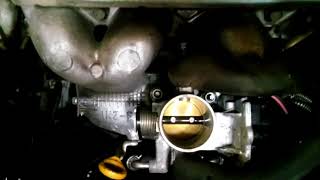
Typical fix: Clean the throttle body thoroughly using a dedicated throttle body cleaner spray and a soft cloth or brush. The throttle plate can be manually rotated to clean all surfaces. This is a common and effective DIY repair. 🎬 See how to properly clean the throttle body on your Prius.
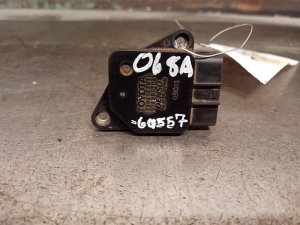
Est. part cost: $10-$15 - Dirty or Faulty Mass Airflow (MAF) Sensor 🔴 High Probability → Shop Fuel Injection Air Flow Meter The MAF sensor's delicate sensing wire is directly in the path of incoming air. A film of dirt, oil, or debris can coat it, insulating the wire and causing it to send inaccurate airflow readings to the ECU.
How to confirm: Visually inspect the MAF sensor wires after removing it (two Phillips screws). They may look dull or coated. The most definitive and cost-effective diagnostic step is to clean it.
Typical fix: Remove the sensor and spray the sensing elements with a dedicated MAF sensor cleaner. 🎬 Watch: A quick guide to cleaning your MAF sensor safely. Do not touch the wires. Allow it to dry completely before reinstalling. If cleaning doesn't work, the sensor may need replacement.
Est. part cost: $10-$15 for cleaner, $70-$150 for a new sensor - Vacuum Leak 🟡 Medium Probability With age, rubber vacuum hoses can become brittle and crack, and intake manifold gaskets can fail, especially in extreme temperatures. This allows un-metered air to enter the engine, which the MAF sensor doesn't see, causing a conflict with MAP sensor readings and often a companion P0171 (System Too Lean) code.
How to confirm: A professional smoke test is the best method. A DIY approach is to carefully spray carburetor cleaner around vacuum lines and intake gaskets with the engine running; a change in engine idle indicates a leak. A known issue on related Toyota engines is the intake manifold gasket failing after cold soaks.
Typical fix: Replace the cracked vacuum hose or failed gasket. Toyota released an updated orange intake manifold gasket (part 17171-22060) for the related 1ZZ-FE engine to fix this issue, replacing the original black one.
Est. part cost: $5-$50 - Clogged Engine Air Filter ⚪ Low Probability
How to confirm: Visually inspect the engine air filter. If it is black, filled with debris, or has not been changed in a long time, it is likely restrictive and can contribute to the airflow correlation error.
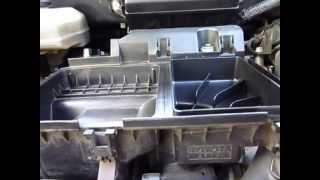
Typical fix: Replace the engine air filter. 🎬 Watch this walkthrough for cleaning the throttle plate and air filter.
Est. part cost: $15-$30
Rare But Worth Checking
- Faulty Manifold Absolute Pressure (MAP) Sensor: → Shop Manifold Absolute Pressure Sensor While less common to fail than the MAF sensor, a faulty MAP sensor can provide incorrect pressure data to the ECU, directly causing a P0068 code. It can be tested with a scan tool for live data.
- Damaged Wiring or Connectors: Check the wiring harnesses for the MAF, MAP, and throttle body for any signs of fraying, corrosion, or loose connections, which can interrupt sensor signals.
Diagnosis Steps
- Read all fault codes with an OBD-II scanner. Note any other codes that are present, especially P0101 or P0171.
- Inspect the air intake system between the air filter and the throttle body for any cracks, loose clamps, or disconnected hoses.
- Inspect and replace the engine air filter if it is dirty or clogged.
- Remove and clean the Mass Airflow (MAF) sensor using dedicated MAF sensor cleaner. Do not use other cleaners and do not touch the sensor wires. Allow it to dry completely before reinstalling.
- Remove the intake boot from the throttle body and clean the throttle plate and bore thoroughly with throttle body cleaner and a soft rag or brush. Manually open the throttle plate to clean the back side and edges.
- After cleaning, clear the codes with the scanner and perform a test drive to see if the code returns.
- If the code persists, check for vacuum leaks. A smoke test is the most effective method. Pay close attention to the intake manifold gasket area.
- Using a scan tool with live data, monitor the voltage/readings from the MAF, MAP, and TPS sensors to check for erratic behavior or readings that are out of specification as the engine RPM changes.
- If a sensor is identified as faulty (e.g., MAF readings don't change with RPM, or TPS voltage jumps erratically), replace that component.
Parts You'll Likely Need
- Mass Airflow (MAF) Sensor Cleaner — Often, the only 'part' needed is a specialty cleaner to restore the function of the existing MAF sensor.
Trusted brands: CRC, WD-40 Specialist
Aftermarket price range: $10-$15 - Throttle Body Cleaner — A dirty throttle body is a primary cause of this code, and a can of cleaner is required to fix it.
Trusted brands: CRC, Gumout
Aftermarket price range: $10-$15 - Mass Airflow (MAF) Sensor
(OEM #22204-22010)— If cleaning the MAF sensor does not resolve the issue, the sensor itself may have failed and requires replacement. The OEM part is made by Denso.
Trusted brands: Denso (OEM)
OEM price range: $110-$150
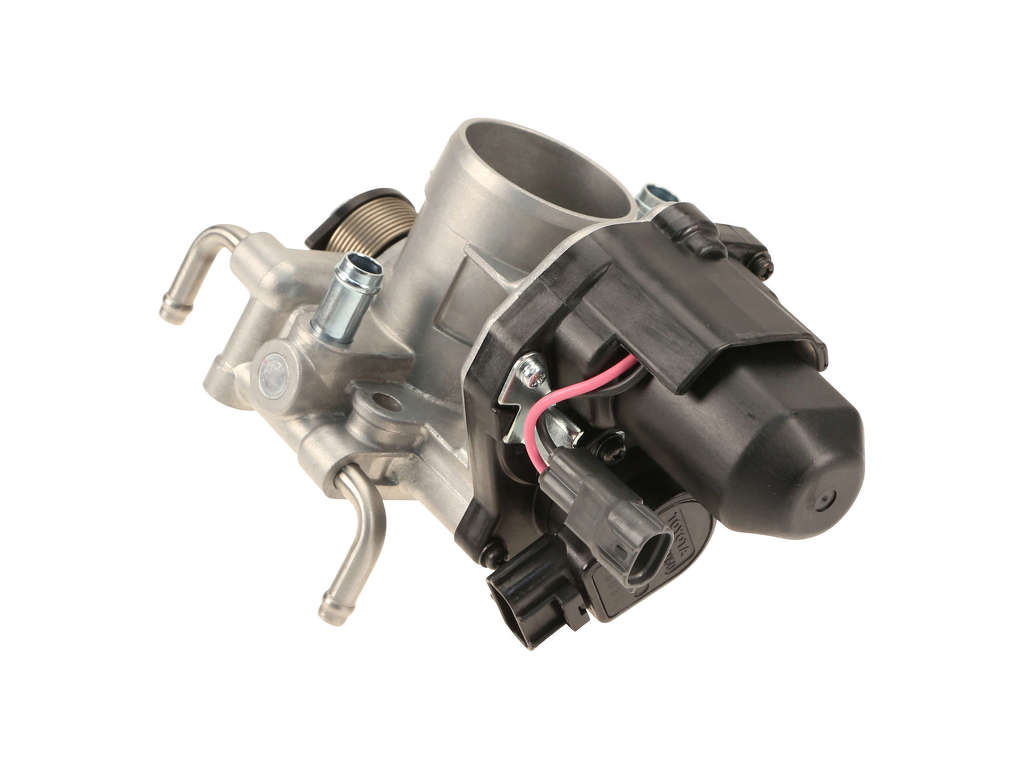
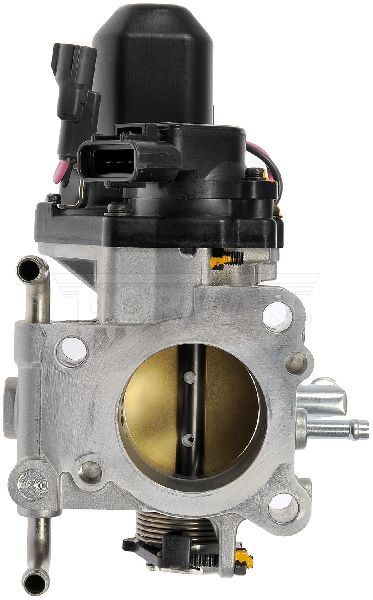
Aftermarket price range: $40-$90 - Throttle Body Assembly
(OEM #22030-21020)— If the throttle body is faulty (e.g., a bad integrated TPS or actuator motor), the entire assembly must be replaced.
Trusted brands: Aisin (OEM), Dorman
OEM price range: $300-$450
Aftermarket price range: $200-$300
Related Codes That Often Appear With This One
- P0101 — This code indicates a MAF Sensor 'Range/Performance' issue. It often appears with P0068 because a dirty or failing MAF sensor is a common cause for both codes.
- P0171 — This code means 'System Too Lean (Bank 1)'. A vacuum leak is a common cause for both P0068 and P0171, as the un-metered air creates a lean condition that the ECU detects. A failing intake manifold gasket is a known cause for this on similar Toyota engines.
Technical Service Bulletins (TSBs) & Recalls
- EG045-07: While not for the Prius specifically, this TSB for the 2003-2008 Corolla/Matrix with the 1ZZ-FE engine addresses a P0171 (Lean) code in subfreezing temperatures caused by a leaking intake manifold gasket. Since P0171 often accompanies P0068 and can be caused by a vacuum leak, this TSB provides strong evidence for checking the intake gasket on a Prius with similar symptoms, especially in cold climates.
Platform-Specific Known Issues
- DIY Throttle Body Cleaning Success Story: → Shop Fuel Injection Throttle Body Multiple owners on PriusChat and in DIY guides confirm that cleaning the gunk from the throttle body is a primary fix. One guide on 'PriusDIY.com' provides a step-by-step pictorial, noting that the job is easy and requires minimal tools like a toothbrush and cleaner to resolve performance issues.
- MAF Sensor Cleaning as First Step: → Shop Fuel Injection Air Flow Meter A thread on PriusChat titled 'Cleaning Mass Airflow Sensor Instructions' details the simple process of removing the two screws, spraying the sensor with dedicated cleaner, and reinstalling. An owner noted that while their sensor looked clean, it's a worthwhile preventative or diagnostic step.
Mechanic-Grade Diagnostic Values
- Throttle Position Sensor (TPS) Voltage — expected: A smooth voltage increase from approximately 0.5V at idle to nearly 5.0V at wide-open throttle.. Failure: Voltage that jumps, drops out, or does not change smoothly when the throttle is opened indicates a faulty sensor.
- Manifold Absolute Pressure (MAP) Sensor Voltage — expected: Approximately 4.5V to 5.0V with Key On, Engine Off (KOEO). Drops to around 1.0V at idle with the engine running.. Failure: Voltage that is stuck high or low, or does not respond to changes in engine load/vacuum, points to a faulty MAP sensor.
- Mass Airflow (MAF) Sensor Live Data (g/s) — expected: At idle, a 1.5L engine should read approximately 1.5 to 2.5 grams/second (g/s). This value should increase steadily with RPM.. Failure: A reading that is stuck, reads unusually low (suggesting a leak downstream), or does not increase with engine speed points to a sensor or wiring issue.
Scan Tool Commands That Help
- Toyota Techstream or equivalent professional scanner: Reset Memory — After cleaning the throttle body or replacing the MAF sensor, performing a 'Reset Memory' function (or disconnecting the 12V battery for several minutes) clears the old learned fuel trims and idle values. This forces the ECU to relearn the new baseline airflow characteristics, preventing high idle or stalling issues.
- Toyota Techstream: Active Test - Control the Throttle Opening Angle — This bidirectional command allows a technician to command the throttle motor to open to specific percentages. It's used to verify the throttle motor is responding correctly and to check if the TPS readings (VTA1, VTA2) correspond accurately to the commanded angle, helping to isolate a faulty throttle body assembly.
Wiring & Ground Locations
- EB, EC — Ground points located on the engine block and in the left side of the engine compartment.. The MAF, MAP, and Throttle Body sensors share common ground circuits that terminate at these points. A corroded or loose ground at EB or EC can introduce voltage offsets and noise into the sensor signals, causing correlation faults like P0068.
- ECM Connector E5, E6 — Located at the Engine Control Module (ECM), which is behind the right side of the dashboard.. Technicians may need to back-probe pins at these connectors to test for voltage and continuity directly from the MAF, MAP, and TPS sensors, verifying the integrity of the wiring harness between the sensors and the ECM.
Real Owner Repair Stories
- PriusChat Forum User (2007 Toyota Prius, 240,000 miles) — Engine suddenly stopped while driving, check engine light and red triangle illuminated. Car would restart but only run for a moment before stalling again. Eventually stayed running enough to limp to a parking lot.
❌ Tried (didn't work) The owner had previously experienced momentary warning lights on a specific curve, which was likely due to low oil level causing the oil pump to suck air, but this was a separate issue from the final stalling problem.
✅ What actually fixed it The dealer diagnosed the issue as a throttle body problem. Given the high mileage and the fact it had never been cleaned, the throttle butterfly and bore were likely corroded and gummed up, preventing free movement. The fix was to replace the entire throttle body assembly.
OEM Part Supersession History
22030-0A020→22030-21020— Part number update and consolidation for various Toyota models.
Heads up: Part number 22030-21020 is the correct and final part for the 2004-2009 Prius. While other throttle bodies may look similar, using the incorrect part can cause idle and performance issues.
Diagnostic Flowchart
Other Known Issues on This Vehicle
Issues unrelated to this code that are worth knowing about as an owner of this generation:
- Hybrid Battery (HV) Degradation / Failure 🔴 High — Common after 8-10 years or 100,000-150,000 miles. Lifespan is affected by age, climate, and driving cycles. Failure often presents as a P0A80 code.
- Combination Meter (Speedometer) Failure 🟠 Medium — A very common issue where the dashboard display goes blank. It can also cause issues like the car not turning off. It is typically caused by a single failed capacitor on the circuit board.
- Excessive Oil Consumption 🟠 Medium — Many owners report oil consumption of up to a quart every 1,000-2,500 miles, especially on higher mileage (120k+ miles) engines. This is often attributed to piston rings getting stuck with carbon deposits. A faulty PCV valve can also be a contributing factor.
- Inverter Coolant Pump Failure 🔴 High — The electric pump that cools the hybrid system's inverter is a known failure point. Failure can cause the hybrid system to shut down, triggering a P0A93 code and master warning light. Toyota issued a recall for this component. (Ref: Toyota Safety Recall (specific number varies by region))
- Brake Actuator Assembly Failure 🔴 High — The ABS pump/actuator can fail, leading to a soft brake pedal, loud pump noises, and warning lights. This is an expensive repair.
Used vs. New Parts: Buying Guide for This Vehicle
When a used part is the smart pick: A used throttle body assembly from a reputable auto recycler or junkyard is a very sensible and cost-effective option, especially if the dealer quotes a high price for a new one. Since the common failure is often electronic or severe wear, a used part from a lower-mileage donor is a good gamble.
Donor-vehicle mileage cap: roughly under 150000 miles for the part to have meaningful remaining life.
What to inspect on the donor part:
- Check for a clean throttle plate and bore; excessive carbon buildup suggests a poorly maintained donor vehicle.
- Ensure the electrical connector is not damaged or corroded.
- Ask for the donor vehicle's mileage if possible; lower is always better.
- Verify the part number (22030-21020) matches.
OEM-only on this vehicle (don't cheap out):
- Mass Airflow (MAF) Sensor
Aftermarket brands forum-validated for this vehicle:
- Denso (for MAF Sensor - this is the OEM supplier)
- Aisin (for Throttle Body - this is the OEM supplier)
Brands owners have reported issues with on this vehicle:
- Unnamed, ultra-cheap MAF sensors from online marketplaces. Forum users report these often fail quickly or are dead on arrival. Sticking with the OEM Denso brand is highly recommended for the MAF sensor.
Real Owner Stories
Aggregated from forums and TSBs cited above. Mileages and costs reflect what owners reported in those sources.
2004-2009 Toyota Prius 1.5L 1NZ-FXE
Symptoms: Performance issues and gunk buildup in the throttle body.
What fixed it: Cleaned the throttle body using a toothbrush and dedicated cleaner following a step-by-step pictorial guide.
Source hint: PriusDIY.com guide mentioned in vehicle_specific_issues
2004-2009 Toyota Prius 1.5L 1NZ-FXE
Symptoms: Drivability problems and airflow-related codes; the sensor looked clean but was suspected as the cause.
What fixed it: Removed two screws, sprayed the MAF sensor with dedicated cleaner, and reinstalled it.
Source hint: PriusChat thread 'Cleaning Mass Airflow Sensor Instructions'
2004-2009 Toyota Prius 1.5L 1NZ-FXE — ~150000 miles
Symptoms: High-mileage oil consumption and potential for intake deposits due to the PCV system design.
What fixed it: Routine maintenance including throttle body cleaning to address buildup caused by the Atkinson cycle and PCV system.
Source hint: PriusChat thread '2nd Gen Prius oil consumption and preventative maintenance suggestion'
Related OBD-II Codes
Frequently Asked Questions
Does TSB EG045-07 apply to my 2004-2009 Prius if I have a P0068 code?
Is there a specific part number for an updated intake manifold gasket to fix vacuum leaks on this engine family?
Why does the Gen 2 Prius throttle body get dirty enough to cause a P0068 code?
Can I use any cleaner to fix the MAF sensor on my 2004-2009 Prius?
What are the common symptoms of a dirty throttle body on a 1.5L 1NZ-FXE engine?
Helpful Videos

Used OEM Parts in Stock
New Aftermarket Parts Available


The information in this article is provided for general reference and educational purposes only. Vehicle specifications, procedures, and part compatibility can vary by production date, trim level, and region. Always consult your vehicle's factory service manual and verify part numbers before purchasing or performing repairs. Safety-critical components such as airbags, seat belts, and braking systems should be installed by a qualified professional.
- Toyota Prius:
- 🧭 Diagnostic Flowchart
- 🎬 Helpful Videos
- 🛍️ Shop This Part
- What's Unique About the 2004-2009 Toyota Prius
- Symptoms You May Notice
- Most Likely Causes
- Rare But Worth Checking
- Diagnosis Steps
- Parts You'll Likely Need
- Related Codes That Often Appear With This One
- Technical Service Bulletins (TSBs) & Recalls
- Platform-Specific Known Issues
- Mechanic-Grade Diagnostic Values
- Scan Tool Commands That Help
- Wiring & Ground Locations
- Real Owner Repair Stories
- OEM Part Supersession History
- Other Known Issues on This Vehicle
- Used vs. New Parts: Buying Guide for This Vehicle
- Real Owner Stories
- 2004-2009 Toyota Prius 1.5L 1NZ-FXE
- 2004-2009 Toyota Prius 1.5L 1NZ-FXE
- 2004-2009 Toyota Prius 1.5L 1NZ-FXE — ~150000 miles
- Related OBD-II Codes
- Frequently Asked Questions
- 🎟️ Get 5% Off