

P0069 on 2011-2018 Volkswagen Jetta: MAP/BARO Correlation Causes and Fixes
On a 2011-2018 VW Jetta, code P0069 is most often caused by a faulty Manifold Absolute Pressure (MAP) sensor. Before replacing it, check for engine computer software updates from a VW dealer, as this is a known issue. A new MAP sensor costs between $40 and $120. On 2.5L engines, a failed PCV valve is a very common root cause that fouls the MAP sensor with oil.
- P0069 on your Jetta means the MAP sensor and internal BARO sensor readings don't agree, usually pointing to a bad MAP sensor.
- Before replacing any parts, ask a VW dealer if there is an ECM software update for your VIN, as this can be a cheap and easy fix.
- If you have a 2.5L engine and the MAP sensor is oily, you MUST also fix the PCV system to solve the problem permanently.
- The diagnostic starting point is to check live data with a scan tool: with the key on and engine off, MAP and BARO pressures should be almost identical.
What's Unique About the 2011-2018 Volkswagen Jetta
On this generation of Volkswagen Jetta, the Barometric Pressure (BARO) sensor is typically not a separate, replaceable part; its function is integrated within the Engine Control Module (ECM) itself. Therefore, the problem is almost always with the external Manifold Absolute Pressure (MAP) sensor, its wiring, or the ECM's software calibration. Volkswagen has been known to release software updates to fix overly sensitive monitoring that can falsely trigger correlation codes like P0069. On Jettas with the 2.5L engine, a failing PCV valve is a frequent cause of MAP sensor contamination and failure, an issue so common that it is often misdiagnosed by shops who replace the sensor without fixing the underlying PCV issue.
Generation note: The 2011-2018 model year range covers the Volkswagen Jetta A6 (Mark 6) generation. The causes and fixes are generally consistent across the different engines available in this generation (e.g., 1.4T, 1.8T, 2.0T, 2.5L, TDI), though the exact location of the MAP sensor varies by engine. For example, on the 2.5L, it's on the intake manifold behind the throttle body, while turbocharged engines like the 1.8T Gen3 may have it on the intake tract between the intercooler and throttle body.
Symptoms You May Notice
- Check Engine Light is on
- Reduced engine power and sluggish acceleration
- Hesitation during acceleration
- Rough or unstable idle
- Decreased fuel economy
- Difficulty starting the engine
- Occasional stalling at low speeds
- Replacing the MAP sensor multiple times without addressing a faulty PCV valve on a 2.5L engine, leading to repeat failures from oil contamination.
- Searching for a separate Barometric Pressure (BARO) sensor to replace, when it is actually integrated into the ECM on this vehicle.
- Replacing the MAP sensor when only an ECM software update was needed to adjust the monitoring sensitivity.
- On the 2.5L engine, accidentally swapping the physically identical MAP sensor (G71) and the Secondary Air Injection (SAI) pressure sensor.
Most Likely Causes
- Faulty Manifold Absolute Pressure (MAP) Sensor 🔴 High Probability → Shop Manifold Absolute Pressure Sensor On turbocharged models (1.4T, 1.8T, 2.0T), the sensor is exposed to boost pressure and oil vapors from the PCV system, which can lead to contamination and failure. On the 2.5L engine, a known PCV valve issue can cause oil to foul the sensor, leading to repeat failures if the PCV is not also replaced.
How to confirm: With the key on and engine off, use an OBD-II scanner to view live data. The MAP sensor reading should be very close to the BARO sensor reading (often displayed as 'Atmospheric Pressure'). At sea level, this is approximately 101 kPa or 14.7 PSI. If they differ by more than 1.0 psi or ~7 kPa, the MAP sensor is likely faulty. Visually inspect the sensor for oil contamination when removed; this is a very common failure sign on the 2.5L engine.
Typical fix: Replace the MAP sensor. On the 2.5L engine, it is critical to also inspect and likely replace the PCV valve to prevent the new sensor from failing.
Est. part cost: $40-$120 - Outdated Engine Control Module (ECM) Software 🟡 Medium Probability → Shop Engine Control Module (ECM) Volkswagen has released Technical Service Bulletins (TSBs) for the related code P0106 on 2.5L engines, addressing overly sensitive monitoring logic with a software update. This same logic can trigger P0069, making a software check a crucial diagnostic step before replacing parts.
How to confirm: A Volkswagen dealer or a specialized shop with the proper tools (like ODIS) can check your vehicle's VIN against available software updates. TSB 01-14-23 (also listed as 2034012) specifically addresses this for 2011-2014 2.5L engines.
Typical fix: Update the ECM software. This must be done by a dealer or qualified independent shop.
Est. part cost: $0-$200 (cost varies by dealer, may be covered under emissions warranty) - Vacuum or Boost Leak 🟡 Medium Probability Plastic vacuum lines, intake hoses, and intercooler piping become brittle with age and heat cycles. A cracked hose, loose clamp, or a failed PCV valve assembly can create leaks in the intake system that throw off pressure readings.
How to confirm: Visually inspect all vacuum hoses connected to the intake manifold for cracks or loose fittings. A smoke test is the most effective way to find hard-to-see leaks. Listen for hissing sounds in the engine bay.
Typical fix: Replace the cracked hose or leaking gasket. The PCV valve assembly is a common point of failure and a known source of vacuum leaks on these engines.
Est. part cost: $10-$150 - Damaged Wiring or Connector ⚪ Low Probability The wiring harness to the MAP sensor is exposed to engine heat and vibration, which can cause wires to fray or the connector to become brittle and develop corrosion over time. Pigtail damage near the connector is a known issue on this platform.
How to confirm: Visually inspect the MAP sensor connector and its wiring for any signs of damage, corrosion, or loose pins. Use a multimeter to check for the correct voltage (typically a 5V reference), ground, and signal continuity back to the ECM.
Typical fix: Repair the damaged section of wiring or replace the connector pigtail.
Est. part cost: $15-$50
Rare But Worth Checking
- Clogged Air Filter: → Shop Air Cleaner Assembly A severely restricted air filter can alter the pressure within the intake system enough to contribute to a correlation fault, especially under load. Always check this simple item first.
- Faulty Engine Control Module (ECM): → Shop Engine Control Module (ECM) This is very rare. The internal barometric sensor can fail, or the module's processing can be faulty. This should only be considered after all other possibilities, including software updates, have been exhaustively ruled out.
- Clogged Catalytic Converter: A severely clogged exhaust can create backpressure that affects intake manifold pressure readings, potentially contributing to this code. This is usually accompanied by a significant loss of power and other exhaust-related codes like P0420.
Diagnosis Steps
- Scan for Codes: Use an OBD-II scanner to confirm P0069 is the primary code. Note any other codes present, especially P0106 or P0507.
- Check Live Data (KOEO): With the Key On, Engine Off, view the live data for the MAP and BARO sensors. The pressure readings should be nearly identical (within 1.0 psi or ~7 kPa). If they differ significantly, the MAP sensor is the primary suspect.
- Check for Software Updates: Contact a VW dealer with your VIN to see if any ECM software updates related to MAP sensor performance or code P0069/P0106 are available. Reference TSB 01-14-23 for 2.5L models.
- Inspect Air Filter: Check the engine air filter to ensure it is not severely clogged, as this can restrict airflow and affect pressure readings.
- Inspect MAP Sensor and Wiring: Visually inspect the MAP sensor, its electrical connector, and nearby wiring for any obvious damage, corrosion, or oil contamination. Pay close attention to the pigtail for frayed wires right at the connector.
- Inspect for Vacuum Leaks: Carefully check all vacuum lines, the air intake boot, and the PCV system for cracks, loose connections, or damage. A smoke test is highly effective for finding hidden leaks.
- Replace MAP Sensor: If the live data check failed or the sensor is contaminated with oil (especially on a 2.5L), replace the MAP sensor. If oil is present on a 2.5L, also replace the PCV valve assembly to prevent a repeat failure.
- Clear Code and Test Drive: After any repair, clear the code with the scanner and perform a test drive to ensure the code does not return.
Parts You'll Likely Need
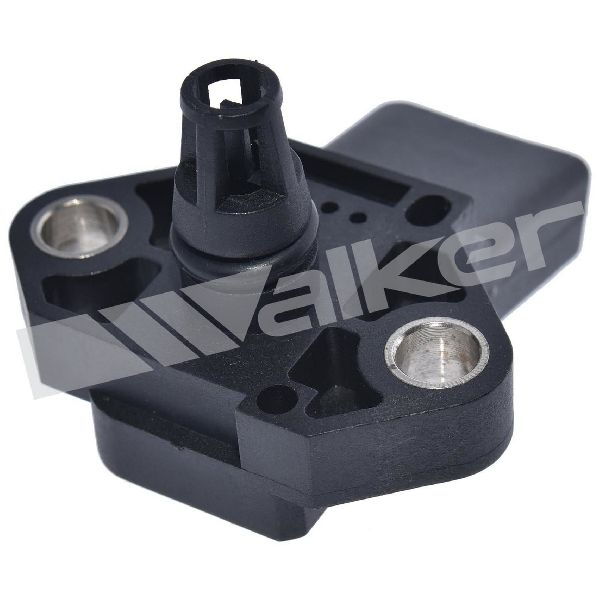
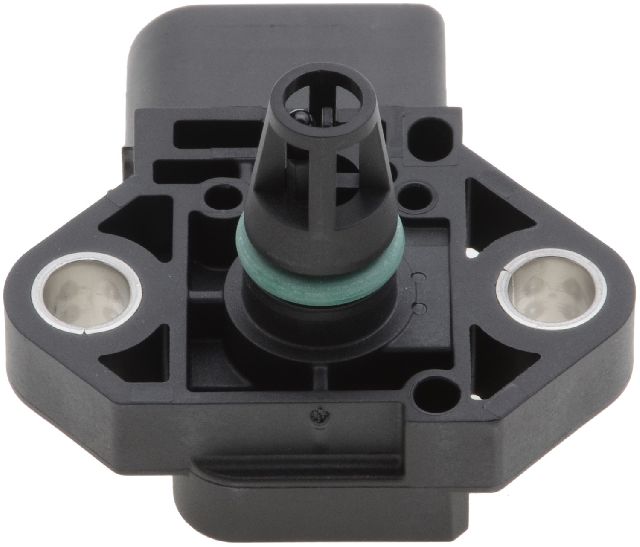
- Manifold Absolute Pressure (MAP) Sensor
(OEM #03C906051F (For many TSI engines, verify by VIN), 07C906051 (For some 2.5L engines, verify by VIN))— This sensor is the most common point of failure for code P0069, either through electronic malfunction or contamination.
Trusted brands: Bosch, Delphi, NTK
OEM price range: $80-$150
Aftermarket price range: $40-$90 - PCV Valve / Oil Separator (for 2.5L Engine)
(OEM #07K103469L, 07K103469M (verify by VIN))— On the 2.5L engine, the diaphragm in this valve commonly fails, causing excessive crankcase vacuum and oil to be sucked into the intake, fouling the MAP sensor. It should be replaced along with an oil-fouled MAP sensor.
Trusted brands: Volkswagen (OEM), Vaico, URO Parts
OEM price range: $100-$180
Aftermarket price range: $50-$100
Related Codes That Often Appear With This One
- P0106 — This code for 'MAP/Barometric Pressure Circuit Range/Performance Problem' is very similar and often shares the same root causes, including a faulty MAP sensor, vacuum leaks, or the need for an ECM software update. TSB 01-14-23 directly addresses P0106.
- P0507 — This code for 'Idle Control System RPM Higher than Expected' can be caused by a vacuum leak, which is also a primary cause for P0069. The same TSB that addresses P0106 also covers this idle control code.
- P0107 — This code for 'MAP/BARO Sensor Circuit Low Input' points directly to an electrical fault like a short to ground or a bad sensor, which would also cause the correlation check for P0069 to fail.
- P0108 — This code for 'MAP/BARO Sensor Circuit High Input' indicates an electrical fault like a short to power or an internally shorted sensor, which would also cause the P0069 correlation failure.
Technical Service Bulletins (TSBs) & Recalls
- TSB 01-14-23 / TPI 2034012: While specifically for P0106 on 2.5L engines, it addresses MAP sensor correlation issues via an ECM software update, which is relevant to P0069. It also covers idle codes P0507 and P050A.
Platform-Specific Known Issues
- On Jettas with the 2.5L engine, a failed PCV valve diaphragm is a very common issue that leads to oil contamination of the MAP sensor, causing codes P0106 and P0069.
- For some 2.5L engines, TSB 01-14-23 addresses P0106 and related idle codes with an ECM software update, which can also resolve P0069.
- On the 2.5L engine, the MAP sensor (G71) and the Secondary Air Injection (SAI) pressure sensor can be physically identical and easily mixed up during repairs, leading to persistent codes.
Mechanic-Grade Diagnostic Values
- MAP Sensor (G71) 5V Reference Wire Voltage — expected: ~5.0 Volts DC with Key On, Engine Off (KOEO). Failure: A reading of 0V indicates an open in the power wire from the ECM. A reading significantly less than 5V indicates high resistance.
- MAP Sensor (G71) Signal Wire Voltage (KOEO) — expected: ~4.5 - 5.0 Volts DC, reflecting atmospheric pressure.. Failure: A low voltage reading with the engine off could indicate a sensor or wiring issue.
- MAP Sensor (G71) Signal Wire Voltage (Engine Idling) — expected: 1.0 - 2.0 Volts DC.. Failure: Voltage that is too high or does not change with throttle input suggests a faulty sensor or vacuum leak.
- MAP Sensor (G71) Ground Wire — expected: Continuity to a known good chassis or engine ground (less than 1 ohm resistance).. Failure: High resistance or an open circuit indicates a bad ground, which can cause incorrect sensor readings.
Scan Tool Commands That Help
- VCDS (VAG-COM) or ODIS: Live Data Blocks (e.g., Engine > Measuring Blocks) — Use with Key On, Engine Off to directly compare the Manifold Pressure (from G71 MAP sensor) and the Atmospheric Pressure (from the sensor in the ECM). They should be nearly identical. This is the primary diagnostic step for P0069.
Wiring & Ground Locations
- G71 — The MAP sensor itself. On the 2.5L, it is on the intake manifold behind the throttle body. On 1.8T/2.0T Gen3 engines, it's often on the intake manifold or on the charge pipe before the throttle body.. This is the primary sensor being tested by the P0069 fault code.
- Ground Point 15 — On the cylinder head (for 2.5L engines).. This is a primary grounding location for many engine sensors. A loose or corroded ground here can affect the MAP sensor's circuit integrity and cause incorrect readings.
- Main Engine Bay Ground — Typically located on the chassis frame rail, often near the battery tray or on the bulkhead behind the battery.. A poor main ground connection can cause floating voltages and unpredictable behavior in multiple electronic systems, including engine sensors.
Real Owner Repair Stories
- YouTube video from 'MattsAPlusCarCare' (2012 VW Jetta 2.5L) — Check Engine Light with codes P0106 (MAP Sensor Implausible Signal) and P3078 (Throttle Control Airflow at Idle too Low). The video also mentions that a bad MAP sensor can cause hard transmission shifting.
✅ What actually fixed it The MAP sensor was heavily contaminated with oil. The fix was to clean the throttle body and replace the oil-fouled MAP sensor. The video explicitly states that oil buildup is what causes these sensors to fail.
OEM Part Supersession History
07K103469D, 07K103469F→07K103469L, 07K103469M, 07K103469N— Revisions to the PCV valve/valve cover assembly for the 2.5L engine to improve durability of the internal diaphragm.
Heads up: While the assemblies are generally interchangeable, it is best practice to use the latest available revision for your specific model year to ensure the longest service life.
Model Year Variations Within This Range
- 2011-2014: The 2.5L 5-cylinder engine was a common offering. These models are particularly susceptible to the PCV valve failure causing oil contamination of the MAP sensor.
- 2014-2018: The 2.5L engine was phased out and replaced by the 1.8T 4-cylinder turbocharged engine as a primary option. Later, a 1.4T engine became the new base model engine. While these turbo engines can still suffer from MAP sensor failures, the root cause is less likely to be the specific PCV diaphragm failure seen on the 2.5L.
- 2016+: The base 2.0L naturally aspirated engine was replaced by a 1.4L turbocharged engine, making turbo-related components (and potential boost leaks) relevant to more of the vehicle lineup.
Diagnostic Flowchart
Other Known Issues on This Vehicle
Issues unrelated to this code that are worth knowing about as an owner of this generation:
- Timing Chain Tensioner Failure (TSI Engines) 🔴 High — Common on pre-2013 2.0T TSI (EA888 Gen1/2) engines. Can occur at any mileage, often without warning. Failure is catastrophic for the engine. (Ref: Multiple lawsuits led to a settlement, but no formal recall. TSB 15-12-01 exists for this issue.)
- Leaking Water Pump / Thermostat Housing (TSI Engines) 🟠 Medium — Very common across 1.4T, 1.8T, and 2.0T engines due to the plastic housing cracking from heat cycles. Often fails between 50,000 and 100,000 miles. (Ref: Class-action lawsuits have led to extended warranties for this component on certain model years.)
- Clogged Heater Core 🟠 Medium — A notorious issue on the MK6 platform, especially TDI models, but affects all engines. Coolant sediment clogs the core, resulting in no heat, particularly on the passenger side. Can occur under 100,000 miles.
- High Oil Consumption (1.8T/2.0T EA888 Gen2) 🟠 Medium — Common on earlier Gen2 TSI engines (approx. before 2014) due to piston ring design. Can lead to needing to add oil every 1,000-1,500 miles. (Ref: Subject of class-action lawsuits.)
- Failing PCV Valve (All Engines) 🟠 Medium → Shop PCV Valve — The PCV diaphragm is a common failure point across all engines (2.5L, TSI models). Leads to vacuum leaks, rough idle, and oil leaks. It's a direct cause of P0069 on the 2.5L.
- Failing Airbag Clockspring 🔴 High — Common enough to trigger a recall and subsequent investigation for failed recalls. Disables the driver's airbag, horn, and steering wheel controls. (Ref: NHTSA Recall 15V483)
Used vs. New Parts: Buying Guide for This Vehicle
When a used part is the smart pick: For this repair, using a used part is generally not recommended for the sensors or the PCV valve. The cost savings are minimal compared to the risk of the used part failing quickly. A used wiring pigtail from a junkyard could be a viable option if a new one is unavailable or prohibitively expensive, provided the wires and connector are in excellent condition.
Donor-vehicle mileage cap: roughly under 60000 miles for the part to have meaningful remaining life.
What to inspect on the donor part:
- For a wiring pigtail: check for any brittleness, cracking, or corrosion on the connector housing and pins.
- Ensure there is at least 6-8 inches of wire attached to allow for proper splicing.
- Avoid parts from vehicles with signs of engine fire, flood damage, or major front-end collision.
OEM-only on this vehicle (don't cheap out):
- PCV Valve / Oil Separator Assembly: Aftermarket versions for the 2.5L engine have a high failure rate according to owner forums. Using a Genuine VW part is strongly recommended to avoid repeat repairs.
Aftermarket brands forum-validated for this vehicle:
- MAP Sensor: Bosch is the Original Equipment Manufacturer (OEM) and is a reliable choice. NTK and Delphi are also reputable sensor manufacturers.
Brands owners have reported issues with on this vehicle:
- Unbranded, low-cost MAP sensors and PCV valves from online marketplaces often have poor quality control and may fail prematurely or be inaccurate out of the box.
Real Owner Stories
Aggregated from forums and TSBs cited above. Mileages and costs reflect what owners reported in those sources.
2012 Volkswagen Jetta 2.5L — ~115000 miles
Symptoms: Check Engine Light was on with a P0106 code, which is closely related to P0069. The car had a rough, unstable idle.
What fixed it: The root cause was a failed PCV valve that was leaking oil onto the MAP sensor. Replacing both the PCV valve assembly and the oil-fouled MAP sensor fixed the problem permanently. Just replacing the sensor alone would not have worked.
Source hint: Reddit - r/MechanicAdvice - 'FIX: MAP Sensor (DTC P0106) for VW 2.5L 5-Cylinder Engine'
2011 Volkswagen Jetta 2.5L
Symptoms: Persistent P0069 and P0106 codes that would not clear even after a new MAP sensor was installed.
What fixed it: It was discovered that during a previous repair, the physically identical MAP sensor and Secondary Air Injection (SAI) pressure sensor had been accidentally swapped. Putting the correct sensors in their proper locations resolved the codes.
Source hint: Ross-Tech Wiki - '16490/P0106/000262'
2014 Volkswagen Jetta 2.5L
Symptoms: Check Engine Light on with codes P0106 and P0507 for MAP sensor correlation and high idle.
What fixed it: After confirming no vacuum leaks or sensor issues, a Volkswagen dealer updated the ECM software per TSB 01-14-23. This corrected the overly sensitive monitoring logic and the codes did not return.
Cost: $0-$200
Source hint: TSB 01-14-23 / TPI 2034012
Related OBD-II Codes
Frequently Asked Questions
My 2.5L Jetta has code P0069. I replaced the MAP sensor, but the light came back on. What did I miss?
Is there a software update or TSB for the P0069 code on my 2013 Jetta 2.5L?
How can I test the MAP sensor on my Jetta before buying a new one?
I'm working on my Jetta 2.5L and see two identical-looking sensors. How do I know which one is the MAP sensor?
Why is P0069 a common issue on the turbocharged (1.4T, 1.8T, 2.0T) Jetta engines?
Could a simple cracked hose cause the P0069 code and poor performance on my Jetta?
We Have This Part in Stock

The information in this article is provided for general reference and educational purposes only. Vehicle specifications, procedures, and part compatibility can vary by production date, trim level, and region. Always consult your vehicle's factory service manual and verify part numbers before purchasing or performing repairs. Safety-critical components such as airbags, seat belts, and braking systems should be installed by a qualified professional.
- Volkswagen Jetta:
- 🧭 Diagnostic Flowchart
- 🛍️ Shop This Part
- What's Unique About the 2011-2018 Volkswagen Jetta
- Symptoms You May Notice
- Most Likely Causes
- Rare But Worth Checking
- Diagnosis Steps
- Parts You'll Likely Need
- Related Codes That Often Appear With This One
- Technical Service Bulletins (TSBs) & Recalls
- Platform-Specific Known Issues
- Mechanic-Grade Diagnostic Values
- Scan Tool Commands That Help
- Wiring & Ground Locations
- Real Owner Repair Stories
- OEM Part Supersession History
- Model Year Variations Within This Range
- Other Known Issues on This Vehicle
- Used vs. New Parts: Buying Guide for This Vehicle
- Real Owner Stories
- 2012 Volkswagen Jetta 2.5L — ~115000 miles
- 2011 Volkswagen Jetta 2.5L
- 2014 Volkswagen Jetta 2.5L
- Related OBD-II Codes
- Frequently Asked Questions
- 🎟️ Get 5% Off