

P0071 on 2010-2015 Volkswagen Passat: Ambient Air Temperature Sensor Causes and Fixes
On a 2010-2015 VW Passat, code P0071 almost always points to a faulty or physically damaged Ambient Air Temperature sensor located in the front bumper area. Replacing the sensor is the most common fix, costing around $25-$50 for the part and is a straightforward DIY job for most owners.
- P0071 on a 2010-2015 Passat is a minor issue, most often caused by a bad or damaged Ambient Air Temperature sensor.
- The sensor is located in the front bumper area, making it vulnerable to damage. Always check for physical damage or a missing sensor first, especially if the car was recently in a collision.
- The primary symptoms will be a Check Engine Light and an incorrect outside temperature reading on your dash, which can affect the automatic A/C's performance.
- This is a DIY-friendly repair. The part is inexpensive, and replacement typically requires minimal tools, though you may need to access the lower front grille.
- The OEM part number is widely shared across VW/Audi models, with 8Z0-820-535 being the most common replacement.
- For TDI models, be aware of TSB 01-19-03, which links this code to a false EGT sensor code (P2080).
What's Unique About the 2010-2015 Volkswagen Passat
On this generation of Passat (B6 and B7/NMS), the AAT sensor is mounted low in the front bumper or behind the grille, making it highly susceptible to damage from road debris, snow, and minor parking lot bumps. A common scenario for this code to appear is after a minor front-end collision, where the sensor or its wiring is damaged, completely knocked off, or forgotten during reassembly. While the sensor itself is a standard VAG part used across many models, its vulnerable placement on the Passat is a key factor in its failure rate.
Generation note: This range covers two Passat generations in North America: the B6 (ending in 2010) and the B7/NMS (2012-2015). The 2011 model year was not sold in the US. While the sensor part number is generally the same for both, the exact location and procedure to access it may differ slightly due to different front bumper and grille designs. On the NMS Passat (2012+), the sensor is typically found in the lower right (passenger side) grille area.
Symptoms You May Notice
- Check Engine Light is on.
- Outside temperature display on the instrument cluster or infotainment screen is incorrect, blank, or stuck at a default value (e.g., -40°F).
- Automatic climate control (Climatronic) may not cool or heat effectively, as it relies on the outside temperature reading to regulate cabin temperature.
- In some cases, the engine cooling fans may run at high speed continuously as a fail-safe measure because the ECM cannot verify the true ambient temperature.
- Slightly reduced fuel economy or minor hesitation on a cold start, as the PCM uses AAT data for initial fuel trim calculations.
- Replacing the Intake Air Temperature (IAT) sensor. The IAT measures air temperature entering the engine's intake manifold, while the AAT measures outside air. They are different sensors in different locations.
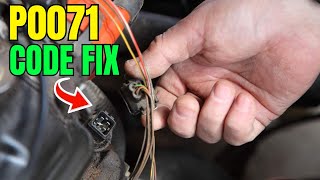
- Recharging the A/C system. While A/C performance can be a symptom, the root cause is the incorrect temperature data, not the refrigerant level. 🎬 See how to test the sensor if your AC isn't working.
- Replacing the Exhaust Gas Temperature (EGT) sensor. On some TDI models, a faulty AAT sensor can cause a sympathetic P2080 code for the EGT sensor. TSB 01-19-03 states to only replace the AAT sensor if both codes are present.
Most Likely Causes
- Failed Ambient Air Temperature Sensor 🔴 High Probability → Shop Ambient Air Temperature Sensor The sensor is exposed to weather, road salt, and moisture, which can cause internal corrosion and failure over time. The sensor is a thermistor, and age or contamination can cause its resistance to drift out of the expected range.
How to confirm: Use a scan tool to view live data for the AAT sensor. If the reading is stuck or clearly wrong (e.g., reads 100°F on a cold day), the sensor is likely bad. You can also test the sensor's resistance with a multimeter; it should change predictably with temperature. Unplugging the sensor should cause the reading to go to a default low value (like -40°F), confirming the wiring to the ECM is likely intact.
Typical fix: Replace the Ambient Air Temperature sensor.
Est. part cost: $20-$50 - Damaged Wiring or Connector 🟡 Medium Probability The sensor's location in the front bumper area makes its wiring vulnerable to being cut, frayed, or damaged by road debris or minor impacts. The connector can also fill with water and corrode. This is a very common cause after front-end body work.
How to confirm: Visually inspect the wiring harness leading to the sensor for any signs of damage, especially near the front bumper and radiator support. Check the connector for green or white corrosion, moisture, or broken pins. Use a multimeter to check for 5V reference and ground at the connector pigtail with the key on.
Typical fix: Repair the damaged section of wire or replace the connector pigtail. The pigtail connector is part number 1J0-973-702.
Est. part cost: $10-$30 - Sensor is Physically Missing or Obstructed ⚪ Low Probability Following a front-end collision or repair, the sensor may not have been reinstalled. It can also be knocked off by road debris. Ice or mud buildup can also insulate it, causing a delayed or incorrect reading that triggers a performance code.
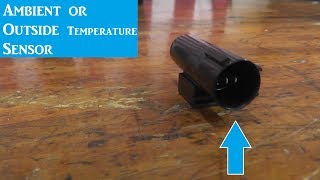
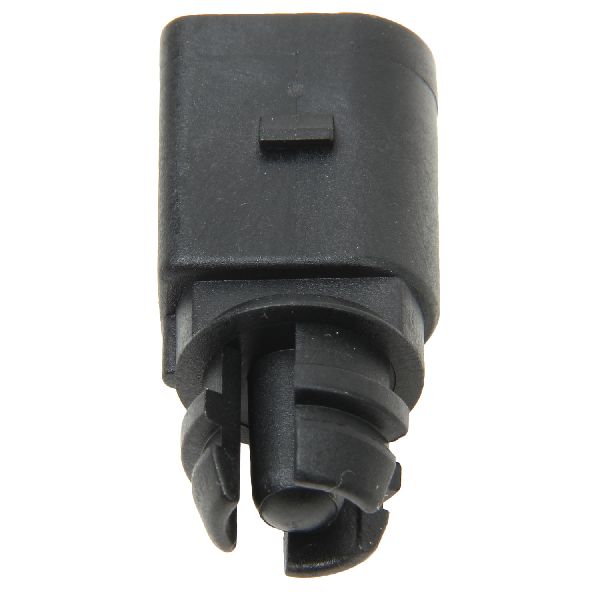
How to confirm: Visually inspect the front lower grille/bumper area. There should be a small, pencil-eraser-sized sensor clipped into a bracket. If it's not there, look for an empty two-pin connector dangling nearby.
Typical fix: Install a new sensor and secure it in its mounting bracket.
Est. part cost: $20-$50
Rare But Worth Checking
- Faulty Engine Control Module (ECM): → Shop Engine Control Module (ECM) This is very rare. Before condemning the ECM, all other possibilities (sensor, wiring) must be exhaustively ruled out. An ECM failure would likely present with other trouble codes as well.
Diagnosis Steps
- Connect an OBD-II scanner and confirm P0071 is the primary code. 🎬 Watch this quick breakdown of what the P0071 code means. Note any other codes present, especially P0070, P0072, P0073, or P2080.
- Access the live data stream on the scanner. Observe the readings for 'Ambient Air Temperature', 'Intake Air Temperature', and 'Engine Coolant Temperature' after the car has been off for at least 3-4 hours (cold soak).
- Compare the readings. The AAT, IAT, and ECT should all be within a few degrees of each other and the actual outside temperature. If the AAT reading is wildly inaccurate or stuck (e.g., -40°F, 250°F), the issue is with the AAT circuit.
- Locate the sensor. On the NMS Passat (2012-2015), it is typically mounted in the lower front bumper grille area, often on the passenger side.
- Visually inspect the sensor. Is it present and securely mounted? Is it covered in mud, ice, or road grime?
- Inspect the wiring leading to the sensor for any cuts, chafing, or signs of impact damage. Pay close attention to areas where the harness passes near the radiator support or bumper brackets.
- If the sensor and wiring appear intact, disconnect the sensor. With the ignition on (engine off), use a multimeter to test the connector. One pin should have a 5-volt reference signal from the ECM, and the other should have a good ground.
- If voltage and ground are present, the sensor itself is the most likely culprit. If they are not, the problem lies in the wiring harness or, rarely, the ECM.
- If a new sensor is installed and the code persists, check for a software update or TSB related to the ECM. VW TSB 01-19-03 is a key document for TDI models.
- Clear the trouble codes with the scanner and take the vehicle for a drive to ensure the code does not return. Check for proper A/C operation and a correct temperature reading on the dash.
Parts You'll Likely Need
- Ambient Air Temperature Sensor
(OEM #8Z0-820-535)— This is the component that fails or is damaged in the vast majority of P0071 cases on this vehicle.
Trusted brands: Bosch, Hella, URO Parts, Rein, Vemo, Genuine Volkswagen
OEM price range: $40-$60
Aftermarket price range: $15-$40 - Ambient Air Temperature Sensor Connector Pigtail
(OEM #1J0-973-702)— If the connector is corroded, melted, or the locking tab is broken, replacing the pigtail is the correct repair.
Trusted brands: Genuine Volkswagen, Dorman, URO Parts
OEM price range: $25-$40
Aftermarket price range: $10-$20
Related Codes That Often Appear With This One
- P0070 — P0070 indicates a general fault in the AAT sensor circuit (like an open or short), while P0071 indicates the signal is present but not performing as expected. They often appear together when the sensor is unplugged, missing, or has failed completely.
- P0072 / P0073 — These codes indicate the sensor circuit is stuck low (P0072) or high (P0073), respectively. They point more specifically to an electrical short or open circuit, but are closely related to the general performance fault of P0071.
- P2080 — On some TDI models, VW issued Technical Service Bulletin 01-19-03 which notes that a failing AAT sensor can cause the ECM to incorrectly flag a fault with the Exhaust Gas Temperature sensor. If both P0071 and P2080 are stored, the TSB advises replacing only the AAT sensor.
Technical Service Bulletins (TSBs) & Recalls
- TSB 01-19-03: For 2013-2016 TDI models, this TSB notes that a faulty Ambient Air Temperature Sensor (G17) can cause both DTC P0071 and P2080 (EGT Sensor). The bulletin instructs technicians to replace only the AAT sensor if both codes are present.
Platform-Specific Known Issues
- Post-Collision Repair Issues: A significant number of P0071 faults on this platform are reported immediately after the vehicle is returned from a body shop for front-end collision repair. The sensor is often damaged, left unplugged, or not transferred to the new bumper cover.
- TDI Models and TSB 01-19-03: For Passat TDI models, it is critical to be aware of TSB 01-19-03. This bulletin clarifies that if P0071 is present with P2080 (Exhaust Gas Temperature Sensor Circuit Range/Performance), the root cause is the AAT sensor, and only the AAT sensor should be replaced.
Mechanic-Grade Diagnostic Values
- AAT Sensor (G17) Resistance — expected: Approx. 1.5-2.0 kΩ at 20°C (68°F), ~3.5 kΩ at 10°C (50°F), ~6.0 kΩ at 0°C (32°F). Resistance increases as temperature drops.. Failure: Infinite resistance (Open Line/OL) or zero resistance indicates a failed sensor.
- Voltage at Sensor Connector — expected: Approximately 5.0 volts on the reference wire with the key on, engine off (KOEO).. Failure: No voltage suggests a wiring break or an issue with the supplying control module (Instrument Cluster or Onboard Supply Control Unit).
Hidden / Shadow Codes Worth Checking
- 00779: Outside Air Temperature Sensor (G17): Open or Short to Plus / Short to Ground. This is the VAG-specific fault code that corresponds to the generic P0071, P0072, and P0073 codes. (see via VCDS (VAG-COM), ODIS, or other professional scanners capable of reading manufacturer-specific codes.)
Scan Tool Commands That Help
- VCDS (VAG-COM): Measuring Blocks (MVB) — Use this function within the Instrument Cluster (Address 17) or Central Electronics (Address 09) modules to view the live temperature reading from the G17 sensor and compare it with the IAT and ECT sensors for the rationality check.
Wiring & Ground Locations
- G17 Sensor Connector — At the sensor, located in the lower front bumper grille area.. This is the primary point for testing voltage and sensor resistance. Pin 1 is typically the signal wire, and Pin 2 is the ground.
- J519 - Onboard Supply Control Unit — Located behind the dashboard, to the left of the steering column.. On later B7 Passats, the G17 sensor wires terminate here. The Brown/Blue wire goes to pin 19 of the T46b connector, and the Brown/Yellow wire goes to pin 27 of the T46b connector. This is the next place to check for continuity if the wiring is suspect.
- Ground Point 685 — On the front of the right longitudinal member in the engine compartment.. This is a major chassis ground point in the vicinity of the sensor. While the sensor grounds through its control module, a poor main ground in this area can cause various electrical issues.
Real Owner Repair Stories
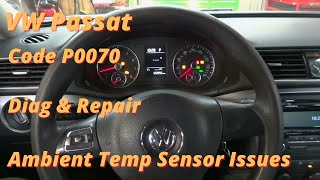
- YouTube channel 'K Diagnostics' (2014 VW Passat) — Check Engine Light was on with codes P0070 and P0071. The vehicle had recently been repaired at a collision center after a front-end crash.
❌ Tried (didn't work) Initial visual inspection was difficult due to the new bumper being installed.
✅ What actually fixed it Upon removing the lower grille, the mechanic discovered the ambient temperature sensor was completely missing and the corresponding wires were broken and dangling. The fix involved repairing the broken wires and installing a new sensor and connector pigtail.
OEM Part Supersession History
8Z0-820-535→8Z0-820-535-A, 8Z0-820-535-B— Standard part revisions for manufacturing process improvements or material changes.
Heads up: No known incompatibilities. Revisions are generally interchangeable for this application.N/A→6RD-820-535— This is an alternative part number that also fits many VW models and may be supplied.
Heads up: Functionally identical to 8Z0-820-535 for this vehicle.
Model Year Variations Within This Range
- 2010 (B6) vs 2012-2015 (B7/NMS): On earlier B6 models, the G17 sensor often reports to the Instrument Cluster (Address 17). On later B7 models, it may report to the Onboard Supply Control Unit / Central Electronics Module (J519, Address 09). This changes the diagnostic path when checking wiring and live data.
Diagnostic Flowchart
Other Known Issues on This Vehicle
Issues unrelated to this code that are worth knowing about as an owner of this generation:
- 2.0T TSI Timing Chain Tensioner Failure 🔴 High — Common on earlier models (approx. 2010-2013) with the original tensioner design. Failure can occur without warning, often between 60k-100k miles, leading to catastrophic engine damage. (Ref: VW TSB 15-12-01 addresses this issue, and multiple revisions of the tensioner have been released.)
- DSG Mechatronics Unit Failure 🔴 High — Can occur on vehicles equipped with the DSG automatic transmission. Symptoms include harsh/jerky shifting, flashing PRNDS indicator, and loss of drive. Failures can happen at various mileages. (Ref: Recalls were issued in some markets for certain DSG units, particularly the 7-speed dry clutch (DQ200) not used in US Passats. However, wet-clutch units can still fail.)
- TDI High-Pressure Fuel Pump (HPFP) Failure 🔴 High — A known issue on TDI diesel engines where the HPFP can fail, sending metal debris throughout the entire fuel system, requiring a very expensive repair. (Ref: Subject of a class-action lawsuit and extended warranty coverage from VW for some model years.)
- Excessive Oil Consumption (TSI Engines) 🟠 Medium — Some 1.8T and 2.0T TSI engines can consume excessive amounts of oil, often attributed to piston ring design. Owners may need to add a quart of oil every 1,000-2,000 miles. (Ref: Class-action lawsuits have addressed this issue for certain engine codes and model years.)
- Clock Spring Failure 🟡 Low — The clock spring in the steering column can fail, causing the airbag light to illuminate and the steering wheel buttons and horn to stop working.
- TDI AdBlue Heater Failure 🟡 Low — Extremely common on TDI models. The heater element in the AdBlue (DEF) tank fails, triggering a CEL (e.g., P202A). It doesn't affect drivability unless in freezing climates but is an expensive repair.
Used vs. New Parts: Buying Guide for This Vehicle
When a used part is the smart pick: A used sensor is a very reasonable choice for this repair. It is a simple, non-wear item, and failure is almost always due to physical damage or internal corrosion from moisture, not mileage. A part from a donor vehicle that did not suffer a front-end collision is a cost-effective option.
Donor-vehicle mileage cap: roughly under 150000 miles for the part to have meaningful remaining life.
What to inspect on the donor part:
- Inspect the sensor tip for any cracks, splits, or signs of impact. A damaged tip can let in moisture and cause failure.
- Check the connector pins for any green or white corrosion.
- Ensure the plastic housing and mounting clips are not brittle or broken.
- If possible, pull the part from a vehicle in a dry climate to minimize the risk of internal corrosion.
OEM-only on this vehicle (don't cheap out):
- None for this specific repair. The sensor is a simple thermistor.
Aftermarket brands forum-validated for this vehicle:
- Bosch
- Hella
- Rein
- Vemo
Brands owners have reported issues with on this vehicle:
- Unnamed, no-brand sensors from online marketplaces can have poor accuracy or premature failure. It is better to buy a name-brand aftermarket part or a used OEM part.
Real Owner Stories
Aggregated from forums and TSBs cited above. Mileages and costs reflect what owners reported in those sources.
2014 Passat
Symptoms: Check Engine Light was on with codes P0070 and P0071 after the car had undergone collision repair.
What fixed it: The sensor was discovered to be missing and the wires were broken. Installing a new sensor and repairing the wiring resolved the codes.
Source hint: YouTube - K's CarFix Lab (formerly KIT'S Auto and Truck Repair)
2010-2015 Volkswagen Passat
Symptoms: A P0071 fault code appeared immediately after the vehicle was picked up from a body shop following a front-end repair.
What fixed it: The fault was traced to the ambient air temperature sensor, which had been left unplugged or was not transferred to the new bumper cover by the repair shop.
Source hint: vehicle_specific_issues: Post-Collision Repair Issues
NMS Passat
Symptoms: The temperature reading on the dashboard was inaccurate and the automatic A/C was not functioning correctly.
What fixed it: Replacing the ambient air temperature sensor, located in the lower passenger-side grille, resolved both the temperature display and A/C issues.
Source hint: VWVortex / PassatWorld Forums
Related OBD-II Codes
Frequently Asked Questions
Where is the ambient air temperature sensor located on my 2012-2015 Passat?
My TDI Passat has codes P0071 and P2080. Do I need to replace both the ambient temp and exhaust temp sensors?
I just got my Passat back from the body shop after a front-end repair and now the check engine light is on for P0071. What's the likely cause?
Can a bad ambient temperature sensor cause my Passat's A/C to not work correctly?
What is the part number for the sensor's wiring connector if mine is corroded or broken?
My outside temperature display on the dash is stuck at -40°F. Is this related to code P0071?
Helpful Videos
We Have This Part in Stock



The information in this article is provided for general reference and educational purposes only. Vehicle specifications, procedures, and part compatibility can vary by production date, trim level, and region. Always consult your vehicle's factory service manual and verify part numbers before purchasing or performing repairs. Safety-critical components such as airbags, seat belts, and braking systems should be installed by a qualified professional.
- Volkswagen Passat:
- 🧭 Diagnostic Flowchart
- 🎬 Helpful Videos
- 🛍️ Shop This Part
- What's Unique About the 2010-2015 Volkswagen Passat
- Symptoms You May Notice
- Most Likely Causes
- Rare But Worth Checking
- Diagnosis Steps
- Parts You'll Likely Need
- Related Codes That Often Appear With This One
- Technical Service Bulletins (TSBs) & Recalls
- Platform-Specific Known Issues
- Mechanic-Grade Diagnostic Values
- Hidden / Shadow Codes Worth Checking
- Scan Tool Commands That Help
- Wiring & Ground Locations
- Real Owner Repair Stories
- OEM Part Supersession History
- Model Year Variations Within This Range
- Other Known Issues on This Vehicle
- Used vs. New Parts: Buying Guide for This Vehicle
- Real Owner Stories
- 2014 Passat
- 2010-2015 Volkswagen Passat
- NMS Passat
- Related OBD-II Codes
- Frequently Asked Questions
- 🎟️ Get 5% Off