

P0073 on 2013-2020 Ford Fusion: Ambient Temperature Sensor Causes and Fixes
On a 2013-2020 Ford Fusion, code P0073 is almost always caused by a failed ambient air temperature sensor located behind the front lower grille. It's an easy, 15-minute DIY fix with a part that costs between $15 and $40. A 'circuit high' fault means the sensor is disconnected or has failed open.
- P0073 on a 2013-2020 Fusion means your outside air temperature sensor circuit has a problem, which will disable your automatic climate control.
- The most likely cause is a bad sensor, which is inexpensive and extremely easy to replace yourself in under 15 minutes.
- The sensor is located behind the lower front grille, usually on the passenger side. You can reach it without removing any major parts.
- Before buying a part, always perform a quick visual inspection of the sensor's wiring and connector for any obvious damage, as this is the second most likely cause, especially if the car has had front-end repairs.
What's Unique About the 2013-2020 Ford Fusion
On the second-generation Ford Fusion (2013-2020), this code is a very common and straightforward issue. The AAT sensor is placed in a vulnerable location behind the lower front grille, making it susceptible to damage from road debris, snowbanks, or even car washes. While the code itself is generic, the high frequency of failure of the sensor itself and its exposed wiring are the key platform-specific characteristics for the Fusion. Some owners report the issue occurring after front-end collision repairs where the sensor or wiring was damaged or not reconnected properly.
Symptoms You May Notice
- Check Engine Light is illuminated.
- Incorrect outside temperature reading on the dashboard or infotainment screen (often defaults to -40°F, 50°F, or displays dashes '--').
- Automatic climate control (A/C and heat) does not work properly or blows air at an incorrect temperature.
- A/C compressor may not engage, resulting in no cold air.
- Replacing A/C system components like the compressor or recharging the refrigerant before checking OBD-II codes. The P0073 code directly points to the AAT sensor circuit as the reason the climate control is malfunctioning.
- In one documented case, a technician replaced the AAT sensor which cleared the P0073 code, but the A/C still didn't work. Further diagnosis revealed a separate failure of the A/C pressure transducer, highlighting the need to confirm the fix resolves the symptom, not just the code.
Most Likely Causes
- Failed Ambient Air Temperature (AAT) Sensor 🔴 High Probability → Shop Ambient Air Temperature Sensor The sensor is exposed to the elements (rain, road salt, heat) at the front of the vehicle, leading to a high failure rate from corrosion and physical damage over time.
How to confirm: After checking the wiring, this is the most likely cause. With an OBD-II scanner, live data will show a nonsensical reading like -40°F. You can test the old sensor with a multimeter for resistance; an 'OL' (Open Loop) reading confirms it has failed internally. 🎬 Watch: How to test and fix the AAT sensor circuit. A good sensor's resistance will change with temperature.
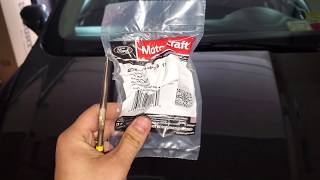
Typical fix: Replace the ambient air temperature sensor. This is a simple plug-and-play part, often accessible through the lower grille without removing the bumper. 🎬 Watch this quick walkthrough on how to replace the sensor.
Est. part cost: $15-$40 - Damaged Wiring or Connector 🟡 Medium Probability The sensor's location behind the lower grille makes the wiring vulnerable to being snagged or damaged by road debris, minor front-end impacts, or corrosion. The wiring harness in this area also serves the active grille shutters, and damage can affect both systems.
How to confirm: Visually inspect the two wires (often Green-Blue and Yellow-Gray) and the plastic connector leading to the AAT sensor. Look for any breaks, corrosion, or signs of impact. Tug gently on the wires to ensure they are secure in the connector. A user on Reddit noted recurring P0073 and headlight issues stemmed from previous accident damage to the front-end wiring harness.
Typical fix: If the connector is damaged, replace it with a new pigtail connector (e.g., Motorcraft WPT-1302 or WPT-437), which requires splicing two wires. If a wire is broken further up the harness, it will need to be repaired.
Est. part cost: $10-$30 for a pigtail connector
Rare But Worth Checking
- Powertrain Control Module (PCM) Fault: → Shop Engine Control Module (ECM) This is extremely rare. The PCM should only be considered if you have verified the sensor and the entire wiring circuit between the sensor and the PCM are good. This fault would likely be accompanied by other trouble codes.
Technical Service Bulletins (TSBs) & Recalls
While the Fusion shares its AAT sensor design with many other Ford platforms, manufacturer bulletins highlight the persistence of this circuit-high code. For instance, TSB Bulletin #TSB 25-2545 notes that vehicles may require replacement of the AAT sensor when DTC P0073 is present in the PCM. Similarly, manufacturer service bulletins such as TSB Bulletin #SSM 51491 and TSB Bulletin #SSM 50742 describe instances where the MIL is illuminated specifically due to P0073 stored in the powertrain control module. In some Ford models, TSB Bulletin #SSM 54522 indicates that P0073 may even be accompanied by B1B38 stored in the body control module (BCM), resulting in no ambient air temperature display at all.
Diagnosis Steps
- Read the trouble codes with an OBD-II scanner to confirm P0073 is present.
- View the live data stream on the scanner. Check the value for 'Ambient Air Temperature'. A reading of -40°F or another fixed, incorrect value strongly suggests a fault in this circuit.
- Locate the AAT sensor. On the 2013-2020 Fusion, look through the lower front grille, usually on the passenger side clipped to the radiator support or nearby structure.
- Visually inspect the sensor, its connector, and the accessible wiring for any obvious signs of damage, corrosion, or disconnection. Check that it hasn't been dislodged from its mounting clip.
- Disconnect the sensor. Inspect the connector terminals for corrosion or damage. With the key on, use a multimeter to check for a 5-volt reference signal on one wire and a good ground on the other. If voltage and ground are present, the wiring from the PCM is likely okay.
- If the wiring and connector appear intact and have correct voltage/ground, the AAT sensor itself is the most probable cause of failure. You can test the sensor's resistance with a multimeter; it should not be an open circuit.
- Replace the AAT sensor. After replacement, clear the code. It may take a few minutes of driving for the new temperature to display correctly on the dash as the system recalibrates.
Parts You'll Likely Need
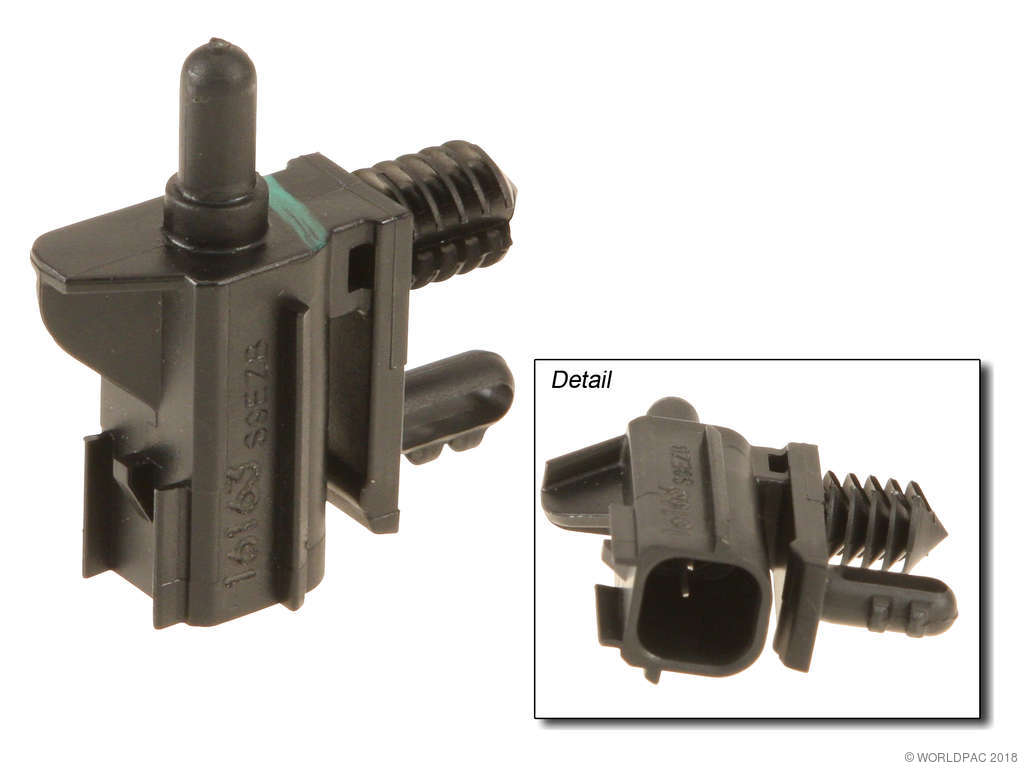
- Ambient Air Temperature Sensor
(OEM #DY-1160 (Replaces: AU5Z-12A647-B, Engineering #: AU5T-12A647-AC))— This sensor is the most common failure point for code P0073 due to its exposed location and electronic nature.
Trusted brands: Motorcraft, Standard Motor Products, Dorman
OEM price range: $25-$40
Aftermarket price range: $15-$30 - Ambient Air Temperature Sensor Connector Pigtail
(OEM #WPT-1302 or WPT-437)— Needed if the original plastic connector or wiring is physically damaged from an impact or corrosion. Verify connector style before purchase.
Trusted brands: Motorcraft, Dorman, Standard Motor Products
OEM price range: $20-$30
Aftermarket price range: $10-$25
Related Codes That Often Appear With This One
- U0284 — The AAT sensor wiring is located in the same harness as the wiring for the Active Grille Shutter module. Damage to this harness from road debris or a minor impact can cause both a P0073 for the sensor and a U0284 (Lost Communication With Active Grille Shutter Module) code simultaneously. 🎬 See how these two codes often appear together on the Fusion.
Mechanic-Grade Diagnostic Values
- AAT Sensor Resistance vs. Temperature — expected: The sensor is an NTC thermistor, so resistance drops as temperature rises. A typical chart shows: 32°F (0°C): ~32.6 kΩ; 59°F (15°C): ~15.7 kΩ; 77°F (25°C): ~10.0 kΩ; 86°F (30°C): ~8.0 kΩ.. Failure: A reading of 'OL' (Open Loop/infinite resistance) on a multimeter indicates the sensor has failed open. A reading that does not change smoothly with temperature change (using a heat gun) also indicates failure.
- AAT Sensor Connector Voltage (Key On, Engine Off) — expected: One wire should have a 5-volt reference signal from the PCM. The other wire is the signal return/ground.. Failure: Absence of the 5V reference suggests a wiring problem between the PCM and the connector. A voltage reading significantly higher than 0V on the ground wire indicates a bad ground connection.
Hidden / Shadow Codes Worth Checking
- P0073:00: The ':00' suffix is a Fault Type Code (FTC) used by Ford. In this context, it typically does not indicate a separate hidden issue but specifies that no specific sub-fault (like short to ground, etc.) was identified by the PCM. It essentially means a general circuit-high failure. (see via Visible on some professional-grade scanners like Ford's IDS or high-end Snap-on/Autel tools that display manufacturer-specific code details.)
Scan Tool Commands That Help
- Manual HVAC Controls: HVAC Control Head Reset — After replacing the sensor or repairing wiring, if the temperature display remains incorrect, a manual reset may force the system to recognize the new sensor. With the engine running, press and hold the A/C and Recirculation buttons simultaneously for about 10 seconds. This is a non-scanner-based procedure reported to work on some Ford models.
Wiring & Ground Locations
- AAT Sensor Wires — In the wiring harness leading to the sensor behind the front lower grille.. The two wires for the AAT sensor are typically Green-Blue (GN-BU) for the signal and Yellow-Gray (YE-GY) for the signal return/ground. Knowing these colors is critical for testing continuity and performing wire repairs.
- C134 — A major inline connector for the front-end wiring harness, located in the engine compartment.. The AAT sensor wiring passes through this connector. Corrosion or a pushed-out pin within C134 can cause an open circuit and trigger P0073, even if the sensor and its pigtail are good.
- G100 / G102 — Main body grounds located on or near the left (driver's side) front strut tower in the engine compartment.. These are primary ground points for the front wiring harness. A loose or corroded connection at G100 or G102 can cause a floating ground and lead to various electrical issues in the front of the car, including a P0073.
- G106 — A body ground located on the right (passenger side) front of the engine compartment.. This ground serves components on the right side of the front harness. Since the AAT sensor is often on the passenger side, checking this ground is an important step if a ground-side fault is suspected.
Real Owner Repair Stories
- YouTube video by 'Eliel Car' (Ford Fusion (model year not specified, but 2nd gen)) — Check engine light with P0073, outside temperature display showed dashes ('--').
❌ Tried (didn't work) Replacing the ambient air temperature sensor did not fix the problem.
✅ What actually fixed it The connector pigtail itself was faulty. The owner spliced in a new connector, connecting the red wire of the new pigtail to the green wire of the car's harness and the black wire of the pigtail to the yellow wire of the harness. This resolved the code and restored the temperature display. - Reddit user in r/AskAMechanic (2018 Ford Fusion S (2.5L)) — P0073 code appeared, along with intermittent low-beam headlight failure. Vehicle had prior front-end accident damage.
❌ Tried (didn't work) Replacing the Ambient Air Temperature (AAT) sensor., Disconnecting the battery to reset the system.
✅ What actually fixed it The user concluded the issue was likely a deeper problem within the main front-end wiring harness, damaged from the previous accident, causing both the P0073 and headlight issues. The final resolution was not posted, but it highlights that on cars with accident history, the fault is often in the harness, not the sensor. - NHTSA ODI #11219480 — An owner reported receiving a P0073 engine code warning light while driving, which occurred alongside other warnings such as a driver-side airbag fault and a vehicle over-speed condition.
When the Usual Fixes Don't Work
- While the vast majority of P0073 codes on this platform are fixed by replacing the sensor, a significant minority of cases, especially on vehicles with a history of front-end impact, are caused by damage to the wiring harness or the sensor's connector pigtail. In a documented case, a user replaced the sensor to no effect, and the final fix was splicing in a new pigtail connector, which immediately solved the problem. This demonstrates that if a new sensor doesn't work, the next step should always be a detailed inspection and test of the connector and its wiring before considering a rare PCM fault.
OEM Part Supersession History
AU5Z-12A647-B (Motorcraft DY-1160)→FC4Z-12A647-A (Motorcraft DY-1345)— Standard part revision and consolidation across multiple vehicle platforms.
Heads up: No known incompatibilities; the new part is a direct replacement for the old one.
Model Year Variations Within This Range
- 2017-2020 (Post-facelift models): While many post-facelift models retain the sensor on the lower passenger side, some owners have reported finding the sensor in a different location: clipped to the top left (driver's side) corner of the active grille shutter assembly. Technicians should check both locations if the sensor is not immediately visible in the passenger-side fog light area.
Diagnostic Flowchart
Other Known Issues on This Vehicle
Issues unrelated to this code that are worth knowing about as an owner of this generation:
- 1.5L & 2.0L EcoBoost Coolant Intrusion 🔴 High — Common issue, particularly on 2017-2019 models. An engine block design flaw allows coolant to leak into the cylinders, causing misfires and eventual engine failure. (Ref: TSB 22-2229, TSB 19-2375, Customer Satisfaction Program 19B37.)
- Degraded Shifter Cable Bushing 🔴 High — Widespread on 2013-2016 models. The bushing that attaches the shifter cable to the transmission can degrade, preventing the vehicle from engaging the selected gear or from being securely in Park. (Ref: Ford Safety Recall 21S24 / NHTSA 22V413.)
- Steering Gear Motor Bolt Corrosion 🔴 High — Affects 2013-2016 models primarily in regions that use road salt. Bolts securing the electric power steering motor can corrode and break, causing a sudden loss of power steering assist. (Ref: Ford Safety Recall 19S26 / NHTSA 19V632000.)
- Cracked Flexplate on 2.0L EcoBoost 🟠 Medium — Reported on 2015-2020 models with the 2.0L EcoBoost. Can cause a rattling noise from the transmission bellhousing area, especially at idle. (Ref: TSB SSM 49821.)
Used vs. New Parts: Buying Guide for This Vehicle
When a used part is the smart pick: A used part is a smart choice for the connector pigtail. If your wiring is damaged, sourcing a pigtail with a few inches of wire from a junkyard vehicle is a cost-effective and reliable repair method.
Donor-vehicle mileage cap: roughly under 150000 miles for the part to have meaningful remaining life.
What to inspect on the donor part:
- For a pigtail, inspect for any signs of brittleness, cracking, or corrosion on the plastic and pins.
- Ensure the locking tab on the connector is intact and functional.
- Cut as much wire as possible from the donor vehicle to give yourself plenty of room to work with for splicing.
OEM-only on this vehicle (don't cheap out):
- No parts for this specific repair require OEM-only sourcing. The sensor and connector are simple components.
Aftermarket brands forum-validated for this vehicle:
- Motorcraft (OEM)
- Standard Motor Products (SMP)
- Dorman
Brands owners have reported issues with on this vehicle:
- No specific brands are consistently reported as problematic for this part, but ultra-low-cost, unbranded online marketplace parts may have questionable accuracy or longevity.
Real Owner Stories
Aggregated from forums and TSBs cited above. Mileages and costs reflect what owners reported in those sources.
2016 Ford Fusion SE
Symptoms: Outside temperature display was incorrect, reading -40 degrees at start and then changing to 50 degrees. This negatively affected the automatic climate control.
What fixed it: Replaced the ambient air temperature sensor, part number DY1160. The owner described it as a 'simple, cheap' fix that can be done with minimal or no tools.
Cost: ~$12
Source hint: YouTube - Andrei Aldea
2018 Ford Fusion
Symptoms: A P0073 code persisted even after replacing the sensor. The vehicle also had unrelated headlight issues.
What fixed it: The root cause was traced to a deeper wiring issue in the front-end harness resulting from previous accident damage.
Source hint: Reddit r/AskAMechanic - 'Ford Fusion Electrical Issue'
Ford Fusion
Symptoms: The vehicle presented with both a P0073 code and a U0284 code for the active grille shutter.
What fixed it: The cause was found to be damaged wiring in the front bumper area that affected both component circuits. Repairing the harness resolved the codes.
Source hint: YouTube - Box 7 Mecânica Automotiva
2017 Ford Fusion
Symptoms: The P0073 code appeared on the vehicle after it was imported with pre-existing front-end damage.
What fixed it: The fault was directly linked to the prior collision damage, reinforcing that wiring issues are a common cause after a front-end impact.
Source hint: DRIVE2.ru - 'Ошибка Р0073 датчик наружной температуры AAT'
Related OBD-II Codes
Frequently Asked Questions
Where is the ambient air temperature sensor located on my 2013-2020 Ford Fusion?
My Fusion's dashboard reads -40°F and the A/C isn't working. Is this caused by the P0073 code?
What is the part number for the replacement AAT sensor on a Ford Fusion?
I replaced the sensor but the P0073 code came back. What's the next thing to check?
The plastic connector for my temperature sensor is broken. What part do I need to fix it?
I have a P0073 code and a U0284 code for the active grille shutter. Are these problems related?
Does this P0073 sensor issue affect other vehicles besides the Ford Fusion?
Helpful Videos

We Have This Part in Stock


The information in this article is provided for general reference and educational purposes only. Vehicle specifications, procedures, and part compatibility can vary by production date, trim level, and region. Always consult your vehicle's factory service manual and verify part numbers before purchasing or performing repairs. Safety-critical components such as airbags, seat belts, and braking systems should be installed by a qualified professional.
- Ford Fusion:
- 🧭 Diagnostic Flowchart
- 🎬 Helpful Videos
- 🛍️ Shop This Part
- What's Unique About the 2013-2020 Ford Fusion
- Symptoms You May Notice
- Most Likely Causes
- Rare But Worth Checking
- Technical Service Bulletins (TSBs) & Recalls
- Diagnosis Steps
- Parts You'll Likely Need
- Related Codes That Often Appear With This One
- Mechanic-Grade Diagnostic Values
- Hidden / Shadow Codes Worth Checking
- Scan Tool Commands That Help
- Wiring & Ground Locations
- Real Owner Repair Stories
- When the Usual Fixes Don't Work
- OEM Part Supersession History
- Model Year Variations Within This Range
- Other Known Issues on This Vehicle
- Used vs. New Parts: Buying Guide for This Vehicle
- Real Owner Stories
- 2016 Ford Fusion SE
- 2018 Ford Fusion
- Ford Fusion
- 2017 Ford Fusion
- Related OBD-II Codes
- Frequently Asked Questions
- 🎟️ Get 5% Off