

P0073 on 2014-2021 Jeep Grand Cherokee: Ambient Air Temperature Sensor Causes and Fixes
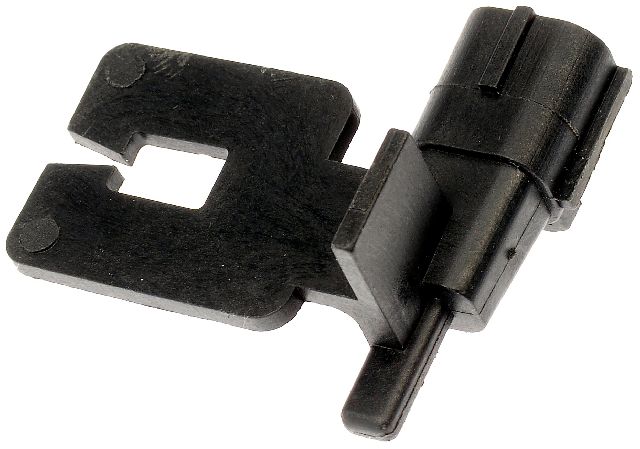
This code means the computer sees a high voltage signal from the Ambient Air Temperature (AAT) sensor, usually due to a failed sensor or damaged wiring. The most common fix is replacing the AAT sensor located behind the front grille. Expect to pay $25-$60 for an aftermarket sensor or $50-$90 for an OEM part. The OEM part number 5149265AB has been superseded by 68518243AA.
- P0073 on a Jeep Grand Cherokee points to a problem with the Ambient Air Temperature (AAT) sensor circuit, most often the sensor itself.
- Symptoms are primarily a Check Engine Light, an incorrect outside temperature display, and poor performance from the automatic climate control.
- The most common fix is to replace the AAT sensor, which is a DIY-friendly job with the part located behind the front grille.
- Before replacing parts, inspect the wiring and connector for damage, as its location makes it vulnerable.
- For 2021 models, be aware of a specific TSB (#0800722) that indicates a BCM software update may be required to fix the issue.
What's Unique About the 2014-2021 Jeep GRAND CHEROKEE
On the Jeep Grand Cherokee, the AAT sensor's input is primarily managed by the Body Control Module (BCM). A unique issue noted in a Technical Service Bulletin (TSB #08-007-22) for 2021 models is that the BCM may incorrectly set the P0073 (Circuit High) code when it should be setting a P0072 (Circuit Low) code for a short-to-ground condition. This indicates a potential software logic issue in the BCM on certain model years. The sensor itself is in a vulnerable position behind the front grille, making it susceptible to damage from road debris, front-end impacts, and water intrusion from car washes or weather.
Diagnostic Flowchart
Tap your situation to follow the diagnostic path that matches what you're seeing on this vehicle.
Symptoms You May Notice
- Check Engine Light (MIL) is on
- Incorrect outside temperature display on the dashboard (may show a very low default value like -40°F)
- Automatic climate control (HVAC) system not working properly or blowing air at incorrect temperatures
- Air conditioning (A/C) compressor may not engage
- Engine start/stop system may be disabled
- Replacing the Intake Air Temperature (IAT) sensor instead of the Ambient Air Temperature (AAT) sensor. The IAT is part of the engine's air intake system, while the AAT is for external temperature readings.
- Replacing the BCM/PCM without thoroughly testing the sensor and wiring first. An open circuit in the wiring is a much more common and cheaper fix.
Most Likely Causes
- Failed Ambient Air Temperature Sensor 🔴 High Probability → Shop Ambient Air Temperature Sensor The sensor is located in a vulnerable position behind the front grille, where it is exposed to road debris, water, and extreme temperatures, leading to a higher failure rate from physical damage or internal corrosion.
How to confirm: Disconnect the sensor and test its internal resistance with a multimeter. An open circuit (infinite resistance or 'OL') indicates a failed sensor. A healthy sensor should have a resistance that changes with temperature, for example, around 10,000 Ohms at 77°F (25°C).
Typical fix: Replace the ambient air temperature sensor. This is often the first and most successful repair attempt.
Est. part cost: $25-$90 - Damaged Wiring or Connector 🟡 Medium Probability Wiring near the front bumper can be damaged from minor impacts, road debris, or corrosion from road salt and moisture. A broken wire in the harness is a common cause, especially after any front-end collision.
How to confirm: Visually inspect the wiring harness and connector for breaks, corrosion, or loose pins. Perform a continuity test on the signal and ground wires from the sensor connector to the BCM/PCM. A resistance reading above 5.0 ohms indicates an open circuit in the wiring.
Typical fix: Repair the damaged section of the wiring harness or replace the connector pigtail. Applying dielectric grease to the new connector can prevent future moisture intrusion.
Est. part cost: $10-$40 - Body Control Module (BCM) Software Issue ⚪ Low Probability As per TSB #08-007-22, some 2021 models have a known software glitch where the BCM sets P0073 incorrectly for a short-to-ground condition.
How to confirm: This is difficult to confirm without a dealer-level scan tool (like wiTECH). If the sensor and wiring test good, a software issue is a possibility, especially on a 2021 model. The dealer can check for available BCM flash updates.
Typical fix: The dealer may need to re-flash or update the Body Control Module software.
Est. part cost: $0-$200
Rare But Worth Checking
- Faulty Powertrain Control Module (PCM) or Body Control Module (BCM): → Shop Engine Control Module (ECM) This is very rare. Before considering module replacement, all other possibilities like the sensor, wiring, and software updates must be exhaustively ruled out. A faulty module may also present with other, unrelated trouble codes.
- Faulty Intelligent Battery Sensor (IBS): Some owner forums report that a failing IBS on the battery's negative terminal can cause a host of seemingly unrelated electrical issues and codes, including P0073, particularly if accompanied by start/stop system problems.
Diagnosis Steps
- Read the trouble codes with an OBD-II scanner to confirm P0073 is present.
- Using the scanner's live data function, check the reading for the Ambient Air Temperature. A reading of -40°F or another extreme, unchanging value points to a circuit fault.
- Locate the AAT sensor. On the Grand Cherokee WK2, it is typically mounted to a bracket behind the front grille 🎬 Watch: See the sensor location and how to replace it, in front of the radiator and A/C condenser.
- Visually inspect the sensor and its electrical connector for any signs of physical damage, corrosion (green crust), or loose connections.
- Disconnect the sensor. With the ignition on (engine off), use a multimeter to check for a 5-volt reference signal on one wire and a good ground on the other. A P0073 is set when the signal circuit voltage is stuck high (above 4.98V).
- If voltage and ground are present, test the sensor itself. Measure the resistance across the two terminals of the sensor. Compare this reading to a temperature/resistance chart. A reading of infinite resistance (Open Loop) means the sensor is bad and needs replacement.
- To test the wiring harness integrity, create a jumper wire and connect it between the signal and ground terminals in the harness-side connector. With the jumper in place, the live data reading on the scan tool should change from -40°F to a very high temperature. If it does, the wiring is likely good, and the sensor is the fault. If the reading does not change, there is an open in the wiring between the connector and the control module.
- If all wiring and the sensor are confirmed to be good, consult a dealer about potential software updates for the BCM, especially for 2021 models, referencing TSB #08-007-22.
Parts You'll Likely Need
- Ambient Air Temperature Sensor
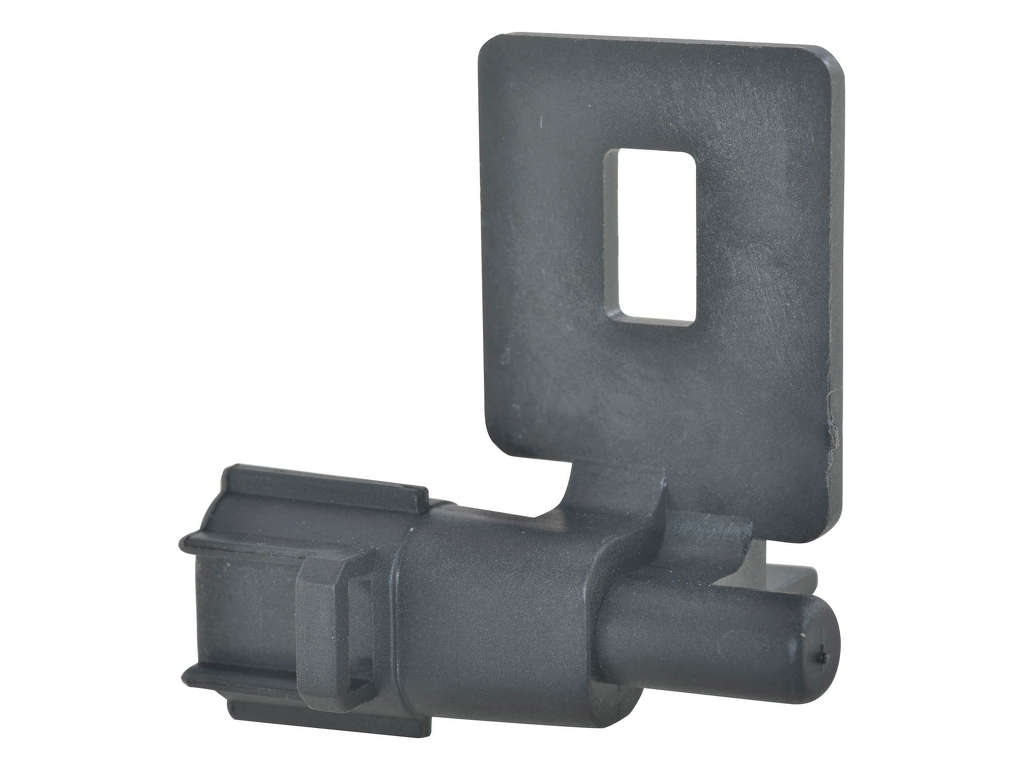
(OEM #5149265AB, superseded by 68518243AA)— This sensor is the most frequent point of failure for the P0073 code due to its exposed location and internal components failing over time.
Trusted brands: Mopar, Standard Motor Products (SMP), Dorman
OEM price range: $50-$90
Aftermarket price range: $25-$60
Related Codes That Often Appear With This One
- P0072 — P0072 (Ambient Air Temperature Sensor Circuit Low) is the companion code. TSB #08-007-22 notes that on some 2021 models, a condition that should set P0072 might incorrectly trigger P0073.
- P0070 — P0070 (Ambient Air Temperature Sensor Circuit Malfunction) is a general fault code for the same circuit, as noted in TSB #S2108000272.
Technical Service Bulletins (TSBs) & Recalls
- 08-007-22: Notes incorrect setting of P0073 instead of P0072 for a shorted sensor on some 2021 models.
- 18-044-26: Lists P0073-00 as a potential stored code.
- 18-018-14 REV. A: Identifies P0073 as a code that can cause MIL illumination.
- S2108000272: Mentions P0070 and P0073 being active together for an AAT sensor issue.
Platform-Specific Known Issues
- TSB #08-007-22 for 2021 models notes that the BCM may set P0073 when a short-to-ground occurs, a condition that should correctly trigger P0072. This points to a module software logic error.
- TSB #S2108000272 for 2021 models confirms that a Check Engine Light can be caused by active P0070 and P0073 codes related to the ambient air temperature sensor.
- TSB #18-018-14 REV. A and #18-044-26 also list P0073 as a potential Diagnostic Trouble Code that can illuminate the check engine light on various model years.
- Front-end damage is a very common precursor to this code, as the sensor and its wiring are located directly behind the bumper and grille.
Mechanic-Grade Diagnostic Values
- AAT Sensor Voltage (Live Data) — expected: 0.5V to 4.5V, changing with temperature. Failure: Voltage is stuck above 4.98V for more than 2.8 seconds.
- AAT Sensor Resistance vs. Temperature — expected: Approx. 34,367 Ohms at 30°F, 10,449 Ohms at 75°F, 5,774 Ohms at 100°F.. Failure: Infinite resistance (OL) indicates an open/failed sensor.
- AAT Signal Circuit to BCM Continuity — expected: Less than 5.0 Ohms. Failure: Resistance is higher than 5.0 Ohms, indicating an open or high resistance in the wire.
- Jumper Wire Test (Sensor Connector) — expected: Voltage on scan tool should drop below 1.0V. Failure: Voltage does not drop, indicating an open in the wiring harness between the connector and the BCM.
Hidden / Shadow Codes Worth Checking
- P0073-00: The '-00' is a symptom byte often seen on dealer scan tools. For this code, it typically means 'No Sub Type Information' and confirms the general circuit high fault. (see via Dealer-level scan tool such as wiTECH.)
Scan Tool Commands That Help
- wiTECH or equivalent professional scan tool: BCM > Data Display > Ambient Air Temperature Sensor Voltage — This is the primary diagnostic step to confirm the BCM is seeing a voltage above the 4.98V threshold, which triggers the P0073 code. It is also used to verify the fix and to watch for voltage changes during wiggle tests or jumper tests.
Wiring & Ground Locations
- (G31) AAT Signal Circuit — Wire running from Pin 2 of the AAT sensor connector to Pin 38 of the BCM C6 connector (behind driver's side lower dash).. An open in this wire or a short to a voltage source is a direct cause of P0073. Continuity must be tested if the sensor is good.
- (G931) AAT Return Circuit — Wire running from Pin 1 of the AAT sensor connector to the BCM. This is a sensor ground provided by the module, not a chassis ground.. An open in this ground circuit will cause the voltage reading to float high, triggering a P0073 code.
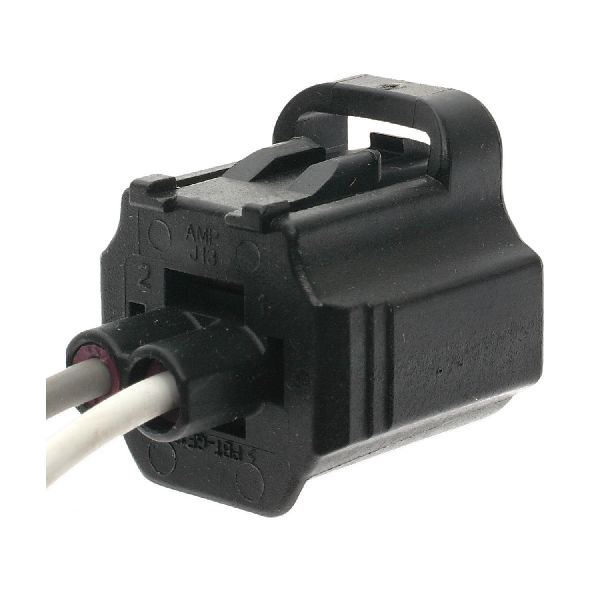
- AAT Sensor Connector — Located behind the front grille, in front of the radiator/condenser, often on a small bracket.. This connector is highly susceptible to corrosion and physical damage from front-end impacts or debris. The pigtail is available as a replacement part (e.g., Mopar 68052569AA).
Real Owner Repair Stories
- YouTube - 'JEEP CHEROKEE HOOD SWITCH AND AMBIENT TEMP SENSOR PART 2' (Jeep Cherokee (platform relative)) — Check Engine Light, incorrect temperature reading.
❌ Tried (didn't work) Initial visual inspection missed the damage.
✅ What actually fixed it The vehicle had been in a front-end collision. The body shop had damaged the wiring harness. The mechanic had to remove the fender liner to access the harness and found several broken wires, including the one for the AAT sensor, which were then repaired. - JeepGarage.org Forum (2014 Jeep Grand Cherokee) — P0073 code, -40 degree temp reading, A/C not working.
❌ Tried (didn't work) Clearing the code with a basic scanner.
✅ What actually fixed it The owner had the front bumper replaced at a body shop. The code appeared afterward. The cause was found to be the AAT sensor wiring being pinched behind a bracket during reassembly. Releasing and repairing the pinched wire resolved the code. - Reddit r/GrandCherokee (Jeep Grand Cherokee WK2) — P0073 code, plus issues with the Start/Stop system.
❌ Tried (didn't work) Initial focus was only on the AAT sensor itself.
✅ What actually fixed it The user noted that a failing Intelligent Battery Sensor (IBS) is known to cause numerous unrelated electrical fault codes, including P0073. Replacing the IBS resolved the AAT code and the Start/Stop problems.
"I Checked Everything" — The Actual Cause
- A diagnostic equivalent for this electrical code is when both the sensor and wiring test perfectly but the code persists. In one documented case for a 2021 model, the root cause was a BCM software logic error, as identified in TSB #08-007-22, requiring a dealer re-flash. In another anecdotal case, after replacing the sensor and verifying wiring, the code would not clear until the owner performed a 'hard reset' by disconnecting the battery for over 30 minutes, which forced all modules to reboot and cleared the persistent fault.
When the Usual Fixes Don't Work
- While replacing the AAT sensor is the most common fix, it is not always the solution. Multiple owner-submitted repairs confirm that P0073 is frequently caused by wiring damage hidden within the harness, especially after front-end body work. In these cases, replacing the sensor has no effect. The actual fix required carefully tracing the harness from the sensor toward the firewall, opening the loom, and repairing wires that were pinched, chafed, or broken internally. Before spending money on a new sensor, a thorough wiggle test of the harness while observing live data on a scan tool can often reveal these intermittent open circuits.
OEM Part Supersession History
5149265AB→68518243AA— Part has been updated by the manufacturer.
Heads up: The new part number 68518243AA also replaces older numbers like 5149025AA and 56042395, indicating it is used across a wide range of Chrysler/Jeep/Dodge vehicles.N/A→68052569AA (example pigtail PN)— The connector itself is a common failure point due to corrosion or broken locking tabs.
Heads up: When replacing the connector pigtail, ensure it is a direct match for the AAT sensor, as different sensors can use different keying.
Model Year Variations Within This Range
- 2021: A specific software logic flaw in the Body Control Module (BCM) can cause P0073 to be set incorrectly when the fault condition should trigger P0072. This is documented in TSB #08-007-22 and requires a dealer software update.
- 2017-2021: These models feature a mid-cycle refresh with a different front fascia and grille design compared to 2014-2016 models. While the sensor's function and general location remain the same, the procedure to access it by removing grilles or bumper components may vary slightly.
Helpful Videos

We Have This Part in Stock


The information in this article is provided for general reference and educational purposes only. Vehicle specifications, procedures, and part compatibility can vary by production date, trim level, and region. Always consult your vehicle's factory service manual and verify part numbers before purchasing or performing repairs. Safety-critical components such as airbags, seat belts, and braking systems should be installed by a qualified professional.
- Jeep GRAND CHEROKEE:
- 🧭 Diagnostic Flowchart
- 🎬 Helpful Videos
- 🛍️ Shop This Part
- What's Unique About the 2014-2021 Jeep GRAND CHEROKEE
- Symptoms You May Notice
- Most Likely Causes
- Rare But Worth Checking
- Diagnosis Steps
- Parts You'll Likely Need
- Related Codes That Often Appear With This One
- Technical Service Bulletins (TSBs) & Recalls
- Platform-Specific Known Issues
- Mechanic-Grade Diagnostic Values
- Hidden / Shadow Codes Worth Checking
- Scan Tool Commands That Help
- Wiring & Ground Locations
- Real Owner Repair Stories
- "I Checked Everything" — The Actual Cause
- When the Usual Fixes Don't Work
- OEM Part Supersession History
- Model Year Variations Within This Range
- 🎟️ Get 5% Off