

OBD-II Code P0075: Intake Valve Control Solenoid Circuit Malfunction (Bank 1)
The Ultimate 2026 Guide: What P0075 Means, Why It Triggers, and Exactly How to Fix It
- P0075 is an electrical circuit code for the Bank 1 intake VVT solenoid, indicating the PCM detects an open wire, short circuit, or bad connection.
- Check your engine oil level and condition immediately; low or dirty oil causes the majority of VVT-related codes and is the cheapest fix.
- Test the solenoid's resistance with a multimeter (typically 5-25 ohms) before spending $125-$450 on a replacement part.
- Driving with P0075 for more than 4-6 months risks destroying your catalytic converter with unburnt fuel, turning a minor repair into a $2,000+ nightmare.
What Does P0075 Mean?

P0075 indicates your car's Powertrain Control Module (PCM) detects an electrical fault in the Bank 1 intake valve control solenoid circuit. This solenoid manages the Variable Valve Timing (VVT) system, adjusting the intake camshaft's timing to optimize performance. The PCM triggered the code because the circuit voltage is outside the specified range, indicating an open wire, a short to ground, or a short to power.
🎬 Watch: A breakdown of P0075 causes and common fixes.Technical definition: The SAE/OBD-II definition is "Intake Valve Control Solenoid Circuit (Bank 1)". The PCM uses a pulse-width modulated (PWM) signal to control the solenoid. P0075 sets when the PCM commands the solenoid to move but detects an unexpectedly high voltage (short to power) or low voltage (open circuit or short to ground).
Can I Drive With P0075?
Yes, But With Caution. You can drive with this code, but limit it to short trips under 50 miles. You will experience poor acceleration, rough running, and a 5-15% drop in gas mileage. Ignoring the code for months causes engine stalling, internal sludge damage, or catalytic converter failure from unburnt fuel (an $800-$2500 repair).
Common Causes

- Low, Dirty, or Incorrect Engine Oil (Very Common) — The hydraulic VVT system requires clean oil at the exact manufacturer-specified viscosity. Low fluid levels or sludge prevent the solenoid from operating, triggering circuit and performance codes.
- Faulty Intake Valve Control Solenoid (Common) — The solenoid's internal coil develops an open or short circuit, or the mechanical plunger seizes from debris.
- Wiring or Connector Issues (Common) — Broken wires, chafed harnesses, or oil-soaked connectors disrupt the electrical circuit between the PCM and the solenoid.
- Clogged Oil Passages or Incorrect Filter (Less Common) — Engine sludge blocks the microscopic oil passages feeding the VVT solenoid and cam phaser. Low-quality aftermarket oil filters also starve the system of pressure.
- Stretched Timing Chain or Faulty Cam Phaser (Less Common) — Incorrect base engine timing forces the VVT system outside its operational range, contributing to circuit codes when the solenoid struggles against mechanical resistance.
- Faulty PCM or Outdated Software (Rare) — The internal PCM driver circuit fails, or the software requires a dealership update to adjust diagnostic sensitivity.
Symptoms
- Check Engine Light is On — The PCM illuminates the Malfunction Indicator Lamp (MIL) immediately upon detecting the electrical fault.
- Poor Engine Performance / Sluggish Acceleration — With intake valve timing stuck, the engine hesitates and lacks power at higher RPMs.
- Decreased Fuel Economy — Fuel efficiency drops by 5-15% because the engine cannot optimize the air-fuel burn.
- Rough Idle or Stalling — Incorrect valve timing at idle disrupts the air-fuel mixture, causing the engine to vibrate or stall at stops.
- Engine Rattling Noise on Startup — A brief rattle from the top of the engine indicates a lack of oil pressure reaching the VVT phaser or solenoid.
Diagnostic Flowchart

Tap your situation to follow the diagnostic path that matches what you're seeing on this code.
Common Fixes & Costs
- Engine Oil and Filter Change — Parts: $40-$100, Labor: $50-$100, ~0.5 hr book time (DIY)
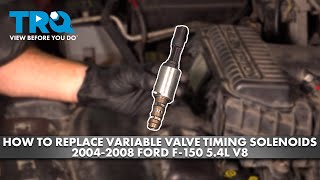
- Replacing the Intake Valve Control (VVT) Solenoid 🎬 See this step-by-step VVT solenoid replacement walkthrough. — Parts: $50-$250, Labor: $75-$200, ~1.2 hr book time (Intermediate)
- Repairing Damaged Wiring or Connector — Parts: $10-$60, Labor: $125-$350, ~2 hr book time (Intermediate)
- Engine Oil System Flush — Parts: $20-$50, Labor: $150-$250, ~1 hr book time (Professional)
- Replacing the Powertrain Control Module (PCM) — Parts: $600-$1200, Labor: $150-$300, ~2.5 hr book time (Professional)
DIY vs Professional
- Engine Oil and Filter Change — Beginner: Yes
Tools: Socket set, oil filter wrench, drain pan, funnel. - Replacing the Intake Valve Control (VVT) Solenoid — Beginner: Yes, if easily accessible.
Tools: Socket set, torque wrench, rags. - Repairing Damaged Wiring or Connector — Beginner: No.
Tools: Multimeter, wire strippers, crimpers, soldering iron, heat gun, wiring diagrams. - Engine Oil System Flush — Beginner: No.
Tools: Professional flushing machine, specific chemical agents.
Used vs. New Parts: Buying Guide
When a used part is worth it: Buying a used VVT solenoid is not recommended as it is a wear item sensitive to sludge. Only consider it for a very old vehicle on a strict budget, sourced from a reputable salvage yard.
Donor-vehicle mileage cap: roughly under 60000 miles for the part to have meaningful remaining life.
Donor quality checklist:
- Source from a low-mileage vehicle wrecked in a collision.
- Visually inspect the part for sludge on the screens and corrosion on the connector.
- Match the part number exactly.
Decision logic:
- If Vehicle is < 100K miles OR part is < $100 new → Always buy new. The small savings aren't worth the risk of repeat labor costs.
- If Vehicle is > 150K miles AND budget is the primary concern → A used part from a low-mileage donor is a calculated risk.
Warranty tradeoff: Used parts offer a 30-90 day warranty. New aftermarket parts offer 1-year to lifetime warranties. New OEM parts offer a 1-year/12,000-mile warranty.
Worst-case if a used part fails: $200-$400 if a used solenoid fails shortly after installation, covering repeat labor and a new part.
What Happens If You Wait — Timeline
- 0-1 month: Check Engine Light illuminates. You experience slight hesitation when accelerating and a small drop in fuel economy. (MPG impact: 3-5%% · Added cost: $0-40 in wasted fuel)
- 1-4 months: Engine performance noticeably worsens. Rough idle becomes consistent, acceleration is sluggish, and the engine stalls at stops. (MPG impact: 5-15%% · Added cost: $50-200 in wasted fuel)
- 4-8 months: Incorrect valve timing causes incomplete combustion, sending unburnt fuel into the exhaust. This overheats and melts the catalytic converter substrate. (MPG impact: 15-25%% · Added cost: $1200-$2800 for catalytic converter replacement.)
- 8+ months: If oil sludge caused the code, continued operation starves the top end of lubrication, destroying timing chains, guides, and camshafts. (MPG impact: 25%+% · Added cost: $4000-$10000+ for engine replacement.)
Cost of Not Fixing It
- 0-1 month: Noticeable drop in fuel economy (5-15%), poor acceleration, and rough idling. Risk of stalling in traffic. (Added cost: Negligible, other than increased fuel costs.)
- 1-6 months: Incorrect valve timing sends unburnt fuel into the exhaust, overheating and destroying the catalytic converter substrate. (Added cost: $1200-$2800 for catalytic converter replacement.)
- 6+ months: If oil sludge is the root cause, continued operation starves the engine of oil, destroying timing chains, camshafts, and bearings. (Added cost: $4000-$10000+ for engine replacement.)
Diagnosis Steps
- Check Engine Oil Level and Condition
Pull the dipstick and verify the oil is at the 'Full' mark. If it is very dark, sludgy, or below the 'Add' line, this is the root cause.
Tools: Rag or paper towel (Beginner) - Scan Codes and Review Freeze Frame Data
Confirm P0075 is present and check for related codes like P0076 or P0011. Analyze freeze frame data to see the exact engine RPM and load when the fault triggered.
Tools: OBD-II Scanner (Beginner) - Visually Inspect the Solenoid and Wiring
Locate the Bank 1 Intake Valve Control Solenoid. Inspect the connector for a secure fit, corrosion, or oil contamination. Trace the wiring harness for chafing or melting.
Tools: Flashlight (Beginner) - Test the Solenoid's Resistance
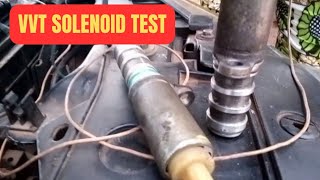
Disconnect the solenoid. Set a multimeter to Ohms (Ω) and measure resistance between the two pins. A good reading is typically 5-25 Ohms. An open circuit ('OL') or short (near 0 Ohms) confirms a failed coil.
Tools: Digital Multimeter, Repair Manual (Intermediate) - Check for Power and Ground at the Connector
With the key on, engine off (KOEO), check for voltage at the harness connector. One pin must have battery voltage (~12.6V). A reading of 0V indicates a blown fuse or open power circuit.
Tools: Digital Multimeter (Intermediate) - Test Circuit Integrity (Continuity and Shorts)
Disconnect the solenoid and PCM connectors. Check for continuity on the control wire between them (resistance < 1.0 Ohm). Then, test resistance from the control wire to ground (should be 'OL').
Tools: Digital Multimeter, Wiring Diagram (Advanced) - [PRO TIP] Actuate the Solenoid with a Scan Tool
With the engine idling, command the solenoid ON using a bidirectional scanner. The engine RPM should drop or stall. If nothing happens but the solenoid clicks manually, you have a hydraulic blockage.
Tools: Bidirectional Scan Tool (Advanced) - [PRO TIP] Analyze Live Data PIDs
Monitor 'VVT Angle' and 'VVT Commanded'. As RPM increases under load, the actual angle must follow the commanded angle. If commanded changes but actual does not, the solenoid or hydraulic system is failing.
Tools: Advanced OBD-II Scan Tool (Advanced) - [PRO TIP] Analyze the Control Circuit with an Oscilloscope
Connect a lab scope to the control wire. With the engine running, you must see a square wave (PWM signal). A flat line at 0V or 12V indicates a hard short or open circuit.
Tools: Automotive Oscilloscope, Wiring Diagram (Professional)
When This Code Triggers (Freeze-Frame Conditions)
- Engine Coolant Temp: 180-210°F (82-99°C) (The fault is typically detected once the engine is fully warmed up and enters closed-loop operation.)
- RPM: 1500-3000 RPM (The PCM flags the circuit during steady-state cruise or light acceleration, not typically at idle.)
- Engine Load: 25-70% (Sets under moderate engine load when the VVT system actively adjusts timing to balance power and efficiency.)
- Vehicle Speed: 30-60 mph (48-97 kph) (Consistent driving speeds provide the stable operating conditions needed for the PCM to run the circuit diagnostic.)
Related Codes
- P0076 — Identical fault but for the EXHAUST valve control solenoid on Bank 1. If both appear, suspect a shared blown fuse or a broken common ground wire.
- P0011 — A MECHANICAL timing code. P0075 causes P0011 because the PCM loses control of the cam timing. Always fix the electrical code (P0075) first.
- P0026 — A 'performance' code. P0075 means the circuit is broken; P0026 means the circuit is intact, but the solenoid is physically slow or sticky.
- P0301-P0306 — Cylinder misfire codes. Incorrect intake valve timing from the P0075 fault disrupts combustion, causing misfires on that specific bank.
Climate & Environmental Factors
- Cold Weather: Extreme cold increases oil viscosity. If oil is too thick on startup, it delays flow to the VVT system, triggering codes. Using the exact winter-weight oil (e.g., 0W-20) is mandatory.
- High Humidity: Persistent humidity accelerates corrosion on the VVT solenoid connector. Moisture penetrates seals, causing the increased resistance or short circuits that trigger P0075.
How to Talk to a Mechanic About This Code
Say this: "I have a P0075 code for the intake valve control solenoid circuit on Bank 1. I've verified the oil is full and clean. I need a diagnostic appointment to test the solenoid resistance and the wiring harness."
This proves you've done basic homework and directs the technician to perform specific electrical tests rather than simply recommending an oil change.
Avoid saying:
- 'My check engine light is on, can you look at it?'
- 'Just replace the sensor the code is for.'
Questions to ask before authorizing the repair:
- What was the ohm reading on the solenoid resistance test?
- Did you confirm there is 12-volt power and a good ground at the solenoid connector?
- If the solenoid is good, did you check the control wire for continuity back to the PCM?
Where to Take It: Dealer vs Independent vs Chain
- Dealer:
Best for: Vehicles under powertrain warranty., Complex wiring issues or suspected PCM failure., Known manufacturer issues covered by a TSB (e.g., Hyundai/Kia).
Downsides: Highest labor rates., May default to replacing expensive parts rather than repairing wires. (Typical cost: +50% vs. baseline) - Independent Shop:
Best fit for most scenarios. P0075 is common, and competent independent shops have extensive experience diagnosing it.
Best for: Out-of-warranty vehicles., Straightforward diagnosis and replacement of a VVT solenoid., Most common wiring repairs.
Downsides: Diagnostic skill for complex electrical issues varies. Vet shops for ASE certifications. (Typical cost: +0% vs. baseline) - Chain Shop:
Avoid for full diagnosis. Acceptable for an oil change, but if they recommend a solenoid, demand to see the electrical test results first.
Best for: An oil and filter change.
Downsides: Technicians often lack experience for proper electrical circuit testing., High pressure to sell parts without proper diagnosis. (Typical cost: -10% vs. baseline)
When to Walk Away From the Repair
If the estimated repair cost exceeds 40-50% of the car's private-party value, consider selling it.
- Car worth $4000, fix is $350: Fix it. A solenoid or wiring repair is well below the threshold.
- Car worth $3000, fix is $1800: Walk away. If the diagnosis points to a failed PCM, the repair cost exceeds 50% of the car's value.
- Car worth $8000, fix is $4500: Walk away. If P0075 is a symptom of severe oil sludge requiring timing chain replacement, the cost is too high.
What Scan Tool You Need for This Code
Minimum: A code reader that displays live sensor data. You must see VVT system PIDs to diagnose properly.
A $20 reader only gives the code. To diagnose P0075, you need live data for commanded vs. actual cam angle to distinguish between a bad solenoid, wiring fault, or hydraulic problem.
Budget: BlueDriver Pro (~$100) — Connects via Bluetooth. Reads codes, views freeze-frame data, and graphs live VVT PIDs to see if the camshaft responds to commands.
Mid-range: Innova 5610 or Foxwell NT530 (~$300) — Adds bidirectional control. Allows you to directly command the VVT solenoid on and off to confirm if it clicks and alters engine RPM.
Professional: Autel MaxiCOM MK808S (~$450-550) — Offers full bidirectional control, advanced live data graphing, and access to OEM-specific codes and relearn procedures.
Rent vs buy: Auto parts stores read codes for free, but their tools are read-only. To diagnose P0075 yourself, buy a budget scanner with live data capabilities.
How to Clear the Code After You Fix It
- Use an OBD-II scan tool to clear the diagnostic trouble codes.
- Reconnect any disconnected components.
- Perform a complete OBD-II drive cycle to allow readiness monitors to run.
Drive cycle (~30 minutes): 1) Cold start (vehicle sits for 8+ hours). 2) Idle for 3 minutes. 3) Drive 15 minutes in stop-and-go conditions. 4) Drive 15 minutes at a steady highway speed (55-60 mph).
Readiness monitors affected: Catalyst Monitor, Oxygen (O2) Sensor Monitor, Comprehensive Component Monitor
Before emissions retest: drive at least 100 miles to fully set monitors.
Watch out for:
- Clearing codes resets all readiness monitors to 'Not Ready', guaranteeing an emissions test failure until a drive cycle is completed.
- The code returns immediately if the underlying electrical fault was not repaired.
Will This Fail Emissions / State Inspection?
Yes — this code typically fails an OBD-II emissions inspection.
- California: An illuminated Check Engine Light from P0075 is an automatic failure. All readiness monitors must be 'Ready' before passing.
- New York: An active P0075 code causes an automatic failure during the OBD-II scan portion of the inspection.
- Texas: In emissions-testing counties, an active P0075 code and illuminated MIL fails the annual inspection.
Most Commonly Affected Vehicles
- Chevrolet / GMC Cruze, Equinox, Malibu, Terrain (2011-2018) — Common on 2.4L Ecotec engines. Solenoids are highly sensitive to oil quality and frequently fail electrically.
- Ford F-150, Explorer, Edge, Mustang (2004-2016) — Prevalent on 3-valve 5.4L/4.6L Triton and Ti-VCT engines. Often caused by low oil pressure or using non-OEM oil filters.
- Hyundai / Kia Elantra, Sonata, Optima, Sorento (2011-2021) — The 2.4L and 2.0L GDI engines are highly susceptible due to oil consumption issues and sludge buildup.
- Toyota / Lexus Camry, Corolla, RAV4, Highlander (2006-2018) — A frequent code on high-mileage vehicles, usually resolved by a straightforward solenoid replacement.
- Subaru Outback, Forester, Impreza, Legacy (2010-2019) — Subaru calls this the Oil Control Valve (OCV). Always inspect and clean the tiny filter screen inside the oil feed line banjo bolt.
Manufacturer-Specific Notes
- Ford: Using an aftermarket oil filter is a known cause of VVT codes on Triton and Ti-VCT engines. The anti-drainback valve of the OEM Motorcraft filter is critical.
- Subaru: When replacing the Oil Control Valve (OCV), you must also replace the small filter screen located in the oil supply line banjo bolt, as it frequently clogs.
- GM (Chevrolet/GMC): On Ecotec engines, intake and exhaust solenoids look identical but have different part numbers. Ensure you install the correct intake solenoid.
- Hyundai/Kia: VVT issues on 2.4L GDI engines are often linked to severe oil consumption. Check with a dealer for lifetime warranty extensions on engine bearings related to oiling issues.
Real Owner Stories
2013 Kia Sportage (2.4L GDI) at 110K miles
Check Engine Light illuminated with codes P0075 and P0076. The engine had a slightly rough idle.
What they tried:
- Removed both intake and exhaust solenoids and found them covered in sludge.
- Cleaned both solenoids thoroughly with intake cleaner and verified they clicked with a 12V source.
- Reinstalled the parts and performed an oil change.
Outcome: Cleaning the solenoids and changing the oil resolved the issue permanently.
Lesson: For Kia/Hyundai 2.4L GDI engines, dirty oil and sludgy solenoids are the primary culprits. Cleaning them is a highly successful, zero-cost first step.
2008 Nissan Altima 2.5L with P0075 & P0011
Car threw P0075 (Circuit) and P0011 (Timing Over-Advanced).
What they tried:
- Replaced the Camshaft Position sensor based on the P0011 code, but both codes returned.
- Tested the VVT solenoid; it received 12V and actuated correctly.
Outcome: The issue required a timing chain replacement due to severe stretching.
Lesson: When an electrical code (P0075) pairs with a mechanical code (P0011), fix the electrical fault first. If the circuit is perfect, the root cause is mechanical (sludge, phaser, or timing chain).
Nissan 370Z with sudden P0075 after radiator repair
Immediately after replacing radiator fans, the Check Engine Light came on with P0075 and the engine stuttered.
What they tried:
- Inspected the engine bay around the radiator fans.
Outcome: Discovered the VVT solenoid's electrical connector was knocked loose during the fan replacement. Plugging it back in fixed the car instantly.
Lesson: If a code appears immediately after a repair, re-inspect your work area. A bumped connector is the most likely cause.
How to Prevent This Code From Triggering
- Perform regular oil changes with manufacturer-specified oil (Every 5,000 miles) — Clean oil of the correct viscosity prevents sludge from clogging the tiny passages and filter screens on the VVT solenoid.
- Use OEM or premium aftermarket oil filters (With every oil change) — Cheap filters have poor flow characteristics and faulty anti-drainback valves, starving the VVT system of pressure on startup.
- Periodically clean the VVT solenoids (Every 60,000 miles) — Removing varnish and fine debris from the solenoid screens restores function and prevents future circuit codes.
Frequently Asked Questions
What is the most common mistake when diagnosing P0075?
Replacing the VVT solenoid without testing it or checking the oil is the biggest mistake. Low oil or a broken wire often causes the code. Always test resistance and voltage before buying parts.
I replaced the solenoid, but P0075 came back. What's next?
The fault lies in the wiring harness or the PCM. Perform a full circuit continuity test from the solenoid connector back to the PCM to locate the open wire or short.
Can I just clean the VVT solenoid?
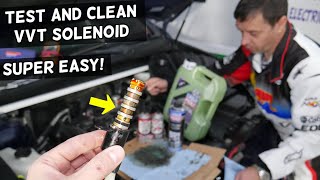
Yes, if the solenoid is clogged with sludge but electrically sound, cleaning it with brake cleaner restores function. However, if a multimeter shows the internal coil has failed, cleaning will not work and you must replace it.
Can low engine oil really cause an electrical circuit code?
Yes. If low oil pressure prevents the camshaft phaser from moving when commanded, the vehicle's logic interprets this lack of mechanical response as a control circuit fault. Always verify oil levels first.
Will an oil change fix a P0075 code?
If low, dirty, or incorrect viscosity oil triggered the code, an oil and filter change often resolves it. If the code returns immediately, you have a hard electrical fault or severe mechanical blockage.
Where is the Bank 1 intake valve control solenoid located?
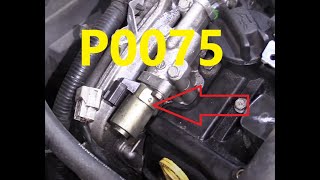
Bank 1 is the side of the engine containing cylinder #1. The intake solenoid mounts on the valve cover or the front of the cylinder head, closest to the intake manifold.
How much does it cost to fix P0075?
An oil change costs $90-$200, while replacing a VVT solenoid ranges from $125 to $450 for parts and labor. Wiring repairs typically cost $150-$450 depending on the damage location.
Key Takeaways
- P0075 is an electrical circuit code for the Bank 1 intake VVT solenoid, indicating the PCM detects an open wire, short circuit, or bad connection.
- Check your engine oil level and condition immediately; low or dirty oil causes the majority of VVT-related codes and is the cheapest fix.
- Test the solenoid's resistance with a multimeter (typically 5-25 ohms) before spending $125-$450 on a replacement part.
- Driving with P0075 for more than 4-6 months risks destroying your catalytic converter with unburnt fuel, turning a minor repair into a $2,000+ nightmare.
Helpful Videos
![What is P0075 Engine Code [Quick Guide]](https://img.youtube.com/vi/yTLrHi_O4S8/mqdefault.jpg)



Shop the Parts Behind P0075
Below are the parts most often responsible for code P0075, ranked by how frequently each one is the actual culprit (per the diagnosis above). Tap any to see what we have for your vehicle.

The information in this article is provided for general reference and educational purposes only. Vehicle specifications, procedures, and part compatibility can vary by production date, trim level, and region. Always consult your vehicle's factory service manual and verify part numbers before purchasing or performing repairs. Safety-critical components such as airbags, seat belts, and braking systems should be installed by a qualified professional.
- 🧭 Diagnostic Flowchart
- 🎬 Helpful Videos
- 🛍️ Shop This Part
- What Does P0075 Mean?
- Can I Drive With P0075?
- Common Causes
- Symptoms
- Common Fixes & Costs
- DIY vs Professional
- Used vs. New Parts: Buying Guide
- What Happens If You Wait — Timeline
- Cost of Not Fixing It
- Diagnosis Steps
- When This Code Triggers (Freeze-Frame Conditions)
- Related Codes
- Climate & Environmental Factors
- How to Talk to a Mechanic About This Code
- Where to Take It: Dealer vs Independent vs Chain
- When to Walk Away From the Repair
- What Scan Tool You Need for This Code
- How to Clear the Code After You Fix It
- Will This Fail Emissions / State Inspection?
- Most Commonly Affected Vehicles
- Manufacturer-Specific Notes
- Real Owner Stories
- 2013 Kia Sportage (2.4L GDI) at 110K miles
- 2008 Nissan Altima 2.5L with P0075 & P0011
- Nissan 370Z with sudden P0075 after radiator repair
- How to Prevent This Code From Triggering
- Frequently Asked Questions
- What is the most common mistake when diagnosing P0075?
- I replaced the solenoid, but P0075 came back. What's next?
- Can I just clean the VVT solenoid?
- Can low engine oil really cause an electrical circuit code?
- Will an oil change fix a P0075 code?
- Where is the Bank 1 intake valve control solenoid located?
- How much does it cost to fix P0075?
- Key Takeaways
- 🎟️ Get 5% Off