

OBD-II Code P0084: Exhaust Valve Control Solenoid Circuit (Bank 2)
The Ultimate Guide to Meaning, Diagnosis, and Repair for P0084
- Code P0084 indicates an electrical circuit failure in the Bank 2 exhaust VVT solenoid, which disables variable valve timing and reduces engine power.
- Check your engine oil first; low or sludgy oil causes over 30% of VVT solenoid failures by clogging the hydraulic passages.
- Test the solenoid's internal resistance with a multimeter before replacing it; a healthy unit typically reads between 5 and 25 ohms.
- Expect to pay between $150 and $350 for a professional solenoid replacement, or under $100 if you clean or replace the part yourself.
- Never ignore P0084 for more than a month; driving with incorrect valve timing dumps unburnt fuel into the exhaust, risking a $1,500 catalytic converter replacement.
What Does P0084 Mean?
Code P0084 indicates the Engine Control Module (ECM) detected an electrical fault in the Bank 2 exhaust valve control solenoid circuit. This solenoid controls the Variable Valve Timing (VVT) system, adjusting valve timing to optimize engine performance and fuel economy. When triggered, the ECM disables the VVT system on that bank, causing immediate drivability issues.
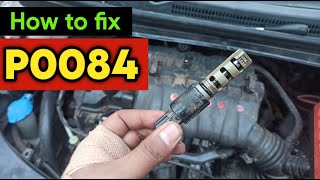
🎬 Watch: How to fix the P0084 circuit faultTechnical definition: The official SAE/OBD-II definition is 'Exhaust Valve Control Solenoid Circuit (Bank 2)'. The Engine Control Module (ECM) sets this code when it detects out-of-range voltage, incorrect resistance, or an open/short condition in the Bank 2 exhaust VVT solenoid circuit. The ECM commands the solenoid using a Pulse-Width Modulated (PWM) signal; P0084 triggers when the feedback voltage does not match the commanded state.
Can I Drive With P0084?
Yes, But With Caution. Yes, but only for short distances. The vehicle enters a failsafe mode that disables variable valve timing, causing poor acceleration, reduced fuel economy, and stalling. Driving longer than a few weeks with incorrect timing dumps unburnt fuel into the exhaust, risking a $1,500+ catalytic converter failure.
Common Causes
- Faulty Exhaust Valve Control Solenoid (Bank 2) (Very Common) — The solenoid fails electrically due to an internal short or open circuit in its coil windings, preventing it from responding to ECM commands.
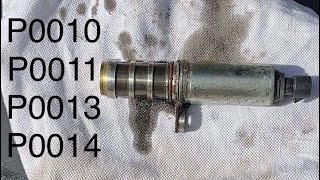
- Low, Dirty Oil or Clogged Filter Screen (Common) — The VVT system relies on clean, pressurized engine oil. Low oil levels, sludge, or incorrect viscosity clogs the solenoid's fine mesh screens, 🎬 See how to clean a clogged VVT solenoid restricting flow and triggering a circuit fault when the valve fails to actuate.
- Damaged Wiring or Corroded Connectors (Common) — Engine heat and vibration fray wires, melt insulation, or loosen connections. Moisture ingress corrodes the connector pins, creating high resistance that disrupts the electrical signal.
- Stretched Timing Chain (Less Common) — A stretched timing chain causes camshaft/crankshaft correlation issues. If the deviation exceeds the VVT system's compensation limits, the ECM logs a VVT circuit code because it cannot achieve the commanded timing.
- Outdated ECM Software (Rare) — Overly sensitive ECM calibrations falsely trigger P0084 codes. Manufacturers release software updates via Technical Service Bulletins (TSBs) to correct this logic error.
- Faulty Engine Control Module (ECM) (Rare) — The internal driver circuit in the ECM that controls the solenoid fails, preventing it from sending the correct PWM signal. This requires replacing and reprogramming the ECM.
Symptoms
- Check Engine Light is On — The ECM logs the fault and illuminates the Malfunction Indicator Lamp (MIL) on the dashboard immediately.
- Poor Acceleration / Sluggish Performance — The vehicle hesitates and responds slowly to throttle inputs, especially when climbing hills or merging onto highways.
- Reduced Fuel Economy — Gas mileage drops by 10-20% because the engine operates outside its optimal efficiency range.
- Rough Idle, Hesitation, or Stalling — The engine shakes, stumbles during acceleration, or stalls completely when coming to a stop 🎬 Watch: Fixing engine stalling by replacing the solenoid due to locked valve timing.
- Increased Exhaust Emissions (scan-tool only — no driver-felt sign) — Improper valve timing causes incomplete combustion, resulting in elevated emissions that fail state smog inspections.
Diagnostic Flowchart
Tap your situation to follow the diagnostic path that matches what you're seeing on this code.
Common Fixes & Costs
- Changing the Engine Oil and Filter — Parts: $40-$80, Labor: $25-$60, ~0.5 hr book time (DIY)
- Cleaning the VVT Solenoid and Passages — Parts: $5-$15, Labor: $0, ~1.0 hr book time (DIY)
- Replacing the Exhaust Valve Control Solenoid
— Parts: $40-$150, Labor: $75-$200, ~1.2 hr book time
(DIY)
Chevrolet Equinox (2.4L, 2014-2017): OEM AC Delco: 12679100 (Alt: Dorman: 917-216)
Ford F-150 (3.5L EcoBoost, 2013-2019): OEM Ford: HL3Z-6M280-A (Alt: Dorman: 916-724)
Subaru Outback (2.5L, 2013-2019): OEM Subaru: 10921AA23B (Alt: Dorman: 916-574) - Repairing Damaged Wiring or Connectors — Parts: $10-$50, Labor: $125-$250, ~1.5 hr book time (Intermediate)
- Updating ECM Software — Parts: $0, Labor: $100-$200, ~1.0 hr book time (Professional)
- Replacing the Engine Control Module (ECM) — Parts: $600-$1000, Labor: $200-$300, ~1.5 hr book time (Professional)
DIY vs Professional
- Changing Engine Oil and Filter 🟢 Beginner
Tools: Wrench set, oil filter wrench, drain pan, funnel - Cleaning or Replacing VVT Solenoid 🟢 Beginner
Tools: Socket set, torque wrench, rags, brake cleaner - Repairing Damaged Wiring 🟢 Beginner
Tools: Multimeter, wire strippers, soldering iron, heat shrink tubing - Updating ECM Software 🟢 Beginner
Tools: Manufacturer-specific scan tool and subscription - Replacing the ECM 🟢 Beginner
Tools: Socket set, specialized programming tools
Used vs. New Parts: Buying Guide
When a used part is worth it: Buying a used solenoid from a low-mileage vehicle makes sense for older, out-of-warranty cars where budget is the primary concern.
Donor-vehicle mileage cap: roughly under 80000 miles for the part to have meaningful remaining life.
Donor quality checklist:
- Verify the donor vehicle was not scrapped due to engine failure or oil sludge.
- Match the part number exactly; visually identical solenoids have different internal calibrations.
- Inspect the part for clean filter screens and zero corrosion on the connector pins.
Decision logic:
- If The vehicle is under powertrain warranty → Use a new OEM part installed by a dealer to maintain warranty coverage.
- If A new OEM or reputable aftermarket part is available for under $100 → Buy new; the $30 savings on a used part isn't worth the risk of premature failure.
- If The vehicle has over 150,000 miles and the budget is extremely tight → A used part is acceptable, but expect a significantly shorter lifespan.
Warranty tradeoff: Used parts offer a 30-day warranty at best. New aftermarket parts offer 1-year to lifetime warranties. New OEM parts carry a 1-year/12,000-mile warranty.
Worst-case if a used part fails: $150-$300 if a used part fails, requiring repeat labor costs and a second replacement part.
What Happens If You Wait — Timeline
- 0-1 month: Check Engine Light illuminates. The vehicle enters failsafe mode, disabling VVT. Fuel economy drops slightly, and acceleration feels sluggish. (MPG impact: 5-10%% · Added cost: $20-$50 in wasted fuel.)
- 1-3 months: Performance issues worsen. The engine hesitates significantly, idles roughly, and loses noticeable power on inclines. (MPG impact: 10-20%% · Added cost: $50-$150 in wasted fuel.)
- 3-6 months: Incorrect valve timing causes inefficient combustion, dumping unburnt fuel into the exhaust. The catalytic converter overheats and begins degrading. (MPG impact: 15-25%% · Added cost: $1200-$2800 for catalytic converter replacement.)
- 6+ months: The catalytic converter clogs completely, causing severe exhaust backpressure. Prolonged incorrect timing stresses the timing chain and valvetrain, risking catastrophic engine failure. (MPG impact: 20-30%+% · Added cost: $3000-$8000+ for major engine repairs.)
Cost of Not Fixing It
- 0-1 month: Noticeable drop in fuel economy (10-15%), poor acceleration, and rough idling. The vehicle fails state emissions tests. (Added cost: $20-$50 in wasted fuel.)
- 1-6 months: Incorrect timing dumps unburnt fuel into the exhaust, overheating and melting the catalytic converter substrate. (Added cost: $1200-$2800 for catalytic converter replacement.)
- 6+ months: Prolonged operation with locked valve timing stresses the timing chain and valvetrain, risking catastrophic piston-to-valve contact in interference engines. (Added cost: $3000-$8000+ for major engine replacement.)
Diagnosis Steps
- Check Engine Oil Level and Condition
Pull the engine oil dipstick. If the oil is low, top it off. If it is dark, gritty, or past its service interval, perform an oil and filter change immediately. Sludge is the leading cause of VVT faults.
Tools: Dipstick, clean rag, new oil (if needed) (Beginner) - Scan Codes and Review Freeze Frame Data
Connect an OBD-II scanner to confirm P0084. Analyze the freeze frame data to see the engine RPM, temperature, and load at the exact moment the code triggered. Clear the codes and test drive to see if it returns.
Tools: OBD-II Scanner (Beginner) - Visually Inspect Wiring and Connector
Locate the Bank 2 exhaust VVT solenoid. Inspect the wiring harness for melted insulation, chafing, or breaks. Unplug the connector and check the pins for corrosion, oil contamination, or bent terminals.
Tools: Flashlight (Beginner) - Test Solenoid Resistance
Disconnect the solenoid connector. Set a digital multimeter to Ohms (Ω) and measure the resistance between the two pins on the solenoid. A healthy unit typically reads 5-25 Ohms (check your specific repair manual). A reading of 'OL' (open circuit) or near-zero (short circuit) confirms a dead solenoid.
Tools: Digital Multimeter, vehicle-specific repair manual (Intermediate) - Check Power and Ground at the Connector
Turn the ignition to 'ON' (engine off). Set the multimeter to DC Volts. Probe the harness connector; one pin must show battery voltage (~12.6V). Switch to Ohms and check the ground pin against the battery negative terminal; resistance must be under 0.5 Ohms. Missing power or ground indicates a wiring or ECM fault.
Tools: Digital Multimeter (Intermediate) - Perform a Wiring 'Wiggle Test'
Connect your multimeter to monitor the circuit's voltage. Gently wiggle the wiring harness and connector. If the voltage drops out or fluctuates wildly, you have an intermittent broken wire or loose connection.
Tools: Digital Multimeter (Intermediate) - Activate Solenoid with Bi-directional Scanner
Use a professional scan tool to command the solenoid ON and OFF. Listen for an audible 'click' from the solenoid. If the ECM sends the command but the solenoid remains silent, it is mechanically stuck or electrically dead.
Tools: Bi-directional OBD-II Scanner (Advanced) - Monitor Live Data PIDs for Camshaft Position
View live data for 'Bank 2 Exhaust Camshaft Position - Desired' vs 'Actual'. Command the solenoid ON. If the 'Desired' angle changes but the 'Actual' angle remains static, the solenoid is stuck or the oil passages are clogged.
Tools: OBD-II Scanner with Live Data (Advanced) - Analyze PWM Signal with Oscilloscope
Back-probe the signal wire at the solenoid connector with an oscilloscope. With the engine running, verify a clean square wave (PWM signal) that changes duty cycle with RPM. A flat line confirms a wiring or ECM failure.
Tools: Automotive Oscilloscope (Lab Scope) (Advanced)
When This Code Triggers (Freeze-Frame Conditions)
- Engine Coolant Temp: 180-200°F (82-93°C) (Triggers after the engine reaches operating temperature and enters closed-loop fuel control.)
- RPM: 1500-3000 RPM (Triggers under moderate load during steady cruising or light acceleration when the VVT system actively adjusts timing.)
- Engine Load: 30-60% (Occurs during normal driving conditions when the ECM expects a specific hydraulic response from the solenoid.)
- Vehicle Speed: 40-65 mph (Commonly triggers at cruising speeds where VVT adjustments are most frequent.)
Related Codes
- P0085 — Indicates 'Exhaust Valve Control Solenoid Circuit Low (Bank 2)'. While P0084 is a general circuit fault, P0085 specifically points to a short to ground or abnormally low solenoid resistance.
- P0086 — Indicates 'Exhaust Valve Control Solenoid Circuit High (Bank 2)'. This strongly suggests a short to power, meaning the control wire is touching a constant 12V source.
- P0028 — Indicates a fault in the intake valve control solenoid circuit on the same bank (Bank 2).
- P0078 — The identical fault code for the opposite side of the engine: 'Exhaust Valve Control Solenoid Circuit (Bank 1)'.
Climate & Environmental Factors
- Cold Weather: Freezing temperatures thicken engine oil, slowing the hydraulic response of the VVT system on startup and triggering timing codes until the engine warms up.
- High Humidity / Road Salt: Moisture and salt penetrate unsealed electrical connectors, accelerating pin corrosion that causes high resistance and intermittent P0084 faults.
- Engine Sludge Buildup: Short trips in any climate prevent oil from reaching operating temperature, accelerating sludge formation that clogs VVT solenoid screens.
How to Talk to a Mechanic About This Code
Say this: "I have a P0084 code for the exhaust valve control solenoid circuit on Bank 2. I'd like to schedule a diagnostic that includes checking the solenoid's resistance and verifying power and ground at the connector before any parts are replaced."
This signals you understand P0084 is a circuit fault. It directs the technician to perform a proper electrical diagnosis instead of immediately replacing the solenoid, preventing unnecessary spending if the wiring is the actual problem.
Avoid saying:
- 'Just fix whatever's wrong'
- 'My check engine light is on, can you look at it?'
- 'Replace the VVT solenoid'
Questions to ask before authorizing the repair:
- What was the solenoid's resistance reading in Ohms?
- Did you confirm 12V power and a solid ground at the solenoid's connector?
- Did you inspect the wiring harness for visible damage, melting, or chafing?
- What is the warranty on the recommended part and labor?
Where to Take It: Dealer vs Independent vs Chain
- Dealer:
Best for: Vehicles under powertrain or emissions warranty., Complex cases requiring ECM software updates via manufacturer TSBs., European brands (BMW, Audi) requiring specialized diagnostic routines.
Downsides: Labor rates are 50-100% higher than independent shops., Dealers often recommend replacing entire assemblies rather than individual components. (Typical cost: +50% vs. baseline) - Independent Shop:
Best fit. P0084 is a common code that any competent independent shop with electrical diagnostic skills handles effectively at a lower cost than a dealer.
Best for: Out-of-warranty vehicles where cost is a major factor., Straightforward electrical diagnosis and solenoid replacement., Building a long-term relationship with a trusted mechanic.
Downsides: Quality varies widely; vet shops based on reviews and ASE certifications., May lack expensive, dealer-specific tools for ECM software updates. (Typical cost: +0% vs. baseline) - Chain Shop:
Use with caution. Acceptable for an oil change, but risky for diagnosing the root cause of an electrical circuit code.
Best for: Simple maintenance like an oil change if dirty oil is the suspected cause.
Downsides: Technician skill varies dramatically., High pressure to upsell unnecessary services., Often defaults to replacing the solenoid without performing circuit tests. (Typical cost: -10% vs. baseline)
When to Walk Away From the Repair
If the total estimated repair cost exceeds 50% of your car's private-party value, seriously consider selling or trading it in.
- Car worth $4000, fix is $300: Fix it. A standard solenoid replacement is well below the threshold.
- Car worth $4000, fix is $1500: Borderline. This suggests a complex ECM or wiring failure. Get a second opinion before authorizing the repair.
- Car worth $2500, fix is $1500: Walk away. The repair cost is 60% of the car's value. It is not a sound financial decision.
What Scan Tool You Need for This Code
Minimum: A scanner that reads codes, displays freeze frame data, and shows live data PIDs for the VVT system.
A $20 code reader only provides the P0084 code. Proper diagnosis requires live data (Desired vs. Actual camshaft position) to determine if the solenoid responds to ECM commands.
Budget: BlueDriver Pro (~$100) — Reads codes, provides freeze frame data, and graphs live data for camshaft position to verify solenoid operation.
Mid-range: Foxwell NT510 Elite (~$180) — Includes bi-directional control. Commands the VVT solenoid ON/OFF, letting you hear it click and watch live data change to confirm mechanical function.
Professional: Autel MaxiCOM MK808S (~$450) — Offers full bi-directional control, advanced all-system diagnostics, and a tablet interface for graphing multiple PIDs simultaneously.
Rent vs buy: Auto parts stores read codes for free, but their tools lack bi-directional tests. Buying a capable scanner is required for DIY diagnosis.
How to Clear the Code After You Fix It
- Use an OBD-II scan tool to clear the P0084 code.
- Ensure the fuel tank is between 1/4 and 3/4 full.
- Perform a complete drive cycle to allow the vehicle's readiness monitors to run.
Drive cycle (~30 minutes): Start with a cold engine. Idle for 3 minutes with the A/C and defroster on. Drive for 15 minutes in mixed city/highway conditions, maintaining a steady 55 mph for at least 5 minutes, followed by periods of coasting deceleration.
Readiness monitors affected: Catalyst Monitor, Evaporative System (EVAP) Monitor, Oxygen (O2) Sensor Monitor
Before emissions retest: drive at least 100 miles to fully set monitors.
Watch out for:
- Disconnecting the battery clears the code but resets all readiness monitors, guaranteeing an automatic emissions test failure.
- The code returns immediately upon startup if the underlying electrical short or open circuit remains unrepaired.
Will This Fail Emissions / State Inspection?
Yes — this code typically fails an OBD-II emissions inspection.
- California: An active P0084 code is an automatic failure. After repair, all OBD readiness monitors must be set to 'Ready' before a smog check passes, requiring 50-100 miles of driving.
- New York: The NYS DMV inspection includes an OBD-II scan. The presence of a Check Engine Light and code P0084 results in an immediate emissions failure.
- Texas: In the 17 counties requiring emissions testing, a vehicle with P0084 fails the OBD portion of the annual safety inspection.
Most Commonly Affected Vehicles
- Chevrolet/GMC Silverado, Equinox, Acadia (2014-2021) — Common on V6 and V8 engines. Check for TSB 10-06-01-008I regarding software calibration updates before replacing hardware.
- Ford F-150, Explorer, Fusion (2013-2019) — EcoBoost engines frequently suffer from wiring harness damage due to heat and vibration near the VVT solenoids.
- Subaru Outback, Forester, Legacy (2013-2019) — Boxer engines are highly susceptible to oil-related VVT issues. Ensure the updated OEM part number is used for replacements.
- Hyundai/Kia Santa Fe, Sonata, Optima, Sorento (2012-2021) — Theta II GDI engines suffer from severe oil sludge buildup that clogs the Oil Control Valves (OCV), leading to rough idle and stalling.
- Nissan Altima, Maxima, Murano (2011-2017) — On 3.5L V6 engines, the fault often lies in the 'magnetic retarder' located in the front timing cover rather than the standard solenoid.
- BMW 3-Series, 5-Series, X3, X5 (2010-2018) — VANOS solenoids fail frequently on N52, N54, and N55 engines. Replace both intake and exhaust solenoids on the affected bank simultaneously.
- Volkswagen/Audi GTI, A4, Q5 (2009-2017) — On 2.0T TSI engines, P0084 is caused by a failing N318 exhaust camshaft adjustment valve or a torn cam bridge oil screen.
Manufacturer-Specific Notes
- Hyundai/Kia: Dealers frequently deny powertrain warranty claims for VVT failures if they find engine sludge. Owners must provide meticulous oil change records to prove proper maintenance.
- Nissan: On V6 engines, the VVT system utilizes a 'timing control magnet retarder' inside the timing cover. This component fails more often than the external solenoid.
- General Motors (Chevrolet/GMC): Original ECM software on 2014-2015 models is overly sensitive and triggers false P0084 codes. Always check for TSBs requiring a calibration update before replacing parts.
- Toyota/Lexus: TSB 0015-12 addresses VVT codes that persist after solenoid replacement, requiring replacement of the entire camshaft timing gear assembly (phaser).
Real Owner Stories
2015 Chevy Equinox 2.4L with 165K miles
Vehicle entered 'Reduced Engine Power' mode with poor acceleration and code P0084. The engine consumed 1 quart of oil every 200 miles.
Outcome: The root cause was excessive oil consumption from faulty piston rings. Severe oil burning starved the VVT system, causing the timing codes. The fix required a complete engine rebuild.
Lesson: On engines known for oil consumption, VVT codes are a symptom of oil starvation. Always check oil levels first; replacing the solenoid will not fix a dry engine.
2016 Ford F-150 3.5L EcoBoost
The check engine light illuminated with code P0084, but the truck exhibited no major drivability issues.
Outcome: The technician found a section of the VVT solenoid wiring harness chafed against a hot engine component. Repairing the damaged wires resolved the code.
Lesson: Perform a detailed visual inspection of the wiring and connectors before buying parts. Circuit codes frequently stem from damaged wires, not failed components.
Porsche 987 Cayman 2.9L with 100K miles
The car developed a shudder at idle and threw P0084 alongside random misfire codes.
Outcome: The owner bench-tested the cleaned solenoid by applying 12V power, confirming the internal piston clicked and moved freely. Reinstalling the cleaned unit cleared all codes.
Lesson: If a solenoid passes a multimeter resistance test, the failure is likely mechanical sticking. Cleaning and bench-testing the unit saves the cost of a replacement part.
How to Prevent This Code From Triggering
- Use high-quality full synthetic engine oil and a premium oil filter. (Every oil change) — Synthetic oil resists thermal breakdown and prevents the sludge formation that clogs VVT solenoid screens.
- Adhere to the 'severe' maintenance schedule for oil changes. (Every 3,000-5,000 miles) — Short trips and stop-and-go driving degrade oil rapidly. Frequent changes flush out contaminants before they damage hydraulic VVT components.
- Use a quality fuel system cleaner periodically in GDI engines. (Every 5,000-10,000 miles) — Gasoline Direct Injection (GDI) engines suffer from fuel dilution in the oil. Cleaners maintain combustion efficiency, reducing the blow-by that contaminates engine oil.
- Apply dielectric grease to the VVT solenoid connector pins. (Whenever the connector is unplugged) — Dielectric grease blocks moisture, preventing the pin corrosion that causes high resistance and intermittent P0084 faults.
Frequently Asked Questions
What is 'Bank 2'?
On a V-shaped engine, Bank 1 is the side containing cylinder number one, making Bank 2 the opposite side. Inline engines only have one bank, so they trigger Bank 1 codes like P0078 instead of P0084.
What is the most common misdiagnosis for P0084?
The most common misdiagnosis is replacing the solenoid without performing electrical tests. The actual fault is frequently a broken wire, a corroded connector, or dirty engine oil. Always test the circuit's resistance and check oil quality before buying parts.
I replaced the solenoid and the P0084 code came back. What now?
If a new solenoid fails to clear the code, the problem lies in the wiring or the ECM. Re-check the harness for intermittent shorts by performing a wiggle test while monitoring voltage. Verify proper power and ground at the connector, and check for available ECM software updates.
Can I just clean the VVT solenoid instead of replacing it?
Yes, if the solenoid passes a resistance test but is mechanically stuck from sludge, cleaning it restores function. Remove the unit, spray it thoroughly with brake cleaner, and ensure the internal piston moves freely. If the code returns after cleaning, the internal coil is failing and requires replacement.
Will an oil change fix a P0084 code?
If the code stems from low, dirty, or incorrect oil, an oil and filter change using the manufacturer-specified viscosity fixes the issue. After the oil change, clear the codes and complete a drive cycle to verify the repair.
How much does it cost to fix P0084?
An oil change costs under $100 and fixes sludge-related triggers. Replacing the solenoid costs $150 to $350 at a shop, while DIY replacement runs $40 to $150 for parts. Complex wiring or ECM repairs exceed $600.
What happens if I ignore the P0084 code?
Ignoring this code causes poor engine performance, rough idling, and a 10-15% drop in fuel economy. Long-term operation with incorrect valve timing dumps unburnt fuel into the exhaust, destroying the catalytic converter and turning a $200 repair into a $1,500+ expense.
Where is the P0084 solenoid located?
The Bank 2 exhaust valve control solenoid sits on the cylinder head of the engine bank opposite cylinder #1. It is typically mounted near the valve cover on the exhaust camshaft side. Consult your vehicle's specific repair manual for the exact location.
Key Takeaways
- Code P0084 indicates an electrical circuit failure in the Bank 2 exhaust VVT solenoid, which disables variable valve timing and reduces engine power.
- Check your engine oil first; low or sludgy oil causes over 30% of VVT solenoid failures by clogging the hydraulic passages.
- Test the solenoid's internal resistance with a multimeter before replacing it; a healthy unit typically reads between 5 and 25 ohms.
- Expect to pay between $150 and $350 for a professional solenoid replacement, or under $100 if you clean or replace the part yourself.
- Never ignore P0084 for more than a month; driving with incorrect valve timing dumps unburnt fuel into the exhaust, risking a $1,500 catalytic converter replacement.
Helpful Videos
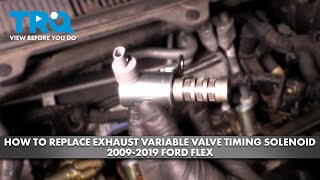
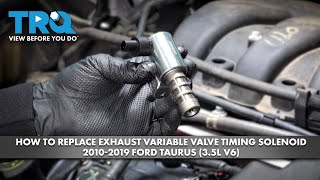
Shop the Parts Behind P0084
Below are the parts most often responsible for code P0084, ranked by how frequently each one is the actual culprit (per the diagnosis above). Tap any to see what we have for your vehicle.

The information in this article is provided for general reference and educational purposes only. Vehicle specifications, procedures, and part compatibility can vary by production date, trim level, and region. Always consult your vehicle's factory service manual and verify part numbers before purchasing or performing repairs. Safety-critical components such as airbags, seat belts, and braking systems should be installed by a qualified professional.
- 🧭 Diagnostic Flowchart
- 🎬 Helpful Videos
- 🛍️ Shop This Part
- What Does P0084 Mean?
- Can I Drive With P0084?
- Common Causes
- Symptoms
- Common Fixes & Costs
- DIY vs Professional
- Used vs. New Parts: Buying Guide
- What Happens If You Wait — Timeline
- Cost of Not Fixing It
- Diagnosis Steps
- When This Code Triggers (Freeze-Frame Conditions)
- Related Codes
- Climate & Environmental Factors
- How to Talk to a Mechanic About This Code
- Where to Take It: Dealer vs Independent vs Chain
- When to Walk Away From the Repair
- What Scan Tool You Need for This Code
- How to Clear the Code After You Fix It
- Will This Fail Emissions / State Inspection?
- Most Commonly Affected Vehicles
- Manufacturer-Specific Notes
- Real Owner Stories
- 2015 Chevy Equinox 2.4L with 165K miles
- 2016 Ford F-150 3.5L EcoBoost
- Porsche 987 Cayman 2.9L with 100K miles
- How to Prevent This Code From Triggering
- Frequently Asked Questions
- What is 'Bank 2'?
- What is the most common misdiagnosis for P0084?
- I replaced the solenoid and the P0084 code came back. What now?
- Can I just clean the VVT solenoid instead of replacing it?
- Will an oil change fix a P0084 code?
- How much does it cost to fix P0084?
- What happens if I ignore the P0084 code?
- Where is the P0084 solenoid located?
- Key Takeaways
- 🎟️ Get 5% Off