

P0087 on 2022 Acura MDX: Fuel Rail Pressure Too Low Causes & Fixes
On a 2022 Acura MDX, P0087 most likely points to a failing fuel pump. Acura has issued a Technical Service Bulletin (TSB) to investigate this exact issue, which can cause stalling or hard starts. Contact an Acura dealer first, as this is a known problem that may extend from issues that caused massive recalls on prior model years.
- P0087 on a 2022 MDX is a serious code indicating dangerously low fuel pressure that can cause stalling.
- This is a known issue under investigation by Acura (TSB #BTI&03282023902), so your first step should be to contact a dealer.
- The most likely causes are a failing low-pressure (in-tank) fuel pump or a failing high-pressure fuel pump.
- Do not drive the vehicle, as a sudden engine stall poses a significant safety risk.
- Diagnosis and repair should be left to a professional due to the complexity and safety risks of the high-pressure fuel system.
What's Unique About the 2022-2022 Acura MDX
The key issue for the 2022 Acura MDX is that this code is the subject of a manufacturer investigation. Acura issued TSB #BTI&03282023902 because of customer complaints about P0087, often accompanied by hard starting or stalling. This bulletin specifically asks dealers to collect vehicle information *before* attempting a repair, to help Honda's engineering team understand the root cause. This indicates a recognized pattern of failure rather than a random one-off problem, making it crucial for owners to be aware of the official TSB when seeking repairs. This issue is also set against a backdrop of massive fuel pump recalls for 2019-2020 Acura models for the same symptoms.
Diagnostic Flowchart
Tap your situation to follow the diagnostic path that matches what you're seeing on this vehicle.
Symptoms You May Notice
- Check Engine Light is on
- Engine is hard to start, will not start, or stumbles after starting
- Engine stalling, possibly while driving
- Poor acceleration or loss of power
- Rough idle
- Engine misfires
- Vehicle enters 'limp mode,' refusing to accelerate past a certain speed (e.g., 45 MPH)
- Replacing the high-pressure fuel pump (HPFP) when the in-tank low-pressure pump is the actual cause. The TSB for this issue specifically directs technicians to investigate the low-pressure system first. One Acurazine user with an RDX reported the dealer replaced the recalled low-pressure pump, but the issue persisted, leading to a diagnosis of a bad HPFP.
Most Likely Causes
- Failing Low-Pressure Fuel Pump (In-Tank) 🔴 High Probability → Shop Fuel Pump While a massive recall for failing low-pressure pumps affected 2019-2020 MDX models due to a defective impeller, the TSB for 2020-2022 models suggests similar issues may persist. The TSB specifically asks dealers to check the low-pressure system first when P0087 is present. This is the most common failure point across the wider Honda/Acura lineup for this code.
How to confirm: A technician will perform a fuel pressure test on the low-pressure side. A healthy pump should produce adequate pressure (e.g., around 57-64 PSI). If the pressure is low or drops under load, the pump is failing.
Typical fix: Replace the in-tank low-pressure fuel pump module. 🎬 See this diagnostic and in-tank fuel pump replacement guide.
Est. part cost: $250-$450 - Failing High-Pressure Fuel Pump (HPFP) 🟡 Medium Probability → Shop Fuel Pump The HPFP is a mechanical pump driven by the engine's camshaft that can wear out. If the low-pressure system checks out, the HPFP is the next logical suspect. A Reddit user with a related Acura model and P0087 reported that a faulty HPFP was the cause found by the dealer.
How to confirm: Use a scan tool to monitor desired vs. actual fuel rail pressure. If the low-pressure side is good but the high-pressure side is significantly below target, the HPFP has likely failed. Mechanics may also inspect the cam lobe and follower that drive the pump for wear.
Typical fix: Replace the high-pressure fuel pump, which is located on the engine.
Est. part cost: $400-$600 - Faulty Fuel Pressure Sensor ⚪ Low Probability → Shop Fuel Pressure Sensor
How to confirm: Compare the pressure reading from a mechanical gauge to the reading reported by the sensor on a scan tool. If the readings differ significantly, or the sensor reading is erratic with the key on and engine off, the sensor is likely faulty.
Typical fix: Replace the fuel rail pressure sensor.
Est. part cost: $100-$200 - Clogged Fuel Filter ⚪ Low Probability → Shop Fuel Filter This is less common on a newer vehicle but can occur due to fuel contamination. The primary fuel filter is typically integrated into the low-pressure fuel pump module assembly.
How to confirm: A fuel pressure test will show low pressure from the in-tank pump. Diagnosis is often incidental when replacing the fuel pump module.
Typical fix: Replace the fuel filter. This is often done as part of a complete fuel pump module replacement.
Est. part cost: $50-$450
Rare But Worth Checking
- FI-ECU Software Error: On 2022-2025 MDX Type-S models, a recall was issued for a software error in the Fuel Injection ECU that could cause stalling or loss of power, mimicking fuel pressure symptoms. The fix is a software update.
Diagnosis Steps
- Contact an Acura dealership and reference TSB #BTI&03282023902. Since this is a known issue under investigation, the dealer has specific instructions from the manufacturer to collect data *before* repair.
- Check the vehicle's VIN on the NHTSA or Acura recall website for any open campaigns, including the FI-ECU software recall for Type S models.
- Confirm the code P0087 is present 🎬 Watch: A helpful walkthrough on fixing the P0087 fault code. using an OBD-II scanner.
- Use a scan tool with live data to monitor the desired versus actual fuel pressure for both the low and high-pressure systems.
- Perform a fuel pressure test on the low-pressure side to rule out the in-tank fuel pump. Expect 57-64 PSI.
- If low-side pressure is within spec, test the high-pressure fuel pump's performance under load. A significant deviation between desired and actual pressure points to a failing HPFP.
- Inspect for any visible fuel leaks in the lines or at the connections, especially around the HPFP.
- Test the fuel pressure sensor by comparing its electronic reading to a mechanical gauge.
- If replacing the HPFP, inspect the camshaft lobe and the pump's cam follower for wear or damage.
Parts You'll Likely Need
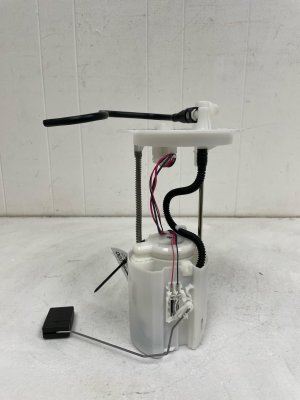
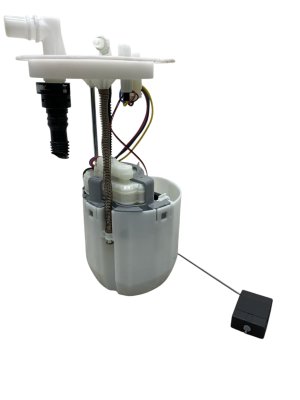
- Fuel Pump Module Assembly (Low Pressure)
(OEM #17045-TYA-A02 (for 3.5L V6))— This is a common failure point on modern Honda/Acura vehicles and is the primary focus of related recalls and TSBs for P0087.
Trusted brands: Acura OE, Denso, Delphi
OEM price range: $430-$635
Aftermarket price range: $250-$450 - High-Pressure Fuel Pump
(OEM #16790-6S9-A01 (for 3.0L Turbo V6 Type S) / Part number for 3.5L V6 varies, confirm with dealer.)— If the low-pressure pump is working correctly, the high-pressure pump is the next most likely component to fail and cause this code.
Trusted brands: Acura OE, Bosch
OEM price range: $370-$540
Aftermarket price range: $400-$600
Technical Service Bulletins (TSBs) & Recalls
- Bulletin #BTI&03282023902: An internal communication from Acura requesting that dealerships report instances of P0087 on 2020-2022 MDX & RDX models for investigation, especially when accompanied by hard start or no-start symptoms. It explicitly asks dealers to contact Honda's Technical Information & Support group before attempting repairs.
Platform-Specific Known Issues
- American Honda Motor Co., Inc. (AHM) is actively investigating P0087 on 2020-2022 MDX models. TSB #BTI&03282023902 instructs dealers to collect information from affected vehicles before attempting repairs to better understand the root cause.
- While the 2022 MDX was not part of the massive 2019-2020 fuel pump recall (NHTSA 21V215000), the symptoms and code are identical, suggesting a potential continuation of supplier issues with the low-pressure pump.
- 2022 MDX Type-S models are subject to a recall for an FI-ECU software error that can cause stalling, a symptom that could be confused with a P0087 fault.
Mechanic-Grade Diagnostic Values
- Low-Pressure Fuel System (In-tank pump) — expected: 57-64 PSI with key on, engine off.. Failure: Pressure is significantly below 57 PSI or drops quickly after the pump primes.
- High-Pressure Fuel System (HPFP) at idle — expected: Approximately 500-600 PSI.. Failure: Actual pressure shown on a scan tool is significantly lower than the desired pressure commanded by the ECM.
- Fuel Rail Pressure Sensor Voltage (Key On, Engine Off) — expected: Approximately 0.5V to 4.5V, varying with residual pressure.. Failure: Voltage is stuck at 0V, 5V, or does not change when fuel pressure is manually bled off.
Scan Tool Commands That Help
- Acura i-HDS (Honda Diagnostic System): On-Board Snapshot Data Review — According to a related TSB for fuel pump issues, technicians are instructed to check the snapshot data for a stored engine stall (Engine Speed = 0 RPM while Vehicle Speed > 0 MPH). This helps prioritize diagnosis towards the low-pressure fuel pump.
- Acura i-HDS (Honda Diagnostic System): Clear All DTCs — This function must be used after replacing the fuel pump motor to clear any stored trouble codes and reset the system.
Wiring & Ground Locations
- Fuel Pump Driver/Control Module — Generally located in the rear of the vehicle, possibly under the rear seat or near the fuel tank. On some MDX generations, it is under the second-row driver's side seat.. This module controls the voltage supplied to the low-pressure fuel pump. A failure in this module or its wiring can starve the pump of power, leading to low fuel volume and triggering P0087.
- G402 (Ground Point) — Located in the left kick panel area on previous MDX generations.. While not confirmed for the 2022 model specifically, the main body ground points in the driver's area are critical for many control modules. A poor ground at G402 could potentially affect the Fuel Pump Driver Module or other related electronics, causing intermittent voltage drops and fuel pressure issues.
Real Owner Repair Stories
- Reddit user ahy90 in r/Acura (Related Acura model (RDX/MDX) from the 2016-2020 range, experiencing identical issues to the 2022 TSB.) — Multiple warning lights on the dash, vehicle would not exceed 45 MPH, vehicle would rumble and shake, and experienced long crank times.
❌ Tried (didn't work) The user did not report other failed attempts; the dealer diagnosed the issue directly.
✅ What actually fixed it The technician confirmed DTC P0087, inspected the fuel, and found abnormalities with the high-pressure fuel pump. Replacing the high-pressure fuel pump and spark plugs resolved the issue.
OEM Part Supersession History
Not specified, but multiple revisions exist.→16790-6S9-A01— Standard part evolution and potential design improvements.
Heads up: Part number 16790-6S9-A01 is specified for the 3.0L V6 Turbo engine in the MDX Type S and TLX Type S from 2021-2023. It is not compatible with the 3.5L V6.
Helpful Videos
Used OEM Parts in Stock
New Aftermarket Parts Available


The information in this article is provided for general reference and educational purposes only. Vehicle specifications, procedures, and part compatibility can vary by production date, trim level, and region. Always consult your vehicle's factory service manual and verify part numbers before purchasing or performing repairs. Safety-critical components such as airbags, seat belts, and braking systems should be installed by a qualified professional.
- Acura MDX:
- 🧭 Diagnostic Flowchart
- 🎬 Helpful Videos
- 🛍️ Shop This Part
- What's Unique About the 2022-2022 Acura MDX
- Symptoms You May Notice
- Most Likely Causes
- Rare But Worth Checking
- Diagnosis Steps
- Parts You'll Likely Need
- Technical Service Bulletins (TSBs) & Recalls
- Platform-Specific Known Issues
- Mechanic-Grade Diagnostic Values
- Scan Tool Commands That Help
- Wiring & Ground Locations
- Real Owner Repair Stories
- OEM Part Supersession History
- 🎟️ Get 5% Off