

P0087 on 2017-2018 Audi S4 3.0T: Fuel Pressure Too Low Causes and Fixes
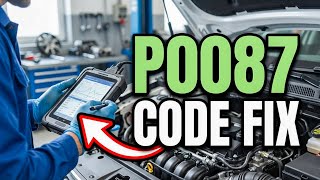
For a 2017-2018 Audi S4, a P0087 code is often due to a software issue. An official Audi Technical Service Bulletin (TSB 2048604/3) calls for an ECU software update as the first step. If the code returns, especially under load, the high-pressure fuel pump (HPFP) is the next most likely cause.
- For a 2017-2018 Audi S4, do not replace any parts for a P0087 code until you have verified with a dealer that the software update from TSB 2048604/2 has been performed.
- If the code persists after the software update, the high-pressure fuel pump (HPFP) is the most probable cause of the failure.
- Symptoms typically include severe power loss and hesitation when accelerating, as the fuel system cannot meet the engine's demand.
- Driving with this code is unsafe due to the risk of stalling. The issue should be addressed promptly.
- Diagnosis requires advanced tools to monitor live fuel pressure data; this is not a simple fix for a novice DIYer.
What's Unique About the 2017-2018 Audi S4
For the B9 generation Audi S4 (2017-2018), this code has a very specific, documented issue. Audi released a Technical Service Bulletin (TSB 2048604/3, latest version as of March 2020) acknowledging that the P0087 code could be triggered erroneously. The official first step is a specific software update to improve the diagnostic logic. Unlike many other vehicles where P0087 immediately points to a mechanical failure, on this platform, a software update is the primary prescribed remedy before any parts are replaced.
Symptoms You May Notice
- Check Engine Light illuminated
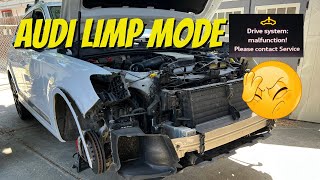
- Significant loss of engine power, sometimes described as 'limp mode'
- Engine hesitation or stuttering, especially under acceleration or high load (e.g., above 3,000 RPM).
- Rough or uneven idle
- Difficulty starting the engine or long crank times.
- Engine stalling unexpectedly.
- A shaky or misfiring sensation, particularly on the highway.
- Replacing the High-Pressure Fuel Pump (HPFP) before performing the mandatory software update specified in TSB 2048604/3.
- Replacing the fuel pressure sensor when the HPFP is actually failing to keep up with demand under load.
- Confusing the normal, loud ticking of the direct injectors with a fault, when the actual problem is a silent drop in pressure under load.
Most Likely Causes
- Engine Control Module (ECM) Software 🔴 High Probability → Shop Engine Control Module (ECM) Audi issued TSB 2048604/3 specifically for this issue on 2017-2018 S4/S5/SQ5 models, indicating the original software had overly sensitive diagnostics that could falsely trigger P0087.
How to confirm: An Audi dealer or a shop with the appropriate ODIS diagnostic tools can check the current software version against the TSB and see if the update has been performed. This is the mandatory first step.
Typical fix: Update the ECM software to the latest version as specified in the TSB. This resolves the issue for many owners without any hardware replacement.
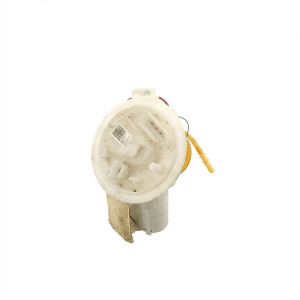
Est. part cost: $0 (if under warranty) or 1-2 hours labor at a dealer/specialist. - Failing High-Pressure Fuel Pump (HPFP) 🟡 Medium Probability → Shop Fuel Pump The HPFP is a mechanical pump driven by the camshaft that is responsible for creating pressures up to 200 bar (2900+ PSI). It is a common failure point in direct-injection fuel systems when pressure drops under load, after the software issue has been ruled out.
How to confirm: After the software update, a technician should monitor specified vs. actual fuel rail pressure with a diagnostic tool (like VCDS). If actual pressure drops significantly during a full-throttle pull while low-pressure supply is steady, the HPFP is the prime suspect.
Typical fix: Replace the high-pressure fuel pump. It is also highly recommended to replace the cam follower (roller) that the pump rides on at the same time.
Est. part cost: $400-$800 - Faulty Fuel Pressure Sensor ⚪ Low Probability → Shop Fuel Pressure Sensor The system uses both a high-pressure (G247) and low-pressure (G410) sensor. While sensor failure is less common than pump failure, a faulty sensor can send incorrect data to the ECU, triggering the code. A user on AudiWorld experienced a P119A code for the G247 sensor along with P0087 after many other parts were replaced.
How to confirm: Compare the sensor's readings on a scan tool with a mechanical gauge reading. A significant discrepancy points to a bad sensor or wiring.
Typical fix: Replace the faulty fuel pressure sensor, most likely the high-pressure sensor (G247) on the fuel rail.
Est. part cost: $100-$250 - Failing Low-Pressure Fuel Pump (LPFP) or Clogged Fuel Filter ⚪ Low Probability → Shop Fuel Filter The in-tank LPFP supplies the HPFP. If its output is weak due to a failing pump or a clogged filter, the HPFP will be starved of fuel, causing the P0087 code. This is a more general cause and less specific to the B9 S4's known issues.
How to confirm: Test the pressure of the low-pressure fuel system. It should hold a steady pressure (e.g., ~6 bar) that meets manufacturer specifications before condemning the high-pressure system.
Typical fix: Replace the in-tank fuel filter or the entire low-pressure fuel pump assembly.
Est. part cost: $50-$400
Rare But Worth Checking
- Leaking Fuel Injector: → Shop Fuel Injector A fuel injector stuck open can cause a drop in rail pressure. This would likely be accompanied by other symptoms like a strong fuel smell from the exhaust, fuel in the oil, and misfire codes for a specific cylinder.
- Worn Camshaft Lobe / HPFP Follower: → Shop Engine Camshaft The lobe on the camshaft that drives the HPFP can wear down, or the roller follower on the pump itself can fail. This reduces the pump's stroke and its ability to generate pressure. When replacing the HPFP, this component should always be inspected and typically replaced as a best practice.
Diagnosis Steps
- Connect an OBD-II scanner and confirm the presence of P0087 and any other codes. Note the conditions under which the code was set (e.g., RPM, load).
- CRITICAL: Check with an Audi dealer or qualified specialist if TSB 2048604/3 (software update) is applicable and has been performed. If not, this is the first required action.
- If the code returns after the update, connect a diagnostic tool capable of reading live data (e.g., VCDS, OBDeleven).
- Monitor 'Fuel Rail Pressure (specified)' and 'Fuel Rail Pressure (actual)' (e.g., VCDS MVB 106).
- Observe pressures at idle (should be around 40 bar). Then, during a test drive with hard, full-throttle acceleration, monitor the gap between specified and actual pressure. A large, consistent gap where 'actual' falls far below 'specified' (which can be up to 150-200 bar) points to a mechanical fuel delivery issue.
- Rule out the low-pressure side. Check the low-pressure fuel pump's output to ensure it's delivering adequate pressure (~6 bar) to the HPFP.
- If the low-pressure side is healthy and the high-pressure side fails to meet demand, the High-Pressure Fuel Pump (HPFP) is the most likely cause.
- Before replacing the HPFP, check the engine oil for fuel contamination or a gasoline smell, which can indicate a severe internal pump failure.
- When replacing the HPFP, inspect the camshaft lobe for wear and always replace the roller cam follower. 🎬 See this walkthrough for installing a high-pressure fuel pump
Parts You'll Likely Need
- High-Pressure Fuel Pump (HPFP)
(OEM #06M127025C)— This is the most common mechanical failure that causes P0087 on this platform, especially after the software has been updated.
Trusted brands: Bosch (OEM), Hitachi
OEM price range: $600-$900
Aftermarket price range: $400-$700 - High-Pressure Fuel Rail Sensor (G247)
(OEM #06J906051D)— Though less common than the pump, a faulty sensor can cause the P0087 code and is a potential point of failure.
Trusted brands: Bosch (OEM), Vemo
OEM price range: $150-$250
Aftermarket price range: $80-$150
Related Codes That Often Appear With This One
- P12A300 — This code for 'Fuel Pressure Regulator Valve mechanical malfunction' is listed alongside P0087 in the same Audi TSB 2048604/3, indicating they are related to the same software diagnostic issue.
- P030x (e.g., P0300, P0301) — Misfire codes can occur because the low fuel pressure leads to a lean air-fuel mixture that fails to ignite properly, especially under load.
- P119A — This code points to a fault with the G247 fuel pressure sensor. It can appear alongside P0087, complicating diagnosis, as seen in a forum thread where a user was chasing the root cause.
Technical Service Bulletins (TSBs) & Recalls
- 01 20 45 2048604/3: '01 MIL on, DTC P008700 or P12A300 stored in ECM - 3.0T' - This TSB is the most critical piece of information, advising a software update for the 2017-2018 S4/S5/SQ5 before replacing parts. This version supersedes previous versions.
Platform-Specific Known Issues
- A primary issue for the 2017-2018 S4 is the original ECM software, which can incorrectly trigger a P0087 code. Audi TSB 2048604/3 addresses this with a software update and is the mandatory first step in diagnosis.
Mechanic-Grade Diagnostic Values
- Low-Pressure Fuel System Pressure — expected: Approx. 6.0 Bar (87 PSI). Failure: Pressure significantly below 6.0 Bar indicates a failing in-tank pump (LPFP) or clogged filter.
- High-Pressure Fuel Rail Pressure (at idle) — expected: Approx. 35-40 Bar (507-580 PSI). Failure: Pressure significantly below this range at idle, or failing to rise under load, points to an HPFP or sensor issue.
- High-Pressure Fuel Rail Pressure (under load) — expected: Specified value can reach up to 200 Bar (2900 PSI). Failure: If the 'Actual' pressure in VCDS measuring blocks cannot keep up with the 'Specified' pressure during acceleration, the HPFP is likely failing.
- G247 Fuel Pressure Sensor - Supply Voltage — expected: Approx. 5.0 V between pins 1 and 3 of the sensor connector with ignition on.. Failure: No voltage or significantly lower voltage suggests a wiring or ECM problem, not a sensor failure.
- G247 Fuel Pressure Sensor - Harness Resistance — expected: Max 1.5 Ohms between the sensor connector terminals and the corresponding terminals at the ECM connector.. Failure: Higher resistance (or an open circuit) indicates a break or corrosion in the wiring harness.
Hidden / Shadow Codes Worth Checking
- P008700: This is the more specific version of the code often seen on VCDS or ODIS scanners. The '00' suffix indicates it's the primary fault without additional subtype information, confirming 'Fuel Rail/System Pressure - Too Low' as the direct meaning. (see via VCDS, ODIS, or other advanced VAG-specific diagnostic tools.)
Scan Tool Commands That Help
- VCDS or ODIS: Advanced Measuring Values (UDS) — To log 'Fuel high-pressure: actual value' vs. 'High fuel pressure: specified value' during a test drive. A large deviation under load is the primary method for confirming a mechanical HPFP failure after the software update has been performed.
- VCDS or ODIS: Basic Settings - Group 060 (Throttle Valve Alignment) — While not directly related to fuel pressure, ensuring the throttle body is correctly adapted is a good practice when diagnosing any driveability issue, as incorrect throttle readings can affect ECU load calculations and commanded fuel pressure.
Real Owner Repair Stories
- Reddit user on r/Audi (2015 Audi S4 (B8.5, but symptoms and fix are analogous to B9)) — Car became shaky, Check Engine Light came on. Code P0087 was present. Symptoms only occurred at higher RPMs (3,000+).
❌ Tried (didn't work) Initial diagnosis pointed to HPFP based on symptoms.
✅ What actually fixed it The issue was resolved by replacing the High-Pressure Fuel Pump (HPFP). The user also noted the importance of replacing the cam follower at the same time, as recommended by parts suppliers like FCP Euro. - Carly community forum user (2019 Audi S4) — No-start condition, rough running, stalling at idle, Check Engine Light, and poor fuel economy. The stored code was P0087.
❌ Tried (didn't work) Scanning the code was the first step.
✅ What actually fixed it A workshop confirmed the diagnosis and replaced the fuel pump, which resolved all symptoms. Another user in the thread confirmed P0087 is a classic symptom for a failing pump on this model.
OEM Part Supersession History
06J906051B→06J906051D— Revision and update by the manufacturer (Bosch/VW/Audi) for improved reliability or calibration.
Heads up: While 06J906051D is the recommended replacement for many modern Audi/VW engines, it is critical to confirm fitment by VIN. Some sources indicate other revisions like 06J906054B are used on different platforms and are not interchangeable.
Diagnostic Flowchart
Other Known Issues on This Vehicle
Issues unrelated to this code that are worth knowing about as an owner of this generation:
- Rocker Arm Bearing Failure 🔴 High → Shop Engine Rocker Arm — Primarily affects early production 2017-2018 models (pre-August 2018 build dates). Failure can be catastrophic to the engine. The sound is often a distinct, slower, off-beat tapping noise, different from the normal fast ticking of the injectors. (Ref: No official recall, but Audi revised the part (rollers are visibly larger on the new part) in mid-2018.)
- Water Pump and Thermostat Housing Leaks 🟠 Medium — Common failure item, often seen between 40,000-60,000 miles. Early signs include a low coolant warning or the smell of coolant. The pump can leak coolant internally into the engine's vacuum system, causing widespread issues if not addressed. (Ref: No recall, but an updated water pump design was released. Early models have a 4-bolt pulley flange, while the updated, more reliable design has a 6-bolt flange.)
- Piston Skirt Wear / Piston Slap 🔴 High — Affects a minority of engines but is a known issue. Can cause ticking or clanking sounds from the driver's side of the engine, excessive oil consumption, and eventually engine failure. A technician noted seeing it on cars with as low as 32k miles. (Ref: Audi extended the warranty for this specific issue to 8 years or 80,000 miles for affected vehicles.)
- PCV System Failure 🟡 Low — Common on many direct-injected, turbocharged engines. Can lead to increased oil consumption. It is often considered a maintenance item, especially on tuned vehicles.
Used vs. New Parts: Buying Guide for This Vehicle
When a used part is the smart pick: For this specific repair, buying used parts is generally not recommended. The primary failure points are the software (which cannot be 'bought'), the HPFP (a mechanical wear item), and electronic sensors. The cost savings on a used sensor are minimal compared to the risk of it failing soon after installation.
Donor-vehicle mileage cap: roughly under 40000 miles for the part to have meaningful remaining life.
What to inspect on the donor part:
- If considering a used HPFP (not advised), source it from a vehicle with documented low mileage and no history of fuel system codes.
- For a used sensor, ensure the connector pins are clean, straight, and free of any corrosion.
- Avoid parts from vehicles that show signs of a major front-end collision or engine fire.
OEM-only on this vehicle (don't cheap out):
- High-Pressure Fuel Pump (HPFP)
- High-Pressure Fuel Sensor (G247)
Aftermarket brands forum-validated for this vehicle:
- Bosch (OEM supplier for sensors and pump)
- Hitachi (Often an OEM supplier for fuel system components)
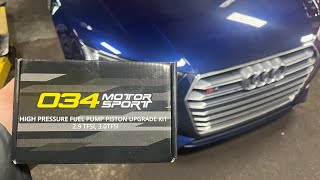
- 034 Motorsport / Integrated Engineering (For upgraded HPFP internals, not standard replacement)
Brands owners have reported issues with on this vehicle:
- Unnamed, no-brand 'white box' sensors and pumps from online marketplaces. These often have high failure rates and incorrect calibration, leading to repeat repairs.
Real Owner Stories
Aggregated from forums and TSBs cited above. Mileages and costs reflect what owners reported in those sources.
2018 Audi S4 3.0T
Symptoms: The owner experienced an EPC light and P0087 code specifically under acceleration, resulting in a 'Limp Mode' condition with no power.
What fixed it: The dealer first performed the software update as per the TSB instructions.
Source hint: Audizine Forum: B9 S4 P0087 - EPC Light, Limp Mode, No Power
Related OBD-II Codes
Frequently Asked Questions
I have a 2018 Audi S4 with P0087; do I need to replace my high-pressure fuel pump immediately?
What specific TSB addresses the P0087 code on the B9 S4 3.0T?
If the software update doesn't fix my P0087, what is the most likely mechanical failure?
Should I replace any other parts when swapping the High-Pressure Fuel Pump?
Can a low-pressure fuel system issue cause this high-pressure rail code?
How can a technician tell the difference between a bad sensor and a bad pump on my S4?
Helpful Videos
Used OEM Parts in Stock
New Aftermarket Parts Available


The information in this article is provided for general reference and educational purposes only. Vehicle specifications, procedures, and part compatibility can vary by production date, trim level, and region. Always consult your vehicle's factory service manual and verify part numbers before purchasing or performing repairs. Safety-critical components such as airbags, seat belts, and braking systems should be installed by a qualified professional.
- Audi S4:
- 🧭 Diagnostic Flowchart
- 🎬 Helpful Videos
- 🛍️ Shop This Part
- What's Unique About the 2017-2018 Audi S4
- Symptoms You May Notice
- Most Likely Causes
- Rare But Worth Checking
- Diagnosis Steps
- Parts You'll Likely Need
- Related Codes That Often Appear With This One
- Technical Service Bulletins (TSBs) & Recalls
- Platform-Specific Known Issues
- Mechanic-Grade Diagnostic Values
- Hidden / Shadow Codes Worth Checking
- Scan Tool Commands That Help
- Real Owner Repair Stories
- OEM Part Supersession History
- Other Known Issues on This Vehicle
- Used vs. New Parts: Buying Guide for This Vehicle
- Real Owner Stories
- 2018 Audi S4 3.0T
- Related OBD-II Codes
- Frequently Asked Questions
- 🎟️ Get 5% Off