

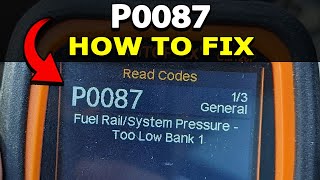
P0087 on 2017-2018 Audi S5 3.0T: Causes for Low Fuel Rail Pressure and Fixes
On a 2017-2018 Audi S5, code P0087 is most often caused by a failing High-Pressure Fuel Pump (HPFP). Other likely causes include a weak in-tank low-pressure fuel pump or a faulty fuel pressure sensor. Diagnosis is critical to avoid replacing expensive parts unnecessarily, as misdiagnosis is common.
- P0087 on your S5 indicates a serious fuel delivery problem that makes the car unsafe to drive.
- The most likely cause is a failed High-Pressure Fuel Pump (HPFP), but the in-tank Low-Pressure Fuel Pump (LPFP) and pressure sensors must be ruled out first.
- Proper diagnosis with a scan tool that can read live data for both low and high-pressure fuel systems is essential to avoid costly misdiagnosis.
- Due to the extremely high pressures and complexity, this repair is best left to a professional mechanic with experience on Audi vehicles.
What's Unique About the 2017-2018 Audi S5
The 2017-2018 Audi S5 uses the EA839 3.0T turbocharged V6 engine, which features a sophisticated dual-pressure fuel system. Unlike older port-injected cars, diagnosing P0087 requires checking both the low-pressure supply from the in-tank pump and the high-pressure output from the cam-driven HPFP. The HPFP is located in the 'hot-V' of the engine, between the cylinder banks. While no major recalls exist for the 2017-2018 S5's fuel pumps specifically, the platform mates which share the EA839 engine family have also reported these issues, suggesting a vulnerability in the overall system design.
Symptoms You May Notice
- Significant loss of power, especially during acceleration
- Engine hesitation or stuttering
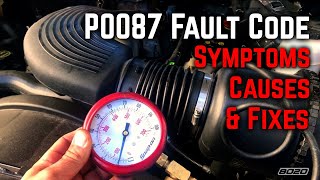
- Check Engine Light and/or EPC (Electronic Power Control) light is on 🎬 See this video for a quick explanation of P0087 symptoms.
- Rough or unstable idle
- Engine cranks longer than usual before starting (hard start)
- Sudden engine stalling
- Whining noise from the fuel tank area (under the rear seat), indicating a struggling LPFP.
- Replacing the HPFP without first confirming the LPFP is supplying adequate pressure. This is a common and expensive mistake.
- Replacing fuel pumps when the actual fault is a less expensive fuel pressure sensor or a wiring issue.
- Assuming the code is for a standalone fuel filter, which is part of the in-tank pump assembly and not a separate, easily serviceable part on this vehicle.
Most Likely Causes
- High-Pressure Fuel Pump (HPFP) Failure 🔴 High Probability → Shop Fuel Pump The HPFP is a mechanical pump driven by the camshaft that operates under high stress. Wear of the internal components or the camshaft follower that drives it can lead to an internal failure, preventing it from generating the required pressure. This is a widely reported failure point for P0087 on modern direct-injection engines.
How to confirm: Use a diagnostic scan tool (like VCDS or OBDeleven) to monitor requested vs. actual high-pressure fuel rail readings. If the actual pressure consistently fails to meet the requested pressure, especially under load, and the low-pressure supply is confirmed to be stable and within spec, the HPFP is the likely culprit.
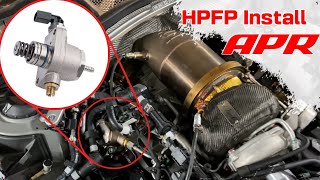
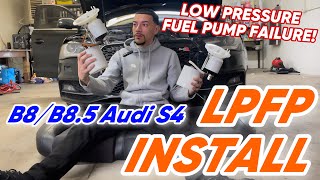
Typical fix: Replace the High-Pressure Fuel Pump and its associated cam follower. 🎬 Watch: Step-by-step HPFP installation guide for the EA839 engine. It is located on the engine.
Est. part cost: $400-$700 - Low-Pressure Fuel Pump (LPFP) Failure 🟡 Medium Probability → Shop Fuel Pump The in-tank LPFP is responsible for supplying fuel to the HPFP. If the LPFP becomes weak or its integrated controller fails, it cannot provide enough volume, starving the HPFP and causing high-side pressure to drop under demand. This can sometimes be an intermittent issue before total failure.
How to confirm: Monitor the low-pressure fuel sensor readings with a scan tool. The pressure should be stable and within the manufacturer's specified range (typically 4.0-6.0 bar at idle). If the low-side pressure drops significantly during acceleration or is erratic, the LPFP is likely failing. Often accompanied by code P310B.
Typical fix: Replace the in-tank low-pressure fuel pump assembly, which includes the fuel filter and sending unit.
Est. part cost: $300-$500 - Faulty Fuel Pressure Sensor (High or Low Side) ⚪ Low Probability → Shop Fuel Pressure Sensor The B9 platform uses two primary pressure sensors (G410 for low pressure, G247 for high pressure). A faulty sensor can send incorrect data to the ECM, causing it to trigger P0087 even if the pressure is mechanically sound. These sensors can fail, leading to a frustrating diagnosis if not checked properly.
How to confirm: Compare the scan tool's pressure readings to a mechanical fuel pressure gauge. If the gauge shows correct pressure but the scan tool reports a low value, the sensor or its wiring is faulty. If low-pressure readings are erratic but the pump is new, the G410 sensor is a strong suspect.
Typical fix: Replace the specific faulty fuel pressure sensor (G410 or G247). The G410 (low pressure) is generally easier to access.
Est. part cost: $80-$200
Rare But Worth Checking
- Clogged Fuel Filter: → Shop Fuel Filter The primary fuel filter is integrated into the in-tank LPFP assembly and is not serviced separately on this platform. A failure is a failure of the entire LPFP module.
- Leaking Fuel Injector: → Shop Fuel Injector An injector stuck open can cause a drop in rail pressure. This is less common and would likely be accompanied by misfire codes (P0300-P0306) for a specific cylinder and potentially a fuel smell in the oil.
- Worn Camshaft Lobe: → Shop Engine Camshaft The lobe on the camshaft that drives the HPFP can wear down, reducing the pump's stroke and its ability to generate pressure. This is a more serious mechanical issue and is usually checked when replacing the HPFP.
Diagnosis Steps
- Connect an OBD-II scanner (VCDS/OBDeleven recommended) and confirm the presence of P0087 and any other related codes like P310B or misfires.
- Using the scanner's live data function, monitor both 'Fuel Rail Pressure (Low)' and 'Fuel Rail Pressure (High)' - both requested and actual values.
- At idle, check if the low-pressure actual reading meets the specified value (typically around 4.0-6.0 bar). It should be stable.
- While safely driving, perform a wide-open throttle acceleration in a middle gear (e.g., 3rd or 4th from a low RPM). Watch the live data.
- If the high-pressure 'actual' value drops significantly and fails to keep up with the 'requested' value, while the low-pressure value remains steady and in spec, the HPFP is the primary suspect.
- If the high-pressure 'actual' value drops AND the low-pressure 'actual' value also drops significantly, the in-tank LPFP is the likely cause.
- If pressure readings seem erratic, jump around, or don't match what a mechanical gauge shows (if one can be connected), suspect a faulty pressure sensor or wiring.
- Visually inspect the HPFP and fuel lines for any signs of leaks. Check the engine oil for a strong smell of gasoline, which could indicate a leaking HPFP seal or a stuck injector.
Parts You'll Likely Need
- High-Pressure Fuel Pump (HPFP)
(OEM #06M127026K (or superseding part numbers like 06M127026P))— This is the most probable cause of P0087 when the low-pressure system is confirmed to be working correctly. It is responsible for creating the final high pressure for direct injection.
Trusted brands: Audi Genuine, Bosch
OEM price range: $500-$700
Aftermarket price range: $350-$550 - Low-Pressure Fuel Pump (LPFP) Assembly
(OEM #8W0919087H (VIN specific, confirm with dealer))— If diagnosis shows a drop in pressure from the tank, the LPFP is the cause. It must be replaced to supply the HPFP with adequate fuel. It is sold as a complete module. 🎬 Watch: How to replace the in-tank low pressure fuel pump.
Trusted brands: Audi Genuine, VDO
OEM price range: $400-$600
Aftermarket price range: $250-$450 - Low-Pressure Fuel Sensor (G410)
(OEM #06E906051K)— This sensor is a known failure point on some Audi engines and can cause incorrect pressure readings, leading to misdiagnosis. If low-pressure readings are erratic or incorrect, this is a likely culprit.
Trusted brands: Bosch, Audi Genuine
OEM price range: $100-$150
Aftermarket price range: $50-$100
Related Codes That Often Appear With This One
- P0300-P0306 — Misfire codes often accompany P0087 because insufficient fuel pressure leads to a lean air/fuel mixture, causing incomplete combustion in one or more cylinders.
- P310B — This code specifically points to an issue in the low-pressure fuel system. If you see P310B with P0087, it strongly suggests the problem originates with the in-tank pump (LPFP) or its controller/sensor.
- P2293 — Fuel Pressure Regulator 2 Performance. This code can appear alongside P0087 and points more directly toward a problem with the high-pressure side of the system, including the HPFP itself.
Technical Service Bulletins (TSBs) & Recalls
- TSB 2045655/14: While for an older 2.0T engine, this TSB addresses P0087 and P310B codes by updating software and potentially replacing the low pressure sensor (G410), showing a history of sensor-related issues in Audi fuel systems.
- TSB 2058127/3: Relates to fuel system diagnostics on the EA839, providing technicians with updated procedures for diagnosing pressure deviations, emphasizing the need to check both low and high pressure systems thoroughly before replacing components.
Platform-Specific Known Issues
- Owner Experience: Chasing P0087: An owner on a Reddit forum with a B8.5 S5 (similar 3.0T engine architecture) described a frustrating scenario. After getting a P0087 code, they first replaced the HPFP and cam follower. The code returned. They then replaced the entire LPFP assembly. The code still returned. Their next step was to replace the fuel rail pressure sensor, highlighting the importance of diagnosing the sensors before replacing expensive pumps.
Mechanic-Grade Diagnostic Values
- High-Pressure Fuel Rail (Actual vs. Specified) — expected: At idle, pressure should be stable between 25.0 to 40.0 bar (360-580 PSI). Under load, it must closely follow the specified value.. Failure: The deviation between actual and specified pressure should not exceed 5.0 bar. If the actual pressure drops significantly below specified during acceleration, it indicates a fault.
- Low-Pressure Fuel System (LPFP Output) — expected: Stable pressure between 4.0 and 6.0 bar at idle.. Failure: Pressure dropping significantly under load or erratic readings at idle.
- Injector Leak Test (via Heat Soak Pressure Rise) — expected: After running the engine to operating temperature and shutting it off, the residual high fuel pressure should roughly double within 3-5 minutes (e.g., from 40 bar to 80 bar) due to heat expansion.. Failure: If the pressure fails to rise to the expected level or rises and then falls, it can indicate a leaking fuel injector that cannot hold pressure.
Scan Tool Commands That Help
- VCDS (VAG-COM): Output Test: Fuel Pump Electronics — To manually activate the low-pressure fuel pump to verify it runs and to prime the fuel system after replacing the pump or filter. This is found in
[01 - Engine] -> [Output Tests - 03]. - VCDS (VAG-COM): Basic Settings: Transfer Fuel Pump Test — A dedicated function to run the in-tank fuel pump for a set duration to bleed air from the low-pressure side. Use this after opening the fuel system to prevent long cranking. Found in
[01 - Engine] -> [Basic Settings - 04].
Wiring & Ground Locations
- Fuel Pump Control Module (J538) — Typically located under the rear passenger seat, beneath the carpet. Access may require removing the rear seat bench.. This module provides the variable voltage to the in-tank low-pressure pump. A failure of the module, its power supply, ground, or wiring can mimic a failed low-pressure fuel pump, causing P0087. Checking for power and ground at this module is a critical diagnostic step before replacing the pump itself.
OEM Part Supersession History
06M127026K→06M127026P, then 06M127026Q— Revisions by the manufacturer to improve reliability or address known issues with the High-Pressure Fuel Pump.8W0919087H→8W0919087AA— Revision to the in-tank Low-Pressure Fuel Pump assembly.
Heads up: Always confirm the part number with a VIN, as different versions may exist for coupe, sportback, and cabriolet models.06E906051K→06K906051 (listed as equivalent)— This low-pressure sensor (G410) is a widely used part, and minor revisions may occur. Functionality remains the same.
Heads up: Ensure the connector is the correct 3-pin type.
Model Year Variations Within This Range
- 2017 vs 2018 (North America): The 2017 Audi S5 (B8.5) uses a 3.0L supercharged V6. The 2018 Audi S5 (B9) introduced the 3.0L turbocharged V6 (EA839). The fuel pumps, sensors, and engine management are completely different. This guide is specific to the B9 chassis and its EA839 turbocharged engine.
Diagnostic Flowchart
Other Known Issues on This Vehicle
Issues unrelated to this code that are worth knowing about as an owner of this generation:
- Rocker Arm Bearing Failure 🔴 High → Shop Engine Rocker Arm — More common on early production 2017-2019 models. Failure can be catastrophic to the engine if not caught early. The failure rate is debated, but it is a well-documented concern. (Ref: No official recall, but multiple part number revisions exist for the rocker arms.)
- Water Pump / Thermostat Assembly Leak 🟠 Medium — A very common failure point. The pump can leak internally into the vacuum system or externally, causing coolant loss. Often fails between 40k-80k miles. (Ref: A class-action lawsuit settlement extended warranty coverage for this issue on some B9 models in the US.)
- Piston Failure (Ringland/Skirt) 🔴 High — Less common than rocker arm or water pump issues, but documented even on stock engines. Analysis suggests potential design vulnerabilities related to piston rocking and stress risers from oil ring drain holes.
- Interior Rattles and Creaks 🟡 Low — Owners of early B9 models (2017-2018) frequently report various rattles from door panels, the MMI screen area, and the rear speaker deck, especially in cold weather.
Used vs. New Parts: Buying Guide for This Vehicle
When a used part is the smart pick: For electronic components like the Fuel Pump Control Module (J538), a used OEM part from a reputable salvage yard is a smart, cost-effective choice. The HPFP and LPFP can also be sourced used to save significant cost, but carry a higher risk than a module.
Donor-vehicle mileage cap: roughly under 60000 miles for the part to have meaningful remaining life.
What to inspect on the donor part:
- For pumps (HPFP/LPFP), inspect electrical connectors for corrosion or melting.
- For the HPFP, ensure the mechanical plunger tip is smooth and not damaged.
- For the LPFP assembly, check that the plastic housing is free of cracks.
- Verify the donor vehicle was not in a flood or major collision.
OEM-only on this vehicle (don't cheap out):
- High-Pressure Fuel Pump (HPFP)
- Low-Pressure Fuel Pump (LPFP) Assembly
Aftermarket brands forum-validated for this vehicle:
- Bosch (OEM supplier for HPFP)
- VDO (OEM supplier for LPFP)
- Autotech (for performance HPFP upgrades)
Brands owners have reported issues with on this vehicle:
- Unbranded, 'white-box' fuel pumps from online marketplaces are highly discouraged due to high failure rates.
Real Owner Stories
Aggregated from forums and TSBs cited above. Mileages and costs reflect what owners reported in those sources.
2015 Audi RS5 — 98000 miles
Symptoms: Experiencing both P0087 and P310B (Low Pressure Fuel System) codes simultaneously.
What fixed it: The combination of codes points to an issue with the in-tank LPFP, its controller, or the low-pressure sensor.
Source hint: Reddit r/Audi: Help with codes P310b and P0087
Audi B8.5 S5 3.0T
Symptoms: Persistent P0087 code that returned even after replacing major fuel system components.
What fixed it: Replacing the fuel rail pressure sensor after the HPFP, cam follower, and LPFP assembly failed to clear the code.
Source hint: Vehicle_specific_issues: Owner Experience: Chasing P0087
2014 Audi S5
Symptoms: P0087 code keeps reappearing despite repairs.
What fixed it: The owner replaced the LPFP, HPFP, and pressure sensor, but the code persisted, suggesting potential wiring or ECU issues.
Source hint: Reddit r/audis5: P0087 code keeps reappearing :(
Related OBD-II Codes
Frequently Asked Questions
Does TSB 2058127/3 apply to my 2017-2018 Audi S5 with the EA839 engine?
I have a P0087 and a P310B code on my Audi; what does this combination usually mean?
Is there a specific sensor I should check on my S5 before replacing the expensive high-pressure fuel pump?
What are the symptoms of a struggling LPFP on the B9 S5 platform?
Can the HPFP cause gasoline to leak into my engine oil?
Is the rocker arm failure mentioned in forums related to my P0087 fuel pressure code?
Helpful Videos

Used OEM Parts in Stock
New Aftermarket Parts Available


The information in this article is provided for general reference and educational purposes only. Vehicle specifications, procedures, and part compatibility can vary by production date, trim level, and region. Always consult your vehicle's factory service manual and verify part numbers before purchasing or performing repairs. Safety-critical components such as airbags, seat belts, and braking systems should be installed by a qualified professional.
- Audi S5:
- 🧭 Diagnostic Flowchart
- 🎬 Helpful Videos
- 🛍️ Shop This Part
- What's Unique About the 2017-2018 Audi S5
- Symptoms You May Notice
- Most Likely Causes
- Rare But Worth Checking
- Diagnosis Steps
- Parts You'll Likely Need
- Related Codes That Often Appear With This One
- Technical Service Bulletins (TSBs) & Recalls
- Platform-Specific Known Issues
- Mechanic-Grade Diagnostic Values
- Scan Tool Commands That Help
- Wiring & Ground Locations
- OEM Part Supersession History
- Model Year Variations Within This Range
- Other Known Issues on This Vehicle
- Used vs. New Parts: Buying Guide for This Vehicle
- Real Owner Stories
- 2015 Audi RS5 — 98000 miles
- Audi B8.5 S5 3.0T
- 2014 Audi S5
- Related OBD-II Codes
- Frequently Asked Questions
- 🎟️ Get 5% Off