

P0087 on 2017-2018 Audi SQ5 3.0T: Diagnosing Low Fuel Rail Pressure
For a 2017-2018 Audi SQ5 with a P0087 code, the most common cause is a failing High-Pressure Fuel Pump (HPFP). Other likely causes include a faulty fuel pressure sensor, a weak in-tank low-pressure fuel pump, or a leaking fuel injector. Expect repair costs to range from $250 for a sensor to over $1,500 for an HPFP replacement at a shop.
- P0087 on a 2017-2018 Audi SQ5 means the fuel pressure on the high-pressure side is too low.
- The most probable cause is a failing High-Pressure Fuel Pump (HPFP), but the pressure sensor and low-pressure pump should also be checked.
- Driving with this code is not recommended due to severe power loss and the risk of stalling.
- Diagnosis requires a scan tool to monitor specified vs. actual fuel pressure under various engine loads.
- Be aware of your specific model year (2017 vs. 2018) as it determines which generation and engine you have, affecting part selection.
What's Unique About the 2017-2018 Audi SQ5
The 2017-2018 model years span two different generations of the SQ5 with two different 3.0T engines. The 2017 model is the first generation (B8.5/8R) with a supercharged EA837 engine, while the 2018 model is the second generation (B9/FY) with a turbocharged EA839 engine. While both use a high-pressure fuel system, the specific High-Pressure Fuel Pump (HPFP) and related components are different. The core issue of low fuel pressure remains the same, but part numbers and specific failure patterns can vary between the two generations. Diagnosis for both often points towards the HPFP as a primary suspect when this code appears.
Generation note: The 2017 model year is the last of the first generation (Type 8R, B8.5 chassis) with the supercharged EA837 3.0T engine. The 2018 model year marks the beginning of the second generation (Type FY, B9 chassis) with the turbocharged EA839 3.0T engine. 🎬 See this walkthrough for installing a new HPFP on B9 engines. While the causes are similar, always verify parts using your vehicle's VIN as HPFP and sensor designs differ significantly between them.
Symptoms You May Notice
- Check Engine Light and/or EPC (Electronic Power Control) light illuminated
- Significant loss of power, especially during acceleration or going uphill
- Engine hesitation or stumbling, sometimes feeling like a misfire
- Rough or shaky idle
- Engine stalling, sometimes refusing to restart
- Hard starting, requiring longer cranking times
- Car enters 'limp mode' with flashing coil light (on some models)
- Replacing the fuel pressure sensor when the High-Pressure Fuel Pump (HPFP) is actually at fault. It's crucial to diagnose whether the pressure is actually low or if it's just being reported as low by logging data.
- Replacing only the in-tank fuel pump when the HPFP is the root cause. The system must be diagnosed as a whole by checking both low and high-side pressures.
- Throwing parts at the problem without diagnosis. Some owners have replaced the LPFP, HPFP, and sensor before finding the actual cause was a faulty replacement part or a worn cam follower.
Most Likely Causes
- High-Pressure Fuel Pump (HPFP) Failure 🔴 High Probability → Shop Fuel Pump The HPFP is a mechanical pump driven by the camshaft. It is a high-wear item responsible for generating pressures over 2,000 PSI. Internal wear, seal failure, or plunger seizure is a common cause of P0087, especially as mileage increases.
How to confirm: Use a diagnostic scan tool (like VCDS for VW/Audi) to monitor 'Actual' vs. 'Specified' fuel rail pressure. Under load (e.g., during a test drive with hard acceleration), a failing HPFP will show the actual pressure significantly lagging behind or failing to meet the specified pressure. A healthy pump should be able to hold pressure.
Typical fix: Replace the High-Pressure Fuel Pump and the cam follower that drives it (especially on the EA837 engine). 🎬 Watch: How to inspect and replace the HPFP and cam follower.
Est. part cost: $400-$800 - Faulty Fuel Rail Pressure Sensor (G247) 🟡 Medium Probability → Shop Fuel Pressure Sensor The sensor itself can fail, sending incorrect low-pressure readings to the ECM even if the pressure is fine. This can trick the computer into setting a P0087 code. This is a common misdiagnosis, so proper testing is key.
How to confirm: Compare the pressure reading from the sensor (via scan tool) to a reading from a mechanical fuel pressure gauge. If the readings differ significantly, the sensor is likely faulty. TSB 2027306 provides diagnostic guidance, suggesting a sensor is faulty if the scan tool reading differs from a mechanical gauge by more than 500 kPa. On these engines, accessing a port for a mechanical gauge on the high-pressure side is difficult. Another method is to observe the sensor readings for erratic jumps or values that don't logically follow engine RPM/load.
Typical fix: Replace the fuel rail pressure sensor.
Est. part cost: $150-$300 - Failing In-Tank Low-Pressure Fuel Pump (LPFP) 🟡 Medium Probability → Shop Fuel Pump The HPFP cannot generate high pressure if it is not being adequately supplied with fuel from the in-tank pump. A weak LPFP or its control module will starve the HPFP, causing P0087 under high demand.
How to confirm: Test the low-pressure fuel system pressure using a scan tool or mechanical gauge. It should be stable and within the manufacturer's specification (typically 4-6 bar, or around 60-90 PSI). A significant drop under load indicates a failing LPFP, its controller, or a clogged filter.
Typical fix: Replace the in-tank low-pressure fuel pump assembly and/or its control module.
Est. part cost: $300-$500 - Clogged Fuel Filter ⚪ Low Probability → Shop Fuel Filter The fuel filter is a maintenance item. If it has not been replaced per the service schedule (or if the vehicle was run on contaminated fuel), it can become restricted and limit fuel flow to the HPFP.
How to confirm: If the filter's replacement history is unknown or overdue, it's a good idea to replace it as a preventative measure. A fuel pressure test on the low-pressure side before and after the filter can confirm a restriction. Some owners report resolving P0087 by replacing a clogged filter.
Typical fix: Replace the fuel filter.
Est. part cost: $50-$100
Rare But Worth Checking
- Leaking Fuel Injector: → Shop Fuel Injector A fuel injector can get stuck open or leak internally, causing a drop in rail pressure. This might also be accompanied by misfire codes for a specific cylinder and a strong smell of fuel. A fuel pressure bleed-down test can help identify a leaking injector.
- Worn Camshaft Lobe/Follower: → Shop Engine Camshaft The HPFP is driven by a dedicated lobe on the camshaft via a cam follower. Extreme wear on the lobe or follower can reduce the pump's stroke, leading to insufficient pressure. This is a known issue on some VW/Audi engines and should be inspected whenever the HPFP is replaced. The EA837 (2017) uses a more durable roller-style follower, but inspection is still recommended.
- Contaminated Fuel: Water, debris, or incorrect fuel (like diesel in a gasoline engine) can damage the entire fuel system, including the pumps and injectors, leading to low pressure codes. TSB 2023360/4 discusses diagnosing fuel contamination for P0087.
Diagnosis Steps
- Connect a diagnostic scan tool (VCDS is preferred for Audi) and check for any other fault codes.
- Log both specified and actual fuel rail pressure in the measuring blocks. Note the pressure at idle, during revving, and ideally under load during a test drive (e.g., a 3rd gear pull from low RPM).
- A significant and consistent deviation where 'Actual' pressure cannot keep up with 'Specified' pressure under load points strongly to a failing HPFP.
- Observe the low-pressure fuel system data. Ensure the pressure from the in-tank pump is stable and within spec (typically 4-6 bar). If low-side pressure drops, the issue is with the LPFP, its controller, or the filter.
- If the pressure readings are erratic, jumpy, or nonsensical, suspect the fuel rail pressure sensor (G247).
- If high pressure is low and low pressure is also low, diagnose the in-tank pump, its controller, and the fuel filter first.
- Inspect the HPFP area for any visible fuel leaks.
- If replacing the HPFP on the EA837 engine, always inspect and replace the cam follower as a best practice.
Parts You'll Likely Need
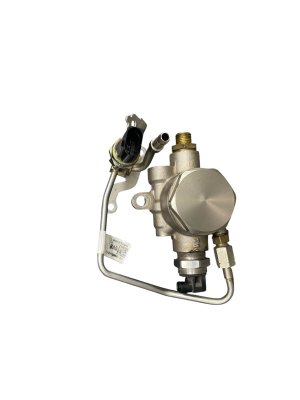
- High-Pressure Fuel Pump (HPFP)
(OEM #EA837 (2017): 06E127025Q / EA839 (2018): 06M127025E)— This is the most common failure point for a P0087 code on these direct-injection engines, as it is a mechanical part under high stress.
Trusted brands: Bosch, Hitachi
OEM price range: $600-$900
Aftermarket price range: $400-$700 - Fuel Rail Pressure Sensor (G247)
(OEM #EA837 (2017): 06J906051D / EA839 (2018): 06K906051C)— This sensor provides the critical pressure reading to the ECM. Its failure can cause incorrect readings, leading to a P0087 code and drivability issues.
Trusted brands: Bosch
OEM price range: $200-$300
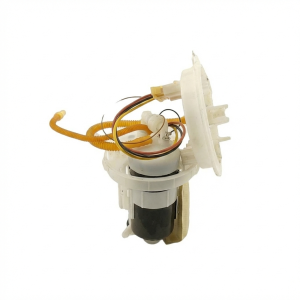
Aftermarket price range: $100-$180 - In-Tank Low-Pressure Fuel Pump (LPFP)
(OEM #8R0919051N (Varies by specific model/PR code))— The HPFP relies on a steady supply of fuel from this pump. If the LPFP is weak, it will starve the high-pressure side and trigger the code.
Trusted brands: VDO, Bosch
OEM price range: $400-$600
Aftermarket price range: $300-$500
Related Codes That Often Appear With This One
- P053F — This code for 'Cold Start Fuel Pressure Performance' often appears with P0087, indicating the pressure is especially low during a cold start.
- P0171/P0174 — These 'System Too Lean' codes can be triggered because the low fuel pressure results in an insufficient amount of fuel being injected relative to the air entering the engine.
- P0088 — Although it means 'Fuel Rail Pressure Too High', it can sometimes appear alongside P0087 if the fuel pressure sensor is failing erratically or if there's a mechanical issue with the pump's pressure regulation.
- P030X (e.g., P0306) — Cylinder-specific misfire codes can occur if a single injector is leaking or if the overall low pressure is causing poor atomization and incomplete combustion in one or more cylinders.
Technical Service Bulletins (TSBs) & Recalls
- Audi TSB 2027306/4: Provides diagnostic assistance for the G247 fuel pressure sensor when codes like P0087, P0088, or P119A are present.
- Audi TSB 2023360/4: Discusses diagnosis for P0087/P0088 related to contaminated fuel in TDI models, but the diagnostic principle is relevant.
- Ross-Tech Wiki Mentions: The Ross-Tech page for P0087 references several TSBs for other engines (like 2.0T) concerning worn camshafts or faulty sensors, highlighting common diagnostic paths.
Mechanic-Grade Diagnostic Values
- Low-Pressure Fuel Pump (LPFP) pressure — expected: 4 to 6 bar (approx. 58 to 87 PSI). Failure: Pressure drops significantly under load or does not meet the minimum specification at idle.
- High-Pressure Fuel Pump (HPFP) pressure (EA839) — expected: Up to 200 bar (2900 PSI) depending on demand.. Failure: Actual pressure (from scan tool) consistently fails to meet specified pressure, especially during acceleration. A deviation of 500 bar has been noted as a failure point in some logs.
- High-Pressure Fuel Pump (HPFP) pressure (EA837) — expected: Up to 140 bar (approx. 2000 PSI) depending on demand.. Failure: Actual pressure fails to reach specified pressure under load. In one case, actual pressure maxed out at 96 bar when 140 bar was specified.
- Fuel Rail Pressure Sensor (G247) vs. Mechanical Gauge — expected: Readings should be within 500 kPa (0.5 bar or 7.25 PSI) of each other.. Failure: If the difference between the scan tool reading and a mechanical gauge is greater than 500 kPa, the sensor or its wiring is likely faulty.
Hidden / Shadow Codes Worth Checking
- VCDS Measuring Blocks 015 & 016: These are not true 'codes' but live data screens showing a real-time counter of misfires for each cylinder. If P0087 is caused by a single leaking injector, these blocks can help identify which cylinder is affected before a specific P030x code is stored. (see via Requires a VAG-specific scan tool like VCDS. Navigate to Engine (01) -> Measuring Blocks (08) -> and enter groups 015 and 016.)
Scan Tool Commands That Help
- VCDS (VAG-COM): Advanced Measuring Values (Adv. Meas. Values) — This is essential for diagnosing P0087. Use it to log and graph 'Specified' vs. 'Actual' fuel pressure for both the low-pressure and high-pressure systems. Key groups to log include IDE00589 (High pressure regulator), low-pressure actual/specified, and high-pressure actual/specified. A graph will clearly show if the actual pressure is failing to keep up with the requested pressure under load.
Wiring & Ground Locations
- Fuel Pump Control Module (J538) — On many Audi models including the Q5, the fuel pump control module is located under the rear seat cushion, on the driver's side, on top of the fuel tank access cover.. This module controls the in-tank low-pressure fuel pump. A failure of the module itself, its power/ground supply, or the wiring to the pump can cause the LPFP to underperform, starving the HPFP and triggering P0087.
Real Owner Repair Stories
- Reddit user iamprofoundbandit (2014 Audi SQ5 3.0T (EA837)) — Check Engine Light with code P0087.
❌ Tried (didn't work) Replaced the High-Pressure Fuel Pump (HPFP)., Replaced the fuel rail pressure sensor., Replaced the in-tank low-pressure fuel pump.
✅ What actually fixed it A second dealer visit determined the issue was a combination of a worn cam follower and a defective (though new) replacement HPFP. Replacing both the HPFP (again) and the cam follower finally resolved the code. - AudiWorld Forums user (2016 SQ5 3.0T (EA837), 66k miles) — P0087, P053F, P0174. Rough idle, jerky and difficult acceleration, especially when cold.
❌ Tried (didn't work) Tightening gas cap.
✅ What actually fixed it The user suspected a dying fuel pump or control module and was seeking mechanic advice. While the final fix isn't posted in the initial thread, the combination of codes (P0087 and P053F for cold start) strongly points to a fuel delivery hardware issue (LPFP or HPFP) rather than a simple sensor fault.
OEM Part Supersession History
06E127025Q (For 2017 SQ5, EA837)→Multiple revisions exist, including 07L127026AL by Pierburg, which is an OEM equivalent. Always verify the latest part number with a dealer using the vehicle's VIN.— Improvements to reliability and performance.
Model Year Variations Within This Range
- 2017 vs 2018: The primary difference is the engine: the 2017 (B8.5) has the supercharged EA837, while the 2018 (B9) has the turbocharged EA839. This means the HPFP, fuel sensors, and related engine-mounted components are completely different parts with unique part numbers and may have different failure characteristics. For example, the EA837 HPFP is part number 06E127025Q, while the EA839 uses 06M127025E.
- 2017 (EA837): This engine uses a roller-style cam follower for the HPFP. While more durable than the flat tappet design on older 2.0T engines, it is still a wear item that should be inspected or replaced with the HPFP.
Diagnostic Flowchart
Other Known Issues on This Vehicle
Issues unrelated to this code that are worth knowing about as an owner of this generation:
- Water Pump / Thermostat Failure 🔴 High — Common on both EA837 and EA839 engines. EA839 pumps can leak internally into the vacuum system, causing widespread issues. Failures can occur from 40k miles onward. (Ref: Subject of a class-action lawsuit (Fiscina v. Volkswagen Group of America, Inc.).)
- Rocker Arm Failure (EA839 Engine) 🔴 High → Shop Engine Rocker Arm — Primarily affects early (2018-2019) B9 models. Bearing failure in the rocker arms causes a distinct ticking noise and can lead to camshaft damage or catastrophic engine failure if ignored. (Ref: No official TSB or recall, but widely documented in forums. Audi has released revised rocker arm parts.)
- Carbon Buildup on Intake Valves (EA837 Engine) 🟠 Medium — Common on direct-injection engines. Becomes problematic around 60,000-80,000 miles, causing reduced power, rough idle, and misfires. Requires manual cleaning (walnut blasting).
- PCV / Oil Separator Failure (EA837 Engine) 🟠 Medium — The PCV valve, located under the supercharger, can fail, leading to excessive oil consumption, lean codes, and potential seal damage. Often replaced preventatively during other 'supercharger off' jobs.
- Timing Chain Tensioner Wear (EA837 Engine) 🔴 High — Can occur from 80,000-120,000 km, causing a rattling noise on cold starts. If not addressed, can lead to timing chain slack and severe engine damage.
Used vs. New Parts: Buying Guide for This Vehicle
When a used part is the smart pick: For this repair, used parts are generally not recommended for the core components. However, a used Fuel Pump Control Module (J538) could be a viable option if confirmed to be from a functional, low-mileage donor vehicle, as it is an electronic part with a lower mechanical wear rate than a pump.
Donor-vehicle mileage cap: roughly under 60000 miles for the part to have meaningful remaining life.
What to inspect on the donor part:
- For a control module, check for any signs of water damage or corrosion on the casing and connector pins.
- Verify the part number exactly matches the one being replaced.
- Obtain vehicle history if possible to ensure the donor car did not have fuel system issues.
OEM-only on this vehicle (don't cheap out):
- High-Pressure Fuel Pump (HPFP): Due to the high mechanical stress and precision required, aftermarket or used pumps have a higher risk of premature failure or being defective out of the box. Sticking to OEM (Bosch, Hitachi) or a reputable OEM-supplier (Pierburg) is critical.
- Fuel Rail Pressure Sensor (G247): This is a precision sensor critical for engine management. Cheaper aftermarket sensors can provide inaccurate readings, leading to persistent codes and poor performance.
Aftermarket brands forum-validated for this vehicle:
- Bosch (OEM for many components)
- Hitachi (OEM supplier for HPFPs)
- Pierburg (OEM supplier for HPFPs)
- VDO (Often OEM for in-tank pumps)
Brands owners have reported issues with on this vehicle:
- Unbranded, no-name parts from online marketplaces. For a critical system like direct injection, the risk of engine damage from a failed component is too high to justify the small cost savings.
Real Owner Stories
Aggregated from forums and TSBs cited above. Mileages and costs reflect what owners reported in those sources.
2015 Audi S4 3.0T (EA837)
Symptoms: Fuel rail system pressure too low code P0087.
What fixed it: Replacement of the High-Pressure Fuel Pump (HPFP).
Source hint: https://www.reddit.com/r/Audi/comments/yvj3u1/audi_s4_2015_b85_showing_p0087_fuel_rail_system/
2018+ Audi SQ5 3.0T (EA839)
Symptoms: Car enters 'limp mode' with a flashing coil light.
What fixed it: High-Pressure Fuel Pump (HPFP) replacement.
Source hint: https://www.audiworld.com/forums/q7-mkii-discussion-211/p008700-fuel-high-pressure_too-low-2992928/
Related OBD-II Codes
Frequently Asked Questions
My 2017 SQ5 is showing P0087; is there a TSB for the fuel pressure sensor?
Should I replace the cam follower when I change the High-Pressure Fuel Pump on my 2017 SQ5?
What is the specified pressure for the low-pressure fuel system on this vehicle?
Can a failing water pump cause issues related to fuel pressure on the 2018 SQ5?
Is the P0087 code common on other Audi models with the 3.0T engine?
How can I tell if my P0087 is a sensor failure or a mechanical pump failure?
Helpful Videos
Used OEM Parts in Stock
New Aftermarket Parts Available


The information in this article is provided for general reference and educational purposes only. Vehicle specifications, procedures, and part compatibility can vary by production date, trim level, and region. Always consult your vehicle's factory service manual and verify part numbers before purchasing or performing repairs. Safety-critical components such as airbags, seat belts, and braking systems should be installed by a qualified professional.
- Audi SQ5:
- 🧭 Diagnostic Flowchart
- 🎬 Helpful Videos
- 🛍️ Shop This Part
- What's Unique About the 2017-2018 Audi SQ5
- Symptoms You May Notice
- Most Likely Causes
- Rare But Worth Checking
- Diagnosis Steps
- Parts You'll Likely Need
- Related Codes That Often Appear With This One
- Technical Service Bulletins (TSBs) & Recalls
- Mechanic-Grade Diagnostic Values
- Hidden / Shadow Codes Worth Checking
- Scan Tool Commands That Help
- Wiring & Ground Locations
- Real Owner Repair Stories
- OEM Part Supersession History
- Model Year Variations Within This Range
- Other Known Issues on This Vehicle
- Used vs. New Parts: Buying Guide for This Vehicle
- Real Owner Stories
- 2015 Audi S4 3.0T (EA837)
- 2018+ Audi SQ5 3.0T (EA839)
- Related OBD-II Codes
- Frequently Asked Questions
- 🎟️ Get 5% Off