

P0087 on 2009-2017 Buick Enclave 3.6L: Fuel Pressure Low Causes & Fixes
On a 2009-2017 Buick Enclave, code P0087 almost always means the high-pressure fuel pump (HPFP) is failing. This is a very common problem on the 3.6L V6 engine. Before buying parts, check the engine oil for a strong gasoline smell, which confirms the diagnosis. GM acknowledged this widespread issue with a Special Coverage Adjustment (#12213/#14329) for some models. Expect repair costs of $600-$1200.
- P0087 on a 2009-2017 Enclave almost certainly points to a failing High-Pressure Fuel Pump (HPFP).
- Before buying any parts, check the engine oil for a strong gasoline smell. If present, the HPFP has failed and the oil is contaminated. Do not drive the vehicle.
- This is not a beginner-friendly DIY repair due to the extremely high pressures involved and the need to replace single-use components.
- When replacing the HPFP, you MUST also replace the single-use high-pressure fuel line and change the engine oil and filter to prevent further damage.
What's Unique About the 2009-2017 Buick Enclave
The 3.6L V6 engine (both LLT and LFX versions) in the first-generation Enclave and its sister vehicles (GMC Acadia, Chevrolet Traverse, Saturn Outlook) is notorious for premature failure of the high-pressure fuel pump. While P0087 is a generic code, on this specific platform, the HPFP is the primary suspect by a wide margin. A key diagnostic sign specific to this platform is the tendency for a failing HPFP to leak fuel internally into the crankcase, which can be detected by a strong gasoline smell in the engine oil. The failure was so common that GM issued Special Coverage Adjustment programs (e.g., #12213, #14329) extending the warranty on the pump for certain vehicles.
Symptoms You May Notice
- Check Engine Light illuminated
- "Reduced Engine Power" message on the dashboard
- Engine hesitation or stumbling on acceleration
- Rough or uneven idle
- Engine stalling, especially when coming to a stop or under load
- Long crank time or hard starting
- Strong smell of gasoline in the engine oil
- Replacing only the fuel rail pressure sensor without confirming the high-pressure fuel pump is healthy. Often, the sensor is correctly reporting the low pressure caused by the failing pump.
Most Likely Causes
- Failing High-Pressure Fuel Pump (HPFP) 🔴 High Probability → Shop Fuel Pump The HPFP on the 3.6L V6 engines in this platform is a well-documented, notorious failure point. Internal seals wear out, causing both a loss of pressure and fuel contamination of the engine oil. GM issued Special Coverage Adjustments like #12213 and #14329 due to the high failure rate.
How to confirm: Check the engine oil dipstick for a strong smell of gasoline. This confirms an internal leak in the pump. Use a scan tool to monitor 'Desired Fuel Rail Pressure' vs. 'Actual Fuel Rail Pressure'. If the actual pressure consistently lags behind the desired pressure by more than 2 MPa, especially under load, the pump is weak.
Typical fix: Replace the high-pressure fuel pump and the single-use high-pressure fuel line. An oil and filter change is mandatory if fuel has contaminated the oil.
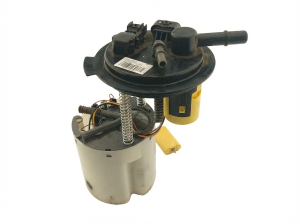
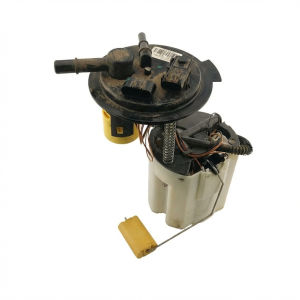
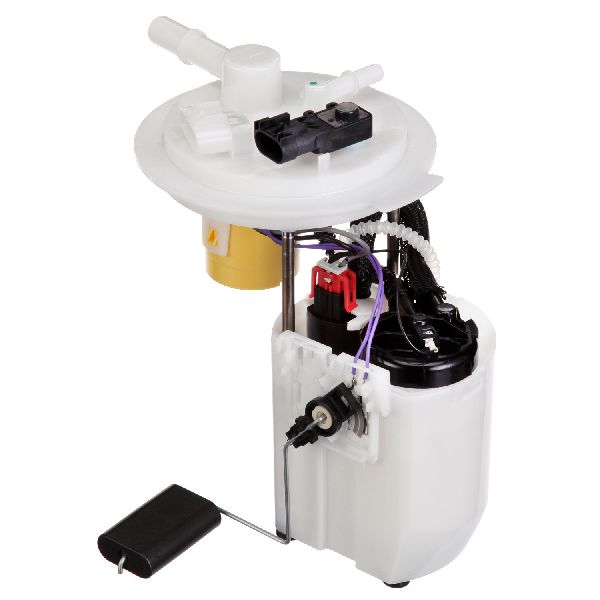
Est. part cost: $250-$600 - Failing Low-Pressure (In-Tank) Fuel Pump or Fuel Pump Control Module (FPCM) 🟡 Medium Probability → Shop Fuel Pump The in-tank pump supplies the HPFP. If it weakens or its control module fails, it can starve the high-pressure side. The FPCM is mounted on the frame rail and is susceptible to corrosion and rodent damage to its wiring.
How to confirm: Test the low-side fuel pressure at the service port (Schrader valve) near the HPFP; it should be around 55-60 psi with the key on and engine off. A scan tool can also show low-side pressure readings. Check the FPCM and its connector for corrosion or chewed wires.
Typical fix: Replace the in-tank fuel pump assembly or the Fuel Pump Control Module and any corroded or damaged wiring pigtails.
Est. part cost: $200-$400 - Faulty Fuel Rail Pressure Sensor ⚪ Low Probability → Shop Fuel Pressure Sensor The sensor is located under the intake manifold where it's exposed to heat and vibration. TSB 20-NA-197 notes that fretting corrosion in the connector can cause intermittent codes.
How to confirm: With a scan tool, compare the fuel rail pressure reading with the key on, engine off. If it shows significant pressure when the system is at rest, the sensor is likely faulty. Diagnosis can be difficult without ruling out the pump first.
Typical fix: Replace the fuel rail pressure sensor. This is labor-intensive as it requires removing the intake manifold. Applying dielectric grease to the connector terminals may resolve corrosion issues.
Est. part cost: $70-$120
Rare But Worth Checking
- Clogged Fuel Filter: → Shop Fuel Filter The fuel filter is part of the in-tank fuel pump module and is not typically serviced separately. A severely clogged filter can restrict flow to the HPFP, but pump failure is more common.
- Worn Camshaft Lobe: → Shop Engine Camshaft The HPFP is driven by a dedicated lobe on the camshaft. Extreme wear on this lobe can reduce the pump's stroke and its ability to generate pressure. This should be visually inspected when replacing the HPFP.
Diagnosis Steps
- Check the engine oil on the dipstick. A strong smell of gasoline is a definitive sign of a failed HPFP leaking into the crankcase. If this is found, proceed directly to replacing the HPFP and changing the oil.
- If no fuel smell is present, connect an OBD-II scan tool capable of reading live data.
- Monitor the 'Desired Fuel Rail Pressure' and 'Actual Fuel Rail Pressure' PIDs. At idle, they should be very close. Briefly rev the engine or perform a short test drive under load. If the actual pressure consistently falls more than 200-300 PSI below the desired pressure, the HPFP is weak.
- Check the low-pressure fuel system. The scan tool may have a PID for this, or you can use a fuel pressure gauge on the low-pressure service port. Pressure should be stable at 55-60 psi (380-410 kPa). If low-side pressure is low or erratic, investigate the in-tank pump and FPCM.
- If the HPFP and low-pressure pump seem to be working, inspect the wiring and connector for the fuel rail pressure sensor for any signs of damage or corrosion, as noted in TSB 20-NA-197.
- Visually inspect the camshaft lobe that drives the HPFP when the pump is removed. Look for scoring or unusual wear patterns.
- If all other components are verified to be good, the fuel rail pressure sensor itself may be faulty, but this is the least likely cause.
Parts You'll Likely Need
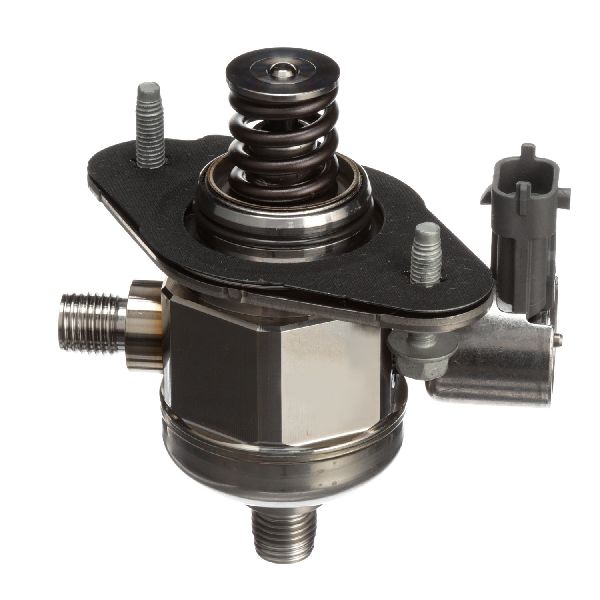
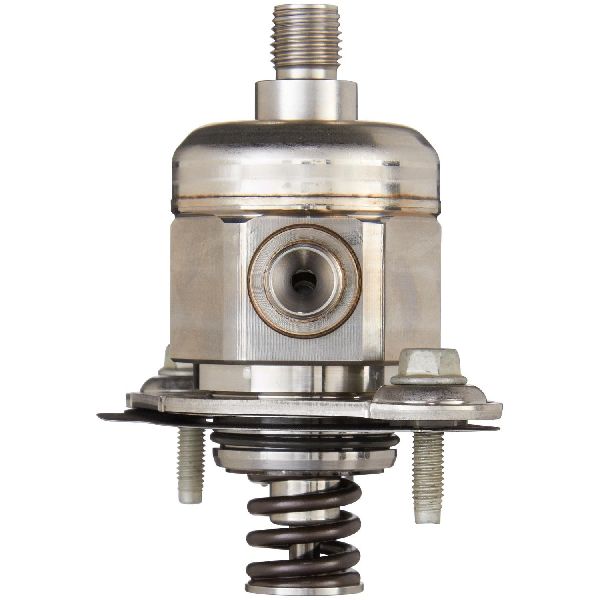
- High-Pressure Fuel Pump
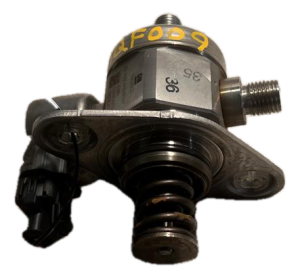
(OEM #LLT (2009-2011): 12641847 (supercedes 12633115, 12608371); LFX (2012-2017): 12639694 or 12658553)— This is the most common failure point on the 3.6L V6 engine that causes code P0087. The OEM part has gone through several revisions to improve reliability. Ensure you get the correct part for your specific engine (LLT or LFX).
Trusted brands: ACDelco, Bosch, Delphi
OEM price range: $300-$550
Aftermarket price range: $200-$400 - High-Pressure Fuel Line
(OEM #12634208)— This is a single-use, torque-to-yield part. It MUST be replaced anytime it is disconnected to prevent extremely dangerous high-pressure fuel leaks.
Trusted brands: ACDelco
OEM price range: $25-$50
Aftermarket price range: $15-$30 - Fuel Rail Pressure Sensor
(OEM #12635273)— Replaced only when diagnosis confirms the sensor itself is faulty, not the pump. Its location under the intake manifold makes it a labor-intensive replacement.
Trusted brands: ACDelco, Bosch
OEM price range: $70-$120
Aftermarket price range: $40-$80
Related Codes That Often Appear With This One
- P0089 — This code for 'Fuel Pressure Regulator Performance' often accompanies P0087 as both point to a problem with the HPFP's ability to maintain commanded pressure.
- P0191 — This code for 'Fuel Rail Pressure Sensor Circuit Range/Performance' is also frequently seen with P0087, indicating a general problem in the high-pressure fuel system, most often the HPFP.
- P228C — Stands for 'Fuel Pressure Regulator 1 Exceeded Control Limits - Pressure Too Low' and is another strong indicator of a failing HPFP on this platform.
- P0300-P0306 — Misfire codes can occur as a secondary result of the lean condition created by low fuel pressure.
Technical Service Bulletins (TSBs) & Recalls
- GM Special Coverage Adjustment #12213 / #14329: Acknowledged high failure rate of the HPFP and extended warranty coverage for this specific part on some models.
- GM Special Coverage Adjustment #11340C: Extended warranty for premature timing chain wear on 2009 Enclave models with the 3.6L V6, a separate common issue.
- GM TSB #14404B: Details the diagnosis and repair for the 3-5-R wave plate failure in the 6T75 transmission.
- TSB 20-NA-197: Notes that fretting corrosion in the fuel rail pressure sensor connector can cause intermittent codes like P0191, which is related to P0087.
Platform-Specific Known Issues
- The high-pressure fuel pump on the 3.6L LLT/LFX engine is a known high-failure item across the entire GM Lambda platform (Enclave, Acadia, Traverse, Outlook).
- GM's Special Coverage Adjustment programs (#12213, #14329) were a direct response to the high number of failures, though the coverage period may have expired for most vehicles.
Mechanic-Grade Diagnostic Values
- Low-Pressure Fuel System Pressure (Scan Tool) — expected: 300-400 kPa (43-58 psi) at idle. Failure: Pressure is significantly below 43 psi.
- Low-Pressure Fuel System Pressure (Manual Gauge, Pump Commanded ON) — expected: 345-690 kPa (50-100 psi). Failure: Pressure is below 50 psi, indicating a weak in-tank pump or restriction.
- High-Pressure Fuel Rail Pressure (Warm Idle, LLT Engine) — expected: 1.9 - 5.0 MPa (276 - 725 PSI). Failure: Pressure is erratic or consistently fails to meet the desired pressure PID on a scan tool.
- High-Pressure Fuel Pump Actuator Resistance (LLT Engine) — expected: 0.35 - 0.6 Ohms at 20°C (68°F). Failure: Resistance is outside the specified range, indicating a faulty actuator solenoid.
- Fuel Rail Pressure Sensor (FRPS) Signal Voltage (KOEO) — expected: Approximately 1.5 - 2.0 Volts. Failure: Voltage is stuck high (near 5V) or low (near 0V).
- Fuel Rail Pressure Sensor (FRPS) 5V Reference Circuit — expected: 4.8–5.2 Volts. Failure: Voltage outside this range points to a wiring issue or a fault in the ECM.
- High-Pressure Fuel Pump Bolt Torque — expected: 15 Nm (11 lb ft). Failure: Bolts are loose, which can cause leaks or improper pump operation. Must be torqued to spec on installation.
- Fuel Injection Fuel Rail Bolt Torque — expected: 20 Nm (15 lb ft). Failure: Bolts are loose. Must be torqued to spec on installation.
Scan Tool Commands That Help
- GDS2 (GM Dealer Tool): Fuel Pressure Control — To manually command changes in fuel rail pressure to test the HPFP's ability to respond, helping to isolate a weak pump from a sensor or actuator issue.
- Professional Scan Tool: Fuel Pump ON/OFF Command — Used with a manual gauge to test the low-pressure fuel pump's maximum pressure output without the engine running.
- Kent Moore Active Fuel Injector Tester (AFIT): → Shop Fuel Injector Automated Injector Flow Test — This is a dealer-level procedure that performs a comprehensive test of the fuel system. It checks low pressure, then systematically tests each injector for leaks and flow rate, which can help differentiate a P0087 caused by a bad pump versus a massively leaking injector.
Wiring & Ground Locations
- Fuel Pump Control Module (FPCM) — Mounted to the driver's side frame rail, under the rear of the vehicle, often near or above the rear differential.. This location makes the module and its wiring vulnerable to corrosion from road salt and water, as well as physical damage or rodent damage, which can interrupt power or communication to the low-pressure pump, starving the HPFP.
- Fuel Rail Pressure (FRP) Sensor Connector — On the high-pressure fuel rail, located under the upper intake manifold.. This 3-pin connector (Pin 1: 5V Ref, Pin 2: Signal, Pin 3: Ground) is a key test point. Fretting corrosion (per TSB 20-NA-197) or heat damage can cause erratic sensor readings, mimicking a fuel pressure problem.
- G110 Ground — Right front of the engine, mounted to the cylinder head.. This is a primary engine ground. A loose or corroded connection here can cause unstable voltage and erratic behavior from various engine sensors, including those in the fuel system.
- FPCM Wiring Harness — Runs from the FPCM at the rear of the vehicle towards the front, eventually connecting to the Engine Control Module (ECM).. The serial data wire that allows the ECM to command the FPCM can be damaged anywhere along its path. Rodent damage in the engine bay near the ECM has been documented to cause a no-communication issue with the FPCM, leading to a no-start and P0087.
Real Owner Repair Stories
- ScannerDanner YouTube Channel (2009 Buick Enclave) — No start, no communication with Fuel Pump Control Module (FPCM).
❌ Tried (didn't work) A previous mechanic had replaced the FPCM with a Dorman aftermarket unit, which did not fix the problem.
✅ What actually fixed it The technician performed a detailed wiring analysis and discovered the root cause was not the FPCM at the rear of the vehicle, but rodent-damaged wires in the engine bay near the ECM. Specifically, the serial data line from the ECM to the FPCM was chewed through. Repairing the damaged wires restored communication and fixed the no-start condition. - Schnebs Garage YouTube Channel (2011 Buick Enclave) — Vehicle went into limp mode while towing a trailer. Scan revealed 10 codes, including P0087 (Fuel Pressure Low), P0089 (Regulator Performance), P0300/P0302/P0304 (misfires), and P02A1 (Injector 2 Leak).
❌ Tried (didn't work) The video is a diagnostic-in-progress, but it highlights how a severe fuel delivery issue under load can trigger a cascade of seemingly unrelated codes.
✅ What actually fixed it The owner suspects a leaking injector based on the combination of codes. This serves as a real-world example of how P0087 can be accompanied by numerous other DTCs when a significant failure occurs.
"I Checked Everything" — The Actual Cause
- While not a smoke test, a classic example of 'the obvious part isn't the problem' is documented in a case where a 2009 Enclave had no communication with its Fuel Pump Control Module (FPCM). The logical assumption was a failed module, which had already been replaced once without success. The actual cause, found after extensive wiring diagram analysis, was rodent damage to the control wires near the Engine Control Module (ECM) at the opposite end of the vehicle. The fix was a wiring repair, not another FPCM.
OEM Part Supersession History
12608371, 12633115→12641847— Revisions to improve reliability and mitigate common failure modes of the HPFP for the LLT engine.
Heads up: These part numbers are for the LLT (2009-2011) engine and are not compatible with the LFX (2012-2017) engine.12639694→12658553— Revisions to improve reliability of the HPFP for the LFX engine.
Heads up: These part numbers are for the LFX (2012-2017) engine and are not compatible with the LLT (2009-2011) engine.
Model Year Variations Within This Range
- 2009-2011: These models use the LLT 3.6L V6. This engine uses a Bosch ECM and has traditional exhaust manifolds. The HPFP and other related parts are specific to this engine version.
- 2012-2017: These models use the updated LFX 3.6L V6. Key differences include a lighter composite intake manifold, cylinder heads with integrated exhaust manifolds, and a Delphi ECM. The HPFP, fuel injectors, and intake gaskets are not interchangeable with the earlier LLT engine.
Diagnostic Flowchart
Other Known Issues on This Vehicle
Issues unrelated to this code that are worth knowing about as an owner of this generation:
- Premature Timing Chain Stretch (LLT Engine) 🔴 High — Extremely common on 2009-2012 models, often appearing between 40,000 and 100,000 miles. Triggers codes P0008, P0017, P0018. (Ref: GM Special Coverage Adjustment #11340C extended the warranty to 10 years/120,000 miles, which has now expired for all vehicles.)
- 6T75 Transmission 3-5-R Wave Plate Failure 🔴 High — Common on earlier models (especially 2008-2010), leading to a sudden loss of 3rd, 5th, and Reverse gears. Can occur without warning. (Ref: GM Special Coverage #14404B covered this repair for 10 years/120,000 miles.)
- Power Steering Pump Failure / Rack Leaks 🟠 Medium — Widespread issue causing whining noises, especially when cold, and difficulty steering at low speeds. Leaks from the pump or high-pressure lines are common.
- Water Pump Failure 🔴 High — The water pump is located behind the timing cover and is driven by the timing chain. A seal failure can cause coolant to leak into the engine oil, leading to catastrophic engine damage if not caught early.
- Ignition Coil Failure 🟡 Low — Individual coil-on-plug failures are common, leading to a rough idle and misfire codes (P0300-P0306). Relatively easy to diagnose and replace.
Used vs. New Parts: Buying Guide for This Vehicle
When a used part is the smart pick: For this specific P0087 repair, using a used High-Pressure Fuel Pump (HPFP) is strongly discouraged due to its extremely high failure rate. A used Fuel Pump Control Module (FPCM) from a low-mileage, dry-climate donor vehicle could be a viable cost-saving measure if the original has failed due to water intrusion.
Donor-vehicle mileage cap: roughly under 70000 miles for the part to have meaningful remaining life.
What to inspect on the donor part:
- For a used HPFP (if you must): Verify the part number is an exact match for your engine (LLT vs LFX).
- Inspect the electrical connector for clean, straight, and un-corroded pins.
- Examine the pump body for any signs of staining or residue that would indicate a past leak.
- Check the roller tappet on the bottom of the pump for scoring or excessive wear.
OEM-only on this vehicle (don't cheap out):
- High-Pressure Fuel Line: This is a single-use, torque-to-yield part. Reusing it poses a significant fire risk from high-pressure leaks. Always buy a new OEM or equivalent quality line.
- High-Pressure Fuel Pump (HPFP): Given the history of failures, using a new OEM (ACDelco) or reputable OEM-supplier (Bosch, Delphi) part is the wisest investment to ensure a lasting repair.
Aftermarket brands forum-validated for this vehicle:
- ACDelco (OEM)
- Bosch
- Delphi
Brands owners have reported issues with on this vehicle:
- Unbranded or 'white-box' high-pressure fuel pumps sold on marketplace sites should be avoided. The failure rate is high, and the initial savings are often lost when the part fails prematurely, requiring the labor to be done a second time.
Real Owner Stories
Aggregated from forums and TSBs cited above. Mileages and costs reflect what owners reported in those sources.
2012 Buick Enclave 3.6L V6
Symptoms: Long-running battle with fuel-related issues, bucking, and intermittent codes; general drivability struggles.
What fixed it: Diagnostic struggle involving fuel system verification.
Source hint: ScannerDanner Forum - 'Fueling issues (I think so anyways) drivability'
2015 Buick Enclave 3.6L LFX
Symptoms: Low pressure code P228C and P0087 symptoms.
What fixed it: High-pressure fuel pump replacement.
Source hint: YouTube - '2015 Buick 3.6 L Code P228C - Low Pressure FIX' by Tims automotive and small engine
2009-2016 GMC Acadia (Platform Mate) 3.6L V6
Symptoms: Reduced Engine Power message, codes P0089, P0174, and P228C.
What fixed it: High Pressure Fuel Pump Replacement after checking desired vs. actual fuel pressure.
Source hint: YouTube - '09-16 GMC Acadia Reduced Engine Power, Codes P0089 P0174 P228C - High Pressure Fuel Pump Replacement' by Fixing it Forward
Related OBD-II Codes
Frequently Asked Questions
Is my 2009-2017 Buick Enclave covered under a special warranty for the High-Pressure Fuel Pump (HPFP)?
Why does my Enclave's engine oil smell like gasoline when I have code P0087?
Can a problem with the Fuel Pump Control Module (FPCM) cause P0087 on my Enclave?
I have P0087 and P0191; could it just be a bad connector?
Does the 2009 Enclave have other major issues I should look out for alongside fuel problems?
What is the 'Reduced Engine Power' message on my dashboard?
Helpful Videos
Used OEM Parts in Stock
New Aftermarket Parts Available


The information in this article is provided for general reference and educational purposes only. Vehicle specifications, procedures, and part compatibility can vary by production date, trim level, and region. Always consult your vehicle's factory service manual and verify part numbers before purchasing or performing repairs. Safety-critical components such as airbags, seat belts, and braking systems should be installed by a qualified professional.
- Buick Enclave:
- 🧭 Diagnostic Flowchart
- 🎬 Helpful Videos
- 🛍️ Shop This Part
- What's Unique About the 2009-2017 Buick Enclave
- Symptoms You May Notice
- Most Likely Causes
- Rare But Worth Checking
- Diagnosis Steps
- Parts You'll Likely Need
- Related Codes That Often Appear With This One
- Technical Service Bulletins (TSBs) & Recalls
- Platform-Specific Known Issues
- Mechanic-Grade Diagnostic Values
- Scan Tool Commands That Help
- Wiring & Ground Locations
- Real Owner Repair Stories
- "I Checked Everything" — The Actual Cause
- OEM Part Supersession History
- Model Year Variations Within This Range
- Other Known Issues on This Vehicle
- Used vs. New Parts: Buying Guide for This Vehicle
- Real Owner Stories
- 2012 Buick Enclave 3.6L V6
- 2015 Buick Enclave 3.6L LFX
- 2009-2016 GMC Acadia (Platform Mate) 3.6L V6
- Related OBD-II Codes
- Frequently Asked Questions
- 🎟️ Get 5% Off