

P0087 on 2015-2018 Chevrolet Colorado: Low Fuel Pressure Causes & Fixes
On a 2015-2018 Colorado, P0087 is most often caused by a failing high-pressure fuel pump (HPFP), especially on the 3.6L V6, or a faulty in-tank low-pressure fuel pump, which is known to fail in cold weather per TSB #18-NA-103. A key diagnostic step is checking the engine oil for a fuel smell, which points to the HPFP. Diagnosis is critical to avoid replacing the wrong pump.
- P0087 on a 2015-2018 Colorado indicates a serious low fuel pressure condition that makes the vehicle unsafe to drive due to the risk of stalling.
- The two most likely causes are a failing high-pressure fuel pump (HPFP) or a failing in-tank low-pressure pump.
- A specific TSB confirms the in-tank pump is prone to failing in cold weather.
- Proper diagnosis with a scan tool that can read both low and high-side fuel pressure is essential to avoid replacing the wrong, expensive component.
- When replacing the HPFP, the single-use high-pressure fuel line must also be replaced to prevent leaks.
What's Unique About the 2015-2018 Chevrolet COLORADO
The 2015-2018 Colorado uses a direct injection fuel system with two separate fuel pumps: a low-pressure pump in the tank and a high-pressure fuel pump (HPFP) on the engine. This dual-pump setup makes diagnosis critical. This specific truck has two well-documented failure patterns for P0087: the in-tank fuel pump is known to fail in very cold weather (per TSB #18-NA-103), and the high-pressure fuel pump on the 3.6L V6 engine is a common failure point across many GM vehicles that share this engine.
Diagnostic Flowchart
Tap your situation to follow the diagnostic path that matches what you're seeing on this vehicle.
Symptoms You May Notice
- Reduced engine power or entering "limp mode"
- Check Engine Light is on
- Engine stalling, especially under load or acceleration
- Hard starting or no-start condition
- Rough idling or engine misfires
- Hesitation or stumbling during acceleration
- Strong fuel smell from the engine oil on the dipstick
- Replacing the in-tank fuel pump when the high-pressure fuel pump has actually failed. This is a common mistake if diagnosis is performed without a scan tool capable of reading both low-side and high-side fuel pressure.
- Replacing the HPFP when the single-use high-pressure fuel line was not also replaced, leading to a persistent leak and a quick return of the P0087 code.
Most Likely Causes
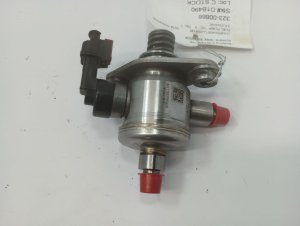
- Failing High-Pressure Fuel Pump (HPFP) 🔴 High Probability → Shop Fuel Pump The 3.6L V6 (LFX/LGZ) engine used in the Colorado is known for HPFP failures across multiple GM platforms. A failed pump cannot generate the 2,000+ PSI needed for direct injection. The pump is mechanically driven by a camshaft lobe, and wear on the pump's internal components or the cam follower can lead to failure.
How to confirm: Use a scan tool to monitor high-side fuel pressure ('Fuel Rail Pressure'). If low-side pressure is normal (45-60 PSI) but high-side pressure fails to meet the commanded value under load, the HPFP is the likely culprit. A definitive sign is a strong gasoline smell in the engine oil, which indicates the HPFP's internal seal has failed and is leaking fuel into the crankcase.
Typical fix: Replace the high-pressure fuel pump, its gasket, and the single-use high-pressure fuel line that connects to it. An oil change is highly recommended if fuel has contaminated the oil.
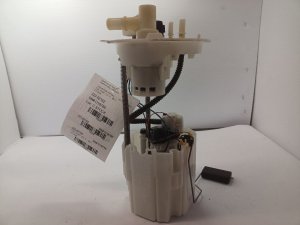
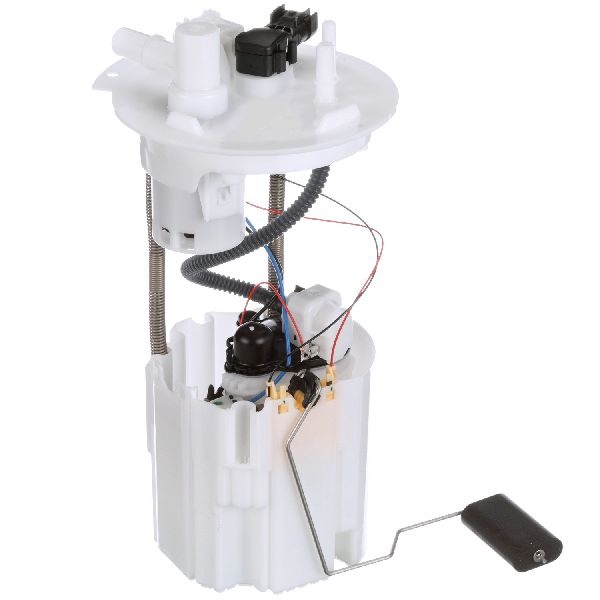
Est. part cost: $200-$700 - Failing In-Tank (Low-Pressure) Fuel Pump 🔴 High Probability → Shop Fuel Pump GM issued Technical Service Bulletin #18-NA-103 specifically for this issue, noting the in-tank fuel pump can develop a whine and fail at temperatures below 20°F (-6°C), causing a no-start and setting code P0087. This is a widely discussed issue in owner forums for the Colorado and its platform-mate, the GMC Canyon.
How to confirm: Use a scan tool to monitor low-side fuel pressure ('Low Fuel System Pressure'). If the pressure is below specification (typically should be stable around 55-60 PSI at idle), the in-tank pump is likely at fault. This test is most effective when the problem is occurring (e.g., in cold weather).
Typical fix: Replace the in-tank fuel pump module assembly. This requires dropping the fuel tank or removing the truck bed for access. 🎬 Watch: Step-by-step tutorial for replacing the in-tank fuel pump
Est. part cost: $150-$400 - Clogged Fuel Filter 🟡 Medium Probability → Shop Fuel Filter The fuel filter is a standard maintenance item that can become restricted over time, starving the rest of the system for fuel. On the Colorado, the primary fuel filter is integrated into the in-tank fuel pump module and is considered non-serviceable separately.
How to confirm: A low-pressure reading on the low-pressure fuel system PID is the primary indicator. Since the filter is part of the pump module, diagnosis often leads to replacing the entire assembly if low pressure is confirmed.
Typical fix: Replace the entire in-tank fuel pump module, which includes a new integrated filter.
Est. part cost: $150-$400 (for module) - Faulty Fuel Rail Pressure Sensor ⚪ Low Probability → Shop Fuel Pressure Sensor While not as common as pump failure, the sensor that reads the high-side pressure can fail or provide inaccurate readings. TSB #20-NA-197 (for the similar GMC Canyon) notes that corrosion at the sensor's electrical connector can also cause this code.
How to confirm: With the engine running, compare the fuel rail pressure reading on a scan tool to the reading from a known-good mechanical gauge. If the readings differ significantly, the sensor is likely bad. Also, inspect the sensor's electrical connector for green or white corrosion.
Typical fix: Replace the fuel rail pressure sensor and inspect its connector for corrosion or damage.
Est. part cost: $50-$180
Rare But Worth Checking
- Fuel System Contamination: As noted in TSB #PIP5151F, water, debris, or the wrong type of fuel (like E85 in a non-flex fuel vehicle) can cause P0087. If contamination is found, the bulletin warns that the entire fuel system may need to be flushed and cleaned to prevent repeat failures of new parts.
- Leaking Fuel Injector: → Shop Fuel Injector An injector that is stuck open can cause a constant drop in fuel rail pressure. This is less common than a pump failure but can be identified through an injector balance test with a capable scan tool or by checking spark plugs for signs of a rich cylinder.
- Worn Camshaft Lobe: → Shop Engine Camshaft The high-pressure fuel pump is driven by a specific lobe on the camshaft. In rare, high-mileage cases, this lobe can wear down, preventing it from fully actuating the pump, leading to low pressure. This is a major mechanical repair.
Diagnosis Steps
- Connect an OBD-II scanner and check for any other accompanying trouble codes. Address codes for sensors or communication first.
- Using a scan tool with live data, monitor both 'Low Fuel System Pressure' and 'Fuel Rail Pressure' (High Pressure).
- At idle, check the low-pressure reading. It should be stable and within the manufacturer's specification (typically 55-60 PSI). If it's low, dropping, or erratic, suspect the in-tank pump, its control module, or a clogged filter.
- If low-side pressure is good, monitor the high-pressure reading. Compare the 'Desired' pressure to the 'Actual' pressure while safely revving the engine or during a short test drive. If the actual pressure cannot keep up with the desired pressure, the problem is in the high-pressure system.
- If the high-pressure pump is suspected, turn off the engine and carefully check the engine oil dipstick for a strong smell of gasoline. A fuel smell strongly suggests the HPFP has an internal leak and must be replaced.
- Visually inspect the high-pressure fuel pump area (under the intake manifold) for any visible fuel leaks.
- Inspect the fuel rail pressure sensor connector for any signs of corrosion, moisture, or damage, as noted in related TSBs.
- If fuel contamination is suspected (e.g., after filling up at a questionable station), a fuel sample should be taken and inspected for water, debris, or separation.
Parts You'll Likely Need
- High-Pressure Fuel Pump
(OEM #12691088)— This is a very common failure point on the 3.6L V6 engine that directly causes low fuel rail pressure. Supersedes part numbers 12673750, 12673141, 12647366, 12733944.
Trusted brands: ACDelco, Bosch, Standard Motor Products
OEM price range: $350-$700
Aftermarket price range: $200-$450 - In-Tank Fuel Pump Module Assembly
(OEM #13552980)— This pump is known to fail in cold weather per a manufacturer TSB, leading to a no-start and P0087. The integrated filter is also non-serviceable.
Trusted brands: ACDelco, Delphi
OEM price range: $250-$500
Aftermarket price range: $150-$400
Related Codes That Often Appear With This One
- P2635 — This code for 'Fuel Pump Flow Performance' is often set with P0087, as both relate to the fuel delivery system struggling, as mentioned in TSB #18-NA-103.
- P0088 — 'Fuel Rail/System Pressure - Too High'. This can appear with P0087 if there is an intermittent or erratic fault in the fuel pressure sensor or fuel pump, causing the pressure to swing wildly.
- P0191 — 'Fuel Rail Pressure Sensor Circuit Range/Performance'. This code points more directly to an issue with the sensor or its wiring and is mentioned alongside P0087 in TSB #PIP5151F.
- P018B, P228A, P228B — These are other fuel pressure sensor and performance related codes that TSB #18-NA-103 lists as potentially appearing with P0087 during cold-weather pump failures.
Technical Service Bulletins (TSBs) & Recalls
- TSB #18NA103: Notes that the in-tank fuel pump can whine and cause a stall, no-start, or loss of power in temperatures below 20°F (-6°C), setting codes P0087, P018B, P228A, P228B, or P2635.
- TSB #PIP5151F: Discusses how fuel system contamination (water, debris, wrong fuel) can lead to hard starting, no-starts, and codes P0087, P0088, and P0191. Warns that the entire fuel system may need cleaning if contamination is found.
- TSB #20-NA-197: While not for the Colorado specifically, this TSB for the similar GMC Canyon notes that corrosion at the fuel rail pressure sensor's electrical connector can cause P0087 and other erratic readings.
Platform-Specific Known Issues
- Cold Weather No-Start: A very common complaint for 2015-2018 Colorado owners is a no-start condition or immediate stall during cold snaps (sub-freezing temperatures). This is almost always accompanied by code P0087 and is directly addressed by TSB #18-NA-103, which points to the in-tank fuel pump failing to perform in the cold. Owners report that moving the vehicle into a heated garage can temporarily resolve the issue, confirming the diagnosis.
- HPFP Failure and Oil Contamination: Owners of the 3.6L V6 model frequently report a sudden loss of power, stalling, and code P0087, which is ultimately traced to a failed high-pressure fuel pump. A tell-tale sign shared in owner forums is discovering the engine oil smells strongly of gasoline. This indicates an internal failure of the pump, leaking fuel directly into the crankcase. This requires immediate replacement of the pump and an oil change to prevent engine damage.
Mechanic-Grade Diagnostic Values
- Low-Side Fuel Pressure (Key On, Engine Off) — expected: Approx. 50 PSI. Failure: Significantly lower pressure indicates a weak in-tank pump or a leak in the low-pressure side.
- Low-Side Fuel Pressure (Engine at Idle) — expected: 55-60 PSI. Failure: Pressure that is low, erratic, or drops significantly under load points to a failing in-tank pump.
- Scan Tool: Actual vs. Desired Low-Side Fuel Pressure Delta — expected: Within 45 kPa (6.5 PSI) at 300 kPa request; Within 60 kPa (8.7 PSI) at 400 kPa request.. Failure: A consistent difference greater than these values indicates a flow performance issue on the low-pressure side.
Scan Tool Commands That Help
- GDS2 (GM Dealer Tool): Fuel Pump On/Off Command — To manually activate the in-tank low-pressure fuel pump while monitoring pressure with a gauge or live data. This helps isolate a dead pump from a control module or wiring issue.
- GDS2 (GM Dealer Tool): Fuel System Pressure Test — This function allows a technician to command specific fuel pressures and observe if the high-pressure and low-pressure pumps can meet and hold those targets, which is crucial for testing the HPFP's performance under controlled conditions.
- GDS2 (GM Dealer Tool): Injector Balance Test — If pumps are testing good but pressure still drops, this test can help identify a leaking or stuck-open injector that is bleeding off rail pressure.
Wiring & Ground Locations
- Fuel Pump Control Module (FPCM) / Chassis Control Module — Mounted to the driver's side frame rail, typically above the spare tire.. This module controls the voltage supplied to the in-tank fuel pump. Its location makes it vulnerable to corrosion from road salt and moisture, which can cause it to fail, cutting power to the pump and triggering P0087. A failure here can be misdiagnosed as a bad fuel pump.
- Primary Engine/Chassis Grounds — Key locations include near the battery, on the engine block, and on the frame rails near the front of the vehicle.. A corroded or loose ground for the FPCM or ECM can cause erratic voltage and intermittent fuel pump operation, leading to low pressure codes. While specific to the 1st Gen, TSBs for other GM trucks point to grounds like SP-105 (driver's side near battery) and SP-106 (passenger side behind airbox) as critical for the fuel system.
Real Owner Repair Stories
- Reddit forum user, cited in a professional article (Similar GM Truck (GMC Sierra)) — Persistent P0087 and P228B codes, but only in temperatures below 30°F. The truck would stall on cold starts.
❌ Tried (didn't work) The dealership first replaced the fuel rail.
✅ What actually fixed it After the code returned on the next cold day and the case was escalated with GM, the high-pressure fuel pump (HPFP) was replaced, which permanently resolved the cold-start stalling and the trouble codes.
OEM Part Supersession History
12647366, 12673141, 12673750, 12733944→12691088— Standard part evolution for improved reliability or manufacturing changes.
Model Year Variations Within This Range
- 2015-2016: These models are equipped with the 3.6L LFX V6 engine and a 6-speed automatic transmission.
- 2017-2018: These models received the updated 3.6L LGZ V6 engine, which was a significant redesign with changes to the VVT system and tuning for better truck performance. It was paired with a new 8-speed automatic transmission.
Helpful Videos
Used OEM Parts in Stock
New Aftermarket Parts Available


The information in this article is provided for general reference and educational purposes only. Vehicle specifications, procedures, and part compatibility can vary by production date, trim level, and region. Always consult your vehicle's factory service manual and verify part numbers before purchasing or performing repairs. Safety-critical components such as airbags, seat belts, and braking systems should be installed by a qualified professional.
- Chevrolet COLORADO:
- 🧭 Diagnostic Flowchart
- 🎬 Helpful Videos
- 🛍️ Shop This Part
- What's Unique About the 2015-2018 Chevrolet COLORADO
- Symptoms You May Notice
- Most Likely Causes
- Rare But Worth Checking
- Diagnosis Steps
- Parts You'll Likely Need
- Related Codes That Often Appear With This One
- Technical Service Bulletins (TSBs) & Recalls
- Platform-Specific Known Issues
- Mechanic-Grade Diagnostic Values
- Scan Tool Commands That Help
- Wiring & Ground Locations
- Real Owner Repair Stories
- OEM Part Supersession History
- Model Year Variations Within This Range
- 🎟️ Get 5% Off