

P0087 on 2018-2019 Chevrolet Equinox: Low Fuel Pressure Causes and Fixes
P0087 on a 2018-2019 Equinox most often points to a failing high-pressure fuel pump (HPFP), a common issue on these direct-injection engines. GM has a customer satisfaction program for some models related to cracking HPFPs. Expect to pay $300-$500 for the part and 1-2 hours of labor.
- P0087 means the high-pressure fuel system is failing to provide enough pressure to the engine.
- The most likely culprit is a failing high-pressure fuel pump (HPFP), a common issue on GDI engines.
- Do not drive the vehicle, as the engine can stall unexpectedly, creating a serious safety risk.
- Diagnosis requires a scan tool to monitor live fuel pressure data; simply replacing parts is not recommended.
- Per a GM TSB, check for fuel contamination, as it may require a more extensive repair than just one part.
What's Unique About the 2018-2019 Chevrolet EQUINOX
The 2018-2019 Equinox with the 1.5L (LYX) or 2.0L (LTG) turbo engines uses a gasoline direct injection (GDI) system that is sensitive to fuel pressure. A key issue, identified in GM Customer Satisfaction Program N182199610, is that the high-pressure fuel pump itself may crack and leak fuel over time. Additionally, GM Technical Service Bulletin #PIP5151F highlights that fuel system contamination can cause this code and requires a complete system inspection, not just a single part replacement, suggesting a vulnerability in the system.
Diagnostic Flowchart
Tap your situation to follow the diagnostic path that matches what you're seeing on this vehicle.
Symptoms You May Notice
- Reduced engine power or "limp mode"
- Engine hesitation or stumbling on acceleration
- Rough idle
- Hard starting or long crank times
- Engine stalling
- Check Engine Light illuminated
- Fuel smell from the engine bay, particularly if the HPFP housing has cracked
- Replacing only the fuel pressure sensor without verifying its reading against a mechanical gauge.
- Replacing the low-pressure fuel pump when the high-pressure pump is actually at fault.
- Replacing the HPFP without checking for timing chain issues, especially if codes P0016/P0017 are also present.
Most Likely Causes
- Failing High-Pressure Fuel Pump (HPFP) 🔴 High Probability → Shop Fuel Pump The HPFP is a known failure point. GM issued Customer Satisfaction Program N182199610 for 2018-2019 Equinox models with the 1.5L engine due to a condition where the HPFP may crack and leak fuel. Wear on the pump's internal components or the camshaft lobe that drives it can also reduce its ability to generate pressure.
How to confirm: Use a scan tool to monitor desired vs. actual fuel rail pressure under load. 🎬 See a breakdown of common causes for the P0087 code. If actual pressure cannot keep up with desired pressure during acceleration, the HPFP is a likely culprit. A visual inspection for fuel leaks around the pump is also critical. Some owners report repeat failures, suggesting it's a persistent issue.
Typical fix: Replace the high-pressure fuel pump and its associated one-time-use fuel line. Per program N182199610, the fuel pump insulator should also be replaced.
Est. part cost: $250-$500 - Fuel System Contamination 🟡 Medium Probability As noted in TSB #PIP5151F, contamination from poor quality fuel, water, or other fluids can cause low fuel pressure. The bulletin was originally for diesel engines but its principles are applied to GDI systems experiencing similar symptoms and codes. Debris from a failing pump can also contaminate the system.
How to confirm: Inspect the fuel system for debris or unusual substances, as recommended by the TSB. This may involve checking the fuel tank, lines, and filter. A fuel sample should be placed in a clear container to check for cloudiness, water, or separation.
Typical fix: According to the TSB, if contamination is found, the complete fuel system may need to be cleaned or flushed to prevent repeat failures. This is not a warranty-covered repair.
Est. part cost: $50-$1000+ - Faulty Fuel Rail Pressure Sensor 🟡 Medium Probability → Shop Fuel Pressure Sensor The sensor can fail and send inaccurate low-pressure readings to the ECM, even if the pressure is normal. It is located under the intake manifold, making it a labor-intensive part to replace.
How to confirm: Compare the scan tool's live pressure reading with a reading from a mechanical fuel pressure gauge. If the readings differ significantly, the sensor is likely faulty. A failing sensor may also give erratic readings that jump around, whereas a failing pump often shows a consistent drop in pressure.
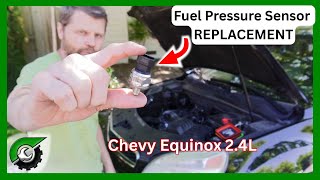
Typical fix: Replace the fuel rail pressure sensor. This requires removing the intake manifold. 🎬 Watch: Step-by-step guide to replacing the fuel rail pressure sensor.
Est. part cost: $50-$150 - Failing Low-Pressure (In-Tank) Fuel Pump ⚪ Low Probability → Shop Fuel Pump If the in-tank pump can't supply enough fuel to the HPFP, the high-pressure side will be starved. While less common than HPFP failure, it's a possibility.
How to confirm: Test the low-pressure fuel system pressure at the inlet of the HPFP. It should meet the manufacturer's specification (typically 50-70 PSI). This can be checked via a scan tool or a mechanical gauge at a test port.
Typical fix: Replace the in-tank fuel pump module.
Est. part cost: $200-$400
Rare But Worth Checking
- Worn Camshaft Lobe: → Shop Engine Camshaft The high-pressure fuel pump is driven by a lobe on the camshaft. In some GM engines, excessive wear on this lobe or a stretched timing chain can prevent the pump from generating sufficient pressure. This is often accompanied by camshaft/crankshaft correlation codes like P0016 or P0017.
- Clogged Fuel Filter: → Shop Fuel Filter The fuel filter is integrated into the in-tank fuel pump module and is considered non-serviceable. However, significant contamination from poor fuel quality could still restrict flow, warranting a replacement of the entire module.
Diagnosis Steps
- Check for other DTCs. Codes related to camshaft timing (P0016/P0017) or the pressure sensor (P0191) can provide important clues.
- Use an OBD-II scanner to view live data for 'Desired Fuel Rail Pressure' and 'Actual Fuel Rail Pressure'.
- Start the engine and let it idle. Compare the desired and actual pressure readings. At idle, pressure should be several hundred PSI.
- Safely increase engine RPM while monitoring the readings. If the actual pressure drops significantly and fails to match the desired pressure under load (which can exceed 2000 PSI), suspect a weak HPFP or a supply issue.
- Check the engine oil for a strong gasoline smell. A failed HPFP can leak fuel into the crankcase, which is a significant finding.
- Visually inspect the high-pressure fuel pump and surrounding area for any signs of fuel leaks or wetness, as indicated in GM Program N182199610.
- Test the low-pressure fuel system to ensure the HPFP is receiving adequate fuel from the tank (should be 50-70 PSI).
- As per TSB #PIP5151F, if contamination is suspected, take a fuel sample and inspect it for water, debris, or other fluids.
- If timing codes are present, investigate the timing chain for slack and the camshaft lobes for wear, as this can directly affect the HPFP's operation.
Parts You'll Likely Need
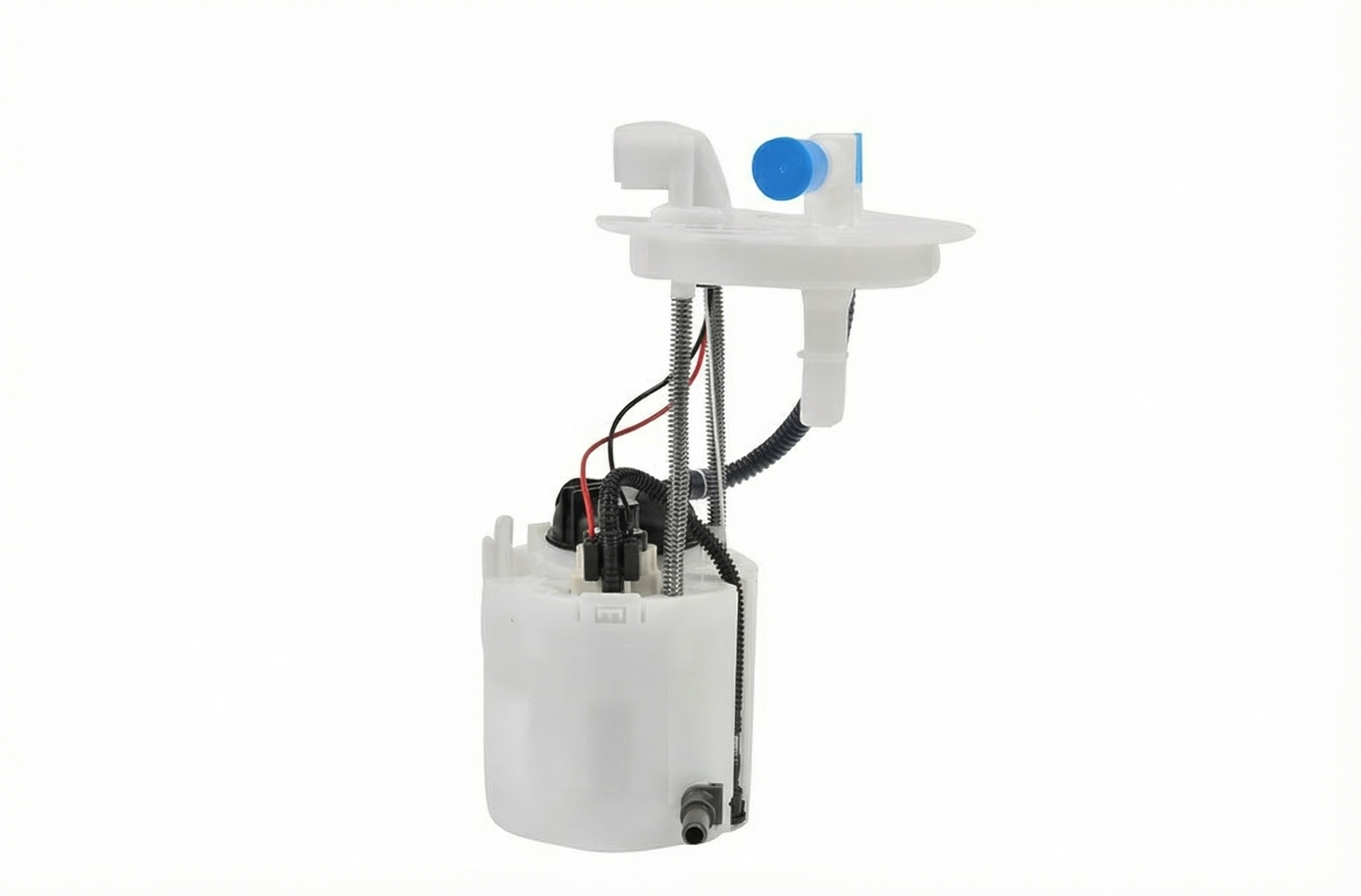
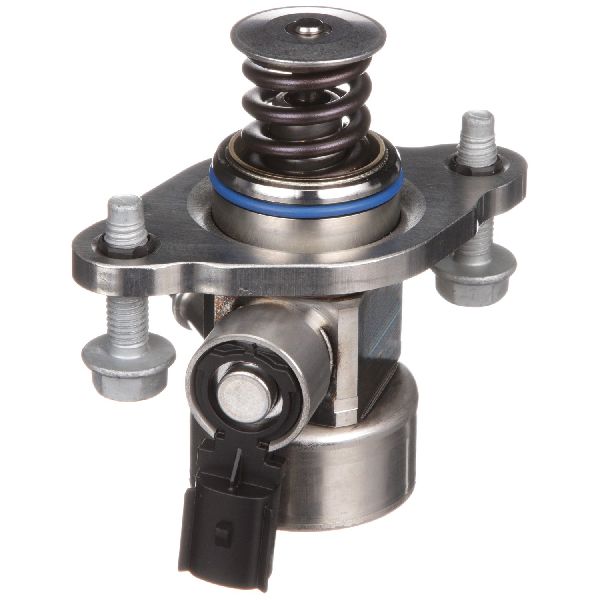
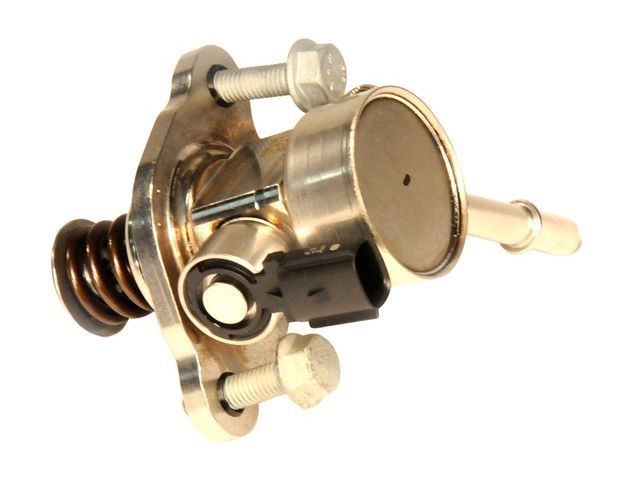
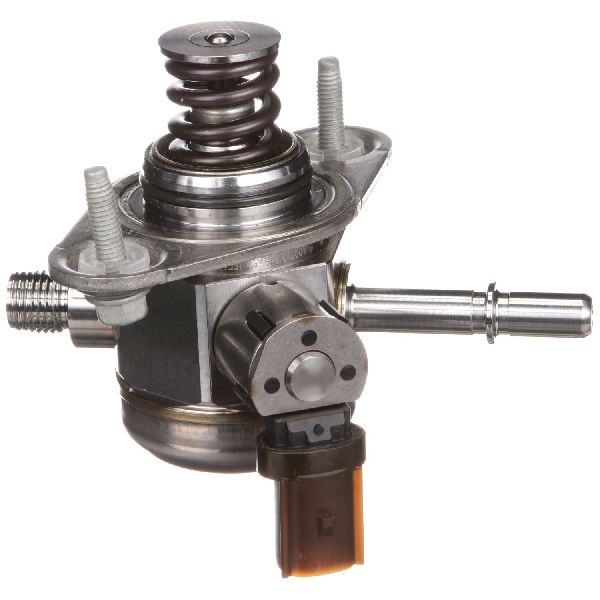
- High-Pressure Fuel Pump
(OEM #12682079 (For 1.5L LYX, per N182199610), 12677329 (Alternative for 1.5L/2.0L))— This is the most frequent cause of P0087 on this platform, with a known issue leading to a customer satisfaction program from GM.
Trusted brands: ACDelco (GM Genuine), Bosch
OEM price range: $300-$500
Aftermarket price range: $200-$400 - Fuel Rail Pressure Sensor
(OEM #12679932 (Verify by VIN))— A faulty sensor can send incorrect data, leading to a false P0087 code. It's a critical diagnostic component, though less common to fail than the pump.
Trusted brands: ACDelco, Delphi
OEM price range: $80-$150
Aftermarket price range: $50-$100 - High-Pressure Fuel Feed Pipe
(OEM #12684046 (For 1.5L LYX, per N182199610))— This is a one-time-use part that must be replaced any time it is disconnected to service the high-pressure fuel pump or sensor to ensure a proper seal.
Trusted brands: ACDelco (GM Genuine)
OEM price range: $30-$60
Aftermarket price range: $20-$40
Related Codes That Often Appear With This One
- P0088 — Fuel Rail/System Pressure - Too High. This can appear with P0087 if the fuel pressure regulator or sensor is behaving erratically.
- P0191 — Fuel Rail Pressure Sensor Circuit Range/Performance. This code points more directly to a problem with the sensor or its circuit, and is mentioned in TSB #PIP5151F.
- P0016 / P0017 — Crankshaft/Camshaft Position Correlation. These codes indicate a timing issue. Since the HPFP is driven by the camshaft, incorrect timing can directly cause low fuel pressure.
- P228D — Fuel Pressure Regulator 1 Control Performance - High Pressure. This code often appears alongside P0087 when the HPFP is failing or there are timing issues affecting its operation.
Technical Service Bulletins (TSBs) & Recalls
- PIP5151F: Addresses hard start, no start, rough running, or low fuel pressure associated with codes P0087, P0088, P0191, and P128E, pointing to potential fuel system contamination.
- N182199610: A 'Customer Satisfaction Program' bulletin detailing a condition where the high-pressure fuel pump on 1.5L engines may crack and leak, requiring replacement.
Platform-Specific Known Issues
- TSB #PIP5151F: Notes that P0087 can be caused by fuel system contamination, which may require a complete fuel system inspection and cleaning/replacement.
- Customer Satisfaction Program N182199610: Specifically for the 2018-2019 Equinox with the 1.5L LYX engine, this program addresses a condition where the high-pressure fuel pump may crack and leak fuel, causing various symptoms including P0087. The fix involves replacing the pump, insulator, and feed pipe.
- Recall N222372310: While for the 2021-2022 models, it highlights a known issue with fuel pump modules that may not provide sufficient fuel, leading to stalling. This indicates a history of fuel pump issues on the Equinox platform.
Mechanic-Grade Diagnostic Values
- Low-Pressure Fuel System Pressure (at HPFP inlet) — expected: 50-70 PSI. Failure: Pressure below 50 PSI indicates a weak in-tank pump or clogged filter.
- High-Pressure Fuel Rail Pressure at Idle — expected: ~440 PSI. Failure: Significantly lower pressure suggests a failing HPFP or a supply issue.
- High-Pressure Fuel Rail Pressure Under Load — expected: 500 to 3,000 PSI, dynamically adjusted by the ECM.. Failure: Actual pressure failing to meet desired pressure during acceleration points to a weak HPFP.
- Fuel Rail Pressure Sensor Voltage — expected: Typically a 3-wire sensor with a 5V reference, ground, and a signal wire. The signal wire should read ~0.5V at low pressure and ~4.5V at max pressure.. Failure: Voltage that is stuck low, high, or does not correlate with actual pressure indicates a faulty sensor or wiring issue.
Scan Tool Commands That Help
- GDS2 (or equivalent professional scanner): Fuel Pump On/Off Command — To verify if the Fuel Pump Control Module (FPCM) and the low-pressure in-tank pump are responding to commands, helping to isolate a control-side vs. a component failure.
- GDS2 (or equivalent professional scanner): FSCM/FPCM Replacement Programming — This is a required procedure after replacing the Fuel System Control Module (FSCM/FPCM). The new module must be programmed to the vehicle.
- GDS2 (or equivalent professional scanner): Fuel Pressure Relief Valve Learned Values Reset — According to GM service procedures for some models, this reset is required after replacing the high-pressure fuel pump to ensure the system correctly learns the new component's characteristics.
Wiring & Ground Locations
- Fuel Pump Control Module (FPCM) — Located under the driver's side of the vehicle, protected by a large shield that is held in place by 10mm nuts.. The FPCM controls the voltage and speed of the low-pressure in-tank pump. A failure of this module or its wiring/ground can starve the high-pressure pump of fuel, causing P0087.
- FPCM Fuses (Example from prior gen) — In the under-hood fuse box. On the previous generation Equinox (2010-2017), these were fuses F46 and F52.. A blown fuse for the FPCM will cut power to the low-pressure pump, leading directly to a P0087 code. Always check relevant fuses before replacing expensive components.
- Fuel Rail Pressure Sensor Connector — On the fuel rail, under the intake manifold.. Corrosion or damage to this connector can cause an incorrect low-pressure signal to be sent to the ECM, triggering a false P0087 code.
Real Owner Repair Stories
- YouTube channel 'Rainman Ray's Repairs' (Chevrolet with 2.4L Ecotec (similar GDI architecture)) — Check Engine Light with codes P0016, P0017, P0087, P228D, and StabiliTrak warning.
❌ Tried (didn't work) Focusing only on the fuel system codes (P0087, P228D) without considering the timing codes.
✅ What actually fixed it The root cause was a stretched timing chain. The camshaft position being incorrect (P0016/P0017) directly affected the camshaft-driven high-pressure fuel pump, causing the low pressure code (P0087). The fix was a complete timing chain service, not fuel system parts. - Carly Community Forum (2016 Chevrolet Equinox, 48,519 km) — Check Engine Light, stalling at idle, reduced power, OBD code for faulty fuel rail pressure sensor.
❌ Tried (didn't work) Initial cleaning of the sensor connector provided only a temporary fix.
✅ What actually fixed it The final repair involved replacing the defective fuel rail pressure sensor itself. The problem was a combination of corrosion in the connector and a failed sensor. The total repair cost was reported as €240.
"I Checked Everything" — The Actual Cause
- While a smoke test is for vacuum leaks, a similar diagnostic misdirection occurs with P0087. Technicians may perform comprehensive fuel pressure and volume tests on both the low and high-pressure systems and find them borderline or inconsistent. They might replace the HPFP, only for the code to return. The actual cause, as seen in real-world cases, was a stretched timing chain. The incorrect camshaft timing directly impacts the HPFP's mechanical operation, which standard fuel system electronic tests do not account for.
When the Usual Fixes Don't Work
- While the high-pressure fuel pump is the most common cause, it should not be replaced without first ruling out underlying issues. In a documented case involving P0087 accompanied by timing codes P0016 and P0017, the actual fault was a stretched timing chain. Replacing the fuel pump would not have fixed the issue, as the pump's low output was a symptom of being improperly driven by the out-of-time camshaft. This highlights the critical importance of diagnosing all codes present, not just the most obvious one.
OEM Part Supersession History
12649461, 12673450→12682079— GM regularly updates service parts to integrate new materials and technologies for improved reliability.12658331→28289962— Part update or manufacturer change for the fuel rail pressure sensor.
Helpful Videos


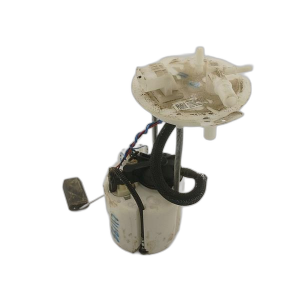
Used OEM Parts in Stock
New Aftermarket Parts Available

The information in this article is provided for general reference and educational purposes only. Vehicle specifications, procedures, and part compatibility can vary by production date, trim level, and region. Always consult your vehicle's factory service manual and verify part numbers before purchasing or performing repairs. Safety-critical components such as airbags, seat belts, and braking systems should be installed by a qualified professional.
- Chevrolet EQUINOX:
- 🧭 Diagnostic Flowchart
- 🎬 Helpful Videos
- 🛍️ Shop This Part
- What's Unique About the 2018-2019 Chevrolet EQUINOX
- Symptoms You May Notice
- Most Likely Causes
- Rare But Worth Checking
- Diagnosis Steps
- Parts You'll Likely Need
- Related Codes That Often Appear With This One
- Technical Service Bulletins (TSBs) & Recalls
- Platform-Specific Known Issues
- Mechanic-Grade Diagnostic Values
- Scan Tool Commands That Help
- Wiring & Ground Locations
- Real Owner Repair Stories
- "I Checked Everything" — The Actual Cause
- When the Usual Fixes Don't Work
- OEM Part Supersession History
- 🎟️ Get 5% Off