

P0087 on 2015-2019 Chevrolet Express: Fuel Pressure Too Low Causes and Fixes
On 2015-2019 Chevrolet Express vans, code P0087 is most often caused by fuel system contamination or a failing in-tank fuel pump, especially in cold weather. For Duramax diesel models, failure of the high-pressure fuel pump (HPFP) is a primary cause. This is a serious issue that can cause stalling and requires a thorough diagnosis of the entire fuel system.
- P0087 on a 2015-2019 Express is a serious code indicating insufficient fuel pressure, which can cause the engine to stall.
- Do not immediately assume the fuel pump has failed. GM has issued multiple TSBs indicating that fuel system contamination is a common root cause.
- In cold climates, a failing in-tank fuel pump is a very likely culprit, as documented in a specific TSB.
- Diagnosis should always begin by verifying actual fuel pressure with a mechanical gauge to rule out a faulty sensor.
- Due to the potential for contamination, a simple part swap may not be a lasting fix; a full system inspection and cleaning may be required.
What's Unique About the 2015-2019 Chevrolet EXPRESS
For this generation of Chevrolet Express and its twin, the GMC Savana, P0087 is frequently linked to specific, documented issues beyond a simple worn-out part. Multiple GM Technical Service Bulletins (TSBs) point towards widespread fuel system contamination from debris causing low pressure. Another TSB specifically calls out the in-tank fuel pump failing in cold temperatures, leading to a no-start or stalling condition. For Duramax diesel engines, TSBs also detail a common failure of the high-pressure fuel pump (HPFP), which can disintegrate internally and send metal debris throughout the entire fuel system, requiring a costly and extensive repair.
Diagnostic Flowchart
Tap your situation to follow the diagnostic path that matches what you're seeing on this vehicle.
Symptoms You May Notice
- Engine will not start (no-start)
- Hard to start, requires long cranking time
- Engine stalls, especially under load or at idle
- Loss of engine power and poor acceleration, sometimes called 'falling on its face'
- Vehicle enters 'limp mode' with severely restricted speed
- Rough running or engine misfires
- Illuminated Check Engine Light
- Replacing the fuel pressure sensor without first verifying the actual fuel pressure with a mechanical gauge.
- Replacing only the fuel pump when the root cause is fuel system contamination, which will likely cause the new pump to fail prematurely.
- On Duramax models, replacing the in-tank lift pump when the high-pressure fuel pump (HPFP) is the actual source of the problem and contamination.
Most Likely Causes
- Fuel System Contamination 🔴 High Probability Multiple manufacturer TSBs (#PIP5151F, #16-NA-102) specifically cite debris in the fuel system as a primary cause for P0087 on these vehicles, including the Express/Savana. This can be from external sources or internal component failure.
How to confirm: Inspect the fuel tank, fuel filter, and fuel pressure regulators for debris. TSB #16-NA-102 advises checking the fuel pressure regulator screen for magnetic particles, which is a strong indicator of a failing high-pressure fuel pump on Duramax engines.
Typical fix: If contamination is found, the entire fuel system must be cleaned, including the fuel tank, lines, and rails. The fuel filter and the component that caused the contamination (e.g., the high-pressure fuel pump) must be replaced.
Est. part cost: $50-$2500 - Failing In-Tank Fuel Pump 🔴 High Probability → Shop Fuel Pump TSB #18NA103 identifies failures of the in-tank fuel pump, particularly in temperatures below 20°F (-6°C), causing P0087 and stalling or no-start conditions. This can also be caused by diesel fuel gelling in extreme cold.
How to confirm: Perform a fuel pressure and volume test using a mechanical gauge at the low-pressure service port to verify the pump's output against specifications. The issue may only appear in cold conditions.
Typical fix: Replace the in-tank fuel pump module. If fuel gelling is suspected, moving the vehicle to a warm garage may temporarily resolve the symptom.
Est. part cost: $250-$500 - Clogged Fuel Filter 🟡 Medium Probability → Shop Fuel Filter A fuel filter is a standard maintenance item that can become clogged over time, restricting fuel flow. This is a common and relatively simple cause for P0087 on any vehicle and should be one of the first items checked.
How to confirm: Replace the fuel filter as a first step, as it's an inexpensive maintenance item. A significant pressure drop across the filter during a pressure test also indicates a clog. On Duramax models, inspect the old filter media for metal shavings.
Typical fix: Replace the fuel filter.
Est. part cost: $20-$70 - Faulty Fuel Pressure Sensor ⚪ Low Probability → Shop Fuel Pressure Sensor While less common than pump or contamination issues, TSB #20-NA-197 notes that corrosion in the fuel pressure sensor connector can cause this code on some GM vehicles. The sensor itself can also fail and send incorrect readings.
How to confirm: Compare the sensor's reading on a scan tool with a reading from a mechanical fuel pressure gauge. If the readings differ significantly, the sensor is likely faulty. Inspect the electrical connector for corrosion.
Typical fix: Replace the fuel pressure sensor or its electrical connector pigtail.
Est. part cost: $50-$150
Rare But Worth Checking
- Restricted Fuel Line: → Shop Fuel Line A physically damaged, kinked, or internally collapsed fuel line can restrict flow. This is worth checking, especially if the vehicle has been recently worked on or has underbody damage.
- Failing High-Pressure Fuel Pump (HPFP): → Shop Fuel Pump This applies primarily to Duramax diesel engines (and some direct-injection gas engines). TSB #16-NA-102 describes an internal failure of the HPFP that can cause P0087 and contaminate the entire fuel system with metallic debris. This is a catastrophic and expensive failure.
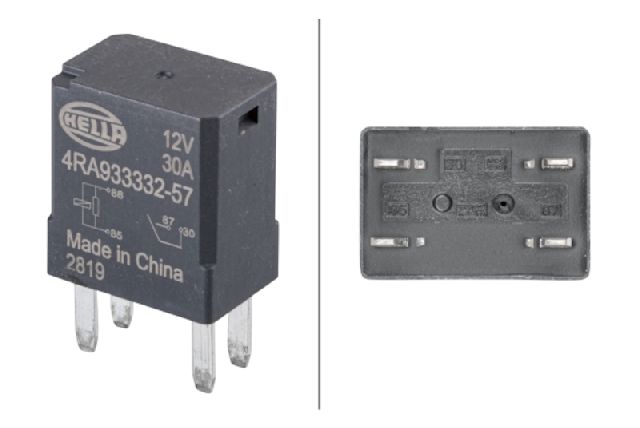
- Faulty Fuel Pump Control Module (FPCM): → Shop Fuel Pump The FPCM regulates the voltage to the in-tank fuel pump to control its speed and output. A failing module can cause the pump to run slow or not at all, leading to low pressure. Diagnosis involves checking module communication and output signals with a scan tool.
Diagnosis Steps
- Check for any Technical Service Bulletins (TSBs) related to your vehicle's VIN.
- Connect a scan tool to confirm the P0087 code and check for any other related DTCs.
- Use the scan tool to monitor live fuel rail pressure data, observing both 'Desired' and 'Actual' pressure readings. Note the pressure at idle and under load. A significant deviation indicates a problem.
- Connect a mechanical fuel pressure gauge to the low-pressure fuel system service port to verify the accuracy of the electronic sensor's readings at idle.
- As a first step, replace the fuel filter, especially if its age is unknown. Inspect the old filter for debris or metal particles.
- Inspect the fuel lines for any visible kinks, damage, or leaks.
- Following TSB guidance for Duramax models, inspect the fuel pressure regulator(s) for magnetic metal debris, which points to HPFP failure.
- Test the in-tank fuel pump's voltage supply and ground, and check the Fuel Pump Control Module (FPCM) for proper operation if equipped.
- If pressure is confirmed low and contamination is not found, the in-tank fuel pump is a likely culprit.
Parts You'll Likely Need
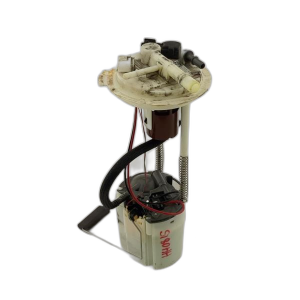
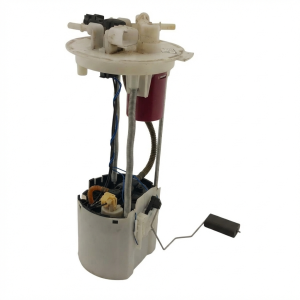
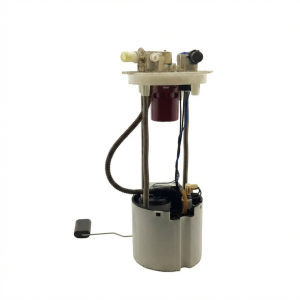
- Fuel Pump Module
(OEM #ACDelco M100153)— A failing pump is a primary cause of low fuel pressure, especially in cold weather as noted by TSB #18NA103. This part is the in-tank low-pressure pump.
Trusted brands: ACDelco, Delphi
OEM price range: $350-$500
Aftermarket price range: $250-$400 - Fuel Filter — A clogged fuel filter is a common cause of fuel restriction and is often replaced as a first diagnostic step or when contamination is found.
Trusted brands: ACDelco, Wix, Bosch
OEM price range: $40-$70
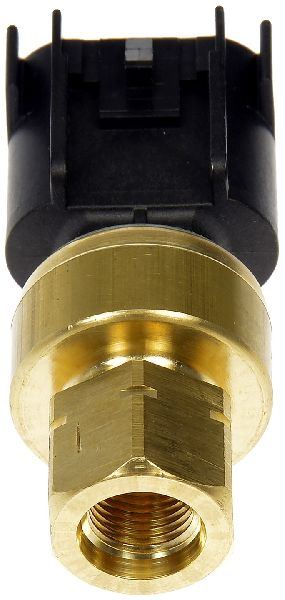
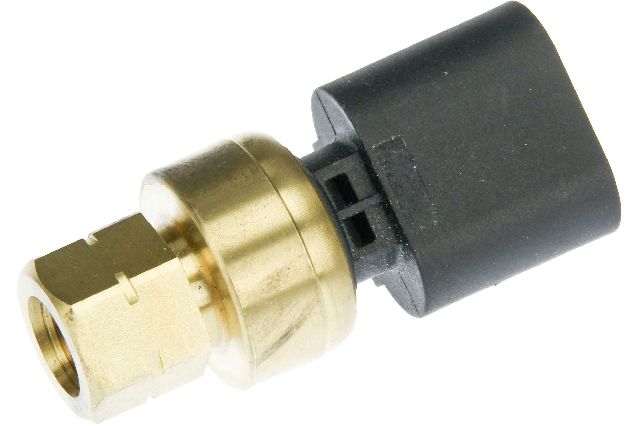
Aftermarket price range: $20-$50 - Fuel Pressure Sensor
(OEM #ACDelco 13516496 (replaces 13579380))— Replaced if it is providing inaccurate readings when compared to a mechanical gauge, or if its connector is corroded.
Trusted brands: ACDelco, Bosch
OEM price range: $80-$150
Aftermarket price range: $50-$100 - High-Pressure Fuel Pump (HPFP) — For Duramax diesel engines, this is a very common point of failure that causes P0087 and contaminates the entire fuel system with metal debris.
Related Codes That Often Appear With This One
- P0088 — This code for "Fuel Rail/System Pressure - Too High" can appear alongside P0087 if the fuel pressure is erratic due to contamination or a failing regulator. It is cited in TSBs #PIP5151F and #16-NA-102.
- P0191 — This code for "Fuel Rail Pressure Sensor Circuit Range/Performance" often accompanies P0087 as it indicates the sensor reading is not what the ECM expects. It is mentioned in TSBs #PIP5151F and #16-NA-102.
- P2635 — This code for "Fuel Pump 'A' Flow/Performance" points directly to a problem with the low-pressure fuel pump's ability to deliver the correct volume of fuel. It is cited in TSB #18NA103.
- P018B, P228A, P228B — These are other fuel pressure sensor and regulator related codes that can be triggered by the same underlying low-pressure condition, as noted in TSB #18NA103.
Technical Service Bulletins (TSBs) & Recalls
- Bulletin #18NA103: Notes start/stall and loss of power in cold weather due to the in-tank fuel pump, setting P0087. Also discusses diesel fuel gelling as a potential cause.
- Bulletin #16-NA-102: Details the diagnostic procedure for P0087 on Duramax diesels, focusing on inspecting for magnetic debris from a failed high-pressure fuel pump and outlining the extensive cleaning/replacement process required.
- Bulletin #PIP5151F: Provides visual examples of different types of fuel contamination (rust, water, DEF) that can be found in the fuel system, leading to codes like P0087.
- Bulletin #08-06-04-029A: An older bulletin for Duramax engines that describes how an internal fracture in the high-pressure fuel pump can lead to P0087 and system contamination.
Platform-Specific Known Issues
- Duramax HPFP Failure & Fuel System Contamination: TSBs #PIP5151F and #16-NA-102 warn that on 6.6L Duramax engines, the high-pressure fuel pump (HPFP) can fail, sending magnetic metal debris through the fuel rails, injectors, and lines. This causes P0087 and requires replacement of the HPFP, injectors, and thorough cleaning of the entire fuel system.
- Cold Weather In-Tank Fuel Pump Failure: → Shop Fuel Pump TSB #18NA103 specifically addresses the in-tank fuel pump failing in temperatures below 20°F (-6°C), leading to start/stall issues and P0087. On diesels, this can also be related to fuel gelling.
- Corroded Sensor Connector: TSB #20-NA-197 points to potential corrosion at the fuel pressure sensor electrical connector on some GM vehicles, which can cause erratic readings and trigger P0087.
Mechanic-Grade Diagnostic Values
- Duramax Diesel: Low-Pressure Fuel Supply from Tank — expected: Greater than 10 PSI. Failure: Pressure below 10 PSI indicates a blockage in the lines or a weak in-tank lift pump.
- Duramax Diesel: High-Pressure Fuel Rail at Idle — expected: ~4,000 - 6,000 PSI. Failure: Pressure significantly below this range indicates a problem with the HPFP, regulator, or a leak.
- Duramax Diesel: High-Pressure Fuel Rail at Wide-Open Throttle (WOT) — expected: ~23,000 - 26,000+ PSI. Failure: If the actual pressure reading on a scan tool falls more than 2,000 PSI short of the desired pressure, it confirms a fuel delivery issue under load.
- Gasoline Engines: Low-Pressure Fuel System at Idle — expected: 55 - 62 PSI. Failure: Pressure below this range, such as 40 PSI, will often cause the engine to bog down or 'fall on its face' during acceleration.
Scan Tool Commands That Help
- GM Tech 2 / GDS2: Monitor Desired vs. Actual Fuel Rail Pressure — This is a primary diagnostic step. At idle and under load (WOT), compare the ECM's requested pressure with the actual reading from the sensor. A large discrepancy points to a performance issue.
- GM Tech 2 / GDS2: Fuel Pressure Regulator (FPR) Test — On Duramax engines, you can command the fuel pressure regulator percentage and observe the change in rail pressure. Unplugging the regulator should cause the rail pressure to spike; if it doesn't, the regulator may be stuck.
- GM Tech 2 / GDS2: EGR Valve Operation — While not directly a fuel system component, a malfunctioning EGR system can affect engine performance and may be worth checking with a bidirectional scan tool if other fuel-related tests are inconclusive.
Wiring & Ground Locations
- Fuel Pump Control Module (FPCM) — On the frame rail on the driver's side, typically located underneath the driver's door area, near the fuel door.. The FPCM controls the voltage and speed of the in-tank fuel pump. A failure of this module, its wiring, or its ground can directly cause low fuel pressure and trigger P0087.
- Fuel Pump Frame Ground — On the driver's side frame rail, often near the wheel well. There may be two grounds in this location; the one for the fuel pump is typically the top one.. This is the primary ground point for the fuel pump circuit. Corrosion or a loose connection at this point will cause the pump to operate poorly or not at all, leading to low fuel pressure.
- Main Engine/Chassis Ground — A primary ground strap runs from the battery negative terminal to the engine block and then to the chassis. One common location for the engine-to-chassis connection is near the starter or on the back of the driver-side cylinder head.. A compromised main ground can cause a host of electrical issues, including erratic behavior from the FPCM and fuel pump. In one documented case, a failed main ground cable caused a crank-no-start and fuel system diagnosis pointed to a lack of ground at the FPCM.
Real Owner Repair Stories
- YouTube Channel 'E Automotive' (2017 Chevy Express 6.0L) — Crank but no start.
❌ Tried (didn't work) Initial check showed no fuel pressure. The technician suspected the fuel pump or FPCM.
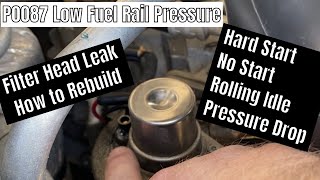
✅ What actually fixed it Using a multimeter, the technician discovered there was no ground signal at the Fuel Pump Control Module (FPCM). Tracing the circuit back, he found the main battery-to-engine-to-chassis ground cable had failed internally. The cable appeared intact but had no continuity. Replacing the main ground cable restored the ground to the FPCM and fixed the no-start condition. - YouTube Channel 'Tools & Stuff' (2006 GMC Duramax (LBZ)) — Hard start/no start, rolling idle, P0087 code, limp mode (unable to exceed 2000 RPM), and falling on its face under acceleration.
❌ Tried (didn't work) The owner initially suspected the fuel pressure regulator due to the symptoms.
✅ What actually fixed it The owner noticed the fuel filter housing was leaking diesel and sucking in air. He rebuilt the fuel filter head with new O-rings, which resolved the air intrusion. This fixed the hard starting, limp mode, and cleared the P0087 code.
OEM Part Supersession History
13579380→13516496— Standard part revision and update by the manufacturer.
Heads up: The new part number (13516496) is the correct direct replacement for the original.
Model Year Variations Within This Range
- 2017-2019: In 2017, GM introduced the 2.8L Duramax (LWN) 4-cylinder turbo-diesel engine as an option in the Express van. This engine has a different high-pressure fuel system (Bosch common rail) compared to the gasoline engines and the older 6.6L Duramax found in trucks. Diagnostics for P0087 on a 2.8L will be specific to this diesel platform, focusing on its unique HPFP, injectors, and sensors.
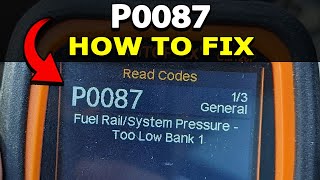
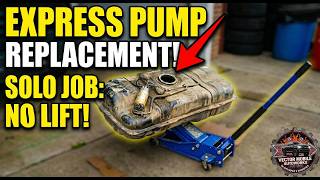
Helpful Videos
Used OEM Parts in Stock
New Aftermarket Parts Available


The information in this article is provided for general reference and educational purposes only. Vehicle specifications, procedures, and part compatibility can vary by production date, trim level, and region. Always consult your vehicle's factory service manual and verify part numbers before purchasing or performing repairs. Safety-critical components such as airbags, seat belts, and braking systems should be installed by a qualified professional.
- Chevrolet EXPRESS:
- 🧭 Diagnostic Flowchart
- 🎬 Helpful Videos
- 🛍️ Shop This Part
- What's Unique About the 2015-2019 Chevrolet EXPRESS
- Symptoms You May Notice
- Most Likely Causes
- Rare But Worth Checking
- Diagnosis Steps
- Parts You'll Likely Need
- Related Codes That Often Appear With This One
- Technical Service Bulletins (TSBs) & Recalls
- Platform-Specific Known Issues
- Mechanic-Grade Diagnostic Values
- Scan Tool Commands That Help
- Wiring & Ground Locations
- Real Owner Repair Stories
- OEM Part Supersession History
- Model Year Variations Within This Range
- 🎟️ Get 5% Off