

P0087 on 2018-2020 Chevrolet Silverado 1500: Low Fuel Pressure Causes & Fixes
P0087 on a 2018-2020 Silverado 1500 indicates low fuel pressure, most often caused by a failing high-pressure fuel pump (HPFP) or a weak in-tank (low-pressure) fuel pump. A TSB also points to the in-tank pump struggling in cold weather. Expect to pay $400-$700 for a new HPFP, or $250-$400 for an in-tank pump, plus labor.
- P0087 on a 2018-2020 Silverado is a serious code that indicates dangerously low fuel pressure and should be addressed immediately.
- The two most likely causes are a failing high-pressure fuel pump (HPFP) or a failing in-tank (low-pressure) fuel pump.
- A GM Technical Service Bulletin (#18NA103) specifically points to the in-tank pump failing in cold weather.
- Diagnosis must include testing both the low-pressure and high-pressure sides of the fuel system to pinpoint the correct failed component.
- Do not rule out less common causes like a clogged filter, a bad fuel pressure sensor, or fuel contamination as noted in TSB #PIP5151F.
What's Unique About the 2018-2020 Chevrolet SILVERADO 1500

The 2018-2020 Silverado 1500 uses a sophisticated direct injection fuel system that is sensitive to pressure drops. A key issue, identified in GM Technical Service Bulletin #18-NA-103, is the tendency for the in-tank fuel pump to perform poorly in cold temperatures, directly leading to a P0087 code. Additionally, as with many direct injection engines, the high-pressure fuel pump (HPFP) is a common failure point that can cause this code. A failing HPFP can sometimes leak fuel into the crankcase, which can be identified by a strong fuel smell in the engine oil.
Diagnostic Flowchart

Tap your situation to follow the diagnostic path that matches what you're seeing on this vehicle.
Generation note: This year range covers two generations of the Silverado 1500: the end of the third generation (K2XX) in 2018 and the beginning of the fourth generation (T1XX) from 2019-2020. While the fuel system principles are similar, part numbers for components like the high-pressure and low-pressure fuel pumps may differ between these generations. The 2019+ T1XX trucks with 4.3L, 5.3L, and 6.2L engines may use HPFP part number 12711660.
Symptoms You May Notice
- Check Engine Light illuminated
- Loss of engine power, especially under acceleration
- Engine hesitation or sputtering
- Engine stalling, sometimes unexpectedly
- Hard starting or long crank times
- Rough idle
- Fuel smell in engine oil (indicative of a failed HPFP seal)
- Reduced fuel economy
- Engine misfires (may be accompanied by codes like P0300-P0308)
- Replacing the fuel pressure sensor when the real issue is a failing fuel pump.
- Replacing the high-pressure fuel pump (HPFP) when the in-tank low-pressure pump is actually the cause.
- Replacing fuel pumps when the issue is a kinked or restricted fuel line.
Most Likely Causes

- Failing High-Pressure Fuel Pump (HPFP) 🔴 High Probability → Shop Fuel Pump The HPFP is a mechanically driven pump that is a known wear item on many direct injection engines. It is responsible for generating the very high pressures needed for injection and is a primary suspect when rail pressure is low. A failure of the internal seals can also cause fuel to leak into the engine oil.
How to confirm: Use a scan tool to monitor desired versus actual fuel rail pressure. If the low-pressure system is confirmed to be working correctly but the actual high pressure is below desired under load, the HPFP is likely at fault. Checking the engine oil dipstick for a strong fuel smell can also point to a failed HPFP seal.
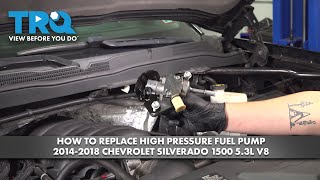
Typical fix: Replace the high-pressure fuel pump. This often requires removing the intake manifold. 🎬 Watch: Step-by-step guide to replacing the high-pressure fuel pump. The high-pressure fuel line is often a one-time use part and should be replaced as well.
Est. part cost: $370-$410 - Failing In-Tank (Low-Pressure) Fuel Pump 🔴 High Probability → Shop Fuel Pump TSB #18-NA-103 specifically calls out the in-tank fuel pump for causing P0087 and other codes due to poor performance in cold weather (below 20°F / -6°C). This can be due to the properties of certain fuel blends in the cold, causing a whining noise and stalling.
How to confirm: Connect a mechanical fuel pressure gauge to the low-pressure fuel line, or use a scan tool to monitor the low-side fuel pressure sensor. The pressure should meet the manufacturer's specification (typically 46-84 PSI) when the pump is commanded on. If pressure is low, the in-tank pump is failing. The TSB suggests that if the issue is cold-related, warming the vehicle in a garage may temporarily resolve the symptoms, confirming the diagnosis.
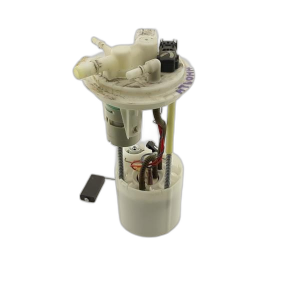
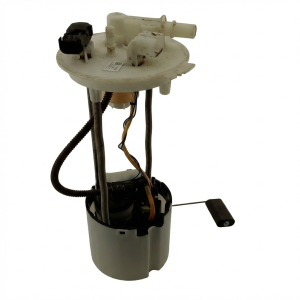
Typical fix: Replace the in-tank fuel pump module assembly. This requires dropping the fuel tank or lifting the truck bed for access. 🎬 Watch: How to replace the in-tank fuel pump at home. Per TSB 18-NA-103, if the cause is fuel gelling, the pump should NOT be replaced; the issue is with the fuel itself.
Est. part cost: $250-$400 - Clogged Fuel Filter 🟡 Medium Probability → Shop Fuel Filter The fuel filter is a maintenance item that can become restricted over time, impeding fuel flow to the high-pressure pump. On these trucks, it is often integrated into the in-tank fuel pump module and is not serviced separately.
How to confirm: A low-pressure reading from the low-side fuel system would indicate a restriction. Since the filter is part of the pump module, a low pressure reading often leads to replacing the entire assembly.
Typical fix: Replace the fuel filter. Since it's usually part of the fuel pump module, it's often replaced during that job.
Est. part cost: $20-$50 (if separate), included with pump module - Faulty Fuel Pressure Sensor ⚪ Low Probability → Shop Fuel Pressure Sensor While not as common as pump failure, a faulty sensor can send incorrect low-pressure readings to the ECM, triggering the code even if the pressure is normal. TSB #20-NA-197 notes that corrosion on the sensor connector can also cause this issue on some GM trucks.
How to confirm: Compare the fuel pressure reading from a scan tool with a reading from a mechanical fuel pressure gauge. If the readings differ significantly, the sensor is likely faulty.
Typical fix: Replace the fuel rail pressure sensor.
Est. part cost: $50-$100
Rare But Worth Checking
- Fuel System Contamination: TSB #PIP5151F warns that contamination in the fuel system (with water, rust, or other fluids) can cause P0087 and other codes. If contamination is found, the entire fuel system may need to be cleaned, which is a significant and expensive repair. The bulletin notes that damage from contaminated fuel may not be covered by warranty.
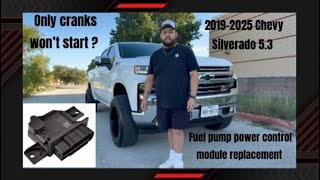
- Faulty Fuel Pump Driver Module (FPDM): → Shop Fuel Pump The FPDM, or Fuel System Control Module (FSCM), controls the voltage to the in-tank fuel pump. While a common failure on older models due to corrosion, it can still fail on newer trucks, causing low fuel pressure. 🎬 See how to replace the fuel pump control module.
- Worn Camshaft Lobe: → Shop Engine Camshaft The high-pressure fuel pump is driven by a lobe on the camshaft. In some cases, this lobe can wear down, preventing the pump from generating sufficient pressure, even with a new HPFP installed.
Diagnosis Steps
- Check for any other stored DTCs to get a complete picture of the problem.
- Using an OBD-II scan tool with live data, monitor the desired versus actual fuel rail pressure. Note the conditions under which the pressure drops (e.g., idle, acceleration, cold start).
- Connect a mechanical fuel pressure gauge to the low-pressure side of the system to test the output of the in-tank fuel pump. Compare this to the manufacturer's specifications (typically 46-84 PSI at idle).
- If low-side pressure is good, but high-side pressure is low, the issue likely lies with the high-pressure fuel pump (HPFP) or its components.
- If low-side pressure is low, the problem is with the in-tank fuel pump, its control module (FPDM), or a clogged filter/restriction in the line.
- Check the engine oil for a strong smell of gasoline. If present, it strongly indicates a failed internal seal on the high-pressure fuel pump.
- Inspect the fuel pressure sensor's electrical connector for any signs of corrosion or damage, as noted in TSB #20-NA-197.
- Visually inspect fuel lines for any kinks, damage, or leaks.
Parts You'll Likely Need
- High-Pressure Fuel Pump
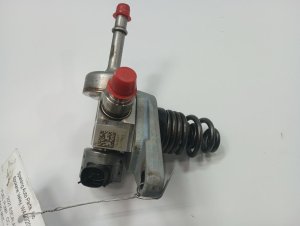
(OEM #12711660)— This is a primary cause of P0087 on direct injection engines when the low-pressure fuel supply is confirmed to be adequate. This part number is applicable to 2019+ models with 4.3L, 5.3L, and 6.2L engines.
Trusted brands: ACDelco, GM Genuine
OEM price range: $450-$600
Aftermarket price range: $160-$500 - In-Tank Fuel Pump Module
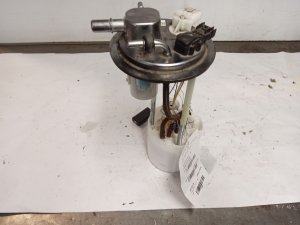
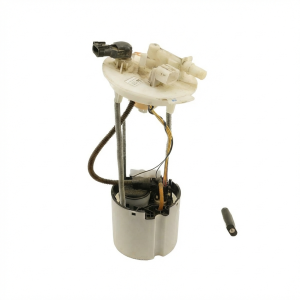
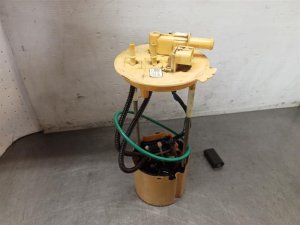
(OEM #85623230)— A weak low-pressure pump cannot supply the HPFP with enough fuel, causing pressure to drop. TSB #18-NA-103 identifies this as a specific problem in cold weather. Part number 85623230 is listed for 2019-2025 Silverado/Sierra 1500 models with various gas engines and bed/cab configurations.
Trusted brands: ACDelco, Delphi
OEM price range: $350-$500
Aftermarket price range: $250-$400
Related Codes That Often Appear With This One
- P018B — Fuel Pressure Sensor 'B' Circuit Range/Performance, often set alongside P0087 per TSB #18-NA-103.
- P228A — Fuel Pressure Regulator 1 Control Forced Engine Shutdown, cited with P0087 in TSB #18-NA-103.
- P0088 — Fuel Rail/System Pressure - Too High. Can sometimes appear with P0087 if the fuel pressure regulation is erratic, as noted in TSB #PIP5151F.
- P0191 — Fuel Rail Pressure Sensor Circuit Range/Performance, indicating a problem with the sensor's readings, also mentioned in TSB #PIP5151F.
- P2635 — Fuel Pump 'A' Flow Performance. This code is frequently mentioned alongside P0087 in TSBs related to fuel delivery issues, including the cold weather problem in TSB 18-NA-103.
Technical Service Bulletins (TSBs) & Recalls

- 18-NA-103: Addresses in-tank fuel pump whine, no-start, or stalling in cold temperatures (below 20°F / -6°C) due to fuel properties, causing start/stall and loss of power with DTC P0087, P018B, P228A, and P2635.
- PIP5151F: Discusses hard start, no start, and rough running conditions with DTC P0087, potentially caused by fuel system contamination. Provides examples of contamination types.
- 20-NA-197: (Mentioned in related articles) Points to potential corrosion at the fuel pressure sensor electrical connector as a cause for P0087.
Platform-Specific Known Issues
- TSB #18-NA-103: Some vehicles may experience a failure of the in-tank fuel pump at temperatures below 20°F (-6°C), leading to a start and stall, no start, or loss of power, accompanied by DTC P0087. The bulletin clarifies that this may be related to fuel properties and does not always require pump replacement.
Mechanic-Grade Diagnostic Values
- Low-Pressure Fuel System Pressure (In-tank pump) — expected: 320-580 kPa (46-84 PSI). Failure: Pressure is below 46 PSI when the pump is commanded on, or pressure drops more than 34 kPa (5 PSI) in one minute after the pump is turned off.
- High-Pressure Fuel Rail Pressure at Idle — expected: 1.9-5.0 MPa (276-725 PSI). Failure: Pressure reading is significantly below the target range at idle, or is erratic.
- Desired vs. Actual Fuel Rail Pressure (High Pressure) — expected: Actual pressure should closely track desired pressure under all conditions (idle, load, WOT).. Failure: Actual pressure falls more than 2,000 PSI below desired pressure, especially during acceleration or wide-open throttle (WOT).
Scan Tool Commands That Help
- GDS2 (GM Dealer Scan Tool): Fuel Pump Enable / On-Off — To manually run the in-tank (low-pressure) fuel pump to test its pressure output without the engine running. This isolates the low-pressure side of the system for diagnosis.
- GDS2 (GM Dealer Scan Tool): Fuel Injector Balance Test — To test for leaking or clogged injectors, which can cause pressure loss. The tool disables one injector at a time and measures the corresponding pressure drop, comparing it to the average.
- GDS2 (GM Dealer Scan Tool): Fuel Pump Driver Control Module Configuration — This function MUST be performed after replacing the Fuel Pump Driver Control Module (FPDM/FSCM). A known software issue in GDS2 for 2019-2020 models requires a workaround: manually build the vehicle in GDS2 and select the 2.7L L3B engine to access the configuration function.
Wiring & Ground Locations
- Fuel System Control Module (FSCM / FPDM) — On 2019+ (T1XX) models, the module is located underneath the truck on the driver's side, mounted to a plate accessible from under the rear seat area.. This module controls the in-tank fuel pump. Failure of the module, its connector, or its ground can cut power to the pump, causing a P0087 code. Its location makes it susceptible to damage.
- Engine Control Module (ECM) Harness — A potential chafe point exists where the main wiring harness rubs against the plastic ECM mounting bracket.. Damage to the 5-volt reference wire in this harness can cause multiple, seemingly unrelated codes, including fuel pressure and fuel pump codes (like P2635). This can be misdiagnosed as a component failure.
- Fuel Pump Frame Ground — On older GM trucks, a critical ground for the fuel pump is located on the driver's side frame rail.. While the exact location for the 2018-2020 models may vary, a corroded or loose frame ground for the fuel pump circuit is a classic cause of intermittent or total fuel pump failure and should be inspected.
Real Owner Repair Stories
- YouTube channel 'Ben66win' (2022 Chevrolet Silverado (T1XX Platform)) — Crank no-start condition.
❌ Tried (didn't work) Initial diagnosis pointed towards a fuel delivery issue.
✅ What actually fixed it Replacement of the Fuel Pump Control Module located under the truck on the driver's side. The owner was able to replace it in a parking lot. - YouTube channel 'Diag-Online' (2019 GMC Sierra 1500) — Check Engine Light on, radiator fan runs continuously, vehicle shifted into 4x4 on its own.
❌ Tried (didn't work) Initial scan showed multiple codes including P2635 (Fuel Pump Low Flow) and others for sensor circuits.
✅ What actually fixed it The technician found a chafed wire in the main harness where it was rubbing on the ECM's plastic mounting bracket. Repairing the open in the 5-volt reference wire resolved all the codes.
OEM Part Supersession History
85623230 (In-Tank Fuel Pump Module)→85855260— Standard part evolution for design or material improvements.
Heads up: Part 85623230 also replaces numerous older part numbers, including 84606473, 84880561, and 84505354.12711660 (High-Pressure Fuel Pump)→N/A, but has multiple equivalent numbers— N/A
Heads up: This part interchanges with several other OEM numbers such as 12691150, 12704278, and 12697967. Ensure cross-reference when purchasing.
Model Year Variations Within This Range
- 2019-2020 (T1XX Platform): The Fuel System Control Module (FSCM) is located under the vehicle on the driver's side, differing from some prior generation placements. Additionally, a software bug in the GDS2 diagnostic tool requires a specific workaround to perform the mandatory 'Fuel Pump Driver Control Module Configuration' after replacement on these model years.
- 2018 (K2XX) vs 2019-2020 (T1XX): The 2019 model year marked a full platform change from K2XX to T1XX, introducing new engine options (like the 2.7L Turbo and updated V8s with Dynamic Fuel Management) and different vehicle architecture. While fuel system principles are similar, component locations (like the FSCM) and part numbers may not be interchangeable between a 2018 and a 2019 model.
Helpful Videos
Used OEM Parts in Stock
New Aftermarket Parts Available


The information in this article is provided for general reference and educational purposes only. Vehicle specifications, procedures, and part compatibility can vary by production date, trim level, and region. Always consult your vehicle's factory service manual and verify part numbers before purchasing or performing repairs. Safety-critical components such as airbags, seat belts, and braking systems should be installed by a qualified professional.
- Chevrolet SILVERADO 1500:
- 🧭 Diagnostic Flowchart
- 🎬 Helpful Videos
- 🛍️ Shop This Part
- What's Unique About the 2018-2020 Chevrolet SILVERADO 1500
- Symptoms You May Notice
- Most Likely Causes
- Rare But Worth Checking
- Diagnosis Steps
- Parts You'll Likely Need
- Related Codes That Often Appear With This One
- Technical Service Bulletins (TSBs) & Recalls
- Platform-Specific Known Issues
- Mechanic-Grade Diagnostic Values
- Scan Tool Commands That Help
- Wiring & Ground Locations
- Real Owner Repair Stories
- OEM Part Supersession History
- Model Year Variations Within This Range
- 🎟️ Get 5% Off