

P0087 on 2010-2014 Chevrolet Silverado: Low Fuel Pressure Causes and Fixes
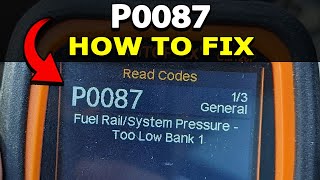
On a 2010-2014 Silverado, P0087 means fuel pressure is too low. For 2010-2013 models, the most likely cause is a corroded Fuel Pump Control Module (FPCM) located above the spare tire. For 2014 models with direct injection, the high-pressure fuel pump (HPFP) is also a primary suspect. A critical first step for any year is to inspect the FPCM for corrosion before replacing a more expensive fuel pump.
- P0087 indicates dangerously low fuel pressure that can cause stalling and no-start conditions.
- For 2010-2013 models, always inspect the Fuel Pump Control Module (FPCM) for corrosion before assuming the fuel pump has failed.
- For 2014 models, diagnosis must differentiate between the low-pressure system (in-tank pump, FPCM) and the high-pressure system (HPFP).
- A scan tool that can read live fuel pressure data is essential for accurate diagnosis.
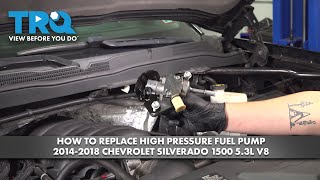
- Replacing the high-pressure fuel pump (on 2014 models) is a significant job that requires removing the intake manifold.
What's Unique About the 2010-2014 Chevrolet SILVERADO
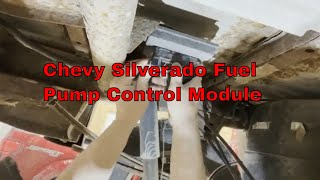
This year range spans two key fuel system designs. The 2010-2013 models (GMT900 platform) use a traditional port fuel injection system where a common failure point is the Fuel Pump Control Module (FPCM), which corrodes due to its placement on the frame above the spare tire. 🎬 Watch: How to inspect and replace a corroded control module. The 2014 model year introduced the K2XX platform with new EcoTec3 direct-injected engines. These engines have both a low-pressure in-tank pump and a high-pressure fuel pump (HPFP) mounted on the engine, adding the HPFP as a significant and costly potential failure point not present in earlier models.
Diagnostic Flowchart
Tap your situation to follow the diagnostic path that matches what you're seeing on this vehicle.
Generation note: This range covers the end of the second generation (GMT900, 2010-2013) and the first year of the third generation (K2XX, 2014). The 2014 models introduced direct injection engines (5.3L L83, 6.2L L86), which feature a high-pressure fuel system. Diagnosis for P0087 differs significantly, as 2014+ models have a high-pressure fuel pump (HPFP) as a potential cause, whereas 2010-2013 models do not.
Symptoms You May Notice
- Check Engine Light is on
- Engine hesitation, sputtering, or bogging down under acceleration
- Reduced engine power or entering "limp mode"
- Rough idle
- Hard starting or long crank times
- Engine stalling, sometimes unexpectedly while driving
- A whining noise from the fuel tank area, indicating a struggling in-tank pump
- Strong smell of gasoline in the engine oil (specific to HPFP failure on 2014 models).
- Replacing the in-tank fuel pump when the actual fault is the corroded Fuel Pump Control Module (FPCM). This is a very common and costly mistake.
- On 2014 models, replacing the low-pressure in-tank fuel pump when the high-pressure fuel pump (HPFP) is the cause of the pressure drop under load.
- Replacing any parts without first checking for fuel contamination or poor fuel quality (e.g., low octane or E85 in a non-flex fuel vehicle).
Most Likely Causes
- Failed Fuel Pump Control Module (FPCM) 🔴 High Probability → Shop Fuel Pump The FPCM is mounted on a frame crossmember above the spare tire, exposing it to moisture and road salt. This leads to severe corrosion of the module's housing and electrical connector pins, causing it to fail and not send proper voltage to the in-tank fuel pump. This is the most common cause for P0087 on 2010-2013 models.
How to confirm: Lower the spare tire and visually inspect the module and its connector for white or green crusty corrosion, or cracks in the housing. A scan tool can check for FPCM-specific codes like P069E. Technicians can also command the pump with a scan tool or bypass the module to see if the pump runs, confirming the FPCM is the point of failure.
Typical fix: Replace the Fuel Pump Control Module. Many aftermarket replacements (like Dorman) come with a redesigned cover to better protect against moisture. Some modules require programming to the vehicle's VIN, though many are sold pre-programmed.
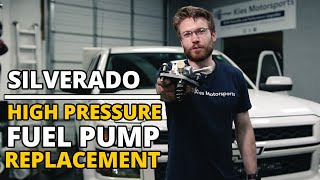
Est. part cost: $80-$200 - Failed High-Pressure Fuel Pump (HPFP) 🔴 High Probability → Shop Fuel Pump Specific to 2014 models with direct injection. The mechanical HPFP is a known failure point on GM's EcoTec3 engines. It is driven by a lobe on the camshaft and located in the engine valley, making replacement labor-intensive.
How to confirm: Diagnosis requires a scan tool to monitor 'Desired Fuel Rail Pressure' vs. 'Actual Fuel Rail Pressure'. If the actual pressure cannot keep up with the desired pressure during acceleration, the HPFP is suspect. A critical secondary check is to pull the oil dipstick and smell for a strong gasoline odor, which indicates a failed internal seal leaking fuel into the crankcase.
Typical fix: Replace the high-pressure fuel pump and the one-time-use high-pressure fuel line. It is mandatory to change the engine oil and filter at the same time to remove any fuel contamination.
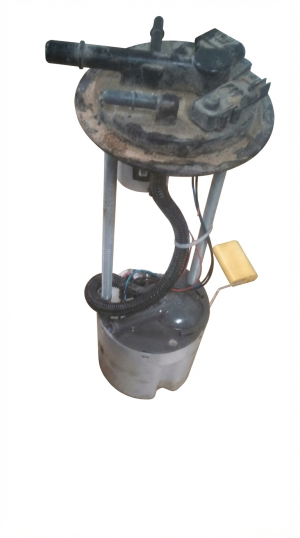
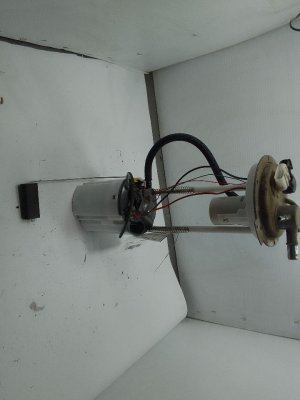
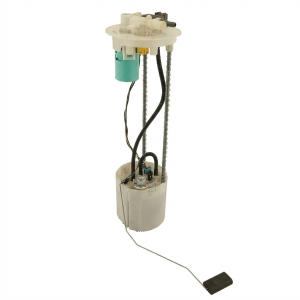
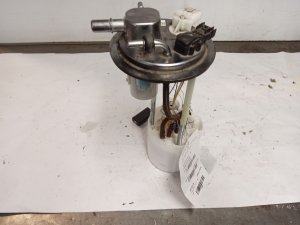
Est. part cost: $250-$700 - Failing In-Tank Fuel Pump (Low Pressure) 🟡 Medium Probability → Shop Fuel Pump The in-tank pump can weaken over time or fail outright. TSB #18-NA-103 specifically notes that in temperatures below 20°F, the pump may whine and the engine may stall or fail to start, triggering P0087. This can be due to the fuel itself or a weak pump struggling with the cold.
How to confirm: Test the low-side fuel pressure. A scan tool or mechanical gauge should show pressure meeting specifications (typically 50-70 PSI). Per GM recall 13370A, the pressure should be at least 73 PSI (500 kPa) during a commanded test. If pressure is low and the FPCM is confirmed good, the in-tank pump is the likely cause.
Typical fix: Replace the in-tank fuel pump assembly. This is a more involved job that requires dropping the fuel tank or lifting the truck bed.
Est. part cost: $200-$500 - Clogged Fuel Filter ⚪ Low Probability → Shop Fuel Filter The fuel filter is a maintenance item. On these trucks, the filter is typically integrated into the in-tank fuel pump module and is not separately serviceable. TSB #PIP5151A notes that if contamination is found (rust, water, debris), the entire fuel system may need service.
How to confirm: If the fuel filter is part of the non-serviceable pump module, diagnosis points towards a restricted pump. In rare cases of extreme contamination, debris may be visible in the tank.
Typical fix: Replace the entire fuel pump module if the internal filter is clogged. If widespread contamination is found, the tank, lines, and pumps may need to be cleaned or replaced.
Est. part cost: $20-$60 (if separate) - Failed Fuel Rail Pressure Sensor ⚪ Low Probability → Shop Fuel Pressure Sensor The sensor can fail and send inaccurate low-pressure readings to the ECM, triggering the code even if the pressure is normal. TSB #20-NA-197 mentions that corrosion at the sensor's electrical connector can also cause this issue.
How to confirm: Use a scan tool to read the pressure reported by the sensor and compare it to a reading from a mechanical fuel pressure gauge. If the readings differ significantly, the sensor is likely faulty. Visually inspect the connector for corrosion.
Typical fix: Replace the fuel rail pressure sensor and/or its pigtail connector if corrosion is present.
Est. part cost: $50-$150
Rare But Worth Checking
- Fuel System Contamination: As mentioned in TSB #PIP5151A, finding contamination (water, rust, DEF) in the fuel system may require a complete fuel system replacement, including the tank, pump, lines, and injectors, making it a very expensive repair. One owner found installation manual debris left in the tank from a previous repair, which blocked the fuel pickup and caused P0087.
- Leaking Fuel Injector(s): → Shop Fuel Injector An injector stuck open can cause a drop in fuel rail pressure, but this would typically be accompanied by other symptoms like a rich running condition, misfires (e.g., P030x), and a strong fuel smell from the exhaust.
- Collapsed Fuel Lines: → Shop Fuel Line Some forum users and a GM TSB for Duramax models note that flexible fuel supply lines can soften and collapse under vacuum from the pump, especially when hot, causing a restriction and triggering P0087.
Diagnosis Steps
- Scan the ECM for P0087 and any other stored codes. Note codes like P0088, P0191, P128E, or P069E.
- CRITICAL FIRST STEP: Lower the spare tire and visually inspect the Fuel Pump Control Module (FPCM) and its electrical connector for signs of corrosion, cracks, or physical damage.
- Use a scan tool to monitor live data for 'Desired Fuel Rail Pressure' and 'Actual Fuel Rail Pressure'. At idle, they should be close. For 2014 models, high-side pressure should be 290-725 PSI at idle and can exceed 2,100 PSI under load.
- Test the low-pressure fuel system. Check for at least 50-70 PSI from the in-tank pump. If pressure is low, and the FPCM inspection passed, the in-tank pump is suspect.
- If low-pressure is good, proceed to test the high-pressure system (2014 models). Monitor fuel pressure with the scan tool while driving. If 'Actual' pressure drops significantly behind 'Desired' pressure under acceleration, suspect the high-pressure fuel pump (HPFP).
- For 2014 models, pull the engine oil dipstick and smell it for gasoline. A fuel smell strongly indicates a failed internal seal on the HPFP, requiring its replacement and an oil change.
- If scan tool pressure readings seem incorrect or erratic, compare them to a mechanical gauge to verify the fuel rail pressure sensor's accuracy.
- Inspect for fuel leaks along the lines, at the rail, and around the injectors. Check for kinked or collapsed flexible fuel lines.
Parts You'll Likely Need
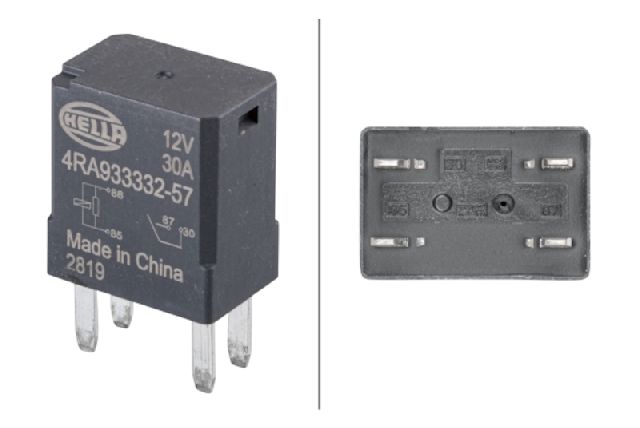
- Fuel Pump Control Module
(OEM #20850907)— This is the most common failure on 2010-2013 models due to corrosion from its mounting location. Also fits some 2014 models.
Trusted brands: ACDelco, Dorman (often includes a protective cover)
OEM price range: $150-$250
Aftermarket price range: $80-$150 - High-Pressure Fuel Pump
(OEM #12677329 (superseded by 12691016))— A primary suspect for P0087 on 2014 models with direct injection.
Trusted brands: GM Genuine, ACDelco, Bosch
OEM price range: $400-$700
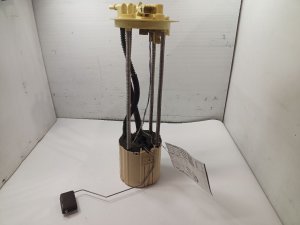
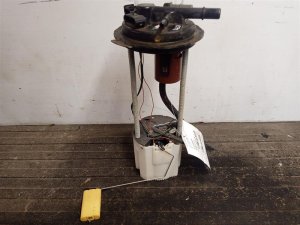
Aftermarket price range: $250-$500 - In-Tank Fuel Pump Assembly — The next likely culprit after the FPCM is ruled out, or if low fuel pressure is confirmed with a gauge.
Trusted brands: ACDelco, Delphi, Carter
OEM price range: $300-$500
Aftermarket price range: $200-$400
Related Codes That Often Appear With This One
- P0088 — Fuel Rail/System Pressure - Too High. This can appear with P0087 if the fuel pressure regulator or sensor is failing erratically, causing pressure to swing between high and low.
- P0191 — Fuel Rail Pressure Sensor Circuit Range/Performance. This code points more directly to a problem with the sensor or its circuit, and is often seen with P0087. [Bulletin #PIP4949D, 2]
- P128E — This is a manufacturer-specific code also related to fuel pressure control, mentioned alongside P0087 in GM TSBs. [Bulletin #PIP4949D, #PIP5151A, 2]
- P069E — Fuel Pump Control Module Requested MIL Illumination. This code points directly to a fault detected by the FPCM itself and is a strong indicator that the FPCM is the root cause.
Technical Service Bulletins (TSBs) & Recalls
- TSB #18-NA-103: Addresses customer concerns of an in-tank fuel pump whine, no-start, or stalling in cold temperatures (below 20°F) due to potential fuel gelling or pump weakness, which can set codes P0087, P2635, and others.
- TSB #PIP5151A / #PIP5151F: A diagnostic guide for identifying fuel system contamination (water, rust, DEF) that causes hard/no start, rough running, and codes P0087/P0088. It warns that a complete fuel system cleaning may be required.
- TSB #20-NA-197: Addresses issues where corrosion in the fuel rail pressure sensor's electrical connector causes erratic readings and various fuel pressure codes, including P0087.
- TSB #PIP4949D: Provides diagnostic information for vehicles with a hard start or no start condition, where DTCs P0087, P0088, P0191 or P128E may be found.
Platform-Specific Known Issues
- The Critical FPCM Inspection: Countless owner stories across forums emphasize that the first step for a P0087 on a 2010-2013 GM truck is to lower the spare tire and physically inspect the Fuel Pump Control Module. Many have spent hundreds of dollars replacing the in-tank fuel pump only to find the truck still won't start, because the corroded FPCM was the real, and much cheaper, problem.
- HPFP Failure and Fuel in Oil: On 2014 models with the EcoTec3 engines, a common repair story involves the P0087 code appearing alongside a noticeable smell of gasoline in the engine oil. This is a tell-tale sign of high-pressure fuel pump failure, where the pump's internal seal breaks down and leaks high-pressure fuel directly into the engine crankcase. This is a severe condition that requires immediate replacement of the HPFP and a full oil change to prevent catastrophic engine damage.
Helpful Videos

![Easy Fix for Common Chevy Problem [Fuel Pump Control Module]](https://img.youtube.com/vi/38Xeo1uLBoU/mqdefault.jpg)
Used OEM Parts in Stock
New Aftermarket Parts Available




The information in this article is provided for general reference and educational purposes only. Vehicle specifications, procedures, and part compatibility can vary by production date, trim level, and region. Always consult your vehicle's factory service manual and verify part numbers before purchasing or performing repairs. Safety-critical components such as airbags, seat belts, and braking systems should be installed by a qualified professional.
- Chevrolet SILVERADO:
- 🧭 Diagnostic Flowchart
- 🎬 Helpful Videos
- 🛍️ Shop This Part
- What's Unique About the 2010-2014 Chevrolet SILVERADO
- Symptoms You May Notice
- Most Likely Causes
- Rare But Worth Checking
- Diagnosis Steps
- Parts You'll Likely Need
- Related Codes That Often Appear With This One
- Technical Service Bulletins (TSBs) & Recalls
- Platform-Specific Known Issues
- 🎟️ Get 5% Off