

P0087 on 2010 Chevrolet Silverado 2500: Low Fuel Pressure Causes & Fixes
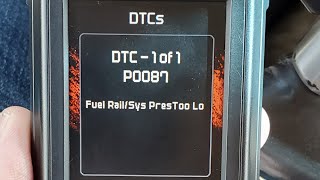
P0087 on a 2010 Silverado 2500 means fuel pressure is too low. For the 6.6L Duramax diesel, this is commonly a clogged fuel filter, failing high-pressure CP3 pump, or a collapsed fuel line. For the 6.0L gas engine, it's usually a weak in-tank fuel pump or a restricted fuel filter.
- P0087 indicates dangerously low fuel pressure and the vehicle should not be driven due to the risk of stalling.
- For both gas and diesel engines, the first and most cost-effective diagnostic step is to replace the fuel filter.
- On the 6.6L Duramax, P0087 is a very common code that most often points to a clogged fuel filter or a wearing high-pressure (CP3) injection pump.
- On the 6.0L Gas engine, the cause is almost always a failing in-tank fuel pump.
- Using a scan tool to compare 'Desired' vs. 'Actual' fuel rail pressure is the most effective way to confirm a low-pressure condition.
What's Unique About the 2010-2010 Chevrolet SILVERADO 2500
The 2010 Silverado 2500HD was offered with two very different engines and fuel systems: the 6.0L Vortec (LY6) gasoline V8 and the 6.6L Duramax LMM turbo-diesel. While the code's meaning is the same for both, the causes and repairs are drastically different. The Duramax diesel uses a complex high-pressure common rail system with a Bosch CP3 injection pump, and P0087 is a notoriously common code on these engines as components age or fuel supply is restricted. The gasoline engine uses a more conventional low-pressure system, where faults are typically limited to the in-tank pump and filter.
Diagnostic Flowchart
Tap your situation to follow the diagnostic path that matches what you're seeing on this vehicle.
Symptoms You May Notice
- Loss of power, especially when accelerating or towing.
- Engine goes into 'limp mode' (Reduced Engine Power).
- Engine cranks but does not start. [Bulletin #PIP4949E, Bulletin #PIP5151B]
- Hard starting, requiring long crank times. [Bulletin #PIP5151B]
- Engine stalling, sometimes unexpectedly.
- Rough running or misfiring.
- Check Engine Light is on.
- Replacing the high-pressure pump (CP3) on a Duramax before checking for a collapsed fuel line or replacing the fuel filter, which are much cheaper and more common points of failure.
- Replacing fuel injectors on a Duramax without first performing a return rate test to confirm they are the source of the leak.
- Condemning the CP3 pump before testing the fuel pressure relief valve, which can cause identical symptoms if it's stuck open.
Most Likely Causes
- Clogged Fuel Filter (Duramax & Gas) 🔴 High Probability → Shop Fuel Filter Diesel fuel is susceptible to contamination and gelling. A restricted filter is the first and most common cause of low fuel pressure on the Duramax and should always be the first part replaced. Some owners report that LMM engines are sensitive to aftermarket filters and run best on AC Delco parts.
How to confirm: Check the fuel filter life monitor on the driver information center. If it's near 0% or was changed long ago, replace it. Visually inspect the old filter media for debris or metal shavings, which would indicate a more serious pump failure.
Typical fix: Replace the fuel filter. This is a routine maintenance item and the cheapest first step in diagnosis.
Est. part cost: $30-$80 - Failing High-Pressure Fuel Pump (CP3) (Duramax Diesel) 🟡 Medium Probability → Shop Fuel Pump The Bosch CP3 injection pump on the LMM Duramax is a wear item. After 150,000+ miles, internal wear can prevent it from generating the required 26,000 PSI of pressure under load, triggering P0087.
How to confirm: Use a scan tool to monitor 'Desired' vs 'Actual' fuel rail pressure. Command max rail pressure at idle. If 'Actual' pressure drops more than 2,000 PSI below 'Desired' under heavy acceleration, the CP3 pump is likely weak. TSB #PIP4949E advises checking for metal debris on the fuel pressure regulator as a sign of pump failure.
Typical fix: Replace the high-pressure CP3 injection pump. This is a labor-intensive job. It is often sold as a remanufactured unit by Bosch (Part #0986437332) or as a GM part (#97361351).
Est. part cost: $700-$1200 for a remanufactured Bosch unit. - Collapsed Fuel Supply Hose (Duramax Diesel) 🟡 Medium Probability A GM service bulletin (#PIP4526) addresses an issue where the factory rubber fuel supply line between the frame and engine can soften with heat and collapse under the vacuum of the CP3 pump, restricting fuel flow. This is a very common issue on LMM trucks.
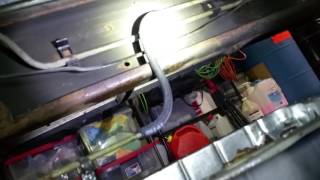
How to confirm: Visually inspect the flexible rubber fuel lines, especially the section near the hot-side intercooler pipe on the driver's side of the engine. Look for sections that appear kinked, flattened, or have been rubbing. A vacuum gauge at the test port showing more than 8 inches of Hg under load also indicates a restriction.
Typical fix: Replace the factory rubber hose section with a higher-quality, more rigid hose like a Parker 601-8, as outlined in the service bulletin and demonstrated by many owners online. 🎬 Watch: How to replace the fuel filter and upgrade hoses.
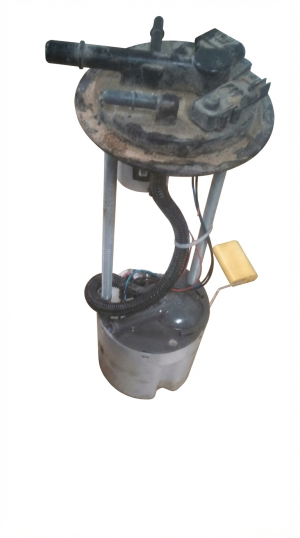
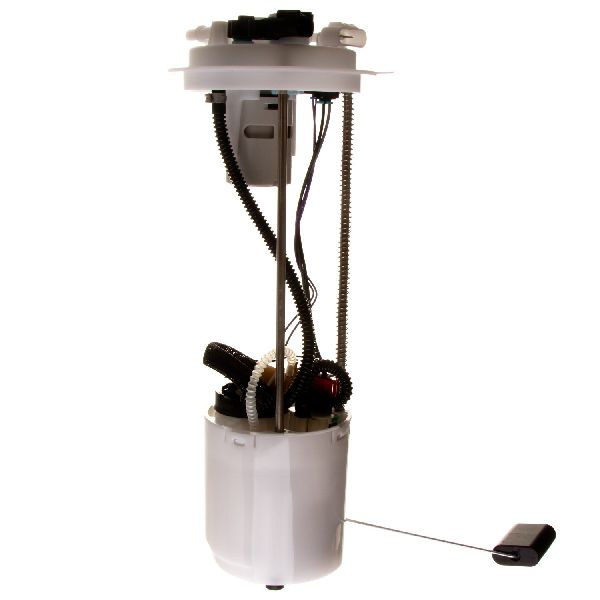
Est. part cost: $20-$50 - Failing In-Tank Fuel Pump (Gas Engine) 🟡 Medium Probability → Shop Fuel Pump The in-tank electric fuel pump is the only pump on the gasoline models. Over time, the motor weakens and cannot supply adequate pressure and volume to the fuel rail, a problem exacerbated by cold weather as noted in TSB #18NA103.
How to confirm: Connect a mechanical fuel pressure gauge to the test port on the fuel rail. Compare the reading to the manufacturer's specification (typically 55-62 PSI for the 6.0L V8). If pressure is low, the pump is failing.
Typical fix: Replace the in-tank fuel pump module. This requires dropping the fuel tank. Common replacement parts include the ACDelco M100116.
Est. part cost: $250-$450 - Leaking Fuel Injectors (Duramax Diesel) ⚪ Low Probability → Shop Fuel Injector As injectors wear, they can leak fuel internally, returning too much fuel to the tank instead of spraying it into the cylinder. This excessive return flow can overwhelm the CP3 pump's ability to maintain rail pressure, especially on high-mileage engines.
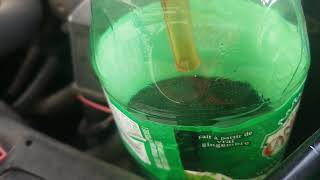
How to confirm: Perform an injector return rate test (a 'bottle test'). This involves measuring the amount of fuel returned from each injector over a set period. Excess return from one or more injectors indicates they are faulty. High balance rates on a scan tool can also point to a bad injector.
Typical fix: Replace the faulty fuel injector(s).
Est. part cost: $300-$500 per injector - Leaking Fuel Pressure Relief Valve (Duramax Diesel) ⚪ Low Probability The relief valve on the fuel rail is designed to bleed off excess pressure. It can weaken over time or stick open, bleeding off pressure and causing a P0087 code, especially under load.
How to confirm: Perform a 'bottle test' on the relief valve itself by disconnecting the return line from the valve, capping the return system, and running a hose from the valve to a bottle. Command max rail pressure with a scan tool. If any fuel enters the bottle, the valve is leaking and must be replaced.
Typical fix: Replace the fuel pressure relief valve. Some owners opt to install a 'race plug' which deletes the valve entirely, though this removes a safety feature.
Est. part cost: $100-$200 for a new valve
Rare But Worth Checking
- Fuel System Contamination: As mentioned in TSB #PIP5151B, contamination from water (causing rust) or accidentally adding Diesel Exhaust Fluid (DEF) can damage the fuel pressure regulators, injectors, and pump. If contamination is found, the entire fuel system may need to be cleaned or replaced.
- Faulty Fuel Rail Pressure Sensor: → Shop Fuel Pressure Sensor While possible, this is less common than a mechanical failure. The sensor can send inaccurate low-pressure readings to the ECM. This is best diagnosed by comparing the sensor's reading on a scan tool to a reading from a mechanical gauge.
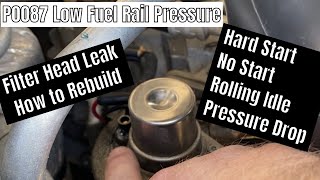
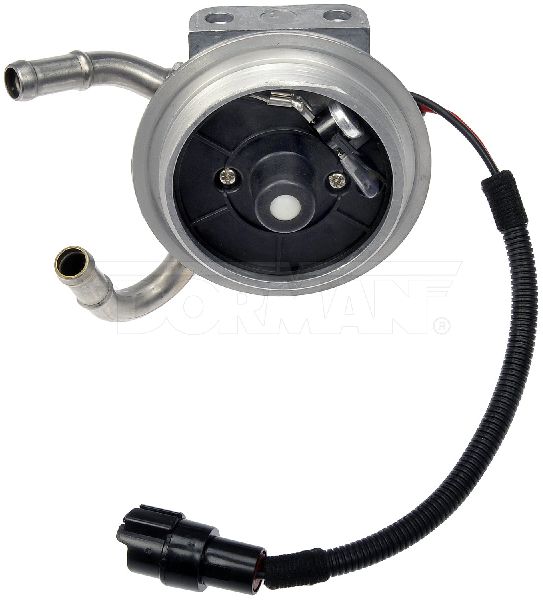
- Cracked/Leaking Fuel Filter Housing (Duramax Diesel): → Shop Fuel Filter The plastic housing for the fuel filter, including the primer button on top, can develop cracks over time, allowing the system to suck in air. 🎬 Watch this guide on testing injector return rates and CP3 failure. This introduces air into the fuel, causing a loss of pressure and hard starting.
Diagnosis Steps
- Check for any other stored DTCs to see if they provide more clues.
- For all engines, start by replacing the fuel filter. This is an inexpensive and common cause.
- For Duramax engines, visually inspect the flexible fuel supply hose near the driver's side of the engine for kinks or collapse.
- Connect a scan tool and monitor 'Desired Fuel Rail Pressure' and 'Actual Fuel Rail Pressure'.
- Observe the pressure readings at idle, during a brief wide-open throttle snap, and while driving under load (if safe). If 'Actual' pressure falls more than 2,000-3,000 PSI short of 'Desired' pressure, a mechanical fault is likely.
- For Duramax engines, if pressure is low, perform a fuel pressure relief valve 'bottle test' to check for leaks.
- If the relief valve is good, perform an injector return rate ('bottle test') to check for excessive return from one or more injectors.
- If injectors and relief valve are good, the high-pressure CP3 pump is the likely culprit.
- For 6.0L gas engines, if the filter change doesn't work, connect a mechanical fuel pressure gauge to the fuel rail. If pressure is below the 55-62 PSI spec, the in-tank pump is likely faulty.
Parts You'll Likely Need
- High-Pressure Fuel Injection Pump (CP3)
(OEM #97780161)— This is the most common major component to fail on the 6.6L Duramax LMM engine causing code P0087.
Trusted brands: Bosch
OEM price range: $900-$1200
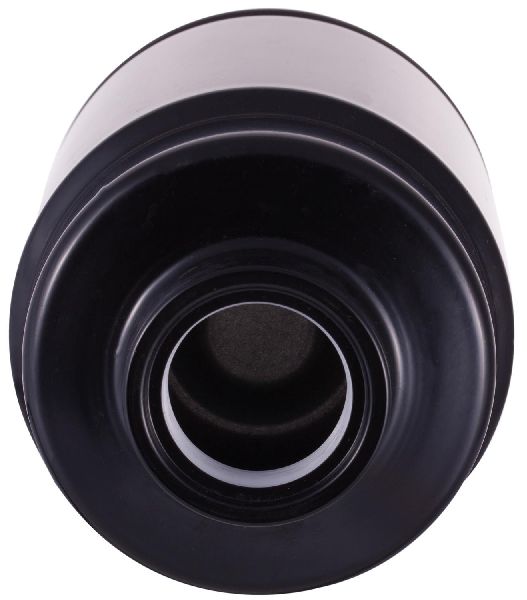
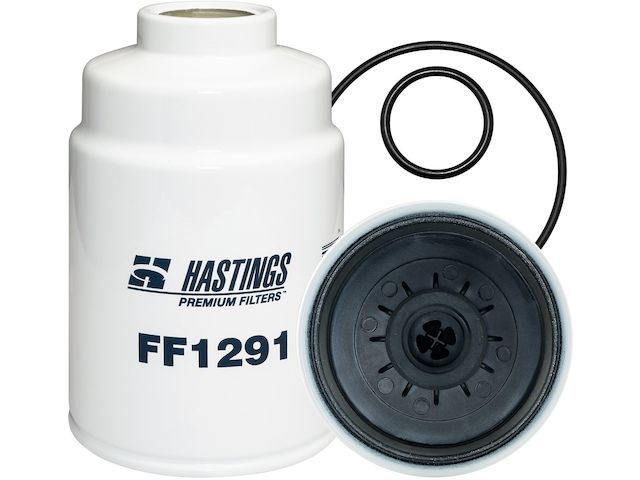
Aftermarket price range: $700-$1000 (Bosch Remanufactured) - Fuel Filter — A clogged fuel filter is the most frequent and simplest cause of low fuel pressure on both gas and diesel engines.
Trusted brands: ACDelco, Donaldson, Baldwin
OEM price range: $50-$80
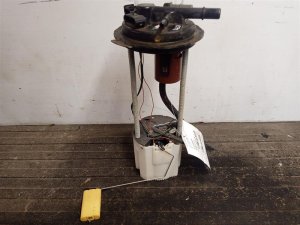
Aftermarket price range: $30-$60 - In-Tank Fuel Pump Module (Gas Engine) — The primary cause of low fuel pressure on the 6.0L gas engine is a weak or failed in-tank pump.
Trusted brands: ACDelco, Delphi
OEM price range: $350-$450
Aftermarket price range: $250-$350
Related Codes That Often Appear With This One
- P0088 — This code for 'Fuel Rail/System Pressure - Too High' can appear with P0087 if the fuel pressure regulator is failing and causing erratic pressure swings. [Bulletin #PIP4949E]
- P0191 — 'Fuel Rail Pressure Sensor Circuit Range/Performance' often accompanies P0087, indicating the sensor's readings are unstable, which can be a cause or a result of the pressure problem. [Bulletin #PIP4949E]
- P1093 — A GM-specific code for low fuel pressure that is often set along with P0087 on Duramax engines when the actual rail pressure is significantly lower than the desired pressure.
- P2635 — This code for 'Fuel Pump 'A' Low Flow/Performance' can be set with P0087, especially in cold weather, pointing towards a problem with the low-pressure in-tank pump on gas models or a restriction on diesel models. [Bulletin #18NA103]
- P069E — On gasoline models, this code for 'Fuel Pump Control Module Requested MIL Illumination' is a strong indicator that the FPCM itself has detected a fault and is the likely root cause of the low pressure condition.
Technical Service Bulletins (TSBs) & Recalls
- Addresses customer concerns of start and stall, no start, or loss of power at temperatures below 20°F (-6°C). Points to the in-tank fuel pump as a potential cause and lists P0087 as a possible DTC.
- Provides diagnostic guidance for hard start or no start conditions, possibly with DTCs P0087, P0088, P0191, or P128E. It instructs technicians to inspect Fuel Pressure Regulator 1 for magnetic metal debris if diagnostics lead to injection pump replacement, as this debris indicates internal pump failure.
- Discusses issues of hard start, no start, rough running, or low fuel pressure with DTCs P0087, P0088, P0191. It specifically warns that if fuel system contamination (such as rust from water or DEF) is found, the entire fuel system will need to be cleaned or replaced.
- An older bulletin that specifically addresses the rubber portion of the fuel supply line collapsing or kinking, which can cause a restriction and trigger DTC P0087. It provides instructions for replacing only the flexible rubber portion of the line.
Platform-Specific Known Issues
- TSB #18NA103 notes that at temperatures below 20°F (-6°C), the truck may experience a start and stall, no start, or loss of power accompanied by P0087 due to issues with the in-tank fuel pump.
- TSB #PIP5151B warns that if fuel system contamination is found during inspection for P0087, the entire fuel system may need to be replaced to ensure a complete repair.
- A known issue on Duramax trucks involves the soft rubber fuel supply line collapsing under heat and vacuum, which can mimic a clogged filter or failing pump. A GM service bulletin recommends upgrading this hose.
Mechanic-Grade Diagnostic Values
- Duramax Injector Return Rate (Standard Test) — expected: Maximum of 5 ml in 15 seconds for a single injector; maximum of 20 ml per bank.. Failure: Any measurement exceeding the specified volume indicates a leaking injector.
- Duramax Injector Return Rate (GM Enhanced Test) — expected: Total return from all 8 injectors should be less than 144 ml. No single injector should exceed 18 ml.. Failure: Test is performed for 30 seconds at idle with rail pressure commanded to 17,400 PSI. Exceeding these values indicates excessive leakage.
- Duramax Injector Balance Rates — expected: Between -4.0 and +4.0 mm³/sec at hot idle in Park or Neutral.. Failure: A strong negative number (e.g., less than -4.0) suggests a leaking injector, while a strong positive number suggests low compression or a clogged injector nozzle.
- Duramax Fuel Supply Vacuum — expected: Less than 5 inches of Hg at WOT in park; less than 8 inches of Hg during hard acceleration.. Failure: Higher vacuum readings indicate a restriction in the fuel supply, such as a clogged filter or collapsed hose.
- 6.0L Gas Engine Fuel Pressure — expected: 55-62 PSI at the fuel rail test port.. Failure: Pressure below this range indicates a weak in-tank fuel pump or a faulty Fuel Pump Control Module (FPCM).
- Duramax Fuel Rail Pressure Sensor (FRP) Voltage — expected: Signal wire should read between 0.5V and 4.8V.. Failure: Voltage outside this range, or that doesn't correlate with pressure, indicates a faulty sensor or wiring issue.
Scan Tool Commands That Help
- GDS2 / Tech2: Command Fuel Rail Pressure — For Duramax engines, command pressure to 17,400 PSI or higher at idle. This tests the CP3 pump's ability to build pressure and helps identify leaks from injectors or the pressure relief valve without putting the engine under load.
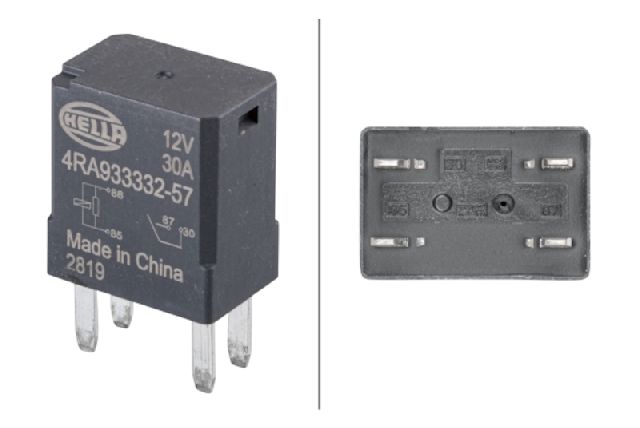
- GDS2 / Tech2: Fuel Pump On/Off — For 6.0L gas engines, this command directly tests the functionality of the Fuel Pump Control Module (FPCM) and the in-tank fuel pump circuit. If the pump doesn't activate when commanded, it isolates the fault to the pump, FPCM, or wiring.
- GDS2 / Tech2: Injector Flow Rate Programming — This is a required step after replacing one or more fuel injectors on a Duramax engine. The unique IQA code from each new injector must be programmed into the ECM for proper fuel delivery and engine balance.
Wiring & Ground Locations
- Fuel Pump Control Module (FPCM) — On gasoline engine models, the FPCM is located on a frame crossmember above the spare tire.. This location makes the module highly susceptible to corrosion from road salt and moisture, which is a very common cause of failure leading to P0087 on the 6.0L gas engine.
- Fuel Pump Ground — A critical ground connection for the fuel pump is located on the driver's side frame rail, typically near the driver's door.. Corrosion at this ground point creates high resistance, preventing the fuel pump (on gas models) or lift pump (if equipped on diesel) from receiving adequate voltage, leading to low flow and pressure.
- FPCM Connector (Gas Engine) — The connector at the FPCM module above the spare tire.. For testing, Pin 32 (Red/White) is battery positive, and Pin 1 (Black) is ground. Pin 47 (Gray) is the supply voltage to the fuel pump. Jumpering these can bypass the module to test the pump directly.
- Fuel Rail Pressure (FRP) Sensor — On the LMM Duramax, the sensor is located on the fuel rail, behind the intake tube on the passenger side of the engine near the firewall.. Provides the 'Actual' fuel pressure reading to the ECM. A faulty sensor or damaged connector/wiring can send an incorrect low-pressure signal, falsely triggering P0087.
Real Owner Repair Stories
- DuramaxDiesels.com forum user (2010 LMM Duramax) — P0087 code and loss of rail pressure when applying over 50% power.
❌ Tried (didn't work) Replacing fuel filter, Replacing fuel lines, Replacing the entire fuel filter head assembly
✅ What actually fixed it Installing an aftermarket lift pump (Kennedy kit). The user concluded the stock CP3 pump was being starved for fuel under heavy load, and the lift pump provided the necessary positive pressure to resolve the issue. - YouTube channel 'Cars and Joshee' (Duramax (LLY, similar fuel system)) — P0087, hard start/no start, rolling idle, limp mode.
❌ Tried (didn't work) Initial diagnosis pointed towards fuel pressure regulator or relief valve.
✅ What actually fixed it The root cause was the fuel filter housing primer pump leaking, allowing the system to suck in air. This was visible as bubbling around the primer button when pressed. Rebuilding the fuel filter head with a new seal kit resolved the air leak and fixed the P0087 code. - Reddit user in r/Duramax (Duramax (LBZ, similar fuel system)) — P0087 code appearing under load, such as when towing.
❌ Tried (didn't work) Considering replacement of major components like injectors or CP3 pump.
✅ What actually fixed it Installed a fuel pressure relief valve shim kit for about $20. This prevents the stock valve from weakening and bleeding off pressure prematurely under high demand, which is a common cause for this code under load.
OEM Part Supersession History
GM 97361351 / Bosch 0445020037→Bosch Remanufactured 0986437332— Standard remanufacturing lifecycle for the CP3 high-pressure fuel pump on the LMM Duramax.
Heads up: These part numbers are for the LBZ/LMM CP3 pump (2006-2010) and are not compatible with earlier (LB7) or later (LML) Duramax engines.GM 98090186→Bosch 0281002971 / ACDelco 213-3914— OEM supplier part numbers for the same Fuel Rail Pressure (FRP) sensor.
Helpful Videos
Used OEM Parts in Stock
New Aftermarket Parts Available


The information in this article is provided for general reference and educational purposes only. Vehicle specifications, procedures, and part compatibility can vary by production date, trim level, and region. Always consult your vehicle's factory service manual and verify part numbers before purchasing or performing repairs. Safety-critical components such as airbags, seat belts, and braking systems should be installed by a qualified professional.
- Chevrolet SILVERADO 2500:
- 🧭 Diagnostic Flowchart
- 🎬 Helpful Videos
- 🛍️ Shop This Part
- What's Unique About the 2010-2010 Chevrolet SILVERADO 2500
- Symptoms You May Notice
- Most Likely Causes
- Rare But Worth Checking
- Diagnosis Steps
- Parts You'll Likely Need
- Related Codes That Often Appear With This One
- Technical Service Bulletins (TSBs) & Recalls
- Platform-Specific Known Issues
- Mechanic-Grade Diagnostic Values
- Scan Tool Commands That Help
- Wiring & Ground Locations
- Real Owner Repair Stories
- OEM Part Supersession History
- 🎟️ Get 5% Off