

P0087 on 2012-2020 Chevrolet Sonic 1.4L Turbo: Low Fuel Pressure Causes and Fixes
On a 2012-2020 Chevy Sonic with the 1.4L Turbo engine, code P0087 is most often caused by a failing high-pressure fuel pump (HPFP). A weak in-tank low-pressure fuel pump is the second most likely culprit. A strong smell of gasoline in the engine oil is a tell-tale sign of HPFP failure. Expect to pay $200-$500 for a replacement HPFP.
- P0087 on your Sonic 1.4L Turbo means fuel pressure is too low, most likely due to a failing high-pressure fuel pump (HPFP) or the in-tank low-pressure pump.
- Do not drive the vehicle if possible; stalling in traffic is a significant safety risk.
- Diagnosis should start by testing the low-pressure pump's output with a mechanical gauge. This will tell you whether to focus on the in-tank pump or the engine-mounted HPFP.
- When replacing the HPFP, it's a good practice to also change the engine oil, as a failing pump can leak fuel into the crankcase.
- Before buying parts, confirm which pump is faulty. Replacing the fuel pressure sensor is rarely the correct fix for this code on this car.
What's Unique About the 2012-2020 Chevrolet Sonic
The 1.4L Turbo engine in the Sonic is shared with the Chevrolet Cruze, Trax, and Buick Encore, and they all share common failure points for this code. P0087 on this platform is very frequently a hardware problem rather than a sensor issue. The two most common culprits are the camshaft-driven high-pressure fuel pump (HPFP) mounted on the engine, which is a known wear item, or the low-pressure 'lift' pump located in the fuel tank. Diagnosis involves determining which of these two pumps has failed before replacing parts.
Symptoms You May Notice
- Reduced engine power or entering 'limp mode'
- Hesitation, sputtering, or stumbling during acceleration
- Engine stalls unexpectedly, sometimes while driving
- Rough or uneven idle
- Engine cranks but fails to start
- Loud whining noise from the rear of the car (indicates a failing low-pressure pump)
- Illuminated Check Engine Light
- Strong smell of gasoline in the engine oil
- Replacing the fuel rail pressure sensor first without testing the fuel pumps. The pumps are a much more common failure point on this engine.
- Replacing spark plugs or ignition coils. While these can cause misfires, they do not cause a P0087 code.
- Assuming the issue is with fuel injectors without first verifying fuel pressure from the pumps.
Most Likely Causes
- Failing High-Pressure Fuel Pump (HPFP) 🔴 High Probability → Shop Fuel Pump The HPFP is a widely documented failure point on the 1.4L Turbo engine platform used in the Sonic, Cruze, and Encore. Being a mechanical pump driven by the camshaft, its internal seals and plunger can wear out, leading to an inability to generate the required pressure (often over 2000 PSI) for the direct injection system.
How to confirm: With a scan tool, monitor 'Desired Fuel Rail Pressure' vs. 'Actual Fuel Rail Pressure'. If the actual pressure is significantly lower than desired, especially under load, and the low-pressure system is confirmed to be working correctly, the HPFP is the likely cause. A strong smell of fuel in the engine oil is a definitive indicator of a failed internal seal on the HPFP, which allows gasoline to leak into the crankcase.
Typical fix: Replace the high-pressure fuel pump. It is also critical to change the engine oil and filter if fuel contamination is present to prevent engine damage.
Est. part cost: $200-$500 - Failing Low-Pressure Fuel Pump (In-Tank) 🟡 Medium Probability → Shop Fuel Pump The in-tank pump's job is to supply the HPFP with a steady flow of fuel (acting as a 'lift pump'). If this pump weakens, it starves the HPFP, causing low pressure on the high side. These pumps can fail due to age or electrical issues.
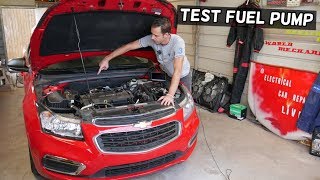
How to confirm: Connect a mechanical fuel pressure gauge to the low-pressure fuel line's service port. The pressure should be stable and within GM's specification (typically 50-60 PSI). If the pressure is low, erratic, or drops significantly under acceleration, the in-tank pump is failing. A loud whining sound from the fuel tank area is also a common symptom.
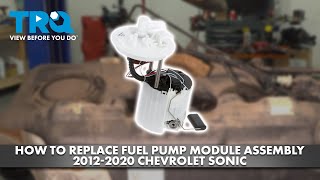
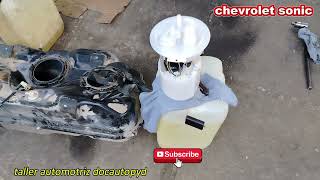
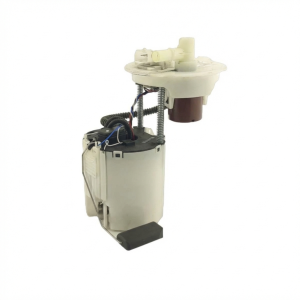
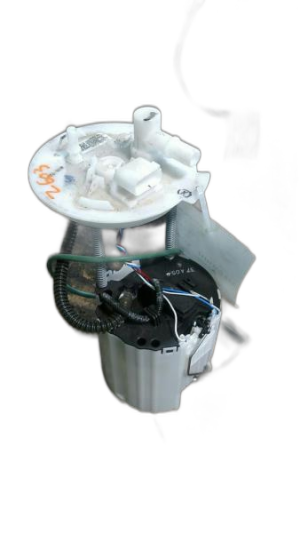
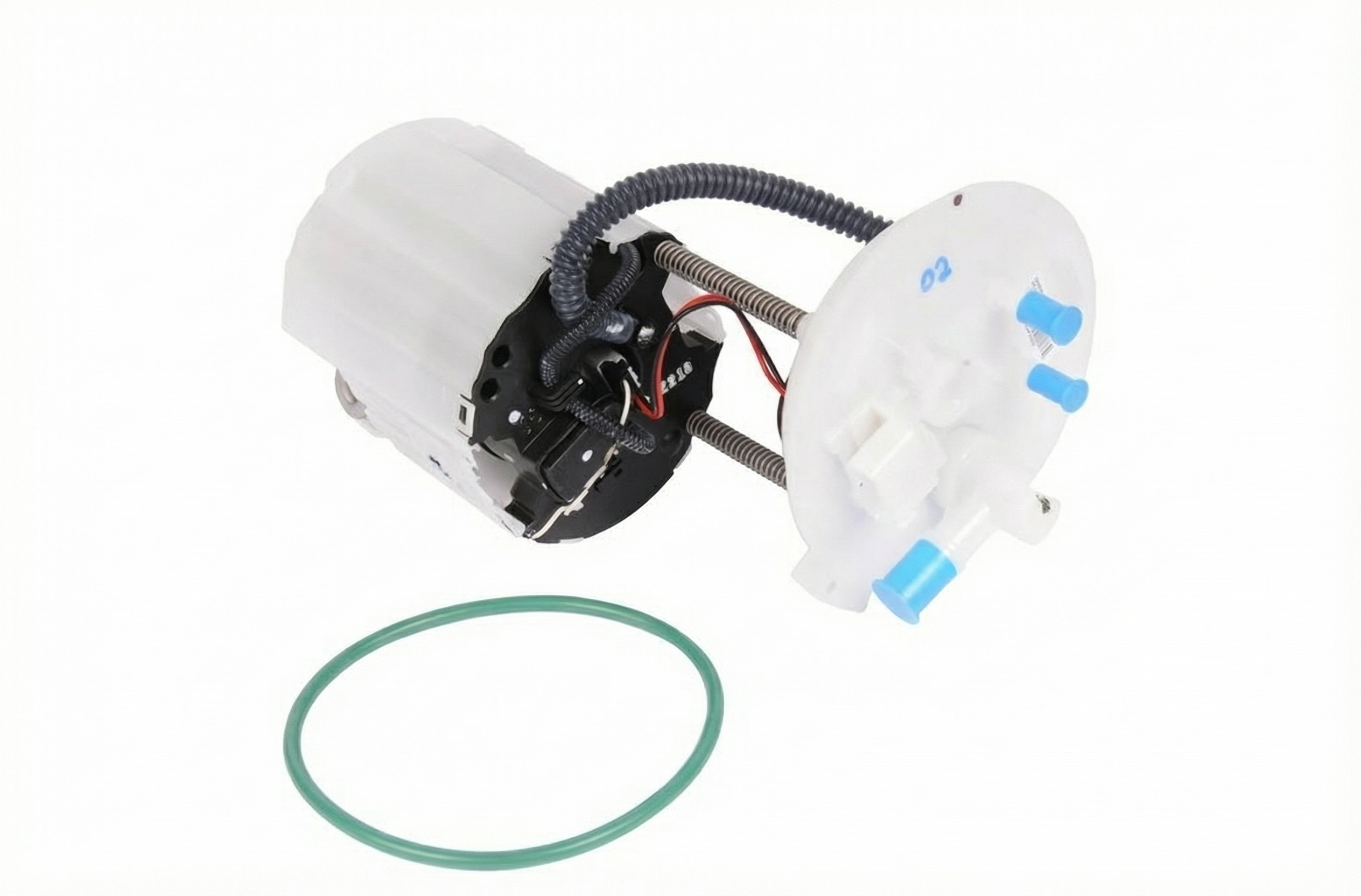
Typical fix: Replace the in-tank fuel pump module assembly. The fuel filter is integrated into this assembly and is not serviced separately. 🎬 Watch this step-by-step fuel pump module replacement guide
Est. part cost: $150-$350 - Faulty Fuel Rail Pressure Sensor ⚪ Low Probability → Shop Fuel Pressure Sensor
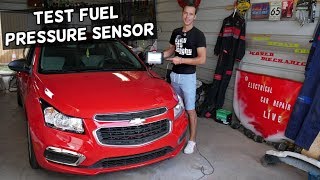
How to confirm: This is best diagnosed by exclusion. If both the low-pressure and high-pressure pumps are known to be good but the scan tool still reports low pressure, the sensor may be at fault. A good diagnostic step is to compare the scan tool's pressure reading to a mechanical gauge on the low-pressure side with the engine at idle. If the readings are vastly different, the sensor is suspect. 🎬 See how to test the fuel rail pressure sensor Failure of this sensor can also trigger codes P0191 or P0192.
Typical fix: Replace the fuel rail pressure sensor.
Est. part cost: $40-$100
Rare But Worth Checking
- Clogged Fuel Filter: → Shop Fuel Filter On the Sonic, the fuel filter is part of the in-tank fuel pump module and is not serviced separately. While a clog can cause P0087, it is diagnosed and fixed by replacing the entire low-pressure fuel pump assembly, making it part of that common cause.
- Leaking Fuel Line or Connection: → Shop Fuel Line A physical leak in a fuel line can cause a loss of pressure. A visual inspection for fuel odor or wet spots around the fuel lines, especially at the connections to the HPFP and fuel rail, is warranted. A service update (12041) was issued for a specific fuel pipe connector on 2012 models that could fracture, though this was primarily a safety concern in a crash.
- Worn Camshaft Lobe: → Shop Engine Camshaft Since the HPFP is driven by a lobe on the camshaft, excessive wear on this specific lobe can reduce the pump's stroke and its ability to generate pressure. This is a rare mechanical failure but is a possibility on very high-mileage engines.
Diagnosis Steps
- Connect an OBD-II scanner and verify P0087 is present. Note any other codes.
- Using the scanner's live data, observe 'Desired Fuel Rail Pressure' and 'Actual Fuel Rail Pressure' at idle, during a brief, gentle acceleration, and if possible, under load. Note the discrepancy. The actual pressure should closely follow the desired pressure.
- Test the low-pressure fuel system. Connect a fuel pressure gauge to the low-pressure line's service port. With the engine running, pressure should be stable and within spec (typically 50-60 PSI). If it's low or drops under load, the in-tank pump is the likely issue.
- If low-pressure is stable and strong, the issue is in the high-pressure system.
- Carefully inspect the high-pressure fuel pump (HPFP) and surrounding fuel lines for any signs of leaks or a strong fuel odor.
- Remove the engine oil cap and dipstick and check for a strong smell of gasoline. A fuel smell is a definitive sign that the HPFP has an internal leak and must be replaced.
- If the HPFP is suspected, confirm it is being driven by the camshaft. While rare, a worn camshaft lobe can cause low pressure.
- If all other tests pass and scan tool data seems implausible compared to mechanical gauge readings, the fuel rail pressure sensor is a possible, though less likely, culprit.
- Before replacing the HPFP, it is critical to relieve the high pressure in the fuel rail by following the manufacturer's service procedure to avoid injury.
Parts You'll Likely Need
- High-Pressure Fuel Pump
(OEM #12677329 (superseded by 12691016))— This is the most common cause of P0087 on the 1.4L Turbo engine. It is a mechanical pump that wears out over time.
Trusted brands: ACDelco, GM Genuine, Bosch
OEM price range: $300-$500
Aftermarket price range: $200-$400 - Low-Pressure Fuel Pump Module Assembly
(OEM #13516949)— This is the second most likely cause. It fails by becoming too weak to supply the high-pressure pump, and it contains the non-serviceable fuel filter.
Trusted brands: ACDelco, Delphi
OEM price range: $250-$400
Aftermarket price range: $150-$300 - Fuel Rail Pressure Sensor
(OEM #12672582)— A less common cause, this sensor can fail and send false low-pressure readings to the computer. It is often replaced mistakenly when a pump is the real issue.
Trusted brands: ACDelco, GM Genuine
OEM price range: $60-$120
Aftermarket price range: $40-$80
Related Codes That Often Appear With This One
- P0171 — System Too Lean. This code often accompanies P0087 because the low fuel pressure prevents the correct air/fuel mixture, leading to a lean condition.
- P0300 — Random/Multiple Cylinder Misfire. The fuel-starved engine may misfire across multiple cylinders, especially under load.
- P0088 — Fuel Rail/System Pressure - Too High. Seeing both P0087 and P0088 can indicate an erratically failing HPFP or fuel rail pressure sensor, causing wild swings in pressure.
- P0299 — Engine Underboost. While often related to PCV or turbo issues, severe fuel starvation from P0087 can prevent the engine from producing enough power to build proper boost.
Technical Service Bulletins (TSBs) & Recalls
- 12041: Service update for 2012 models regarding a fuel pipe connector that could fracture in a crash, potentially causing a fuel leak.
- 22-NA-067: Addresses poor engine performance in extreme cold due to icing in the PCV system and charge air cooler. While not a direct cause of P0087, its symptoms can overlap.
- 18-NA-361: A diagnostic tip for diesel engines, but it lists P0087 and other codes that can be caused by fuel contamination, highlighting the importance of fuel quality.
- Bulletin #18NA103: Notes that in-tank fuel pumps may experience issues at temperatures below -6C or 20F, resulting in P0087, start and stall conditions, or a loss of power.
Platform-Specific Known Issues
- The high-pressure fuel pump (HPFP) is a widely reported failure item on the 1.4L Turbo engine, often failing between 80,000 and 120,000 miles.
- GM issued TSB 22-NA-067 for the 1.4L LUV engine concerning poor performance in extreme cold weather due to icing in the PCV system and charge air cooler, which can cause symptoms like hesitation and loss of power, though it typically sets different codes like P0299 or P2227.
- As noted in cross-manufacturer reports like NHTSA ODI #11716292, some fuel management systems may trigger a "reduced acceleration" warning and P0087 specifically in weather below 30F.
Mechanic-Grade Diagnostic Values
- Low-Pressure Fuel System (In-tank pump) — expected: 50-60 PSI (345-414 kPa), stable at idle. Some service documents specify a range of 40-65 PSI (276-448 kPa) when the pump is commanded on with a scan tool.. Failure: Pressure is below 40-45 PSI, is erratic, or drops significantly under load.
- Low-Pressure System Leak-Down Test — expected: After turning the engine off, pressure should not decrease more than 5 PSI (34 kPa) in 1 minute.. Failure: A pressure drop greater than 5 PSI in one minute indicates a leak in the low-pressure side, possibly from the pump's check valve.
- High-Pressure Fuel System (at idle) — expected: Approximately 3.0-5.0 MPa (435-725 PSI).. Failure: Actual pressure on a scan tool fails to meet desired pressure, especially under load.
- Fuel Rail Pressure Sensor Voltage (Key On, Engine Off) — expected: Approximately 0.5V.. Failure: A high voltage reading with the engine off suggests a faulty sensor.
Scan Tool Commands That Help
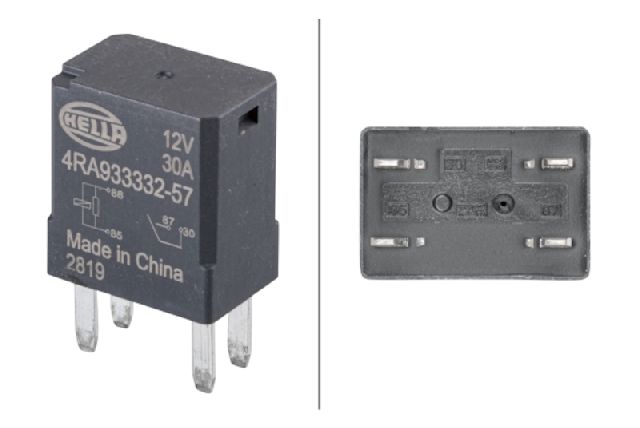
- GDS2 / Professional Scan Tool: Fuel Pump Enable / Fuel Pump Relay Command — This bidirectional command is used during diagnosis to manually turn on the low-pressure fuel pump with the engine off. This allows a technician to check the pump's maximum pressure and perform leak-down tests without the engine running.
- GDS2 / Professional Scan Tool: Module Programming / Setup — If the Fuel Pump Control Module (FPCM) is replaced, it must be programmed to the vehicle using the factory scan tool software to ensure it communicates correctly with the ECM and operates the fuel pump as commanded.
Wiring & Ground Locations
- Fuel Pump Control Module (FPCM) — On hatchback models, the FPCM is located behind the passenger-side rear interior trim panel.. A faulty FPCM can fail to provide the correct voltage to the in-tank fuel pump, mimicking a pump failure and causing low fuel pressure.
- Fuse F14 (Underhood) — In the underhood fuse block, position #14.. This 20A fuse provides the main power supply to the Fuel Pump Control Module. A blown fuse will cause the entire fuel pump system to be inoperative.
- Fuse F19 (Underhood) — In the underhood fuse block, position #19.. This 10A fuse provides the control power for the Fuel Pump Control Module. A blown fuse will prevent the module from activating.
Real Owner Repair Stories
- AliExpress User Review (2019 Buick Encore (same 1.4L engine platform)) — Intermittent stalling.
❌ Tried (didn't work) Replacing the fuel filter.
✅ What actually fixed it The owner noted there was no priming sound from the engine block area. After confirming the part number, they replaced the high-pressure fuel pump (HPFP). The vehicle started immediately and the stalling issue was resolved, confirming the HPFP had failed internally. - NHTSA ODI #11150332: An owner of a similar platform vehicle reported receiving a P0087 alert via OnStar, stating the engine and transmission system was not performing as expected.
- NHTSA ODI #10641106: A report describes a vehicle intermittently displaying P0087 low fuel pressure along with a "change fuel filter" message on the dash.
OEM Part Supersession History
12677329→12691016— GM periodically updates parts to improve reliability or consolidate part numbers. 12691016 is the latest revision for the HPFP.
Heads up: Part number 12691016 also replaces numerous older numbers including 12622475, 12629934, 12633594, 12641740, 12669005, and 12677328. Using the latest superseded part number is critical for this repair.
Model Year Variations Within This Range
- 2012-2020: The LUJ and LUV engine codes are used somewhat interchangeably for the 1.4L Turbo in the Sonic and Cruze. For the purposes of diagnosing P0087, there are no significant physical differences in the fuel system components between these engine designations or across the model years. The core causes and fixes remain consistent.
Diagnostic Flowchart
Other Known Issues on This Vehicle
Issues unrelated to this code that are worth knowing about as an owner of this generation:
- PCV System Failure (Valve Cover / Intake Manifold) 🔴 High — Extremely common, often occurs between 60,000-120,000 miles. A torn diaphragm in the valve cover or a failed check valve in the intake manifold causes a massive vacuum leak. (Ref: TSB PIP5197 / Special Coverage N202299080 covers the valve cover diaphragm for 10 years/120,000 miles on some model years.)
- Coolant Leaks (Water Pump / Thermostat Housing) 🟠 Medium — Very common. The water pump is known to leak from its seal or weep hole. Plastic thermostat housings and coolant outlet pipes are also prone to cracking and leaking. (Ref: Special Coverage 14371B extended the warranty on the water pump to 10 years/150,000 miles for early model years.)
- Valve Cover Gasket Oil Leak 🟠 Medium — Common failure. The gasket leaks oil externally, often down the side of the engine, and internally into the spark plug tubes, which can destroy ignition coils and cause misfires.
- Turbocharger Failure 🔴 High — Moderately common, especially on higher mileage or poorly maintained engines. Failures can include wastegate issues, cracked housings, or bearing failure from oil starvation.
Used vs. New Parts: Buying Guide for This Vehicle
When a used part is the smart pick: For this repair, sourcing used parts is generally not recommended due to the high failure rate of the primary components. A used Fuel Pump Control Module (FPCM) could be a viable option if tested, as it is an electronic part without mechanical wear. However, for pumps, new is strongly advised.
Donor-vehicle mileage cap: roughly under 60000 miles for the part to have meaningful remaining life.
What to inspect on the donor part:
- For a used FPCM, ensure there is no corrosion on the pins or damage to the housing.
- Avoid any fuel system parts from a vehicle that shows signs of sitting for a long time (stale fuel smell, rust in tank).
- Do not buy a used High-Pressure Fuel Pump (HPFP). The risk of a worn camshaft on the donor car means the pump's history is unknown and it could fail prematurely.
OEM-only on this vehicle (don't cheap out):
- High-Pressure Fuel Pump (HPFP): While good aftermarket options exist, OEM (ACDelco/GM Genuine) is the safest bet for longevity and compatibility. The risk of a cheap aftermarket pump failing and requiring a second high-labor repair is significant.
Aftermarket brands forum-validated for this vehicle:
- Bosch (for the High-Pressure Fuel Pump, as they are often the OEM manufacturer)
- Delphi (for the Low-Pressure In-Tank Fuel Pump) [Pass 2 Data]
Brands owners have reported issues with on this vehicle:
- Unnamed, 'white-box' or suspiciously cheap HPFPs from online marketplaces. The tolerances and materials are critical for this part, and low-quality versions are known to fail quickly.
Real Owner Stories
Aggregated from forums and TSBs cited above. Mileages and costs reflect what owners reported in those sources.
2014 Chevrolet Cruze 1.4L Turbo — ~100000 miles
Symptoms: Experienced P0087 along with codes P0171, P0299, and P0089.
What fixed it: Replacing the high-pressure fuel pump (HPFP) after an initial attempt to fix it with a low-pressure pump failed.
Source hint: CruzeTalk Forum: P0087, P0171, P0299, P0089 - Fixed
2014 Chevrolet Sonic 1.4L Turbo — 114000 miles
Symptoms: Reported code P0087 and engine stalling.
What fixed it: The community identified the HPFP as the most likely cause, consistent with the 80,000-120,000 mile failure window for this platform.
Source hint: Sonic Owners Forum: P0087 Code
Related OBD-II Codes
Frequently Asked Questions
My 2014 Sonic is stalling and has code P0087; what is the most likely part to fail?
I smell gas when I check my oil dipstick. Is this related to the P0087 code?
Does TSB 22-NA-067 explain why I have a P0087 code in the winter?
Can a bad fuel rail pressure sensor cause P0087 on my Chevrolet Sonic?
Is there a service update for the fuel system on 2012 Sonic models?
What should I do if I find fuel contamination in my oil while fixing P0087?
Helpful Videos
Used OEM Parts in Stock
New Aftermarket Parts Available

The information in this article is provided for general reference and educational purposes only. Vehicle specifications, procedures, and part compatibility can vary by production date, trim level, and region. Always consult your vehicle's factory service manual and verify part numbers before purchasing or performing repairs. Safety-critical components such as airbags, seat belts, and braking systems should be installed by a qualified professional.
- Chevrolet Sonic:
- 🧭 Diagnostic Flowchart
- 🎬 Helpful Videos
- 🛍️ Shop This Part
- What's Unique About the 2012-2020 Chevrolet Sonic
- Symptoms You May Notice
- Most Likely Causes
- Rare But Worth Checking
- Diagnosis Steps
- Parts You'll Likely Need
- Related Codes That Often Appear With This One
- Technical Service Bulletins (TSBs) & Recalls
- Platform-Specific Known Issues
- Mechanic-Grade Diagnostic Values
- Scan Tool Commands That Help
- Wiring & Ground Locations
- Real Owner Repair Stories
- OEM Part Supersession History
- Model Year Variations Within This Range
- Other Known Issues on This Vehicle
- Used vs. New Parts: Buying Guide for This Vehicle
- Real Owner Stories
- 2014 Chevrolet Cruze 1.4L Turbo — ~100000 miles
- 2014 Chevrolet Sonic 1.4L Turbo — 114000 miles
- Related OBD-II Codes
- Frequently Asked Questions
- 🎟️ Get 5% Off