

P0087 on 2013-2017 Chevrolet Suburban: Low Fuel Pressure Causes & Fixes
On 2015-2017 Suburbans with direct injection, P0087 is most often caused by a failed high-pressure fuel pump (HPFP), which can sometimes leak fuel into the engine oil. For 2013-2014 models, or as a secondary cause on newer ones, suspect the in-tank fuel pump or the corrosion-prone Fuel System Control Module (FSCM) located on the frame rail above the spare tire.
- P0087 indicates dangerously low fuel pressure that can cause stalling.
- For 2015-2017 Suburbans, the high-pressure fuel pump (HPFP) is the most likely culprit.
- For 2013-2014 Suburbans, the problem is in the low-pressure system, most likely the in-tank pump or the Fuel System Control Module (FSCM).
- Always check the cheaper and easier to access FSCM for corrosion before deciding to replace an expensive fuel pump.
- Diagnosis requires differentiating between the high-pressure and low-pressure fuel systems on 2015+ models to avoid replacing the wrong parts.
What's Unique About the 2013-2017 Chevrolet SUBURBAN
The 2013-2017 Suburban range spans two key generations with different fuel systems. The 2015 model year introduced direct injection (DI) EcoTec3 engines, which use both a low-pressure in-tank pump and an engine-mounted high-pressure fuel pump (HPFP). On these 2015-2017 models, the HPFP is a very common failure point leading to code P0087. In contrast, the 2013-2014 models use a conventional port injection system with only a low-pressure in-tank pump, so the causes for P0087 are different and do not involve an HPFP.
Diagnostic Flowchart
Tap your situation to follow the diagnostic path that matches what you're seeing on this vehicle.
Generation note: This range covers two generations. The 2013-2014 models belong to the 10th generation (GMT900 platform) and have port-injected engines. The 2015-2017 models are part of the 11th generation (K2XX platform) and feature direct-injected engines (5.3L L83, 6.2L L86), which have a high-pressure fuel system that is a frequent cause of this code.
Symptoms You May Notice
- Loss of engine power, especially under acceleration or load
- Engine hesitation or stumbling
- Engine stalling, sometimes unexpectedly after running for a few minutes
- Hard starting or extended cranking time
- No-start condition
- Illuminated Check Engine Light
- Whining noise from the in-tank fuel pump, especially in cold weather.
- Strong smell of gasoline from the engine oil dipstick (on 2015+ models)
- Replacing the in-tank (low-pressure) fuel pump on a 2015+ model when the high-pressure fuel pump (HPFP) is the actual cause. Always check for fuel in the oil first.
- Replacing a fuel pump when the Fuel System Control Module (FSCM) is the true culprit. Always inspect the FSCM for corrosion.
- Replacing the fuel rail pressure sensor without first verifying actual fuel pressure and confirming the health of the low and high-pressure pumps.
Most Likely Causes
- High-Pressure Fuel Pump (HPFP) Failure (2015-2017 models only) 🔴 High Probability → Shop Fuel Pump The mechanical HPFP on the direct-injected EcoTec3 engines is a widely documented failure point. It can wear internally or the seal can fail, allowing fuel to leak directly into the crankcase and contaminate the engine oil.
How to confirm: Use a scan tool to monitor both desired and actual high-side fuel rail pressure. If the actual pressure is significantly lower than desired under load, the HPFP is suspect. The most definitive confirmation is checking the engine oil on the dipstick; a strong smell of gasoline is a tell-tale sign of HPFP failure.
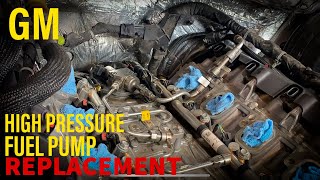
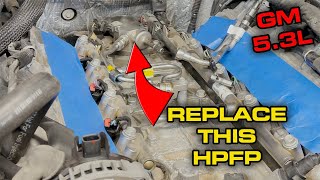
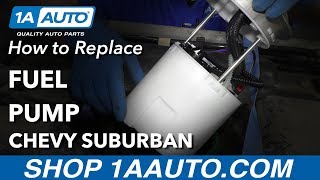
Typical fix: Replacement of the high-pressure fuel pump and the associated one-time-use high-pressure fuel line. 🎬 Watch: Complete guide to replacing the high-pressure fuel pump. An oil and filter change is mandatory if the oil is contaminated with fuel.
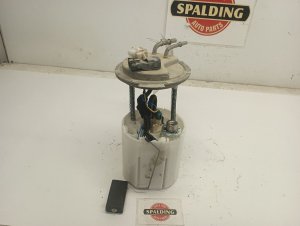
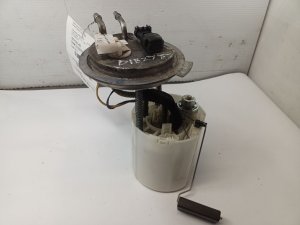
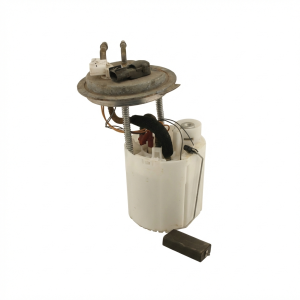
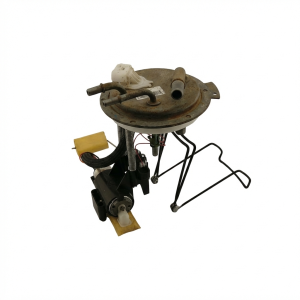
Est. part cost: $300-$600 - Failing In-Tank (Low-Pressure) Fuel Pump 🟡 Medium Probability → Shop Fuel Pump The in-tank pump can weaken over time. A GM Technical Service Bulletin (#18-NA-103) also notes that in temperatures below 20°F (-6°C), the fuel can cause the pump to whine and struggle, leading to a loss of power and setting code P0087.
How to confirm: Connect a mechanical fuel pressure gauge to the low-pressure system. If the pressure is below specification (typically 48-54 PSI with key on, engine off), the pump is likely weak. A user on TahoeYukonForum described symptoms of the truck dying after a few minutes of running, which was resolved by replacing the in-tank pump.
Typical fix: Replacement of the in-tank fuel pump module assembly.
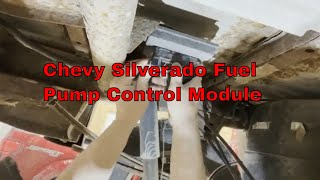
Est. part cost: $250-$450 - Faulty Fuel System Control Module (FSCM) / Fuel Pump Driver Module (FPDM) 🟡 Medium Probability → Shop Fuel System Controller This module controls the voltage to the in-tank fuel pump. It's typically mounted on the frame rail crossmember above the spare tire, where it is exposed to moisture and road salt, leading to severe corrosion of the housing and connector pins, 🎬 See how to inspect and replace the fuel control module. causing failure.
How to confirm: Visually inspect the module and its electrical connector for green or white corrosion and physical damage. A scan tool can check for communication errors with the module (U-codes). A failure here can mimic a bad fuel pump, so this check is crucial before replacing the pump.
Typical fix: Replacement of the Fuel System Control Module. The new OEM module requires programming by a dealer or a capable shop, though some aftermarket modules are sold pre-programmed.
Est. part cost: $80-$220 - Failed Fuel Rail Pressure Sensor ⚪ Low Probability → Shop Fuel Pressure Sensor
How to confirm: Compare the fuel pressure reading from a scan tool with a reading from a mechanical gauge on the low-pressure side. For the high-pressure side, diagnosis relies on observing if the scan tool reading is erratic or irrational (e.g., stuck at a certain value regardless of engine load). If the low-pressure system tests good and the HPFP is not leaking into the oil, but pressure readings are still incorrect, the sensor is suspect.
Typical fix: Replacement of the fuel rail pressure sensor.
Est. part cost: $50-$100
Rare But Worth Checking
- Clogged Fuel Filter: → Shop Fuel Filter The fuel filter is integrated into the in-tank fuel pump module and is considered non-serviceable. This cause is usually addressed by replacing the entire fuel pump module assembly.
- Worn Camshaft Lobe (2015-2017 models): → Shop Engine Camshaft The HPFP is driven by a special lobe on the camshaft via a 'cam follower' or 'roller'. If this lobe or the follower wears down, it cannot properly actuate the pump, leading to low pressure. This is a significant mechanical repair. Inspection of the follower and lobe is recommended whenever the HPFP is replaced.
- Fuel Contamination: Water or debris in the fuel can damage both the in-tank and high-pressure fuel pumps. GM TSB #PIP5151F warns that if significant contamination is found, the entire fuel system may need to be flushed or replaced to prevent repeat failures.
Diagnosis Steps
- Connect an OBD-II scanner and confirm P0087 is present. Check for any other related codes, especially P0172/P0175, P2635, or P018B.
- For 2015+ models, perform the most critical and simple check first: remove the engine oil dipstick and smell it for a strong odor of raw gasoline. If present, the High-Pressure Fuel Pump (HPFP) has almost certainly failed.
- View live data on the scanner. Monitor 'Desired Fuel Rail Pressure' and 'Actual Fuel Rail Pressure'. On 2015+ models, differentiate between low-pressure and high-pressure readings if possible. A significant discrepancy between desired and actual high pressure under load points towards the HPFP.
- For all models, locate the Fuel System Control Module (FSCM) on the frame rail above the spare tire. Inspect the module and its connector for any signs of corrosion, water damage, or broken pins.
- If the FSCM appears fine, connect a mechanical fuel pressure gauge to the low-pressure fuel line to verify the pressure from the in-tank pump. It should be within 48-54 PSI with the key on and engine off.
- If low-side pressure is good but high-side pressure (on 2015+ models) is low, and there is no fuel in the oil, the issue could still be the HPFP, a worn camshaft lobe, or the pressure sensor.
- If both mechanical pressure and scan tool pressure are good at idle but the code persists, the issue may only appear under load. A road test while monitoring live data may be necessary.
- Inspect wiring and connectors for the fuel pumps, FSCM, and pressure sensors for any damage or corrosion.
Parts You'll Likely Need
- High-Pressure Fuel Pump (2015-2017)
(OEM #12728002 (supersedes 12711662, 12697966, 12688606, etc.))— This is the most common failure point for P0087 on the direct-injected 2015+ Suburbans. Failure often includes leaking fuel into the engine oil.
Trusted brands: ACDelco, GM Genuine Parts, Delphi
OEM price range: $400-$600
Aftermarket price range: $250-$450 - In-Tank Fuel Pump Module Assembly
(OEM #M100094 (2013-2014), MU2315 (2015-2016))— This is the primary cause on 2013-2014 models and a secondary cause on 2015+ models, especially in cases of cold weather (per TSB 18-NA-103) or high mileage.
Trusted brands: ACDelco, TRQ, Delphi
OEM price range: $350-$500
Aftermarket price range: $200-$350 - Fuel System Control Module (FSCM)
(OEM #23382215 (2015+), 20759945 (2013-14))— This module is highly prone to failure from corrosion due to its location on the frame rail. It can mimic the symptoms of a bad fuel pump.
Trusted brands: ACDelco, Standard Motor Products, Dorman
OEM price range: $100-$180
Aftermarket price range: $70-$120 - High-Pressure Fuel Feed Pipe
(OEM #12673077)— This is a one-time-use part that GM mandates must be replaced any time the high-pressure fuel pump is replaced on 2015+ models.
Trusted brands: ACDelco, GM Genuine Parts
OEM price range: $40-$70
Related Codes That Often Appear With This One
- P018B — Fuel Pressure Sensor 'B' Circuit Range/Performance. Often set with P0087 per TSB #18-NA-103, especially in cold weather conditions.
- P2635 — Fuel Pump 'A' Low Flow/Performance. This code directly relates to the low-pressure in-tank pump's performance and is often seen with P0087 when the in-tank pump is failing.
- P0172 / P0175 — System Too Rich (Bank 1 / Bank 2). Can occur on 2015+ models if the HPFP seal fails and leaks fuel into the crankcase. The fuel vapor is then pulled into the intake via the PCV system, creating a rich condition that the oxygen sensors detect.
Technical Service Bulletins (TSBs) & Recalls
- TSB #18-NA-103: Details a condition where the in-tank fuel pump may whine and cause stalling, no-starts, and set P0087 in cold temperatures below 20°F (-6°C).
- TSB #PIP5151F: Warns that if fuel system contamination is discovered, the entire fuel system may require replacement to prevent repeat failures of new components.
Platform-Specific Known Issues
- Common failure of the engine-mounted High-Pressure Fuel Pump (HPFP) on 2015-2017 models with EcoTec3 direct injection engines, often diagnosed by a strong fuel smell in the engine oil.
- Corrosion and failure of the Fuel System Control Module (FSCM) mounted above the spare tire is a frequent issue across all years in this range, especially in regions that use road salt.
- Per TSB #18-NA-103, the in-tank fuel pump can struggle or fail in temperatures below 20°F (-6°C), causing a whine, stalling, and code P0087.
Mechanic-Grade Diagnostic Values
- Low-Pressure Fuel System (All Years) — expected: 48-54 PSI (331-372 kPa) with Key On, Engine Off (KOEO).. Failure: Pressure below this range indicates a weak in-tank pump, clogged filter, or failing FSCM.
- High-Pressure Fuel System Idle (2015+) — expected: Approximately 500-600 PSI (3,447-4,137 kPa) at idle.. Failure: Significantly lower pressure at idle suggests a failing HPFP or worn camshaft lobe.
- High-Pressure Fuel System Cranking (2015+) — expected: Should build to 300-400 PSI (2,068-2,758 kPa) while cranking.. Failure: Failure to build pressure or pressure that drops off quickly during cranking points to an issue with the HPFP or its drive.
- High-Pressure Fuel Rail Sensor Test (2015+) — expected: Unplugging the sensor with KOEO results in a 0 PSI reading. Shorting the 5V reference wire to the signal wire results in a default reading of 4,626 PSI.. Failure: If the scan tool does not show these specific values during the test, it indicates a wiring or ECM issue rather than a pump problem.
- FSCM Control Signal (All Years) — expected: 12V present at the Dark Green/White wire (Pin 13) at the FSCM connector for 3-6 seconds at key-on, or while cranking.. Failure: No voltage indicates a break in the wire between the ECM and FSCM, or a faulty ECM.
Scan Tool Commands That Help
- GDS2 / Tech2: Fuel Pump On/Off Command — To directly test the functionality of the in-tank fuel pump and the Fuel System Control Module (FSCM), bypassing other variables. If the pump runs with this command, the pump and FSCM are likely operational.
- GDS2 / Tech2: FSCM Replacement Programming — This is a mandatory procedure after replacing the FSCM with a new OEM unit. The module must be programmed with the vehicle's VIN and specific calibration to communicate with the ECM.
- GDS2 / Tech2: Fuel System Depressurize (2015+) — This is a critical safety step before servicing any high-pressure fuel components. It commands the system to relieve pressure to a safe level. It can also be used diagnostically to see if the pressure sensor reading drops to zero as expected.
Wiring & Ground Locations
- FSCM Connector — On the Fuel System Control Module, located on the driver's side frame rail, typically above the spare tire.. This connector is exposed to the elements and is a common point of failure due to corrosion. Key pins to test are Pin 1 (Ground), Pin 13 (Control Signal from ECM), and Pin 32 (Battery Power).
- FSCM Control Wire Chafe Point — The Dark Green/White wire (to Pin 13 of the FSCM) is known to chafe and break where the harness runs near the front driveshaft or transfer case.. A break in this wire will prevent the ECM from commanding the fuel pump on, perfectly mimicking a failed FSCM or fuel pump and leading to a P0087. A continuity check of this wire is crucial if no signal is found at the FSCM.
- Engine Ground Stud — On the back of the engine block, on the driver's (port) side, near the flywheel/transmission housing.. A loose or corroded main engine ground can cause a variety of sensor and module communication issues, including erratic readings from the fuel pressure sensors that could trigger P0087.
Real Owner Repair Stories
- YouTube user 'Held The Flashlight For Dad' (GM Truck with Duramax Diesel Engine (similar fuel supply line design)) — Intermittent P0087 code, especially when towing or in hot weather, causing the truck to enter limp mode.
❌ Tried (didn't work) Replacing the fuel filter, Installing a race plug in the fuel rail relief valve
✅ What actually fixed it The soft rubber fuel supply line from the filter housing to the engine was collapsing internally under heat and suction. The fix, per a GM TSB, was to cut off the factory crimps and replace the rubber section with a more rigid Parker brand hose. - Sprinter-Source.com forum user '44ktimbg' (2005 Dodge Sprinter (different vehicle, but demonstrates a wiring failure pattern)) — Persistent P0087 code and related drivability issues.
❌ Tried (didn't work) Replacing high-pressure fuel sensor, Replacing low-pressure fuel sensor, Replacing the entire fuel rail
✅ What actually fixed it A knowledgeable technician traced the issue to an intermittent short in the engine wiring harness. An 'overlay' wire was run for the low-pressure fuel sensor circuit directly to the PCM, bypassing the fault in the original harness.
"I Checked Everything" — The Actual Cause
- While a smoke test is not used for fuel pressure, a similar pattern occurs where standard pressure tests are misleading. The issue of an internally collapsing fuel supply hose is a prime example. A pressure gauge at the rail might read correctly at idle, but under load (when suction increases), the hose collapses, starves the pump, and triggers P0087. The hose appears perfectly fine from the outside, leading technicians to miss the true cause.
OEM Part Supersession History
12711662, 12697966, 12688606, 12625817, etc.→12728002, which is now superseded by 12744840— Updates to improve reliability and address internal wear and seal failure issues.
Heads up: When replacing the High-Pressure Fuel Pump (HPFP), it is mandatory to also replace the one-time-use high-pressure fuel feed pipe (GM PN 12673077). Failure to do so can result in leaks.Varies (e.g., 20759945)→Varies (e.g., 23382215)— Design changes to improve resistance to corrosion and electronic failure.
Heads up: OEM Fuel System Control Modules (FSCM) require programming to the vehicle's VIN using a tool like GDS2. However, many aftermarket modules are sold as 'plug and play' and do not require programming, which is a critical difference for DIY repair.
Model Year Variations Within This Range
- 2015-2016 vs 2017+: The high-pressure fuel rail sensor may have changed around the 2017 model year. Early Gen V engines (2015-2016) often used a 4-wire sensor that incorporated a fuel temperature reading, while later versions may differ. This is important to verify when ordering a replacement sensor.
Helpful Videos
![Easy Fix for Common Chevy Problem [Fuel Pump Control Module]](https://img.youtube.com/vi/38Xeo1uLBoU/mqdefault.jpg)
We Have This Part in Stock

The information in this article is provided for general reference and educational purposes only. Vehicle specifications, procedures, and part compatibility can vary by production date, trim level, and region. Always consult your vehicle's factory service manual and verify part numbers before purchasing or performing repairs. Safety-critical components such as airbags, seat belts, and braking systems should be installed by a qualified professional.
- Chevrolet SUBURBAN:
- 🧭 Diagnostic Flowchart
- 🎬 Helpful Videos
- 🛍️ Shop This Part
- What's Unique About the 2013-2017 Chevrolet SUBURBAN
- Symptoms You May Notice
- Most Likely Causes
- Rare But Worth Checking
- Diagnosis Steps
- Parts You'll Likely Need
- Related Codes That Often Appear With This One
- Technical Service Bulletins (TSBs) & Recalls
- Platform-Specific Known Issues
- Mechanic-Grade Diagnostic Values
- Scan Tool Commands That Help
- Wiring & Ground Locations
- Real Owner Repair Stories
- "I Checked Everything" — The Actual Cause
- OEM Part Supersession History
- Model Year Variations Within This Range
- 🎟️ Get 5% Off