

P0087 on 2016-2019 Ford Explorer 3.5L EcoBoost: Low Fuel Rail Pressure Causes and Fixes
Code P0087 on a 3.5L EcoBoost Explorer means the high-pressure fuel system has low pressure. The most common causes are a failing high-pressure fuel pump (HPFP) or a weak in-tank low-pressure fuel pump. For 2017+ models, first check for a backward-installed fuel jumper line (SSM 50089) before replacing parts. Diagnosis is key, as replacing the wrong pump is a costly mistake.
- P0087 on the 3.5L EcoBoost indicates low pressure in the high-pressure fuel system.
- The most critical diagnostic step is to test the low-pressure fuel pump first. A healthy low-pressure system (55-75 PSI) is required before condemning the more expensive high-pressure pump.
- The most common fixes are replacing either the in-tank low-pressure fuel pump assembly or the engine-mounted high-pressure fuel pump (HPFP).
- If the vehicle is a 2017-2019 model and recently had engine work, check for an incorrectly installed fuel jumper line per Ford's SSM 50089 before replacing parts.
- Due to the complexity and potential for misdiagnosis, this repair can be challenging for DIYers. A systematic approach using a scan tool with live data is essential.
What's Unique About the 2016-2019 Ford Explorer
The 3.5L EcoBoost is a Gasoline Direct Injection (GDI) engine, which makes diagnosing P0087 more complex than on a traditional port-injected engine. You must determine if the fault lies with the low-pressure system (in-tank pump, filter) or the high-pressure system (HPFP, rail sensor, camshaft-driven components). A common misdiagnosis is replacing one pump when the other is at fault, so a proper diagnostic approach that checks both low and high-pressure readings is critical. Furthermore, on 2017+ models, a simple mistake like installing a fuel jumper line backward after a repair is a very common cause for this code, as detailed in Ford's SSM 50089.
Symptoms You May Notice
- Check Engine Light is on
- Significant loss of engine power or hesitation during acceleration
- Engine running rough or stumbling
- Difficulty starting the engine, requiring long crank times
- Engine stalling, especially under load
- Reduced fuel economy
- Replacing the high-pressure fuel pump (HPFP) when the in-tank low-pressure pump was the actual cause.
- Replacing the in-tank fuel pump when the HPFP was the actual cause.
- Replacing a fuel pump when the fuel rail pressure sensor was providing a false reading.
- Replacing the HPFP or in-tank pump when the fuel jumper line was simply installed backward after a previous repair (SSM 50089).
Most Likely Causes
- Failing High-Pressure Fuel Pump (HPFP) 🔴 High Probability → Shop Fuel Pump The HPFP is a mechanical pump driven by a camshaft lobe and is a known failure point on many GDI engines, including the 3.5L EcoBoost. Wear on the internal spring and plunger is a common failure mode. NHTSA ODI #11360172 notes a case where the high pressure pump ground into the top of the camshaft, causing fuel rail failure and code P0087.
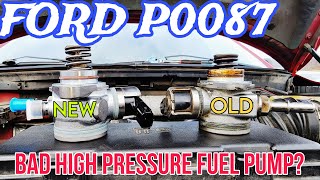
How to confirm: Use a scan tool to monitor desired vs. actual fuel rail pressure. If low-pressure supply is confirmed to be good (around 55-75 PSI), but high pressure does not meet the desired value under load, the HPFP is the likely culprit. Upon removal, a failed pump's plunger may appear visibly compressed or 'collapsed' compared to a new one.
Typical fix: Replace the high-pressure fuel pump and the cam follower that it rides on.
Est. part cost: $150-$500 - Failing In-Tank Low-Pressure Fuel Pump 🟡 Medium Probability → Shop Fuel Pump The HPFP cannot function correctly if it is starved of fuel. A weak in-tank pump cannot supply the necessary volume and pressure (typically 55-75 PSI for this engine) to the high-pressure pump. In some instances, such as NHTSA ODI #11658406, a failure to start accompanied by P0087 was linked to metal shavings found throughout the fuel system, necessitating a full pump replacement.
How to confirm: Use a scan tool or a mechanical gauge to test the low-side fuel pressure with the key on, engine off. It should be stable. If the pressure is low, erratic, or drops off, the in-tank pump is failing.
Typical fix: Replace the in-tank fuel pump module assembly. The fuel filter is typically integrated into this assembly.
Est. part cost: $200-$450 - Faulty Fuel Rail Pressure Sensor ⚪ Low Probability → Shop Fuel Pressure Sensor The sensor provides the pressure reading to the PCM. If it sends an inaccurately low signal, it can trigger P0087 even if the pressure is mechanically fine. NHTSA ODI #11318285 describes a scenario where the check engine light and low oil light appeared as the car was about to die; while P0087 was present, the actual issue was a defective fuel rail sensor.
How to confirm: Compare the scan tool's pressure reading with a mechanical gauge. If there's a significant difference, the sensor is likely faulty. Note that on the 3.5L EcoBoost, this sensor is often located under the intake manifold, making access difficult.
Typical fix: Replace the fuel rail pressure sensor.
Est. part cost: $50-$150
Rare But Worth Checking
- Incorrectly Installed Fuel Jumper Line: Ford issued Special Service Message (SSM) 50089 for 2017-2021 models. If recent engine work was performed, a fuel jumper line with an internal check valve may have been installed backward, restricting flow and causing P0087. The Oetiker clamp on the line should be closest to the port injection rail.
- Worn Camshaft Lobe: → Shop Engine Camshaft The HPFP is driven by a lobe on the camshaft. In rare, high-mileage cases or if the engine was starved of oil, this lobe can wear down, preventing it from properly actuating the pump. This should be inspected when replacing the HPFP.
- Leaking Fuel Injector: → Shop Fuel Injector A stuck-open fuel injector can cause a drop in rail pressure. This is often accompanied by misfire codes (P030x) and a strong smell of fuel or black smoke from the exhaust. Check the engine oil dipstick for a strong gasoline smell.
- Diverter Valve Failure: While more common on other Ford platforms, NHTSA ODI #11633930 reports a case where a vehicle lost acceleration during rapid freeway entry, triggering P0087 due to a failed diverter valve.
Diagnosis Steps
- Read the trouble codes with an OBD-II scanner and confirm P0087 is present.
- Use a scan tool with live data capabilities to monitor 'Fuel Rail Pressure' (high-side) and 'Fuel Rail Pressure Desired'. Also, monitor low-side fuel pressure if available.
- If the vehicle is a 2017 or newer and has had recent engine work, IMMEDIATELY inspect the fuel jumper line per SSM 50089. Check that the Oetiker clamp is on the end closest to the port injection rail.
- With the Key On, Engine Off (KOEO), check the low-pressure fuel reading. It should be stable, around 55-75 PSI for the EcoBoost. If it's low or erratic, the problem is likely the in-tank fuel pump or a clogged filter.
- If low-side pressure is good, start the engine. At idle, the high-pressure reading should closely match the desired reading.
- Safely increase engine RPM or briefly drive under load while monitoring the data. If the actual fuel rail pressure drops significantly and does not meet the desired pressure, the issue is on the high-pressure side.
- Check the oil dipstick for a strong smell of gasoline. If present, suspect a leaking fuel injector which can cause a loss of rail pressure.
- If high pressure is low and injectors are not suspected, the most likely causes are the HPFP or the fuel rail pressure sensor.
- If the HPFP is replaced, inspect the camshaft lobe for wear and visually compare the old pump's plunger to the new one. A collapsed plunger on the old pump confirms its failure.
Parts You'll Likely Need
- High-Pressure Fuel Pump (HPFP)
(OEM #BL3Z-9350-D)— This is the most common failure point for P0087 on the 3.5L EcoBoost when low-side pressure is confirmed to be good. Also fits F-150, Expedition, and Navigator with the 3.5L EcoBoost.
Trusted brands: Motorcraft, Bosch
OEM price range: $300-$500
Aftermarket price range: $150-$350 - In-Tank Fuel Pump Module Assembly
(OEM #DA8Z-9H307-K)— A weak in-tank pump will starve the HPFP, causing low pressure codes. The fuel filter is part of this assembly. Also fits the Ford Flex and Lincoln MKT with the 3.5L EcoBoost.
Trusted brands: Motorcraft, Delphi, TRQ
OEM price range: $350-$500
Aftermarket price range: $200-$350 - Fuel Rail Pressure Sensor
(OEM #BU5Z-9F972-B)— Though less common for this code, a faulty sensor can send incorrect readings to the PCM. Its location under the intake manifold makes it a labor-intensive replacement. This sensor is a frequent failure point on other EcoBoost platforms.
Trusted brands: Motorcraft, Bosch, Standard Motor Products (SMP)
OEM price range: $80-$150
Aftermarket price range: $50-$100
Related Codes That Often Appear With This One
- P008A — This code for 'Low Pressure Fuel System Pressure - Too Low' can appear alongside P0087, pointing more directly to an issue with the in-tank pump or a restriction like the backward jumper line.
- P00C6 — This code for 'Fuel Rail Pressure Too Low - Engine Cranking' often appears with P0087, indicating the system cannot build sufficient pressure even to start the engine, strongly pointing to a failed HPFP or major leak.
- P0300-P0306 — Misfire codes can occur when low fuel pressure creates a lean air/fuel mixture, preventing proper combustion in one or more cylinders.
Technical Service Bulletins (TSBs) & Recalls
- SSM 50089 / NHTSA ID 10201579: Addresses stalling and lack of power and low fuel pressure codes (P0087, P008A) caused by the improper installation of the fuel jumper line on 2017-2021 models after service. The fix is to ensure the Oetiker clamp on the line is positioned closest to the port injection rail.
Platform-Specific Known Issues
- For 2017 and newer models, Ford issued Special Service Message (SSM) 50089, warning that a fuel jumper line can be installed backward during other engine repairs, causing a fuel restriction and triggering P0087. This should be the first check after any recent service.
Mechanic-Grade Diagnostic Values
- Low-Pressure Fuel System (In-tank pump) — expected: 55-75 PSI, stable with Key On, Engine Off (KOEO).. Failure: Pressure is below 55 PSI, is erratic, or drops off over time.
- High-Pressure Fuel System (HPFP) at Idle — expected: >200 PSI, actual pressure should closely match desired pressure on scan tool.. Failure: Actual pressure is significantly lower than desired pressure.
- High-Pressure Fuel System (HPFP) Under Load — expected: Actual pressure should climb with desired pressure to over 2,000 PSI.. Failure: Actual pressure fails to rise or drops significantly as the engine is revved or driven under load.
- Low-Side Mechanical Gauge Observation — expected: The gauge needle should show a slight, rapid fluctuation or flutter while the engine is running.. Failure: A completely static, non-fluctuating needle can indicate the HPFP is not mechanically operating (plunger not moving), as the plunger action normally creates small pulses back into the low-side line.
Scan Tool Commands That Help
- Ford IDS / Pro-level Scan Tool: Live Data Monitoring: 'FRP' (Fuel Rail Pressure), 'FRP_DSD' (Fuel Rail Pressure Desired) — This is the primary diagnostic method. It is used to compare the PCM's requested fuel pressure with the actual pressure measured by the sensor in real-time, under various conditions (KOEO, idle, load) to determine if the fault is on the low-pressure supply side or high-pressure delivery side.
Wiring & Ground Locations
- Fuse F63 — In the under-hood Power Distribution Box, located on the driver's side of the engine compartment.. This 20A or 30A fuse powers the in-tank low-pressure fuel pump. A blown fuse will cut power to the pump, starving the HPFP of fuel and causing P0087. While a blown fuse is uncommon without another fault, it is a simple and critical check.
- PCM Connector Pins — The main electrical connectors at the Powertrain Control Module (PCM).. If the vehicle has been in an accident or had previous major engine/electrical work, pins within the PCM connector can become dislodged or 'pushed out,' creating a poor connection for circuits controlling the fuel system. This can mimic a component failure and is often missed during diagnosis. NHTSA ODI #11568117 notes a similar electrical failure where Pin 25 in connector C1035A melted, causing a poor connection for the fuel pump control module.
Real Owner Repair Stories
- ScannerDanner Forum (2014 Ford Fusion 2.0L (similar GDI fuel system)) — Long crank time, poor acceleration, P0087.
❌ Tried (didn't work) Replaced low-pressure fuel sensor, Replaced high-pressure fuel sensor, Replaced high-pressure fuel pump (used), Replaced in-tank low-pressure fuel pump (new)
✅ What actually fixed it After all part replacements failed, the technician inspected the PCM connectors and found two wires had been pushed out of the connector housing during a previous, unrelated repair after an accident. Reseating the pins in the connector restored proper function and resolved the code. - YouTube channel 'Just Rolled In' (Ford F-150 3.5L EcoBoost) — No power, P0087.
❌ Tried (didn't work) Initial diagnosis focused on scan tool data showing low actual pressure.
✅ What actually fixed it The high-pressure fuel pump follower (tappet) had completely worn through, and the camshaft lobe that drives it was severely scored and damaged. The final fix required replacing the exhaust camshaft, the follower, and the high-pressure fuel pump. - YouTube channel 'FordTechMakuloco' (2012 Ford F-150 3.5L EcoBoost) — No power over 35mph, rough idle, clattering noise, codes P0087, P0174, P053F.
❌ Tried (didn't work) Visual inspection under vehicle showed no damage from customer going in a ditch.
✅ What actually fixed it Diagnosis confirmed good low-side pressure (~64 PSI) but very low high-side pressure. A key finding was the old HPFP's plunger was visibly collapsed compared to the new one. Replacing the high-pressure fuel pump resolved all symptoms and codes.
"I Checked Everything" — The Actual Cause
- In a documented case on a similar Ford GDI engine, P0087 persisted despite replacing both fuel pumps and sensors. A smoke test or fuel pressure test would not have found the issue. The actual cause was two pushed-out pins in the PCM electrical connector from a prior accident repair, which was only found after a meticulous physical wire and connector inspection at the module.
OEM Part Supersession History
BL3Z-9350-A, BL3Z-9350-B, BL3Z-9350-C→BL3Z-9350-D— Standard design revisions and improvements by the manufacturer for the 3.5L EcoBoost High-Pressure Fuel Pump.
Model Year Variations Within This Range
- 2017-2019: These models use the 2nd Generation 3.5L EcoBoost, which features a dual-injection system (both port and direct). This makes them subject to Ford's Special Service Message (SSM) 50089, where a fuel jumper line can be installed backward after service, causing P0087. This is a primary check on these model years if any recent engine work was performed.
Diagnostic Flowchart
Other Known Issues on This Vehicle
Issues unrelated to this code that are worth knowing about as an owner of this generation:
- Internal Water Pump Failure 🔴 High — Common on high-mileage (100k+ miles) vehicles. The pump is internal and driven by the timing chain. Failure can cause coolant to mix with engine oil, leading to catastrophic engine damage.
- Timing Chain Stretch and Cam Phaser Rattle 🔴 High — A characteristic 'startup rattle' is the primary symptom. Caused by a stretching timing chain or failing VCT phasers. If ignored, can lead to loss of timing and engine damage. Repair is labor-intensive. (Ref: SSM 49821 (relates to various cam timing codes))
- Intake Valve Carbon Buildup 🟠 Medium — Inherent to all GDI engines. Oil vapor from the PCV system bakes onto the back of the intake valves, restricting airflow over time (50k-100k miles). Causes rough idle, hesitation, and reduced performance. Requires manual cleaning (walnut blasting).
- Electronic Throttle Body (ETB) Failure 🟠 Medium — A well-known issue where contamination of internal contacts causes the vehicle to suddenly enter 'limp mode' with a wrench light. Can occur at various mileages. (Ref: Customer Satisfaction Program 13N03, 16B32)
Used vs. New Parts: Buying Guide for This Vehicle
When a used part is the smart pick: For this repair, using used parts is generally not recommended for the core components. A used fuel rail pressure sensor from a low-mileage donor could be a cost-effective option if you suspect a sensor issue. However, for the pumps themselves, new is strongly advised.
Donor-vehicle mileage cap: roughly under 50000 miles for the part to have meaningful remaining life.
What to inspect on the donor part:
- For a sensor, ensure the donor vehicle was not in a front-end collision.
- Check for any signs of corrosion or damage on the part's electrical connector.
- Avoid parts from vehicles with signs of flood or fire damage.
OEM-only on this vehicle (don't cheap out):
- High-Pressure Fuel Pump (HPFP)
- In-Tank Low-Pressure Fuel Pump
Aftermarket brands forum-validated for this vehicle:
- Bosch (Often the OEM manufacturer for the HPFP)
- Delphi (for the in-tank pump)
Brands owners have reported issues with on this vehicle:
- Unnamed, 'white box' parts from online marketplaces. The HPFP is a precision, high-stress component; failure of a cheap unit can be catastrophic and lead to repeated, expensive labor. Forum consensus strongly favors OEM/Motorcraft or Bosch.
Real Owner Stories
Aggregated from forums and TSBs cited above. Mileages and costs reflect what owners reported in those sources.
2017-2021 Ford (Various Models) 3.5L/5.0L
Symptoms: Stalling, lack of power, and low fuel pressure codes appearing immediately after the vehicle was serviced for other engine repairs.
What fixed it: Correcting the installation of the fuel jumper line; the Oetiker clamp was found on the wrong end, causing a restriction. It must be closest to the port injection rail.
Source hint: SSM 50089 / NHTSA ID 10201579
2011-2017 Ford F-150 3.5L EcoBoost
Symptoms: Fuel rail system pressure too low (P0087) specifically after a 'launch' or aggressive driving under increased load.
What fixed it: Replacement of the High-Pressure Fuel Pump (HPFP) which was failing to maintain pressure under high-load demands.
Source hint: F150forum.com thread titled 'ecoboost-fuel-rail-system-pressure-too-low-p0087-after-launch-339203/'
Ford Fusion (Platform Study)
Symptoms: Persistent P0087 code that remained even after multiple fuel system parts were replaced.
What fixed it: Repairing pushed-out pins in the main PCM electrical connector that were disturbed during a previous, unrelated repair.
Source hint: ScannerDanner.com Forum thread 'ford-dtc-code-p0087-fuel-pressure-to-low-in-the-fuel-rail-system.html'
Documented NHTSA Reports
Ford Escape (Platform Study)
Symptoms: Loss of acceleration during rapid acceleration attempts, such as freeway on-ramps, accompanied by a P0087 code.
What fixed it: Diagnosis revealed a failed diverter valve was the root cause of the low fuel rail pressure.
Source hint: NHTSA ODI #11633930
Ford F-250 (Platform Study)
Symptoms: Multiple diagnostic trouble codes including P0087 and P008A.
What fixed it: Investigation found Pin 25 in connector C1035A had melted, causing a poor connection for the fuel pump control module.
Source hint: NHTSA ODI #11568117
Related OBD-II Codes
Frequently Asked Questions
I just had engine work done on my 2017 Explorer and now I have a P0087 code. What should I check first?
My 3.5L EcoBoost has a startup rattle and now a P0087 code. Are they related?
Can a bad fuel injector cause a P0087 'Low Pressure' code on my Explorer?
What are the specific fuel pressure specs for the 2016-2019 Explorer 3.5L low-side pump?
I've replaced the HPFP and the sensor, but P0087 persists. What else could it be?
Is there a specific part I should replace along with the High-Pressure Fuel Pump?
Helpful Videos

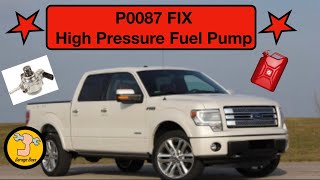
Used OEM Parts in Stock
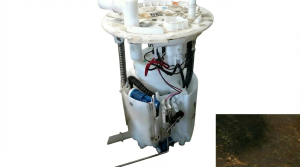
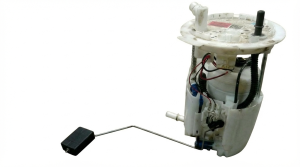
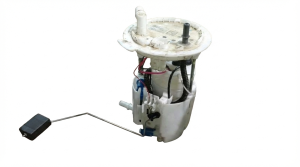
New Aftermarket Parts Available


The information in this article is provided for general reference and educational purposes only. Vehicle specifications, procedures, and part compatibility can vary by production date, trim level, and region. Always consult your vehicle's factory service manual and verify part numbers before purchasing or performing repairs. Safety-critical components such as airbags, seat belts, and braking systems should be installed by a qualified professional.
- Ford Explorer:
- 🧭 Diagnostic Flowchart
- 🎬 Helpful Videos
- 🛍️ Shop This Part
- What's Unique About the 2016-2019 Ford Explorer
- Symptoms You May Notice
- Most Likely Causes
- Rare But Worth Checking
- Diagnosis Steps
- Parts You'll Likely Need
- Related Codes That Often Appear With This One
- Technical Service Bulletins (TSBs) & Recalls
- Platform-Specific Known Issues
- Mechanic-Grade Diagnostic Values
- Scan Tool Commands That Help
- Wiring & Ground Locations
- Real Owner Repair Stories
- "I Checked Everything" — The Actual Cause
- OEM Part Supersession History
- Model Year Variations Within This Range
- Other Known Issues on This Vehicle
- Used vs. New Parts: Buying Guide for This Vehicle
- Real Owner Stories
- 2017-2021 Ford (Various Models) 3.5L/5.0L
- 2011-2017 Ford F-150 3.5L EcoBoost
- Ford Fusion (Platform Study)
- Documented NHTSA Reports
- Ford Escape (Platform Study)
- Ford F-250 (Platform Study)
- Related OBD-II Codes
- Frequently Asked Questions
- 🎟️ Get 5% Off