

P0087 on 2017-2021 Ford F-250 SD 6.7L: Low Fuel Pressure Causes and Fixes
P0087 on a 6.7L Power Stroke means fuel rail pressure is too low. The most common and simple fix is replacing clogged fuel filters. If that fails, the cause can range from a weak lift pump to a catastrophic failure of the high-pressure CP4 fuel pump, which is a known issue on these trucks, potentially leading to a $10,000+ repair bill.
- P0087 on a 6.7L Power Stroke means fuel pressure is dangerously low.
- Always start diagnosis by replacing the two fuel filters with Motorcraft parts; this is the most common and cheapest fix.
- Check the fuel filter housing for metal shavings. If you see any, the high-pressure CP4 pump has failed, and a full fuel system replacement is necessary.
- This code is a serious issue on these trucks due to the unreliable CP4 pump. Do not ignore it.
- For 2020-2022 models, check if your vehicle is part of Ford's recall #24S78 for a free software update to help prevent pump failure.
What's Unique About the 2017-2021 Ford F-250 SD

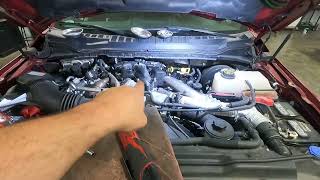
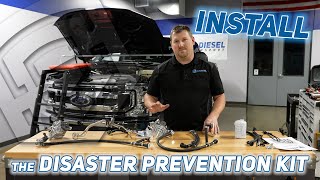
The 2017-2021 F-250 Super Duty with the 6.7L Power Stroke uses a Bosch CP4.2 high-pressure fuel pump, a component notorious for catastrophic failure. Unlike a simple weak pump, the CP4.2 can self-destruct, sending metallic debris throughout the entire fuel system, leading to an extremely expensive repair that can exceed $10,000. This makes a P0087 code on this specific truck a much more serious concern than on many other vehicles, as it can be an early warning sign of impending CP4 failure. Ford issued recall 24S78 (NHTSA 24V-957) for 2020-2022 models, attributing some failures to aged biodiesel deposits forming inside the pump. Many owners proactively install a "Disaster Prevention Kit" which bypasses fuel return from the CP4, preventing contamination of the whole system 🎬 See how to install a disaster prevention kit for protection. if the pump fails, or opt for a more robust CP3 or DCR pump conversion.
Diagnostic Flowchart

Tap your situation to follow the diagnostic path that matches what you're seeing on this vehicle.
Symptoms You May Notice
- Check Engine Light is on
- "Reduced Engine Power" message on the dash
- Lack of power, especially under acceleration or when towing
- Engine runs rough, misfires, or has a bucking/jerking sensation
- Hard starting or long crank times
- Engine stalling, sometimes abruptly under load
- Unusual whining or grinding noise from the engine or fuel pump area
- Replacing only the Fuel Rail Pressure sensor without testing the actual mechanical fuel pressure.
- Replacing the high-pressure pump without addressing clogged fuel filters first.
- Replacing injectors when the root cause is a failing CP4 pump sending debris to them.
- Assuming an aftermarket tune is the cause, when it's a pre-existing mechanical issue revealed by the tune's higher demand.
Most Likely Causes

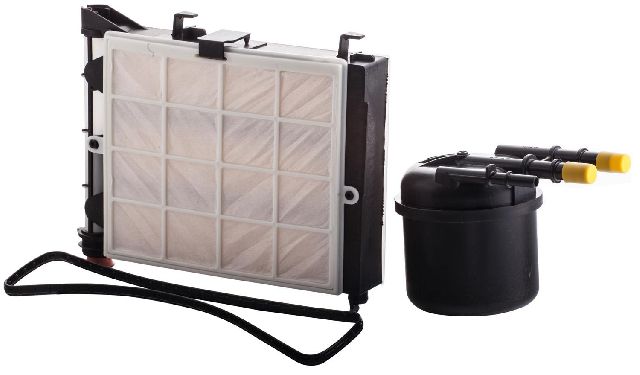
- Clogged Fuel Filters 🔴 High Probability → Shop Fuel Water Separator Filter Diesel fuel systems are sensitive to contaminants and water. The 6.7L Power Stroke has two filters (a primary frame-mounted filter/water separator and a secondary engine-mounted filter) that must be changed regularly, typically every 15,000 miles. Using non-OEM filters or improper installation can also lead to air leaks, causing similar symptoms.
How to confirm: Check maintenance records. If the filters haven't been replaced in the last 15,000 miles, replace them. This is the cheapest and most logical first step. An improperly seated lower filter cap is a very common cause of air entering the system, which also causes low pressure.
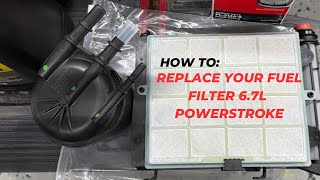
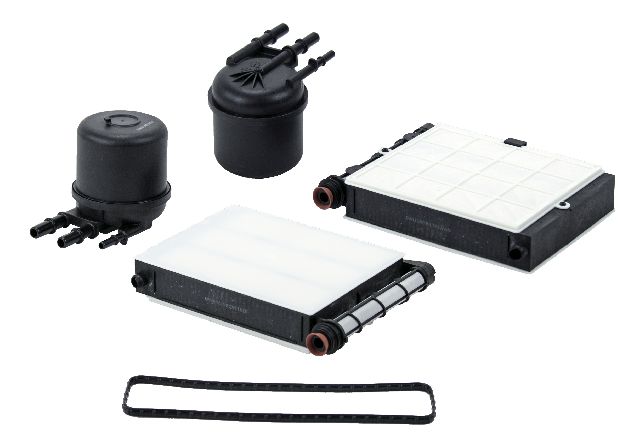
Typical fix: Replace both the primary and secondary fuel filters with high-quality OEM Motorcraft parts. The correct kit is part number FD-4624, which has been superseded by FD-4641. 🎬 Watch: Step-by-step guide to changing your fuel filters correctly. Ensure the water separator cap is fully tightened and the O-ring is seated correctly.
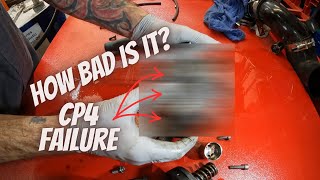
Est. part cost: $70-$120 - High-Pressure Fuel Pump (CP4) Failure 🟡 Medium Probability → Shop Fuel Pump The Bosch CP4.2 pump used in these model years is a well-documented failure point. Internal components, specifically the roller followers, can wear and disintegrate, sending metal debris through the entire fuel system. Ford issued recall 24S78 for some 2020-2022 models due to this issue.
How to confirm: Check the upper fuel filter housing and the fuel pressure control valve (PCV/MPROP) on the pump for metallic particles, often called 'forbidden glitter'. A technician can use a scan tool to monitor desired vs. actual rail pressure; a large, consistent discrepancy under load points to a failing pump. A Reddit user described a scenario where the pump could keep up at WOT but failed during steady-state cruising, which ultimately was a bad CP4.
Typical fix: If metal is present, a full fuel system replacement is required. This includes the high-pressure pump, fuel rails, all eight injectors, all high and low-pressure fuel lines, and dropping and cleaning the fuel tank. Many owners opt to replace the CP4 with a more robust CP3-style or DCR conversion kit from brands like S&S Diesel Motorsport or SPE Motorsport to prevent future failures.
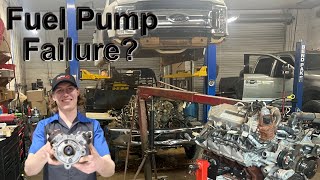
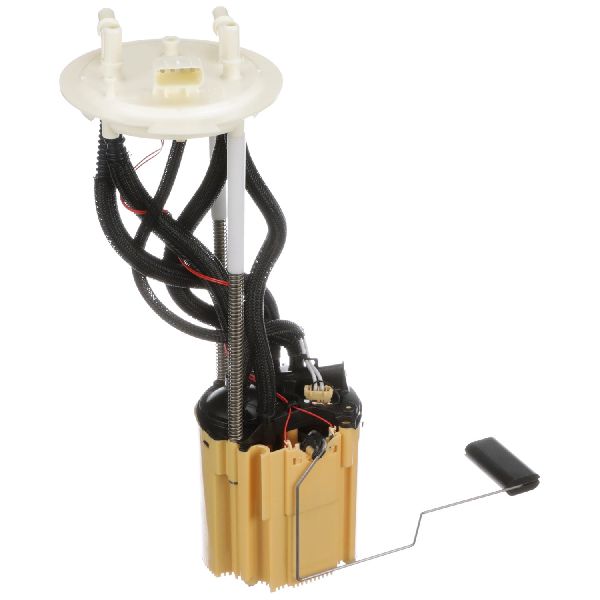
Est. part cost: $5,000-$8,000 for a complete OEM or aftermarket fuel system kit. A CP3 or DCR conversion pump alone costs around $2,400-$2,700. - Failing Low-Pressure Fuel Pump (Lift Pump) ⚪ Low Probability → Shop Fuel Pump The lift pump, located in the Diesel Fuel Conditioning Module (DFCM) on the frame rail, supplies fuel to the high-pressure pump. If it weakens, it cannot provide enough volume, starving the CP4 and causing it to work harder, which can lead to both low pressure codes and premature CP4 wear.
How to confirm: A technician can test the low-pressure fuel system pressure with a mechanical gauge at the test port on the secondary fuel filter housing. Pressure should be stable, typically 55-73 PSI. 🎬 Watch: Professional diagnostics for the low-pressure fuel system. On 2015+ models, this can be monitored with a scan tool. The code P008A often accompanies P0087 when the lift pump is the cause.
Typical fix: Replace the low-pressure fuel pump/DFCM assembly. The OEM part number for the pump is often HC3Z-9A407-B.
Est. part cost: $300-$600 - Fuel Gelling or Low Fuel Level ⚪ Low Probability As noted in Ford TSBs #SSM 50448 and #SSM 49062, running the fuel tank very low can cause the pump to suck in air, leading to a pressure drop. In cold temperatures, untreated diesel fuel can gel or wax, restricting flow through the filters and lines, which will starve the pumps for fuel.
How to confirm: Check the fuel gauge and consider if the issue started in very cold weather. If gelling is suspected, moving the truck to a warm garage may resolve the issue temporarily. The newest Motorcraft filters (FD-4641 and newer) include a bypass valve to help prevent this issue from completely disabling the truck.
Typical fix: Add at least 5 gallons of fuel to the tank. Use a quality anti-gel fuel additive during winter months. If gelled, replace fuel filters after the system has thawed as the wax will have clogged them.
Est. part cost: $10-$20 for additive
Rare But Worth Checking
- Faulty Fuel Rail Pressure (FRP) Sensor: → Shop Fuel Pressure Sensor The sensor itself can fail and send inaccurate low-pressure readings to the PCM. This is less common than a mechanical fault but worth considering if all pump pressures check out. A forum user reported replacing this sensor (along with the regulator) resolved their P0087 issue, but then triggered a P0191 code, indicating a sensor circuit problem. The OEM part number is typically BC3Z-9F838-A.
- Leaking Fuel Injector: → Shop Fuel Injector An injector that is stuck open or has a bad internal seal can bleed off rail pressure, causing a P0087 code. This can sometimes be identified with a scan tool by looking at injector balance rates or by measuring injector return flow. Per Ford spec, each injector should not return more than 3ml of fuel in 15 seconds at idle.
- Faulty Pressure Control Valve (PCV): This valve, also known as the Fuel Volume Control Valve or MPROP, is located on the high-pressure pump and regulates fuel volume entering the pump. It can fail or become contaminated with debris, causing pressure regulation issues. A forum user on NC4x4 was recommended by a dealer to replace this part first for a P0087 code. Another user on Ford Truck Enthusiasts ultimately fixed their issue by replacing the fuel pressure regulator on the rail.
Diagnosis Steps
- Verify the fuel level is not critically low. Add at least 5 gallons if in doubt. Note ambient temperature and possibility of fuel gelling.
- Scan for all DTCs. Note if P008A or P0093 are present, as they point towards low-side or major leak issues, respectively.
- Inspect the vehicle's maintenance history. If fuel filter service is overdue, replace both fuel filters with Motorcraft FD-4624/FD-4641 parts. Check that the lower filter cap is fully tightened. Properly prime the system by cycling the key-on, engine-off for 30 seconds at least 6 times before starting.
- Visually inspect the upper (secondary) fuel filter housing for signs of metal shavings ('glitter'). A borescope can be useful. If any metal is found, the CP4 pump has failed, and a full fuel system replacement is necessary.
- If no metal is found, connect a scan tool (like FORScan) and monitor 'Desired vs. Actual' fuel rail pressure (FRP) and low-side fuel pressure. Low-side pressure should be 55-73 PSI. High-side pressure should be ~4,400 PSI at idle and track closely with desired pressure under load.
- Perform a low-pressure fuel system volume test. Disconnect the supply line to the high-pressure pump and measure flow. It should be a minimum of 1 liter in 30 seconds.
- If low-side pressure/volume is low, suspect a weak lift pump. If low-side pressure is good but high-side pressure is low, suspect the high-pressure pump (CP4), the Fuel Pressure Control Valve (on the rail), or the Fuel Volume Control Valve (on the pump).
Parts You'll Likely Need
- Fuel Filter Kit
(OEM #FD-4624 (superseded by FD-4641))— Clogged or improperly installed filters are the most frequent cause of low fuel pressure and should always be the first part replaced. - High-Pressure Fuel Pump (CP4)
(OEM #BC3Z-9A543-B (example, varies by year))— The OEM pump is required if a failure occurs and no metal has contaminated the system, or if performing a warranty repair. A remanufactured unit can cost around $700. - Complete Fuel System Kit (CP4 Failure) — If the CP4 fails and sends metal through the system, all related components must be replaced. Aftermarket kits including a more reliable DCR or CP3 pump are a popular, albeit expensive, solution.
- Low-Pressure Fuel Pump (Lift Pump)
(OEM #HC3Z-9A407-B)— Replaced when diagnosis confirms the low-pressure side of the system is failing to supply the high-pressure pump. - Fuel Rail Pressure Sensor (FRP)
(OEM #BC3Z-9F838-A)— Replaced if the sensor is providing incorrect readings to the PCM, causing a false P0087 code.
Related Codes That Often Appear With This One
- P008A — This code indicates low pressure in the *low-pressure* fuel system. If seen with P0087, it strongly suggests a problem with the lift pump or clogged/improperly installed filters, rather than the high-pressure pump itself.
- P0093 — This code indicates a large fuel system leak. It can be triggered alongside P0087 when the pressure drop is sudden and severe, such as during hard acceleration with a failing pump or a significantly leaking injector.
- P2291 — This code means 'Injector Control Pressure Too Low - Engine Cranking'. It often appears with P0087 when the high-pressure pump is so weak it cannot build sufficient pressure to even start the engine.
Technical Service Bulletins (TSBs) & Recalls
- SSM 50448: Mentions P0087 can be caused by low fuel level or fuel gelling in cold temperatures.
- SSM 49064: Associates P0087 and P008A with low fuel pressure concerns, advising to check fuel level before diagnosis.
- SSM 49062: Repeats the guidance from SSM 50448 regarding low fuel level and fuel gelling as potential causes for P0087.
Platform-Specific Known Issues
- CP4 High-Pressure Fuel Pump Failure: The Bosch CP4.2 pump is prone to self-destruction, contaminating the entire fuel system with metal fragments. This is a widely known issue in the diesel community and the subject of TSBs and recalls.
- Fuel Gelling in Cold Weather: Ford TSBs #SSM 50448 and #SSM 49062 specifically mention that low fuel pressure codes like P0087 can be caused by fuel gelling in cold ambient temperatures.
- Recall 24V-957 (Ford #24S78): Ford issued a recall for certain 2020-2022 Super Duty trucks because biodiesel deposits could form on pump components, leading to failure. The remedy is a PCM software update.
Mechanic-Grade Diagnostic Values
- Low-Pressure Fuel System Pressure (Lift Pump) — expected: 53-73 PSI. A user with FORScan reported 58 PSI at idle and 68 PSI at cruise/WOT as normal.. Failure: Pressure below 52-53 PSI will trigger the low-pressure switch and can cause P008A.
- High-Pressure Fuel Rail Pressure (FRP) — expected: Approx. 4,400 PSI at idle, 18,000 PSI at cruise, and 28,000-30,000 PSI at WOT (for 2017-2019 models).. Failure: Actual pressure consistently fails to meet desired pressure, especially under load. A deviation of more than +/- 300 PSI from desired at idle can indicate a regulator issue. The system requires at least 5,000 PSI to start.
- Low-Pressure Fuel System Volume Test — expected: A minimum of 1 liter of fuel flow in 30 seconds from the secondary fuel filter outlet.. Failure: Less than 1 liter in 30 seconds indicates a restriction or a weak lift pump.
- Fuel Rail Pressure (FRP) Sensor Resistance — expected: Continuity between sensor terminals when tested with a multimeter.. Failure: No continuity (infinite resistance) indicates a faulty sensor.
Scan Tool Commands That Help
- FORScan / IDS: Monitor PIDs: LP_FUEL_SW, FPL_CMD, F_PCV, F_VCV, FRP, FRP_D — These PIDs (Low Pressure Fuel Switch, Fuel Pump Lift Command, Pressure Control Valve, Volume Control Valve, Fuel Rail Pressure Actual, Fuel Rail Pressure Desired) are critical for live diagnosis. Comparing actual vs. desired FRP under load is the primary way to identify a high-pressure deficit.
- IDS (Ford Dealer Tool): Fuel System Integrity Test — This is a guided diagnostic routine within the dealer software that commands the fuel system to various states to test the integrity of the high and low-pressure sides, helping to isolate the faulty component.
- FORScan / IDS: Reset All Adaptations / Clear Fuel System Adaptations — After replacing a major fuel system component like a high-pressure pump, pressure control valve, or injectors, the learned fuel trim and pressure tables in the PCM must be reset to allow the system to relearn with the new components.
Wiring & Ground Locations
- G404 — Center of the right frame rail (for wide frame vehicles).. This is a major chassis ground point for the frame wiring harness. A corroded or loose G404 ground could potentially cause intermittent electrical issues for the in-tank lift pump or its control module, leading to low fuel pressure.
Real Owner Repair Stories
- Ford Truck Enthusiasts Forums user 'Fritzerton' (2017 F-250 6.7L) — P0087 and P0093 codes, reduced power mode while towing a heavy load.
❌ Tried (didn't work) Replacing fuel filters (this did clear the P0093 code, but P0087 remained under hard acceleration)., Replacing the entire in-tank fuel pump assembly (the new pump was bad out of the box, causing a no-start).
✅ What actually fixed it The fuel pressure regulator on the back of the fuel rail was bad. Replacing the regulator resolved the P0087 code.
OEM Part Supersession History
FD-4624→FD-4625, then FD-4625AA, and finally FD-4641.— Design improvements to the filter housing and media. The latest versions are beefier and the upper filter includes an internal bypass valve to allow fuel flow even if the filter media is clogged or gelled in cold weather.
Heads up: All listed part numbers are interchangeable for the 2017-2022 model years. A newer kit, FD-4647, is listed for 2023+ but may also fit earlier models.
Model Year Variations Within This Range
- 2020-2021: The 2020 model year introduced a 'Gen 3' 6.7L Power Stroke with significant fuel system changes. The high-pressure system was upgraded to operate at a maximum of 36,000 PSI, up from 30,000 PSI in 2017-2019 models. This involved an updated high-pressure pump, new fuel rails, lines, and new piezo injectors. While the P0087 code's meaning is the same, the specific components (injectors, pump) are not interchangeable between 2017-2019 and 2020-2022 models.
Helpful Videos

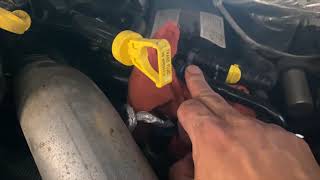
We Have This Part in Stock


The information in this article is provided for general reference and educational purposes only. Vehicle specifications, procedures, and part compatibility can vary by production date, trim level, and region. Always consult your vehicle's factory service manual and verify part numbers before purchasing or performing repairs. Safety-critical components such as airbags, seat belts, and braking systems should be installed by a qualified professional.
- Ford F-250 SD:
- 🧭 Diagnostic Flowchart
- 🎬 Helpful Videos
- 🛍️ Shop This Part
- What's Unique About the 2017-2021 Ford F-250 SD
- Symptoms You May Notice
- Most Likely Causes
- Rare But Worth Checking
- Diagnosis Steps
- Parts You'll Likely Need
- Related Codes That Often Appear With This One
- Technical Service Bulletins (TSBs) & Recalls
- Platform-Specific Known Issues
- Mechanic-Grade Diagnostic Values
- Scan Tool Commands That Help
- Wiring & Ground Locations
- Real Owner Repair Stories
- OEM Part Supersession History
- Model Year Variations Within This Range
- 🎟️ Get 5% Off